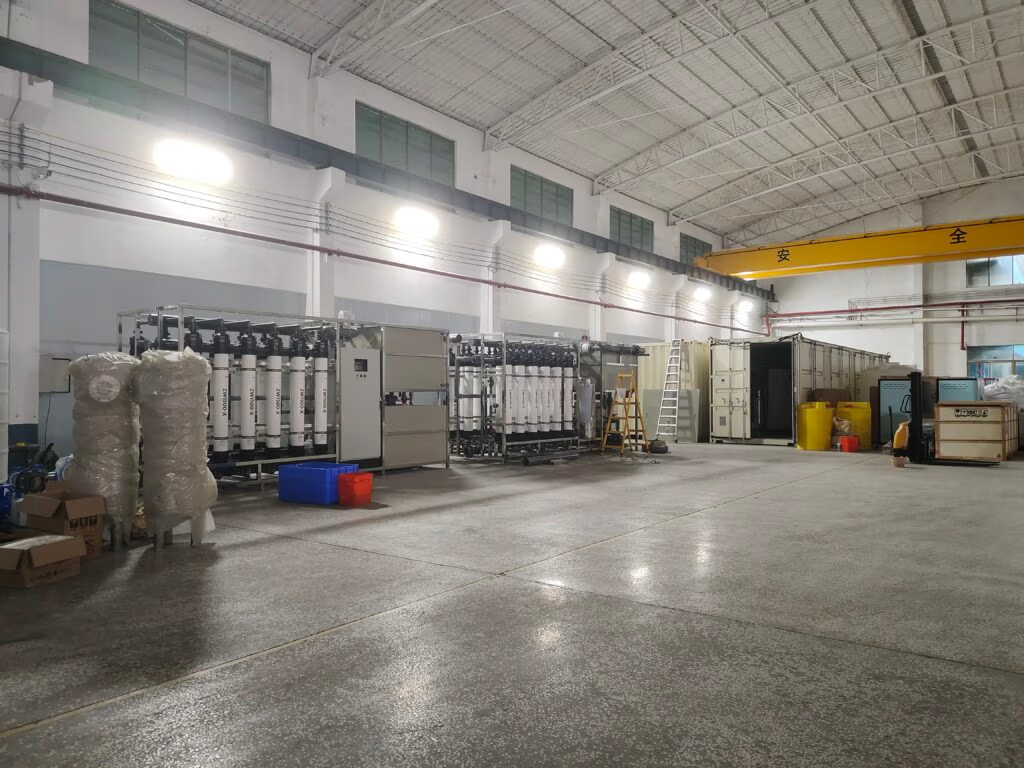
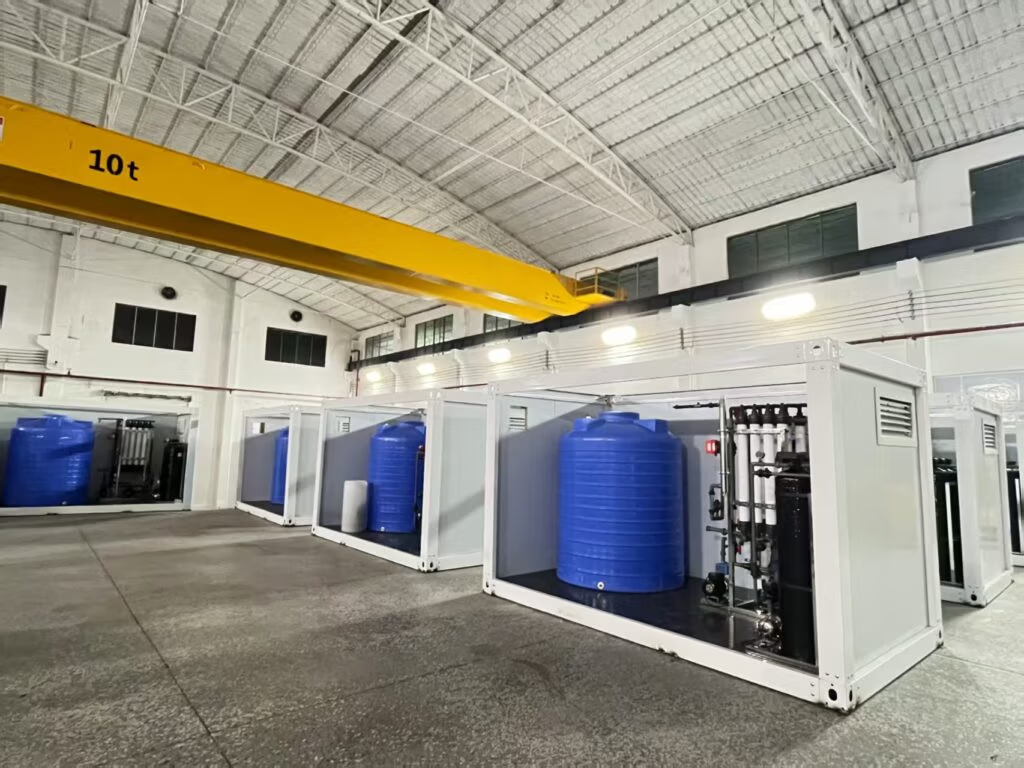
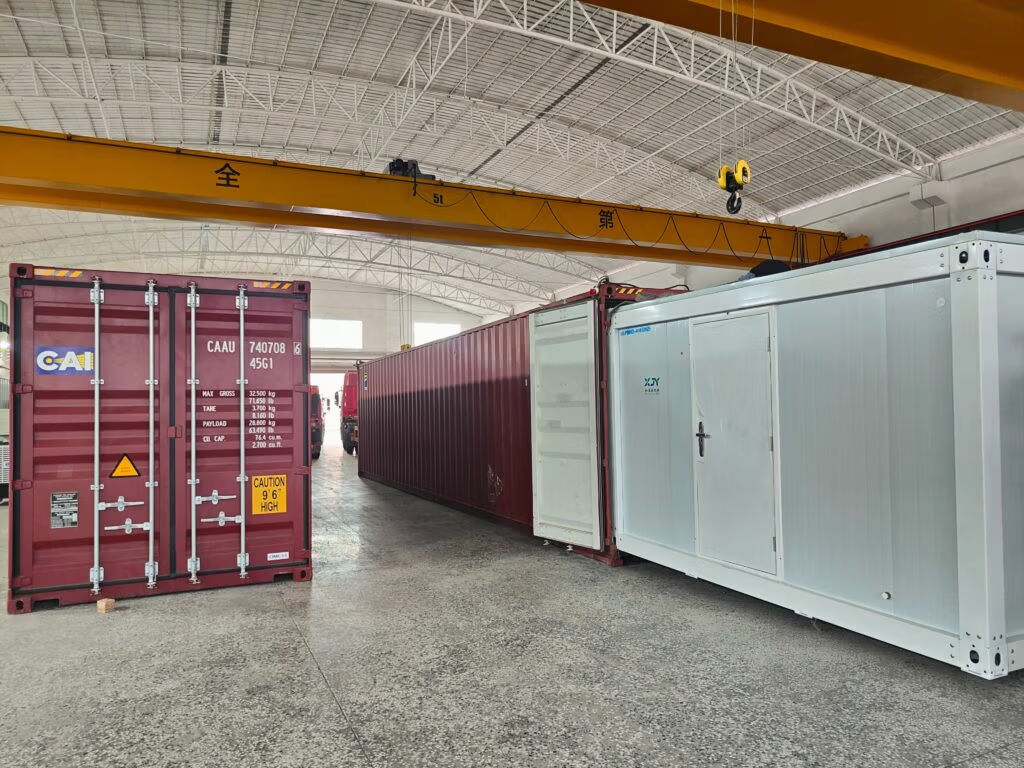
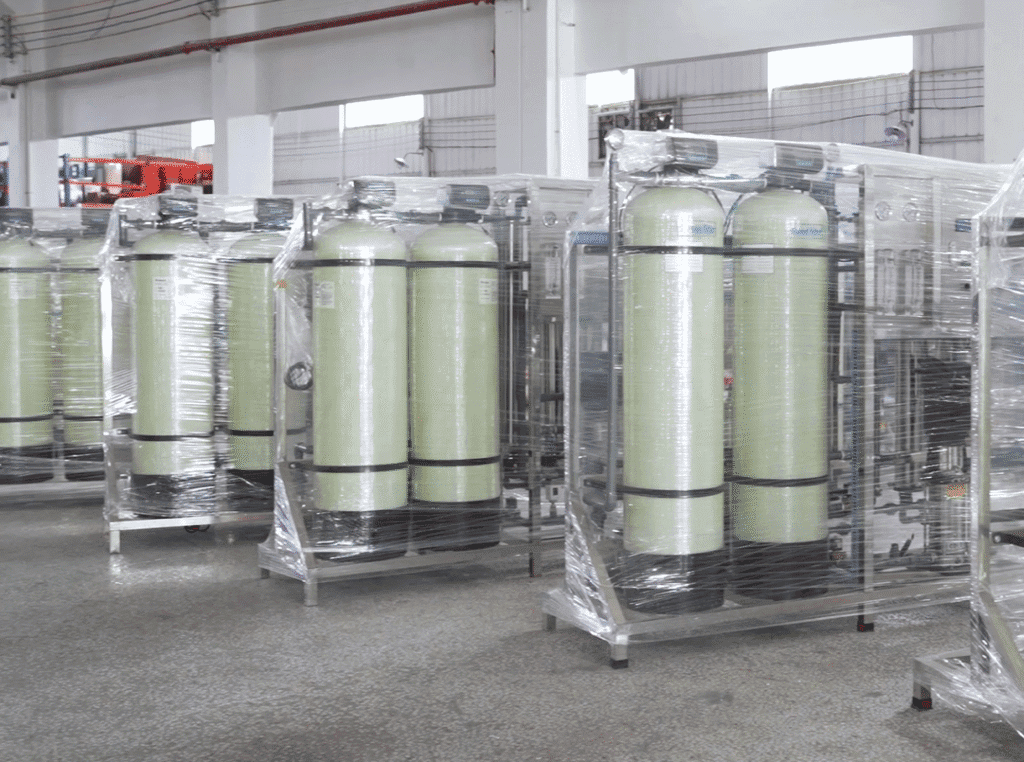
Why use stainless steel reverse osmosis system in the livestock farming industry? Because the cleanliness of drinking water for livestock and poultry is directly related to disease control, growth efficiency, and product quality. The WHO drinking water fact sheet underscores that clean, contaminant-free water is as critical for animal health as it is for human consumption, making purified water systems essential in modern farming. This system is safe, durable, and highly efficient, thus improving water quality in farms. This article will explain the various advantages of using stainless steel reverse osmosis system to help you understand this system.
1. Stainless steel reverse osmosis system is suitable for various aquaculture conditions
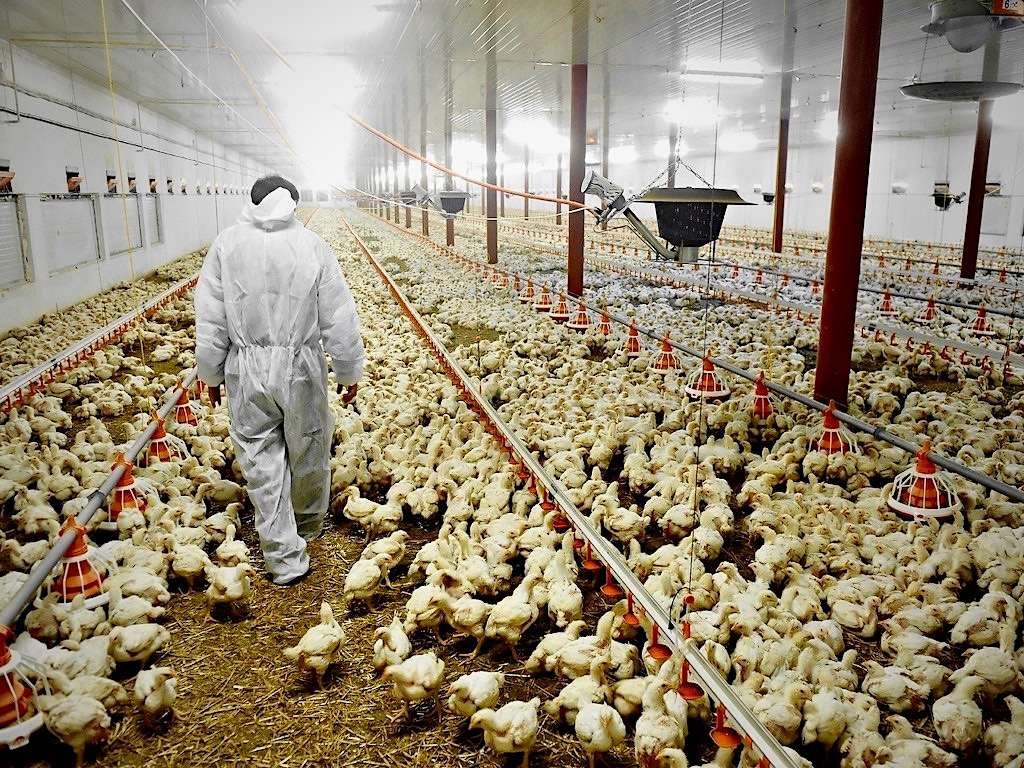
Livestock pens are typically dark, damp, poorly ventilated, or semi-enclosed environments. They may also contain stagnant water, accumulated manure, and uneaten feed. Routine equipment cleaning generates significant amounts of moisture. This moisture can damage equipment made of materials such as plastic and carbon steel, leading to reduced equipment durability, membrane contamination, and ultimately jeopardizing the health of livestock and poultry.
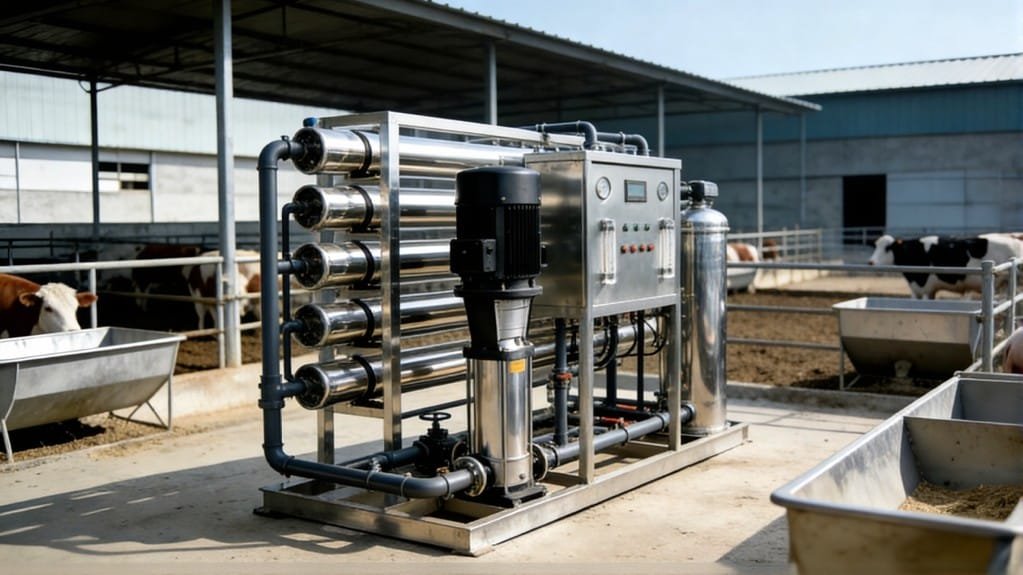
We recommend that farms use reverse osmosis systems made of 304 stainless steel. The smooth, easy-to-clean surface, rust-free and corrosion-resistant, effectively resists moisture and acid/alkali substances in the farming environment, preventing leaks and malfunctions caused by corrosion and aging.
Compared to equipment made of plastic or carbon steel, its lifespan can reach over 20 years. Only regular maintenance and filter replacement are required, significantly reducing equipment replacement costs, making it the preferred choice for many large-scale farms.
2. Reverse osmosis systems can deeply purify water quality
In livestock farming, the water source is typically groundwater or river water. These sources often contain harmful substances such as heavy metals, E. coli, bacterial flora, and pesticide residues. If livestock drink this water long-term, it can easily lead to digestive diseases, respiratory infections, and other problems, increasing the need for veterinary medication, affecting growth rates, and even reducing survival rates. Therefore, we need to treat the raw water, and a reverse osmosis system is a good choice.
A reverse osmosis system uses high pressure to force raw water through a semi-permeable membrane, allowing only water molecules to pass through while blocking impurities such as salt, heavy metals, bacteria, and organic matter. It can efficiently remove over 97% of harmful impurities from the water.
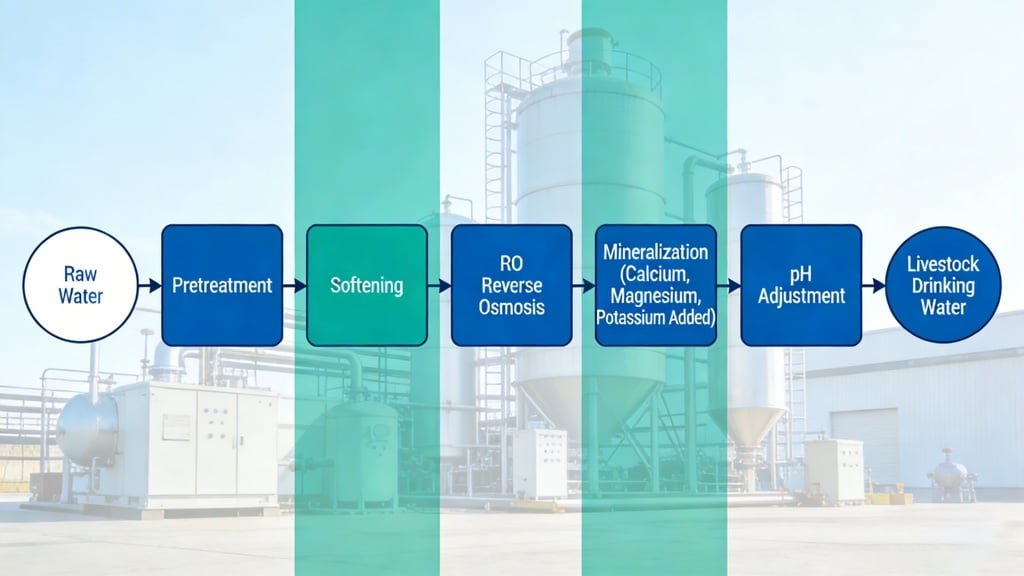
After the pretreatment stage, a softening system is added to prevent scaling on the reverse osmosis membrane.
After the semi-permeable membrane stage, a mineralizer and pH adjustment are added. Because RO pure water is slightly acidic, the pH must be adjusted to a slightly alkaline level to prevent diarrhea in livestock and improve absorption.
Through these steps, the raw water can be transformed into natural drinking water suitable for livestock. The specific process is as follows:
Actual farming cases show that after using this equipment, the incidence of diarrhea and respiratory diseases in livestock and poultry has been significantly reduced, the amount of veterinary drugs used has been reduced by more than 30%, and the survival rate of livestock has increased by 10%-15%.
3. Stainless steel reverse osmosis system is suitable for large-scale farming
Large-scale livestock farms consume large quantities of drinking water daily, but traditional water treatment equipment is energy-intensive and inefficient, failing to meet water demands and leading to water waste.
We can choose customized stainless steel reverse osmosis system. For example, it is designed with energy efficiency in mind, consuming only about 0.8 kWh per ton of water treated, saving over 20% energy compared to traditional equipment, while maintaining a stable water production capacity.
Furthermore, we can flexibly adapt to the scale of the farm, ranging from 0.25 cubic meters per hour to 50 cubic meters per hour, meeting the needs of small-scale farmers as well as the centralized water supply systems of large-scale farms.
4. Summary
For those pursuing large-scale, standardized farming, choosing a stainless steel reverse osmosis system means choosing a worry-free, efficient, and sustainable new farming model, which undoubtedly improves the quality of livestock and poultry products and enhances water quality.