Does reverse osmosis remove arsenic? Reverse osmosis technology can effectively remove arsenic from industrial wastewater. In particular, after pretreatment optimization, it can achieve efficient retention of various arsenic forms, thus meeting the requirements for compliant discharge and wastewater reuse.
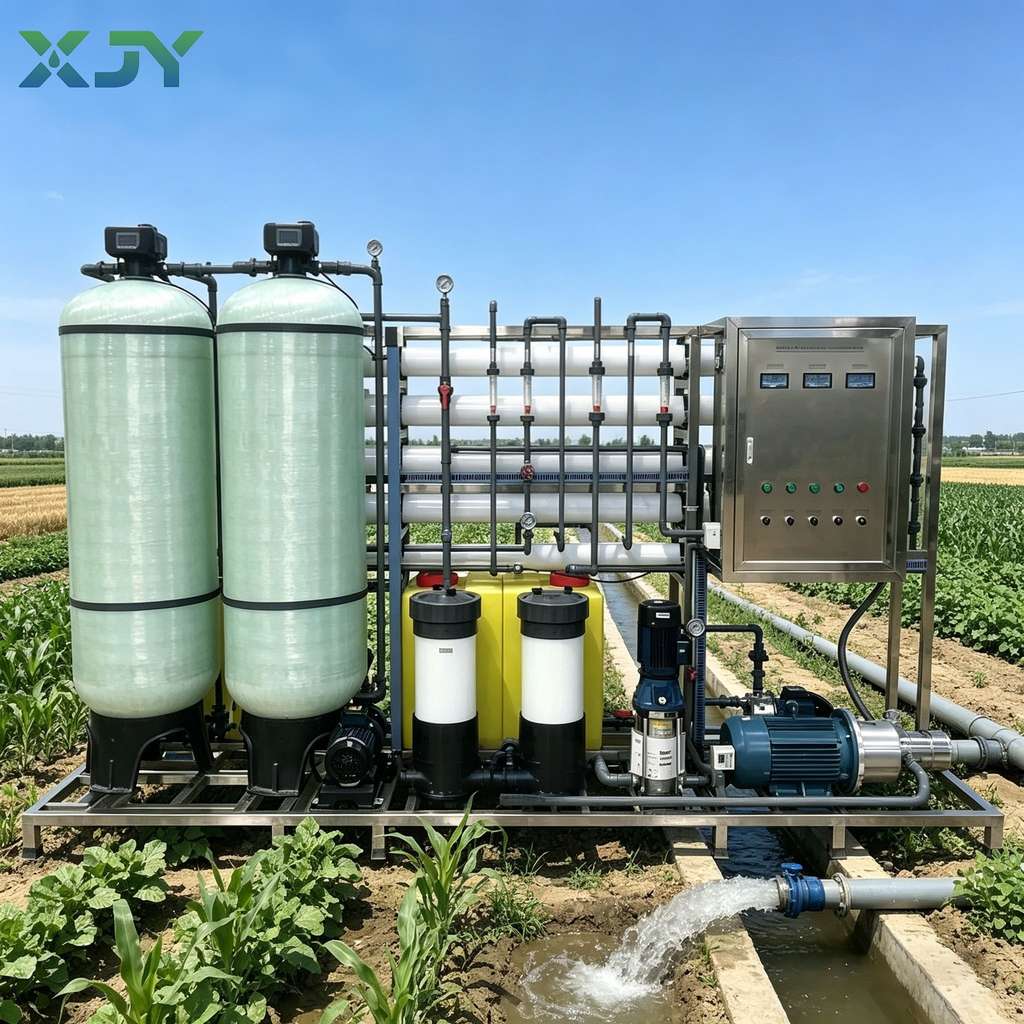
Using reverse osmosis technology to treat arsenic
Arsenic pollution is a significant environmental problem, widely present in wastewater from industries such as metallurgy, mining, electronics and semiconductors, and pesticides. As a highly toxic metallic element, even low concentrations of arsenic, when released over a long period, can severely damage aquatic and soil ecosystems, threatening human health and inducing various diseases such as chronic poisoning and cancer. Therefore, understanding the effectiveness of arsenic removal and its key applications is urgently needed.
To understand why reverse osmosis removes arsenic, it is first necessary to understand the forms in which arsenic exists in industrial wastewater and the working principle of reverse osmosis technology.
Arsenic in industrial wastewater mainly exists in inorganic forms, namely trivalent arsenic (As(III)) and pentavalent arsenic (As(V)). Trivalent arsenic is more toxic, has higher solubility, and is more difficult to treat. Pentavalent arsenic is relatively stable and easier to intercept and remove.
Reverse osmosis is a high-pressure driven membrane separation technology. The pore size of reverse osmosis membranes is extremely small (usually less than 0.5 nm), which is much smaller than the diameter of arsenic ions (0.1-0.5 nm), providing a physical basis for arsenic removal.
Compared with other membrane technologies such as ultrafiltration and nanofiltration, reverse osmosis technology requires higher driving pressure and has a stronger ability to retain small molecule compounds and ions, which is its core advantage in efficiently removing arsenic.
Does reverse osmosis remove arsenic?
The mechanism by which reverse osmosis technology removes arsenic is the dual action of “physical sieving” and “charge repulsion,” which ensures its high efficiency in retaining arsenic.
① Physical sieving is fundamental. Regardless of their valence state, arsenic ions have a volume larger than the diameter of the reverse osmosis membrane pores. They cannot pass through the membrane layer with water molecules and can only be retained on the raw water side, eventually being discharged with the concentrate, thus achieving effective separation from water molecules.

② The charge repulsion further enhances the removal effect. Mainstream industrial reverse osmosis membranes have a negative charge on their surface. Pentavalent arsenic mainly exists in the form of arsenate ions (negatively charged), while trivalent arsenic, although mostly in the form of neutral molecules, can also exhibit a weak negative charge under certain pH conditions. According to the principle of “like charges repel each other,” the negative charge on the membrane surface will generate an additional repulsive force on arsenic ions, preventing them from approaching and penetrating the membrane layer, thus significantly improving the removal efficiency.
Reverse osmosis’s removal efficiency for arsenic in different valence states
Extensive experimental data have shown that reverse osmosis technology can effectively remove arsenic from industrial wastewater, and the removal effect far exceeds that of traditional arsenic removal technologies.
- Conventional industrial reverse osmosis equipment can remove over 90% of pentavalent arsenic, while high-quality membrane modules can even achieve a removal rate of 95%-97%, fully meeting industrial wastewater discharge standards and reuse requirements.
- The removal efficiency of trivalent arsenic is relatively low, typically below 70%. This is because trivalent arsenic exists primarily in water as neutral arsenic acid molecules, which are less affected by charge repulsion, allowing some trivalent arsenic molecules to penetrate the membrane. Therefore, when treating industrial wastewater with high concentrations of trivalent arsenic, a pretreatment stage must be added before reverse osmosis. This involves adding oxidants such as sodium hypochlorite to oxidize the more toxic and difficult-to-remove trivalent arsenic into more easily retained pentavalent arsenic, thereby improving the overall arsenic removal efficiency.
Differences between reverse osmosis and traditional arsenic removal technologies
Compared with traditional arsenic removal technologies such as chemical precipitation, adsorption, and ion exchange, reverse osmosis technology has significant advantages in industrial arsenic removal applications.
- While chemical precipitation is simple to operate and has a low cost, it generates a large amount of arsenic-containing sludge, posing a risk of secondary pollution, and it is difficult to achieve the requirements for deep arsenic removal.
- Adsorption is suitable for treating low-concentration arsenic wastewater, but the adsorbent is easily saturated and needs to be replaced frequently, resulting in high operating costs.
- Ion exchange is highly selective, but it is easily affected by coexisting ions. Resin regeneration requires a large amount of chemical reagents, making it unsuitable for large-scale industrial wastewater treatment.
- Reverse osmosis technology requires no chemical additives, does not produce secondary pollution, and produces stable effluent. It can achieve deep removal of arsenic and simultaneously remove other heavy metal ions, organic matter and other impurities in wastewater, enabling the reuse of industrial wastewater.
Of course, reverse osmosis technology also has certain limitations in industrial arsenic removal applications. For example, it has a high initial investment in equipment, a high risk of membrane fouling, and requires further treatment of the concentrate.
To address these issues, we will customize solutions based on parameters such as the arsenic valence state, concentration, and coexisting pollutants in the wastewater. This includes pretreatment processes such as oxidation, filtration, and softening to reduce membrane fouling. Select suitable reverse osmosis membranes and optimizing operating parameters to reduce energy consumption and implement a concentrated wastewater treatment system to achieve resource utilization or compliant discharge, thereby minimizing operating costs for businesses. Please feel free to contact us if you have any needs.
Summarize
Reverse osmosis technology can remove arsenic from industrial wastewater, achieving highly efficient retention of various arsenic forms. In the future, with the continuous improvement of industrial environmental standards, the application of reverse osmosis technology in arsenic removal will become increasingly widespread.