Membrane fouling is the single biggest operational headache for anyone running ultrafiltration equipment. Flux drops, transmembrane pressure climbs, cleaning cycles multiply . And before long, what looked like a cost-efficient filtration investment starts bleeding money. Understanding why fouling happens and how to systematically prevent it is the difference between a system that runs profitably for years and one that drains your maintenance budget every quarter.
Why Membrane Fouling Happens in Ultrafiltration Equipment
Fouling occurs when contaminants accumulate on or inside the membrane surface, restricting water flow through the pores. It is not a single event. And it is an ongoing process driven by feed water composition, operating conditions, and system design. There are four primary fouling mechanisms that affect every ultrafiltration system in industrial service.
Particulate and colloidal fouling happens when suspended solids and fine colloids form a cake layer on the membrane surface. Organic fouling is caused by natural organic matter (NOM), humic acids, and proteins that adsorb onto and block membrane pores. Biofouling develops when microorganisms colonize the membrane surface and form biofilms that are difficult to remove with standard backwashing alone. Scaling occurs when dissolved minerals such as calcium carbonate, iron, or silica precipitate out of solution and deposit on the membrane.
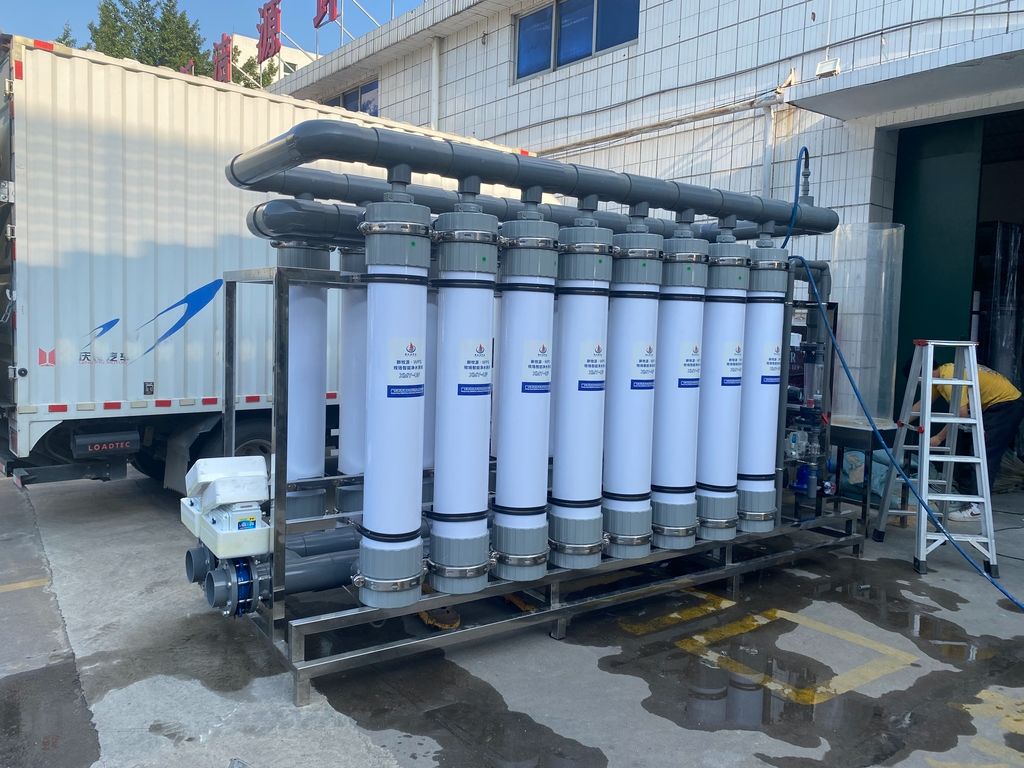
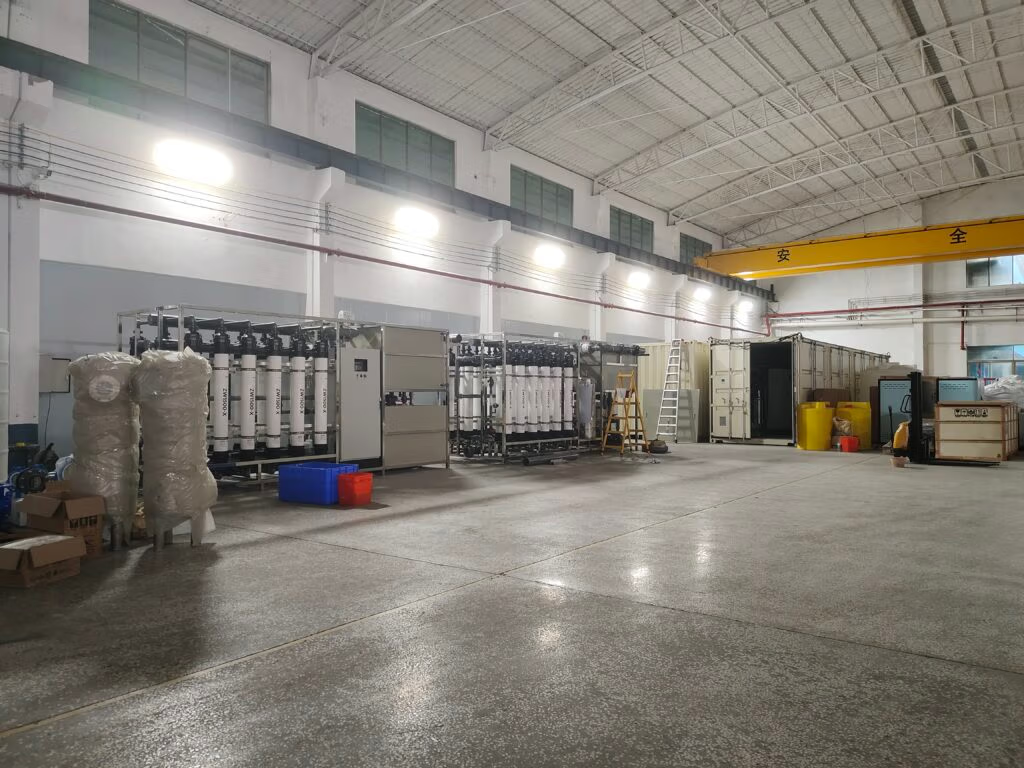
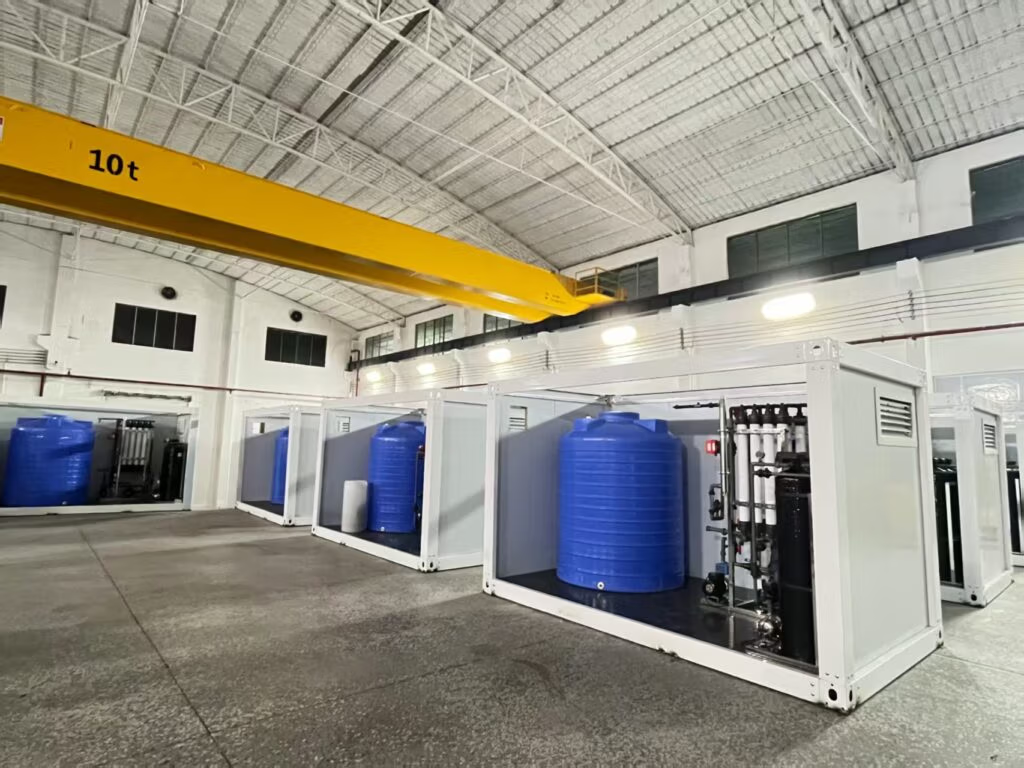
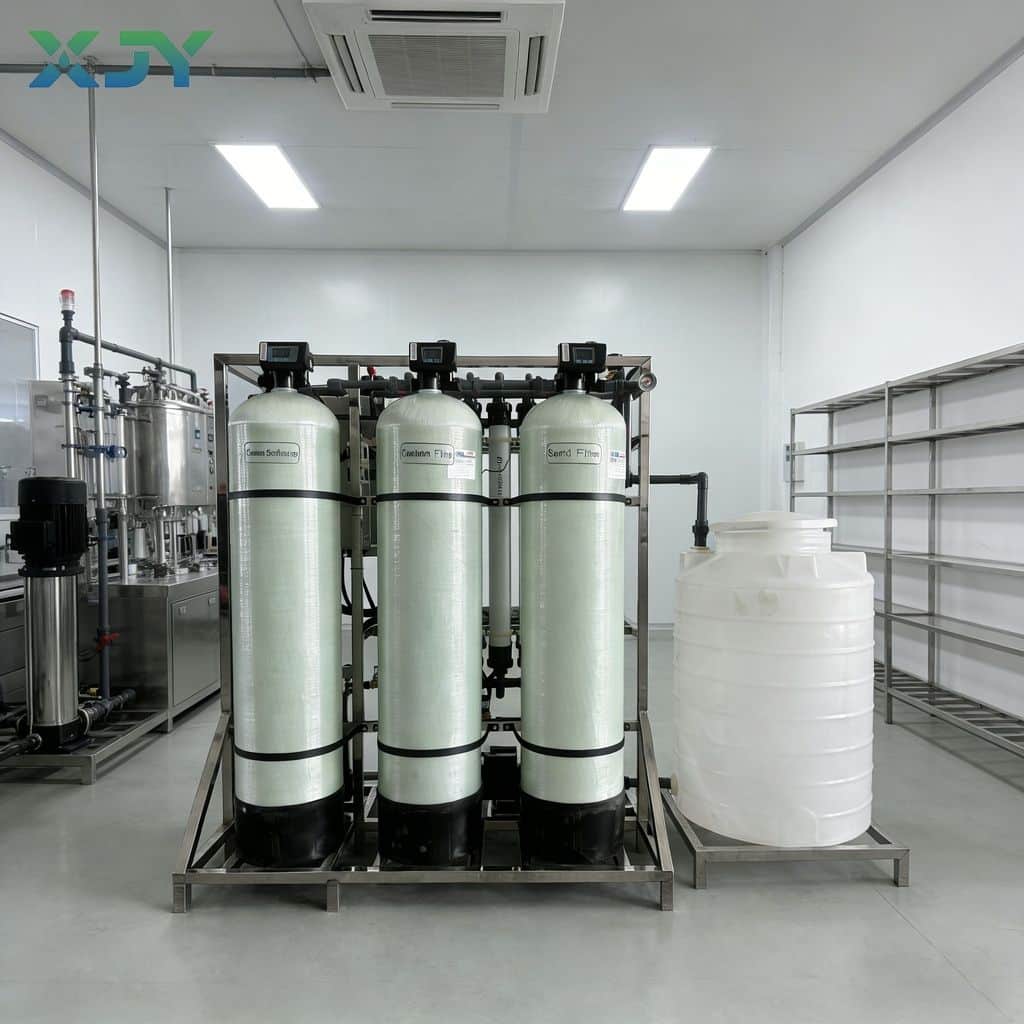
In most industrial applications, multiple fouling types occur simultaneously, which is why a single-strategy approach consistently fails. The XinJieYuan ultrafiltration system is engineered with each of these fouling mechanisms in mind, from membrane material selection to automated cleaning protocols.
How to Prevent Fouling Before It Reaches the Membrane
The most cost-effective place to fight fouling is upstream, before feed water ever contacts the UF membrane. Inadequate pre-treatment is the leading cause of premature membrane degradation across industrial ultrafiltration installations.
Step 1 — Match Pre-Treatment to Your Feed Water Profile
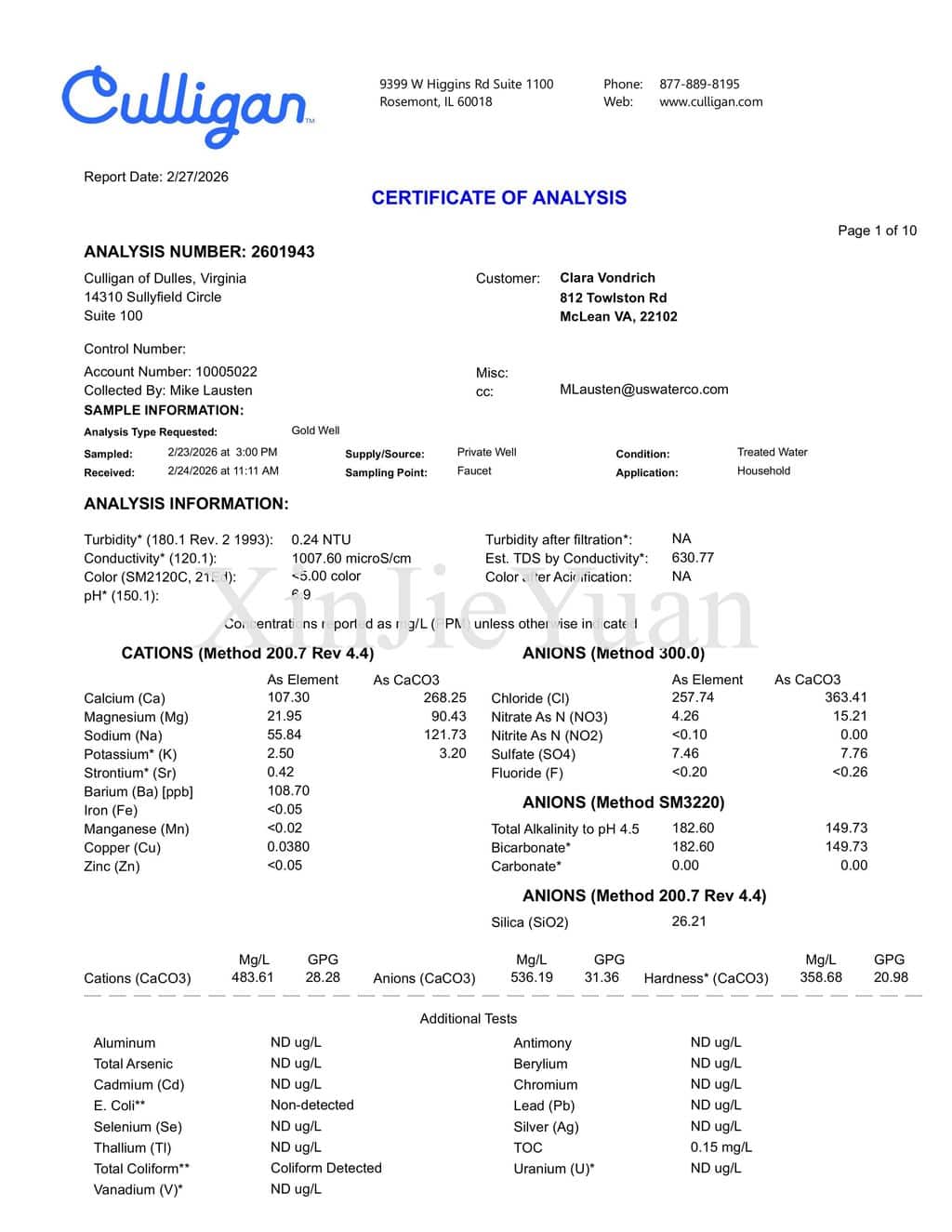
Every feed water source has a unique fouling fingerprint. Surface water high in NOM and turbidity requires coagulation and flocculation ahead of the UF stage to break down colloidal matter before it reaches the membrane. Industrial effluent with elevated oil or grease content needs dissolved air flotation (DAF) upstream. High-hardness groundwater requires antiscalant dosing to suppress carbonate and silica scaling.
Running a full feed water analysis, includes SDI, turbidity, TOC, hardness, iron, and microbial load before commissioning any industrial ultrafiltration system is a non-negotiable first step. Systems sized and pre-treated based on actual water chemistry consistently outperform those designed around assumed parameters.
Step 2 — Control Flux to Avoid Critical Fouling Thresholds
Operating above the critical flux threshold accelerates irreversible fouling significantly. Every membrane has a flux rate below which fouling is largely reversible and manageable, and above which fouling becomes self-reinforcing and increasingly difficult to clean.
XinJieYuan industrial ultrafiltration engineers design systems with conservative flux targets, typically 20–60 LMH for surface water and secondary effluent applications, rather than pushing membranes to rated maximums. This approach extends membrane life and reduces the frequency of intensive chemical cleaning cycles.
How to Remove Fouling That Has Already Built Up
Even with excellent pre-treatment and controlled flux operation, some fouling accumulation is inevitable in any real-world ultrafiltration system. The key is removing it before it transitions from reversible to irreversible.
Backwashing — Your First Line of Defense
Automated backwashing reverses the flow direction through the membrane, physically dislodging accumulated cake layers from the membrane surface. Most industrial UF systems should backwash every 20–45 minutes depending on feed water quality. Triggering backwash based on rising transmembrane pressure (TMP) rather than a fixed timer is more responsive and prevents fouling from compacting into irreversible deposits.
Every ultrafiltration system includes fully automated backwash sequencing controlled by PLC, with TMP-based trigger logic as standard. No manual intervention required during normal operation.
Chemically Enhanced Backwash (CEB) — Targeting Biofouling and Organics
Standard backwashing removes physical cake layers but does not address biofouling or organic adsorption. Chemically Enhanced Backwash adds low concentrations of sodium hypochlorite (NaOCl) or citric acid to the backwash stream to break down biofilm and dissolve organic deposits. CEB cycles typically run every 12–24 hours and add minimal chemical cost while substantially reducing the need for full CIP events.
The ultrafiltration system integrates automated CEB dosing with chemical injection controls built into the skid, eliminating the need for manual chemical addition during routine maintenance cycles.
Clean-In-Place (CIP) — Recovering Irreversible Fouling
When TMP cannot be recovered through backwashing or CEB alone, a full CIP is required. Alkaline cleaning with sodium hydroxide (NaOH) targets organic fouling and biofouling. Acid cleaning with citric acid or hydrochloric acid dissolves inorganic scaling and iron deposits. The correct sequence, chemical concentration, temperature, and contact time vary by fouling type and membrane material.
A critical warning: over-aggressive CIP, particularly excessive chlorine concentration or cleaning outside the recommended pH range causes irreversible membrane damage and dramatically shortens service life. We provides application-specific CIP protocols for every system supplied, calibrated to the actual membrane material and the customer’s feed water chemistry.
How Membrane Material Choice Affects Fouling Resistance
Not all UF membranes foul at the same rate. Membrane material has a significant impact on fouling tendency, cleaning tolerance, and long-term flux stability.
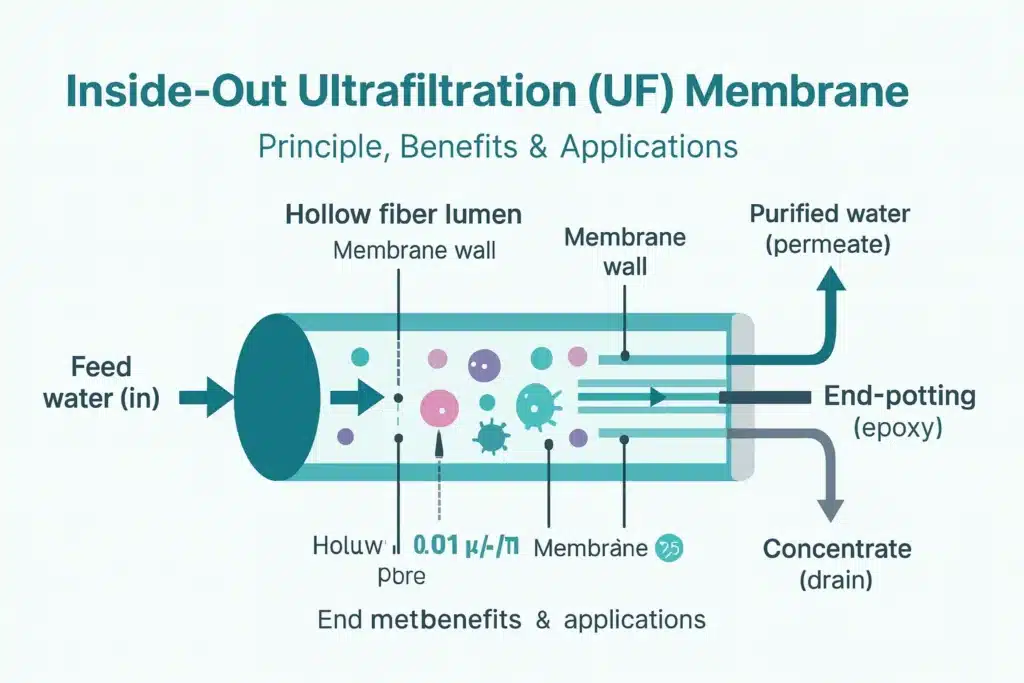
PVDF (polyvinylidene fluoride) membranes offer strong chemical resistance, good chlorine tolerance up to 200,000 ppm·h cumulative exposure, and hydrophilic surface properties that reduce organic adsorption. PES (polyethersulfone) membranes provide excellent thermal stability and broad pH tolerance but are more sensitive to oxidative cleaning agents. Hydrophilic surface modification — applied during membrane fabrication — reduces the affinity of organic foulants for the membrane surface and is a meaningful differentiator in long-term fouling performance.
Industrial ultrafiltration systems use hydrophilic PVDF hollow-fiber membranes as standard, selected specifically for their fouling resistance and compatibility with the cleaning regimes required in demanding industrial feed water conditions. Learn more about our membrane specifications in the XinJieYuan UF System product range.
How to Monitor Fouling Progress Before It Becomes a Crisis
The operators who manage fouling best are those who monitor it continuously rather than reacting to performance failures after they occur. Three key parameters should be tracked in real time on any well-managed ultrafiltration equipment installation.
Transmembrane pressure (TMP) is the most direct indicator of fouling accumulation — a steady upward trend between backwash cycles signals that fouling is progressing faster than cleaning can remove it. Normalized permeate flux tracks actual output volume corrected for temperature and feed pressure, giving a true picture of membrane condition over time. Specific energy consumption rises as fouling increases resistance to flow — a sustained increase in kWh/m³ is an early warning sign that cleaning frequency or intensity needs adjustment.
The ultrafiltration system includes SCADA-compatible data outputs for all three parameters, enabling remote monitoring and trend analysis. Customers running our systems with remote monitoring consistently identify and address fouling escalation weeks before it would otherwise trigger an unplanned shutdown. Industry guidance from the American Water Works Association also recommends continuous TMP and flux monitoring as best practice for any membrane-based treatment system.
The Real Cost of Getting Fouling Management Wrong
Poorly managed fouling has a compounding financial impact that extends well beyond the cost of additional cleaning chemicals. Frequent unplanned shutdowns mean lost production and emergency maintenance costs. Aggressive cleaning to recover heavily fouled membranes accelerates membrane degradation, compressing replacement intervals from 5–7 years to as little as 2–3 years. Higher TMP means higher pump energy consumption throughout every operating hour. Inconsistent permeate quality can disrupt downstream processes — particularly in pharmaceutical, semiconductor, and food-grade applications where water quality specifications are tight.
In contrast, a well-designed industrial ultrafiltration system with appropriate pre-treatment, optimized flux operation, and automated cleaning protocols routinely achieves membrane service lives of 5–7 years, energy consumption below 0.2 kWh/m³, and permeate quality stable enough to feed directly into RO systems without SDI exceedances. For downstream desalination applications, see how our systems integrate with the XinJieYuan Reverse Osmosis System range.
Where to Start If Your Ultrafiltration Equipment Is Already Fouling
If your current system is experiencing accelerating TMP rise, declining flux, or shortening membrane life, the diagnosis almost always traces back to one or more of the following: pre-treatment that is undersized or mismatched to current feed water conditions, flux rates set too aggressively during commissioning, backwash cycles that are too infrequent or too short, CEB protocols that are not targeting the correct fouling type, or membrane material that is not suited to the chemical cleaning regime being applied.
We offers fouling diagnostic reviews for existing installations not just for our own systems. Our engineers review your TMP trend data, cleaning logs, and feed water analysis to identify the root cause and recommend targeted corrective actions. In most cases, operational adjustments alone recover significant performance without requiring membrane replacement.
If you are specifying new ultrafiltration equipment, the ultrafiltration system design process starts with your feed water data and works backward to pre-treatment requirements, membrane selection, flux targets, and cleaning protocol design. So fouling management is engineered in from the start, not patched in after commissioning. Contact the technical team to discuss your application.