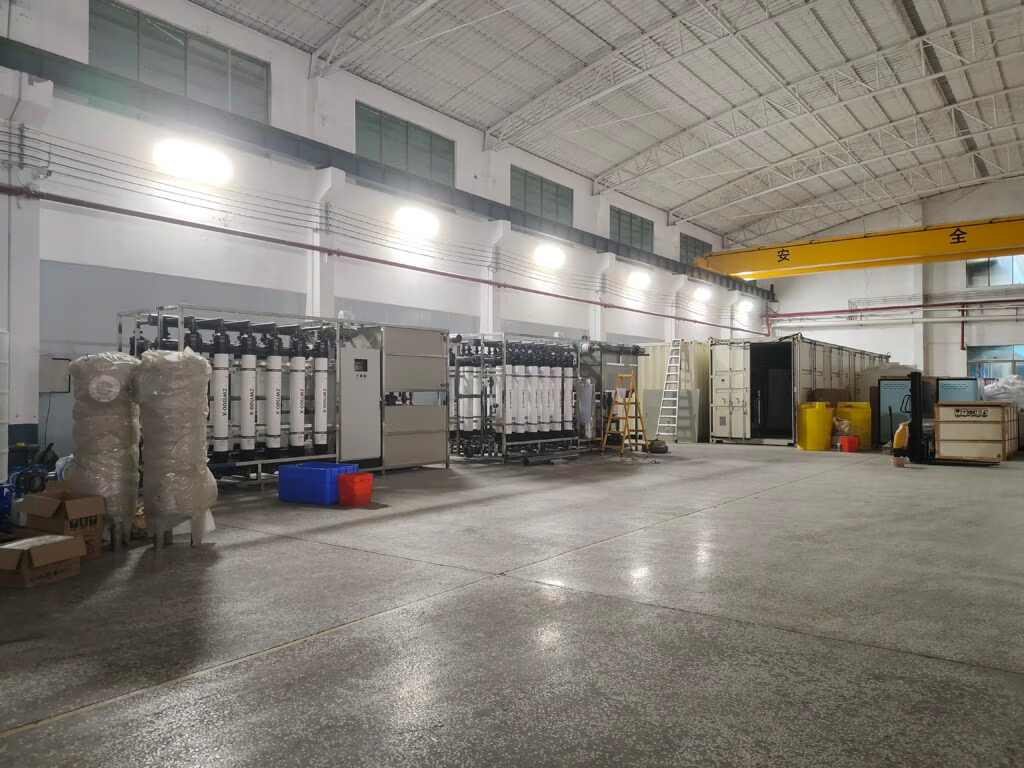
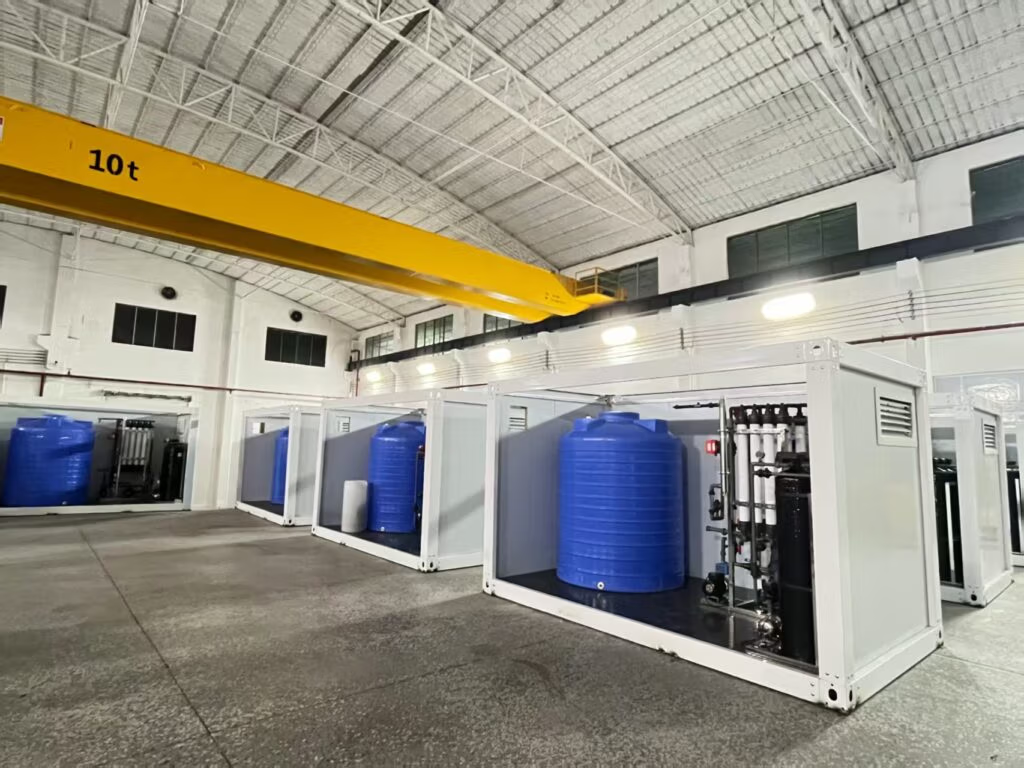
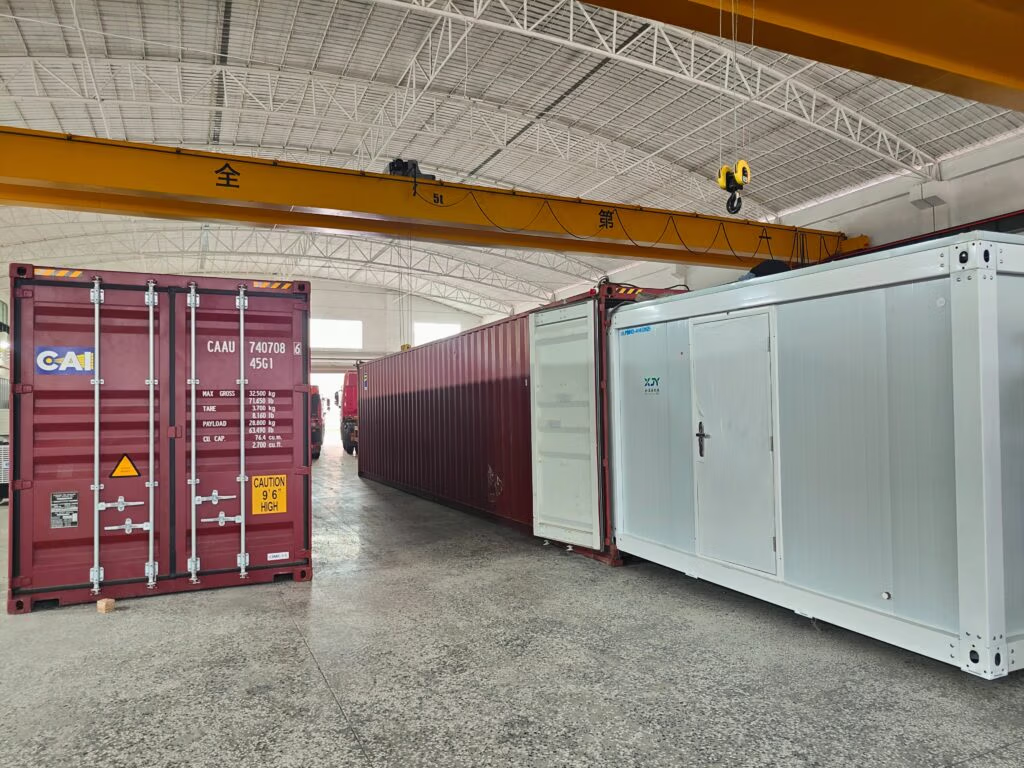
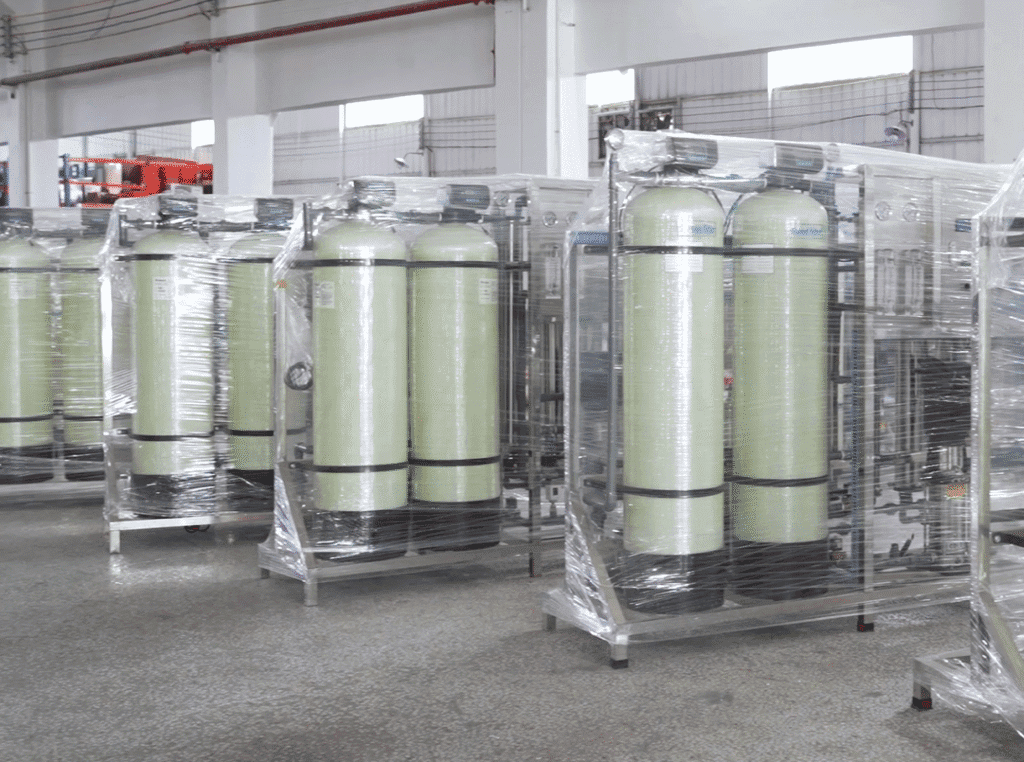
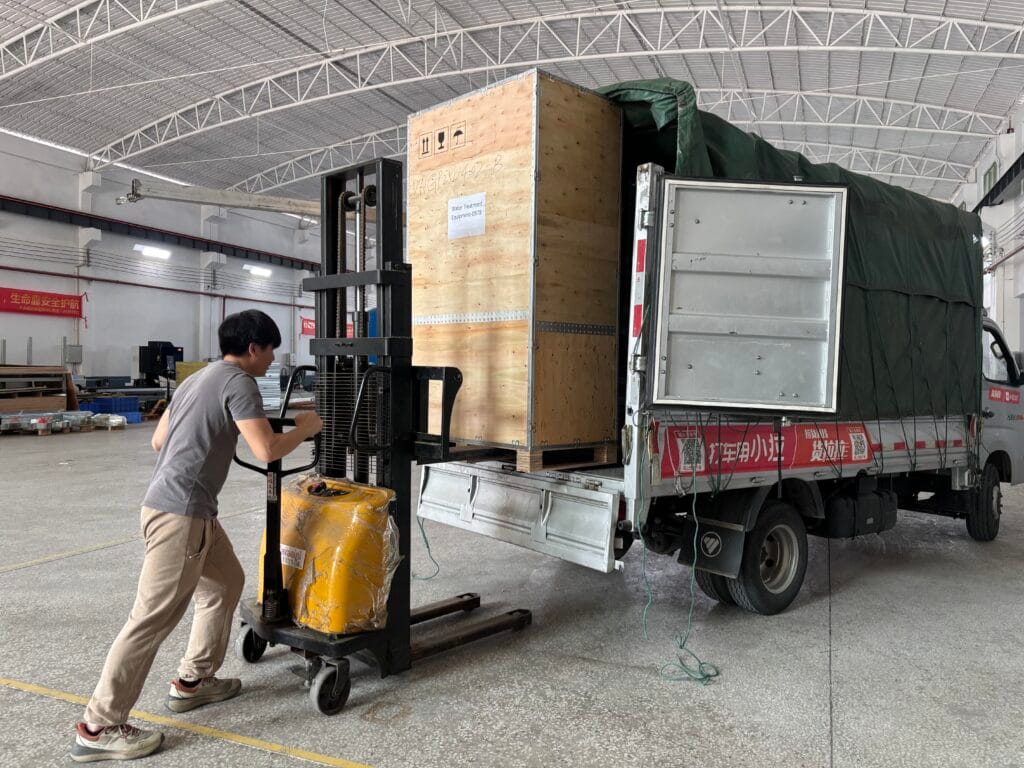
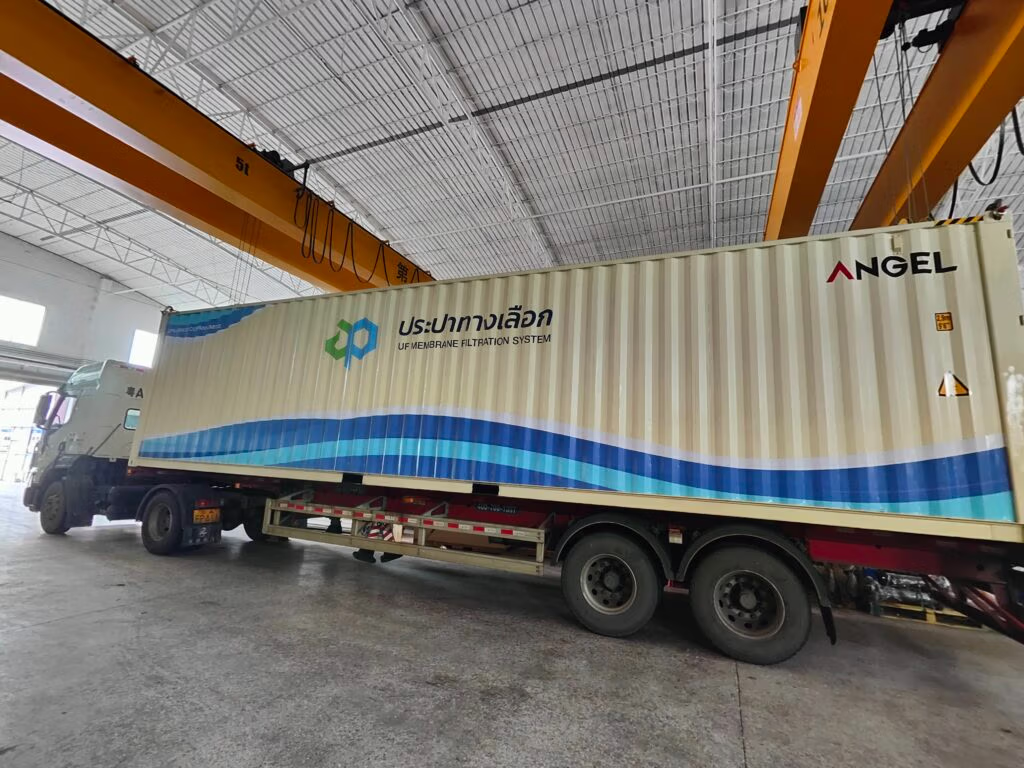
The rise of seawater desalination technology has opened up a new, stable, and reliable water source for near-shore enterprises. Furthermore, the upgrading of seawater desalination equipment has made this technology a core tool for enterprises to save water, reduce costs, and enhance competitiveness. This article will detail the advantages of desalination and how industrial water treatment equipment can amplify these values.
What are the advantages of seawater desalination?
1. Stable and independent water source, solving the water supply dilemma
With 71% of the Earth’s surface covered by seawater, this inexhaustible resource has completely freed industrial production from dependence on traditional water sources such as limited surface runoff and groundwater. Compared to traditional water sources, seawater is not limited by seasons, rainfall, or location, and can be precisely matched to the dynamic water needs of industries such as chemicals and power generation.
In well-known coastal industrial parks such as Jubail in Saudi Arabia and Jabel Ali in the UAE, the introduction of our customized industrial seawater desalination equipment has enabled a daily water supply of 15,000 tons, even during the long dry season, with production lines operating uninterrupted year-round.
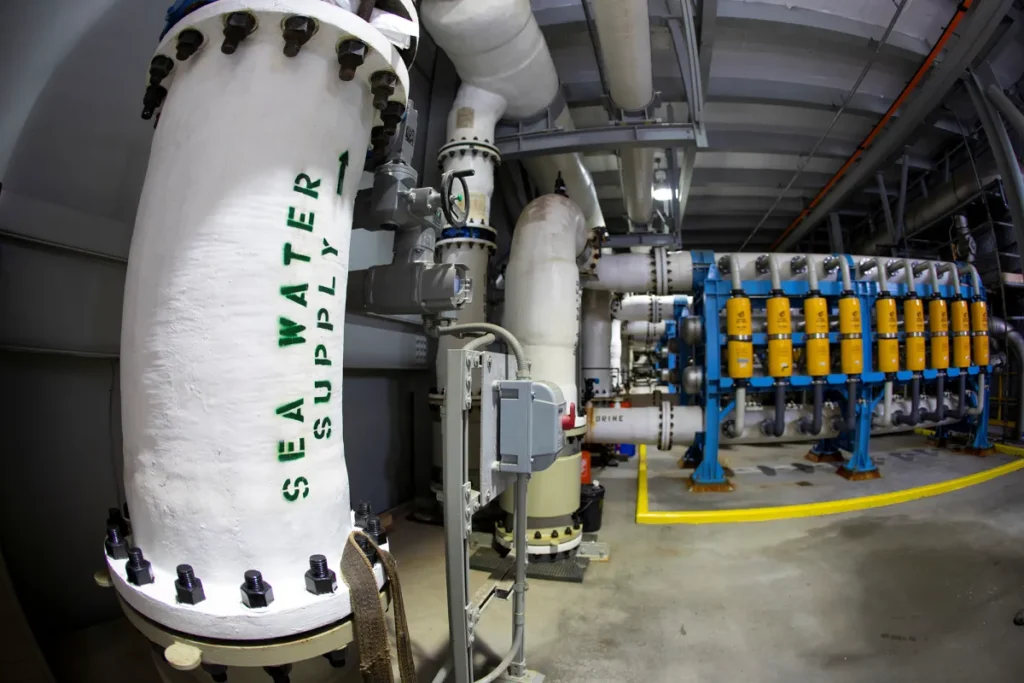
2. Water quality is controllable and customizable, adaptable to high-precision industrial needs
Industries such as electronics, pharmaceuticals, and semiconductors have stringent water quality requirements. Traditional water sources often require multiple pretreatment stages but still struggle to meet these standards. Seawater desalination, however, utilizes a comprehensive process of “pretreatment + core desalination + deep purification” to achieve precisely customized water quality. Furthermore, industrial water treatment equipment supports modular upgrades, allowing for flexible adjustments from micron-level filtration to nanometer-level desalination, adapting to the stringent industry standards of Europe, America, Japan, and South Korea.
A semiconductor company in Silicon Valley, USA, uses our integrated “reverse osmosis + EDI” industrial seawater desalination equipment to directly treat seawater into ultrapure water with a resistivity of 18.2 MΩ·cm and an ion removal rate of 99.9%. This equipment not only eliminates three traditional filtration stages but also reduces the chip scrap rate due to water quality issues to below 0.1%.
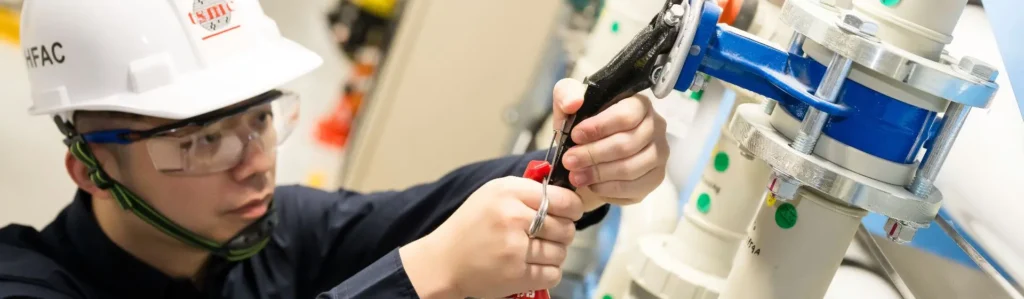
3. Low long-term operating costs, aligning with expected return on investment
In the past, seawater desalination was labeled as “high-cost” due to its high energy consumption. However, with the application of energy-efficient water treatment equipment, the treatment cost has now dropped to $0.5-0.8 per ton, roughly equivalent to the pricing of industrial water in regions like the Middle East and Australia.
After a power plant in Spain introduced our waste heat recovery seawater desalination equipment, it reduced energy consumption by utilizing waste heat from power generation. This resulted in a 40% reduction in the cost per ton of desalinated water compared to traditional processes, saving over $1.2 million in water costs annually.
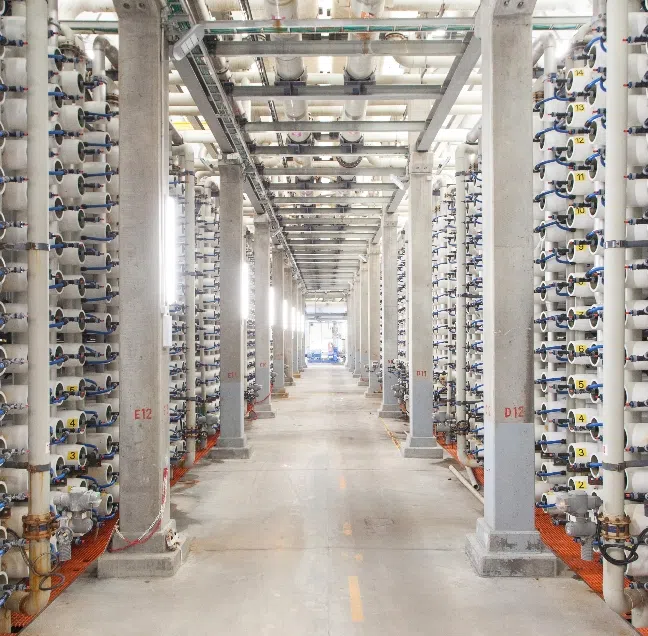
4. Strong emergency response capabilities, solidifying the production safety line
Extreme weather, water pollution, and other emergencies can easily lead to water outages, but seawater desalination systems can serve as a rapid “emergency water source.” The water treatment equipment also supports automatic fault alarms and emergency automatic start/stop, and can operate stably even without human intervention. This provides enterprises with a dual safety net of “traditional water source + desalinated water source,” addressing various unexpected water supply issues.
In 2022, Hurricane Ian struck Florida, USA, causing a shutdown of its municipal water treatment plant. The local chemical industrial park, relying on its own industrial seawater desalination equipment, restored water supply within four hours, preventing billions of dollars in production capacity losses.
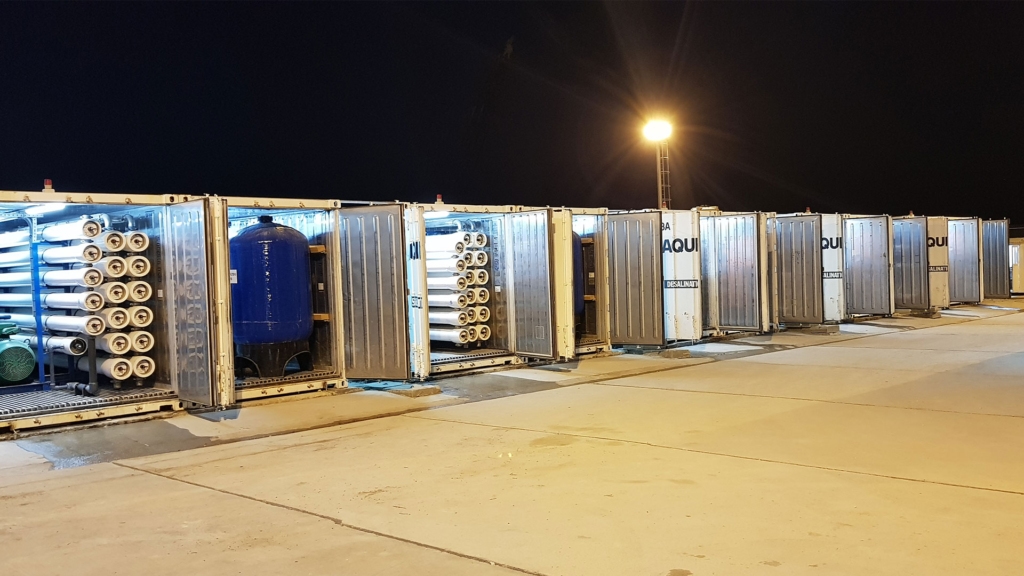
5. Align with dual carbon objectives to achieve a win-win situation for environmental protection and compliance
Driven by the global goal of carbon neutrality, the environmental value of seawater desalination is becoming increasingly prominent. Modern desalination technology enables the resource utilization of concentrated brine, converting byproducts into industrial salt through a salt-chemical co-production model, achieving cascaded resource utilization.
Simultaneously, equipment can utilize low-energy membrane modules and wastewater recovery technology, increasing water recovery rates to over 75%. The concentration of concentrated brine discharged strictly complies with international standards such as the EU’s Water Framework Directive and the US Clean Water Act, helping companies achieve a win-win situation of environmental compliance and economic benefits.
Seawater desalination leads a new direction in water conservation
From resource security to cost control, from water quality assurance to environmental protection requirements, the multiple advantages of seawater desalination are driving it to become a mainstream direction for global industrial water conservation. As a service provider deeply rooted in the field of industrial water treatment equipment, our equipment has passed international certifications such as CE and ISO, and is compatible with the industrial voltages and installation standards of different countries.
In the future, we will continue to focus on technological innovation, providing more efficient, energy-saving, and intelligent solutions to better serve various industrial scenarios overseas, injecting stable “water power” into the high-quality development of global enterprises.