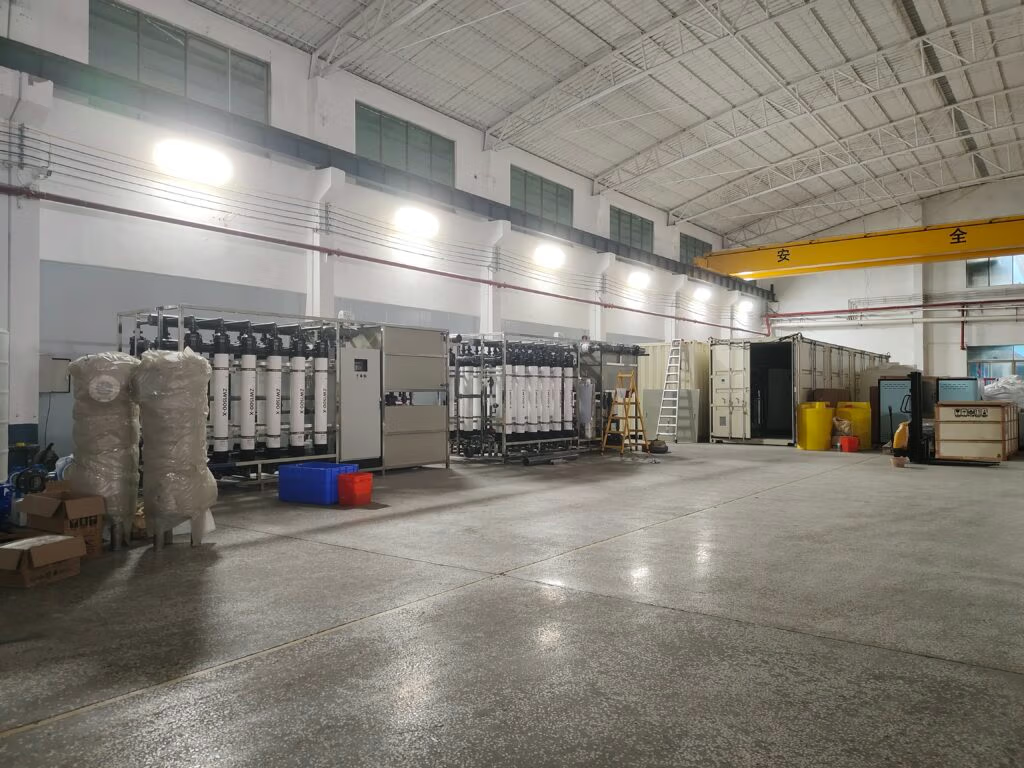
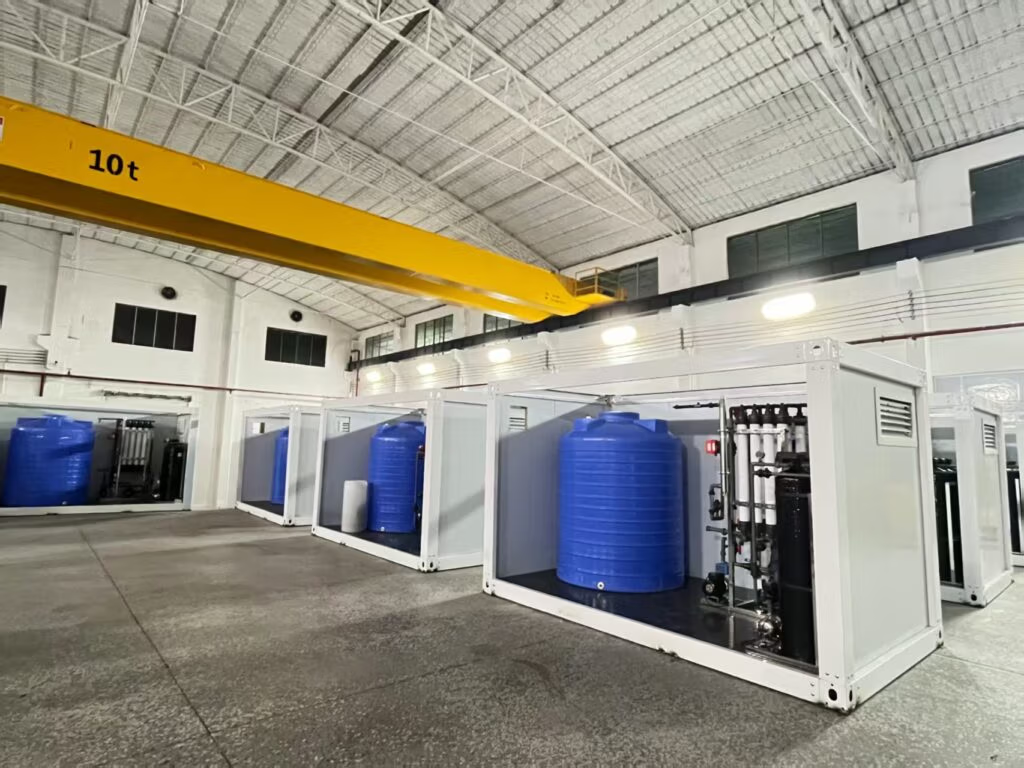
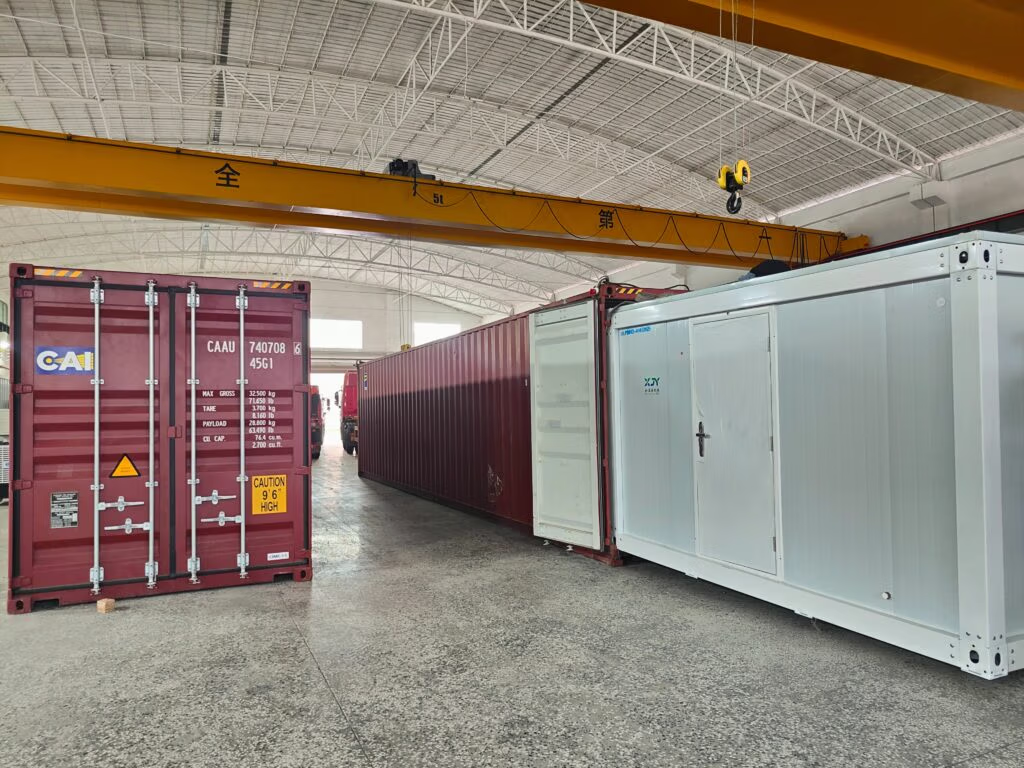
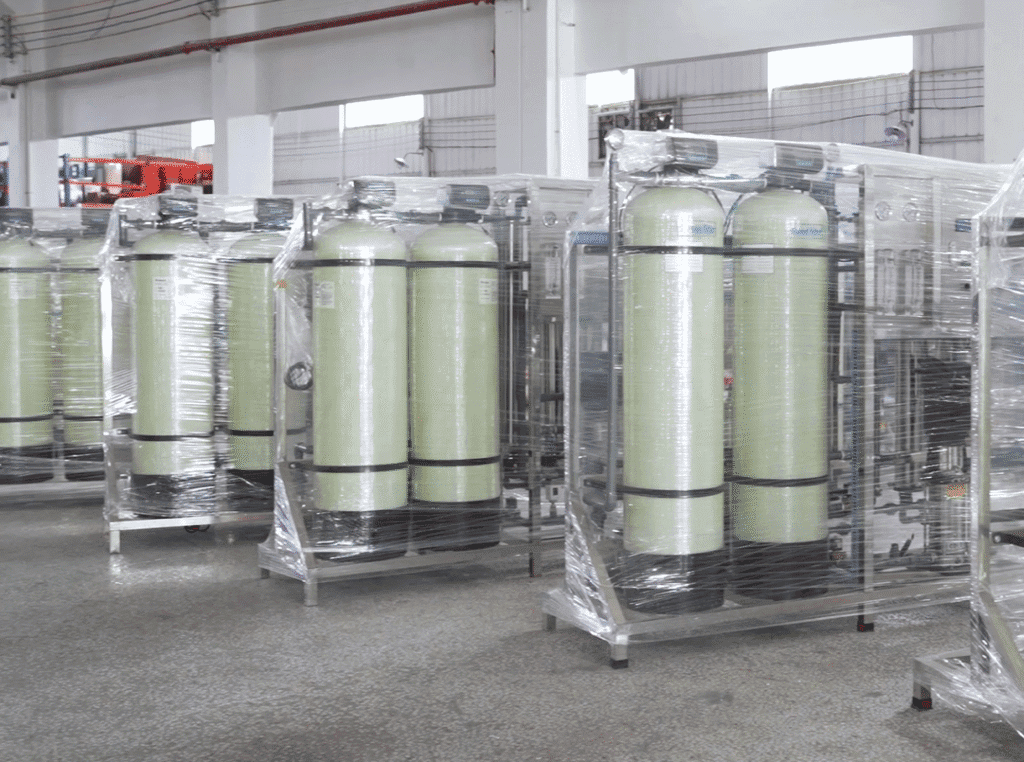
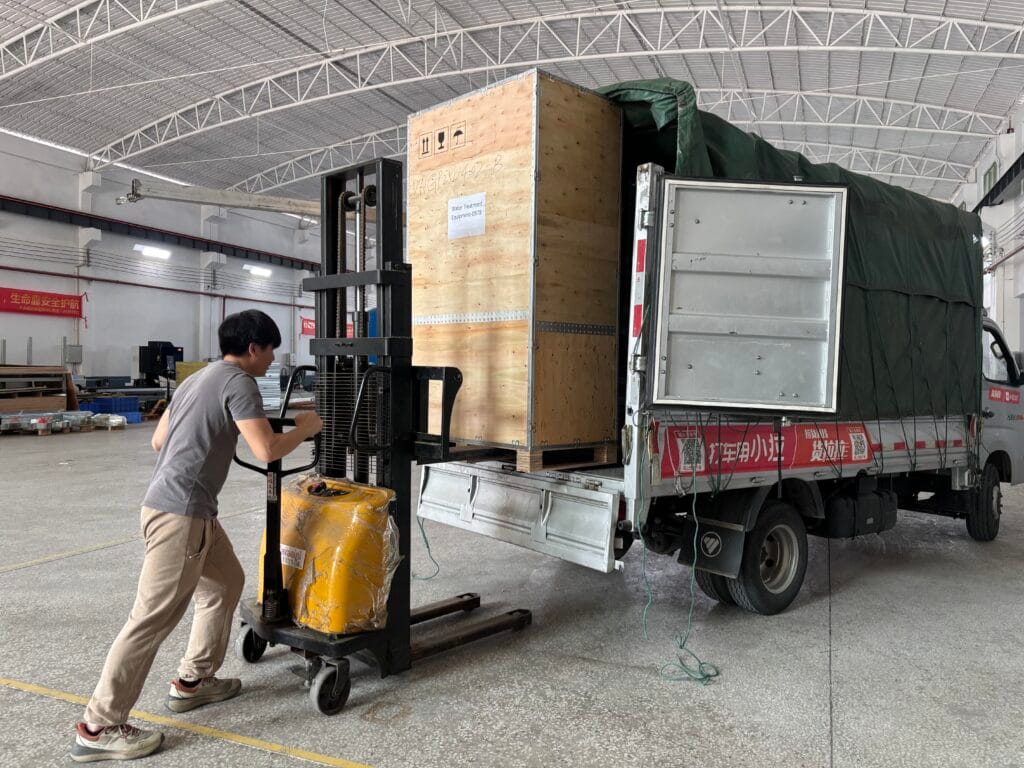
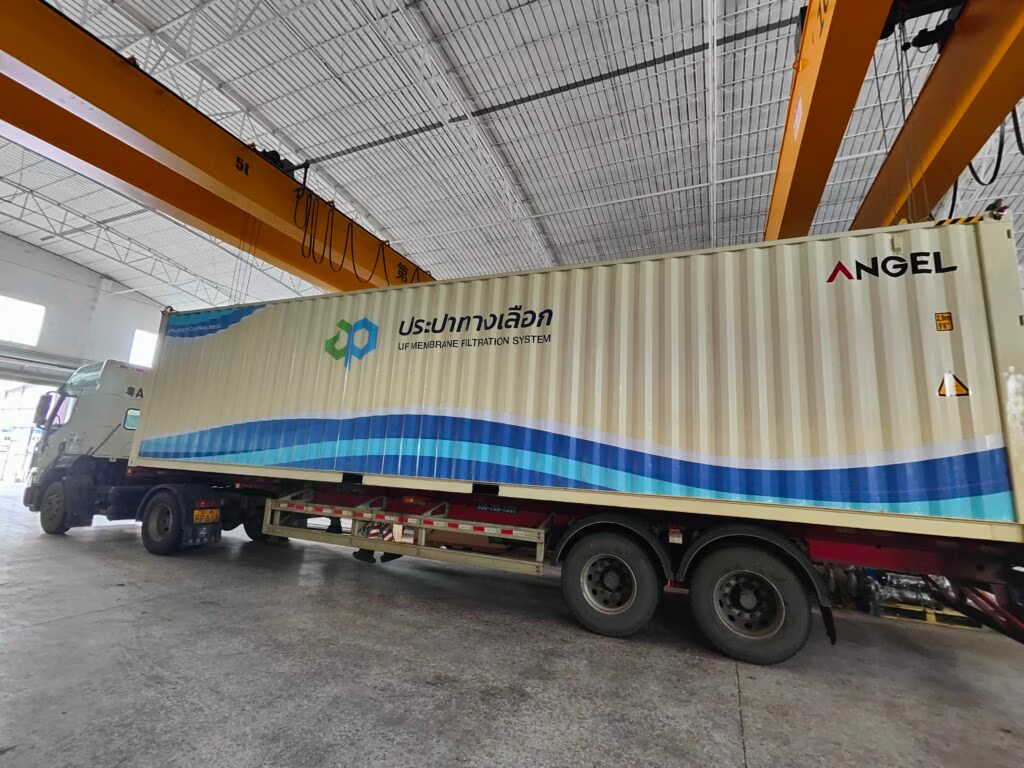
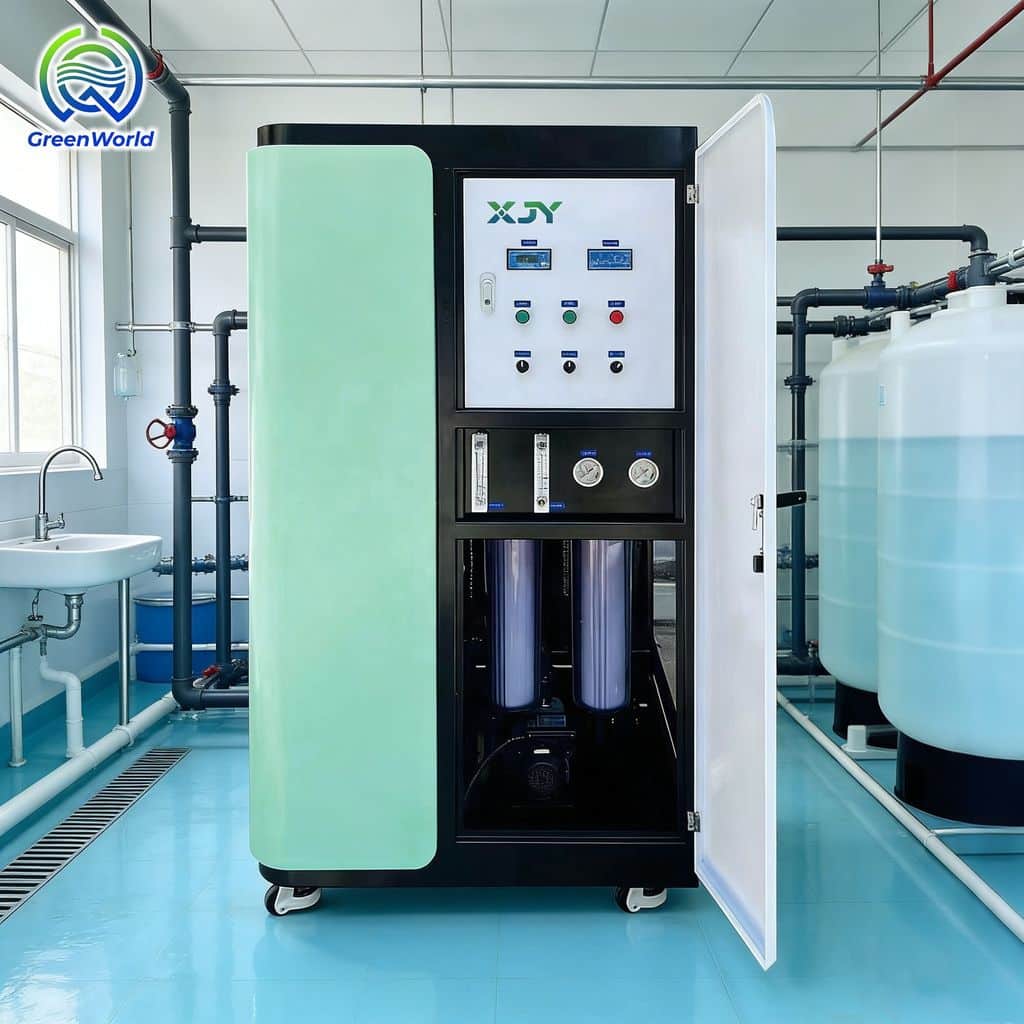
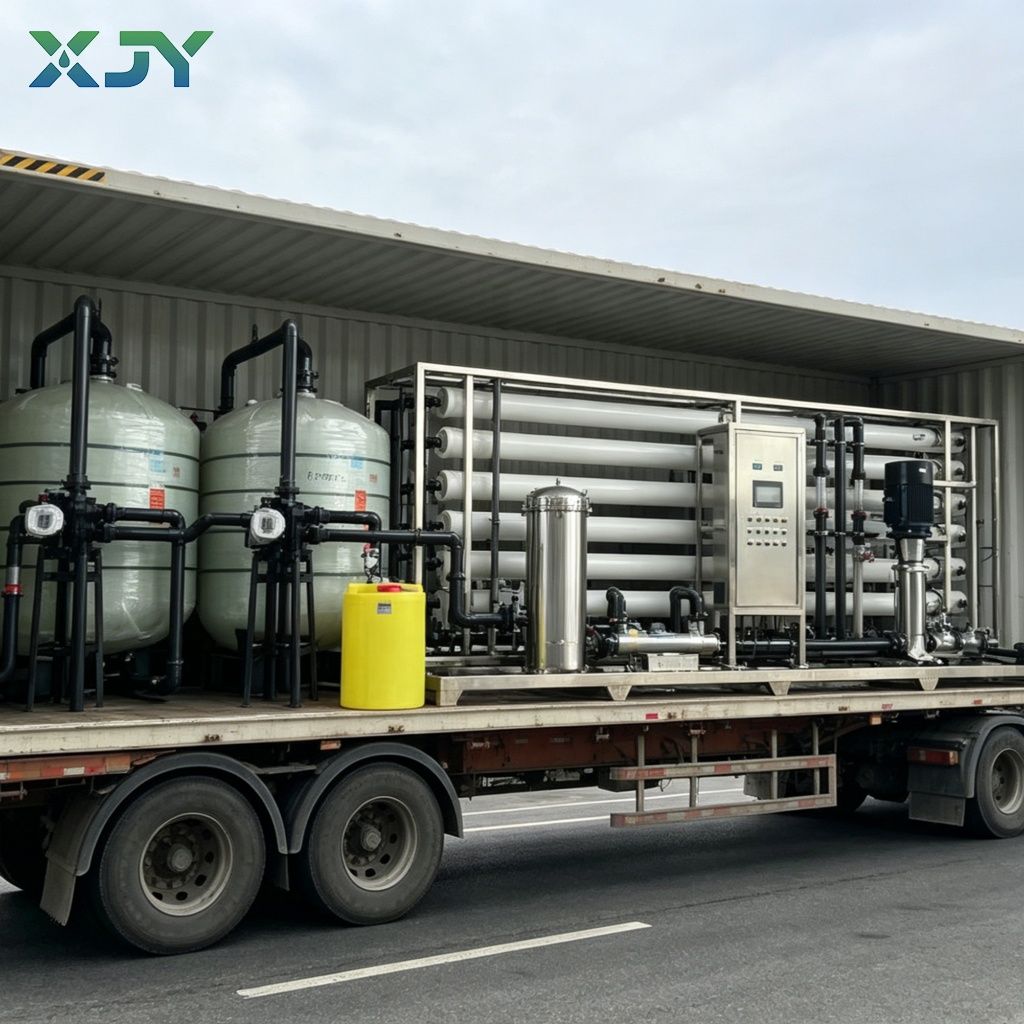
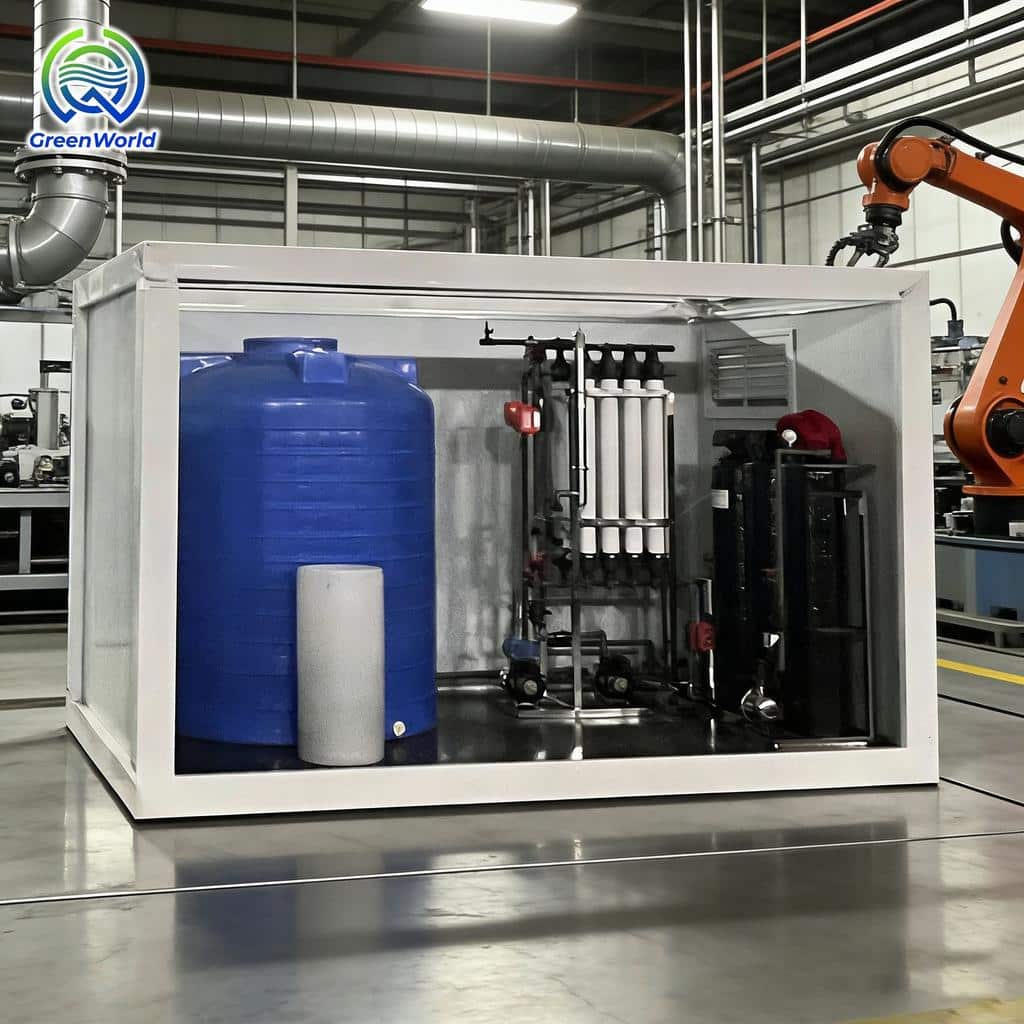
As the core equipment of integrated commercial reverse osmosis systems, the box type reverse osmosis machine overcomes the pain points of traditional water purification equipment, such as large footprint, cumbersome installation, immobility, and strong site limitations. Through its integrated modular box design, it centrally integrates the pretreatment system, reverse osmosis machine, control system, and piping system. Therefore, it requires no complex civil engineering construction, allowing for rapid deployment and flexible relocation, and is widely adaptable to various industrial production, commercial water supply, and emergency water purification scenarios. In summary, the box type commercial reverse osmosis machine is currently one of the most cost-effective water treatment devices in the industrial water treatment field. This article will focus on detailing the mainstream industrial application scenarios of the box reverse osmosis machine.
Commercial reverse osmosis scenario 1: High purity water
The electronics, semiconductor, and optoelectronic display industries have some of the highest requirements for industrial water quality. These industries encompass processes such as chip etching, wafer cleaning, circuit board production, and LCD panel manufacturing. Therefore, they have stringent standards for controlling the salt content, colloids, microorganisms, and heavy metal impurities in the water; even trace impurities can cause product defects and reduced yield.
A box type commercial reverse osmosis machine can efficiently filter over 99% of dissolved salts, suspended solids, organic matter, and microorganisms from raw water, producing stable pure water and providing a qualified pre-treatment water source for subsequent EDI (Electronic Dioxide) purification processes.
Compared to traditional stationary water purification equipment, the integrated box design offers stronger sealing, effectively isolating external dust and pollutants, ensuring consistent water quality. Simultaneously, the modular structure can adapt to the water supply needs of small and medium-sized electronics processing plants, laboratory pilot production, and large semiconductor industrial parks.

Commercial reverse osmosis scenario 2: Boiler feedwater and circulating water
Boiler feedwater and cooling circulating water systems in thermal power plants, new energy power plants, and distributed energy plants have extremely high requirements for water purification. Impurities such as calcium and magnesium ions and silicates in raw water can easily cause scaling and corrosion in boilers and pipes, reducing heat exchange efficiency, increasing energy consumption, and in severe cases, even posing equipment safety hazards. A box type commercial reverse osmosis machine can perform deep desalination and purification of surface water, groundwater, and plant tap water, effectively reducing water hardness and salinity, producing boiler feedwater that meets power industry standards.
Most power plant areas have compact equipment layouts and limited available space, and some remote power plants require temporary water supply or upgrades. The box reverse osmosis machine requires no dedicated civil engineering machine room. It can be put into use immediately after connecting to water and electricity, with a short installation cycle and strong relocation and reusability. At the same time, the equipment can operate stably for a long time, effectively optimizing the quality of circulating cooling water, reducing pipe scaling and equipment corrosion, and significantly reducing power plant operation and maintenance costs and equipment failure rates.
Commercial reverse osmosis scenario 3: Production water
The production water used in industries such as food and beverage, brewing, dairy products, and pre-processed food directly determines the taste, quality, and shelf life of products. Therefore, water safety is a core foundation of food production.
Odors, heavy metals, bacteria, and residual impurities in raw production water can directly affect product quality and even cause food safety issues. A box type commercial reverse osmosis machine can thoroughly filter out harmful impurities from water, retaining water molecules while removing contaminants, providing standardized production process water, cleaning water, and ingredient mixing water.
This box reverse osmosis machine is highly automated and can continuously produce water for 20 hours, meeting the large-scale, uninterrupted production water needs of food factories. Furthermore, the machine is detachable, allowing for easy replacement of reverse osmosis membranes and filter cartridges. Timely replacement of these components reduces the likelihood of bacterial growth, making it suitable for all categories of food processing scenarios, including bottled water, fruit juice beverages, liquor brewing, dairy processing, and food cleaning.
Commercial reverse osmosis scenario 4: Process water
In industries such as fine chemicals, coatings, new materials, and daily chemicals, stable purified water is required for production processes involving reactions, material dilution, and equipment cleaning. Simultaneously, the chemical industry experiences high water consumption and wastewater treatment pressure. Therefore, water conservation and reuse are crucial for cost reduction and efficiency improvement. The box type commercial reverse osmosis machine not only provides qualified process purified water for chemical production lines but can also be integrated with wastewater pretreatment systems to achieve wastewater recycling.
The box type reverse osmosis machine is highly adaptable, suitable for raw water of varying qualities. It maintains stable desalination effects even with high turbidity and high salinity industrial raw water, effectively reducing tap water intake costs and wastewater discharge pressure for enterprises. Furthermore, the equipment is compact, highly resistant to interference, mobile, water-saving, and emission-reducing, adaptable to the complex production environment of chemical plants.
Commercial reverse osmosis scenario 5: Emergency water supply
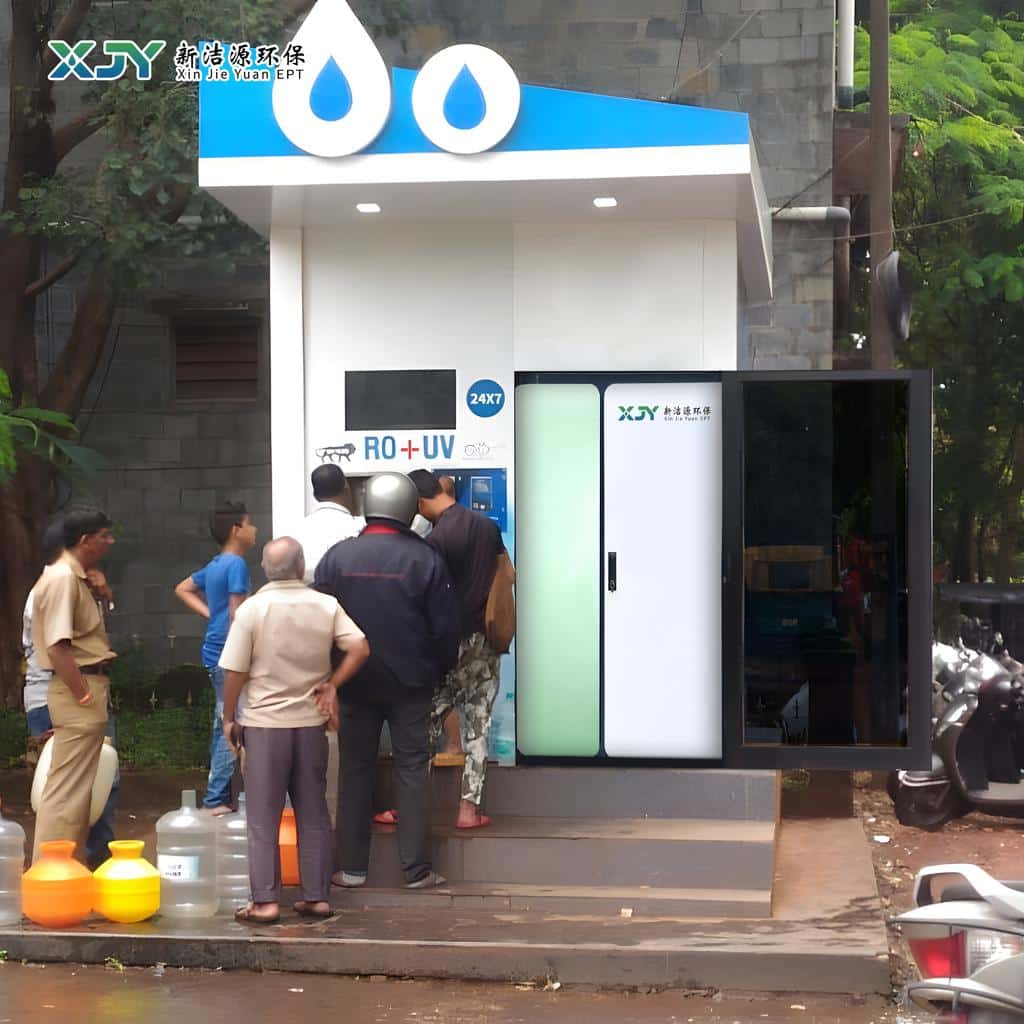
In scenarios such as mining, field engineering, construction sites, and remote factories, there are common problems including the lack of municipal water supply, complex water source quality, and high demand for temporary water supply. Traditional fixed water purification equipment is immobile, slow to deploy, and difficult to adapt to outdoor operation needs. The box type commercial reverse osmosis machine offers the advantages of mobility and all-weather operation. It can be directly placed in camps, mining areas, and field construction sites to purify river water, well water, and surface water on-site, producing compliant domestic and industrial water.
The box type reverse osmosis machine uses an SS304 stainless steel frame, providing a high level of protection and adapting to complex outdoor environments such as high and low temperatures and sandstorms. Its automated operation requires no dedicated personnel, perfectly solving the water supply problems of outdoor industrial operations. It can also be used for post-disaster emergency water purification and temporary expansion of factory water supply, with practicality and adaptability far exceeding traditional water purification equipment.
Summarize
The box type commercial reverse osmosis machine boasts core advantages such as integrated design, no civil engineering required, portability, stable water quality, and wide adaptability, covering all industrial scenarios including electronics, power, food, chemicals, and outdoor mining. It meets the high-standard water purification needs of large-scale production while also being suitable for temporary, mobile, and site-constrained special water supply scenarios. The International Water Association (IWA) highlights compact, modular RO systems as an increasingly important solution for space-limited industrial and commercial water treatment deployments.
If you are interested in this equipment, please contact us at any time for a quote.