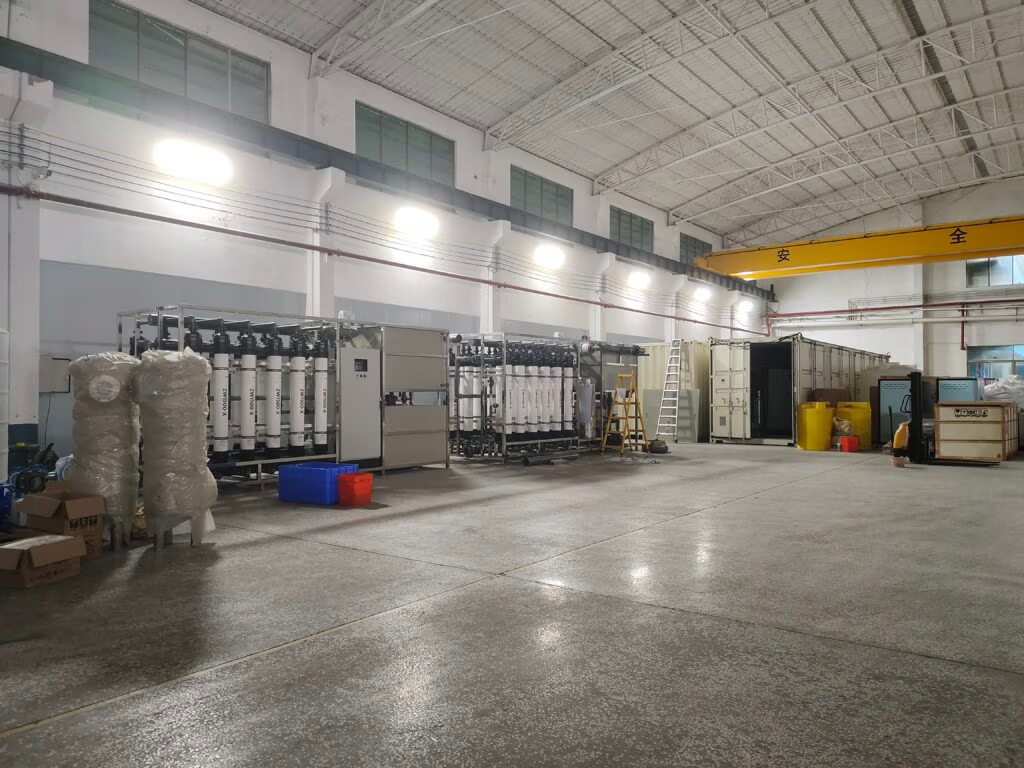
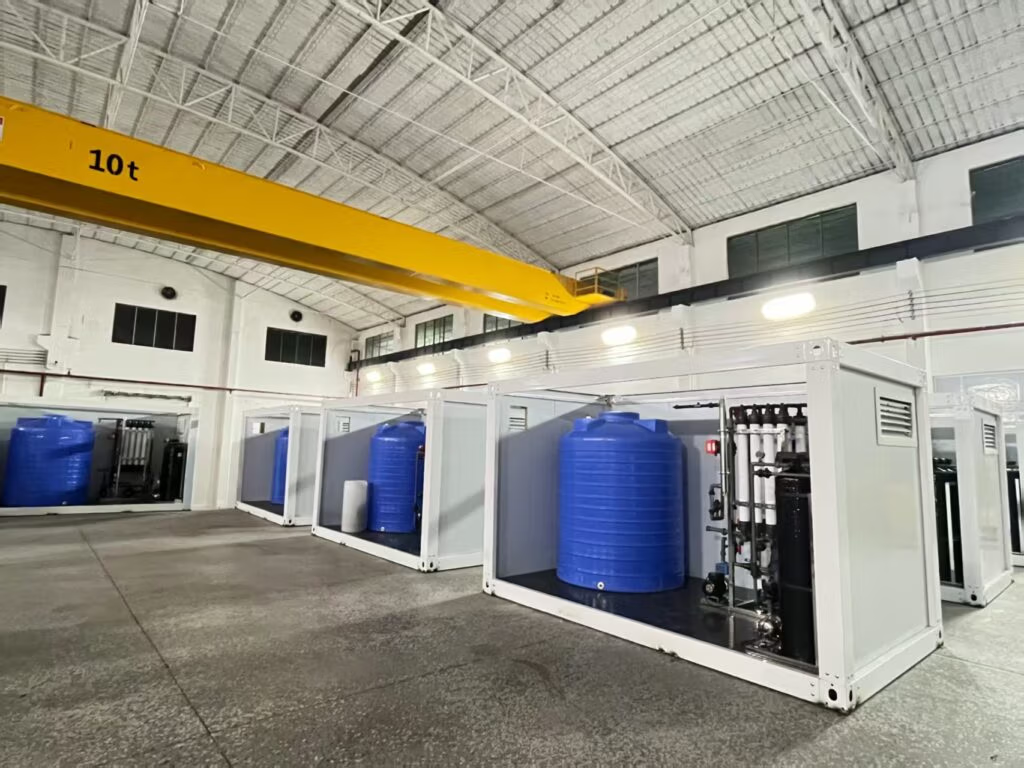
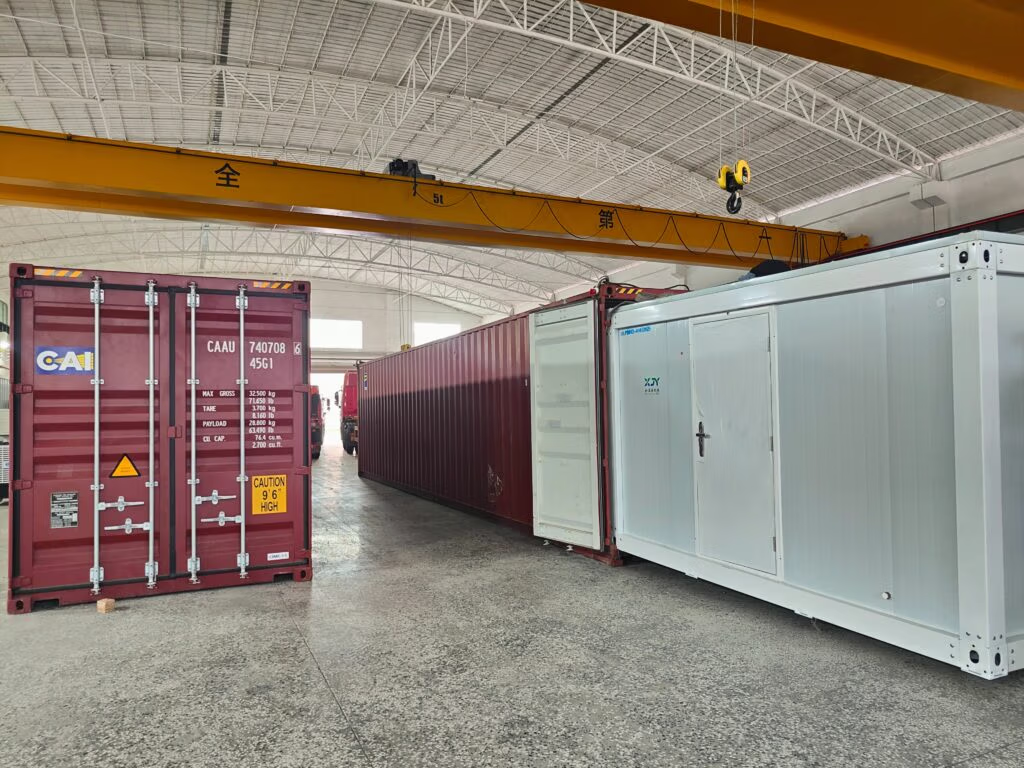
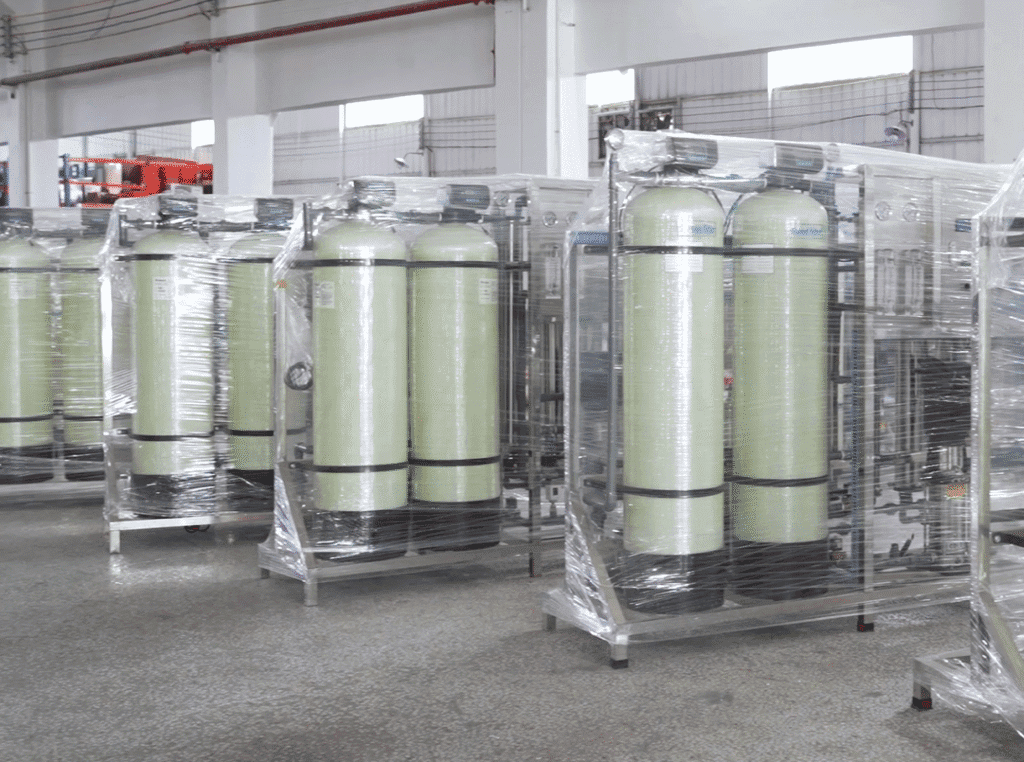
During industrial boiler operation, the quality of boiler feedwater directly affects equipment efficiency, steam quality, and boiler lifespan. The International Water Association (IWA) identifies high-purity boiler feedwater treatment as a critical application of industrial RO systems, directly impacting energy efficiency and equipment longevity. Especially in industries such as food, chemicals, power, pharmaceuticals, and textiles, high-quality boiler feedwater has become a crucial factor for stable production. Therefore, an increasing number of companies are adopting water system reverse osmosis equipment as a boiler feedwater pretreatment solution.
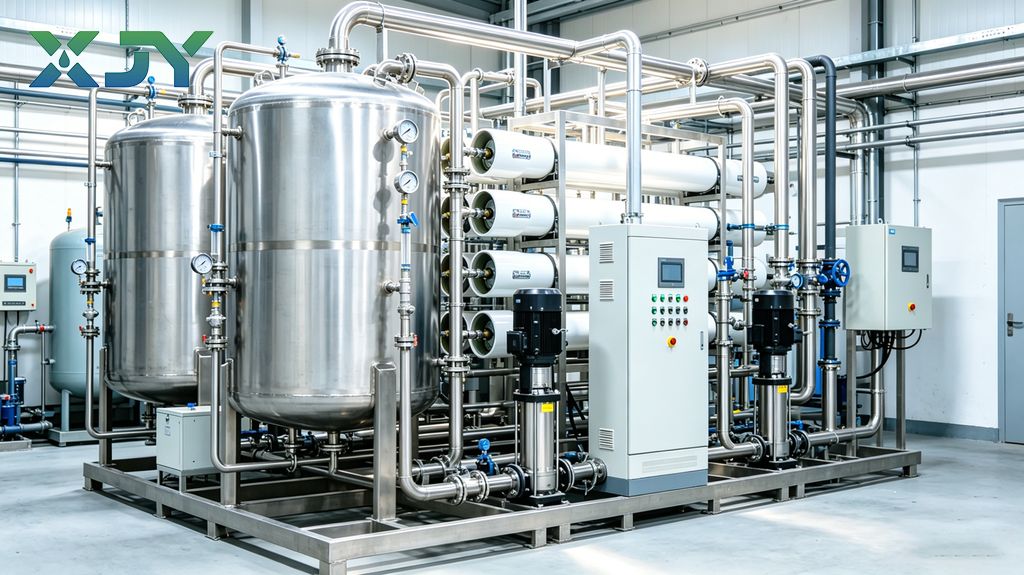
However, many people focus solely on equipment price when choosing a reverse osmosis system, neglecting factors such as water quality, recovery rate, operating costs, and ongoing maintenance. As a result, some of these factors can lead to severe membrane fouling, boiler scaling, increased energy consumption, and even disrupt the stable operation of the entire production line.
This article will detail how to choose the right water system reverse osmosis for boiler feed water and the key considerations during the selection process.
Why is water system reverse osmosis required for boiler feedwater?
Because boilers have very strict requirements for water quality during long-term operation. If the raw water contains excessive levels of:
- Calcium magnesium hardness
- Silicon
- Chloride ions
- Iron and manganese
- Total dissolved solids
- Organic matter
These impurities can form scale, corrosion, and deposits inside the boiler, reducing heat exchange efficiency, increasing fuel consumption, and in severe cases, even causing boiler tube rupture.
Therefore, we need to properly treat these impurities to ensure the quality of boiler feedwater. So how do we obtain pure feedwater? Industrial water system reverse osmosis uses semi-permeable membrane technology to remove over 97% of dissolved salts and impurities, thus providing boilers with a stable supply of high-purity water. Currently, RO has become an important component of water treatment for high-pressure boilers and steam systems.
Parameters to know when selecting a boiler for water system reverse osmosis
1. Raw water quality analysis
The quality of groundwater, tap water, and surface water varies greatly between different countries and regions. Therefore, when purchasing equipment, it is best to conduct a complete water quality test, including:
- TDS
- Hardness
- SDI
- Iron
- Manganese
- Silicon
- pH
- Chloride ion
- COD
Reverse osmosis membranes have relatively high requirements for feed water quality; for example, the SDI value generally needs to be below 3, otherwise the membrane element is easily clogged.
If the raw water contains a high amount of iron or manganese, we will need to add a pretreatment system, for example:
- Multi-media filter
- Activated carbon filter
- Softener
- Ultrafiltration system
If the pretreatment system is configured properly, the lifespan of the reverse osmosis membrane will be significantly increased.
2. Boiler pressure rating
Different boiler pressures have different water quality requirements. Generally speaking:
| Boiler type | Water quality requirements |
| Low-pressure boiler | Softening + RO is sufficient |
| Medium pressure boiler | RO+EDI is more stable |
| High-pressure boiler | Dual-stage RO + EDI |
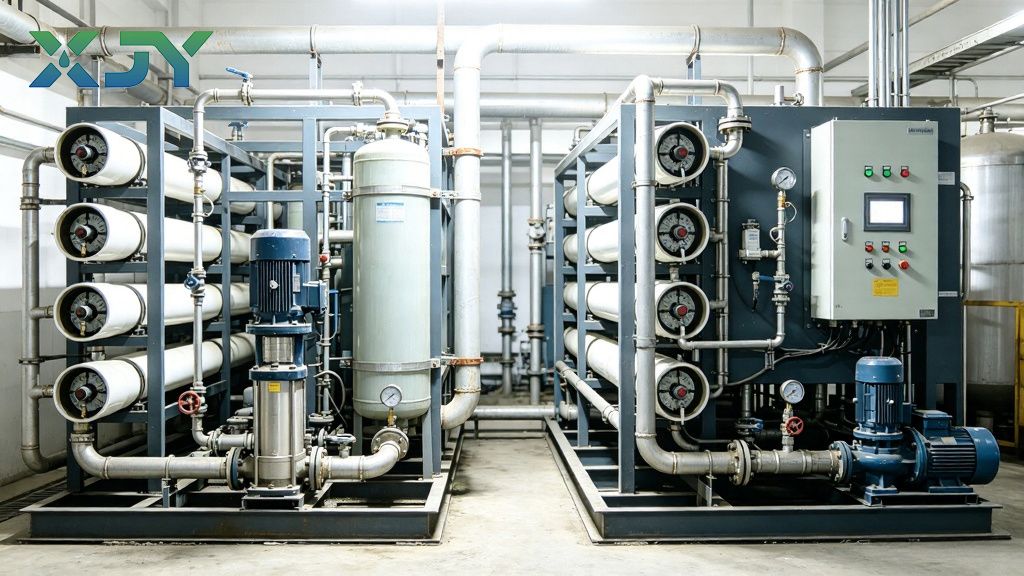
High-pressure boilers have higher requirements for silicon content and conductivity, so single-stage RO systems often cannot meet these requirements. We can selectively add an EDI module. Adding this module can remove almost all salt impurities such as calcium, magnesium, sodium, chloride, sulfate, and carbonate from the water, eliminating the need for acid/alkali regeneration and achieving ultrapure water standards above 15 MΩ·cm.
3. Water production capacity of the reverse osmosis equipment
When selecting a reverse osmosis system, we need to consider the following factors:
- Current boiler makeup water
- Peak water consumption
- Continuous operating time
- Recovery rate
If the water system reverse osmosis is designed to be too small, it may lead to:
- Insufficient water pressure
- Boiler water shortage
- Equipment operating at full load for extended periods
If the system is designed to be too large, it will increase investment and operating costs. Therefore, proper traffic matching is crucial.
4. Cost of water system reverse osmosis equipment
When purchasing equipment, we need to consider not only the price but also the long-term operating costs. The cost of the equipment generally lies in the selection of reverse osmosis membranes, pretreatment systems, and control system components. Long-term operating costs include electricity consumption, chemical and membrane replacement, labor maintenance, and downtime losses.
While a high-quality reverse osmosis system may have a higher initial investment, it offers more stable long-term operation, resulting in a lower overall cost. For reverse osmosis membranes, brands like Dow, Hydranautics, Toray, and Vontron are good options. For high-pressure pumps and raw water pumps, brands like Lingxiao, CNP, and Grundfos are suitable choices.
Common problems with boiler water system reverse osmosis
1. Recovery rate
Many people mistakenly believe that a higher reverse osmosis recovery rate means more water savings, but a higher recovery rate is not necessarily better. Blindly and deliberately increasing the recovery rate can easily lead to scaling on the concentrate side, membrane element fouling, and increased system pressure differential, thus significantly shortening the RO membrane’s lifespan. For boiler-specific water system reverse osmosis equipment, a reasonable recovery rate is generally recommended to be controlled between 65% and 80%. The specific value cannot be arbitrarily set and must be determined based on a comprehensive calculation considering factors such as raw water hardness, silica content, water temperature, and membrane type.
2. Incomplete component configuration
Insufficient pretreatment, lacking softening, activated carbon, and precision filtration processes, can easily lead to excessive levels of suspended solids, hardness, and residual chlorine in the influent. Residual chlorine can oxidize and damage the membrane layer, high hardness easily causes scaling, and sediment and impurities can scratch and clog membrane elements, resulting in frequent membrane fouling and scaling, leading to problems such as decreased permeate flow, reduced desalination rate, and increased pressure differential.
Furthermore, improperly selected high-pressure pumps without frequency conversion control will result in high energy consumption, large water pressure fluctuations, and impact damage to membrane elements. Substandard materials can also cause corrosion and secondary pollution of the influent.
3. Improper application of pesticides
Excessive or insufficient dosage of scale inhibitors and reducing agents, or incorrect dosing points, can lead to either poor scale prevention or microbial growth in the agents, resulting in biofilm contamination.
4. Lack of routine operation and maintenance
Failure to flush on time, test water quality, or record pressure and flow parameters can lead to the accumulation of minor problems into severe clogging, necessitating the premature replacement of the entire batch of membranes and increasing operating costs.
Summarize
For industrial boiler systems, selecting the appropriate water system reverse osmosis not only affects boiler operating efficiency but also directly impacts energy costs and equipment lifespan. During the selection process, we should not only focus on equipment price but also consider a comprehensive approach:
- Raw water quality
- Boiler pressure
- RO membrane performance
- Recovery rate
- Automation level
- Post-operation costs
Only through proper design and scientific selection can the long-term stable operation of a boiler system be truly achieved. If you need this type of equipment, please feel free to contact us for a quote.