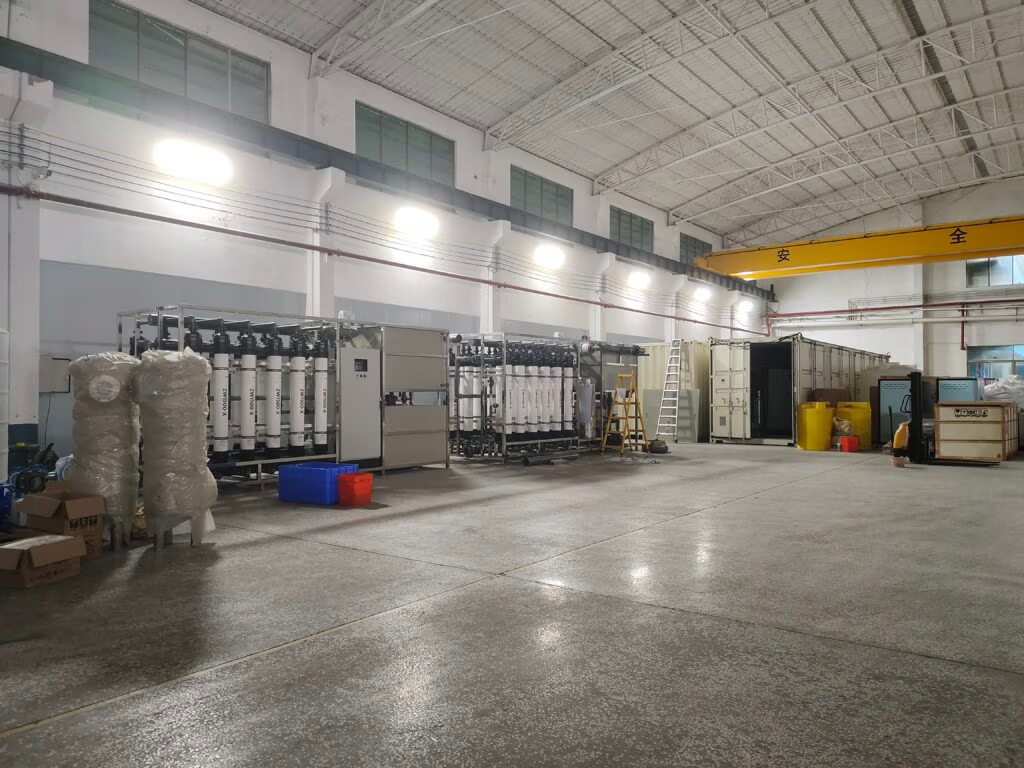
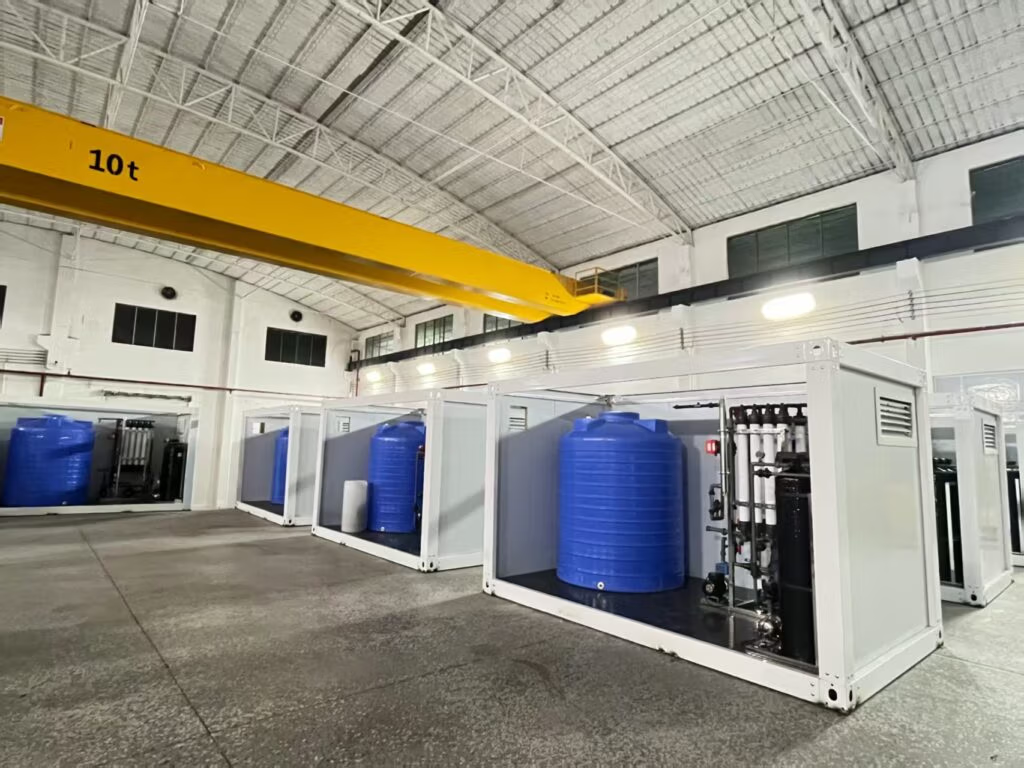
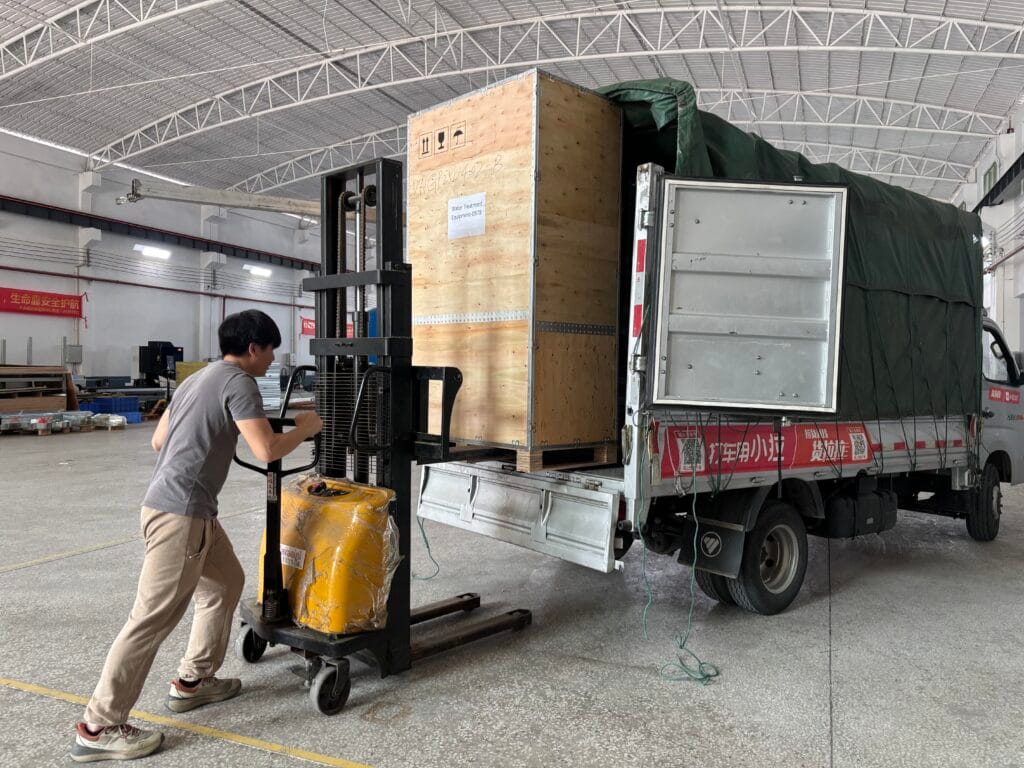
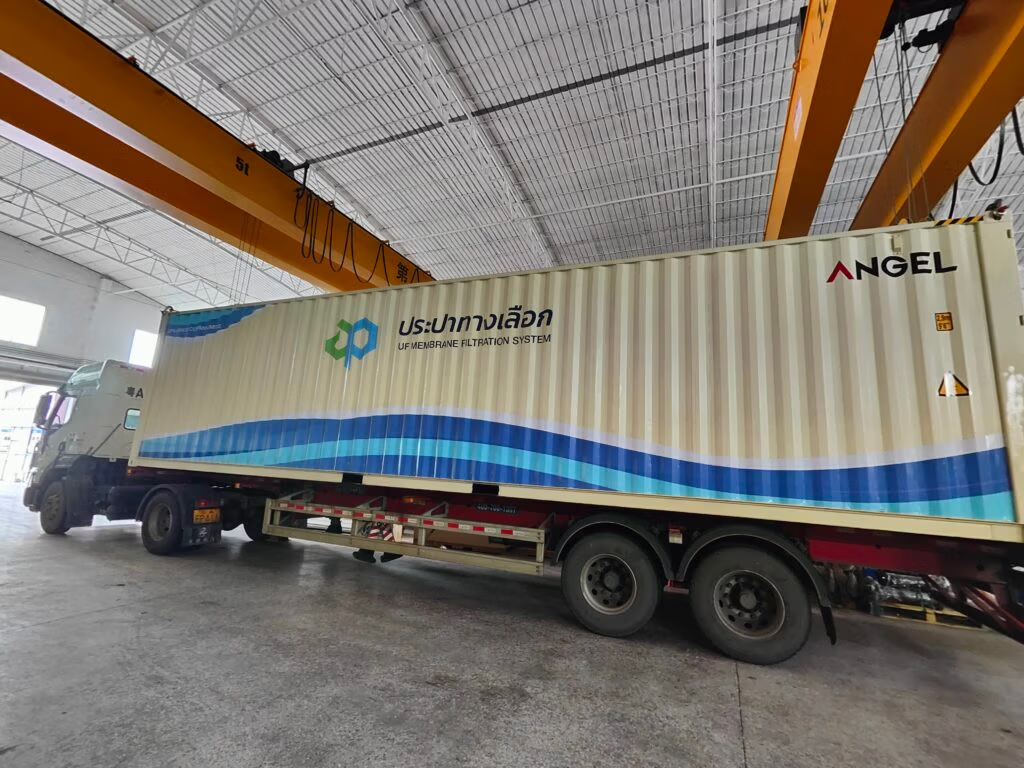
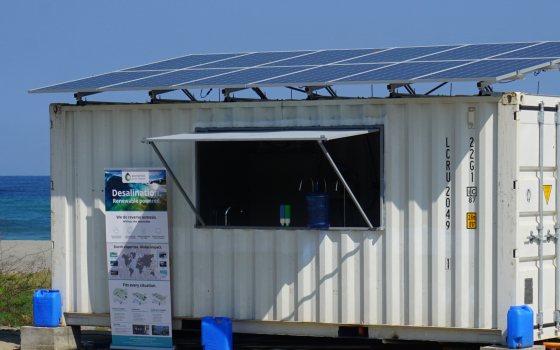
Containerized solar seawater desalination machine is independent of fossil fuels, reducing carbon emissions. It seamlessly combines the clean properties of solar energy with the portability of containers. Thus, provide a mobile, low-cost, zero-emission water treatment solution for islands, remote areas, and emergency scenarios, addressing water scarcity.
How does solar seawater desalination machine work?
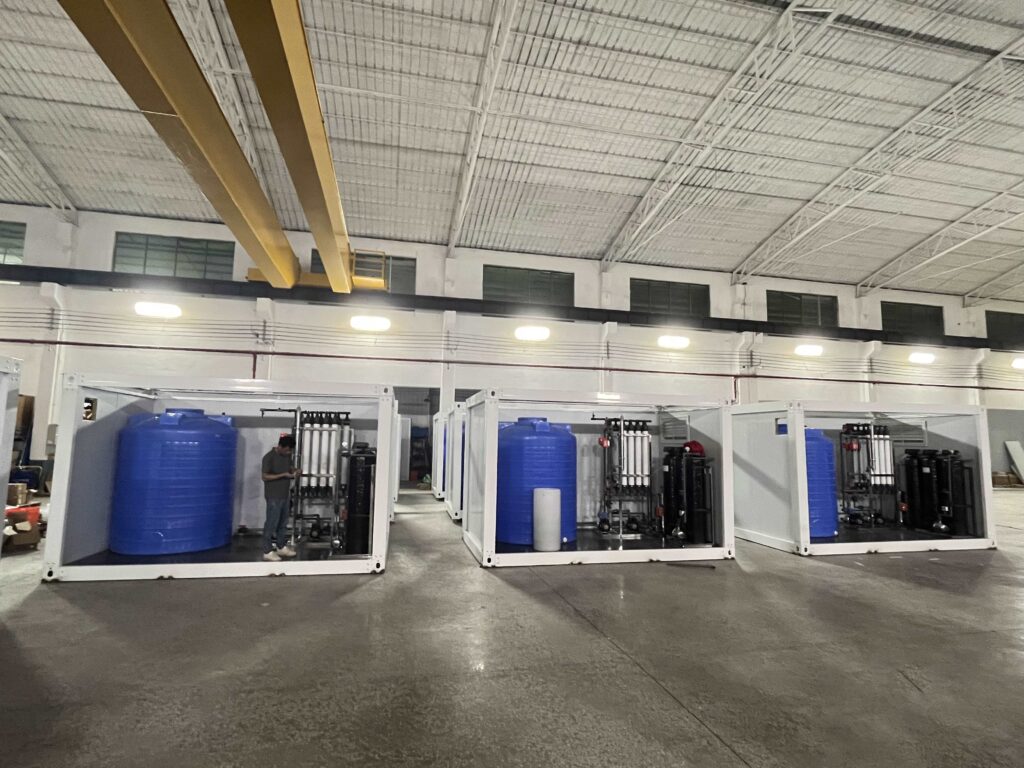
It integrates mature seawater desalination technology and solar energy utilization technology into a standardized container. So it realizes “ready to load and transport, ready to use upon arrival”.
1. Solar energy supply system
We actually deploy high-efficiency photovoltaic panels. It can convert solar energy into electricity, providing power for seawater extraction, pretreatment, desalination and separation.
2. Modular desalination processing unit
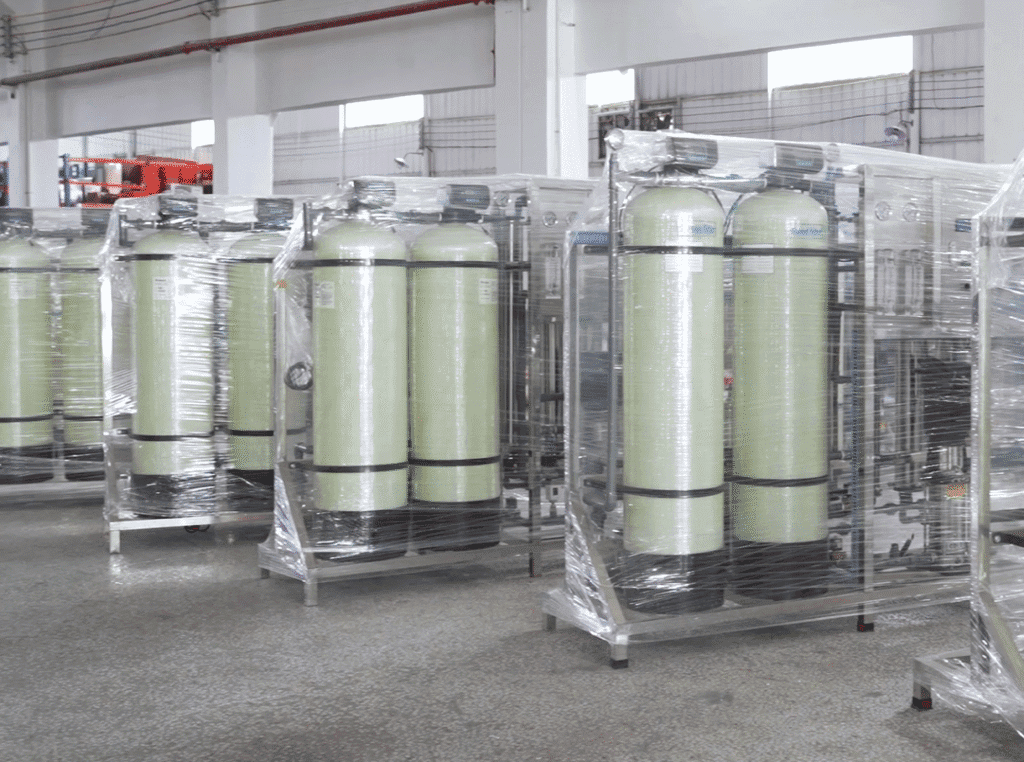
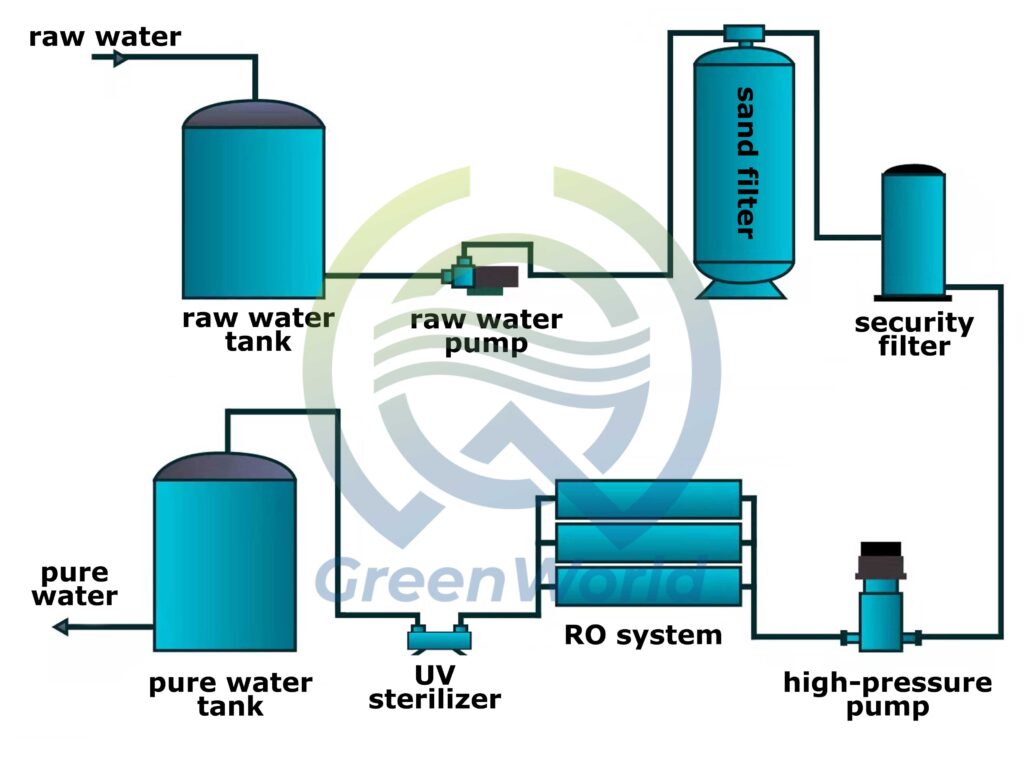
The container integrates three major water treatment links: pretreatment, core desalination, and post-treatment.
- In the pretreatment stage, filtration and sedimentation remove impurities such as silt and plankton from seawater to prevent equipment clogging.
- Reverse osmosis lies at the core of desalination technology, where solar energy drives a high-pressure pump to push seawater through a semi-permeable membrane. membrane, while retaining salt ions and impurities and separating them into fresh water.
- The post-processing stage involves disinfection and mineral adjustment to ensure that the output water meets the standards for drinking water or industrial water.
3.Container integration and intelligent control
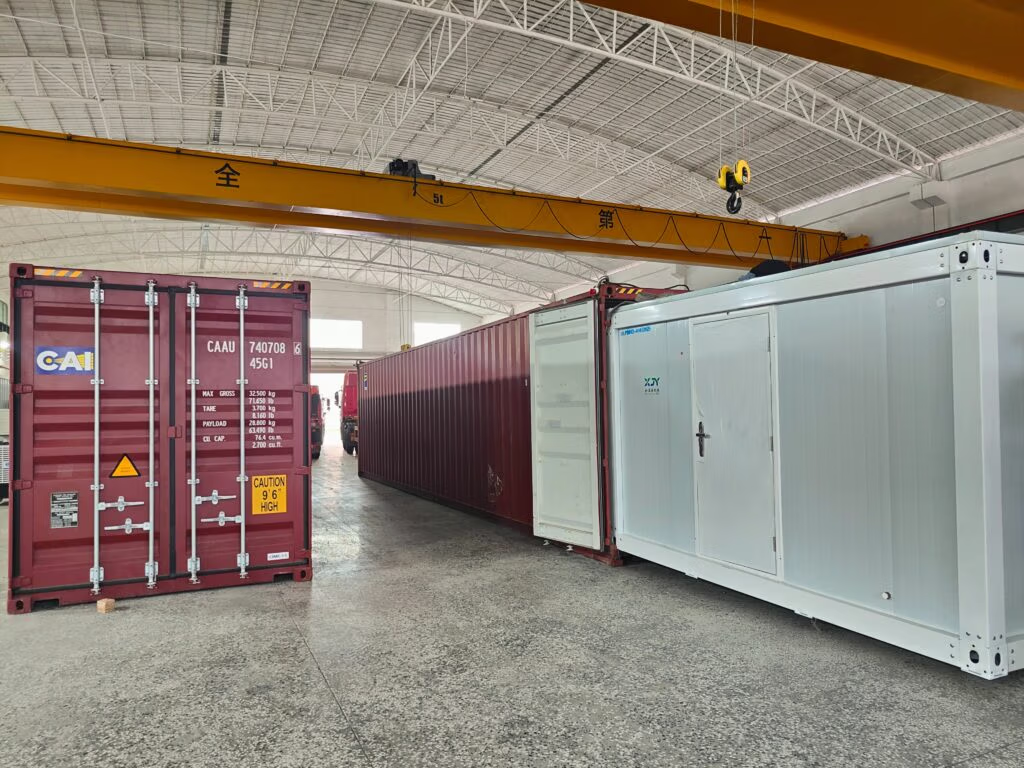
Taking a 20-foot standard container as the carrier, we prefabricate and install the equipment’s components, piping, and control system. It also has an intelligent monitoring platform that can monitor data such as water production, water quality, and energy consumption in real time.
What is the difference between solar seawater desalination machine?
Compared with ordinary, traditional seawater desalination equipment, containerized, solar-powered seawater desalination equipment has more advantages.
1. Flexibility:
The container design allows ships, trucks, and railways to transport it easily, and after landing, it only requires simple debugging before being put into production.
2. Zero carbon and environmental protection:
The entire process relies on solar power supply, consumes no fossil energy, and produces no greenhouse gases or wastewater emissions.
3. High adaptability:
There is no need to lay a power grid, and the water output of the equipment can be flexibly configured according to demand (from several tons to tens of tons per day).
4. Stable and reliable:
The failure of a single component does not affect the overall operation, and the energy storage system ensures continuous water supply under complex climatic conditions.
Where can solar desalination machine be used?
Conventional, traditional seawater desalination machine can replenish domestic water for residents in coastal cities, supply water to island residents and tourist areas, and provide water for coastal factories with high water consumption and specific water quality requirements. However, we can also use containerized solar seawater desalination equipment in the following areas.
- Emergency relief: After natural disasters such as earthquakes, floods, and tsunamis, quickly deploy equipment to provide clean drinking water to affected people.
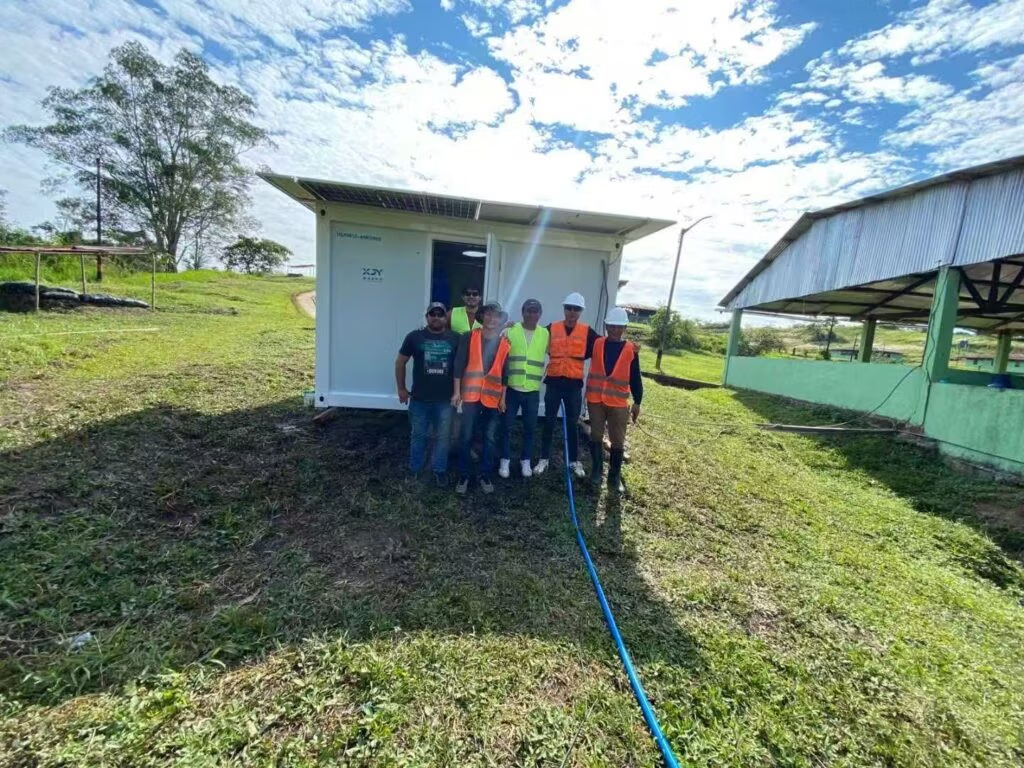
- Agricultural water supply in arid areas: Provide low-cost fresh water for marine aquaculture bases and desert agricultural areas. For example, desert photovoltaic power stations equipped with this device can meet the water needs of power station operation and maintenance and surrounding irrigation.
Summarize
In the future, as photovoltaic module technology and efficiency improve and membrane material costs will decrease. And the cost-effectiveness of containerized solar desalination equipment will continue to improve. For example, the water output of a single unit can be increased to meet larger water demands. We can expand the application scenarios of this machine. For example integrating with seawater hydrogen production and salt chemical industries to create an integrated “water resources – energy – chemical” circular economy model.
If you need this type of water treatment equipment, please feel free to contact us.