Electrodeionization technology integrates the core advantages of ion exchange and electrodialysis, breaking through many limitations of traditional treatment processes. It is now widely used in many key scenarios such as medical ultrapure water preparation, medical consumables treatment, and clinical testing assistance.
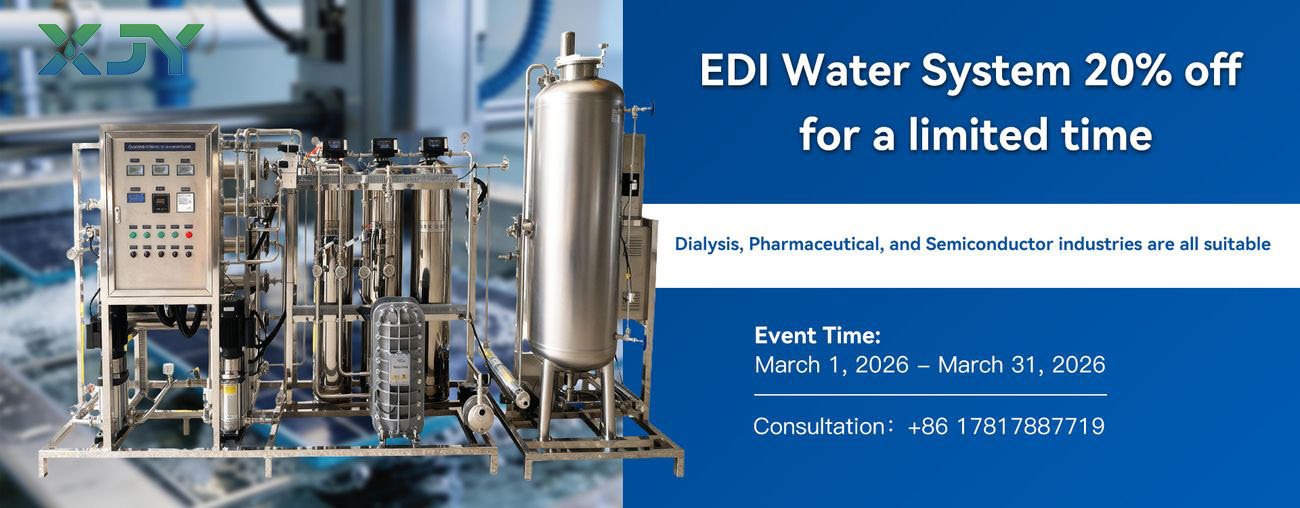
This article will focus on exploring the specific application paths of electrodeionization technology in the medical field, interpreting its core value and practical significance, and looking forward to its future development trends.
Working principle and advantages of Electrodeionization technology
First, we need to understand the core working principle and advantages of EDI technology. Unlike traditional ion exchange methods that require chemical reagents for regeneration, electrodeionization technology, through the synergistic operation of ion exchange resin and ion exchange membrane, completes the entire process of continuous adsorption, migration, and separation of ions in water under the drive of a DC electric field. This process does not require the addition of acid or alkali regeneration agents, eliminating chemical pollution at the source, perfectly aligning with the medical industry’s core requirements of “green, environmentally friendly, safe, and residue-free.”
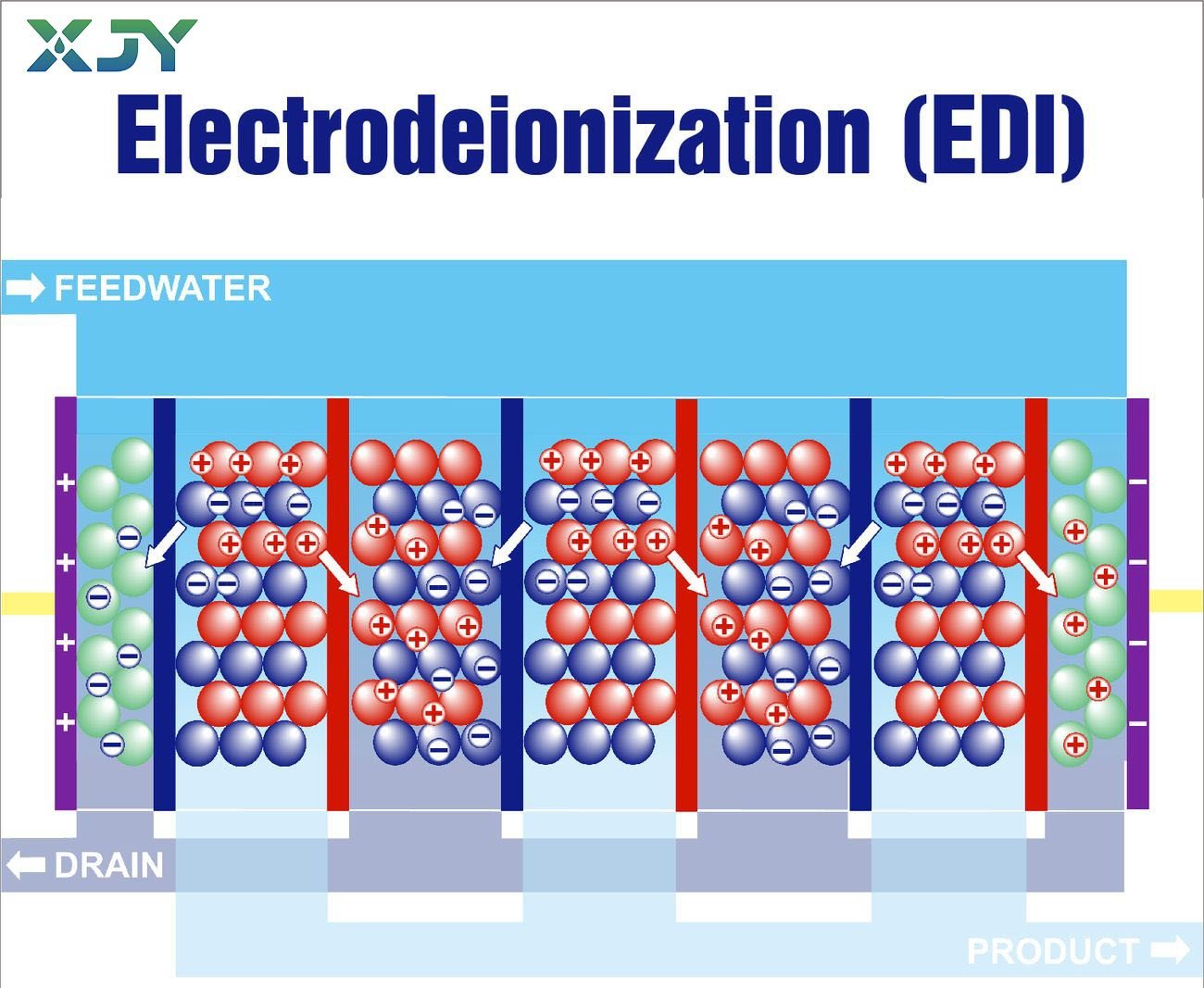
Working principle
The EDI module is internally equipped with cation exchange membranes and anion exchange membranes. The module can be divided into three regions: a desalination chamber, a concentrate chamber, and an electrode chamber. The desalination chamber is filled with ion exchange resin. When raw water flows through the desalination chamber, the resin adsorbs the cations and anions in the water. Under the influence of a DC electric field, these ions detach from the resin and migrate through their corresponding cation and anion exchange membranes to the concentrate chamber, ultimately achieving efficient separation of desalination and ions, thus producing high-purity water.
Core advantages
Compared to traditional water treatment technologies, electrodeionization technology boasts three core advantages, making it better suited to meet the stringent standards of the medical industry.
First, it provides stable water purity, continuously producing ultrapure water with a resistivity of at least 18.2 MΩ·cm. This ultrapure water meets the extremely high water quality requirements of the medical field, with minimal fluctuations in effluent quality. Therefore, it effectively prevents interference with various medical processes due to unstable water quality.
Second, it is green and efficient, requiring no chemical regeneration, reducing the discharge of acidic and alkaline wastewater and lowering related environmental treatment costs. Furthermore, the high level of automation reduces manual operation, significantly improving water treatment efficiency.
Third, it has a long service life. The ion exchange resin can self-regenerate under the influence of an electric field, eliminating the need for frequent replacements and resulting in lower maintenance costs, making it suitable for the long-term stable operation needs of medical institutions.
These advantages lay a solid foundation for the widespread adoption of EDI technology in the medical field.
What are the applications of Electrodeionization technology in different fields?
Medical field
Medical-grade purified water preparation is the core and most widely applied area of EDI system.
The medical industry’s need for purified water spans multiple stages, including diagnosis, pharmaceutical manufacturing, and consumable disposal. Different stages have varying water quality standards, and EDI technology can flexibly adjust to meet specific needs, achieving precise water supply.
In clinical diagnosis, ultrapure water is primarily used for critical procedures such as endoscope cleaning and disinfection, surgical instrument rinsing, and hemodialysis. For example, endoscopy is a common method for diagnosing and treating diseases of the digestive and urinary systems. If the cleaning water contains impurities or ions, it can easily lead to residual contaminants on the endoscope, potentially causing cross-infection. Ultrapure water prepared using electrodeionization technology can thoroughly remove ions, microorganisms, and particulate matter from the water, ensuring that endoscope cleaning and disinfection meet standards and reducing the risk of infection.
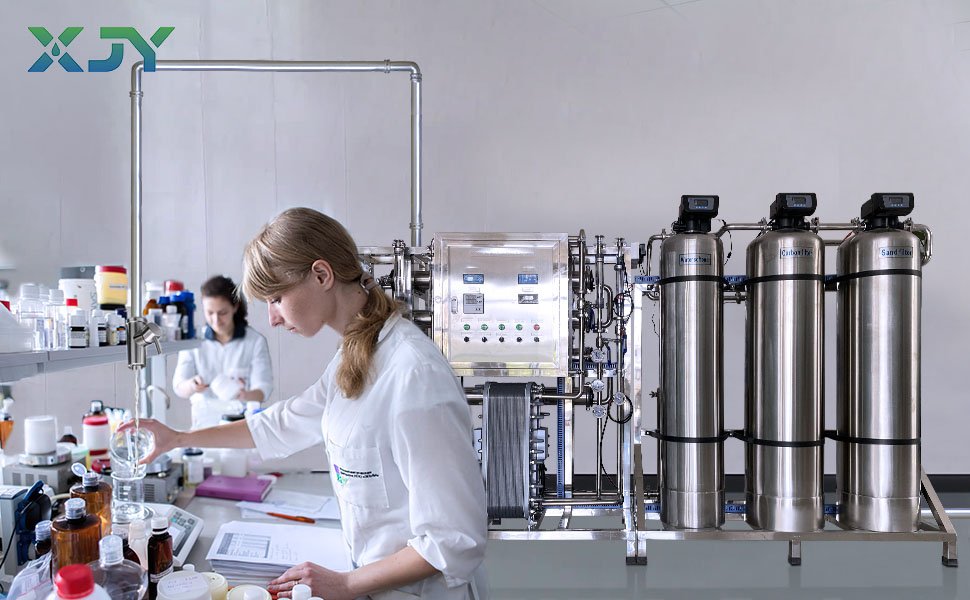
In hemodialysis treatment, patients need to pass through dialysis equipment multiple times a week to remove toxins from their blood. The purity of the dialysis water directly affects the treatment effect and the patient’s safety. Ultrapure water produced by EDI technology can prevent harmful ions in the water from entering the patient’s blood, reduce the occurrence of complications, and ensure the safety of hemodialysis treatment.
Drug preparation
In the field of pharmaceutical manufacturing, EDI technology also plays an irreplaceable and crucial role.
Throughout the pharmaceutical production process, whether it’s the synthesis of active pharmaceutical ingredients, the formulation of preparations, or the production of injectable drugs, large quantities of high-purity water are required as solvents or cleaning water. The purity of this water directly determines the efficacy and safety of the drug. Traditional pure water preparation techniques struggle to completely remove trace impurities from the water, easily leading to substandard drug purity. electrodeionization technology, however, effectively removes harmful components such as heavy metal ions, organic matter, and microorganisms from water, producing pharmaceutical-grade pure water that meets standards.
For example, in the production of high-end pharmaceuticals such as antibiotics and biologics, ultrapure water prepared using EDI system prevents impurities from damaging the active ingredients, enhancing drug efficacy, and reducing adverse drug reactions, thus providing strong assurance for the safety of drug production.
Future development trends
While electrodeionization technology has achieved significant results, it still faces some practical challenges, such as reliance on imported core components for high-end EDI equipment, high equipment maintenance costs, and insufficient understanding of EDI machine among some primary healthcare institutions.
To address these issues, collaborative efforts from the government, enterprises, and medical institutions are needed to increase investment in technological research and development, overcome core technological bottlenecks, and reduce equipment production costs.
With continuous technological advancements, EDI technology will contribute even more to the green and sustainable development of the healthcare industry.