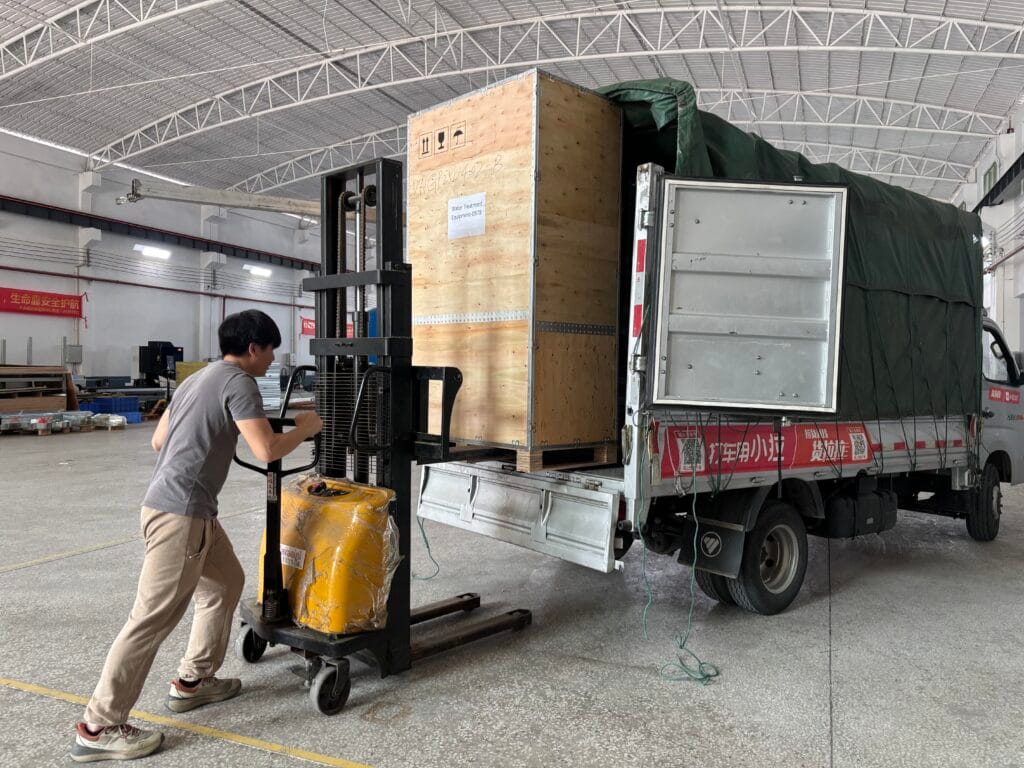
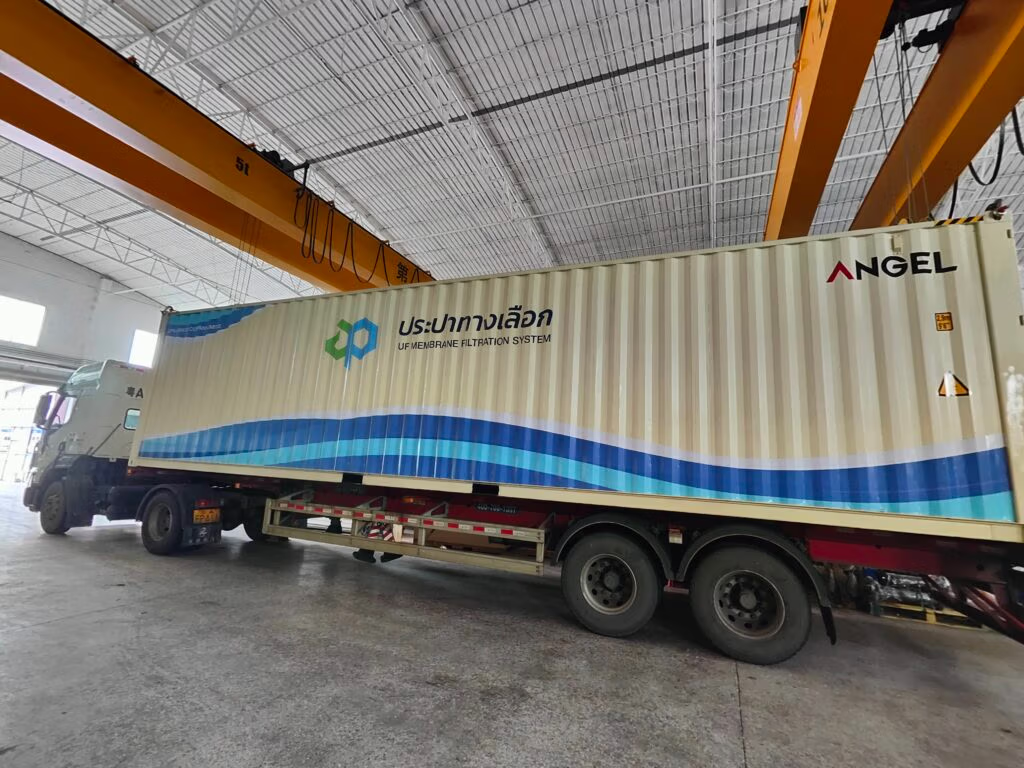
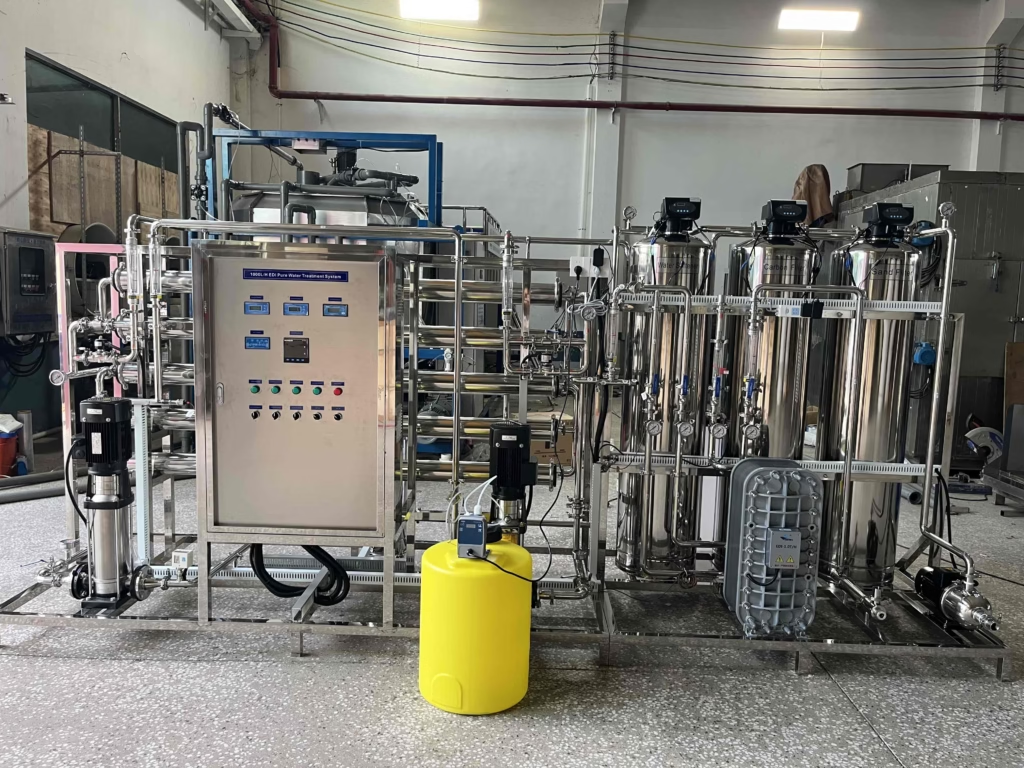
Bei der Reinstwasserfiltration wird eine Reihe physikalischer und chemischer Verfahren eingesetzt, um Verunreinigungen wie Schwebeteilchen, Kolloide, gelöste Ionen, organische Stoffe und Mikroorganismen aus dem Wasser zu entfernen und so extrem hohe Reinheitsstandards zu erreichen. Das so gewonnene Reinwasser erfüllt die Anforderungen der Präzisionsfertigung, der anspruchsvollen Chemietechnik, der Biomedizin und anderer Anwendungen, die extrem niedrige Verunreinigungsgrade erfordern.
Welcher Grad der Reinstwasserfiltration ist erforderlich?
Widerstandsfähigkeit:
Reinstwasser erfordert in der Regel einen spezifischen Widerstand von 18,2 MΩ-cm (25°C). Bei dieser Temperatur ist die Ionenkonzentration im Wasser extrem niedrig. Damit nähert es sich dem Niveau von theoretisch reinem Wasser.
Organischer Gesamtkohlenstoff (TOC):
Für Reinstwasser ist im Allgemeinen ein TOC-Wert von unter 5 ppb erforderlich (weniger als 1 ppb bei einigen Halbleiteranwendungen).
Partikelgehalt:
Wir müssen die Anzahl der Partikel ≥0,1 μm auf weniger als 10 pro Milliliter kontrollieren. Um zu verhindern, dass winzige Partikel an den Oberflächen von Präzisionsbauteilen haften bleiben und die Leistung beeinträchtigen.
Mikrobieller Inhalt:
Das Reinstwasser muss steril sein (Gesamtkoloniezahl <1 KBE/ml).
Wie funktioniert die Reinstwasserfiltration?
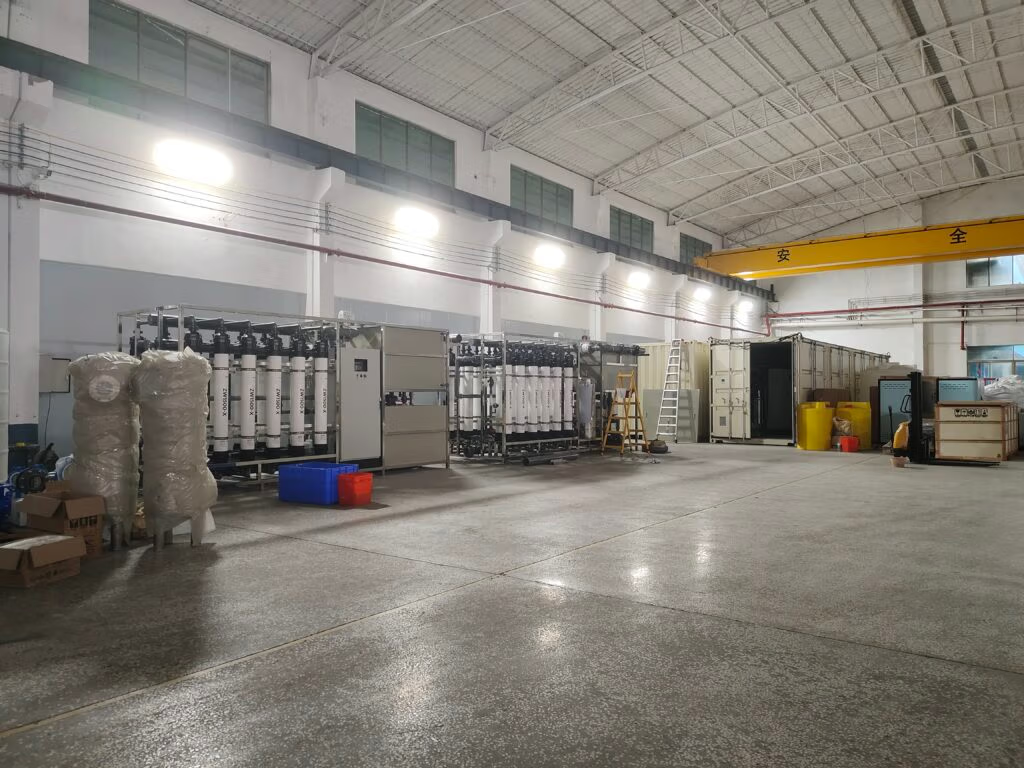
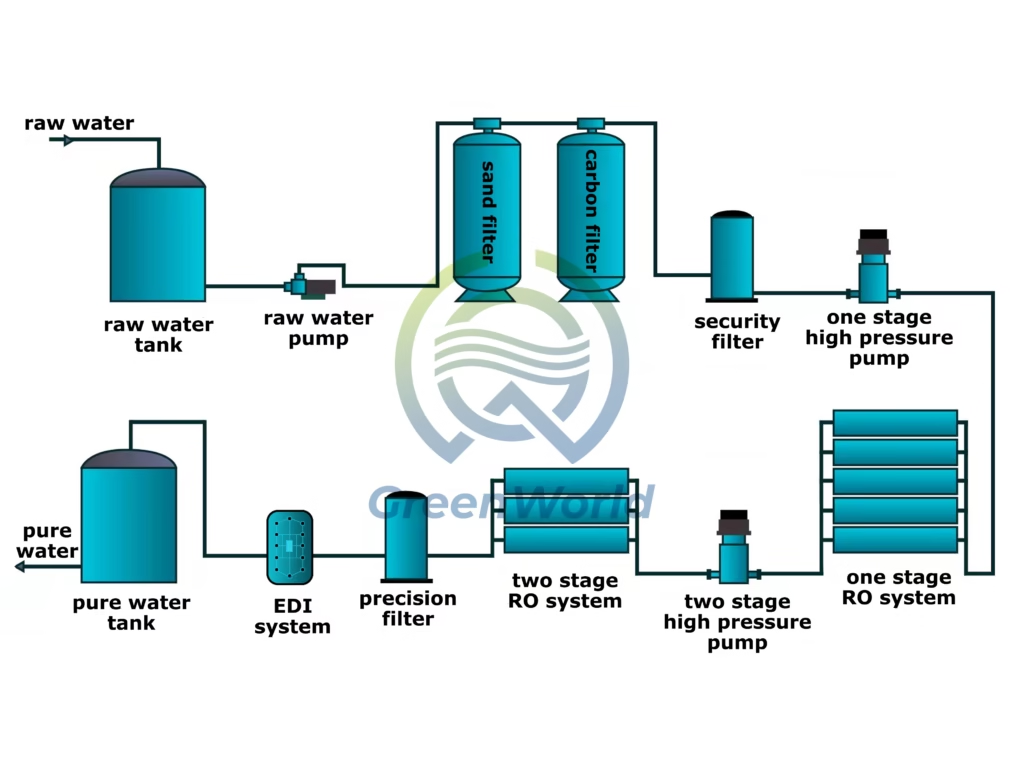
Wir können den Reinigungsprozess unterteilen in EDI-System in fünf Stufen. Dazu gehören die Vorbehandlung, die primäre Umkehrosmosebehandlung, die sekundäre Umkehrosmosebehandlung, die tiefe EDI-Behandlung und die Qualitätssicherung des Endwassers.
1. Vorverarbeitungsphase
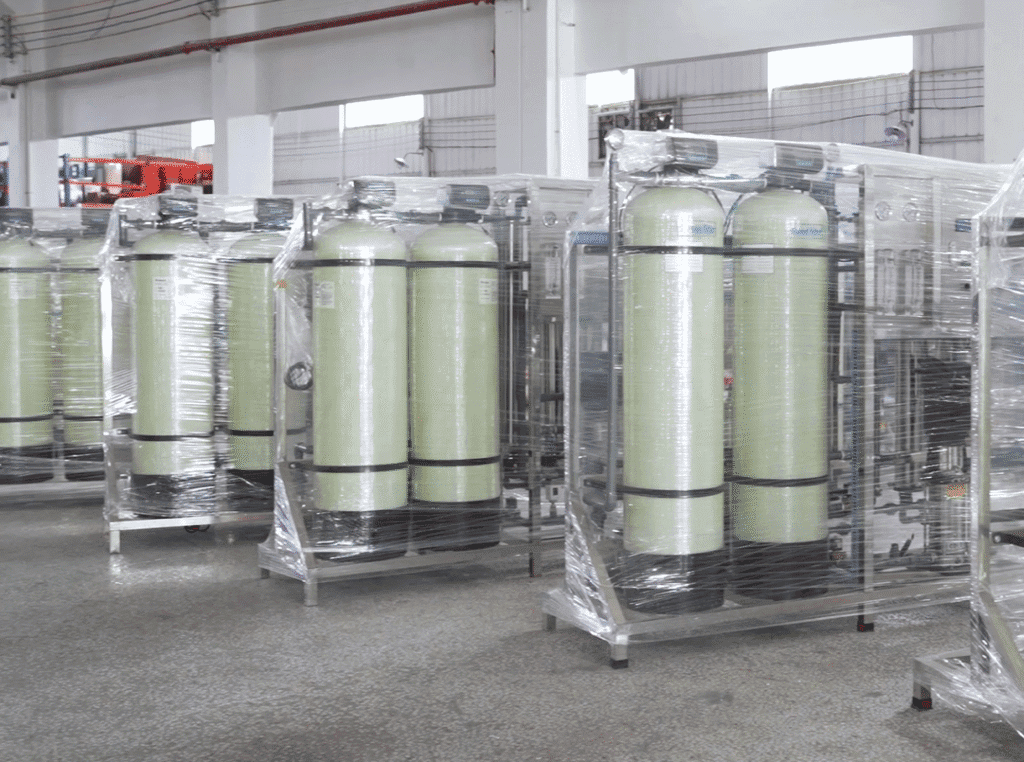
Zunächst wird das Rohwasser nacheinander durch einen Multi-Media-, Aktivkohle- und Sicherheitsfilter behandelt. Anschließend wird ein Kesselsteininhibitor (Härte 8,5) oder zu niedrig (<5,5) ist, müssen wir den pH-Wert auf 6,5-7,5 einstellen, um den optimalen Betriebs-pH-Bereich der RO-Membran zu erreichen.
Bei diesem Verfahren werden Schwebstoffe, Kolloide, Restchlor, Härte (Ca²⁺, Mg²⁺) und einige organische Stoffe aus dem Rohwasser entfernt. Dies verhindert spätere Ablagerungen, Verunreinigungen oder Oxidationsschäden an der Umkehrosmose-Membran und gewährleistet einen stabilen Betrieb des Umkehrosmose-Systems.
2. Primäre Umkehrosmose-Aufbereitungsstufe
In einem zweiten Schritt wird das vorbehandelte Wasser mit einer Hochdruckpumpe auf 1,5-2,5 MPa gepresst. Unter Verwendung einer hochdichten, verschmutzungsresistenten Umkehrosmose-Membran zwingt der Druck die Wassermoleküle durch die Membran, um “Produktwasser” zu bilden. Gelöste Ionen und organische Stoffe werden als konzentriertes Wasser zurückgehalten (20%-30%, das abgeleitet oder wiederverwendet werden kann).
Das Produktwasser gelangt in einen Puffertank. In der Zwischenzeit ist eine Online-Überwachung des spezifischen Widerstands (100-500 kΩ・cm), der Leitfähigkeit und einer Entsalzungsrate von ≥97% erforderlich. Abnormale Indikatoren (z. B. eine verringerte Entsalzungsrate aufgrund von Membranverschmutzung) lösen einen Alarm aus.
Dadurch werden 97% gelöste Ionen, große organische Moleküle und einige Mikroorganismen aus dem vorbehandelten Wasser entfernt, wodurch die Verunreinigungslast im Wasser erheblich reduziert wird.
3. Sekundäre Umkehrosmose-Aufbereitungsstufe
Drittens, weil der Salzgehalt des primären Permeatwassers deutlich gesunken ist. Eine sekundäre Hochdruckpumpe erhöht den Druck auf 1,0-1,8 MPa (niedriger als
das primäre Permeatwasser, um Membranschäden zu vermeiden). Wir können eine Umkehrosmose-Membran mit höherer Entsalzungseffizienz wählen (z. B. einen Low-Fouling-Typ). Das Permeatwasser muss einen spezifischen Widerstand von ≥150 kΩ・cm, TOC <50 ppb und Siliziumdioxid <0,1 mg/L aufweisen (um EDI-Scaling zu verhindern). Übersteigt der TOC die angegebenen Grenzwerte, können wir vor der sekundären Umkehrosmoseanlage eine 185nm UV-Oxidationseinheit hinzufügen.
Das sekundäre Umkehrosmosekonzentrat (mit einem höheren Salzgehalt als das primäre Permeatwasser, aber niedriger als das Rohwasser) kann zur Wiederaufbereitung in die primäre Umkehrosmoseanlage zurückgeführt werden. Dadurch wird eine Gesamtwasserrückgewinnungsrate von 70%-80% erreicht.
Nach dieser Behandlung erfüllt das aufbereitete Wasser die Anforderungen an die Qualität des Speisewassers für EDI vollständig. Die Gesamtentfernungsrate für Ionen beträgt ≥99,5% (im Vergleich zum Rohwasser), und der Widerstand des Permeatwassers beträgt 150-1000 kΩ・cm, mit TOC <50 ppb.
4. EDI-Tiefenentsalzung
Nach der sekundären Umkehrosmosebehandlung durchläuft das Wasser ein EDI-Modul (mit einer ionenbindenden Membran, Harz und Elektroden), durch das wir einen Gleichstrom (1-5 A) leiten. Die Ionen wandern in die Konzentratkammer und werden dort abgeleitet. Anschließend wird die Durchflussmenge des Frischwassers geregelt (1-3 l/min pro Modul) und der Widerstand des Produktwassers überwacht.
Mit dieser Aufbereitung werden die wichtigsten Spezifikationen für industrielles Reinstwasser erfüllt. Wie z. B. die Anforderungen der Halbleiter- und biopharmazeutischen Industrie. Ionenentfernungseffizienz ≥99,9%, Produktwasserwiderstand 15-18 MΩ cm, TOC <10 ppb und Kieselsäuregehalt <0,01 mg/L.
5. Sicherstellung der Wasserqualität des Terminals
Am Terminal müssen wir eine 0,02-0,1μm Mikrofiltrationsmembran oder eine Ultrafiltrationsmembran verwenden, um Harzfragmente und Mikroorganismen abzufangen, die vom EDI-Modul abfallen könnten.
Wir müssen die Ultraviolett (UV)-Sterilisation auf die jeweilige Anwendung abstimmen. In der biopharmazeutischen und Lebensmittelindustrie werden beispielsweise UV-Lampen mit einer Wellenlänge von 254 nm verwendet, um mikrobielle DNA zu zerstören. Bei einigen Anwendungen kann 185nm UV hinzugefügt werden, um den TOC auf <5 ppb zu reduzieren. Reinstwasser-Lagertanks in der Halbleiterindustrie können mit hochreinem Stickstoff mit einer Reinheit von ≥99,999% gefüllt werden, um die Luft zu isolieren.
Schließlich lassen wir das Reinstwasser durch Rohre aus 316L-Edelstahl zirkulieren. Auf diese Weise wird verhindert, dass sich in stagnierendem Wasser Mikroorganismen ansiedeln und die Adsorption von Verunreinigungen verringert.
Diese Aufbereitung erfüllt die extremen Wasseranforderungen von High-End-Industrieanwendungen. Das Endprodukt Wasser hat einen spezifischen Widerstand von 18,2 MΩ・cm (25°C), TOC <5 ppb, einen Partikelgehalt von ≥0,1 μm <1 Partikel/mL und ist steril.
Wo können wir die Reinstwasserfiltration einsetzen?
①Halbleiter- und Elektronikindustrie
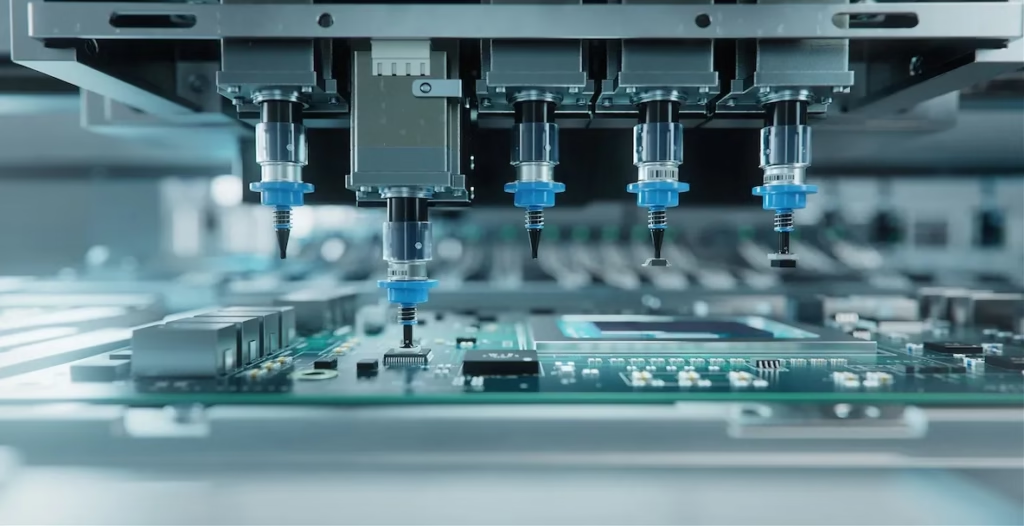
Bei der Herstellung von Halbleiterchips (z. B. Waferreinigung, Fotolithografie und Ätzen) können Ionen, Partikel und organische Stoffe im Wasser Kurzschlüsse in den Schaltkreisen der Chips verursachen und die fotolithografischen Muster verzerren.
Unser Reinstwasserfiltrationssystem verwendet ein kombiniertes “RO + EDI + UV + terminale Ultrafiltration”-Verfahren, um stabiles, hochreines Wasser für die Chipherstellung zu liefern.
②Biopharmazeutische Industrie
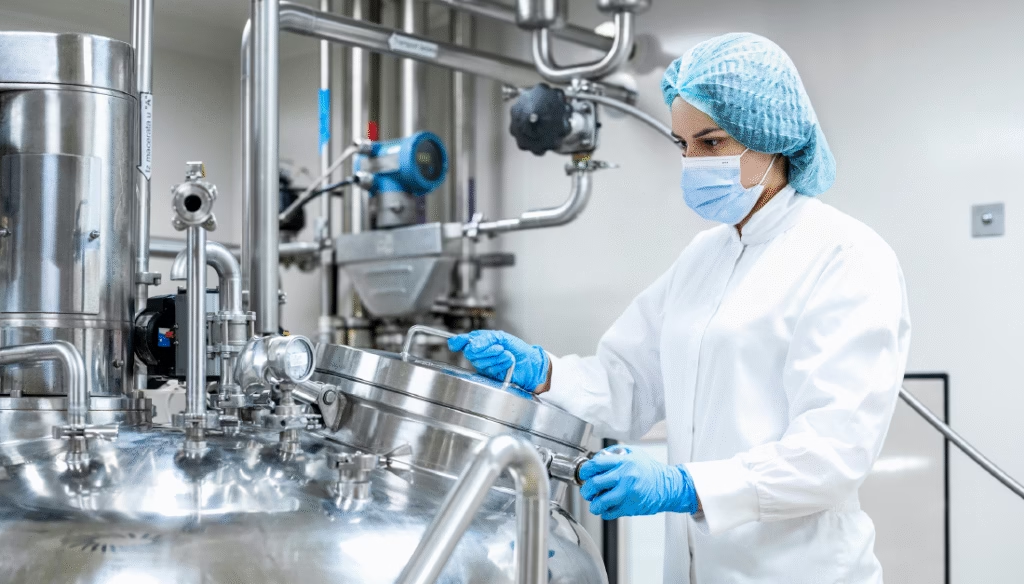
Reinstwasser, das in der pharmazeutischen Produktion und bei der Reinigung medizinischer Geräte verwendet wird, muss die Anforderungen der Guten Herstellungspraxis (GMP) erfüllen: Sterilität, Pyrogenfreiheit (Endotoxine < 0,25 EU/mL) und TOC < 5 ppb.
Das Filtersystem verwendet ein “UF + RO + EDI + terminale Sterilisationsfiltration”-Verfahren, um Mikroorganismen und Pyrogene zu entfernen und eine pharmazeutische Kontamination zu verhindern.
③Energiewirtschaft
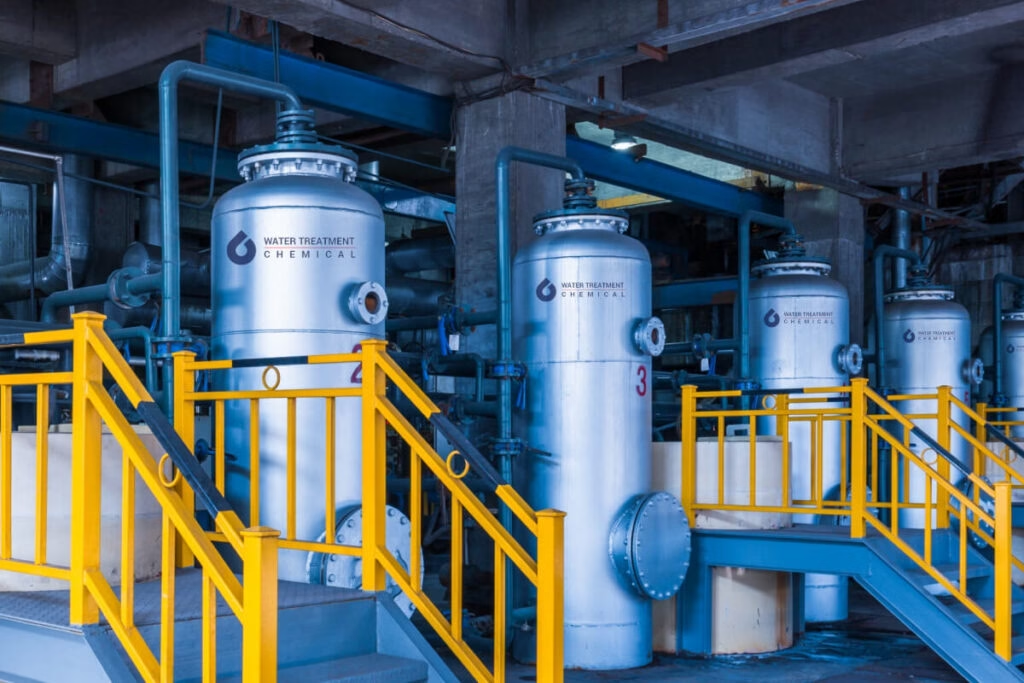
Ionische Verunreinigungen in Kesselwasser, das in Wärmekraftwerken oder Kernkraftwerken verwendet wird, können zur Bildung von Kesselstein an den Kesselwänden führen, was eine geringere thermische Effizienz, Rohrkorrosion und sogar Explosionen zur Folge hat.
Bei der Reinstwasserfiltration wird ein “RO + Ionenaustausch”-Verfahren eingesetzt, um den Widerstand des Kesselspeisewassers auf 5-10 MΩ・cm und eine Härte (gemessen als CaCO₃) von weniger als 0,1 mg/L zu reduzieren, was die Bildung von Kalkablagerungen verringert und die Lebensdauer der Anlagen verlängert.
④Neue Energiewirtschaft
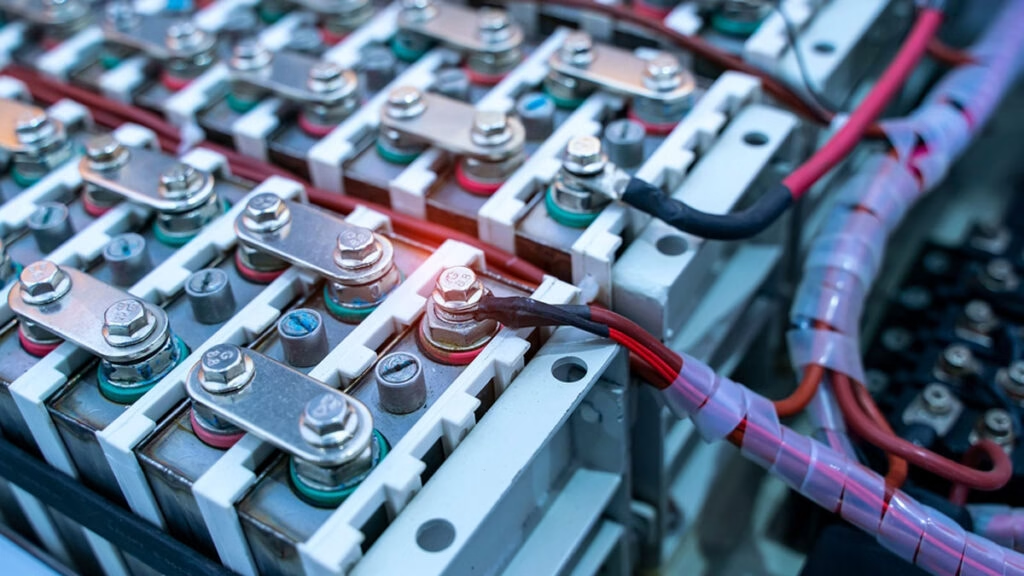
Bei der Herstellung von Lithiumbatterie-Kathodenmaterialien und photovoltaischen Siliziumwafern können Metallionen (wie Na⁺ und K⁺) im Wasser die Batteriekapazität und die Umwandlungseffizienz von Photovoltaikmodulen beeinträchtigen.
Reinstwasserfiltersysteme müssen den Metallionengehalt auf weniger als 0,1 ppb kontrollieren. Mit einem “RO+EDI+Schmelzharz”-Verfahren liefern sie niedrigreines Wasser für die Synthese neuer Energiematerialien.
Was sind die Probleme bei der Verwendung von Reinstwassergeräten?
Hoher Energieverbrauch
Kerntechnologien wie Umkehrosmose und EDI verbrauchen erhebliche Mengen an Strom (z. B. erfordert RO einen Betriebsdruck von 1-4 MPa). Einige traditionelle Ionenaustauschverfahren erfordern den häufigen Einsatz von sauren und alkalischen Regenerationsmitteln, was zu hohen Betriebskosten und erheblichen Umweltbelastungen führt.
Schlechte Anpassungsfähigkeit an komplexe Wasserqualität
Einige industrielle Rohwässer (z. B. stark salzhaltige und schwermetallhaltige Abwässer) haben eine komplexe Zusammensetzung, die Filtersysteme anfällig für Membranverschmutzung und Harzvergiftung macht, was einen häufigen Austausch von Verbrauchsmaterialien erfordert.
Welche Upgrades gibt es bei der Reinstwasserfiltration?
Aufrüstung mit energiesparender Technologie
Durch den Einsatz von energiesparenden Umkehrosmose-Membranen und neuen EDI-Modulen (die den Energieverbrauch um über 30% senken) in Kombination mit Abwärmerückgewinnungssystemen reduzieren wir den Energieverbrauch.
Integrierte Ausrüstung
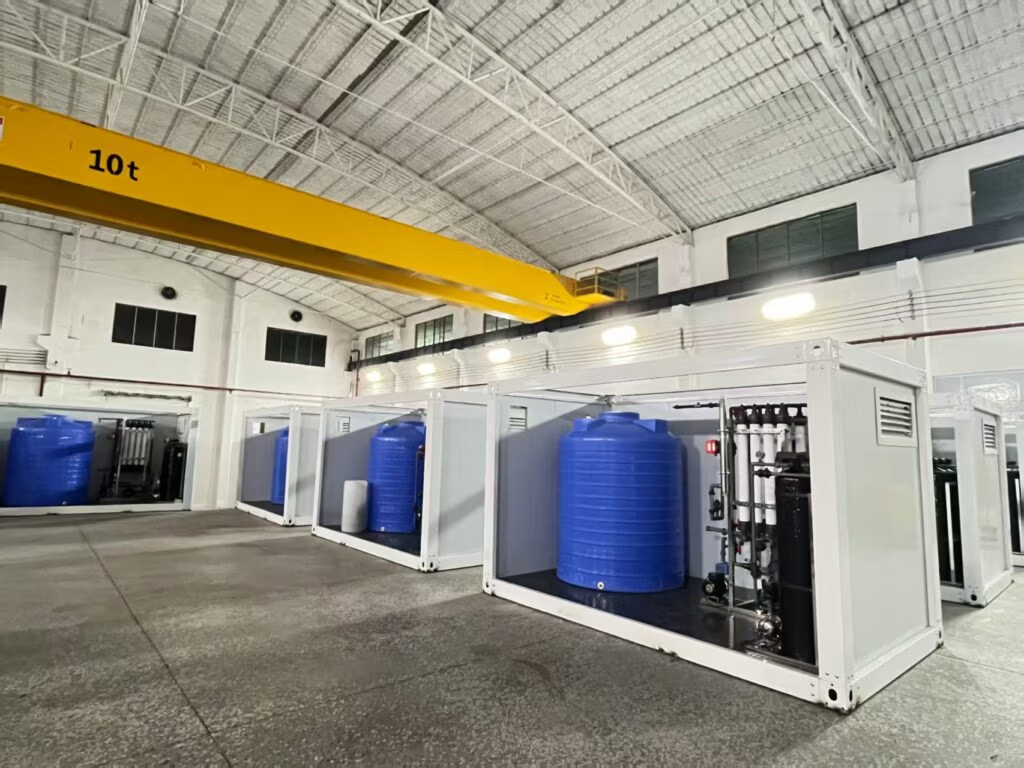
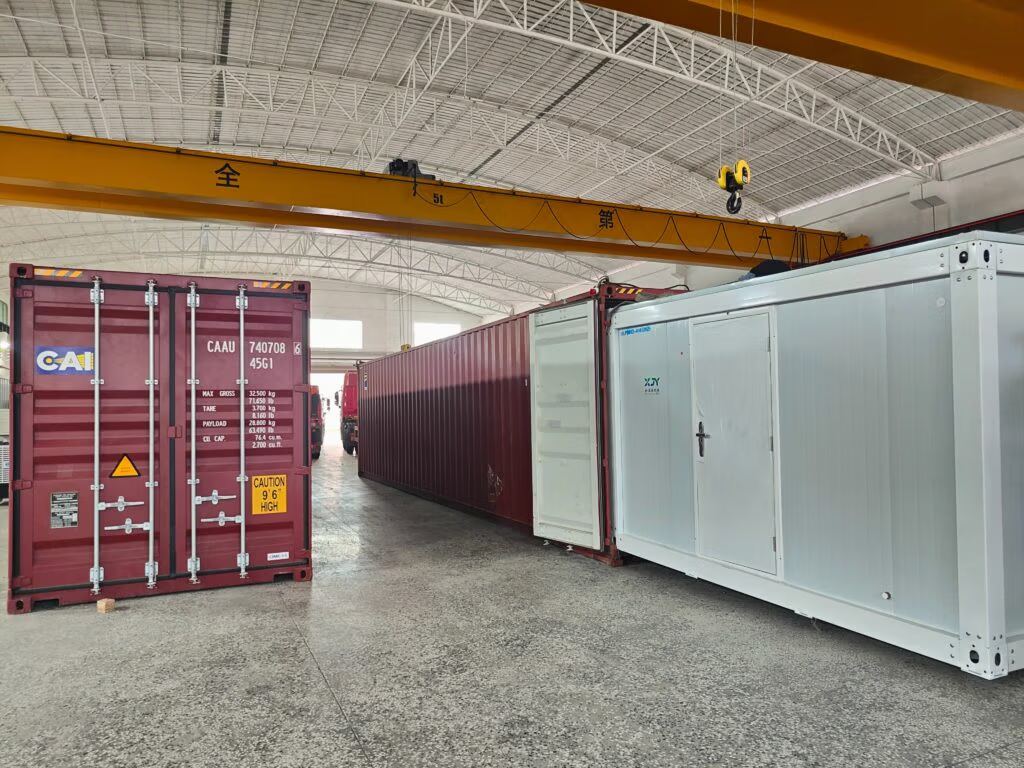
Um den Bedürfnissen kleiner und mittlerer Kunden gerecht zu werden, verwenden wir modulare Reinstwasseranlagen (z. B. integrierte Einheiten “Vorbehandlung + RO + EDI”), um die Installationszyklen zu verkürzen und die betriebliche Komplexität zu verringern.
Schlussfolgerung
Die Reinstwasserfiltration nutzt ein mehrstufiges Reinigungsverfahren, das eine zweistufige Umkehrosmose und EDI kombiniert, um gewöhnliches Rohwasser in Reinstwasser von höchster Reinheit zu verwandeln. Dies ist eine zentrale Wassergarantie für die hochwertige Entwicklung von Schlüsselindustrien wie der Halbleiterindustrie, der Biopharmazie und der neuen Energie.
Gegenwärtig steht sie vor Herausforderungen wie einem hohen Energieverbrauch und einer schlechten Anpassungsfähigkeit an die komplexe Wasserqualität. Die Wasseraufbereitungsindustrie arbeitet an Innovationen und Upgrades für effizientere und umweltfreundlichere Lösungen. Unterstützung der globalen Fertigungsindustrie beim Übergang zu einer präzisen und kohlenstoffarmen Produktion.
Wenn Sie andere EDI-Wassersystem Fragen haben, können Sie sich jederzeit an uns wenden.