A central question frequently raised by industry professionals is: does reverse osmosis remove minerals? The answer is a resounding yes. This is confirmed by the WHO Guidelines for Drinking-water Quality, which note that RO effectively removes dissolved minerals and salts to levels well below recommended thresholds. Industrial reverse osmosis systems are highly effective at rejecting the vast majority of mineral ions present in water, thereby achieving desalination and purification.
However, unlike residential water purification devices, the industrial sector imposes far more stringent requirements regarding mineral removal precision, residual concentration standards, and process compatibility. This article provides a comprehensive analysis of the characteristics of reverse osmosis in removing waterborne minerals, examining the subject from the perspectives of technical principles, removal efficacy, industrial applications, process advantages and disadvantages, and optimization strategies.
1.The principle of reverse osmosis remove minerals
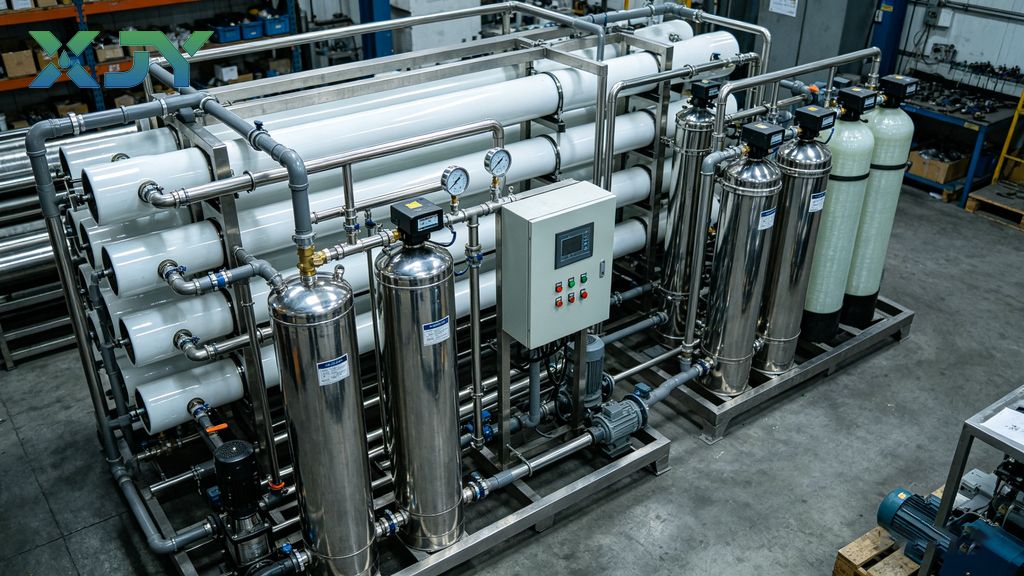
Reverse osmosis is a pressure-driven membrane separation technology that distinguishes itself from traditional filtration, which merely intercepts particulate impurities by enabling fine-scale separation at the ionic level.
Under conditions of natural osmosis, water molecules migrate from a solution of lower solute concentration to one of higher concentration. However, the reverse osmosis process applies an external pressure exceeding the water’s osmotic pressure. This forces water molecules from the feed water to permeate through a reverse osmosis membrane, while impurities such as mineral ions, salts, colloids, and large organic molecules, are completely retained, thereby achieving the ultimate separation of pure water from impurity-laden concentrate.
The reverse osmosis membranes commonly utilized in industrial applications feature extremely minute pore sizes, permitting the passage of only water molecules and a limited quantity of small gaseous molecules. They are capable of almost completely rejecting all types of mineral ions, a characteristic that constitutes the fundamental basis for their highly efficient demineralization and desalination capabilities.
2.The mineral removal efficacy of reverse osmosis
A standard two-stage reverse osmosis system demonstrates extremely stable removal rates for various minerals in water.
- For common macro-mineral ions found in water, such as calcium, magnesium, potassium, and sodium, reverse osmosis achieves a removal rate of 98% to 99.5%. This effectively resolves issues related to excessive water hardness, thereby preventing equipment scaling and clogging.
- Specifically targeting trace metal minerals—such as iron, manganese, copper, and zinc, as well as harmful heavy metals like lead, cadmium, and mercury, the removal rate exceeds 99%, thereby meeting the stringent water purity standards required for high-end industrial production.
In contrast to the limitations of pretreatment processes such as those utilizing quartz sand or activated carbon, which are capable of removing only insoluble mineral impurities, reverse osmosis systems offers the capability to deeply remove dissolved mineral ions from water. This constitutes the primary reason why the reverse osmosis process is an indispensable component in the industrial production of pure water.
3.Application scenarios for reverse osmosis mineral removal
The scope of application for reverse osmosis systems specifically regarding the removal of minerals is quite extensive, and can be illustrated by the following specific scenarios:
1. In boiler feedwater treatment within the power industry, raw water containing calcium and magnesium minerals can lead to scaling in pipelines and boilers. Consequently, two-stage reverse osmosis systems are employed to achieve deep demineralization, thereby preventing reduced heat exchange efficiency and mitigating issues such as equipment corrosion.
2. The electronics and semiconductor industries impose exceptionally stringent requirements on water quality. The ultrapure water required for wafer cleaning and chip manufacturing must undergo deep removal of trace metal minerals—typically via reverse osmosis combined with EDI modules to prevent mineral residues from causing short circuits or performance defects in electronic components.
3. In the fine chemical and pharmaceutical industries, mineral impurities in water can compromise the precision of chemical reactions as well as the purity and stability of pharmaceutical products. Reverse osmosis demineralization processes effectively prevent such product quality defects.
4. The food and beverage industry leverages the precise mineral control capabilities of reverse osmosis to adjust the mineral content of water according to specific production requirements, thereby optimizing the taste and overall quality of their products.
4.The Pros and Cons of Non-Selective Demineralization via Reverse Osmosis
While it is true that reverse osmosis removes minerals, it is crucial to note that industrial-scale reverse osmosis removes minerals from water almost indiscriminately. Specifically, this means that while it blocks harmful minerals present in excessive concentrations, it also filters out beneficial trace minerals found in the water. Consequently, this presents a double-edged sword, offering both advantages and disadvantages.
From the perspective of industrial production, the complete removal of minerals is a distinct advantage, as it effectively eliminates various water-quality issues such as scaling, corrosion, and product contamination.
However, in certain specialized contexts, excessive demineralization can lead to specific drawbacks. For instance, when purified water is subjected to prolonged recirculation, its extremely low mineral content can increase its corrosivity, causing minor corrosion to piping and equipment materials. Furthermore, in certain beverage processing operations and specialized manufacturing processes, it is necessary to retain specific minerals in appropriate quantities. In such cases, water produced solely through reverse osmosis cannot directly meet production requirements.
Process Optimization for Mineral Removal via Reverse Osmosis
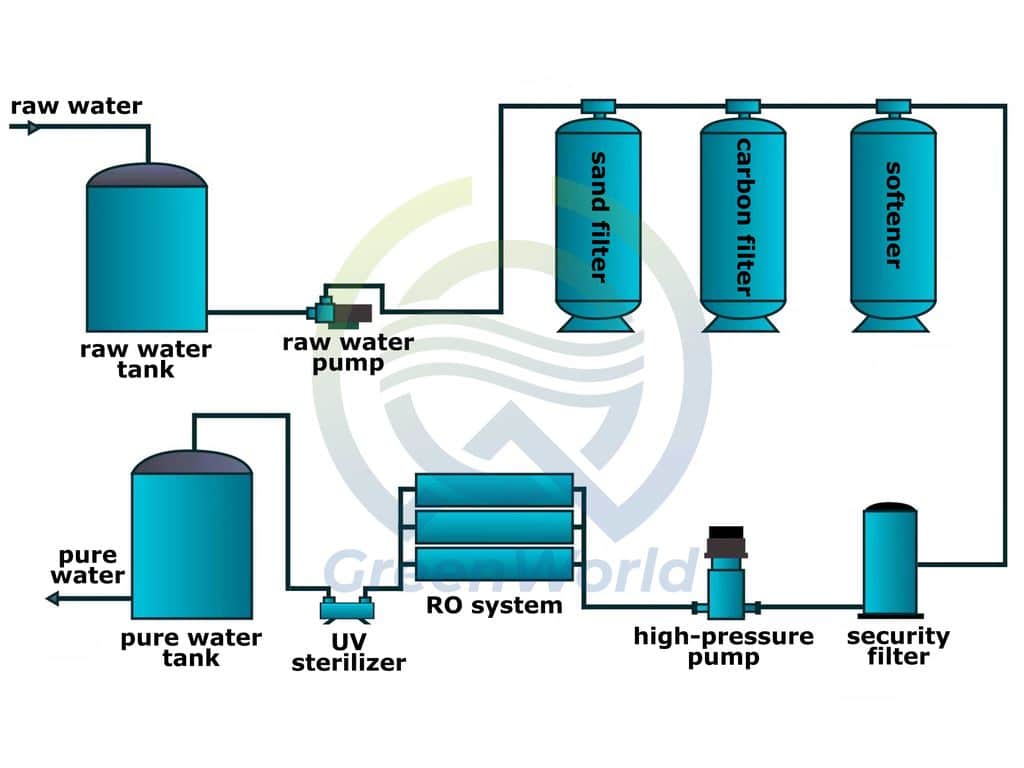
To address the industry challenge of excessive demineralization inherent in reverse osmosis, we employ a combined “reverse osmosis + post-treatment adjustment” process. Following the deep demineralization stage of reverse osmosis, and based on specific production water quality requirements, we utilize post-treatment equipment—such as mineralization units, mixed-bed ion exchangers, or EDI systems to precisely replenish necessary trace minerals or fine-tune the ionic concentration of the water, thereby balancing both water purity and process compatibility.
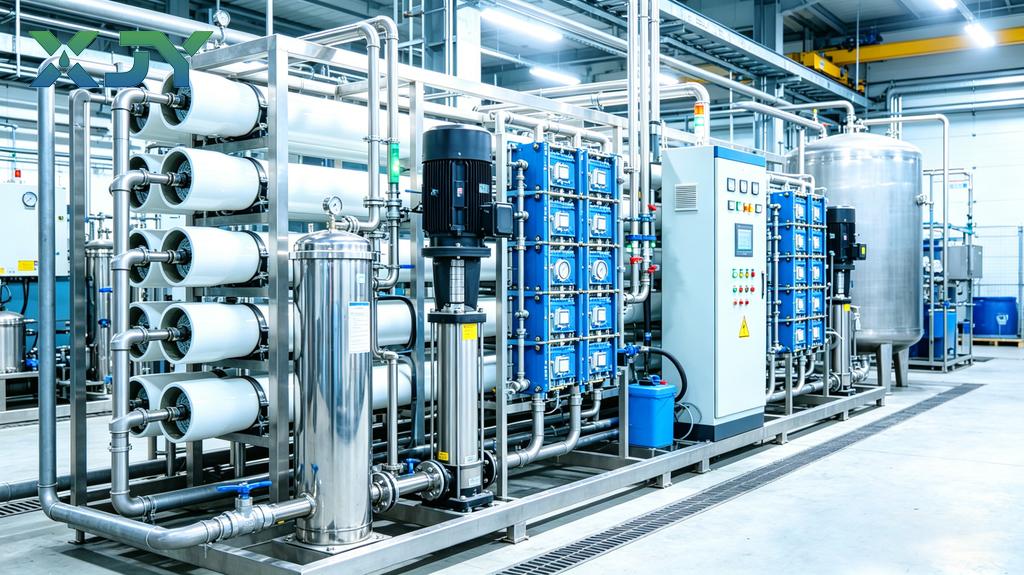
Simultaneously, by optimizing the pretreatment process to intercept large mineral impurities in advance, the reverse osmosis membrane elements are effectively protected. This prevents membrane fouling caused by mineral deposition, extends the service life of the equipment, and ensures the long-term stability of the system’s demineralization performance.
Does reverse osmosis remove minerals?
All things considered, there is no need to question the demineralization capabilities of reverse osmosis. However, by taking into account your specific industry’s water quality standards and production requirement, and by optimizing the process through strategic combinations. You can circumvent the limitations of a purely demineralizing process and maximize the practical value of reverse osmosis technology. If you are interested in this process, please feel free to contact us at any time to obtain a customized solution.