How do I select and maintain the right DuPont RO membrane to reduce downtime and cut operating costs? This guide answers that question step by step, from membrane selection to long-term performance management.
Why DuPont Reverse Osmosis Filters Dominate Industrial Water Treatment
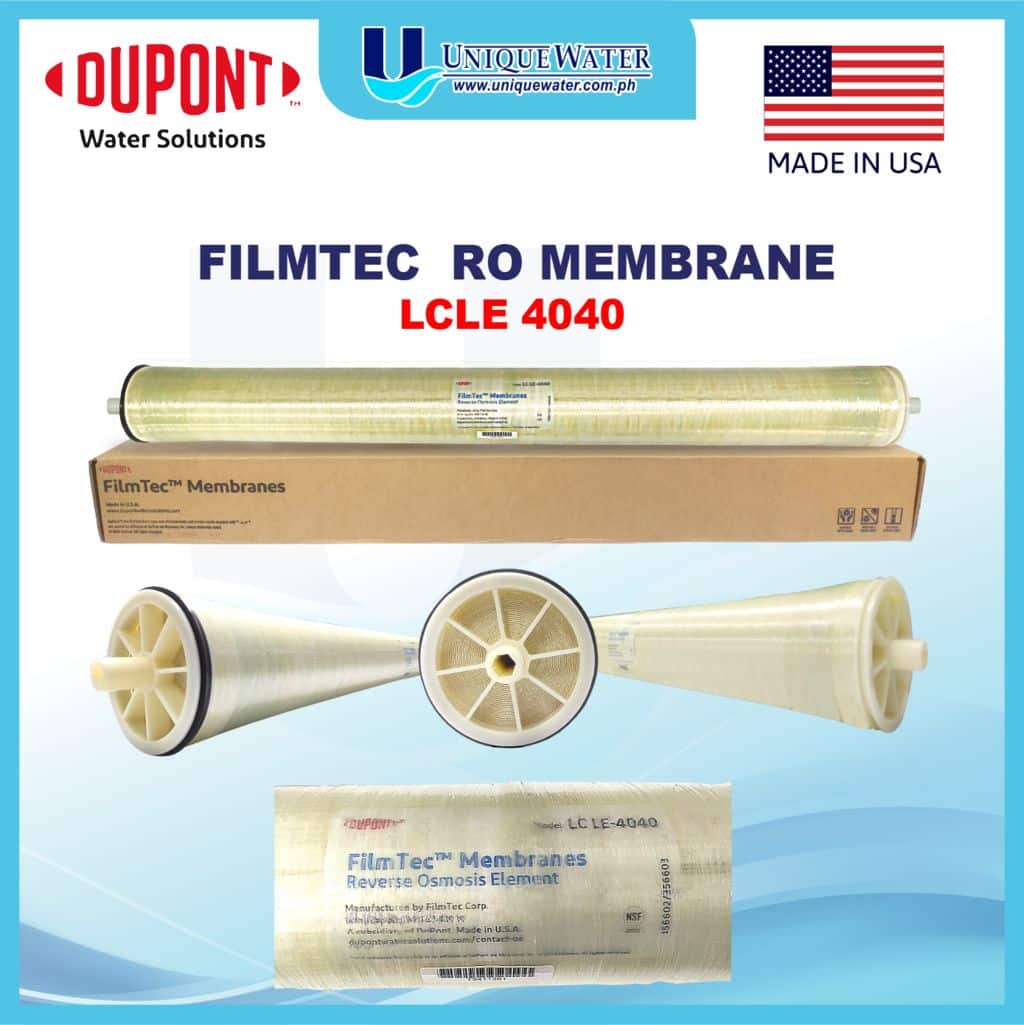
DuPont FilmTec membranes have become the benchmark for industrial reverse osmosis applications worldwide. Their spiral-wound polyamide thin-film composite structure delivers salt rejection rates above 99.5%, making them a reliable choice for process water, boiler feed water, and high-purity manufacturing environments.
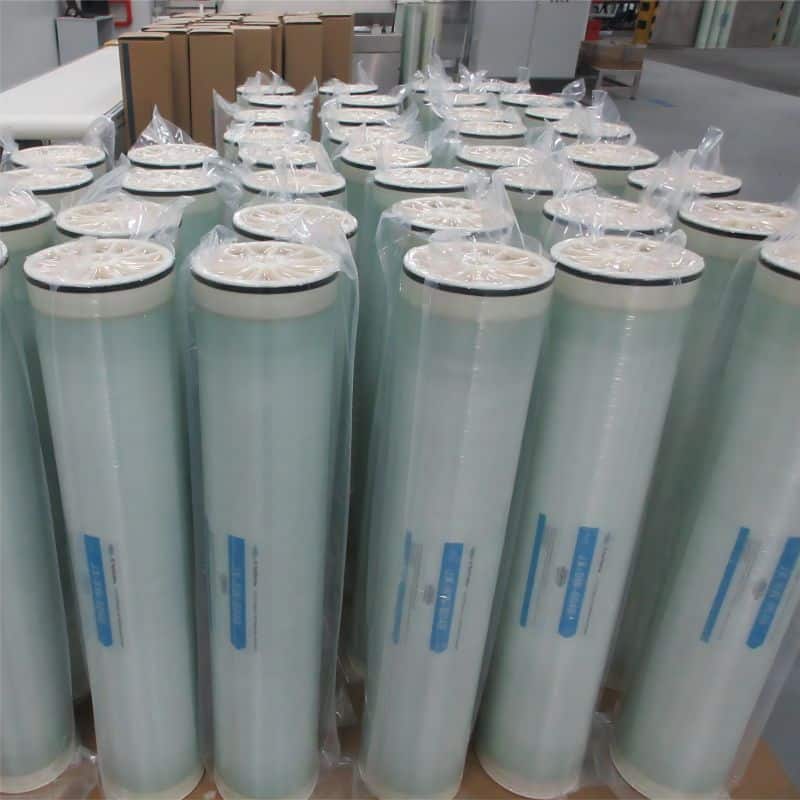
Three structural layers define FilmTec’s performance advantage: a 120-micron polyester support web, a 40-micron microporous polysulfone interlayer, and a 0.2-micron ultra-thin polyamide barrier. This layered engineering allows the membrane to consistently reject dissolved solids, heavy metals, and organic contaminants at high flow rates.
For industrial buyers, that translates into lower chemical consumption, reduced wastewater volumes, and longer system life cycles, all of which directly affect the bottom line.
How to Choose the Right DuPont RO Filter for Your Industrial System
Selecting the wrong dupont reverse osmosis filters is one of the most common and costly mistakes in industrial water treatment. The right membrane depends on three variables: feed water type, required flow rate, and system operating pressure.
Match the Membrane Series to Your Feed Water Quality
DuPont FilmTec offers distinct membrane series for different source water conditions. The SW30 series is engineered for seawater desalination, operating at pressures up to 1,000 psi with a 99.4% salt rejection rate. The BW30 brackish water series handles lower-salinity sources at up to 600 psi, making it well-suited for groundwater and municipal supply treatment.
For industrial process water with moderate contamination, the ECO PRO series offers high-flux performance at reduced operating pressures — an important factor for facilities focused on energy cost reduction. The NF90 and NF270 nanofiltration membranes serve specialized applications where selective ion rejection is required, such as softening or PFAS removal.
Size the Element Diameter to System Capacity
Element diameter determines housing compatibility and daily output. The 4-inch diameter FilmTec elements are the standard choice for industrial-scale systems requiring high production volumes. Larger 8-inch elements, such as the BW30HRLE-440, can produce up to 10,500 gallons per day — suitable for mid-to-large manufacturing operations.
Undersizing membrane area relative to demand forces the system to operate near maximum flux, which accelerates fouling and shortens element life. Always calculate your normalized permeate flow requirements before finalizing membrane selection.
5 Proven Steps to Extend the Life of DuPont Reverse Osmosis Filters
Membrane replacement is the largest recurring cost in industrial RO operations. Applying a structured maintenance protocol around your dupont reverse osmosis filters can extend membrane service life from the industry average of 3 years to 5 or even 6 years.
Step 1 — Monitor Normalized Performance Metrics Weekly
Three performance indicators signal early membrane degradation. A 10% drop in normalized permeate flow points to fouling or scaling. A 5–10% increase in normalized salt passage indicates polyamide layer breakdown. A 10–15% rise in normalized pressure differential across the membrane stages suggests feed channel plugging.
Tracking these values weekly — rather than reacting to visible quality failures — gives operators a 4–8 week window to intervene before membrane damage becomes irreversible. Learn more about how to structure these checks in our guide to industrial reverse osmosis system maintenance.
Step 2 — Calibrate ORP and pH Sensors on a Regular Schedule
Instrument accuracy is the foundation of effective RO management. ORP and pH sensors that drift out of calibration produce misleading data, which can cause operators to run chemical dosing programs that are either insufficient or overly aggressive. Both scenarios damage membranes.
Establish a calibration frequency based on the stability of your feed water chemistry. High-variability sources — such as surface water or blended supplies — warrant monthly calibration. Stable groundwater systems may tolerate quarterly intervals.
Step 3 — Execute Clean-In-Place (CIP) Before Fouling Becomes Irreversible
Every industrial RO system requires periodic CIP cleaning. The challenge is timing it correctly. Cleaning too early wastes chemicals and production time. Cleaning too late allows biofilm or scale to bond permanently to the membrane surface, reducing cleaning efficacy significantly.
A normalized pressure drop increase of 10–15% is the established threshold for initiating CIP on FilmTec membranes. Low-pH citric acid solutions target calcium carbonate and iron scaling; alkaline detergent formulations address biological and colloidal fouling. Use only DuPont-approved cleaning chemicals to avoid voiding membrane warranties.
Step 4 — Optimize System Recovery Rate
Recovery rate — the percentage of feed water converted to permeate — directly affects both operating costs and membrane fouling risk. Operating below the optimal recovery rate wastes water and increases brine disposal costs. Pushing recovery too high concentrates scaling ions beyond the solubility limits of the membrane surface chemistry.
For most brackish water FilmTec configurations, a recovery rate between 75% and 85% balances water efficiency against scaling risk. Systems treating higher-hardness feeds should stay at the lower end of that range and rely on antiscalant dosing to protect the membrane.
Step 5 — Pretreat Feed Water to Protect the Membrane
Dupont reverse osmosis filters are high-precision separation devices, not coarse filtration elements. Exposing them to inadequately pretreated water is the primary cause of premature membrane failure in industrial settings.
A properly designed pretreatment train should address suspended solids (target SDI below 5), free chlorine (FilmTec polyamide membranes have zero chlorine tolerance), iron and manganese, and biological contamination. Cartridge filters rated at 5 microns are typically installed immediately upstream of the RO pressure vessels as a final particle barrier. For a detailed breakdown of common RO fault scenarios, see our article on how to solve faults of inline reverse osmosis filters.
When to Replace DuPont RO Filters in Industrial Systems
Membrane replacement decisions should be based on data, not assumptions. DuPont recommends initiating replacement evaluation when normalized permeate flow has declined 10% from the baseline established during the first 48 hours of commissioning, and when salt passage has increased beyond 5–10% above the original specification.
In well-maintained systems with effective pretreatment, FilmTec membranes can operate reliably for 5 to 6 years. Facilities that skip pretreatment maintenance or delay CIP cycles typically see membrane life drop to 18–36 months — a significant cost difference over the system’s operational lifetime.
External resources such as the DuPont Water Technologies overview and the DuPont industrial RO maintenance guide provide additional technical documentation that supports procurement and maintenance planning for large-scale installations.
Key Performance Indicators for Industrial DuPont RO Filter Operations
Establishing KPIs for your dupont reverse osmosis filters transforms reactive maintenance into predictive operations. The most actionable KPIs for industrial RO systems include: normalized permeate flow (target: within 10% of baseline), salt rejection rate (target: above 99% for FilmTec BW30 series), system recovery (target: 75–85% for brackish applications), CIP frequency (benchmark: no more than 4 times per year under normal feed conditions), and membrane replacement interval (target: 5+ years with proper maintenance).
Facilities that track these metrics consistently report a 15–20% reduction in total water treatment operating costs compared to those running reactive-only maintenance programs.
Get More from Your DuPont Reverse Osmosis Filters
DuPont FilmTec membranes are among the most capable and widely validated industrial RO membranes available. But their performance is only as good as the system design, pretreatment quality, and maintenance discipline surrounding them.
For industrial facilities — whether in chemical processing, power generation, food and beverage, or pharmaceutical manufacturing — a structured approach to membrane selection, monitoring, and maintenance delivers the lowest cost per gallon of treated water over the system’s operational life.
If you are evaluating dupont reverse osmosis filters for a new industrial water treatment project or planning a membrane upgrade, our engineering team can assist with system sizing, membrane selection, and performance optimization. Contact us to discuss your specific feed water conditions and production requirements.