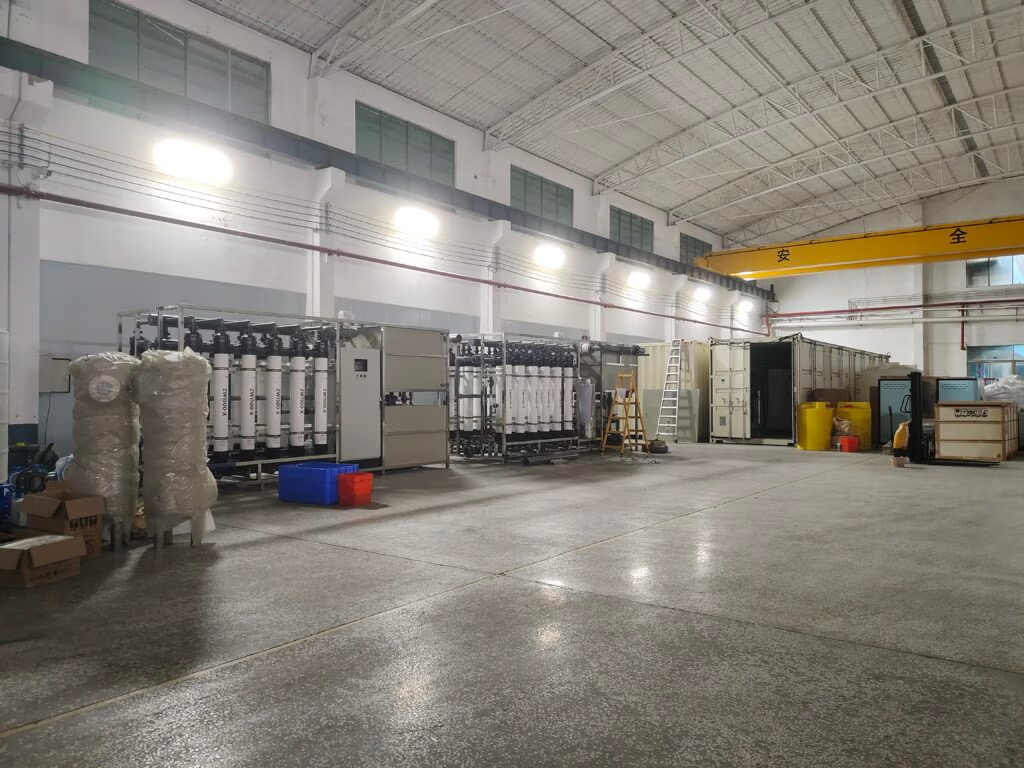
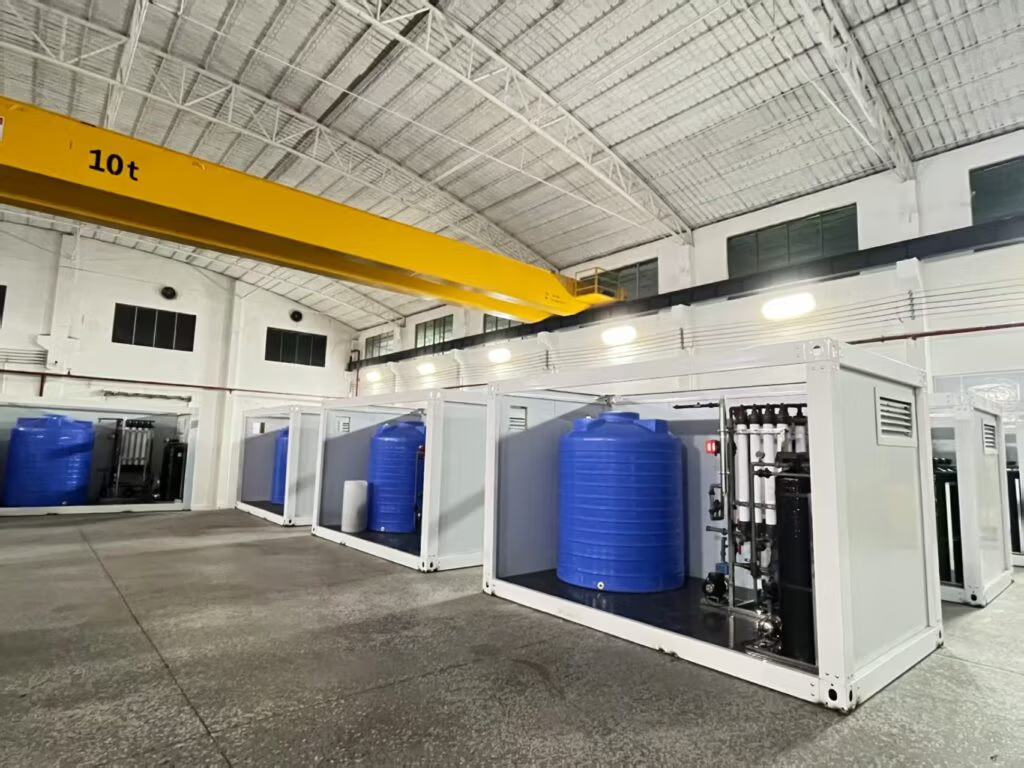
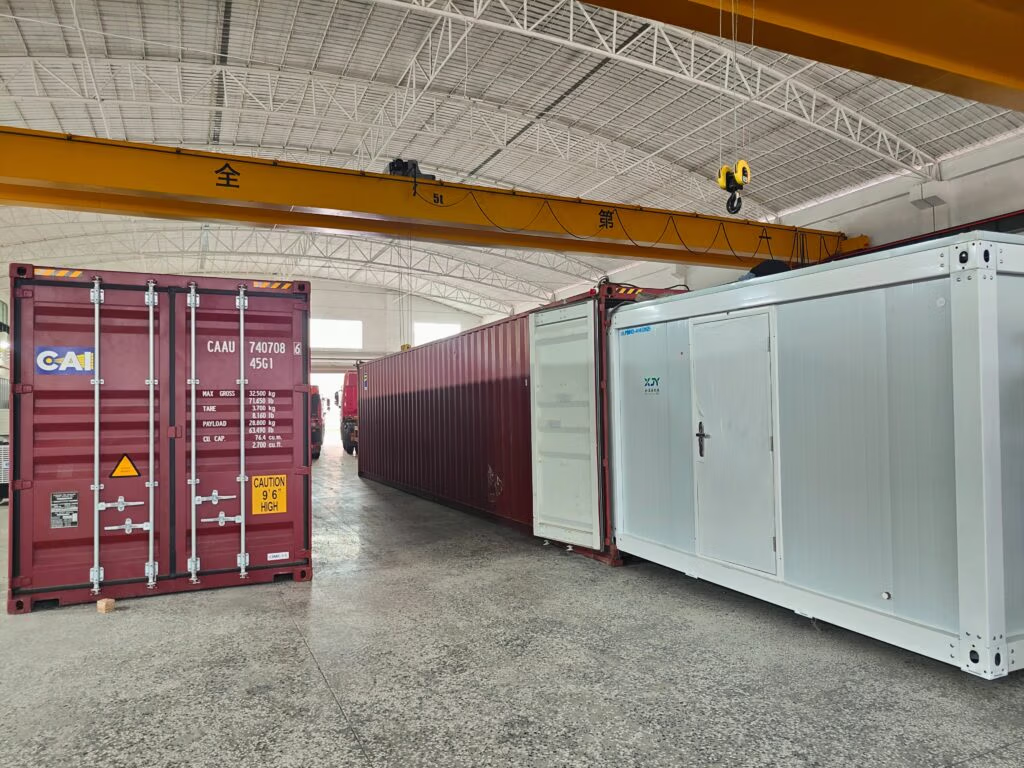
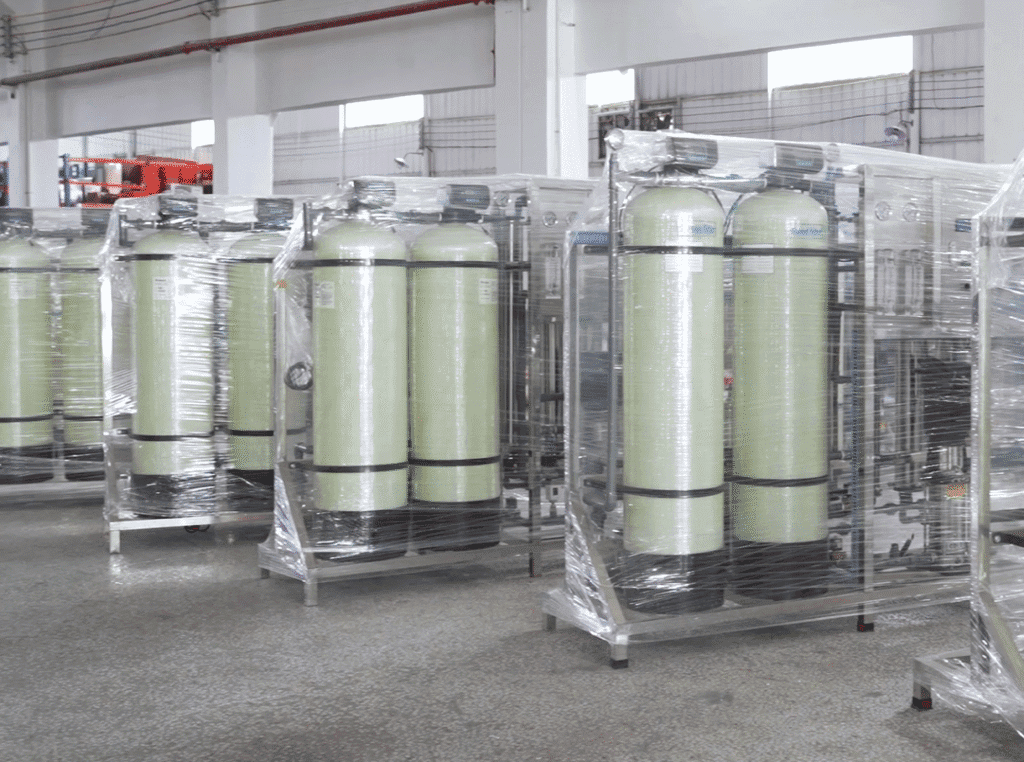
Every stage of industrial production is closely linked to water quality. This is because it directly affects not only the quality of end products but also the lifespan of production equipment.
In recent years, traditional water treatment methods have become increasingly inadequate for the demands of high-precision purification. Instead, máquina de tratamiento de agua por ultrafiltración, with its outstanding advantages of high efficiency and stability, has gradually become the preferred solution in the industrial water treatment field.
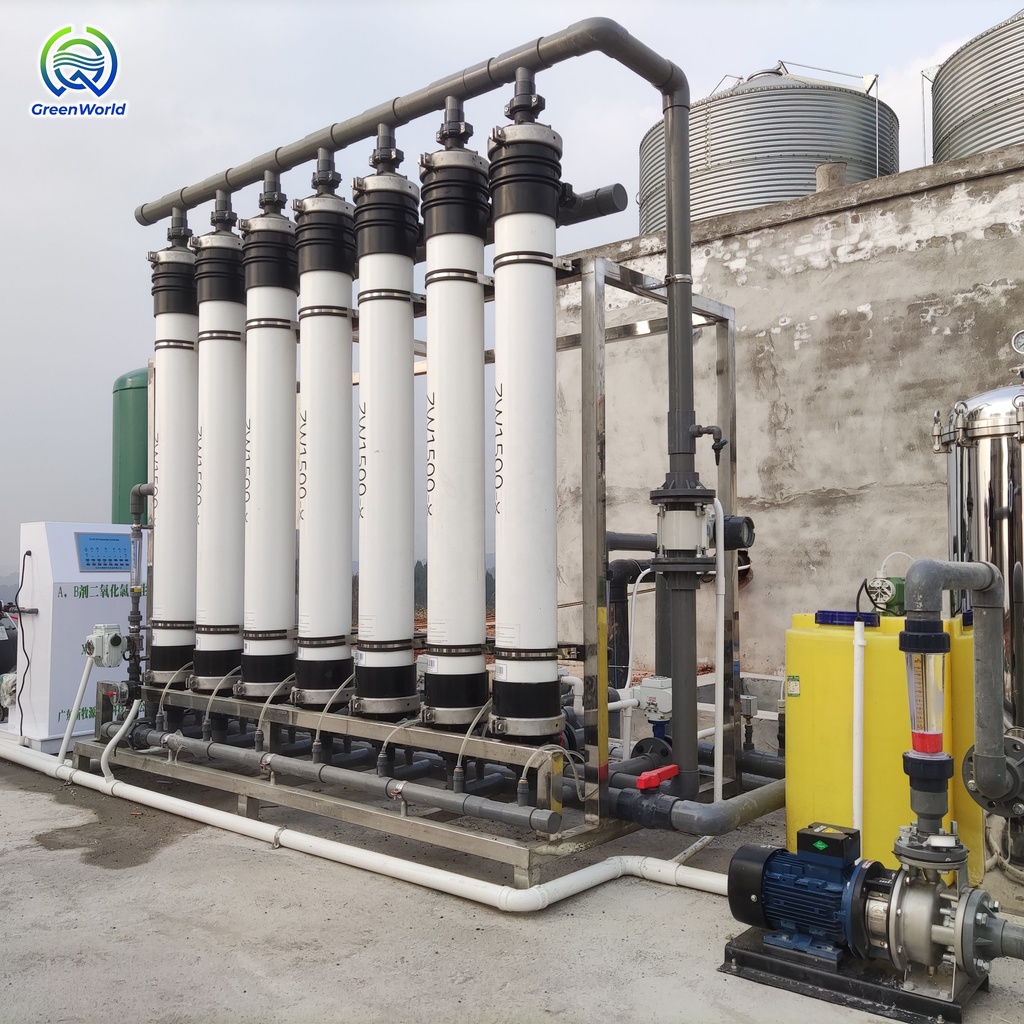
What ultrafiltration water treatment membrane should we use?
Ultrafiltration water treatment relies on the precise sieving characteristics of polymer membranes. Under moderate pressure, water molecules and small organic molecules can pass through the membrane pores smoothly, while the membrane traps colloidal particles, suspended impurities, microorganisms and macromolecular pollutants in the water on its surface.
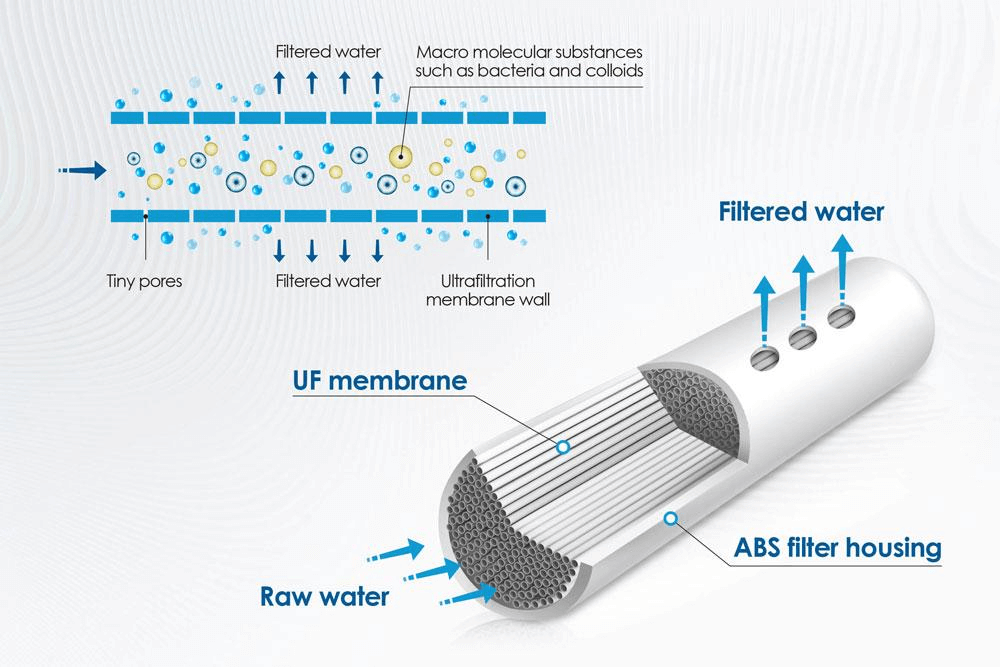
Compared to traditional filtration processes, ultrafiltration membranes have pore sizes ranging from 0.01 to 0.1 micrometers. A precision is difficult for traditional methods such as quartz sand filtration and activated carbon adsorption to achieve. Therefore, they can remove over 99% of turbidity and pathogenic microorganisms from water. And the entire process requires no chemical additives, fundamentally eliminating the risk of secondary pollution.
What are the advantages compared to traditional methods?
In industrial applications, the value of ultrafiltration technology is particularly evident.
On the one hand, it possesses strong adaptability to various scenarios. Engineers can flexibly adjust membrane materials and operating parameters according to the water quality characteristics of different industries. Whether it’s high-purity water preparation in the electronics industry, water purification in food processing, or wastewater recycling in the chemical industry, it can provide customized solutions.
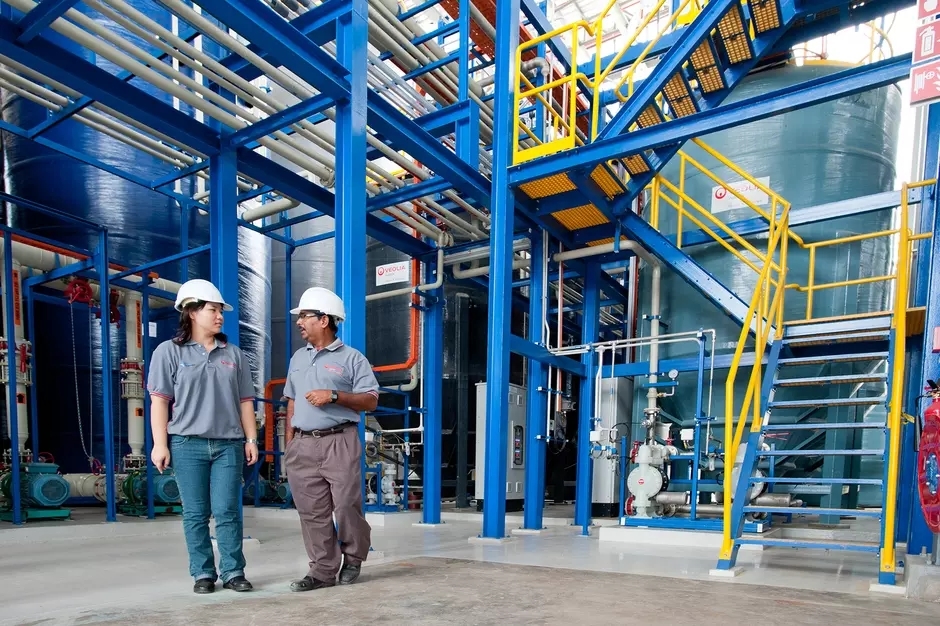
On the other hand, its operational economy is outstanding. The ultrafiltration membrane adopts a cross-flow filtration design, which effectively reduces membrane fouling and extends the membrane’s service life. Simultaneously, the equipment has a high level of automation, requiring only a small number of maintenance personnel to ensure continuous and stable operation. Furthermore, it offers significant environmental benefits. For example, we can recycle industrial wastewater after ultrafiltration treatment, greatly reducing the company’s fresh water consumption and thus achieving water conservation and emission reduction targets.
What upgrades have been made to ultrafiltration water treatment tech?
Con 15 años de experiencia en la fabricación de equipos para el tratamiento de agua, hemos mejorado nuestros sistemas de ultrafiltración en múltiples dimensiones para abordar las dificultades del tratamiento de aguas industriales. Por ejemplo, en la selección de módulos de membrana, utilizamos material PVDF (fluoruro de polivinilideno) con propiedades antiincrustantes superiores, combinado con nuestro proceso de tejido de fibras de membrana, desarrollado independientemente, lo que mejora significativamente la resistencia a la presión y a la limpieza de los módulos de membrana. Además, el diseño de la arquitectura del sistema incorpora una unidad de monitorización inteligente que rastrea indicadores clave como el flujo de la membrana y la diferencia de presión transmembrana en tiempo real. Una vez que el sistema detecta una tendencia de ensuciamiento en la membrana, inicia automáticamente un proceso de limpieza en línea para garantizar un funcionamiento estable.
These technological improvements have earned our ultrafiltration equipment market recognition. After adopting our equipment, a large electronics company in East China saw its production water resistivity consistently maintained above 15 MΩ·cm. Its product qualification rate increase by 3 percentage points, and its production line downtime rate decrease by nearly 20%.
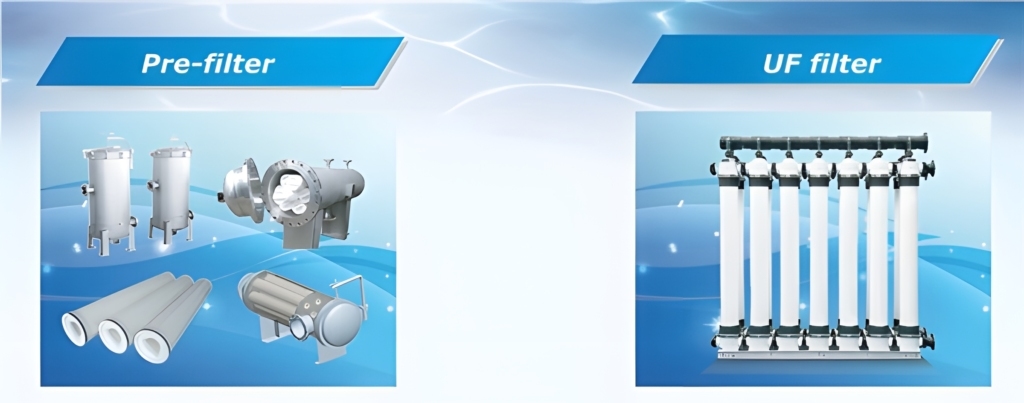
Actualmente, la tecnología de tratamiento de agua mediante ultrafiltración está evolucionando rápidamente hacia la integración, la inteligencia y el bajo consumo energético. Nuestro equipo se centra en el desarrollo de unidades de tratamiento integradas. Combinamos la ultrafiltración con tecnologías de ósmosis inversa y nanofiltración para ofrecer un servicio integral que abarca desde la purificación del agua bruta hasta la producción de agua pura. Simultáneamente, estamos aprovechando la tecnología IoT para desarrollar una plataforma en la nube inteligente para la operación y el mantenimiento remotos, lo que permite la transmisión en tiempo real de datos de funcionamiento de los equipos, alertas sobre anomalías y diagnósticos a distancia, brindando así a nuestros clientes un soporte posventa más eficiente.
Resumir
In the future, breakthroughs in membrane material technology will further improve the filtration accuracy and service life of ultrafiltration membranes. And the initial investment cost of equipment will gradually decrease. These measures will allow more small and medium-sized enterprises to enjoy the development dividends brought by efficient water treatment technology.