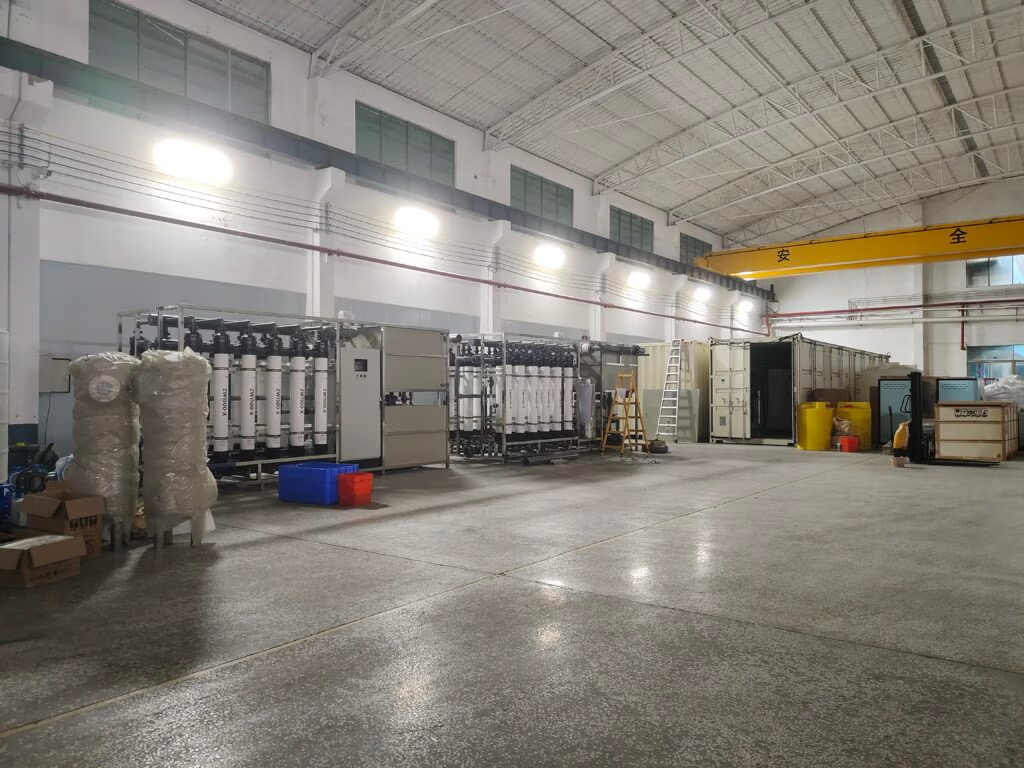
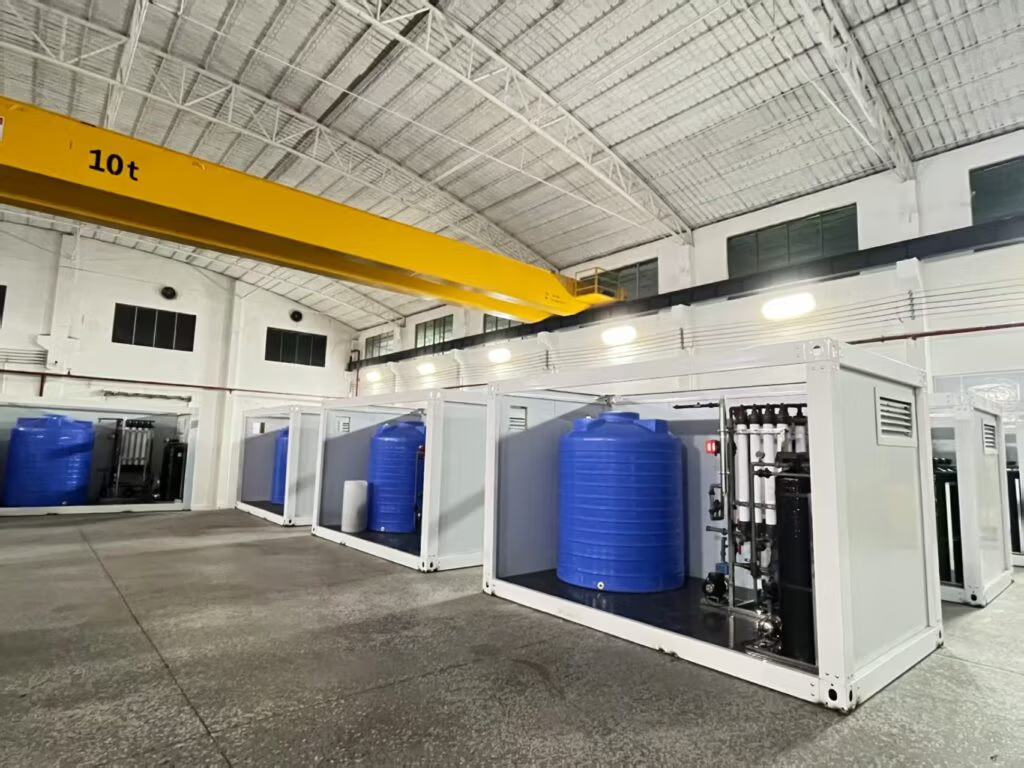
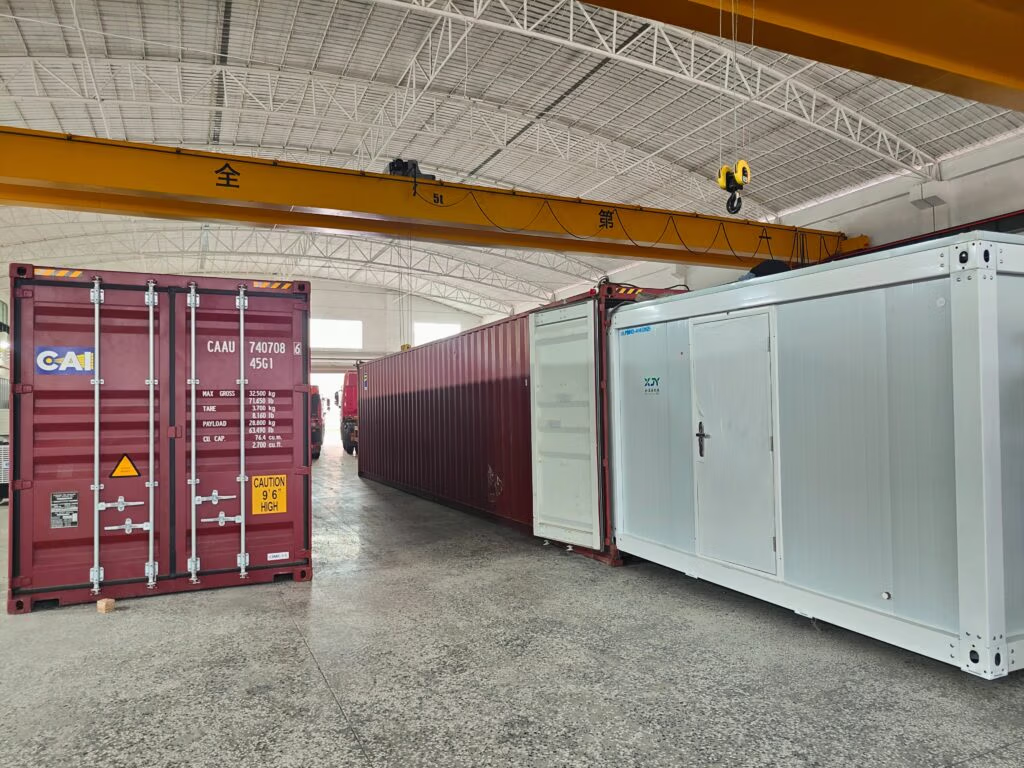
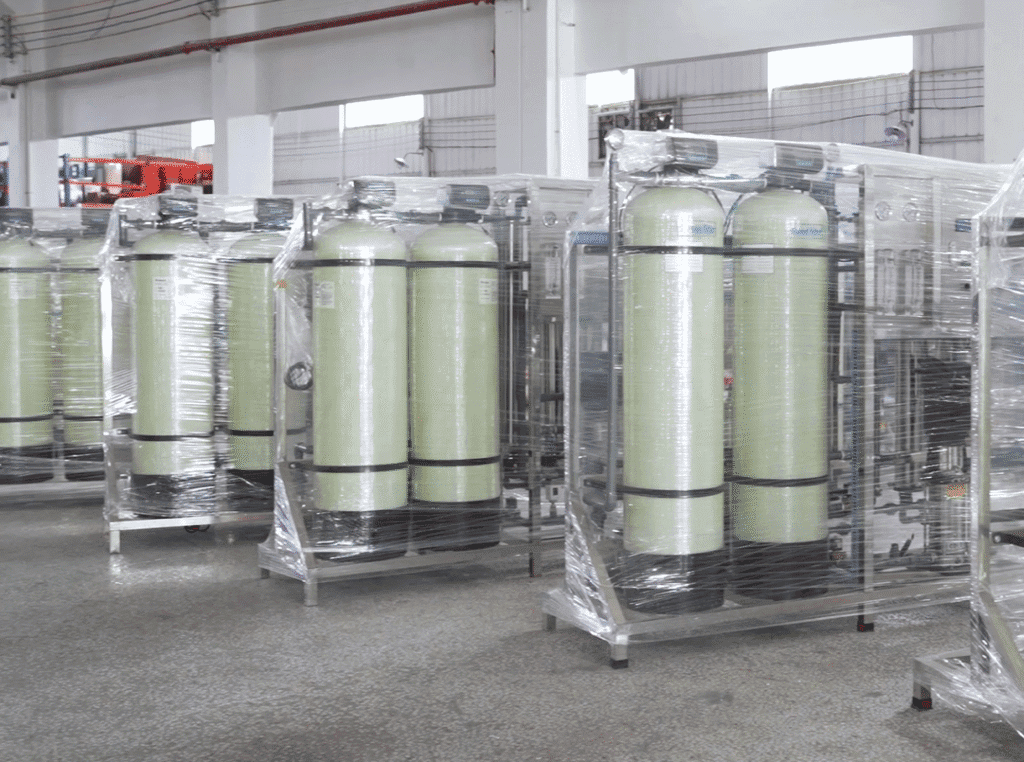
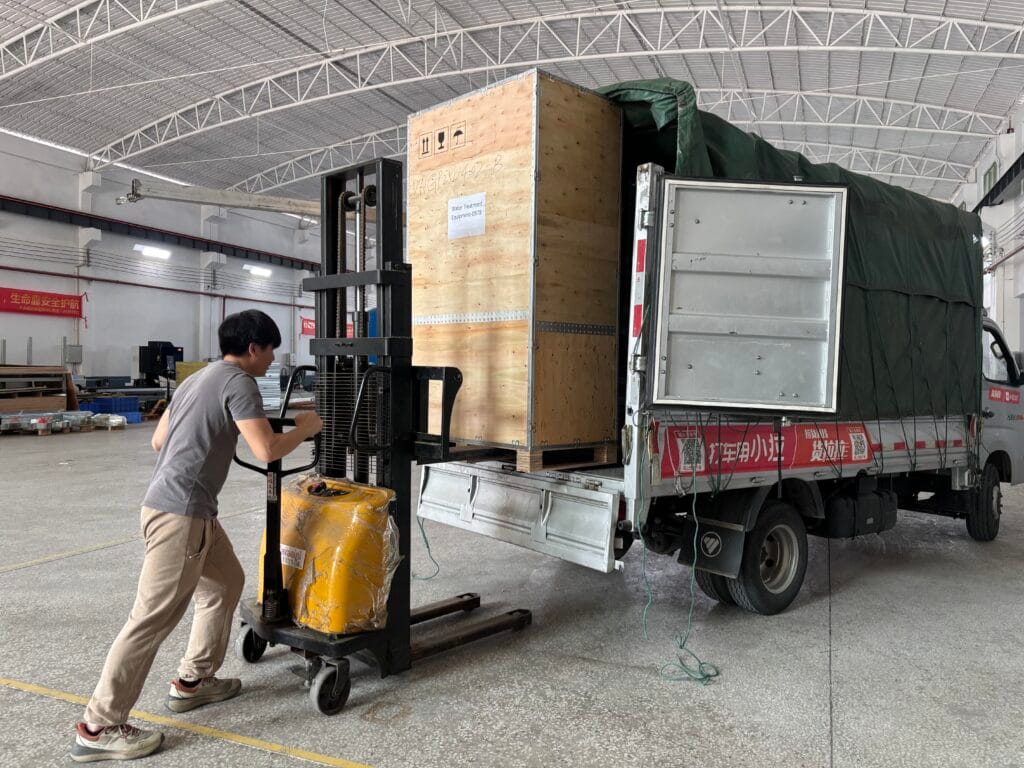
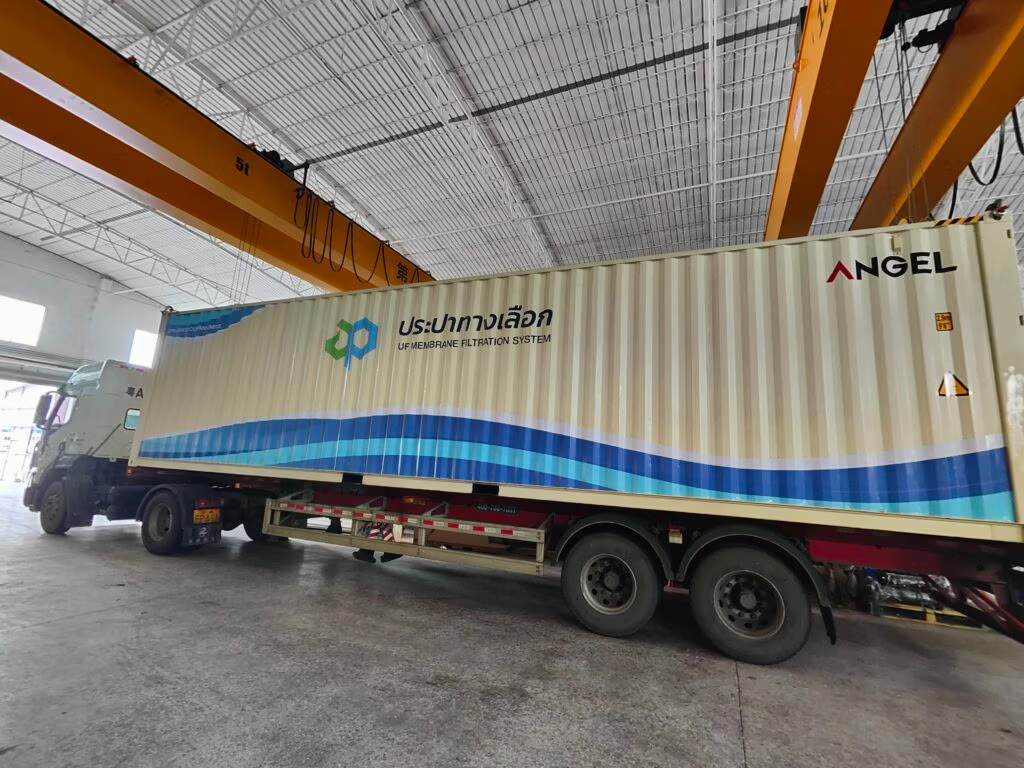
La unidad de ultrafiltración industrial es un nuevo tipo de equipo de tratamiento de agua y separación de materiales basado en la tecnología de separación por membrana. Impulsado por la diferencia de presión y utilizando una membrana de ultrafiltración con un tamaño de poro de 0,001 a 0,1 μm como núcleo. Logra una separación eficiente de moléculas de diferentes tamaños y sólidos/líquidos mediante tamizado. Puede retener impurezas como coloides, bacterias y virus, al tiempo que permite el paso de moléculas de agua y sales inorgánicas. Gracias a sus ventajas de alta eficiencia, ahorro de energía y facilidad de operación, se utiliza ampliamente en el tratamiento de agua, biomedicina, alimentación y otras industrias, y es un equipo clave en la tecnología de separación moderna.
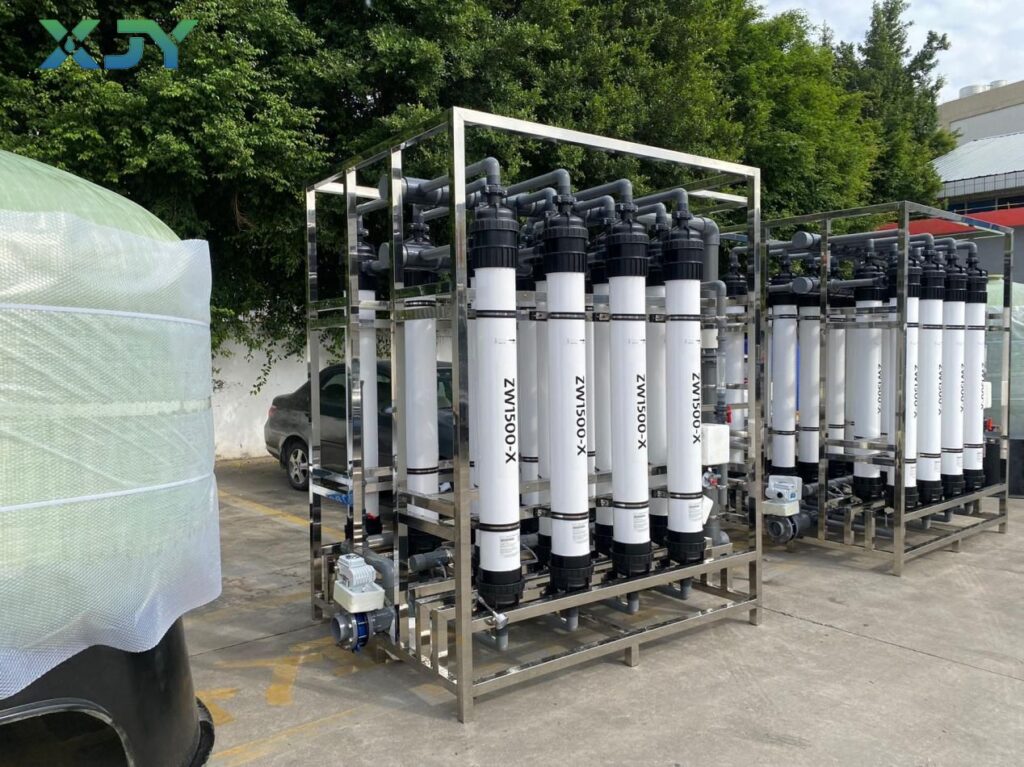
Para comprender plenamente la función de un máquina de ultrafiltración, primero es necesario aclarar su mecanismo de funcionamiento básico.
¿Cómo funciona una unidad de ultrafiltración industrial?
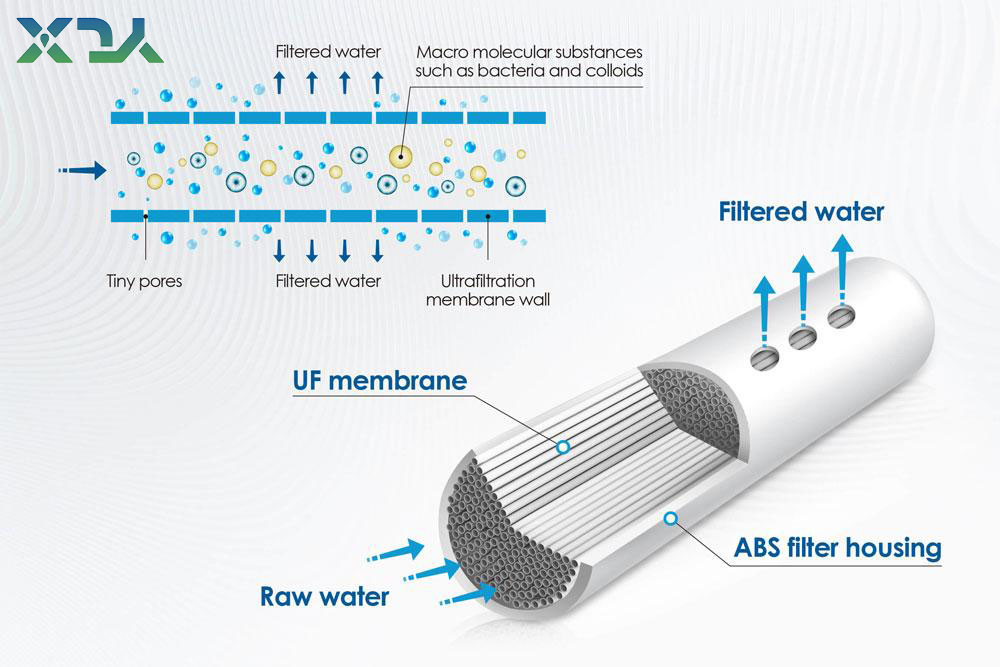
La ultrafiltración es un proceso de separación por membrana impulsado por presión. Todo el proceso de separación no requiere calentamiento ni la adición de reactivos químicos. Solo se aplica una pequeña cantidad de presión externa para crear un estado de flujo cruzado del líquido de alimentación en la superficie de la membrana.
La membrana de ultrafiltración, como medio de separación principal, tiene una estructura microporosa asimétrica. Su capa superficial es una capa microporosa densa, responsable principalmente de tamizar y retener sustancias. La capa inferior es una capa de soporte suelta, que se utiliza para garantizar la resistencia mecánica de la membrana. Cuando el líquido de alimentación fluye a través de la superficie de la membrana, las sustancias más grandes que el tamaño de los poros de la membrana (como partículas coloidales, bacterias, virus y proteínas) quedan atrapadas en el lado de alimentación de la membrana, formando un concentrado que se descarga periódicamente. Las sustancias más pequeñas que el tamaño de los poros de la membrana (como moléculas de agua, iones de sodio e iones de cloruro) pueden atravesar los poros de la membrana, formando el permeado (es decir, el ultrafiltrado). De este modo se logra la separación, purificación y concentración.
Este mecanismo de selección no altera las propiedades químicas del material y permite conservar al máximo los componentes originales del mismo. Es especialmente adecuado para el procesamiento de sustancias sensibles al calor. Por lo tanto, también es la característica principal del sistema de ultrafiltración que lo distingue de la filtración tradicional, la destilación y otras tecnologías de separación.
¿Cuáles son las funciones de una unidad de ultrafiltración industrial?
Las funciones principales de la unidad de ultrafiltración industrial se pueden resumir en tres categorías principales: separación, purificación y concentración. En concreto, esto se manifiesta en la selección y separación precisas de diversas sustancias en diferentes sistemas. Por lo tanto, puede adaptarse a las necesidades prácticas de aplicación de diferentes campos, y cada función tiene un escenario de aplicación claro y ventajas tecnológicas únicas.
Separación
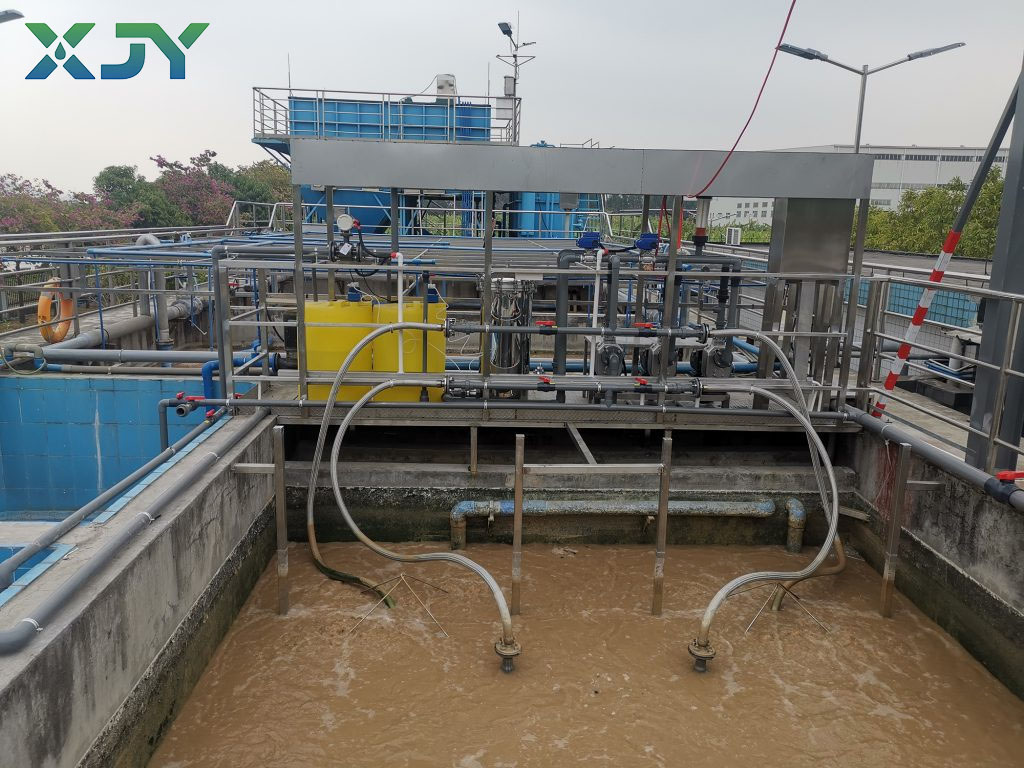
La separación es la función más fundamental y ampliamente utilizada de la unidad de ultrafiltración industrial, principalmente para la separación sólido-líquido. En el tratamiento del agua, el dispositivo elimina eficazmente los sólidos en suspensión, las partículas coloidales y la turbidez del agua, al tiempo que logra una interceptación profunda de los microorganismos. La tasa de eliminación de bacterias puede alcanzar más del 99,991 TP3T, lo que mejora fundamentalmente la claridad del agua y reduce la turbidez y el índice de dispersión de sólidos (SDI).
En comparación con los procesos tradicionales, como la filtración con arena y la filtración con carbón activado, las unidades de ultrafiltración ofrecen una precisión de separación superior. Se ven menos afectadas por las fluctuaciones en la calidad del agua sin tratar y proporcionan agua de alta calidad de forma constante. Incluso con cambios significativos en la turbidez del agua sin tratar, la calidad del efluente se mantiene dentro de los estándares aceptables. Por ejemplo, en el tratamiento municipal del agua potable, las máquinas de ultrafiltración pueden servir como unidades de tratamiento avanzadas, sustituyendo a los procesos de filtración tradicionales para eliminar eficazmente las trazas de coloides y microorganismos que son difíciles de eliminar con los métodos convencionales. En el tratamiento de aguas residuales industriales, pueden eliminar las impurezas coloidales y los contaminantes en suspensión, proporcionando un pretratamiento para el posterior tratamiento por ósmosis inversa, evitando la contaminación coloidal de la membrana de ósmosis inversa, prolongando su vida útil y reduciendo los costos generales de tratamiento del agua.
Purificación
La purificación es una de las aplicaciones principales de la unidad de ultrafiltración industrial en las industrias de productos químicos finos, biomedicina y alimentos y bebidas. Su objetivo principal es eliminar las impurezas de los materiales y conservar los ingredientes activos deseados, logrando así la purificación y el refinamiento.
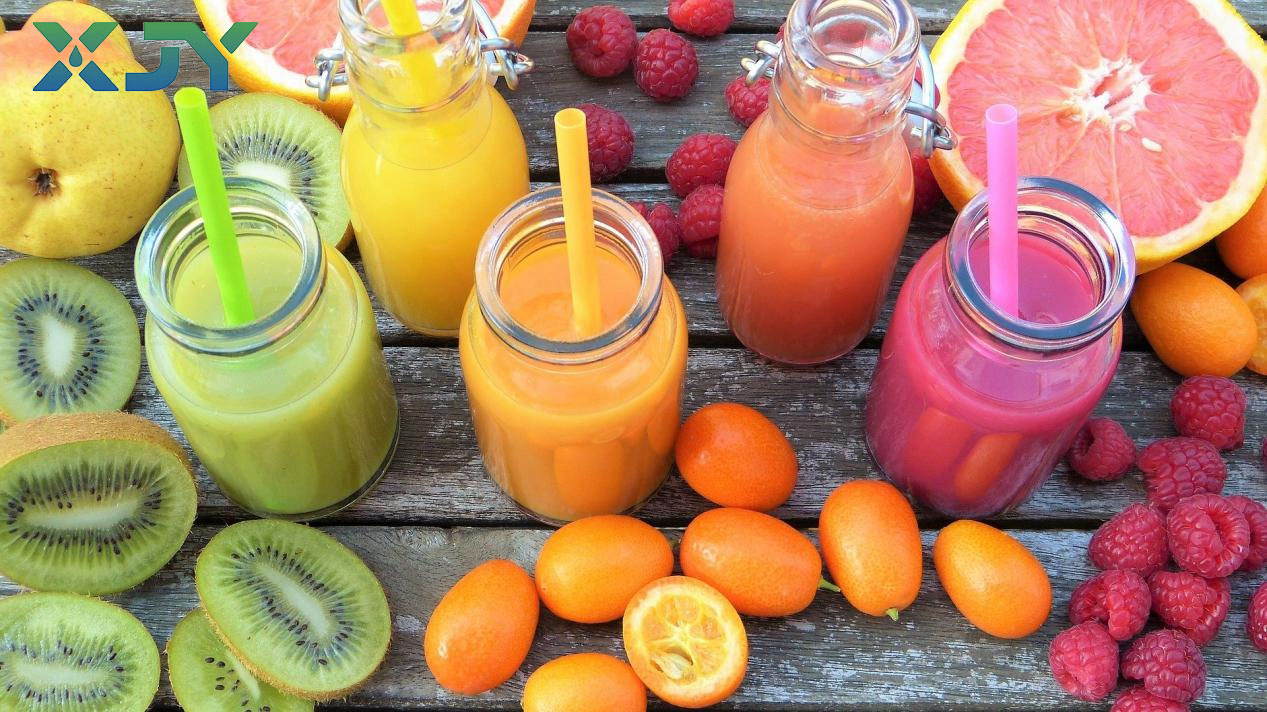
En la industria alimentaria y de bebidas, la función de purificación del sistema de ultrafiltración se utiliza ampliamente. Por ejemplo, en la producción de jugos de frutas, el jugo contiene una gran cantidad de impurezas como pectina, proteínas y partículas en suspensión, que afectan a la claridad, la estabilidad y el sabor del jugo. La máquina de ultrafiltración puede eliminar las impurezas de moléculas grandes, como la pectina y las proteínas, mediante el tamizado, al tiempo que retiene los componentes efectivos, como los azúcares, las vitaminas y los minerales, lo que da como resultado un jugo de fruta claro y estable. Al mismo tiempo, no se necesitan agentes clarificantes ni otras sustancias químicas, lo que garantiza la calidad natural del jugo.
En la producción láctea, los sistemas de ultrafiltración pueden utilizarse para purificar la proteína de suero, eliminando impurezas de moléculas pequeñas como la lactosa y las sales inorgánicas para obtener proteína de suero de alta pureza. Esto puede utilizarse para producir productos de alta gama, como proteína de suero en polvo y fórmulas infantiles, aumentando el valor agregado de los productos lácteos.
Concentración
La concentración es otra función importante de la unidad de ultrafiltración industrial. Se utiliza principalmente para concentrar sustancias objetivo en soluciones diluidas, reduciendo el volumen de la solución y aumentando la concentración de la sustancia objetivo, lo que facilita su posterior almacenamiento, transporte y procesamiento. También permite la recuperación y reutilización de recursos. Las principales ventajas de la concentración son el bajo consumo de energía y el funcionamiento suave. Además, elimina la necesidad de calentar y evaporar, lo que evita la desnaturalización y la descomposición de la sustancia objetivo debido a las altas temperaturas, lo que la hace especialmente adecuada para el procesamiento de sustancias sensibles al calor.
En la industria alimentaria y de bebidas, la concentración se utiliza ampliamente. Por ejemplo, en la producción de jugos de frutas y verduras, las máquinas de ultrafiltración pueden concentrar los jugos diluidos, aumentando la concentración del jugo, reduciendo los costos de transporte y almacenamiento, y conservando al mismo tiempo los nutrientes y el sabor original del jugo.
En la producción láctea, las soluciones de proteína de suero se pueden concentrar para alcanzar la concentración de proteína de suero necesaria para la producción de productos lácteos de alta gama, lo que permite un uso eficiente de los recursos de suero y reduce los residuos.
Otras funciones
Además de sus funciones principales de separación, purificación y concentración, las unidades de ultrafiltración industrial también proporcionan funciones auxiliares como el pretratamiento, la purificación y la recuperación. En el campo del tratamiento del agua, los sistemas de ultrafiltración se utilizan a menudo como unidades de pretratamiento en procesos de tratamiento avanzados, como la ósmosis inversa y la nanofiltración. Al eliminar impurezas como coloides, partículas en suspensión y microorganismos del agua, reducen el índice de sólidos (SDI) del agua. Por ejemplo, en la desalinización del agua de mar y la producción de agua ultrapura, el pretratamiento por ultrafiltración es un paso esencial, ya que elimina eficazmente impurezas como coloides, algas y microorganismos del agua de mar, protegiendo la membrana de ósmosis inversa. Además, mejora la eficiencia y la estabilidad de la desalinización del agua de mar y la producción de agua ultrapura.
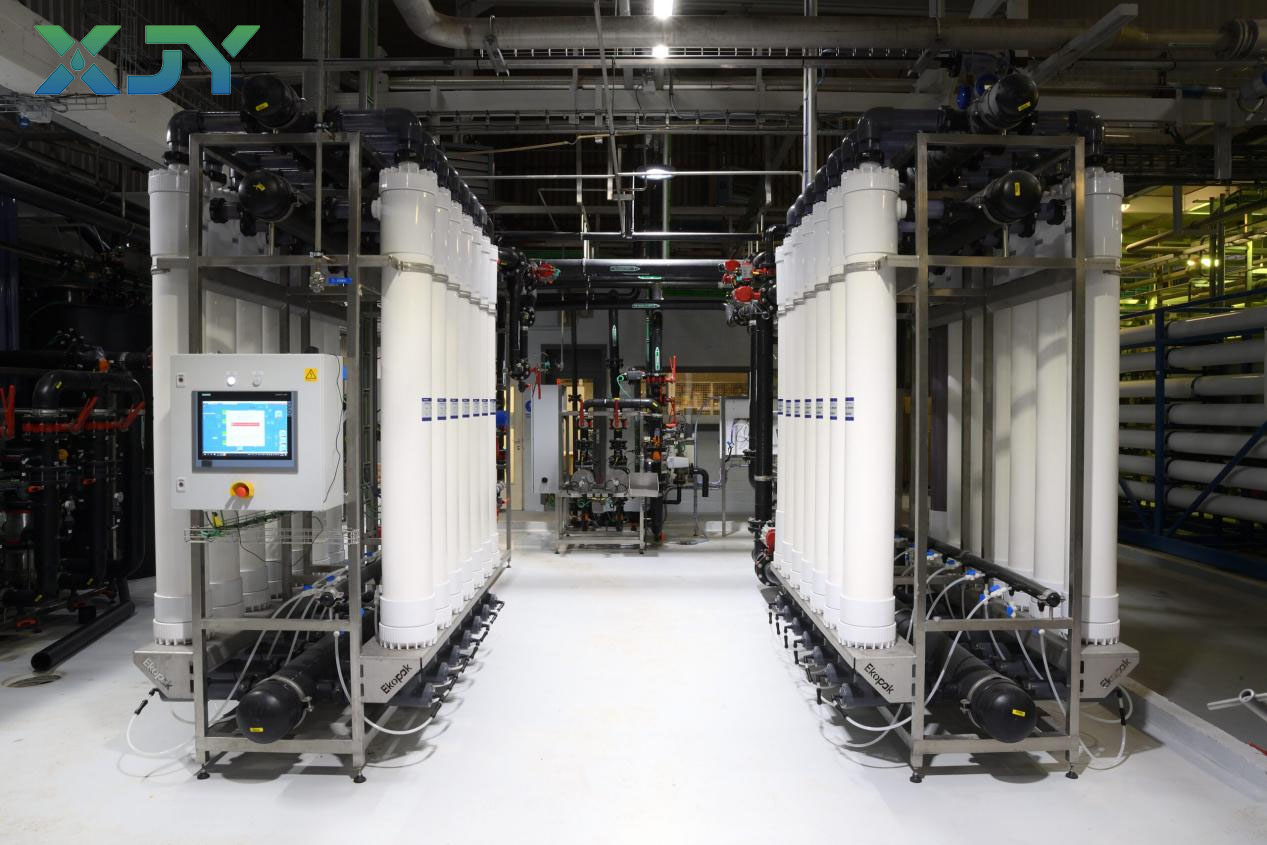
Con el continuo avance de la tecnología de membranas, el rendimiento de las máquinas de ultrafiltración mejora constantemente y su rango de aplicación se amplía continuamente. La investigación y la aplicación de nuevos materiales para membranas de ultrafiltración (como las membranas de polisulfona modificadas y las membranas cerámicas) han mejorado aún más la precisión de separación, la resistencia a las incrustaciones y la vida útil de los dispositivos de ultrafiltración. El uso combinado del sistema de ultrafiltración con otras tecnologías de separación (como la ósmosis inversa, la nanofiltración y el intercambio iónico) logra ventajas complementarias y amplía su aplicación en campos de alta gama, como la preparación de agua ultrapura, la purificación biofarmacéutica y el procesamiento de alimentos de alta gama.
Resumir
Hoy en día, las unidades de ultrafiltración industrial se utilizan ampliamente en diversos campos, como el tratamiento de aguas municipales, el tratamiento de aguas residuales industriales, la biomedicina, la industria alimentaria y de bebidas, la industria química, la electrónica y la protección del medio ambiente. Desempeñan un papel insustituible e importante a la hora de garantizar la seguridad del agua potable, controlar la contaminación medioambiental, mejorar la utilización de los recursos y promover la modernización industrial.