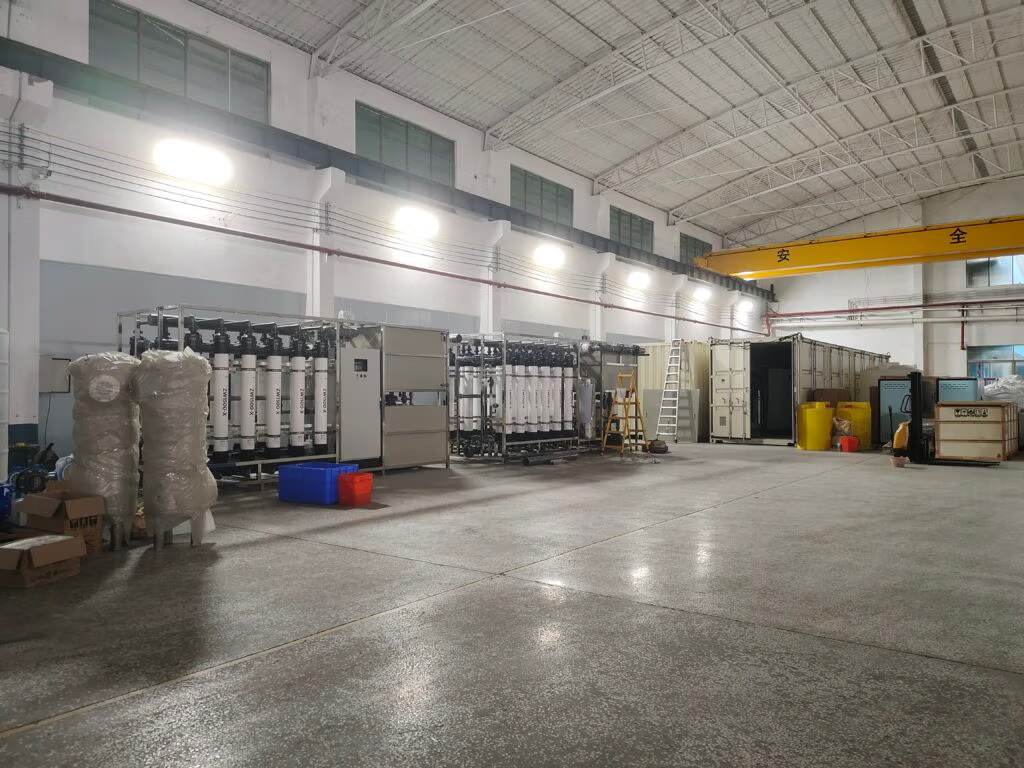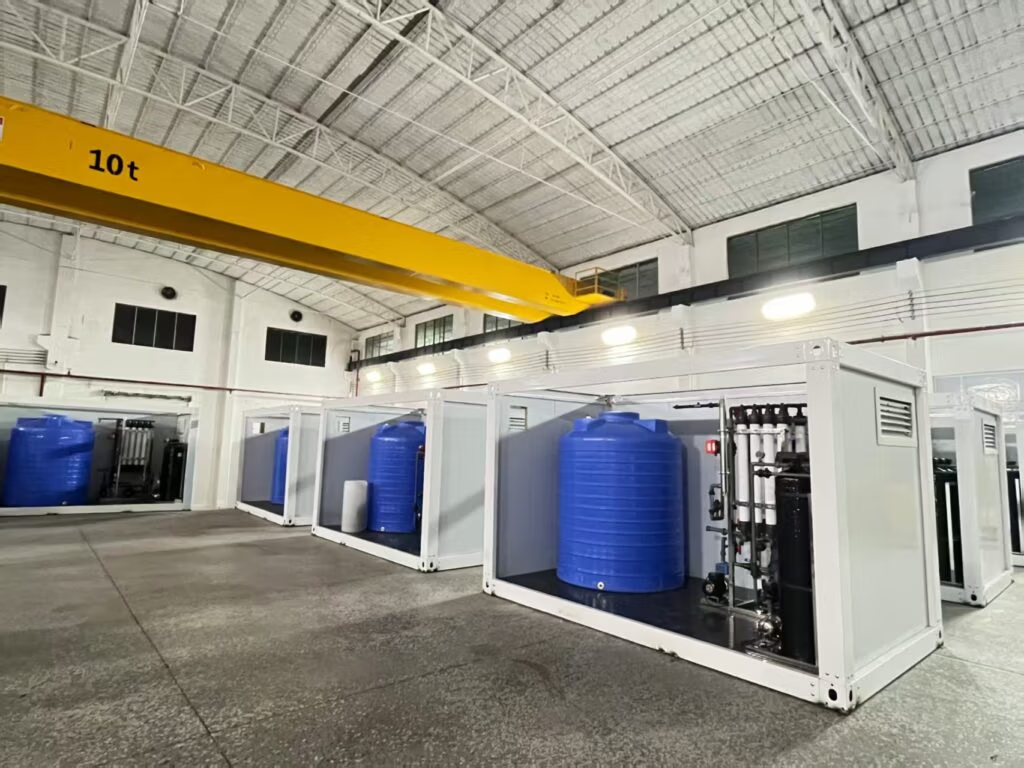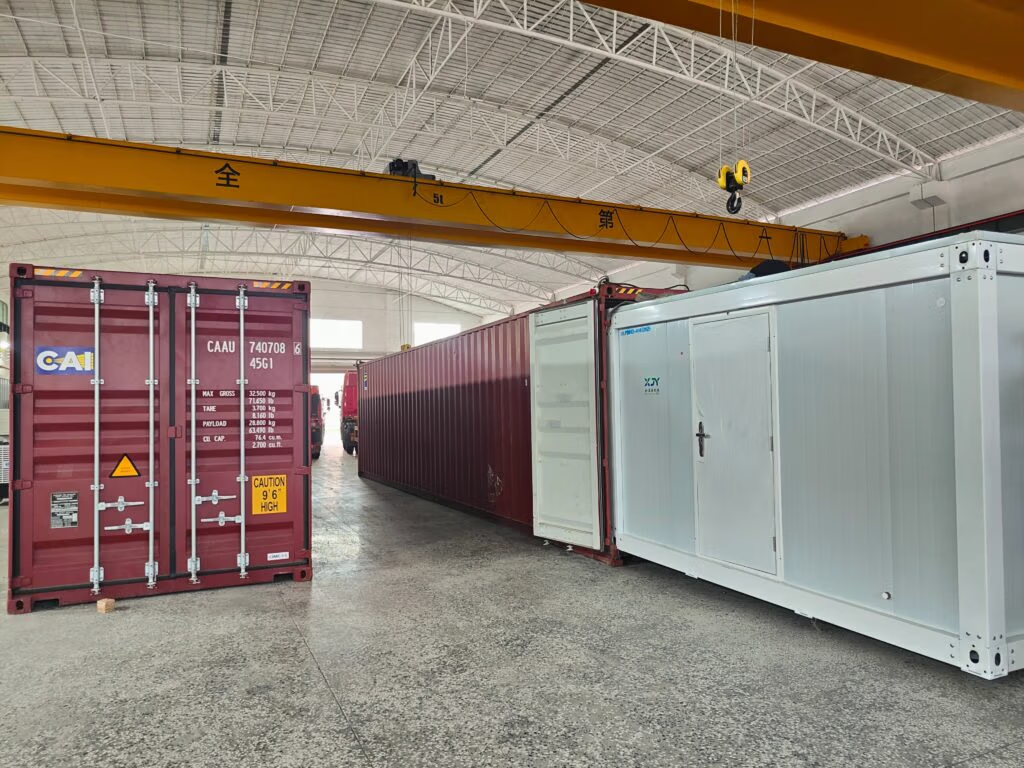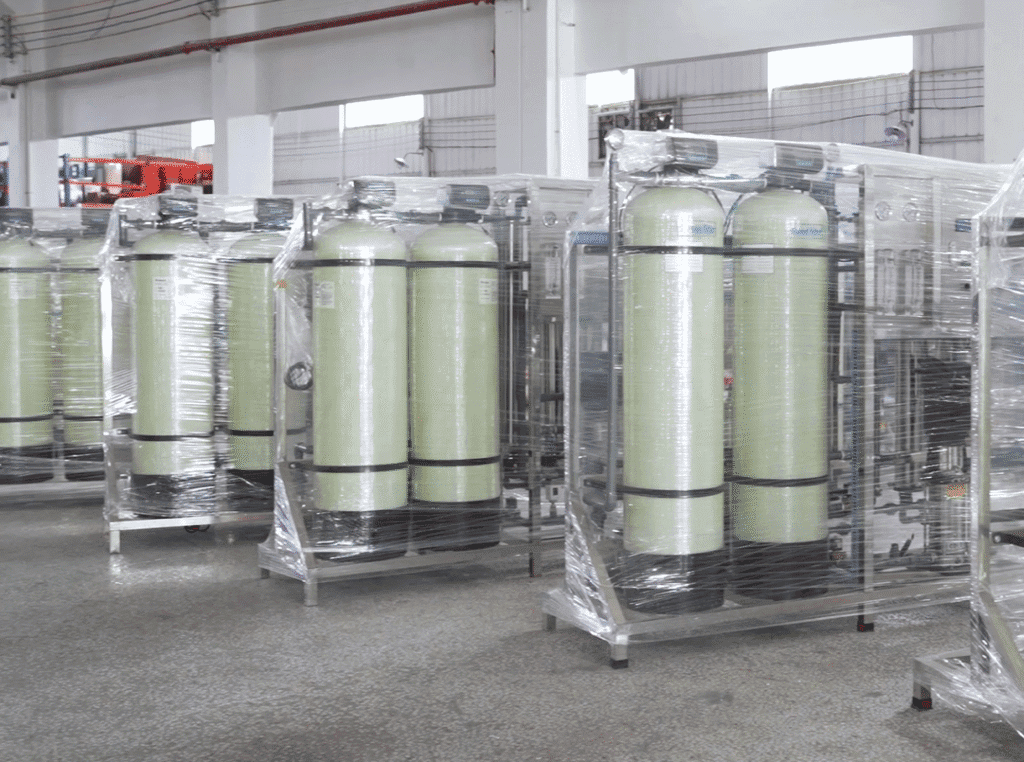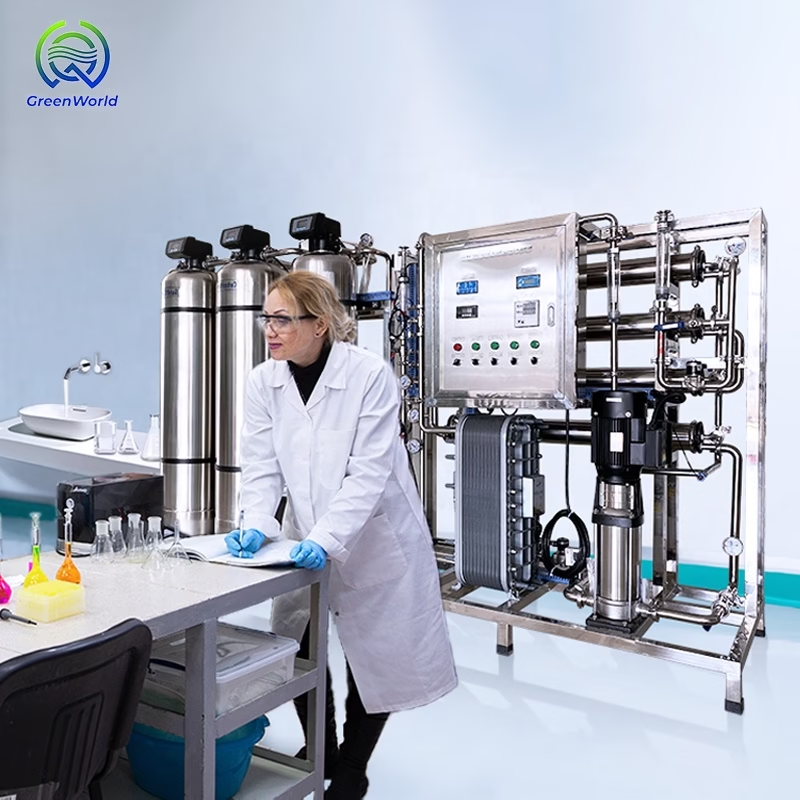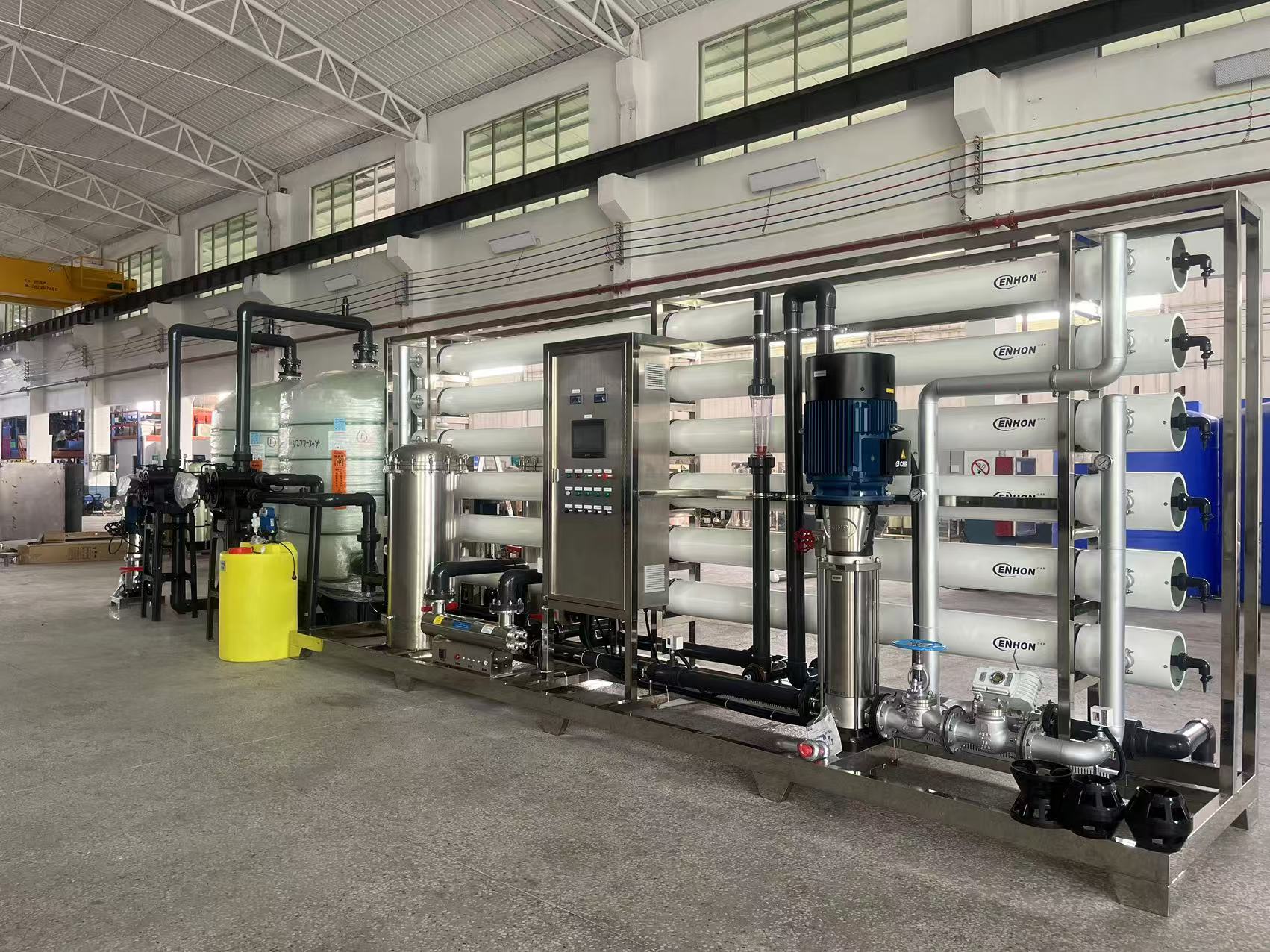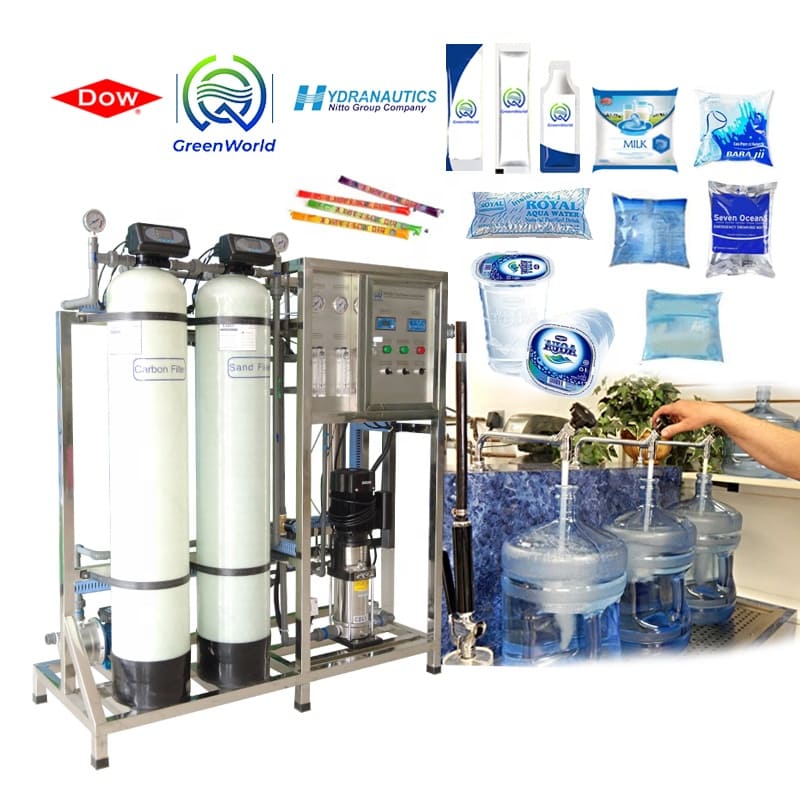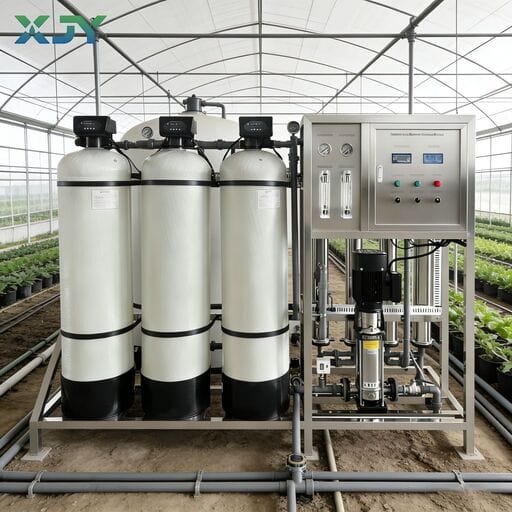
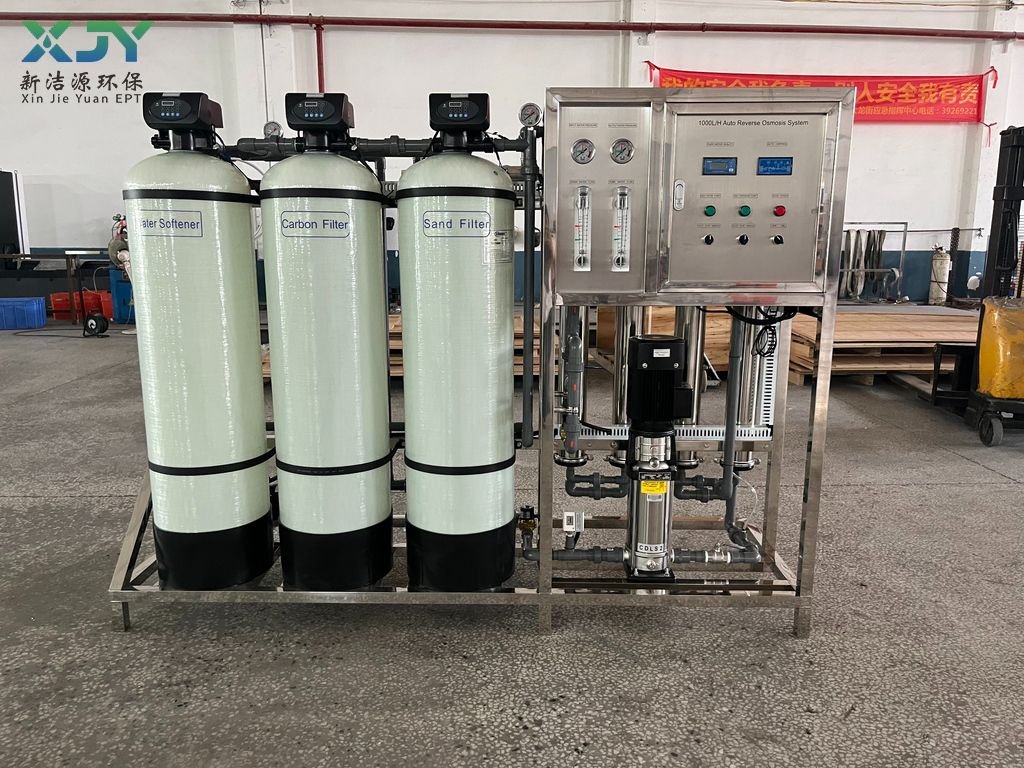
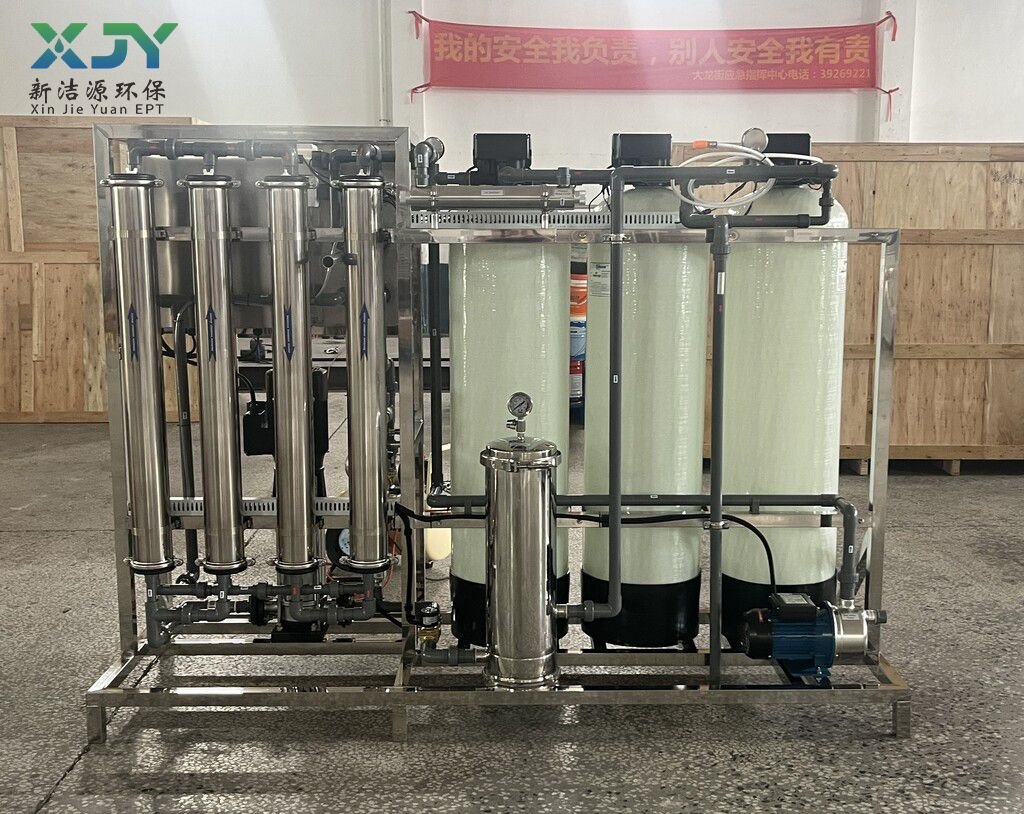
Los sistemas de ósmosis inversa son dispositivos altamente eficientes que utilizan tecnología de membrana RO para filtrar y purificar el agua. Este sistema RO aplica presión para forzar el paso de las moléculas de agua a través de una membrana semipermeable. La membrana retiene la mayoría de las impurezas, como sólidos disueltos, materia orgánica, bacterias y virus, logrando así la purificación deseada del agua.
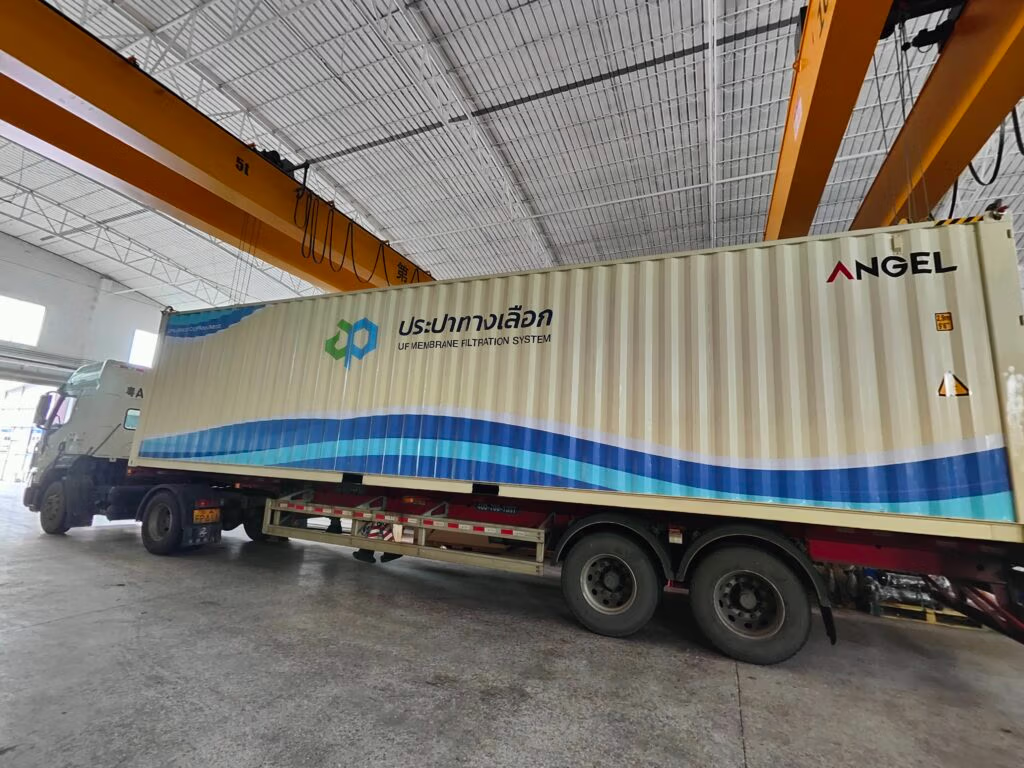
Nuestra fábrica acepta la personalización de diferentes especificaciones, desde 250 LPH hasta 100 TLPH. En cuanto al sector energético, también podemos personalizar equipos de contenedores solares si es necesario.
¿Cómo funcionan los sistemas de ósmosis inversa?
A continuación, explicaré el principio de funcionamiento de la ósmosis inversa.
En cuanto a la función de filtración, los sistemas de ósmosis inversa pueden eliminar eficazmente los sólidos solubles en el agua, como el calcio, los iones de magnesio y las sales inorgánicas, interceptar la materia orgánica, los microorganismos, los coloides y la materia en suspensión, y garantizar la calidad del agua y la seguridad microbiana.
En cuanto a la función de purificación del agua, se basa en su principio de filtración, que se basa en el efecto de interceptación física de las membranas semipermeables. Cuando los parámetros de funcionamiento del sistema de ósmosis inversa son estables y la calidad del agua de entrada fluctúa poco, la calidad del agua de salida se mantiene estable, lo que permite satisfacer la demanda de agua estable a largo plazo.
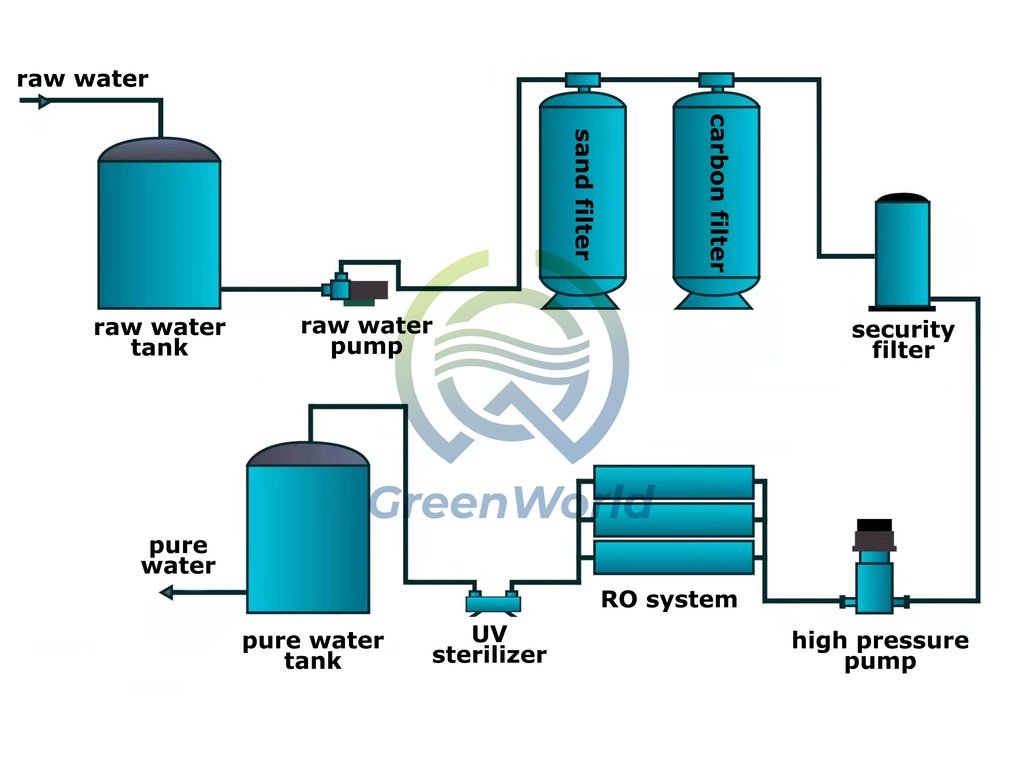
La purificación del agua se puede dividir principalmente en tres pasos.
1. Pretratamiento
El agua sin tratar pasa primero por un sistema de pretratamiento, que incluye filtros de arena de cuarzo, filtros de carbón activado, etc., para eliminar las impurezas del agua, como materias en suspensión, coloides, materias orgánicas, cloro residual, etc., reducir la turbidez y el color del agua, y garantizar la calidad del agua de la membrana de ósmosis inversa.
2. Presurización
El agua pretratada se presuriza mediante una bomba de alta presión para aumentar la presión del agua hasta alcanzar la presión de trabajo de la membrana de ósmosis inversa (generalmente entre 1,5 y 2,5 MPa).
3. Ósmosis inversa
El agua presurizada se distribuye uniformemente a través de cada elemento de membrana de ósmosis inversa. Tras la separación por las membranas, se forman dos corrientes. Una corriente pasa a través de las membranas y se convierte en agua pura (también conocida como permeado o agua de producto). La otra corriente no logra atravesar las membranas y se convierte en concentrado (también conocido como agua de rechazo o agua residual).
El agua pura fluye desde cada elemento de membrana RO, se recoge y se supervisa mediante medidores de flujo y manómetros antes de salir por la salida de los sistemas de ósmosis inversa y entrar en un tanque de agua pura. El agua concentrada fluye desde cada elemento de membrana RO, se recoge y se supervisa mediante medidores de flujo y manómetros. A continuación, sale por la salida de los sistemas de ósmosis inversa para su descarga o reciclaje.
Ventajas de los sistemas de ósmosis inversa
1. Gran capacidad de producción de agua.
La producción de agua por hora alcanza los 1000 litros, lo que permite satisfacer la demanda continua de agua. Ya sea para la producción industrial o el suministro de agua potable en zonas densamente pobladas, puede proporcionar de manera estable fuentes de agua suficientes.
2. Excelente calidad del agua.
La máquina de ósmosis inversa tiene una tasa de desalinización superior a 97% y, dado que el tamaño de los poros de la membrana de ósmosis inversa es de tan solo 0,0001 micras, puede interceptar casi todos los microorganismos para garantizar la seguridad de los indicadores microbianos de la calidad del agua. También puede reducir en gran medida el contenido de materia orgánica, como el ácido húmico, y reducir la DQO y la DBO.
3. Funcionamiento estable
La máquina tiene un alto grado de automatización, utiliza PLC para ajustar los parámetros operativos, ajusta el estado según el valor establecido, cuenta con protección contra alta y baja presión, protección contra falta de agua y otras alarmas de fallo, puede funcionar de forma continua y estable, y producir agua de forma continua y estable.
4. Económico y eficiente.
El equipo tiene la ventaja de un bajo consumo energético. La avanzada tecnología de ósmosis inversa optimiza el consumo energético operativo, reduce los costos a largo plazo, tiene una alta tasa de recuperación, puede mejorar la utilización de los recursos hídricos y reducir los residuos y los costos del agua.
5. Ampliamente utilizado
En el ámbito industrial, es adecuado para las industrias electrónica, farmacéutica, química, alimentaria y de bebidas, ya que proporciona agua de proceso de alta pureza para garantizar la calidad del producto. En otro ámbito de la vida, podemos utilizar sistemas de equipos en contenedores en comunidades, escuelas, hospitales, hoteles y otros lugares para suministrar agua potable de alta calidad.