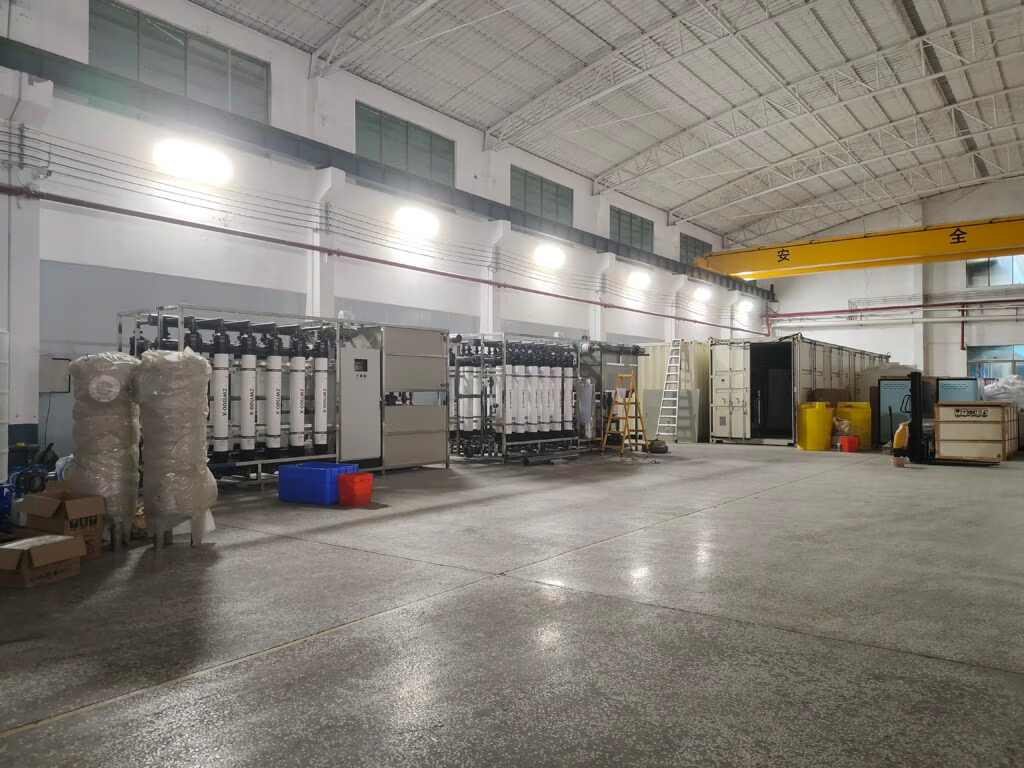
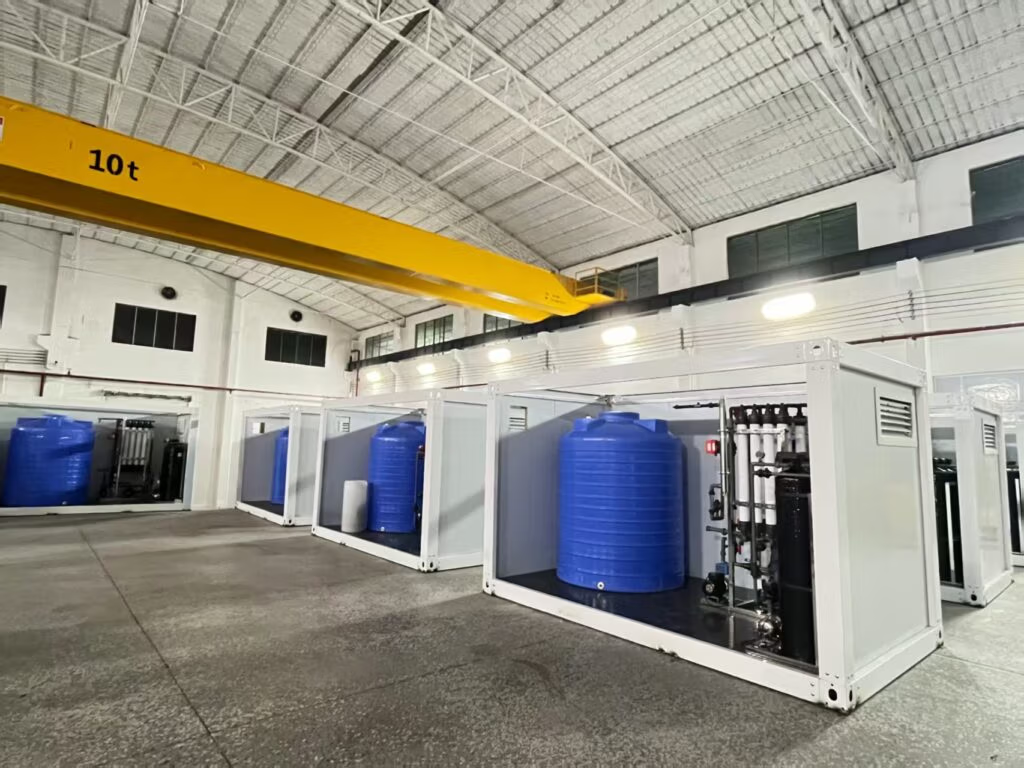
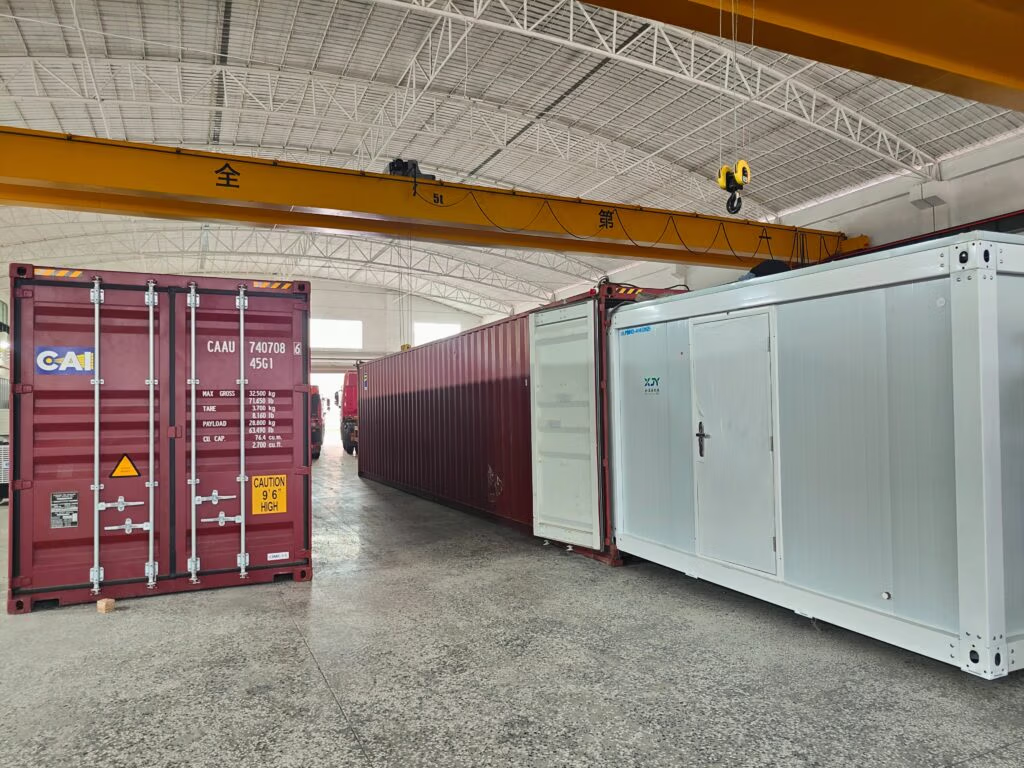
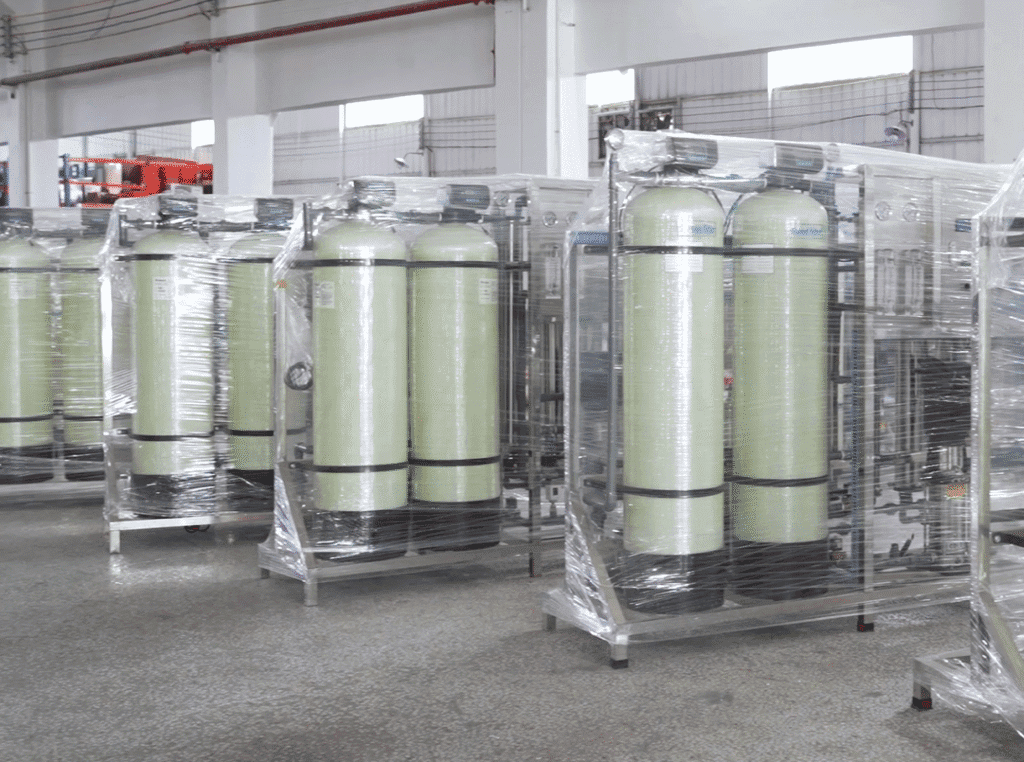
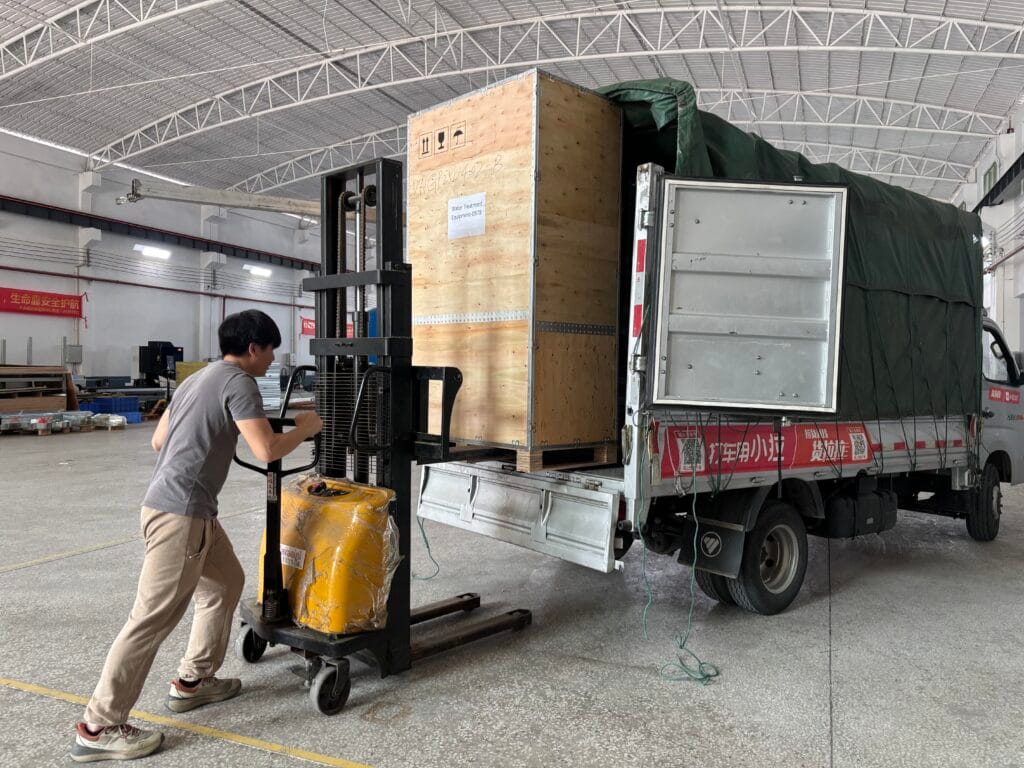
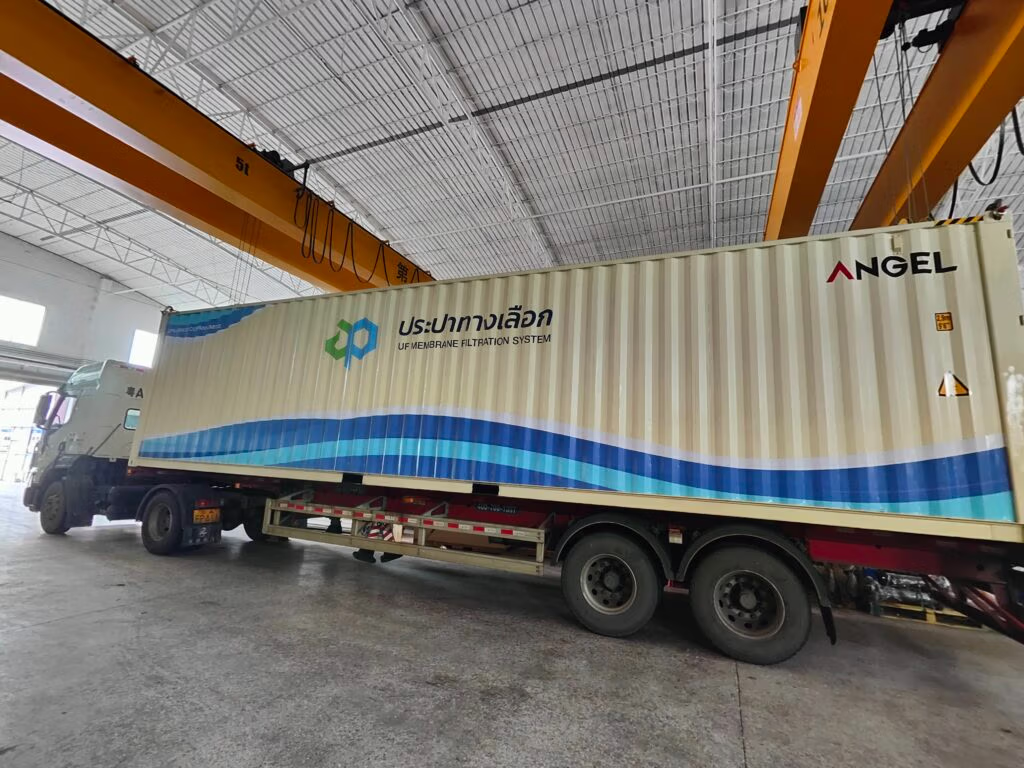
La filtración de agua ultrapura utiliza una serie de métodos físicos y químicos para eliminar impurezas como partículas en suspensión, coloides, iones disueltos, materia orgánica y microorganismos del agua, logrando estándares de pureza extremadamente altos. El agua pura resultante cumple con los requisitos de la fabricación de precisión, la ingeniería química de alta gama, la biomedicina y otras aplicaciones que requieren niveles de impurezas extremadamente bajos.
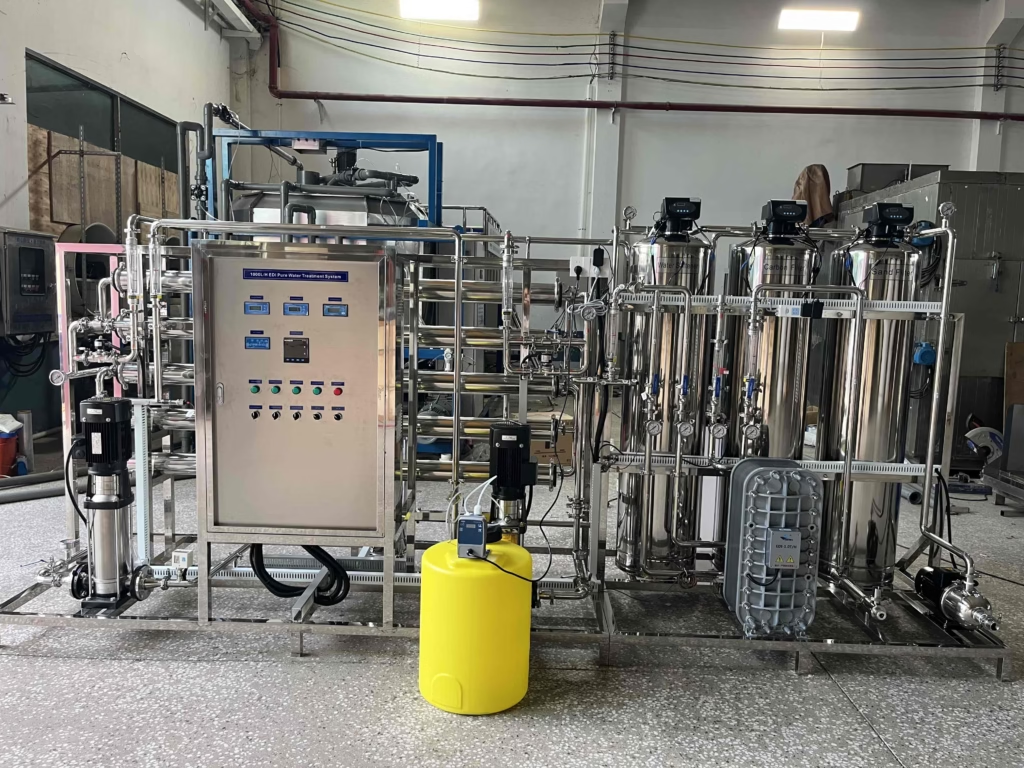
¿Qué nivel de filtración de agua ultrapura se requiere?
Resistividad:
El agua ultrapura suele requerir una resistividad de 18,2 MΩ·cm (25 °C). A esta temperatura, la concentración de iones en el agua es extremadamente baja. Por lo tanto, se aproxima al nivel del agua teóricamente pura.
Carbono orgánico total (COT):
El agua ultrapura generalmente requiere un valor de TOC inferior a 5 ppb (menos de 1 ppb en algunas aplicaciones de semiconductores).
Contenido de partículas:
Debemos controlar el número de partículas ≥0,1 μm a menos de 10 por mililitro. Con el fin de evitar que las partículas diminutas se adhieran a las superficies de los componentes de precisión y afecten al rendimiento.
Contenido microbiano:
El agua ultrapura debe ser estéril (recuento total de colonias <1 UFC/mL).
¿Cómo funciona la filtración de agua ultrapura?
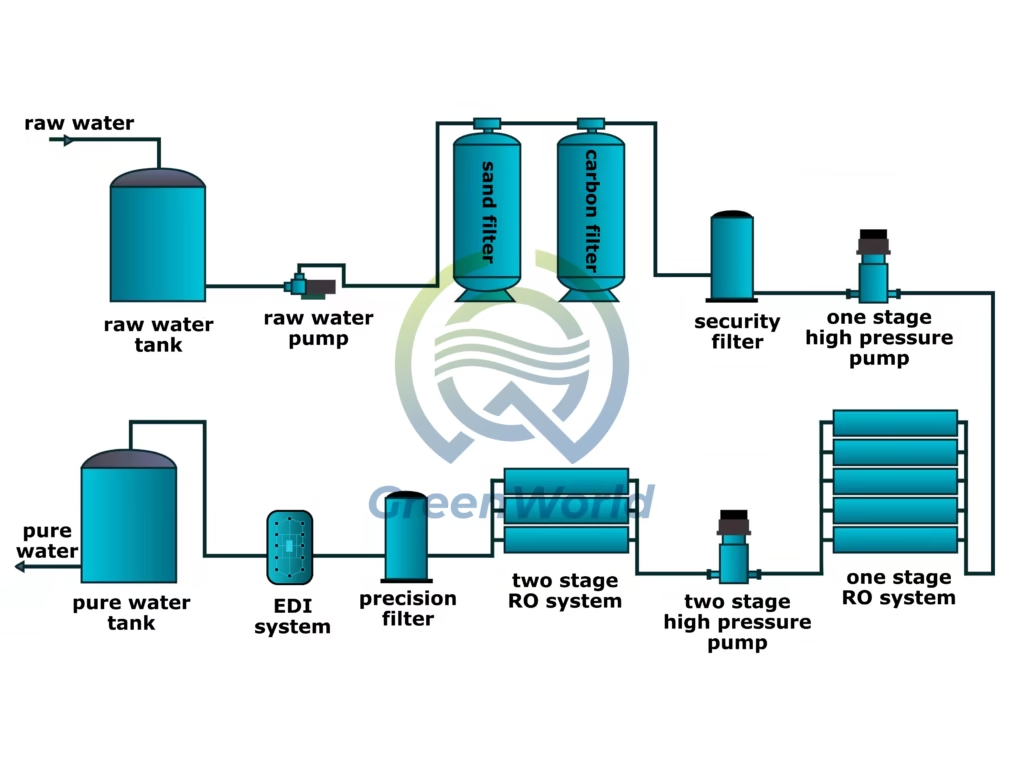
Podemos dividir el proceso de purificación de sistema EDI en cinco etapas. Incluyen el pretratamiento, el tratamiento de ósmosis inversa primaria, el tratamiento de ósmosis inversa secundaria, el tratamiento EDI profundo y el control de calidad del agua terminal.
1. Etapa de preprocesamiento
En primer lugar, el agua sin tratar se trata secuencialmente a través de un filtro multimedia, carbón activado y filtro de seguridad. A continuación, se añade un inhibidor de incrustaciones (dureza 8.5) o demasiado bajo (<5.5), debemos ajustarlo a 6.5-7.5 para que coincida con el rango de pH óptimo de funcionamiento de la membrana de ósmosis inversa.
Este proceso elimina los sólidos en suspensión, los coloides, el cloro residual, la dureza (Ca²⁺, Mg²⁺) y parte de la materia orgánica del agua sin tratar. De este modo, se evita la formación posterior de incrustaciones, la contaminación o los daños por oxidación en la membrana de ósmosis inversa, lo que garantiza un funcionamiento estable del sistema de ósmosis inversa.
2. Etapa de tratamiento primario por ósmosis inversa.
En segundo lugar, una bomba de alta presión presuriza el agua pretratada a 1,5-2,5 MPa. Mediante una membrana de ósmosis inversa de alta densidad y resistente a las incrustaciones, la presión empuja las moléculas de agua a través de la membrana para formar “agua producto”. Los iones disueltos y la materia orgánica se retienen en forma de agua concentrada (20%-30%, que puede descargarse o reciclarse).
El agua del producto entra en un tanque tampón. Mientras tanto, se requiere un monitoreo en línea de la resistividad (100-500 kΩ・cm), la conductividad y una tasa de desalinización ≥97%. Los indicadores anormales (como la reducción de la tasa de desalinización debido a la obstrucción de la membrana) activan una alarma.
Esto elimina 971 TP3T de iones disueltos, moléculas orgánicas grandes y algunos microorganismos del agua pretratada, lo que reduce significativamente la carga de impurezas en el agua.
3. Etapa secundaria de tratamiento por ósmosis inversa.
En tercer lugar, porque la salinidad del agua permeada primaria ha disminuido significativamente. Una bomba secundaria de alta presión aumenta la presión a 1,0-1,8 MPa (inferior a
el agua permeada primaria para evitar daños en la membrana). Podemos seleccionar una membrana de ósmosis inversa con mayor eficiencia de desalinización (como un tipo de baja obstrucción). El agua permeada debe tener una resistividad ≥150 kΩ・cm, TOC <50 ppb y sílice <0,1 mg/L (para evitar la formación de incrustaciones en el EDI). Si el TOC supera los límites especificados, podemos añadir una unidad de oxidación UV de 185 nm antes de la ósmosis inversa secundaria.
El concentrado secundario de ósmosis inversa (con una salinidad mayor que el agua permeada primaria, pero menor que el agua sin tratar) puede devolverse a la alimentación primaria de ósmosis inversa para su retratamiento. Por lo tanto, se logra una tasa de recuperación de agua total de 70%-80%.
Después de este tratamiento, el agua tratada cumple plenamente los requisitos de calidad del agua de alimentación para EDI. La tasa de eliminación total de iones es ≥99,51 TP3T (en comparación con el agua sin tratar), y la resistividad del agua permeada es de 150-1000 kΩ・cm, con un TOC <50 ppb.
4. Desalinización profunda por EDI
Después del tratamiento secundario de ósmosis inversa, el agua pasa a través de un módulo EDI (que contiene una membrana de unión de iones, resina y electrodos), y se le aplica una corriente continua (1-5 A). Los iones migran a la cámara de concentración para su descarga. A continuación, se controla el caudal de agua dulce (1-3 L/min por módulo) y se supervisa la resistividad del agua producida.
Este tratamiento cumple con las especificaciones básicas para el agua ultrapura industrial. Tales como las requeridas por las industrias de semiconductores y biofarmacéutica. Eficiencia de eliminación de iones ≥99.9%, resistividad del agua producida 15-18 MΩ cm, TOC <10 ppb y contenido de sílice <0.01 mg/L.
5. Garantizar la calidad del agua en la terminal.
En la terminal, debemos utilizar una membrana de microfiltración de 0,02-0,1 μm o una membrana de ultrafiltración para interceptar los fragmentos de resina y los microorganismos que puedan desprenderse del módulo EDI.
Debemos adaptar la esterilización con rayos ultravioleta (UV) a cada aplicación. Por ejemplo, en las industrias biofarmacéutica y alimentaria, se utilizan lámparas UV con una longitud de onda de 254 nm para destruir el ADN microbiano. En algunas aplicaciones, se puede añadir UV de 185 nm para reducir el TOC a menos de 5 ppb. Los tanques de almacenamiento de agua ultrapura de la industria de los semiconductores pueden llenarse con nitrógeno de alta pureza, con una pureza ≥99,999%, para aislar el aire.
Por último, hacemos circular el agua ultrapura a través de tuberías de acero inoxidable 316L. De este modo, se evita que el agua estancada genere microorganismos y se reduce la adsorción de impurezas.
Este tratamiento cumple con los requisitos extremos de agua de las aplicaciones industriales de alta gama. El agua del producto final tiene una resistividad de 18,2 MΩ・cm (25 °C), TOC <5 ppb, un contenido de partículas de ≥0,1 μm <1 partícula/mL y es estéril.
¿Dónde podemos utilizar la filtración de agua ultrapura?
①Industria de semiconductores y electrónica
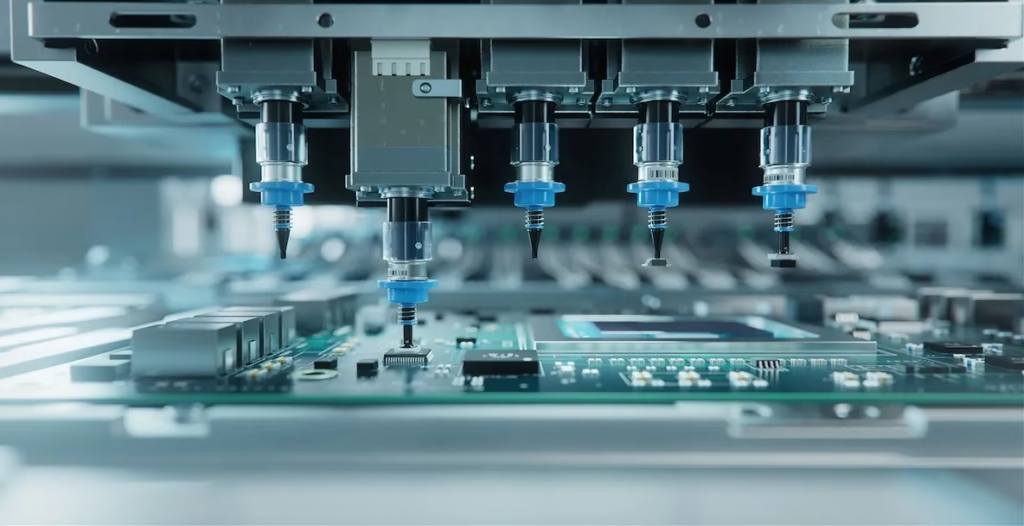
Durante los procesos de fabricación de chips semiconductores (como la limpieza de obleas, la fotolitografía y el grabado), los iones, las partículas y la materia orgánica presentes en el agua pueden provocar cortocircuitos en los chips y distorsionar los patrones fotolitográficos.
Nuestro sistema de filtración de agua ultrapura utiliza un proceso combinado de “RO + EDI + UV + ultrafiltración terminal” para proporcionar agua estable y de alta pureza para la producción de chips.
②Industria biofarmacéutica
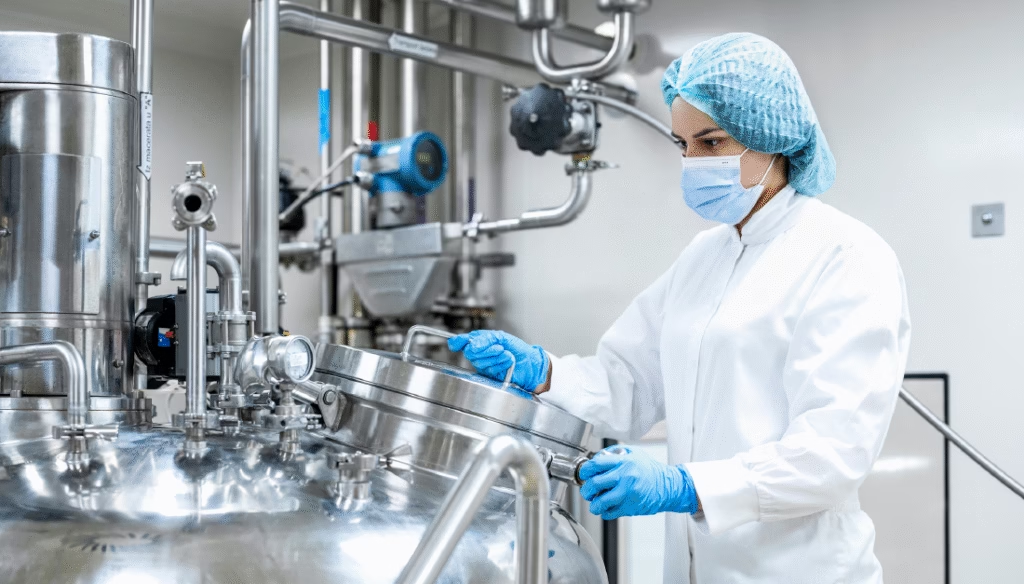
El agua ultrapura utilizada en la producción farmacéutica y la limpieza de dispositivos médicos debe cumplir los requisitos de las buenas prácticas de fabricación (GMP): esterilidad, ausencia de pirógenos (endotoxinas < 0,25 EU/mL) y TOC < 5 ppb.
El sistema de filtración utiliza un proceso de “UF + RO + EDI + filtración esterilizante terminal” para eliminar microorganismos y pirógenos, evitando la contaminación farmacéutica.
③Industria eléctrica
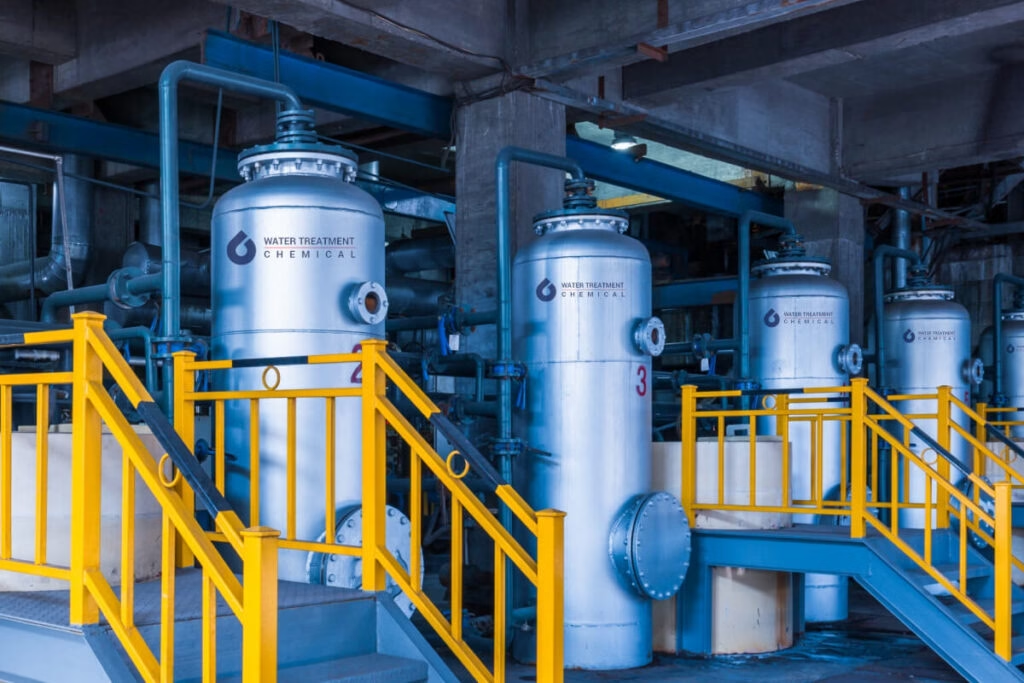
Las impurezas iónicas presentes en el agua de las calderas utilizadas en centrales térmicas o nucleares pueden provocar la formación de incrustaciones en las paredes de las calderas, lo que reduce la eficiencia térmica, provoca la corrosión de las tuberías e incluso puede provocar explosiones.
La filtración de agua ultrapura utiliza un proceso de “ósmosis inversa + intercambio iónico” para reducir la resistividad del agua de alimentación de la caldera a 5-10 MΩ・cm y una dureza (medida como CaCO₃) inferior a 0,1 mg/L, lo que reduce la formación de incrustaciones y prolonga la vida útil del equipo.
④Nueva industria energética
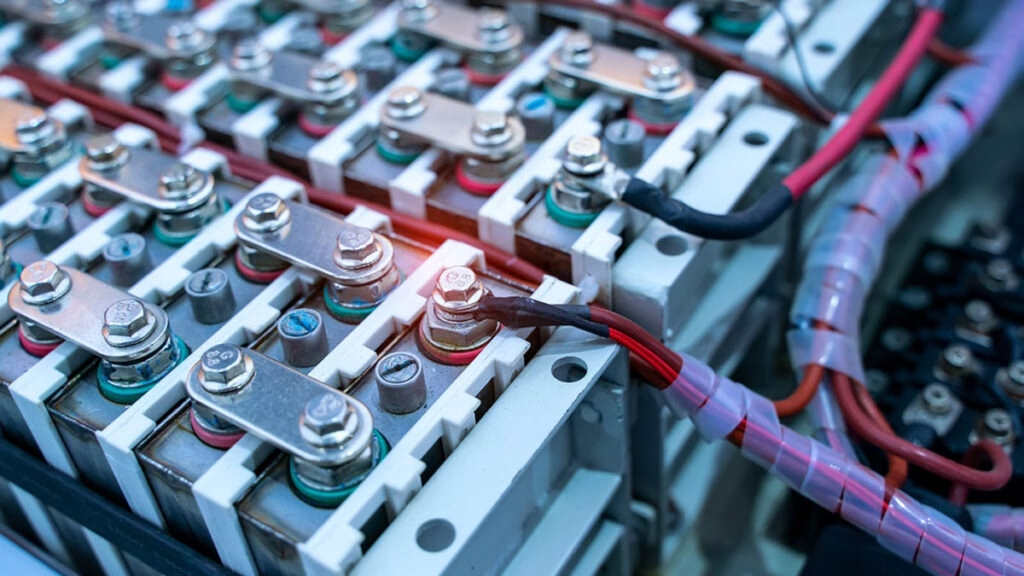
En la producción de materiales catódicos para baterías de litio y obleas de silicio fotovoltaicas, los iones metálicos (como Na⁺ y K⁺) presentes en el agua pueden afectar a la capacidad de las baterías y a la eficiencia de conversión de los módulos fotovoltaicos.
Los sistemas de filtración de agua ultrapura deben controlar el contenido de iones metálicos por debajo de 0,1 ppb. Mediante un proceso de “RO+EDI+resina quelante”, proporcionan agua con bajo contenido en impurezas para la síntesis de nuevos materiales energéticos.
¿Cuáles son los problemas que plantea el uso de equipos de agua ultrapura?
Alto consumo de energía
Las tecnologías básicas, como la ósmosis inversa y la EDI, consumen cantidades significativas de electricidad (por ejemplo, la ósmosis inversa requiere una presión de funcionamiento de 1-4 MPa). Algunos procesos tradicionales de intercambio iónico requieren el uso frecuente de agentes regeneradores ácidos y alcalinos, lo que se traduce en altos costos de funcionamiento y una presión significativa sobre el medio ambiente.
Escasa adaptabilidad a la complejidad de la calidad del agua
Algunas aguas brutas industriales (por ejemplo, aguas residuales con alto contenido en sal y aguas residuales que contienen metales pesados) tienen una composición compleja, lo que hace que los sistemas de filtración sean susceptibles al ensuciamiento de las membranas y al envenenamiento de la resina, lo que requiere la sustitución frecuente de los consumibles.
¿Qué mejoras hay en la filtración de agua ultrapura?
Actualizaciones tecnológicas para ahorrar energía
Mediante el uso de membranas RO de bajo consumo energético y nuevos módulos EDI (que reducen el consumo energético en más de un 30%), combinados con sistemas de recuperación de calor residual, reducimos el consumo energético.
Equipo integrado
Con el objetivo de satisfacer las necesidades de los clientes pequeños y medianos, utilizamos equipos modulares de agua ultrapura (como unidades integradas de “pretratamiento + RO + EDI”) para acortar los ciclos de instalación y reducir la complejidad operativa.
Conclusión
La filtración de agua ultrapura utiliza un proceso de purificación por etapas que combina ósmosis inversa de dos etapas y EDI para transformar el agua cruda común en agua ultrapura de la más alta pureza. Esto proporciona una garantía de agua esencial para el desarrollo de alta calidad de industrias clave como la de semiconductores, biofarmacéutica y de nuevas energías.
Actualmente, se enfrenta a retos como el elevado consumo energético y la escasa adaptabilidad a la compleja calidad del agua. La industria del tratamiento de aguas está innovando y actualizándose hacia soluciones más eficientes y respetuosas con el medio ambiente. Ayuda a la industria manufacturera mundial a realizar la transición hacia una producción de precisión y con bajas emisiones de carbono.
Si tienes otros Sistema de agua EDI Si tiene alguna pregunta, siempre puede consultarnos.