Trouver un fournisseur fiable d'eau traitée par osmose inverse est une priorité stratégique pour toute installation industrielle qui dépend d'une eau ultra-pure. Que votre activité concerne la production d'électricité, la fabrication de produits pharmaceutiques, la transformation agroalimentaire ou la fabrication de semi-conducteurs, la pureté de votre eau de process influe à la fois sur la qualité de la production, la durée de vie des équipements et les coûts d'exploitation. Ce guide explique comment évaluer l'eau d'osmose inverse disponible à la vente, ce qui distingue un système industriel d'eau d'osmose inverse hautement performant d'un système sous-dimensionné, et comment structurer un contrat d'approvisionnement en eau d'osmose inverse en vrac qui garantit la continuité de la production de votre site.
Pourquoi l'eau d'osmose inverse à vendre est la référence dans l'industrie
L'eau brute - quelle que soit sa source - contient des sels dissous, des sous-produits du chlore, des nitrates, des métaux lourds, de la silice et des contaminants microbiens. Dans les environnements industriels, ces substances forment du tartre sur les surfaces des chaudières et des échangeurs de chaleur, corrodent les tuyauteries de précision, contaminent les lots pharmaceutiques et alimentaires et dégradent les performances des membranes dans les systèmes de refroidissement. L'osmose inverse résout chacun de ces problèmes en forçant l'eau d'alimentation à traverser une membrane semi-perméable sous haute pression, en éliminant systématiquement jusqu'à 99% de solides dissous en un seul passage de traitement.
L'expansion du marché mondial de l'eau vendue par osmose inverse reflète un changement fondamental dans la façon dont les opérateurs industriels considèrent l'eau : non pas comme un produit utilitaire, mais comme un intrant de processus contrôlé avec des paramètres de qualité mesurables. Les installations qui considèrent la pureté de l'eau comme une variable gérée font systématiquement état de coûts de maintenance moins élevés, de moins de défaillances au niveau de la qualité des produits et d'intervalles de service plus longs pour les équipements que celles qui ne le font pas.
7 avantages prouvés de l'approvisionnement en eau osmosée pour une utilisation industrielle
- Jusqu'à 99% d'élimination des solides dissous : Les membranes d'OI éliminent les sels, le chlore, le fluor, les nitrates, les métaux lourds et les matières biologiques en un seul passage à haute pression.
- Protection de l'équipement : L'eau sans calcaire et réduite en minéraux élimine l'encrassement des chaudières, des échangeurs de chaleur, des tours de refroidissement et des systèmes de pulvérisation de précision.
- Qualité constante des produits : La stabilité chimique de l'eau élimine une variable clé des processus de fabrication des aliments, des boissons, des produits pharmaceutiques et de l'électronique.
- Conformité réglementaire : L'eau d'osmose inverse certifiée est conforme aux normes USP Purified Water, ASTM Type II et ISO relatives à la qualité de l'eau, sans étapes de traitement supplémentaires.
- Approvisionnement flexible : Tous deux ont acheté de l'eau RO en vrac et ont installé des modèles de systèmes d'eau RO industriels adaptés à l'évolution des besoins de l'installation.
- Un retour sur investissement positif : La réduction de la fréquence de détartrage, du dosage de produits chimiques et du nombre de rejets de lots permet un retour sur investissement mesurable dans les 12 à 36 mois dans la plupart des environnements industriels.
- Indépendance de l'offre : La production d'OI sur site élimine la dépendance à l'égard de la qualité variable de l'eau municipale, qui peut varier selon les saisons ou à la suite de perturbations de l'infrastructure.
Comment s'approvisionner et évaluer l'eau d'osmose inverse à vendre
Le marché de l'eau osmosée à vendre couvre à la fois l'eau livrée en vrac et les systèmes installés sur site. Avant de s'engager dans l'un ou l'autre modèle, il est essentiel de procéder à une évaluation structurée de la qualité, de la capacité et des conditions commerciales afin de s'assurer que votre établissement reçoit une eau qui répond véritablement aux spécifications du processus - et pas seulement aux revendications de pureté de la manchette.
1. Définir les objectifs en matière de TDS, de conductivité et de pureté
Le total des solides dissous (TDS) est le principal critère de qualité pour toute eau d'osmose inverse mise en vente. Les applications pharmaceutiques et électroniques exigent un TDS inférieur à 5 mg/L, obtenu par EDI ou polissage en lit mixte en aval de l'étape primaire d'osmose inverse. Demandez toujours un certificat d'analyse (CoA) à jour couvrant le TDS, la conductivité électrique, le pH, la dureté totale, la silice, le chlorure et la numération microbienne avant de finaliser la sélection d'un approvisionnement ou d'un système.
2. Vérifier les certifications du fournisseur et la fréquence des essais
Un fournisseur crédible d'eau d'osmose inverse à vendre détient les certifications ISO appropriées, effectue régulièrement des tests de qualité de l'eau par des tiers et communique les résultats vérifiés à intervalles réguliers. Demandez la fréquence des tests, si les paramètres microbiens sont testés en plus des paramètres chimiques, et comment les lots hors spécifications sont gérés et communiqués. Les fournisseurs incapables de satisfaire à cette norme ne devraient pas dépasser le stade de l'évaluation initiale.
3. Système d'osmose inverse sur site et approvisionnement en eau achetée
Pour les installations dont la demande est stable et importante, l'installation d'un système d'osmose inverse dédié à l'industrie permet généralement de réduire le coût de l'eau par mètre cube de 70-90% par rapport à l'achat d'eau osmosée en vrac auprès d'une tierce partie. Le compromis réside dans les dépenses d'investissement initiales et l'entretien continu des membranes. Nos services de gestion de l'eau et de l'environnement guide des coûts des systèmes d'osmose inverse fournit un cadre détaillé pour modéliser avec précision le délai de récupération. Pour les établissements dont la demande est variable ou dont l'espace au sol est limité, l'approvisionnement en eau certifiée par osmose inverse pour la vente à l'extérieur reste l'option la plus pratique et la plus évolutive à court terme.
Principales applications industrielles de l'approvisionnement en eau RO en vrac
La demande d'eau certifiée par osmose inverse à vendre concerne toutes les grandes industries de transformation. Dans chacun des secteurs ci-dessous, la pureté de l'eau est une variable opérationnelle directe - et non une utilité de fond.
Production d'électricité : Eau d'alimentation des chaudières et des turbines à vapeur
Les chaudières à haute pression et les turbines à vapeur nécessitent une eau d'une dureté proche de zéro pour éviter la formation de tartre minéral sur les surfaces de transfert de chaleur. Un seul millimètre de tartre de carbonate de calcium réduit l'efficacité thermique de la chaudière jusqu'à 7%, augmentant proportionnellement la consommation de carburant. Les systèmes d'osmose inverse industriels ont été la norme mondiale pour les systèmes de traitement de l'eau. eau d'alimentation de la chaudière La préparation de la vapeur et de l'eau de chaudière se fait depuis des décennies, souvent complétée par l'électrodéionisation (EDI) lorsque les exigences en matière de conductivité sont inférieures à 0,1 µS/cm. Pour une vue d'ensemble techniquement rigoureuse des normes de qualité de la vapeur et de l'eau de chaudière, le site Web de l Documents d'orientation technique de l'IAPWS sont la référence technique internationalement reconnue pour le traitement de l'eau des centrales électriques.
Fabrication de produits alimentaires, de boissons et de produits laitiers
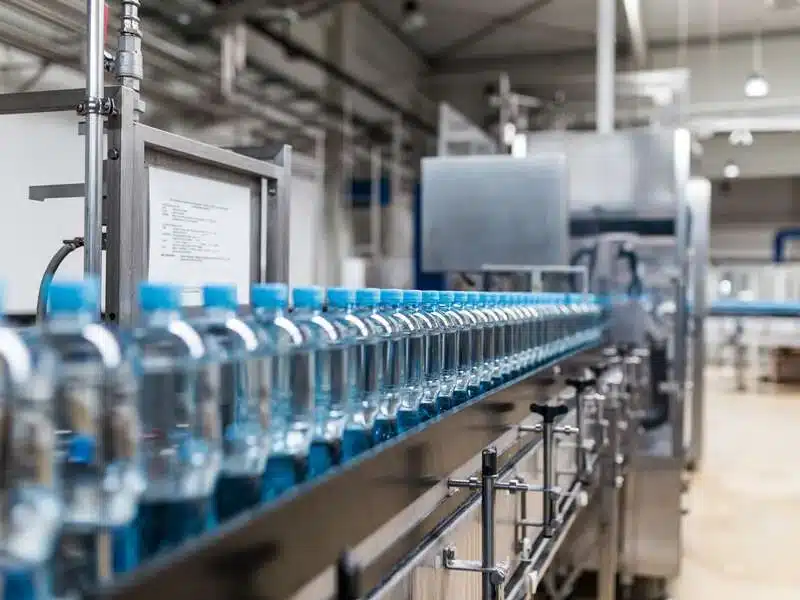
Les brasseries, les producteurs de boissons non alcoolisées, les marques d'eau conditionnée et les transformateurs de produits laitiers s'appuient tous sur une eau d'osmose inverse stable et certifiée, vendue en vrac, en tant qu'intrant fondamental du processus. Une chimie de l'eau cohérente garantit des profils de goût prévisibles pour les produits, une durée de conservation prolongée et la conformité aux exigences des audits de sécurité alimentaire. Le chlore, les composés de mauvais goût, les nitrates et les risques de contamination microbienne sont éliminés à la source, ce qui réduit les rejets de lots et les événements de maintien de la qualité.
Production pharmaceutique et de semi-conducteurs
Ces secteurs requièrent les degrés de pureté d'eau les plus exigeants - l'eau pour injection (WFI) dans la fabrication de produits pharmaceutiques et l'eau ultrapure (UPW) approchant une résistivité de 18,2 MΩ-cm dans la fabrication de semi-conducteurs. Un système d'osmose inverse industriel dédié constitue l'étape fondamentale de purification dans les chaînes de traitement à plusieurs étapes qui comprennent également la stérilisation par UV, le charbon actif et la déionisation en lit mixte. Toute défaillance de qualité au niveau de l'OI se propage en aval, risquant d'entraîner une contamination des lots, des violations de la réglementation ou des rappels de produits.
Cadre de passation des marchés de fourniture d'eau RO en gros
Pour structurer un contrat de fourniture d'eau RO en vrac qui protège réellement votre installation, il ne suffit pas de comparer les prix au mètre cube. Les garanties de qualité, la flexibilité logistique, les accords de niveau de service et les clauses de rupture de contrat sont autant d'éléments qui déterminent la valeur totale réelle d'un accord de fourniture. Utilisez ce cadre étape par étape pour guider l'approvisionnement, de la spécification à l'exécution du contrat.
- Rédiger un cahier des charges précis sur la qualité de l'eau - Documenter les limites requises pour le TDS, le pH, la conductivité, la dureté et la silice, ainsi que les normes industrielles applicables (USP, ASTM Type II ou références spécifiques au procédé).
- Modéliser les besoins en volume en fonction des scénarios de demande - Calculer l'utilisation quotidienne moyenne, la demande de pointe, les besoins de stockage tampon et les projections de volume sur trois ans afin de dimensionner correctement les accords d'approvisionnement.
- Présélectionner les fournisseurs certifiés ISO ayant plus de 6 mois d'expérience en matière de certification. - Les dossiers d'essais effectués par des tiers et la documentation relative à la chaîne de contrôle ne sont pas négociables pour les achats industriels sérieux.
- Négocier des accords de niveau de service (SLA) portant sur la livraison, la qualité et les imprévus. - Convenir de pénalités en cas de retard de livraison, d'eau non conforme aux spécifications et d'obligations d'approvisionnement d'urgence avec des délais de réponse définis.
- Définir le déclencheur de la transition sur le site - Déterminer le seuil de volume ou la période de récupération à partir de laquelle l'installation d'un système d'OI pour l'eau industrielle devient plus économique que la poursuite de l'approvisionnement en eau achetée.
- Flexibilité des contrats en fonction de votre trajectoire de croissance - Évitez les longues périodes de blocage qui pénalisent la croissance des volumes ou le passage à la production d'OI sur site.
Sélection d'un partenaire de confiance pour les systèmes d'osmose inverse industriels
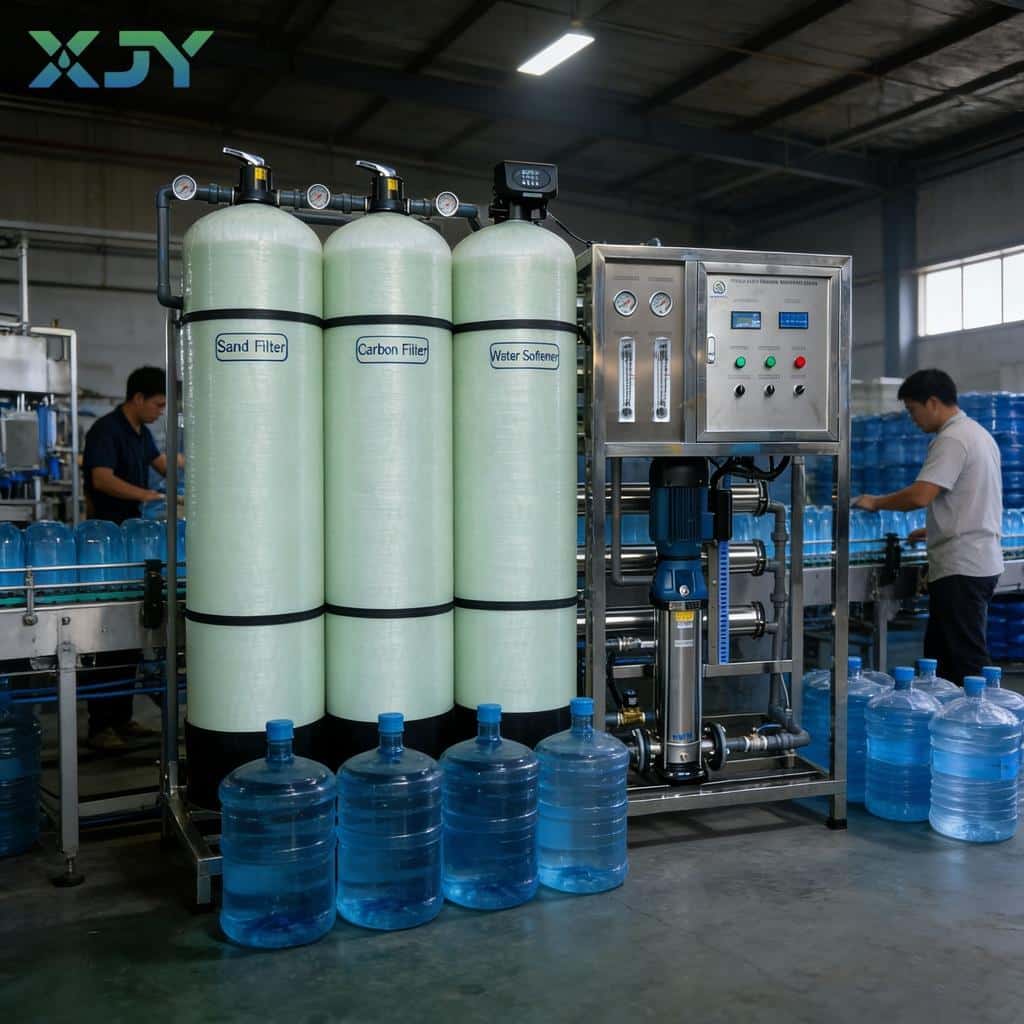
Que vous achetiez de l'eau osmosée en vrac ou que vous mettiez en service un système d'osmose inverse industriel sur site, l'expertise technique et l'assistance après-vente de votre fournisseur déterminent la valeur à long terme. Recherchez une expérience vérifiable dans le secteur, des spécifications transparentes pour les composants et les membranes, des données documentées sur le taux de récupération et un programme structuré de mise en service et d'entretien. Le système d'OI Directives de l'OMS pour la qualité de l'eau de boisson fournissent un cadre de référence mondialement reconnu pour l'évaluation des normes de pureté de l'eau dans les applications d'eau industrielle et d'eau potable.
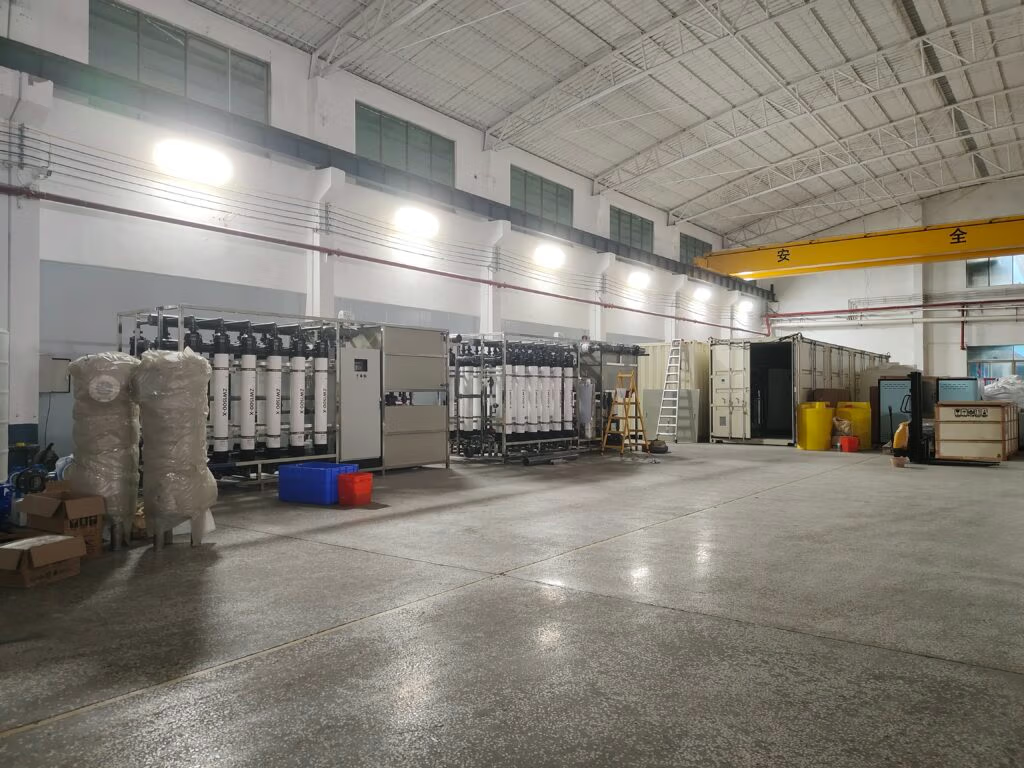
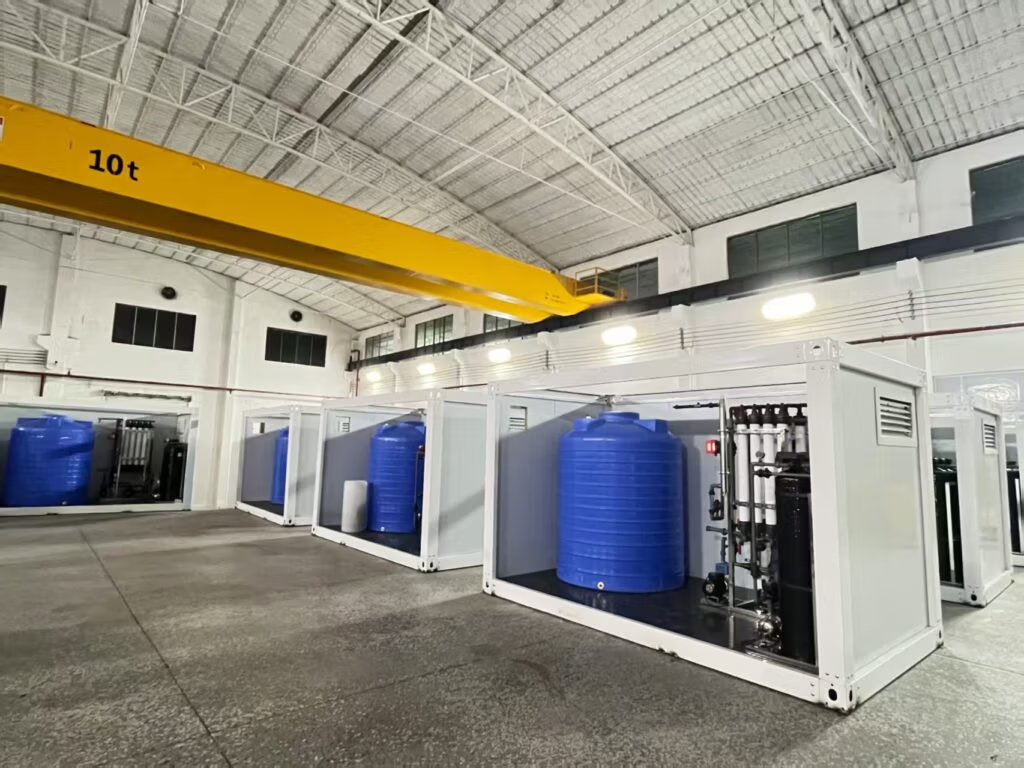
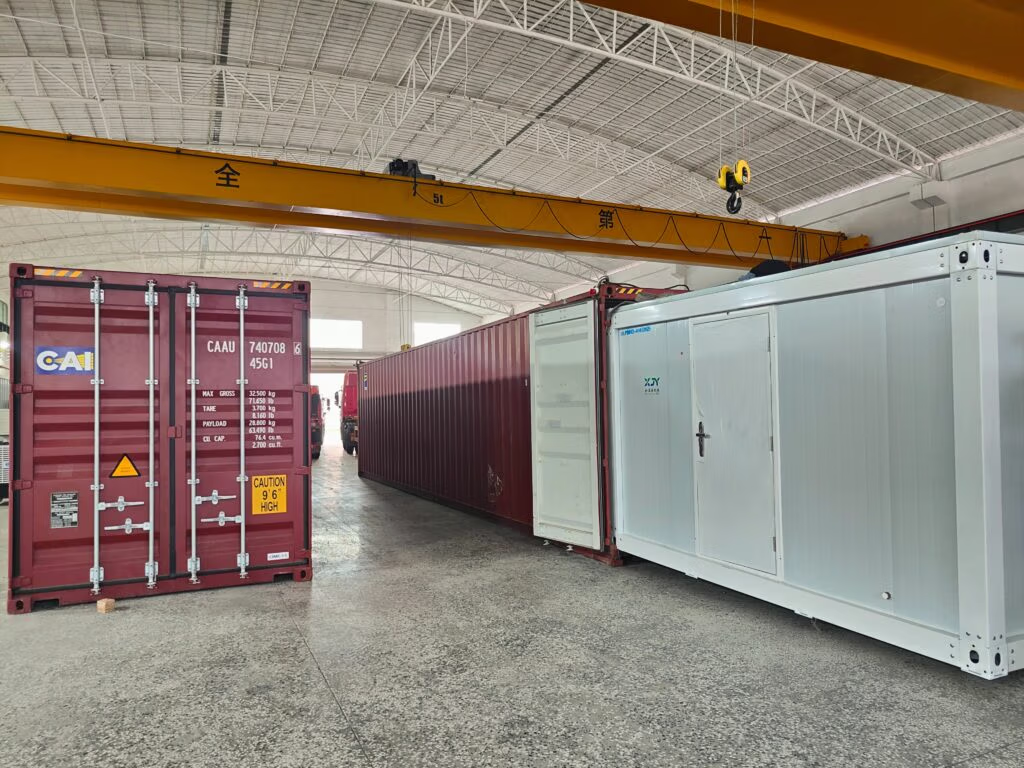
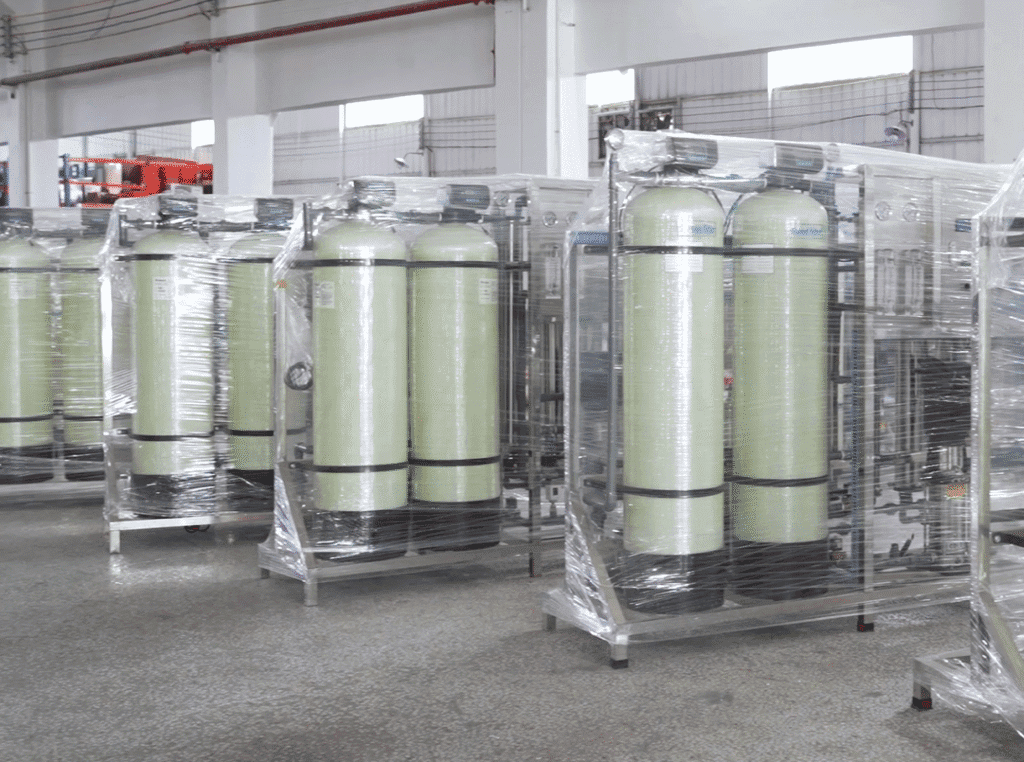
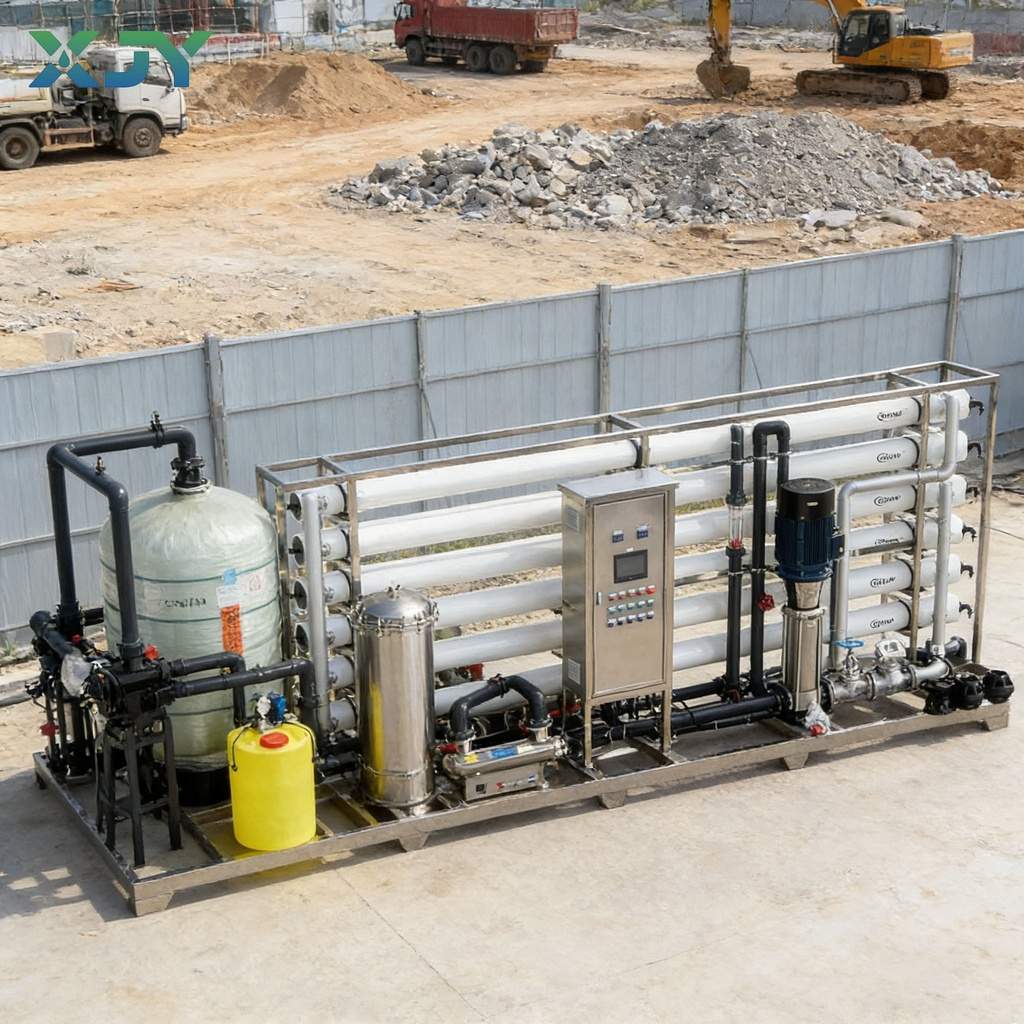
XinJieYuan conçoit et fabrique des systèmes d'osmose inverse de qualité industrielle conçus pour fonctionner en continu et en grand volume dans les secteurs de la production d'énergie, de la fabrication de procédés et du traitement commercial de l'eau. Nos systèmes sont conçus pour une faible intervention de maintenance, une longue durée de vie des membranes et une conformité aux exigences de qualité de l'eau propres à chaque secteur. Voir notre guide sur les avantages de l'eau par osmose inverse pour une analyse détaillée des aspects opérationnels et financiers de l'adoption de l'OI par l'industrie.
Foire aux questions
Quel est le TDS que doit respecter l'eau d'osmose inverse pour une utilisation industrielle ?
L'eau d'osmose inverse de qualité industrielle à vendre doit avoir un TDS inférieur à 50 mg/L pour les applications générales. Les utilisations à haute spécification - WFI pharmaceutique ou UPW semi-conducteur - nécessitent un TDS inférieur à 5 mg/L, obtenu par EDI en aval ou polissage en lit mixte après la membrane RO primaire. Avant de choisir un fournisseur ou une configuration de système, il faut toujours aligner la spécification du TDS sur les exigences exactes de votre procédé.
Quel est le coût de l'approvisionnement en eau RO en vrac par rapport à la production sur site ?
Le prix de l'eau RO achetée en vrac se situe généralement entre $0,50 et $3,00 par mètre cube pour les volumes industriels. La production d'un système d'OI sur site, une fois le capital amorti sur 5 à 7 ans, tombe généralement en dessous de $0,10 par mètre cube - ce qui fait de l'infrastructure en propriété le choix nettement plus économique pour les installations dont la demande est stable et élevée. Un modèle de coût total de possession sur 5 ans comparant les deux options est la base recommandée pour les décisions d'investissement.
La pureté de l'eau RO peut-elle être adaptée à des processus industriels spécifiques ?
Oui. L'eau d'osmose inverse vendue ou produite sur site peut être affinée par polissage EDI, stérilisation UV, post-filtration au charbon actif et ajustement du pH ou des minéraux pour correspondre à pratiquement toutes les spécifications de l'eau industrielle. La configuration du système dépend de l'application du procédé - un ingénieur qualifié en traitement de l'eau doit examiner vos besoins avant de finaliser la conception du système ou la sélection du fournisseur.
Prêt à sécuriser votre approvisionnement en eau industrielle par osmose inverse ?
Que votre établissement ait besoin d'eau certifiée par osmose inverse à vendre, livrée en vrac, d'un système d'osmose inverse industriel clé en main installé sur site ou d'un modèle hybride combinant les deux, la bonne solution commence par une spécification précise de la qualité de l'eau et par un partenaire industriel fiable.