Currently, over half of the world’s population faces varying degrees of freshwater shortages, with the industrial water gap growing at an average annual rate of over 5%. For coastal factories, insufficient freshwater supply directly impacts production continuity. Seawater, as the most abundant resource, has become the core water supply route when treated by reverse osmosis in a salt water desalination plant.
This solution is specifically tailored for salt water desalination plant using reverse osmosis, addressing key pain points such as high energy consumption, severe membrane fouling, high operation and maintenance costs, and insufficient water quality adaptability. Combined with the actual needs of industrial production water, it enables efficient, stable, and low-cost operation of reverse osmosis seawater desalination plants, providing factories with a sustainable supply of high-quality freshwater.
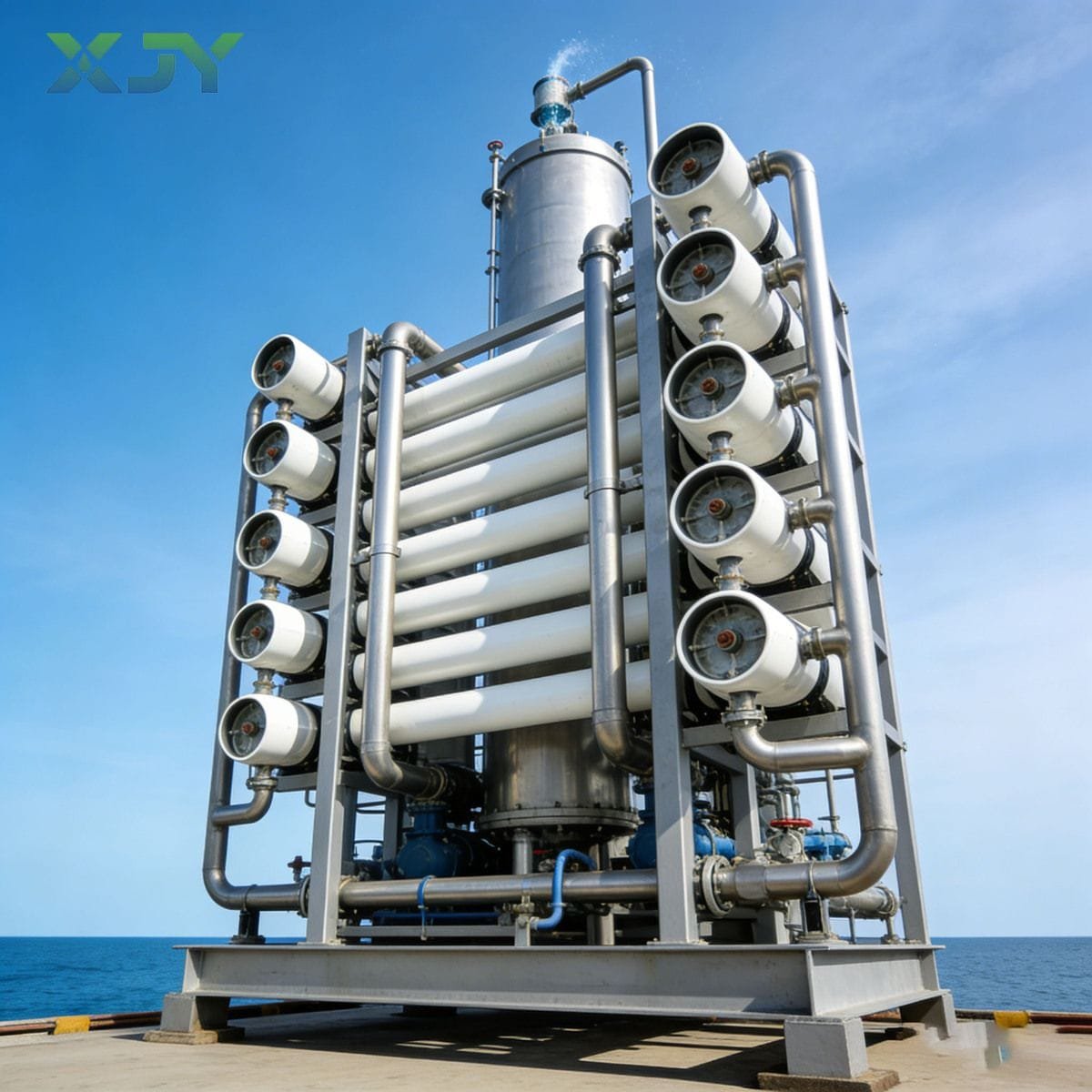
The core objective of the solution is to reduce the energy consumption per unit of freshwater to an advanced level in the industry by systematically optimizing the process design, equipment operation and maintenance, and energy consumption management of the reverse osmosis system, thereby extending the service life of membrane modules, reducing overall operating costs, and ensuring that the quality of desalinated water meets industrial production standards (such as water requirements for the electronics, chemical, and textile industries).
1. Analysis of the pain points of ro salt water desalination plant
Currently, the plant faces four core challenges during its long-term operation, influenced by multiple factors including seawater quality, process design, and maintenance levels. These challenges directly restrict desalination efficiency and operational effectiveness, impacting the plant’s ability to guarantee production water supply.
Firstly, high energy costs have become a major operational burden. The core energy consumption of reverse osmosis salt water desalination plant is concentrated in the high-pressure pump drive stage, used to overcome seawater osmotic pressure and achieve desalination. Currently, most plants maintain a unit energy consumption of 4-6 kWh/m³ for their ro salte water desalination plant, with some older systems reaching as high as 8 kWh/m³. Industrial electricity prices are generally between $0.08 and $0.12/kWh, meaning electricity costs alone account for 55%-65% of the total cost of desalinated water. Combined with costs for reagent consumption and equipment wear and tear, this results in a high overall cost of desalinated water, increasing the pressure on plant production and operations. Furthermore, some plants’ reverse osmosis systems lack efficient energy recovery devices, resulting in the waste of high-pressure energy during concentrate discharge, further increasing energy consumption.
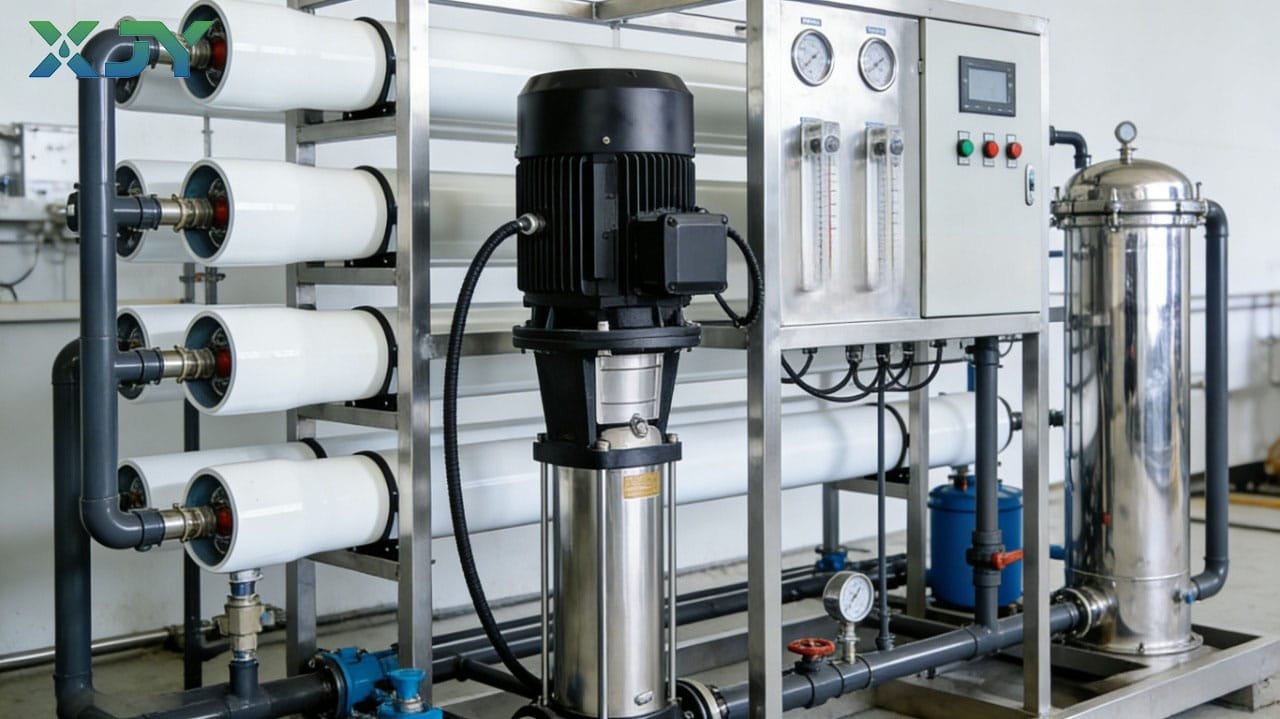
Second, membrane module fouling is severe, significantly shortening its lifespan. Reverse osmosis membranes are core consumables, and their performance directly determines desalination efficiency and water quality. However, during seawater desalination, suspended solids, colloids, microorganisms, organic matter, and heavy metal ions in seawater easily adhere to the membrane surface, causing fouling. Most plants lack scientific pretreatment processes and membrane cleaning solutions, leading to accelerated membrane module fouling rates and shortening the lifespan from the standard 3-5 years to 1-2 years. This not only increases membrane replacement costs but also frequently causes system shutdowns, affecting the continuity of the plant’s water supply.
Third, insufficient process adaptability results in poor water quality compliance. Seawater quality varies significantly across different sea areas, but most plants use a uniform process design for their reverse osmosis systems, failing to optimize pretreatment processes and membrane parameters based on actual seawater quality.
For example, when treating high-turbidity seawater, insufficient pretreatment filtration precision allows suspended solids to enter the membrane module, exacerbating membrane fouling.
When treating high-salinity seawater, improper membrane element selection leads to substandard desalination rates, and the desalinated water quality cannot meet industrial production requirements, necessitating secondary treatment and increasing additional costs. Fourth, the operation and maintenance system is inadequate, leading to frequent equipment failures. Some plants lack professional reverse osmosis salt water desalination plant operation and maintenance teams, resulting in a lack of scientific control over membrane module cleaning cycles, high-pressure pump maintenance frequency, and reagent dosage, leading to frequent equipment failures (such as high-pressure pump leaks, membrane element damage, and pipeline blockages). Simultaneously, the lack of a comprehensive monitoring system makes it impossible to monitor membrane performance, water quality changes, and equipment operating status in real time. Repairs are often only carried out after failures occur, further affecting system stability and increasing operation and maintenance costs.
2. Comprehensive Solutions for salt water desalination plant
Process optimization
Addressing the pain points of insufficient process adaptability and poor water quality stability, we have customized and optimized the reverse osmosis system process based on seawater quality. Focusing on the two core components of pretreatment and membrane system, we ensure that the desalinated water meets the standards while reducing the risk of membrane fouling.
① Precise optimization of pretreatment process
Customized pretreatment processes are implemented based on varying seawater quality: For high-turbidity seawater (such as nearshore inland seas), a three-stage pretreatment process of “grid filtration + multi-media filtration + ultrafiltration” is employed. The grid filtration removes large suspended particles (such as silt and algae), the multi-media filtration removes fine impurities and colloids, and the ultrafiltration membrane further traps microorganisms and large organic molecules, controlling the influent turbidity below 0.1 NTU and the SDI (Soil Degradation Index) below 3, preventing suspended solids from entering the reverse osmosis membrane module.
For high-salinity, low-turbidity seawater (such as offshore seas), multi-media filtration parameters are optimized, and an activated carbon filtration stage is added to adsorb organic matter and residual chlorine in the seawater, reducing the inducing factors of membrane fouling. Simultaneously, suitable scale inhibitors and bactericides are added during the pretreatment stage to inhibit scaling and microbial growth, reducing the risk of membrane fouling at its source.
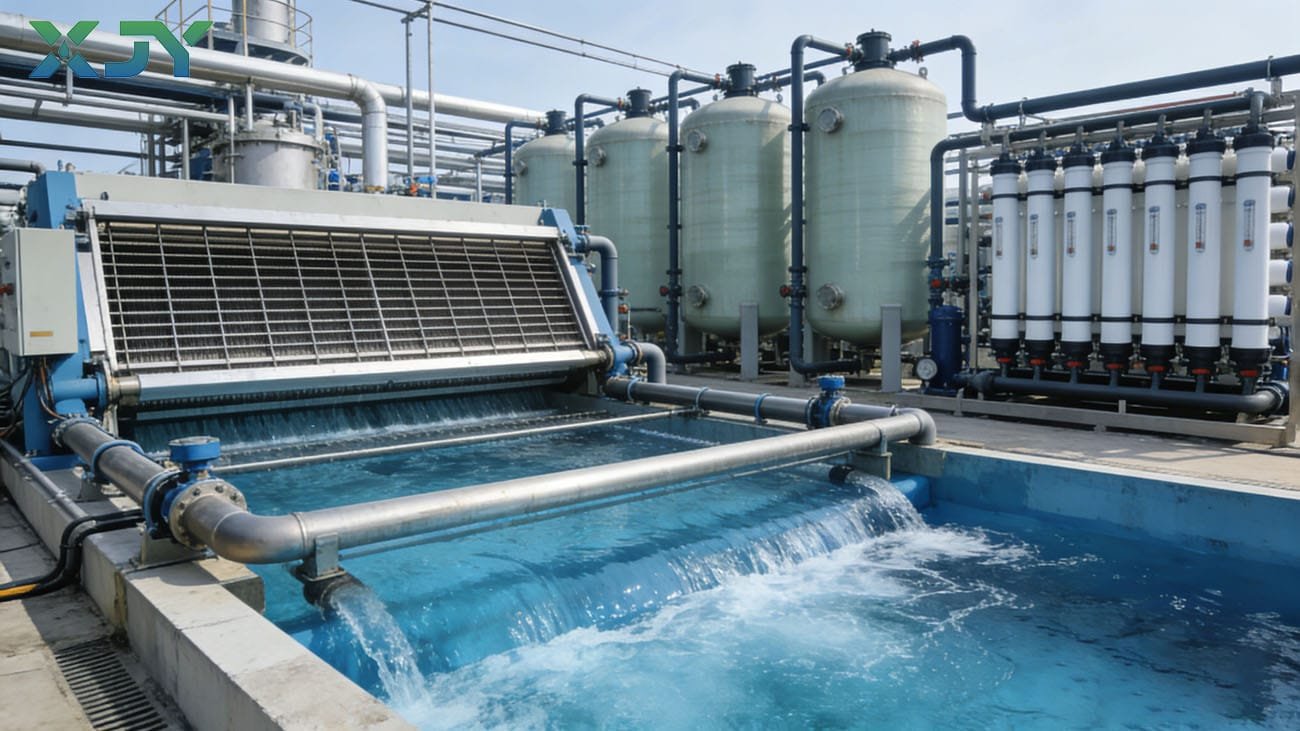
② Customized configuration of reverse osmosis membrane system
Based on the water quality requirements for production water (such as conductivity and hardness), select suitable reverse osmosis membrane elements, prioritizing antifouling composite membranes (such as graphene-modified reverse osmosis membranes and antifouling polyamide membranes). These membrane elements offer advantages such as smooth surfaces, strong antifouling capabilities, and high desalination rates, consistently exceeding 99.5%, meeting the needs of various production water applications.
Optimize the arrangement of membrane modules, employing a two-stage arrangement to improve seawater utilization, reduce concentrate discharge, and lower system operating pressure.
For high-salinity seawater, appropriately increase the number of membrane elements to enhance desalination efficiency and ensure desalinated water quality meets standards. Furthermore, optimize the operating parameters of the reverse osmosis salt water desalination system (such as operating pressure, feed flow rate, and recovery rate), adjusting them in real-time according to changes in seawater quality to avoid membrane damage or increased energy consumption due to inappropriate parameters.
Energy consumption optimization
Addressing the core pain point of excessive energy consumption, we focus on the key energy-consuming components of the ro salt water desalination machine (high-pressure pump and energy recovery), and achieve a significant reduction in energy consumption through equipment upgrades and parameter optimization.
① High-pressure pump energy-saving upgrade
High-pressure pumps are the main energy-consuming equipment in reverse osmosis salte water desalination plant. Replacing traditional high-pressure pumps with high-efficiency variable frequency high-pressure pumps, employing variable frequency control technology, allows for real-time adjustment of pump speed based on inlet water pressure, membrane fouling levels, etc., preventing the high-pressure pump from operating at full load for extended periods and reducing energy consumption.
For example, the operating efficiency of a traditional high-pressure pump is approximately 75%, while replacing it with a high-efficiency variable frequency high-pressure pump can increase the efficiency to over 85%, reducing energy consumption per unit of freshwater by 15%-20%.
Furthermore, regular maintenance and servicing of the high-pressure pump, along with optimization of the pump body structure and reduction of mechanical wear, further enhances energy-saving performance.
② Configuration of high-efficiency energy recovery device
Adding or upgrading high-efficiency energy recovery devices can recover the high-pressure energy emitted during reverse osmosis concentrate discharge and use it to drive seawater into the reverse osmosis system, replacing some of the energy consumption of the high-pressure pump.
Currently, mainstream energy recovery devices (such as PX energy recovery units) can achieve energy recovery efficiencies of over 95%, reducing the unit energy consumption of the reverse osmosis system from 4-6 kWh/m³ to 2.5-3.5 kWh/m³, significantly reducing electricity costs.
③ Energy-saving optimization of system operating parameters
The intelligent control system monitors parameters such as influent pressure, effluent flow rate, and membrane differential pressure of the reverse osmosis desalination system in real time, automatically adjusting operating parameters to optimize energy consumption.
For example, when slight fouling occurs in the membrane module, the influent flow rate is appropriately reduced to prevent high-pressure operation from exacerbating membrane fouling and increasing energy consumption. When seawater salinity decreases, the operating pressure is appropriately reduced to decrease energy consumption.
Simultaneously, the concentrate recovery rate is optimized, increasing it from 50%-60% to 70%-75% while ensuring stable membrane performance. This improves seawater utilization and indirectly reduces energy consumption per unit of freshwater.
Extend membrane life and improve stability
Addressing the pain points of severe membrane fouling and frequent equipment failures, this system enables precise control of membrane modules, routine equipment maintenance, extends membrane lifespan, and improves system operational stability.
① Precise Operation and Maintenance of Membrane Modules
Establish a full life cycle management system for membrane modules, regularly monitor parameters such as membrane pressure difference, desalination rate, and permeate flow, determine the type and degree of membrane fouling based on parameter changes, and formulate targeted cleaning solutions.
- For biological contamination, use alkaline cleaning agents (such as sodium hydroxide solution) in combination with bactericides for cleaning.
- For colloidal and scaling contamination, use acidic cleaning agents (such as citric acid solution) for cleaning.
Optimize the cleaning cycle to avoid over-cleaning that could damage the membrane, while also preventing delayed cleaning from exacerbating membrane fouling. Generally, routine cleaning should be performed every 3-6 months. Deep cleaning should be conducted when the membrane pressure differential increases by more than 15%. In addition, regularly check the integrity of the membrane elements and promptly replace any damaged or aging elements to ensure the overall stability of the system performance.
② Routine equipment maintenance
Establish an equipment maintenance log and conduct regular maintenance on equipment such as high-pressure pumps, energy recovery devices, filters, and pipelines.
- Inspect the seals, bearings and other components of the high-pressure pump every 1-2 months, and replace worn parts in a timely manner to prevent leakage.
- The energy recovery device should be disassembled and cleaned every 6 months to remove internal impurities and ensure energy recovery efficiency.
- Backwash the filter regularly to prevent filter clogging and affecting the pretreatment effect.
③ Deployment of intelligent monitoring system
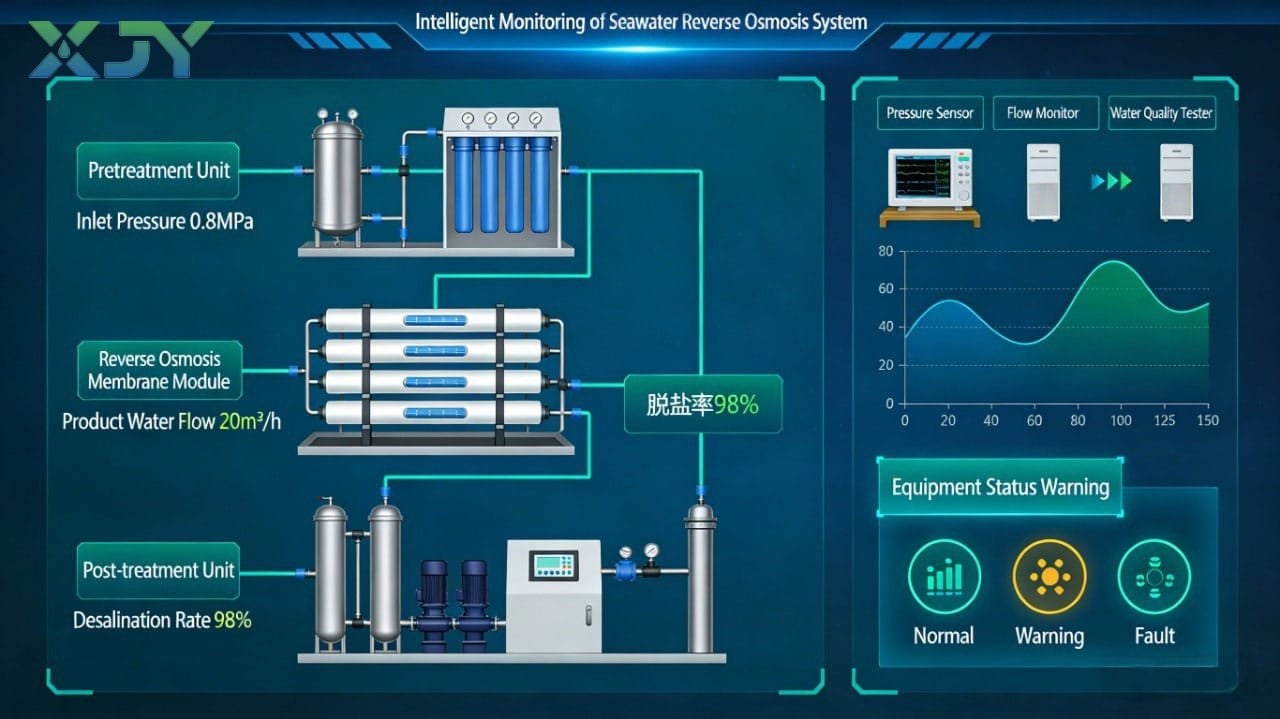
A smart monitoring platform for the reverse osmosis salte water desalination plant is deployed to collect real-time data on influent water quality (turbidity, salinity, SDI), membrane operating parameters (pressure differential, desalination rate, permeate flow), and equipment operating status (high-pressure pump speed, energy consumption). This data is then used for big data analysis to provide early warnings of anomalies. When issues such as increased membrane fouling, equipment malfunction, or substandard water quality occur, the platform promptly issues warning signals, allowing maintenance personnel to respond quickly and prevent the problem from escalating.
Achieve environmental compliance
In response to environmental compliance requirements in production, we optimize wastewater treatment and chemical usage in the reverse osmosis system to ensure that the operation process meets environmental standards and achieves sustainable development.
① Compliant treatment of concentrated wastewater
The concentrated wastewater produced by the reverse osmosis system (with a salinity approximately twice that of seawater) would cause marine pollution if directly discharged. To address this, the concentrated wastewater treatment process has been optimized, employing a “concentrated wastewater dilution + ecological discharge” model. This involves mixing and diluting the concentrated wastewater with other low-concentration wastewater from the plant area to reduce salinity. The wastewater is then discharged into a designated sea area via a dedicated pipeline. The discharge outlet is located in an area with strong sea currents to ensure rapid diffusion of the concentrated wastewater, preventing a sudden increase in salinity in localized areas and protecting the marine ecosystem.
Simultaneously, depending on the plant’s needs, some of the concentrated wastewater can be used for irrigation of green spaces and road cleaning within the plant area, achieving water resource recycling.
② Green Management of Pharmaceuticals
Optimize the use of chemicals in the pretreatment and membrane cleaning processes, selecting environmentally friendly scale inhibitors and bactericides to replace traditional, highly polluting chemicals, thus reducing the environmental impact of chemical residues.
Simultaneously, precisely control the dosage of chemicals, adjusting it in real time according to seawater quality and system operating status to avoid waste and pollution caused by excessive dosage, achieving green and rational use of chemicals.
3. Summary of salt water desalination plant program
For salt water desalination plant using reverse osmosis, efficient, stable, and low-cost operation are core requirements. This solution is based on the actual water usage scenarios of the plant, focusing on four core dimensions of the reverse osmosis salt water desalination system: process, energy consumption, operation and maintenance, and compliance. Through customized optimization and systematic management, it effectively addresses the core pain points of current reverse osmosis salt water desalination plant, achieving the goals of reduced energy consumption, extended membrane life, water quality compliance, and efficient operation and maintenance.
The solution requires no introduction of other desalination technologies, is fully compatible with existing reverse osmosis systems, has low implementation difficulty and strong feasibility, and can be flexibly adapted to the plant’s production capacity, seawater quality, and water usage needs.
 English
 Spanish
 Korean
 Chinese
 French