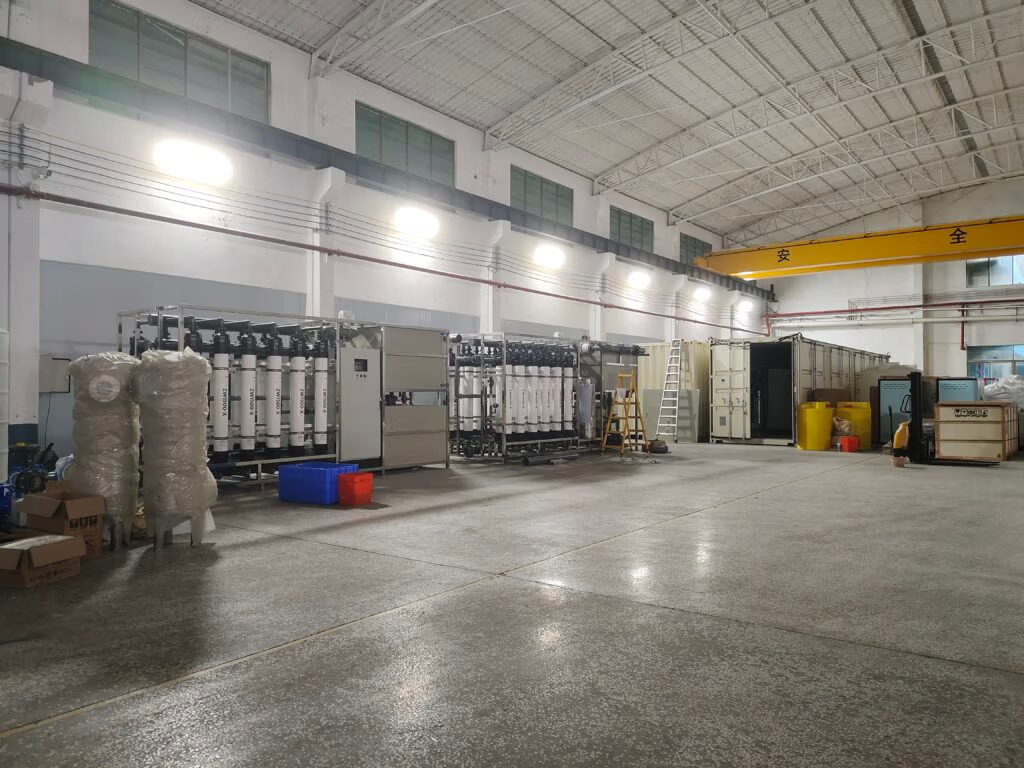
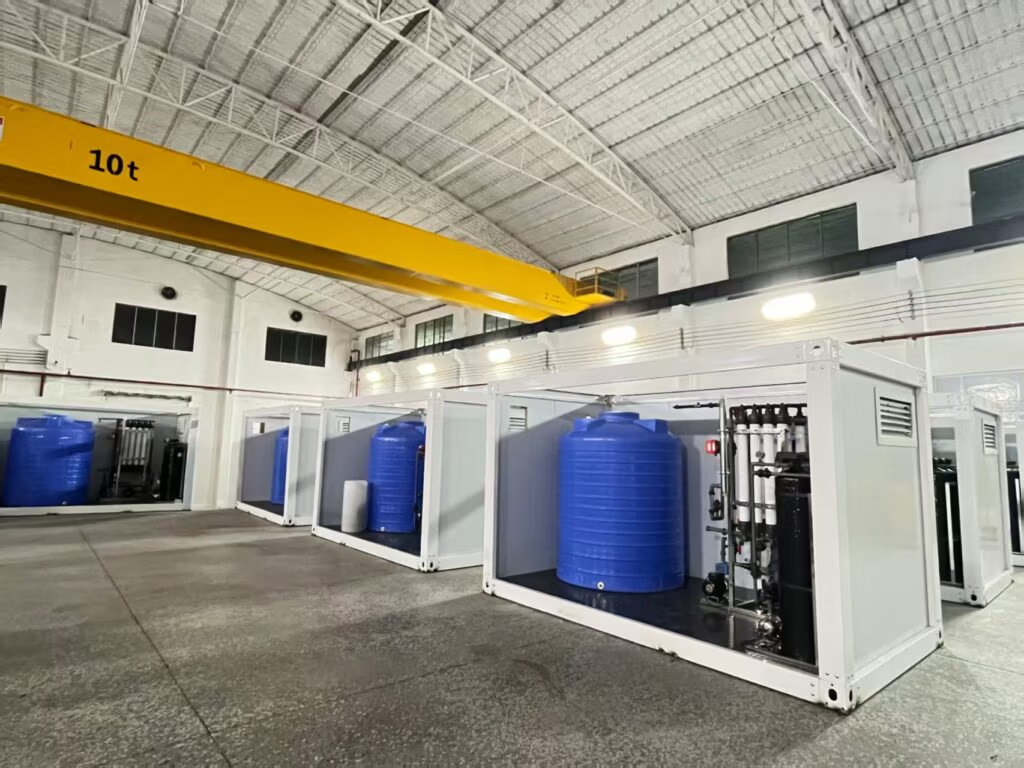
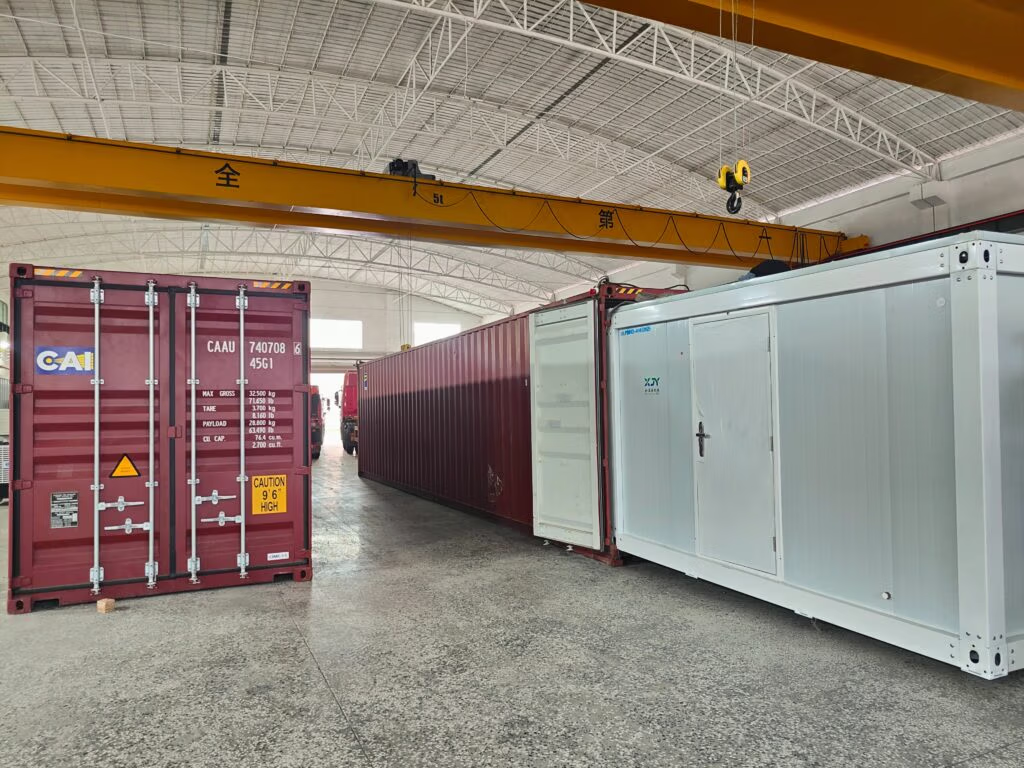
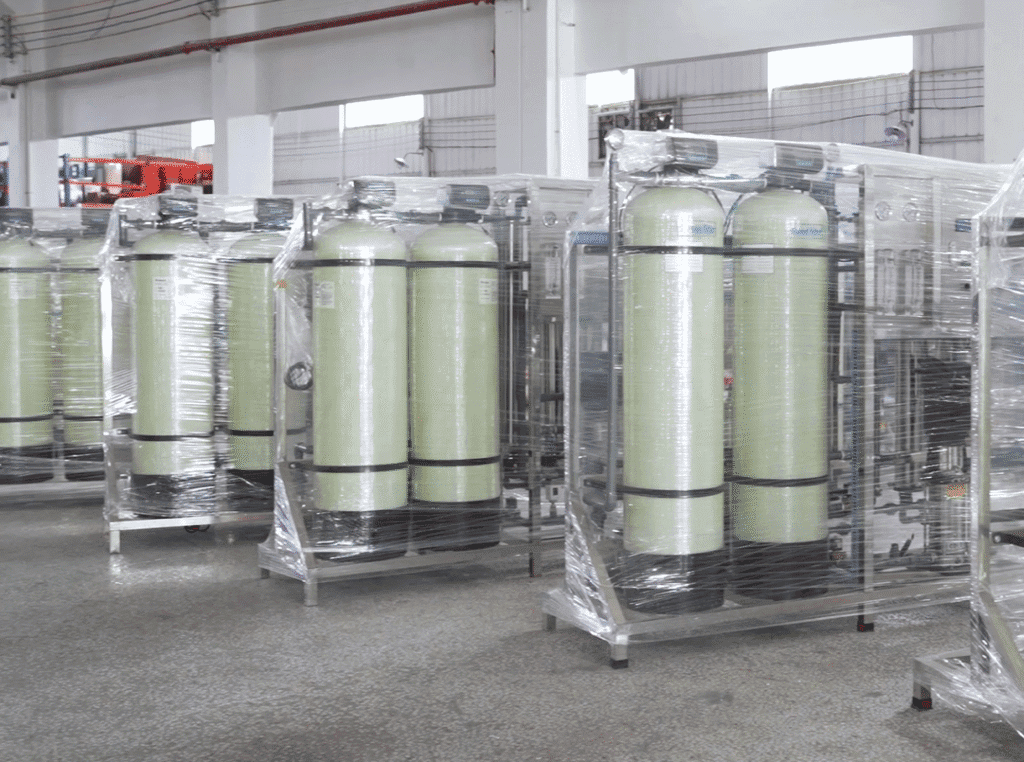
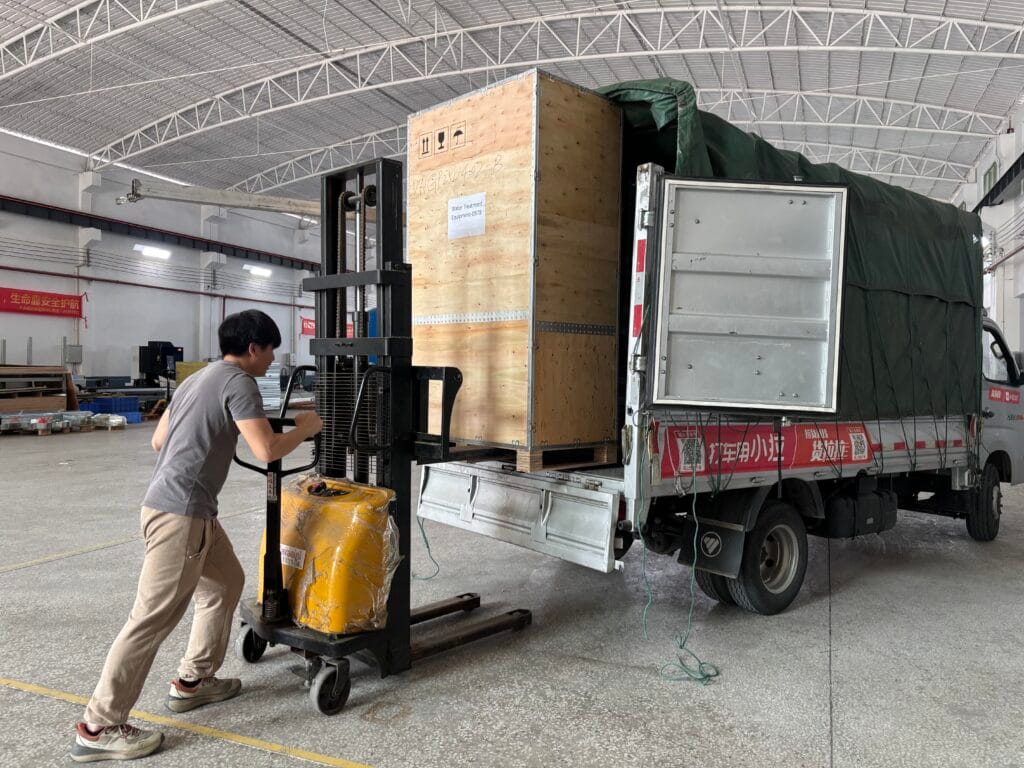
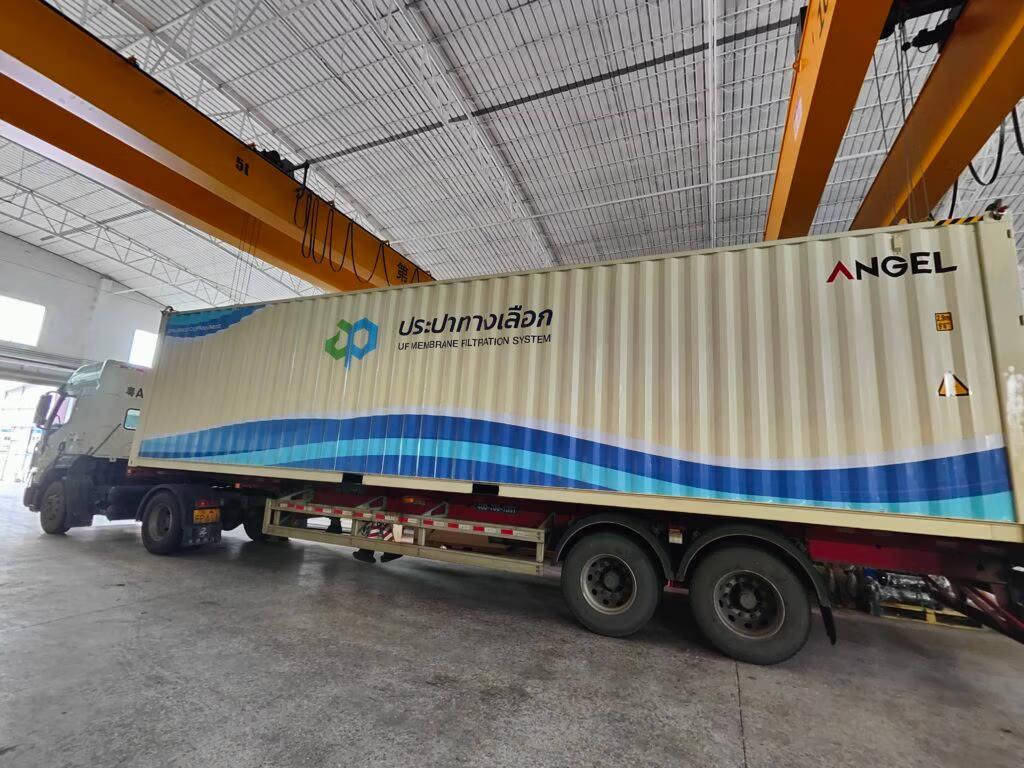
La filtration de l'eau ultra-pure utilise une série de méthodes physiques et chimiques pour éliminer les impuretés telles que les particules en suspension, les colloïdes, les ions dissous, les matières organiques et les micro-organismes de l'eau, afin d'atteindre des normes de pureté extrêmement élevées. L'eau pure qui en résulte répond aux exigences de la fabrication de précision, de l'ingénierie chimique haut de gamme, de la biomédecine et d'autres applications nécessitant des niveaux d'impureté extrêmement bas.
Quel est le niveau de filtration de l'eau ultrapure requis ?
Résistivité :
L'eau ultra-pure requiert généralement une résistivité de 18,2 MΩ-cm (25°C). À cette température, la concentration d'ions dans l'eau est extrêmement faible. Elle s'approche donc du niveau de l'eau théoriquement pure.
Carbone organique total (COT) :
L'eau ultra-pure requiert généralement une valeur de COT inférieure à 5 ppb (moins de 1 ppb dans certaines applications de semi-conducteurs).
Contenu en particules :
Nous devons contrôler le nombre de particules ≥0,1 μm à moins de 10 par millilitre. Afin d'éviter que de minuscules particules n'adhèrent aux surfaces des composants de précision et n'affectent les performances.
Contenu microbien :
L'eau ultra-pure doit être stérile (nombre total de colonies <1 CFU/mL).
Comment fonctionne la filtration de l'eau ultrapure ?
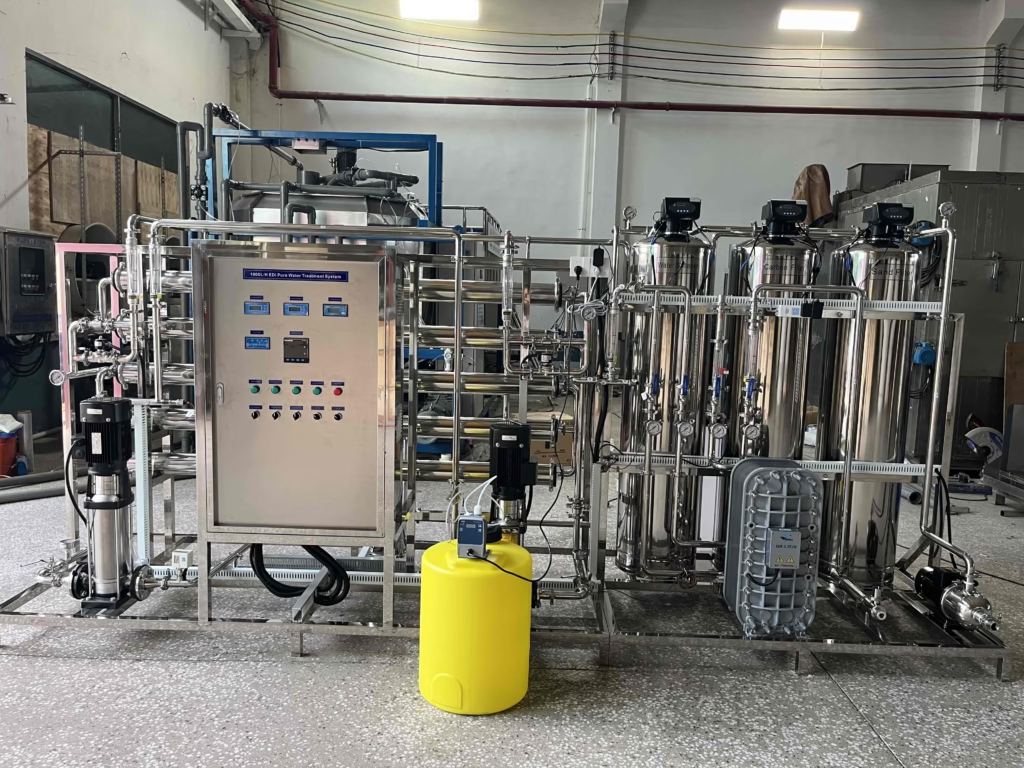
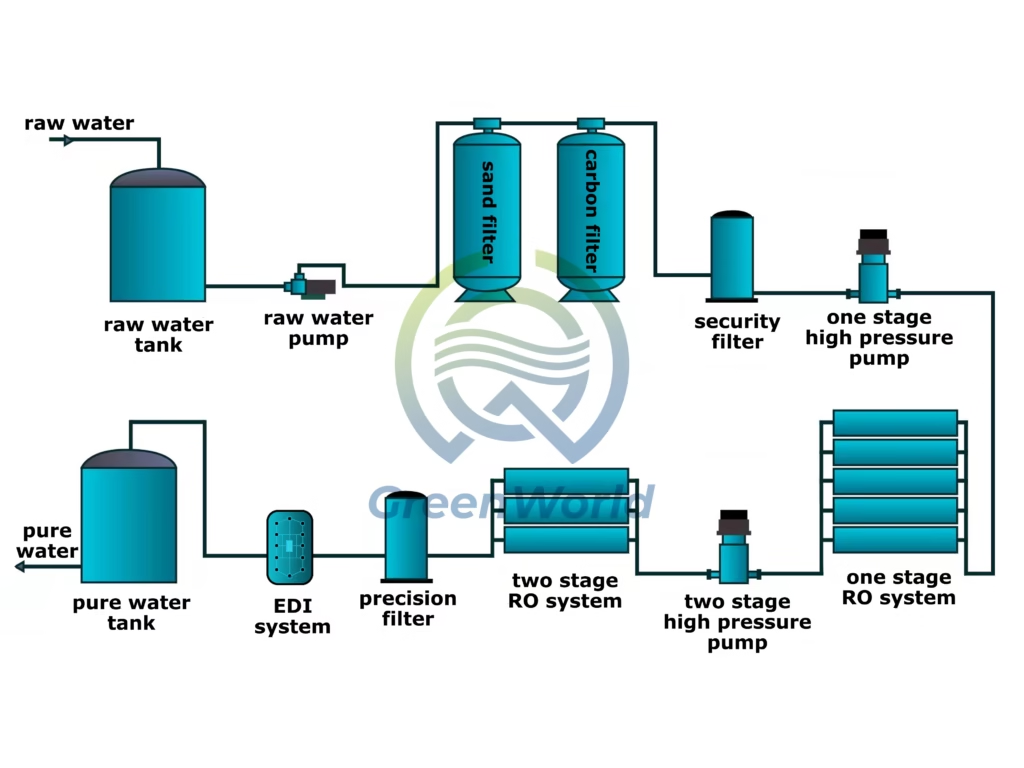
Nous pouvons diviser le processus de purification de Système EDI en cinq étapes. Elles comprennent le prétraitement, le traitement primaire par osmose inverse, le traitement secondaire par osmose inverse, le traitement par EDI en profondeur et l'assurance de la qualité de l'eau du terminal.
1. Étape de prétraitement
Tout d'abord, l'eau brute est traitée séquentiellement à travers un filtre multi-média, un filtre à charbon actif et un filtre de sécurité. Ensuite, un inhibiteur de tartre (dureté 8,5) ou trop bas (<5,5), il faut ajuster le pH entre 6,5 et 7,5 pour qu'il corresponde à la plage de pH optimale de la membrane d'osmose inverse.
Ce processus permet d'éliminer les matières en suspension, les colloïdes, le chlore résiduel, la dureté (Ca²⁺, Mg²⁺) et certaines matières organiques de l'eau brute. Cela permet d'éviter l'entartrage, la contamination ou l'oxydation de la membrane d'osmose inverse, ce qui garantit un fonctionnement stable du système d'osmose inverse.
2. Étape de traitement primaire par osmose inverse
Ensuite, une pompe à haute pression pressurise l'eau prétraitée à 1,5-2,5 MPa. À l'aide d'une membrane d'osmose inverse à haute densité et résistante à l'encrassement, la pression force les molécules d'eau à traverser la membrane pour former “l'eau du produit”. Les ions dissous et les matières organiques sont retenus sous forme d'eau concentrée (20%-30%, qui peut être rejetée ou recyclée).
L'eau produite entre dans un réservoir tampon. Pendant ce temps, une surveillance en ligne de la résistivité (100-500 kΩ・cm), de la conductivité et d'un taux de dessalement ≥97% est nécessaire. Les indicateurs anormaux (tels que la réduction du taux de dessalement due à l'encrassement de la membrane) déclenchent une alarme.
Cela permet d'éliminer 97% des ions dissous, des grosses molécules organiques et certains micro-organismes de l'eau prétraitée, ce qui réduit considérablement la charge d'impuretés dans l'eau.
3. Étape secondaire de traitement par osmose inverse
Troisièmement, la salinité de l'eau perméable primaire a considérablement diminué. Une pompe secondaire à haute pression augmente la pression à 1,0-1,8 MPa (plus faible que la pression de l'eau perméable primaire).
l'eau perméable primaire pour éviter d'endommager la membrane). Nous pouvons sélectionner une membrane RO avec une efficacité de dessalement plus élevée (telle qu'un type à faible encrassement). L'eau perméable doit avoir une résistivité ≥150 kΩ・cm, un COT <50 ppb et une silice <0,1 mg/L (pour éviter l'entartrage de l'EDI). Si le COT dépasse les limites spécifiées, nous pouvons ajouter une unité d'oxydation UV 185nm avant l'OI secondaire.
Le concentré OI secondaire (dont la salinité est supérieure à celle de l'eau perméable primaire, mais inférieure à celle de l'eau brute) peut être renvoyé dans l'alimentation OI primaire pour y être traité à nouveau. On obtient ainsi un taux global de récupération de l'eau de 70%-80%.
Après ce traitement, l'eau traitée répond entièrement aux exigences de qualité de l'eau d'alimentation pour l'EDI. Le taux d'élimination totale des ions est ≥99,5% (par rapport à l'eau brute), et la résistivité de l'eau perméable est de 150-1000 kΩ・cm, avec un COT <50 ppb.
4. Dessalement par EDI en profondeur
Après le traitement secondaire par osmose inverse, l'eau passe par un module EDI (contenant une membrane liant les ions, une résine et des électrodes), et nous y faisons passer un courant continu (1-5 A). Les ions migrent vers la chambre de concentration pour être évacués. Ensuite, le débit d'eau douce est contrôlé (1-3 L/min par module) et la résistivité de l'eau produite est surveillée.
Ce traitement répond aux spécifications essentielles de l'eau industrielle ultrapure. Telles que celles requises par les industries des semi-conducteurs et biopharmaceutiques. Efficacité d'élimination des ions ≥99,9%, résistivité de l'eau du produit 15-18 MΩ cm, COT <10 ppb, et teneur en silice <0,01 mg/L.
5. Assurer la qualité des eaux du terminal
Au niveau du terminal, nous devons utiliser une membrane de microfiltration ou d'ultrafiltration de 0,02-0,1μm pour intercepter les fragments de résine et les micro-organismes susceptibles de tomber du module EDI.
Nous devons adapter la stérilisation par ultraviolets (UV) à l'application. Par exemple, dans les industries biopharmaceutique et alimentaire, les lampes UV de longueur d'onde 254 nm sont utilisées pour détruire l'ADN microbien. Dans certaines applications, des UV de 185 nm peuvent être ajoutés pour réduire le COT à <5 ppb. Les réservoirs de stockage d'eau ultra-pure dans l'industrie des semi-conducteurs peuvent être remplis d'azote ultra-pur d'une pureté ≥99,999% pour isoler l'air.
Enfin, nous faisons circuler l'eau ultrapure dans des tuyaux en acier inoxydable 316L. Cela permet d'éviter que l'eau stagnante ne favorise la prolifération des micro-organismes et de réduire l'adsorption des impuretés.
Ce traitement répond aux exigences extrêmes en matière d'eau des applications industrielles haut de gamme. L'eau du produit terminal a une résistivité de 18,2 MΩ・cm (25°C), un COT <5 ppb, une teneur en particules de ≥0,1 μm <1 particule/mL, et est stérile.
Où peut-on utiliser la filtration de l'eau ultrapure ?
①Industrie des semi-conducteurs et de l'électronique
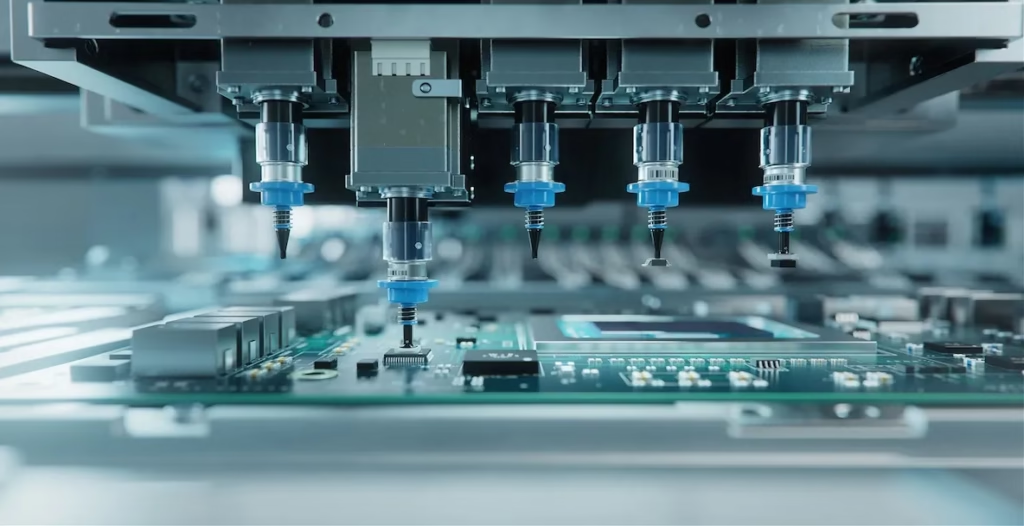
Au cours des processus de fabrication des puces semi-conductrices (tels que le nettoyage des plaquettes, la photolithographie et la gravure), les ions, les particules et les matières organiques présents dans l'eau peuvent provoquer des courts-circuits dans les circuits des puces et déformer les motifs photolithographiques.
Notre système de filtration d'eau ultrapure utilise un processus combiné “RO + EDI + UV + ultrafiltration terminale” pour fournir une eau stable et de haute pureté pour la production de puces.
②Industrie biopharmaceutique
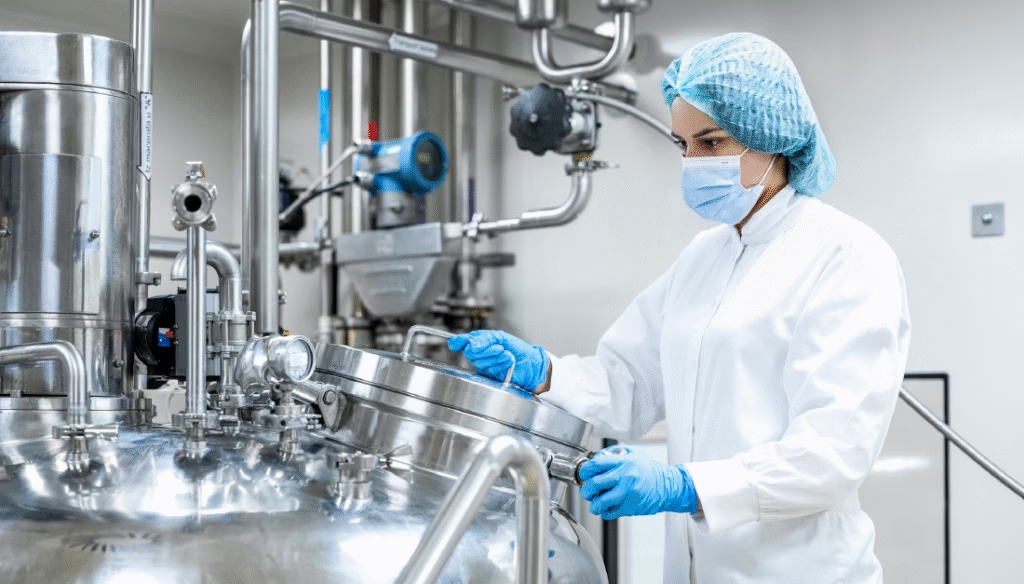
L'eau ultra-pure utilisée dans la production pharmaceutique et le nettoyage des dispositifs médicaux doit répondre aux exigences des bonnes pratiques de fabrication (BPF) : stérilité, absence de pyrogènes (endotoxines < 0,25 EU/mL) et COT < 5 ppb.
Le système de filtration utilise un processus “UF + RO + EDI + filtration stérilisante terminale” pour éliminer les micro-organismes et les pyrogènes, empêchant ainsi la contamination pharmaceutique.
③Industrie énergétique
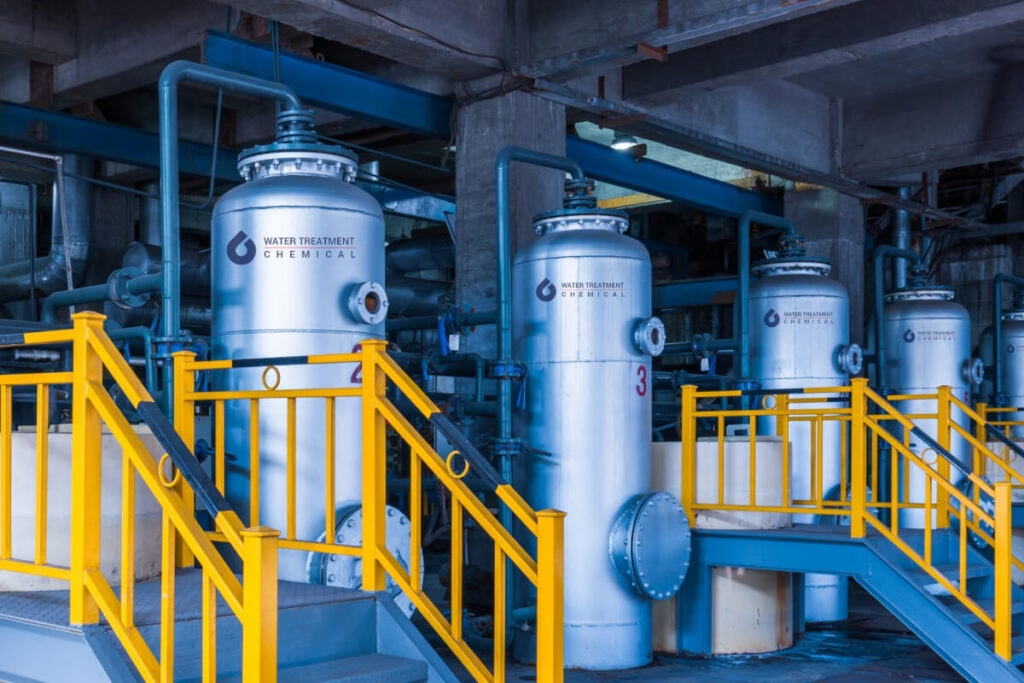
Les impuretés ioniques présentes dans l'eau des chaudières utilisées dans les centrales thermiques ou nucléaires peuvent provoquer la formation de tartre sur les parois des chaudières, ce qui entraîne une réduction de l'efficacité thermique, la corrosion des tuyaux et même des explosions.
La filtration de l'eau ultra-pure utilise un processus “RO + échange d'ions” pour réduire la résistivité de l'eau d'alimentation de la chaudière à 5-10 MΩ・cm et une dureté (mesurée en CaCO₃) inférieure à 0,1 mg/L, réduisant ainsi la formation de tartre et prolongeant la durée de vie de l'équipement.
④Nouvelle industrie de l'énergie
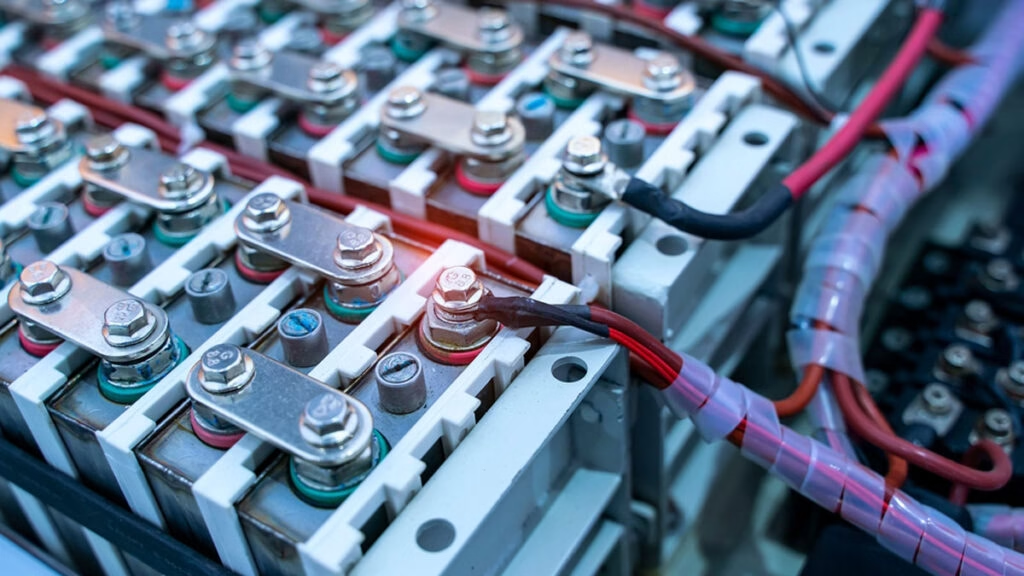
Lors de la production de matériaux pour cathodes de batteries au lithium et de plaquettes de silicium photovoltaïque, les ions métalliques (tels que Na⁺ et K⁺) présents dans l'eau peuvent affecter la capacité des batteries et l'efficacité de conversion des modules photovoltaïques.
Les systèmes de filtration d'eau ultra-pure doivent contrôler la teneur en ions métalliques à moins de 0,1 ppb. En utilisant un procédé “RO+EDI+résine chélatante”, ils fournissent de l'eau de faible pureté pour la synthèse de nouveaux matériaux énergétiques.
Quels sont les problèmes liés à l'utilisation d'un équipement d'eau ultrapure ?
Consommation d'énergie élevée
Les technologies de base telles que l'osmose inverse et l'EDI consomment des quantités importantes d'électricité (par exemple, l'osmose inverse nécessite une pression de fonctionnement de 1 à 4 MPa). Certains procédés traditionnels d'échange d'ions nécessitent l'utilisation fréquente d'agents de régénération acides et alcalins, ce qui entraîne des coûts d'exploitation élevés et des pressions environnementales importantes.
Faible capacité d'adaptation à la complexité de la qualité de l'eau
Certaines eaux brutes industrielles (par exemple, les eaux usées à forte teneur en sel et les eaux usées contenant des métaux lourds) ont une composition complexe, ce qui rend les systèmes de filtration sensibles à l'encrassement des membranes et à l'empoisonnement des résines, nécessitant un remplacement fréquent des consommables.
Quelles sont les améliorations apportées à la filtration de l'eau ultrapure ?
Modernisation des technologies d'économie d'énergie
L'utilisation de membranes d'osmose inverse à faible consommation d'énergie et de nouveaux modules EDI (réduisant la consommation d'énergie de plus de 30%), combinée à des systèmes de récupération de la chaleur résiduelle, nous permet de réduire la consommation d'énergie.
Équipement intégré
Ciblant les besoins des petites et moyennes entreprises, nous utilisons des équipements modulaires pour l'eau ultrapure (tels que des unités intégrées “prétraitement + OI + EDI”) afin de raccourcir les cycles d'installation et de réduire la complexité opérationnelle.
Conclusion
La filtration de l'eau ultra-pure utilise un processus de purification à plusieurs niveaux combinant l'osmose inverse en deux étapes et l'EDI pour transformer l'eau brute ordinaire en une eau ultra-pure de la plus grande pureté. Cela permet de garantir une eau de base pour le développement de haute qualité d'industries clés telles que les semi-conducteurs, les produits biopharmaceutiques et les nouvelles énergies.
Actuellement, l'industrie du traitement de l'eau est confrontée à des défis tels qu'une consommation d'énergie élevée et une faible capacité d'adaptation à la complexité de la qualité de l'eau. L'industrie du traitement de l'eau innove et s'oriente vers des solutions plus efficaces et plus respectueuses de l'environnement. Aider l'industrie manufacturière mondiale à évoluer vers une production de précision et à faible émission de carbone.
Si vous avez d'autres Système d'eau EDI vous pouvez toujours nous consulter.