Reverse osmosis bottled water plant uses systematic membrane treatment processes and standardized production controls to transform natural water sources into directly drinkable bottled water. Therefore it driving the market for bottled water that meets residents’ health needs toward higher quality.
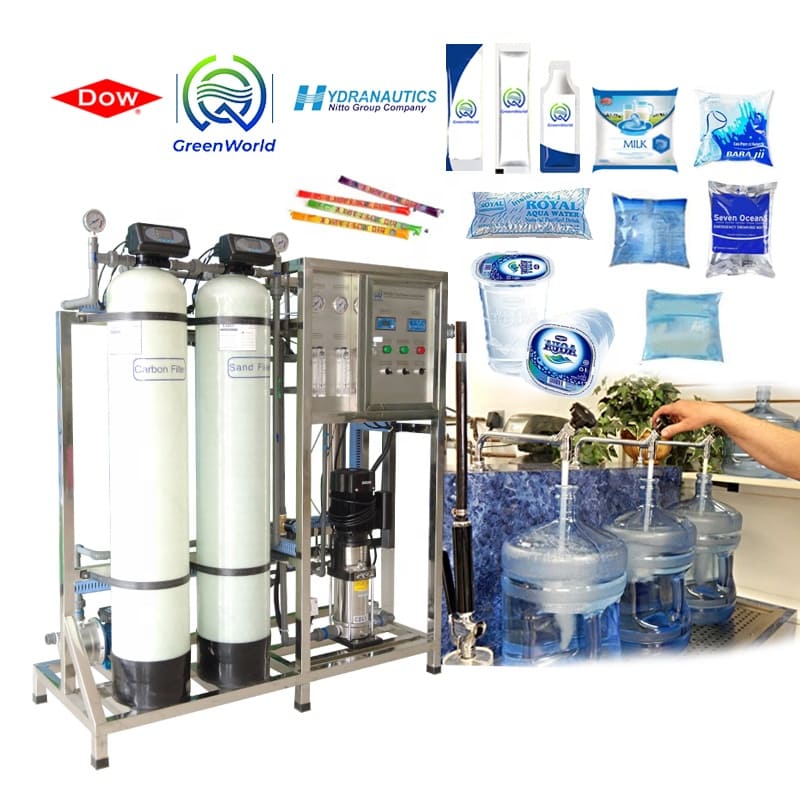
How does reverse osmosis bottled water plant operate?
The essence of reverse osmosis bottled water plant technology is the reverse application of the natural osmosis phenomenon.
Under natural conditions, water molecules spontaneously move towards solutions with higher solute concentrations. RO technology, however, uses a high-pressure pump to apply pressure of 1-10 MPa, forcing water molecules to permeate through a semi-permeable membrane in the reverse direction.
<p><p>The pore size of the RO semi-permeable membrane is only 0.0001 micrometers, equivalent to one millionth the diameter of a human hair. Its desalination rate typically reaches over 95%, and in special cases, even exceeds 99%. This extreme filtration capability is the source of the high purity and sweet taste of RO water.

In terms of purification depth, RO (reverse osmosis) technology is currently the only process capable of achieving ion-level filtration. Compared to traditional technologies like ultrafiltration, it can remove various pollutants with molecular weights greater than 100 Da, including over 99% of heavy metals such as lead and arsenic, over 90% of pesticide residues and antibiotics, and 99.99% of bacteria, viruses, and other microorganisms.
This comprehensive purification capability is crucial for addressing the pain points of modern water pollution. For example, the hidden dangers of excessive heavy metals from industrial wastewater, chemical residues from agricultural production, and pathogens breeding in water pipelines can all be completely eliminated through the RO process.
What is the specific workflow?
The construction of a standardized RO bottled water plant requires comprehensive scientific planning across the entire supply chain. Water source selection must not only be close to high-quality water sources such as deep groundwater. But also utilize low-impact methods such as underground pipelines to avoid damaging surface vegetation and the ecological environment.
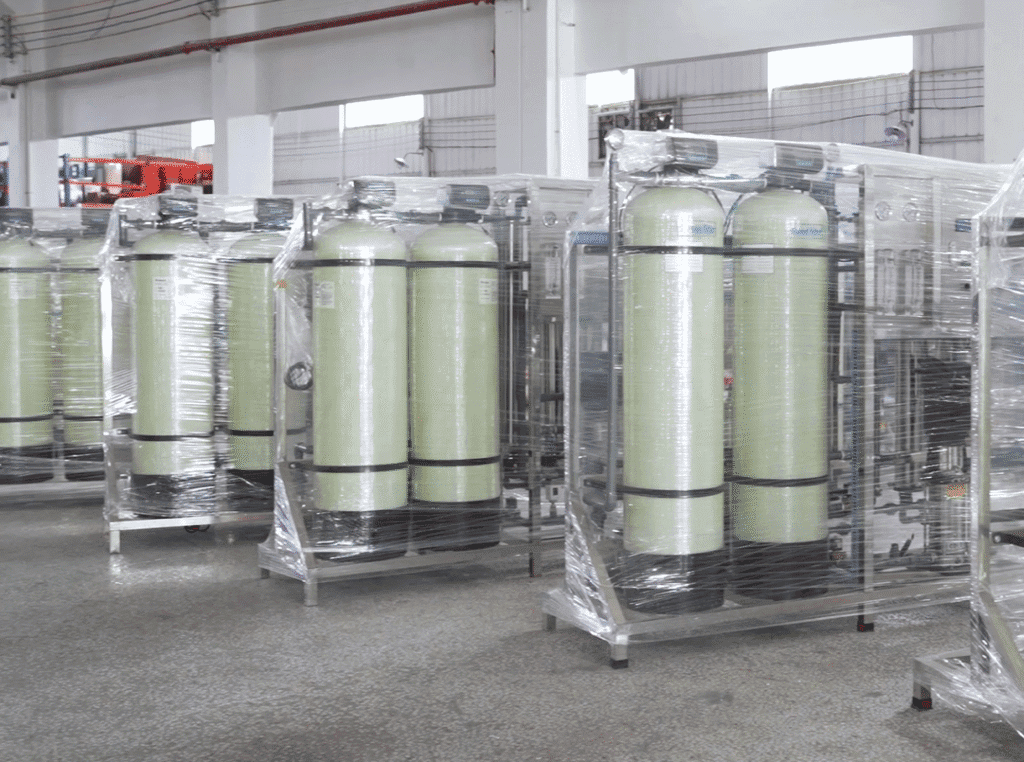
Raw water enters the pretreatment workshop after entering the intake area, where it undergoes multi-media filtration and activated carbon adsorption processes to reduce turbidity to below 1 NTU and control residual chlorine to below 0.1 mg/L, providing protection for the subsequent membrane system.
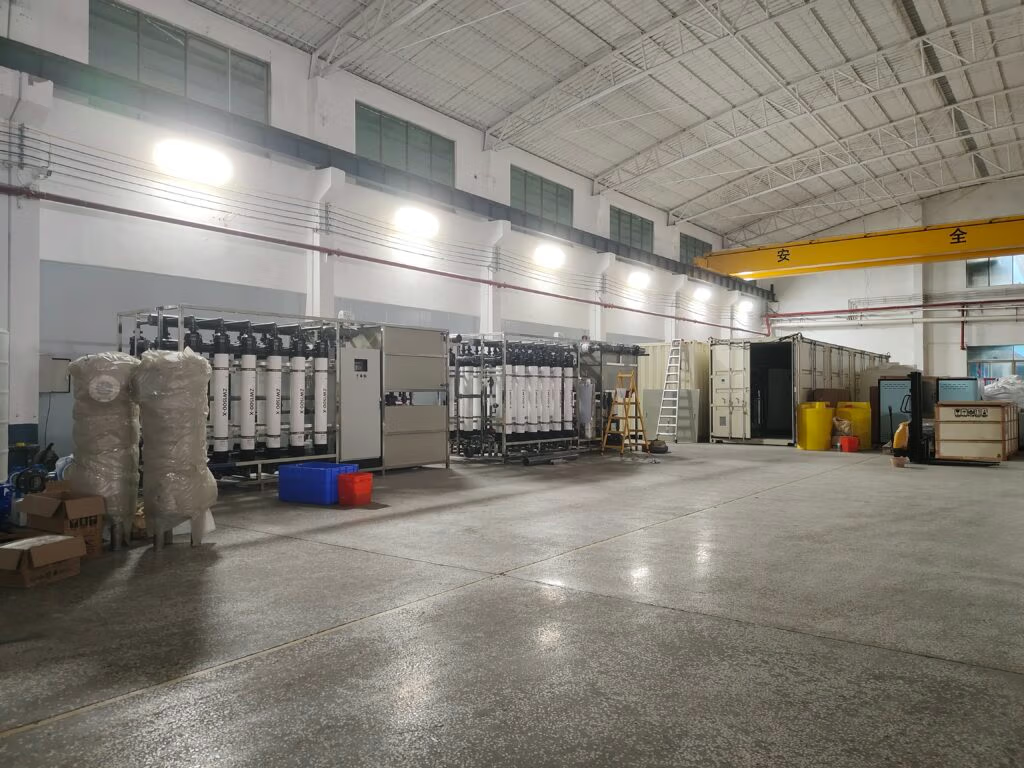
The core component, the RO workshop, employs spiral wound membrane modules and a multi-stage filtration design, combined with high-pressure pumps and energy recovery devices to balance efficiency and energy consumption.
The bottling workshop utilizes an aseptic production line to complete bottle washing, disinfection, and capping in an integrated manner, achieving “zero contact” with the water source throughout the entire process.

What are the advantages and disadvantages of reverse osmosis bottled water plant?
The rise of RO bottled water plants has not only solved the pain point of drinking water safety. But also it has driven industry transformation and upgrading. Compared to the delivery limitations of bottled water, bottled water is suitable for diverse scenarios such as outdoor use and office environments.
Compared to traditional filtration technologies, reverse osmosis (RO) offers greater advantages in deep purification capabilities in industrially polluted areas. The industry is currently accelerating its green and intelligent transformation. For example, a water plant with a capacity of 100,000 tons has increased its RO concentrate recovery rate to 84% for use in farmland irrigation and equipment cleaning. Intelligent systems use sensors to monitor parameters such as pressure and flow in real time, enabling automatic early warning of equipment malfunctions and control of water production stability.
However, the RO bottled water plant industry still faces multiple challenges.
Energy consumption issues caused by high-pressure operation and the cost pressure of membrane module replacement place an operational burden on small and medium-sized enterprises. The phenomenon of “concept hype” in the market also weakens consumer trust.
The solution lies in technological innovation and transparency. Developing low-energy RO membranes reduces operating costs, and using environmentally friendly packaging materials reduces pollution. By using live production broadcasts and traceability systems, consumers can directly see the entire process from water source to finished product.
Summarize
From pristine mountain springs to bottled beverages, reverse osmosis bottled water plants, with membrane technology at their core, are building a bridge between nature and health. With breakthroughs in low-energy technologies and the improvement of industry standards, these water plants will undoubtedly play a more important role in ensuring drinking water safety and become a standard feature of healthy living.
If you also need this type of equipment, please feel free to contact us.