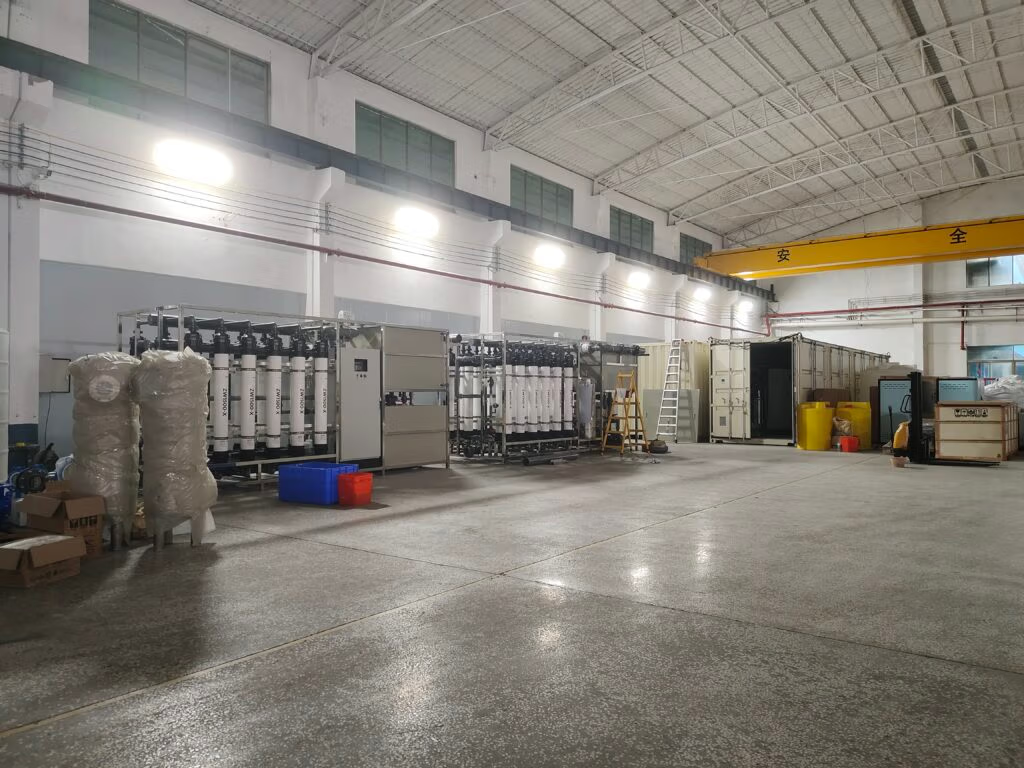
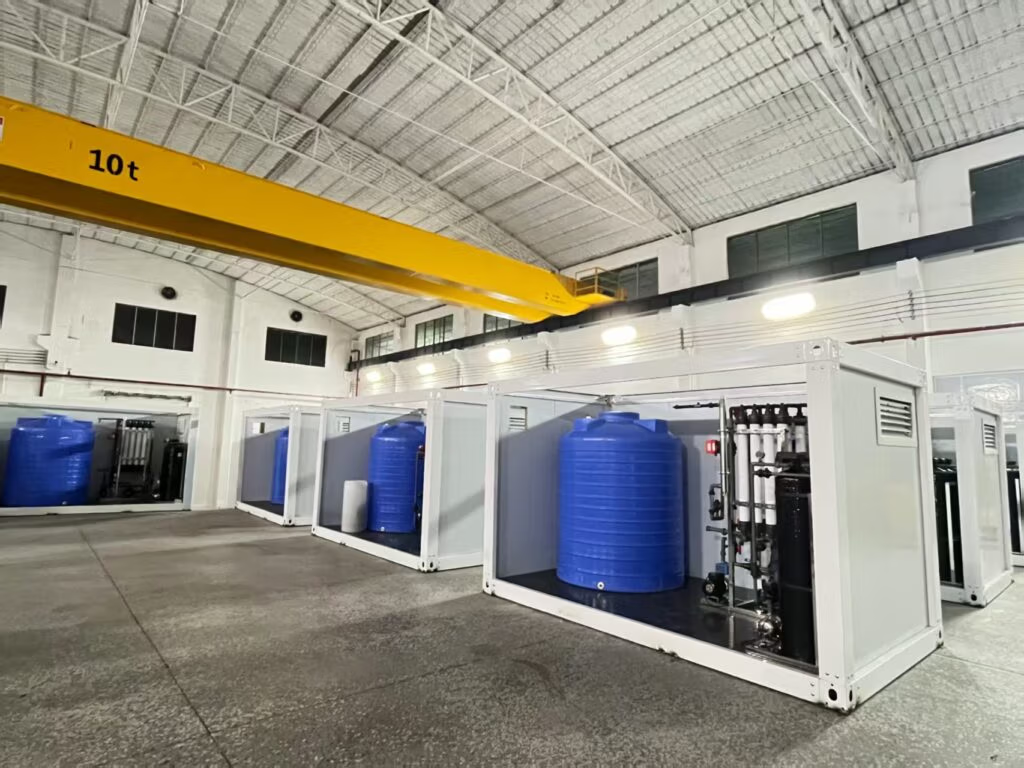
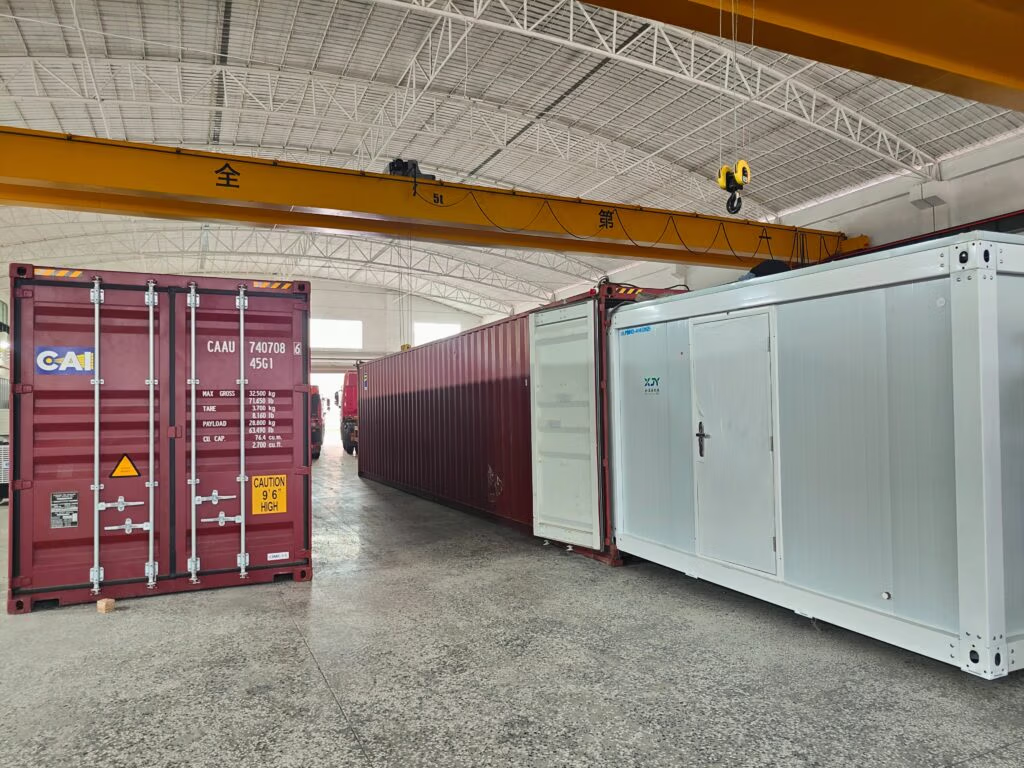
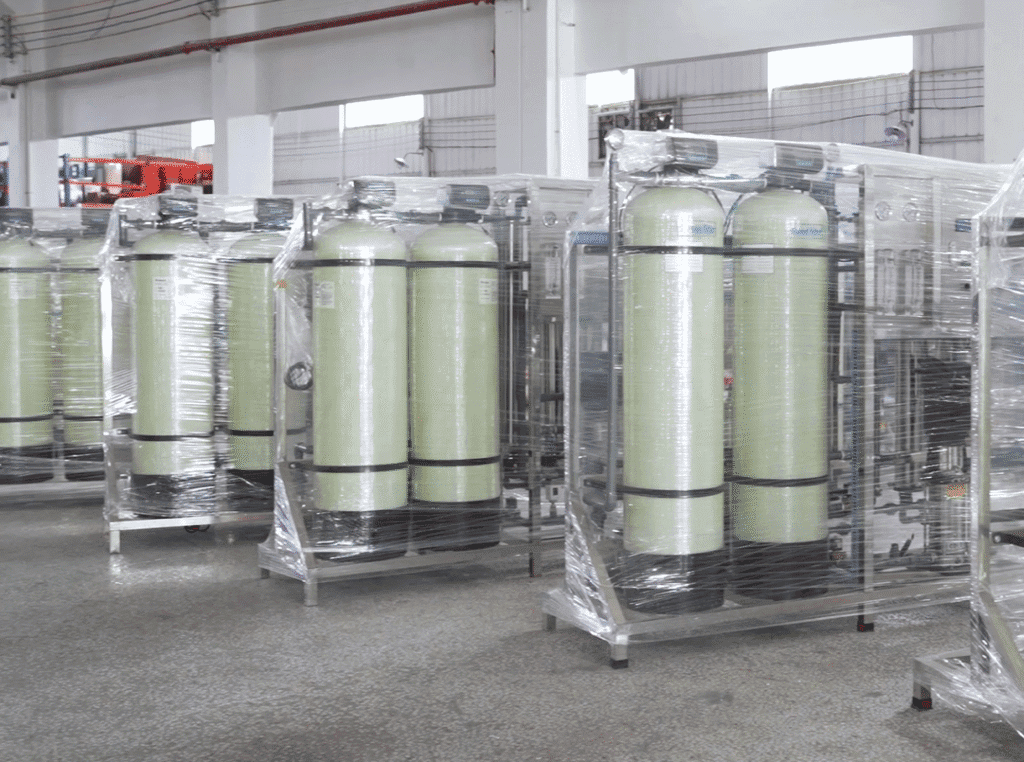
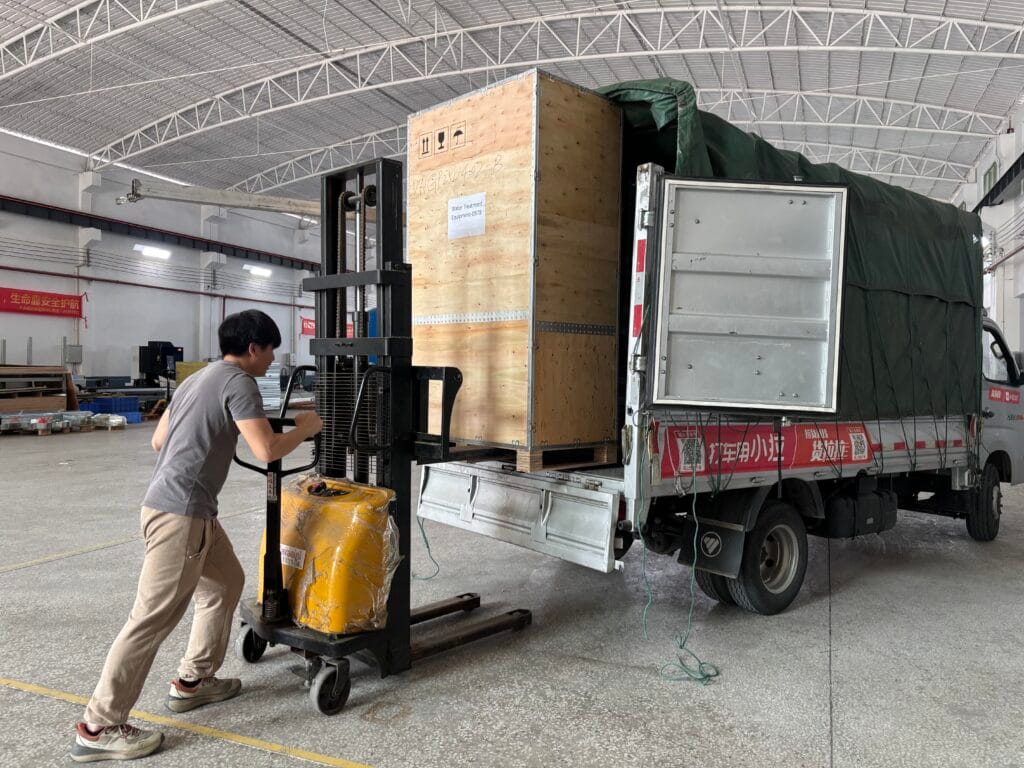
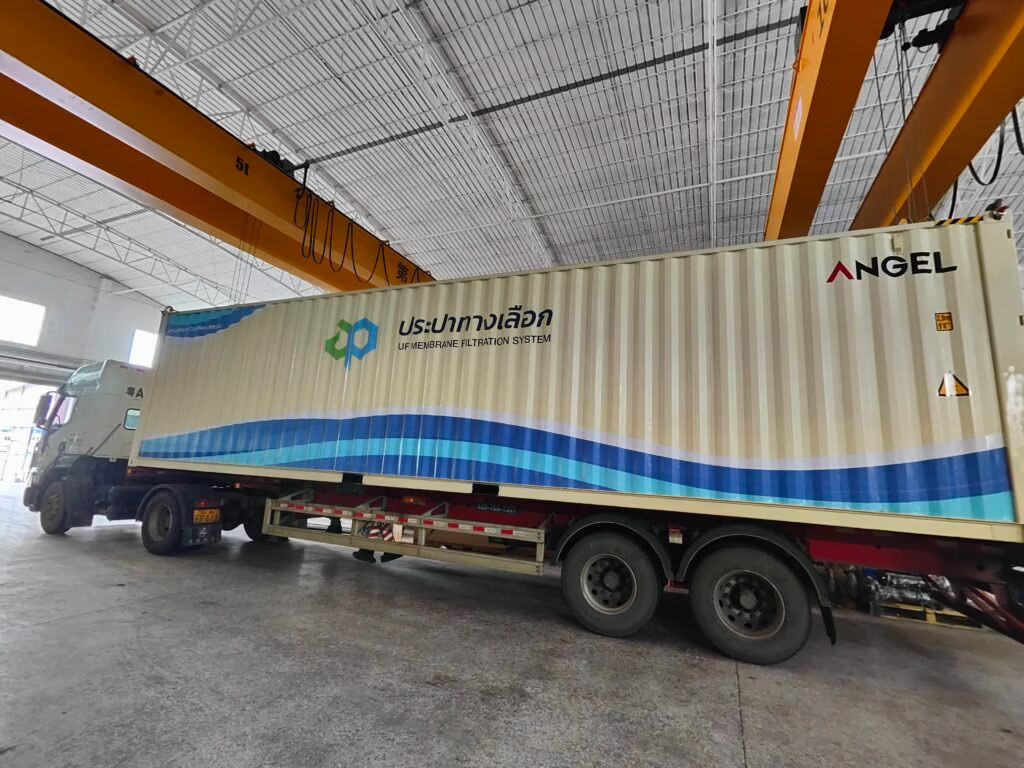
In commercial drinking water applications, box type commercial reverse osmosis system, with its integrated design (all components are integrated into one chamber) and reverse osmosis separation technology, has become an essential water treatment device in many fields such as catering, medical, electronics, and chemical industries, providing a full-process guarantee for commercial scenarios from raw water purification to pure water supply.
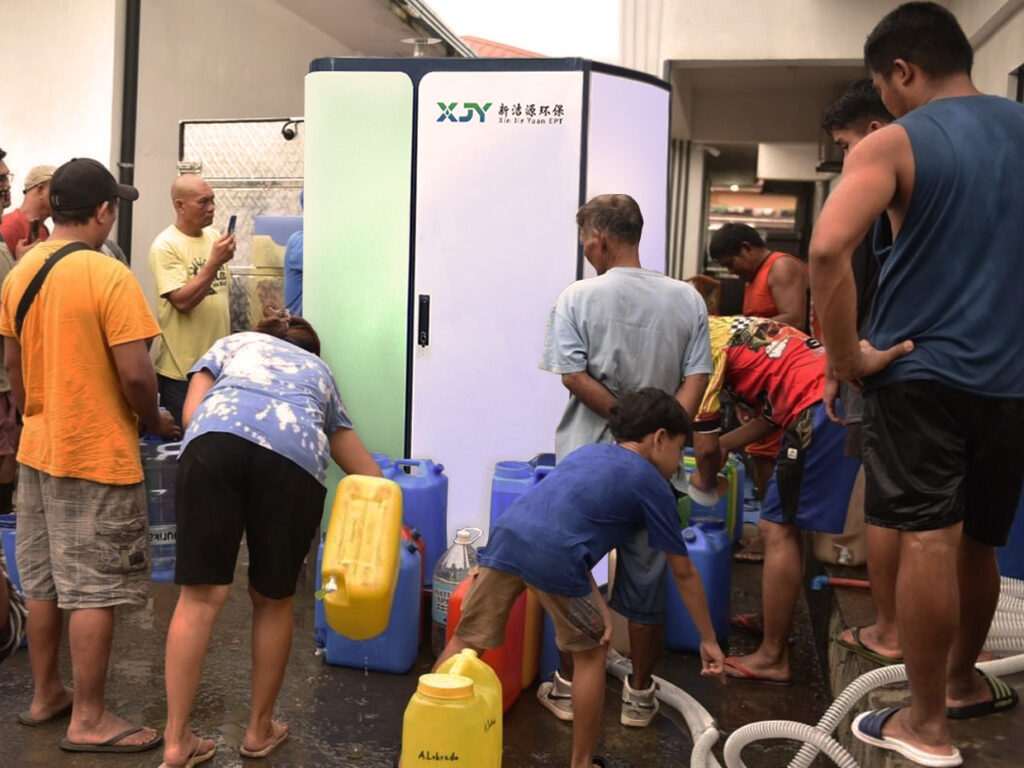
What is a box type commercial reverse osmosis system?
This equipment is a water purification system designed for large-scale commercial water demand. Its core technology utilizes reverse osmosis to efficiently separate water molecules from impurities under pressure, producing pure water that meets commercial production and operational standards. It not only boasts a large processing capacity, small footprint, and stable operation, but is also perfectly suited for intensive water use.
What makes it different from other commercial reverse osmosis system?
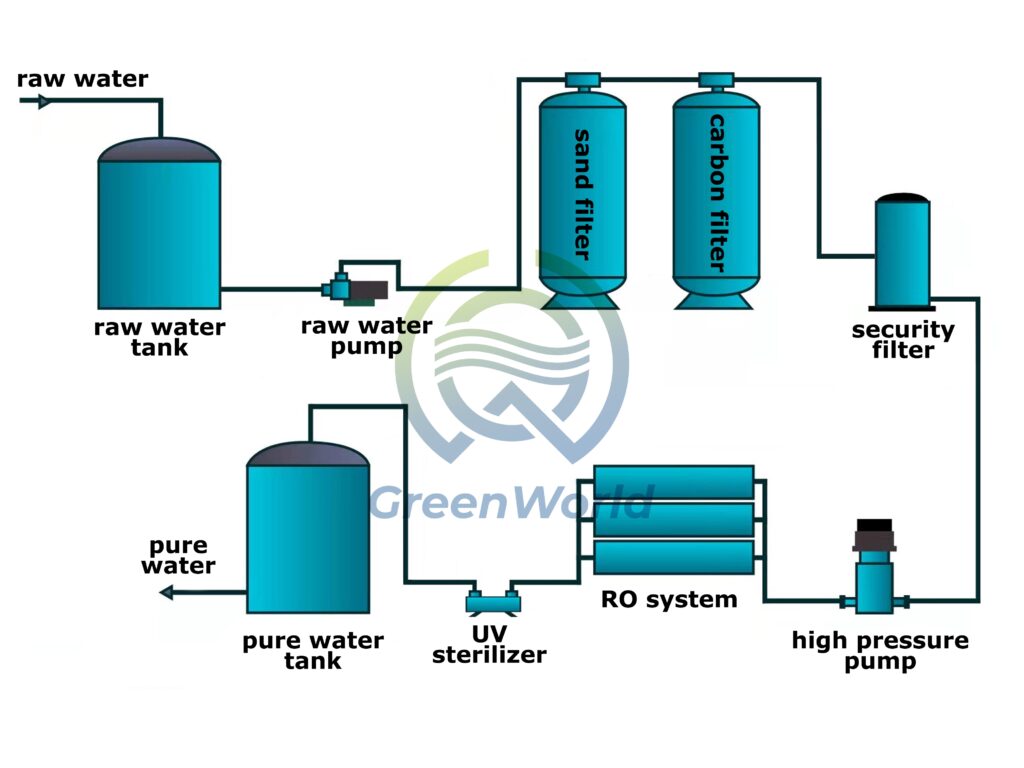
The equipment also uses reverse osmosis technology for water purification. The raw water undergoes pretreatment (filtration, softening, sterilization) to remove large particulate impurities. The initially treated water then undergoes reverse osmosis treatment, followed by sterilization, ultimately producing high-purity permeable water and concentrated water containing impurities. We either discharge or recycle the concentrated water, and we make the high-purity water commercially available.
It has the following characteristics:
Integrated Layout: All functional units are modularly integrated within the enclosure, reducing exposed piping. It occupies only 1/3 the space of traditional distributed equipment, making it suitable for space-constrained environments such as shops, workshops, and laboratories.
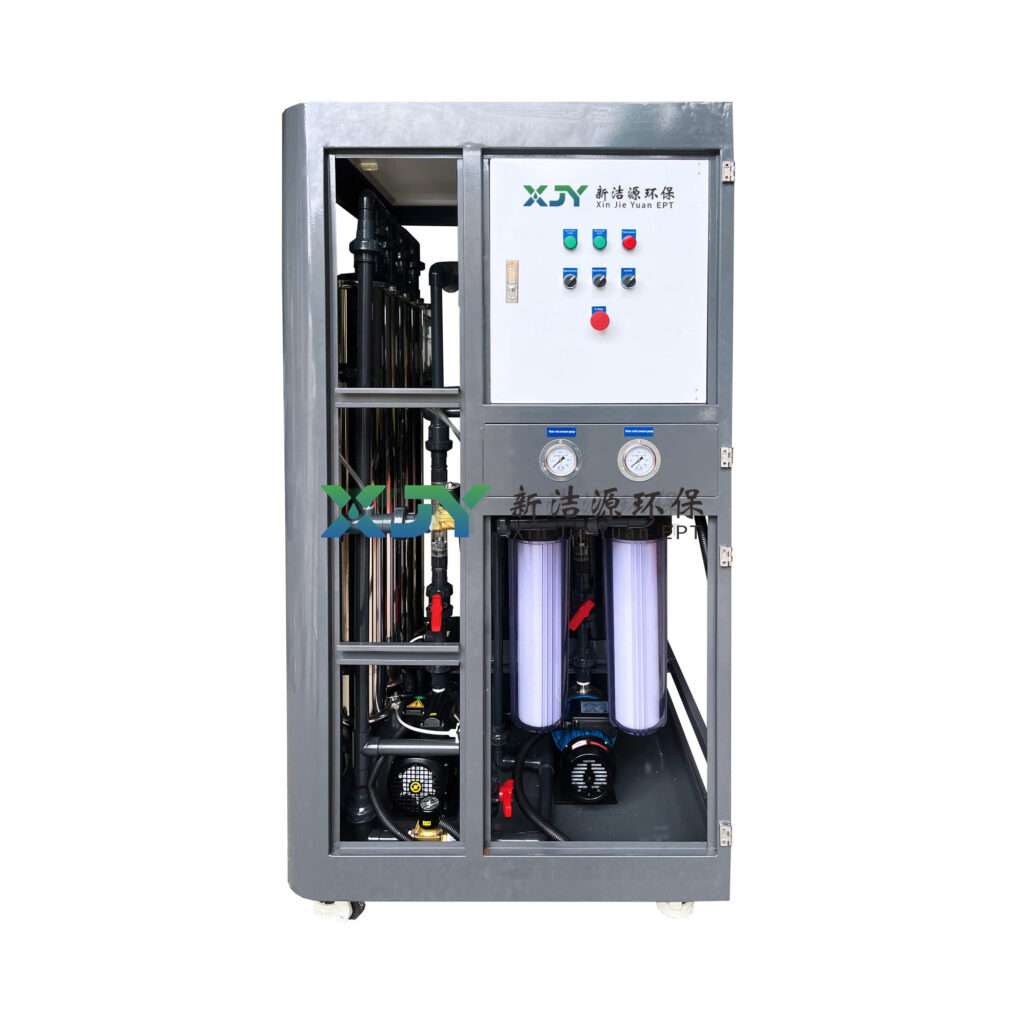
Convenient Operation and Maintenance: The enclosure design facilitates inspection and component replacement, with core components centrally located, reducing daily maintenance time and labor costs.
Stable and Pressure-Resistant: We craft the enclosure from corrosion-resistant, high-strength materials. It can withstand high-pressure operating environments, avoid the risk of leakage during long-term use, and ensure continuous water supply for commercial production.
What are the advantages of commercial reverse osmosis system?
1. High Purification Rate, Customizable:
Single unit water production ranges from 0.5 m³/h to 1 m³/h, with flexible customization options for voltage and processes. Desalination rate exceeds 97%, effectively removing heavy metals, dissolved salts, bacteria, viruses, and organic matter from water.
2. Controllable Energy Consumption:
Utilizing a high-efficiency, energy-saving high-pressure pump and intelligent frequency conversion system, it automatically adjusts operating power according to water demand, reducing energy consumption by 20%-30% compared to traditional water purification equipment.
3. Longer Service Life:
The sealed chamber structure reduces component oxidation and contamination. The RO membrane has a service life of 2-3 years, and the pretreatment filter cartridge has a long replacement cycle. Long-term operating costs are significantly lower than alternatives such as bottled water purchases and decentralized water purification equipment.
How to choose a suitable box type reverse osmosis system?
First, we can select the equipment’s water production capacity, process, water production standards, and pretreatment configuration based on the average daily water consumption and raw water quality.
Second, we should prioritize equipment with branded reverse osmosis membranes, high-efficiency high-pressure pumps, and intelligent control systems. Finally, we need to perform regular inspections and filter replacements on the equipment.
Summarize
Commercial reverse osmosis system, particularly those in modular enclosures, serves as a core water purification solution. They not only efficiently purify water but also reduce operating costs. Whether you’re a startup or a large business, you can choose a suitable unit from these options.
I can create a customized selection guide for commercial RO systems, including water requirements for different industries, recommended parameters, and a list of core configurations. This will help you quickly match your needs. Would you like it?