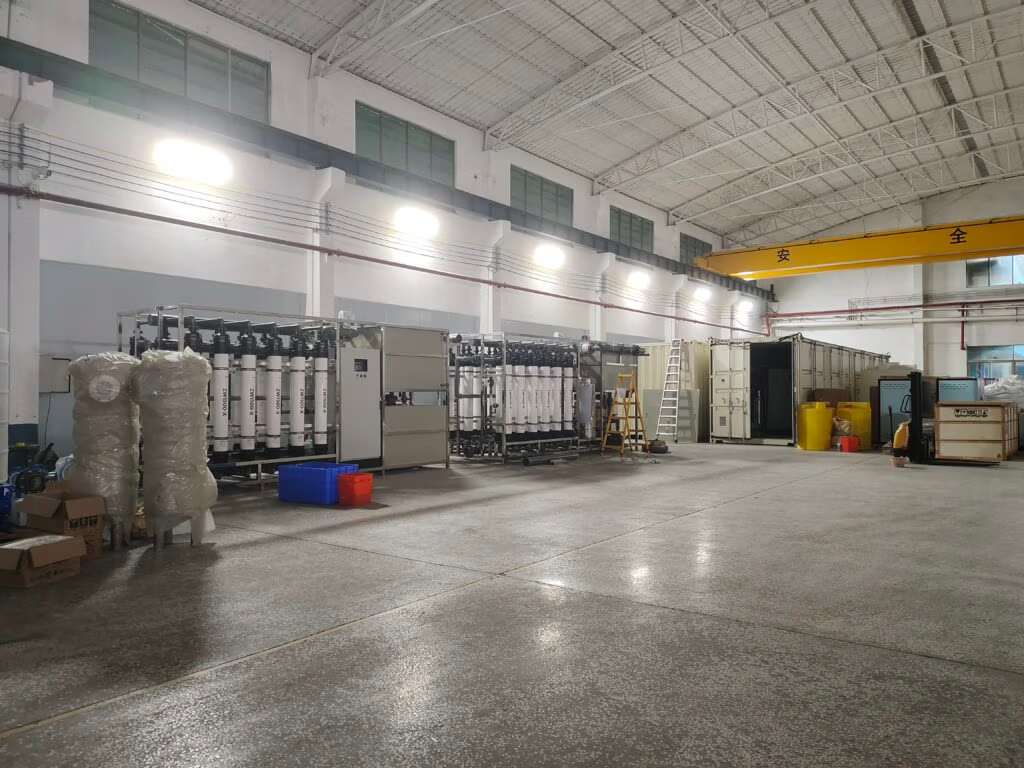
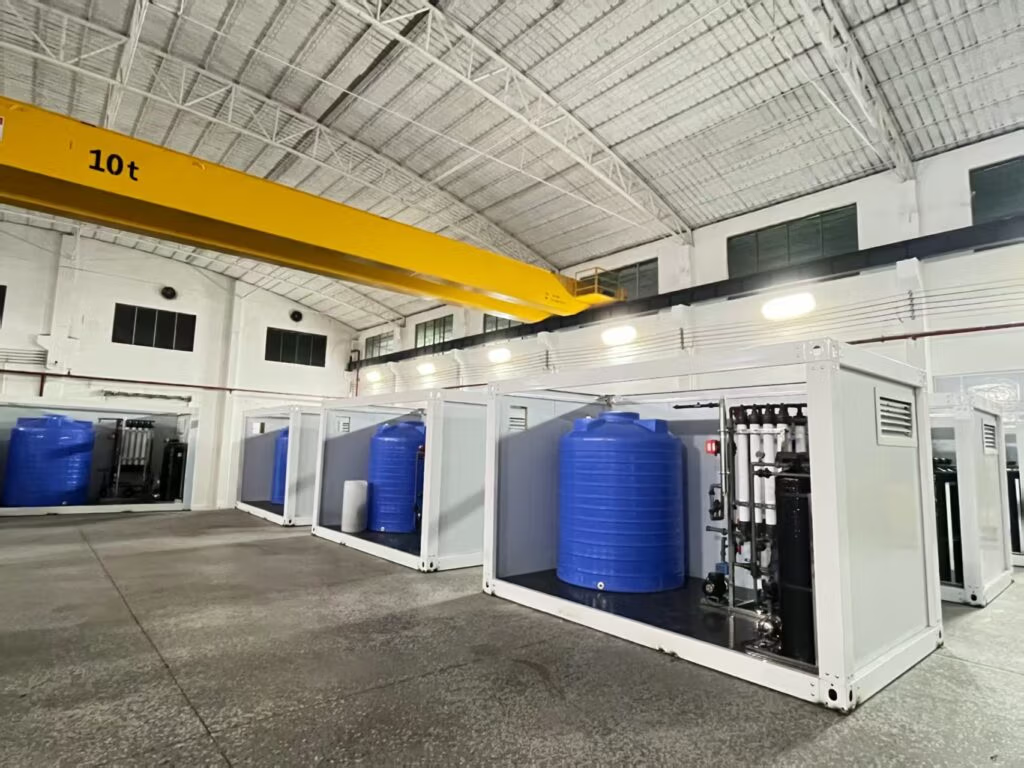
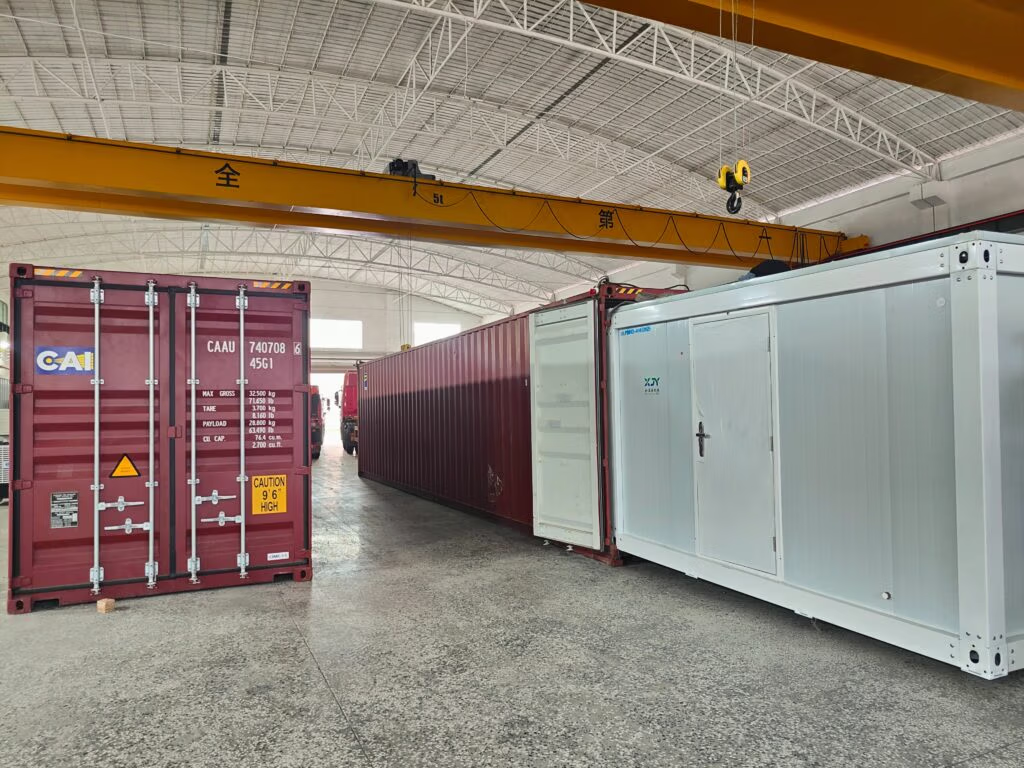
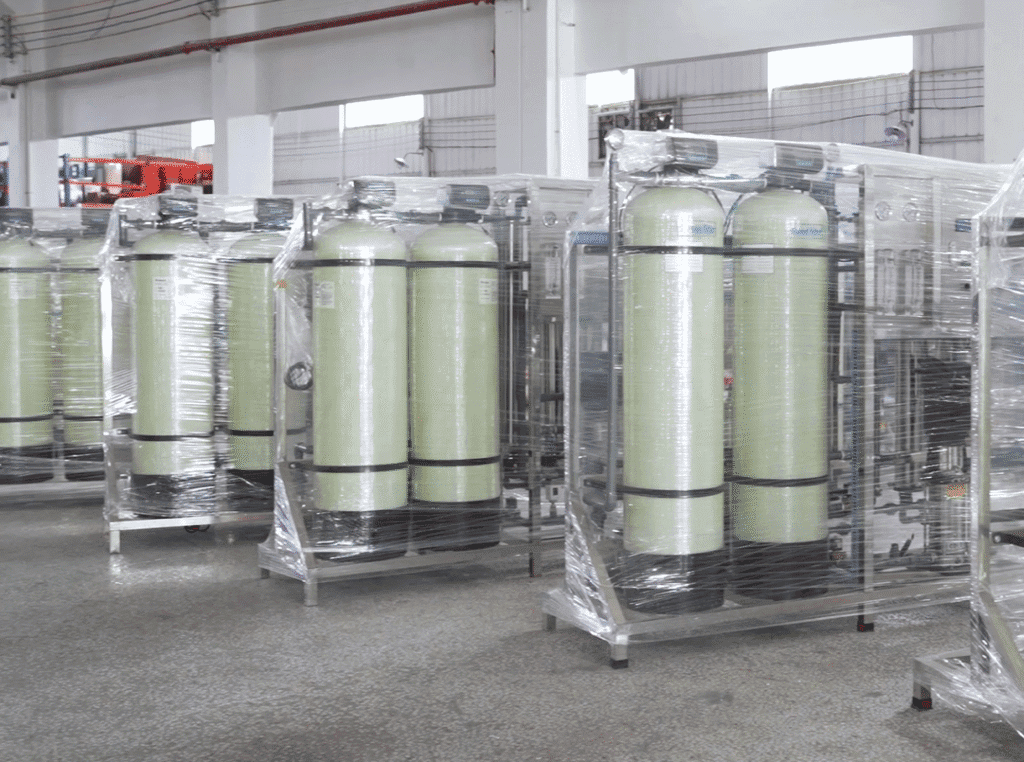
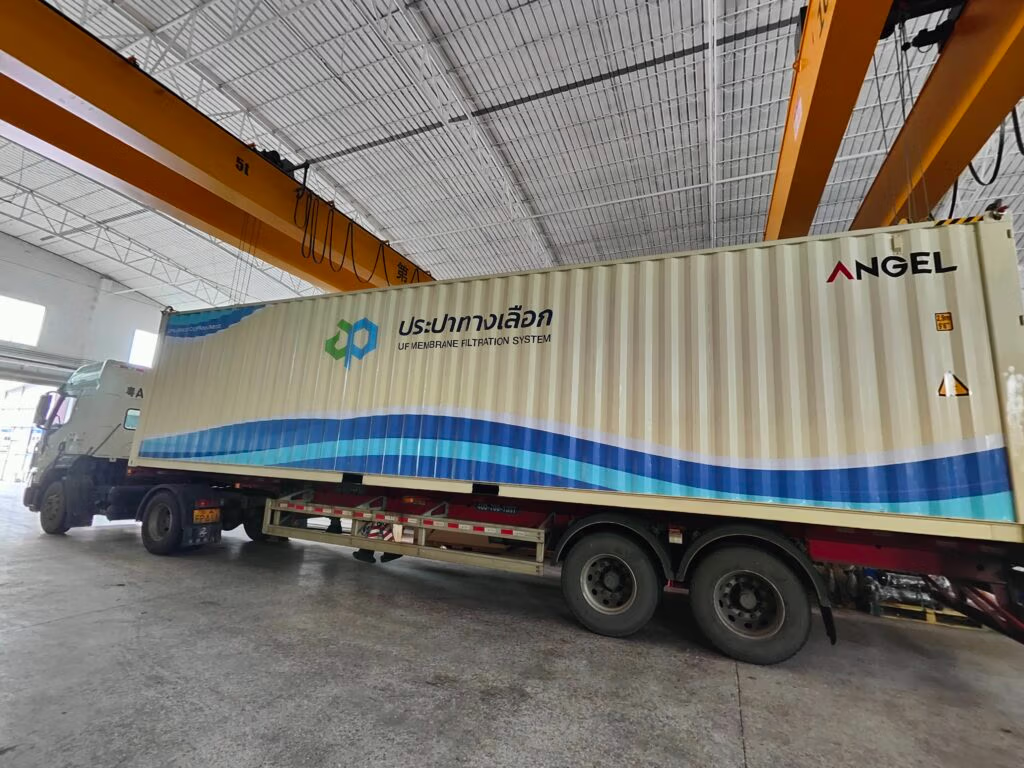
Industrial ultrafiltration systems are core membrane separation equipment in industries such as manufacturing, water treatment, and food and beverage. Their core function is to solve practical problems such as water purification, fluid separation, and wastewater reuse.
However, many practitioners encounter problems such as “not knowing how to start up,” “frequent operational failures,” “rapid membrane fouling,” and “inadequate water production.” This article will guide you step-by-step through solving these core problems in a purely hands-on format. From system understanding, component usage, and operating procedures to troubleshooting and maintenance techniques, the entire process is implemented to help you get started quickly and operate efficiently.
How to quickly understand industrial ultrafiltration systems
Many people make incorrect selections or operate industrial ultrafiltration systems improperly due to a lack of understanding of their core properties, ultimately failing to meet their actual filtration needs. Master these two points to quickly understand the system’s core principles.
1. Core Definition:
An industrial ultrafiltration system is a modular automated filtration device. Its core component is a 0.001-0.1 micron semi-permeable membrane, which achieves separation through physical sieving.
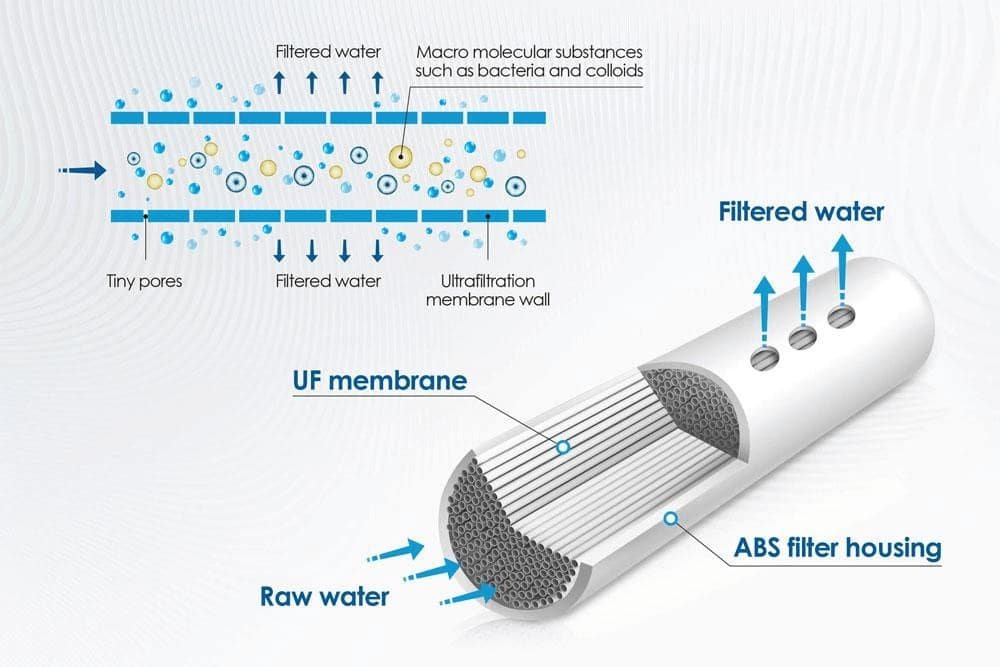
This process requires no chemical reaction and focuses on solving the core need of “removing suspended solids, colloids, and bacteria to produce qualified water”. It is suitable for various water sources such as surface water, groundwater, and industrial wastewater.
2. Key parameters (the core of choosing and using them correctly)
- Operating pressure: 0.1-0.6 MPa (low-pressure operation, energy saving and avoidance of membrane damage, solving the problem of “malfunction caused by improper pressure”).
- Product water standards: Turbidity < 0.1 NTU, SDI < 3, and bacterial removal rate of 99.99% or higher (clearly define the standards and solve the problem of “unqualified product water”).
- Suitable for various scenarios: Automated operation, suitable for continuous industrial production, from small skid-mounted equipment to large multi-module parallel systems, choose as needed.
How to identify the core components of industrial ultrafiltration systems
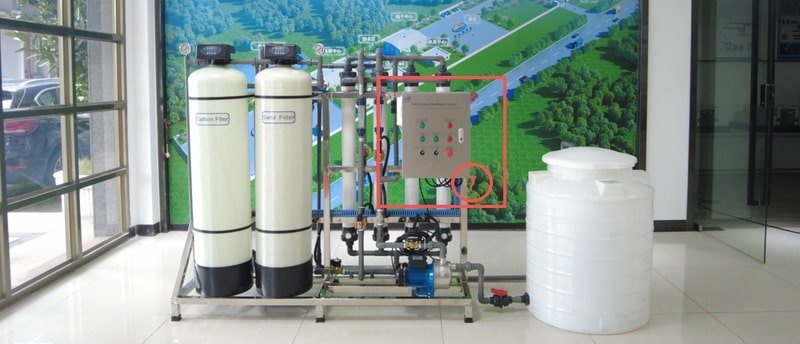
Most malfunctions in industrial ultrafiltration systems are related to component abnormalities. Understanding the seven core components, their function, and common problems is crucial for quick troubleshooting and resolution.
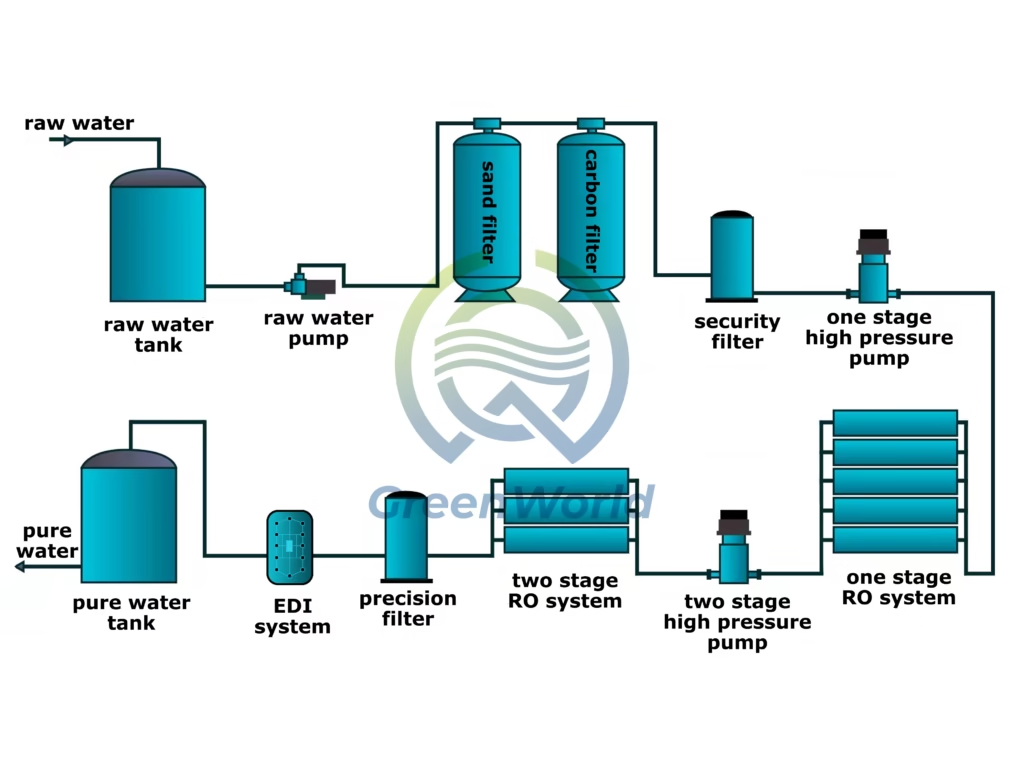
1. Pretreatment unit (the first line of defense against membrane fouling)
Function: Removes large particles and sediment from raw water, preventing wear and clogging of the ultrafiltration membrane.
Practical Tips: Commonly used are 5-50 micron self-cleaning filters and bag filters.
How to Check? Regularly check the filter differential pressure. If it exceeds 0.1 MPa, clean or replace the filter cartridge immediately to prevent pretreatment failure and membrane fouling.
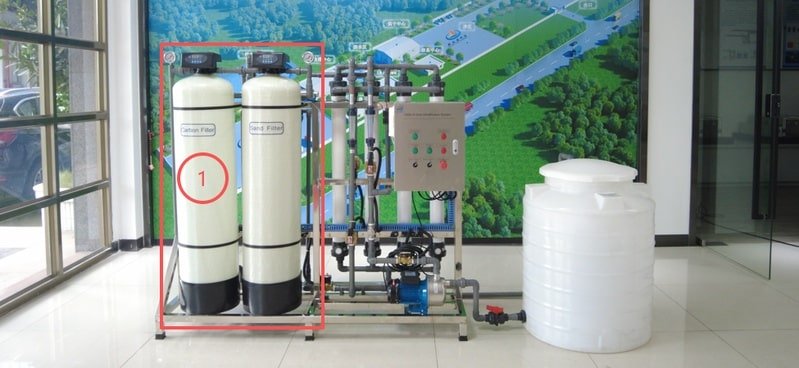
2. Feed pump and pressure control system (to solve the problem of “unstable pressure”)
Function: Provides stable power for raw water to permeate through the membrane. It is the “heart” of the system.
Operational Tips: Equipped with a variable frequency drive (VFD).
How to Adjust? During startup, gradually increase the pressure at a low frequency to avoid sudden pressure rises. Monitor the pressure value in real time during operation. If fluctuations exceed ±0.05 MPa, adjust the VFD parameters promptly to prevent damage to the membrane module.
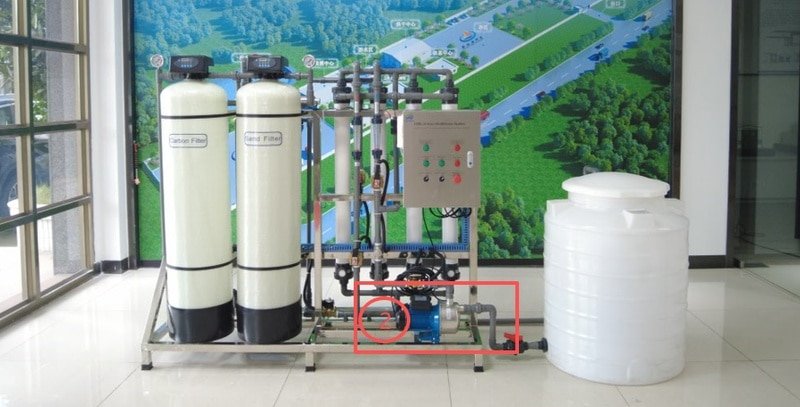
3. Ultrafiltration membrane module (core component, solving the problem of “poor filtration effect”)
Function: Directly determines the quality of produced water. There are 3 common types. Choose according to your needs (to solve the problem of “incorrect selection”).
- Hollow fiber type: Most commonly used, easy to backwash, suitable for most industrial scenarios (such as municipal water treatment, wastewater reuse).
- Flat plate/plate frame type: Resistant to fouling, suitable for high solids content, viscous fluids (such as food and beverage concentration).
- Roll-up type: Compact structure, suitable for scenarios with limited space (such as pure water preparation in small electronics factories).
Membrane material selection: PVDF (chemical-resistant and fouling-resistant) is preferred, while PES (low adsorption) is chosen for food and pharmaceutical applications. Match the material to the water quality and requirements to avoid membrane failure due to incompatible materials.
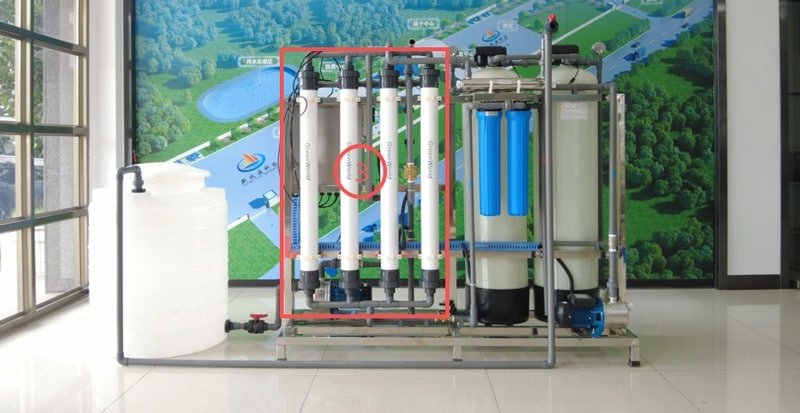
4. Valves and piping systems (to resolve the issue of “unsmooth fluid switching”)
Practical tips: Use stainless steel/industrial plastic piping and regularly check the flexibility of valve operation. If leaks or jamming are found, repair or replace immediately to avoid operational interruptions due to piping problems.
5. Backwashing and air rinsing system (to solve the problems of membrane fouling and reduced flux)
Function: Removes contaminants from the membrane surface, restores membrane flux, and extends membrane life.
Practical Operating Points: How to operate? Backwash with permeate, combined with air washing to generate turbulence, enhancing the cleaning effect. Follow the steps below for the specific frequency.
6. In-situ cleaning (CIP) system (solves the problem of “ineffective backwashing and inability to restore membrane flux”)
Practical tips: If the flux still decreases after backwashing, clean with an acidic solution (to remove inorganic scale) or an alkaline solution (to remove organic matter and biofilm). Rinse thoroughly with clean water after cleaning to avoid chemical residues damaging the membrane.
7. PLC control panel (solves the problems of “complex operation and unattended operation”)
Practical tips: Pre-set operating, backwashing, and cleaning parameters to support 24-hour unattended operation. Pay special attention to checking the fault alarm function. If an alarm is detected, immediately check the prompts to troubleshoot (e.g., excessive pressure, abnormal flow).
How to operate industrial ultrafiltration systems
Follow these steps to avoid operational errors that could lead to malfunctions, ensure stable system operation, and produce qualified water.
1. System Startup: How to boot up the computer correctly
Step 1: Comprehensive Inspection – Confirm that the power supply, water supply, and chemical reagents (for CIP cleaning) are sufficient, and that the instruments (pressure gauge, flow meter) are properly connected and calibrated.
Step 2: Air Bleeding in the Pipeline – Open the inlet valve and air vent valve to release air from the pipeline, preventing air blockage and damage to the membrane module.
Step 3: Start the Feed Pump – Run at low frequency, slowly increasing the pressure to 0.1-0.6 MPa. After observing for leaks and stabilizing the pressure, enter filtration mode.
2. Filtration Operation: How to Ensure Product Water Meets Standards (Core Operation)
Step 1: Confirm the pretreatment unit is functioning correctly. Raw water enters the membrane module after pretreatment.
Step 2: Monitor parameters—maintain a recovery rate of 85-95% and a design flux of 50-120 liters/(square meter·hour) (LMH). Observe the permeate turbidity and SDI value in real time. Immediately shut down the unit for inspection if standards are not met.
Step 3: Concentrate treatment—discharge concentrate continuously or intermittently depending on water quality to avoid excessive accumulation of pollutants leading to membrane fouling.
3. Automatic backwashing: How to perform timed cleaning (solving the “membrane fouling” problem)
As contaminants accumulate on the membrane surface, membrane flux decreases and transmembrane pressure (TMP) increases. At this point, automatic backwashing needs to be initiated, following these steps.
Step 1: The system automatically stops filtration (or is manually triggered).
Step 2: Start the backwash pump to backwash the membrane module with permeate, while simultaneously activating air rinsing to generate turbulent flow that washes the membrane surface.
Step 3: Discharge the backwashed wastewater to complete the backwash and restore filtration.
Key operational points: Set the backwash frequency to once every 20-60 minutes, adjusting according to the degree of raw water contamination to avoid backwashing too frequently or too late.
4. CIP Chemical Cleaning: How to Solve the Problem of “Ineffective Backwashing”
If membrane flux fails to recover after backwashing and transmembrane pressure continues to rise, immediately perform CIP cleaning:
Step 1: Stop filtration and drain residual water from the pipeline.Step 2: Inject cleaning solution (alkaline solution: removes organic matter and biofilm, acidic solution: removes inorganic scale), soak for 30-60 minutes.
Step 3: Rinse the membrane module with clean water until the discharged water is free of chemical residue, and restore filtration. Practical points: Cleaning interval should be 1-4 months, adjusted according to the raw water quality, to avoid frequent chemical cleaning that could damage the membrane.
5. System shutdown: How to properly shut down the system (protective film assembly)
Step 1: Stop the feed pump and close the inlet and outlet valves.
Step 2: Ensure the membrane module is kept moist (do not dry) to prevent membrane pore size shrinkage and damage.
Step 3: For long-term shutdowns, soak the membrane module in a protective solution and replace the solution regularly to prevent membrane aging.
How to solve common faults in ultrafiltration systems
In daily operation, if you encounter the following four common faults, follow the corresponding methods to resolve them and quickly restore industrial ultrafiltration systems operation.
1. A sharp drop in membrane flux (most common)
Causes: Pretreatment failure, membrane fouling, improper pressure.
Solutions: Inspect the pretreatment filter and replace the filter element, perform backwashing or CIP cleaning, adjust the feed pump pressure to restore it to the normal range.
2. The turbidity/SDI of the produced water does not meet the standards
Causes: Damaged membrane module, incomplete pretreatment, abnormal operating parameters.
Solutions: Check membrane integrity and replace damaged membrane fibers. Improve pretreatment and replace filter cartridges, adjust flux and recovery rate to reasonable ranges.
3. System pressure is too high
Causes: Pipeline blockage, valve malfunction, severe membrane fouling.
Solutions: Inspect the pipeline and remove any blockages. Repair or replace the faulty valve. Perform CIP chemical cleaning to restore membrane permeability.
4. Frequent backwashing
Causes: Severe raw water pollution and insufficient pretreatment.
Solutions: Optimize the pretreatment process and increase filtration precision. Shorten the replacement cycle of the pretreatment filter cartridge. Adjust backwashing parameters appropriately.
How to extend the lifespan of industrial ultrafiltration systems
Proper routine maintenance can extend the lifespan of membrane modules to 3-5 years and reduce operation and maintenance costs. Focus on these three key points.
1. Daily/Weekly Maintenance
– Monitor feed pressure, permeate flow rate, and transmembrane pressure, keep records, and address any abnormalities promptly.
– Check pipelines and valves for leaks, and inspect equipment for abnormal noise.
– Check the pretreatment filter differential pressure and clean or replace the filter element as needed.
2. Monthly maintenance
– Calibrate pressure gauges, flow meters, and sensors to ensure accurate data.
– Check the operating status of the feed pump and backwash pump, and clean the pump body and motor components.
– Inspect the membrane module for any damage or leakage.
3. Quarterly/Annual Maintenance
– Conduct a comprehensive inspection of the PLC control system, update operating parameters, and test fault alarm functions.
– Perform a complete CIP cleaning of the membrane modules to restore membrane performance.
– Replace aging pipelines, valves, and filter elements, and conduct a comprehensive investigation of potential system hazards.
Summarize
This article focuses on “solving practical problems” and teaches you how to use industrial ultrafiltration systems efficiently from four dimensions: cognition, operation, troubleshooting, and maintenance.
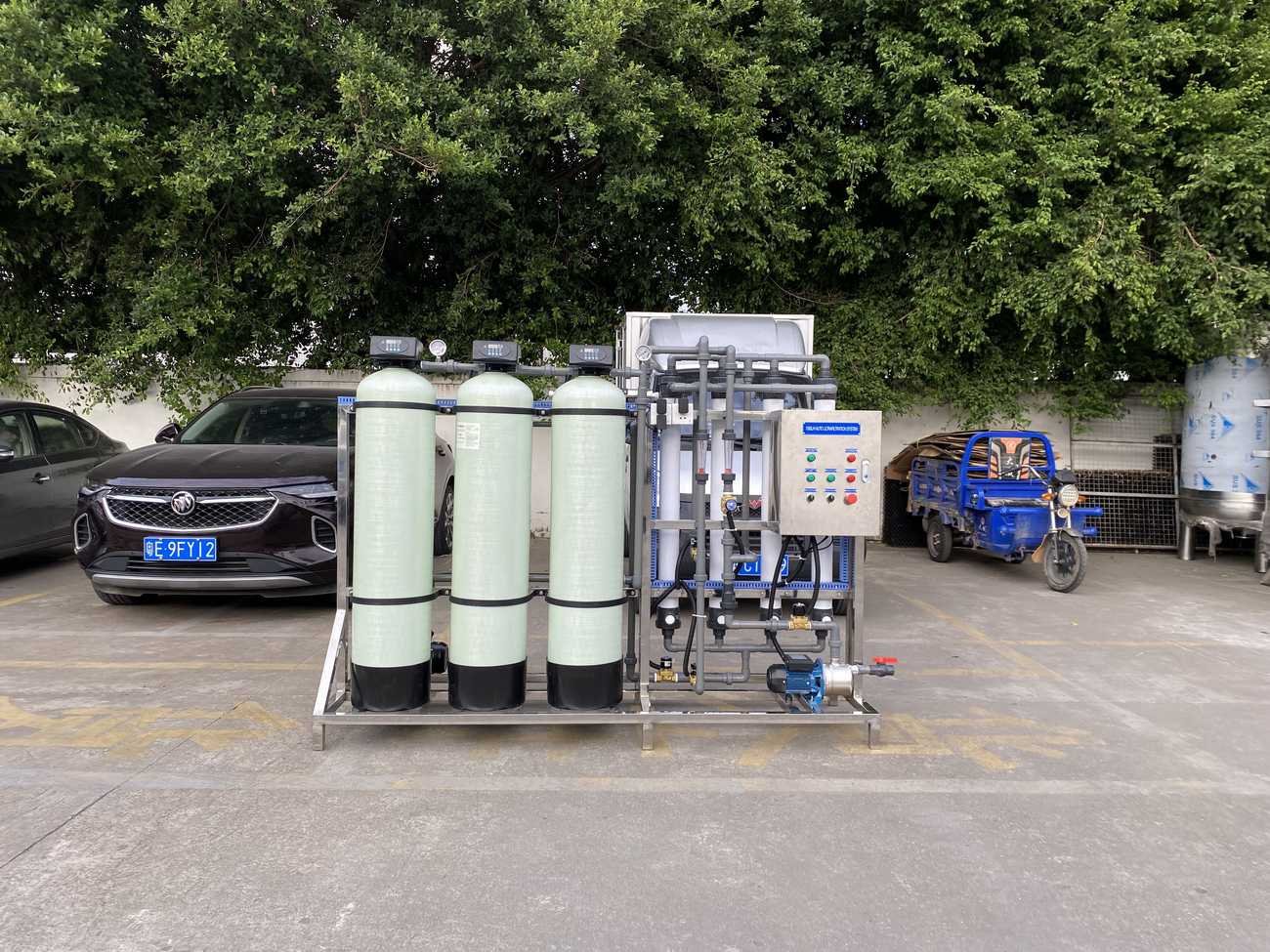
Key points: Select the right components first, then operate according to the steps, perform regular backwashing and maintenance, and troubleshoot malfunctions using the corresponding methods. This will ensure stable production of qualified water, extend ultrafiltration equipment life, and truly leverage the core role of the ultrafiltration system to solve various filtration problems in industrial water treatment.