Setiap tahap produksi industri terkait erat dengan kualitas air. Hal ini karena secara langsung mempengaruhi tidak hanya kualitas produk akhir tetapi juga umur peralatan produksi.
Dalam beberapa tahun terakhir, metode pengolahan air tradisional telah menjadi semakin tidak memadai untuk tuntutan pemurnian presisi tinggi. Sebagai gantinya, mesin pengolahan air ultrafiltrasi, dengan keunggulannya yang luar biasa dalam efisiensi dan stabilitas tinggi, secara bertahap telah menjadi solusi pilihan di bidang pengolahan air industri.
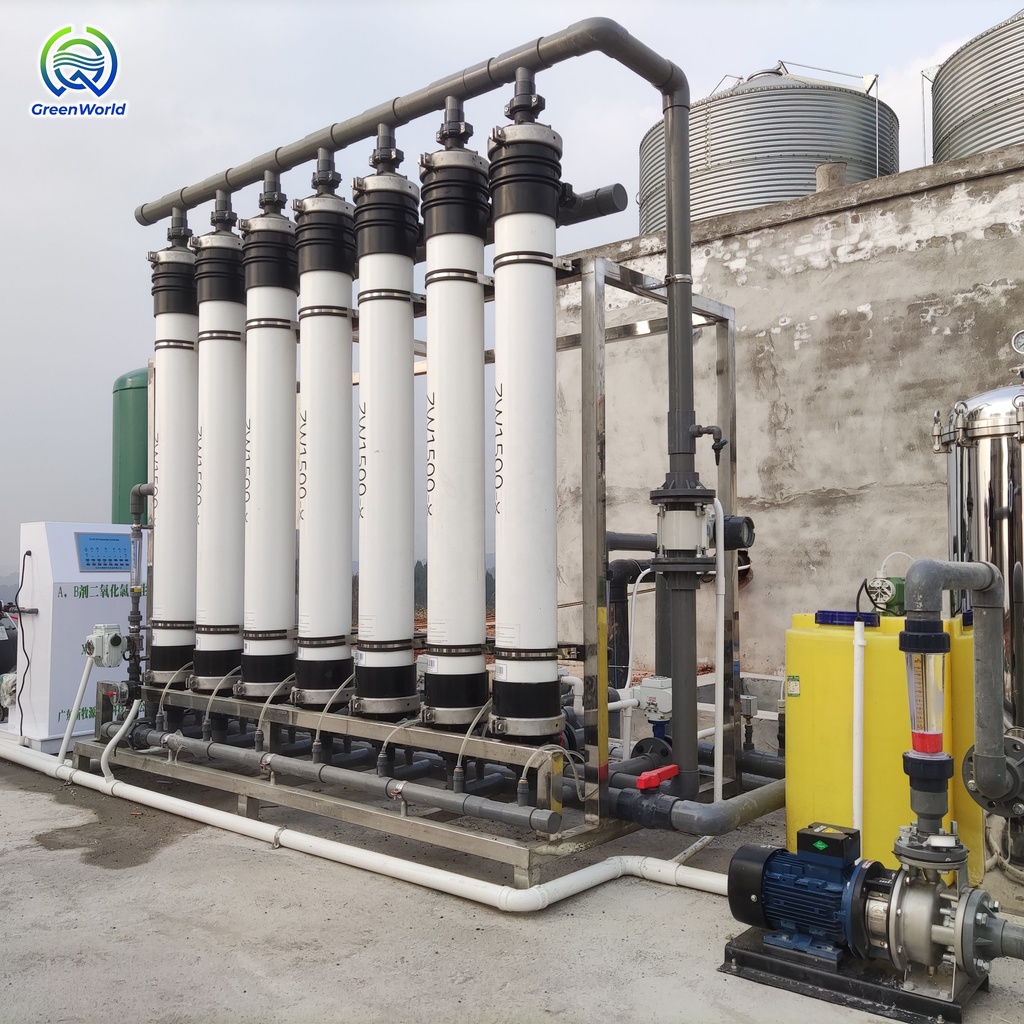
Membran pengolahan air ultrafiltrasi apa yang harus kita gunakan?
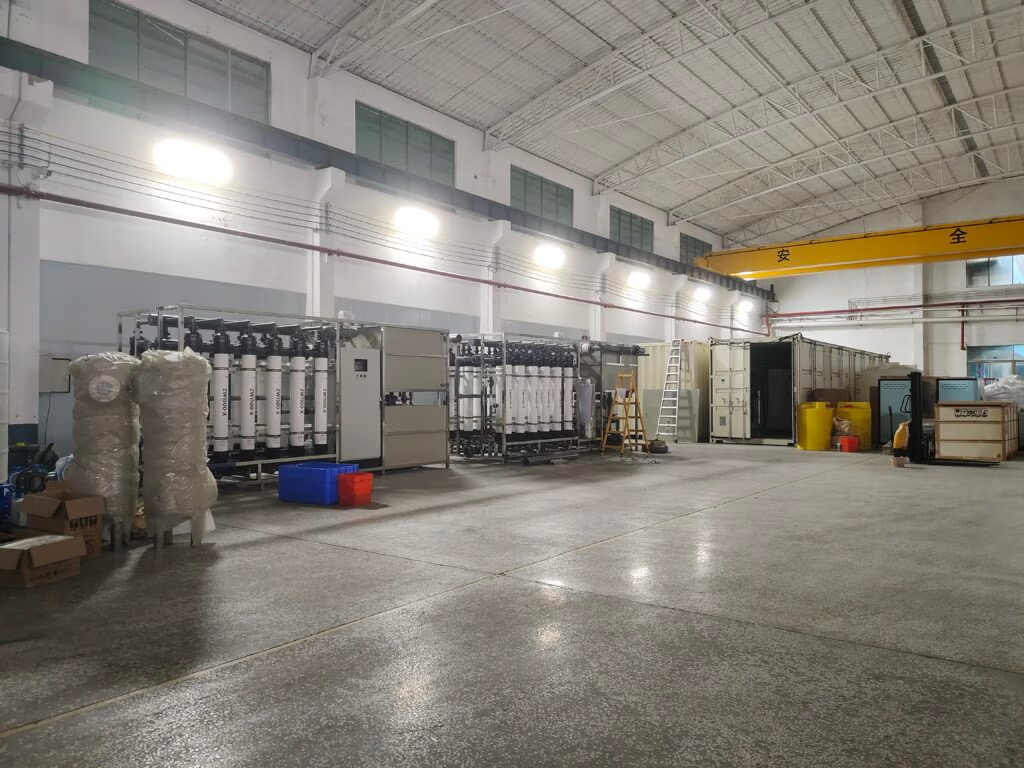
Mesin pengolahan air ultrafiltrasi mengandalkan karakteristik pengayakan yang tepat dari membran polimer. Di bawah tekanan sedang, molekul air dan molekul organik kecil dapat melewati pori-pori membran dengan lancar, sementara membran menjebak partikel koloid, kotoran tersuspensi, mikroorganisme, dan polutan makromolekul di dalam air di permukaannya.
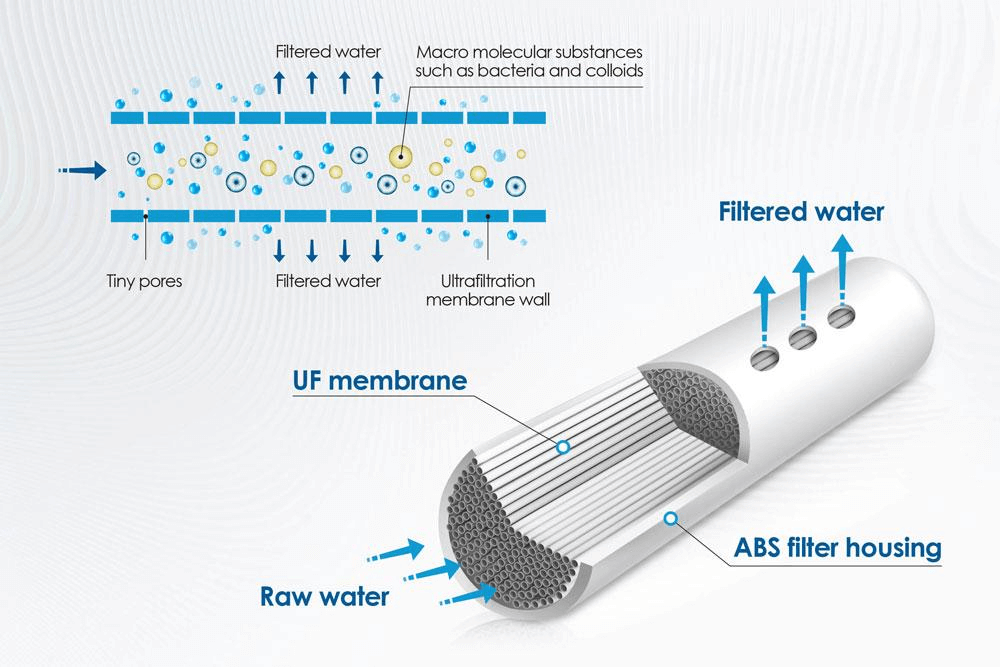
Dibandingkan dengan proses penyaringan tradisional, membran ultrafiltrasi memiliki ukuran pori-pori mulai dari 0,01 hingga 0,1 mikrometer. Ketepatan yang sulit dicapai oleh metode tradisional seperti penyaringan pasir kuarsa dan adsorpsi karbon aktif. Oleh karena itu, mereka dapat menghilangkan lebih dari 99% kekeruhan dan mikroorganisme patogen dari air. Dan seluruh proses tidak memerlukan bahan kimia tambahan, yang pada dasarnya menghilangkan risiko polusi sekunder.
Apa saja keunggulannya dibandingkan dengan metode tradisional?
Dalam aplikasi industri, nilai teknologi ultrafiltrasi sangat jelas terlihat.
Di satu sisi, ia memiliki kemampuan beradaptasi yang kuat terhadap berbagai skenario. Insinyur dapat secara fleksibel menyesuaikan bahan membran dan parameter operasi sesuai dengan karakteristik kualitas air dari berbagai industri. Baik itu persiapan air dengan kemurnian tinggi di industri elektronik, pemurnian air dalam pengolahan makanan, atau daur ulang air limbah di industri kimia, ia dapat memberikan solusi yang disesuaikan.
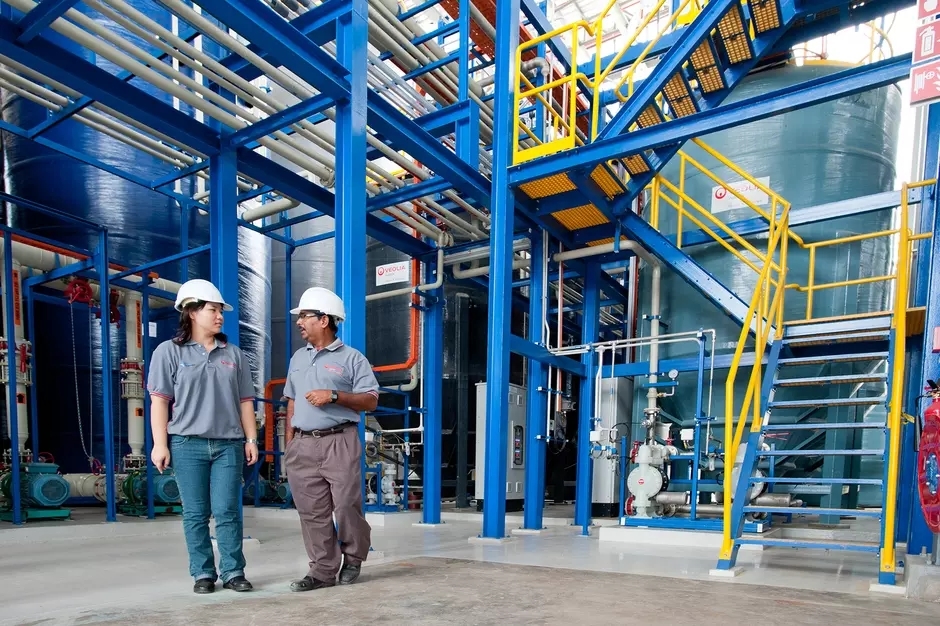
Di sisi lain, ekonomi operasionalnya luar biasa. Membran ultrafiltrasi mengadopsi desain filtrasi aliran silang, yang secara efektif mengurangi pengotoran membran dan memperpanjang masa pakai membran. Secara bersamaan, peralatan tersebut memiliki otomatisasi tingkat tinggi, hanya membutuhkan sejumlah kecil personel pemeliharaan untuk memastikan operasi yang berkelanjutan dan stabil. Selain itu, ia menawarkan manfaat lingkungan yang signifikan. Sebagai contoh, kami dapat mendaur ulang air limbah industri setelah pengolahan ultrafiltrasi, sehingga sangat mengurangi konsumsi air tawar perusahaan dan dengan demikian mencapai target konservasi air dan pengurangan emisi.
Peningkatan apa yang telah dilakukan pada teknologi pengolahan air ultrafiltrasi?
Berdasarkan pengalaman selama 15 tahun dalam manufaktur peralatan pengolahan air, kami telah menyempurnakan sistem ultrafiltrasi kami dari berbagai aspek guna mengatasi berbagai kendala utama dalam pengolahan air skala industri. Sebagai contoh, dalam pemilihan modul membran, kami menggunakan material PVDF (polivinilidena fluorida) yang memiliki sifat anti-fouling unggul; material ini dipadukan dengan proses penganyaman serat membran yang kami kembangkan secara mandiri, sehingga secara signifikan meningkatkan ketahanan modul membran terhadap tekanan maupun proses pembersihan. Selain itu, desain arsitektur sistem kami dilengkapi dengan unit pemantauan cerdas yang memantau indikator-indikator kunci—seperti fluks membran dan perbedaan tekanan transmembran—secara *real-time*. Segera setelah sistem mendeteksi adanya indikasi penumpukan kotoran (*fouling*) pada membran, sistem akan secara otomatis menginisiasi proses pembersihan *online* guna memastikan kelancaran dan stabilitas operasional.
Peningkatan teknologi ini telah membuat peralatan ultrafiltrasi kami mendapatkan pengakuan pasar. Setelah mengadopsi peralatan kami, sebuah perusahaan elektronik besar di Cina Timur melihat resistivitas air produksinya secara konsisten dipertahankan di atas 15 MΩ-cm. Tingkat kualifikasi produknya meningkat sebesar 3 poin persentase, dan tingkat waktu henti lini produksinya menurun hampir 20%.
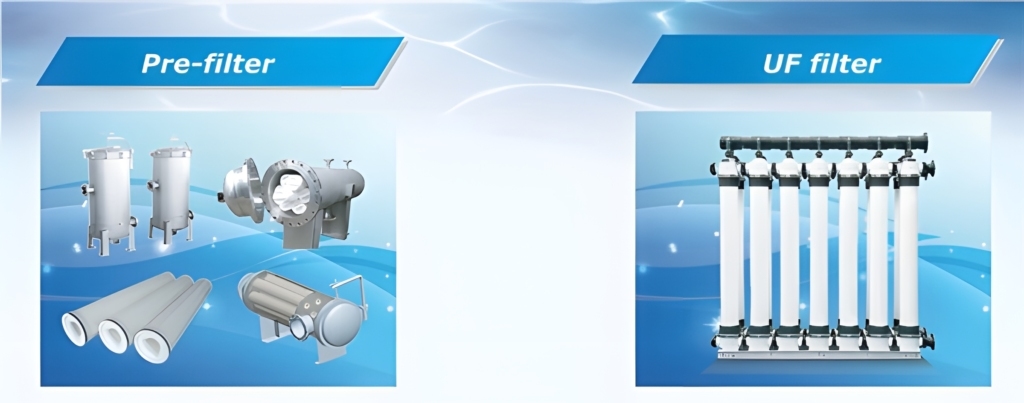
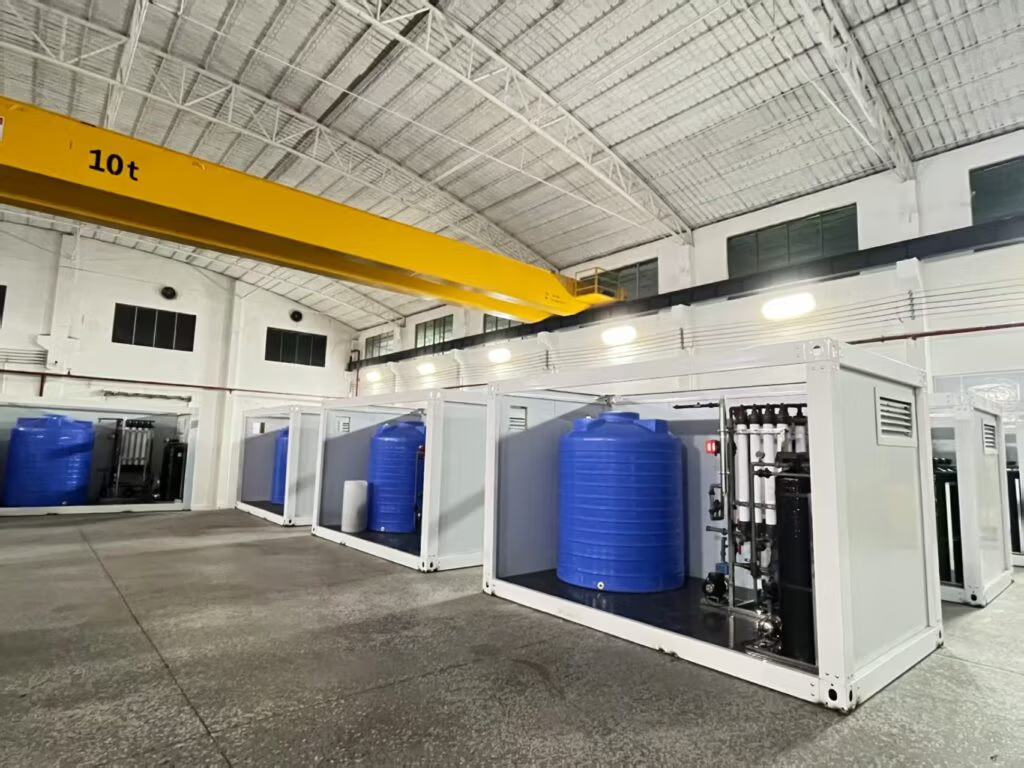
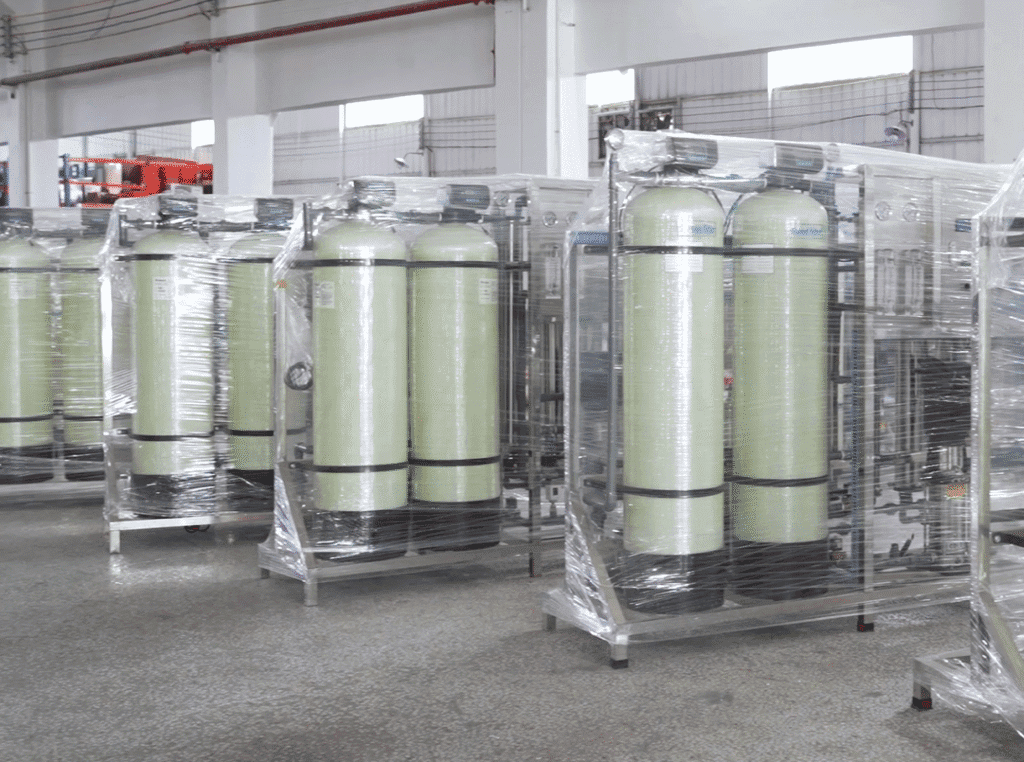
Saat ini, mesin pengolahan air ultrafiltrasi berkembang pesat menuju integrasi, kecerdasan, dan konsumsi energi yang rendah. Tim kami berfokus pada pengembangan unit pengolahan terintegrasi. Kami menggabungkan ultrafiltrasi dengan teknologi reverse osmosis dan nanofiltrasi untuk mencapai layanan satu atap mulai dari pemurnian air baku hingga produksi air murni. Secara bersamaan, kami memanfaatkan teknologi IoT untuk membangun platform cloud operasi dan pemeliharaan jarak jauh yang cerdas, memungkinkan transmisi data operasi peralatan secara real-time, peringatan anomali, dan diagnostik jarak jauh, sehingga memberikan dukungan purna jual yang lebih efisien kepada pelanggan.
Rangkuman
Di masa depan, terobosan dalam teknologi bahan membran akan semakin meningkatkan akurasi filtrasi dan masa pakai membran ultrafiltrasi. Dan biaya investasi awal peralatan secara bertahap akan berkurang. Langkah-langkah ini akan memungkinkan lebih banyak perusahaan kecil dan menengah untuk menikmati dividen pengembangan yang dibawa oleh teknologi pengolahan air yang efisien.