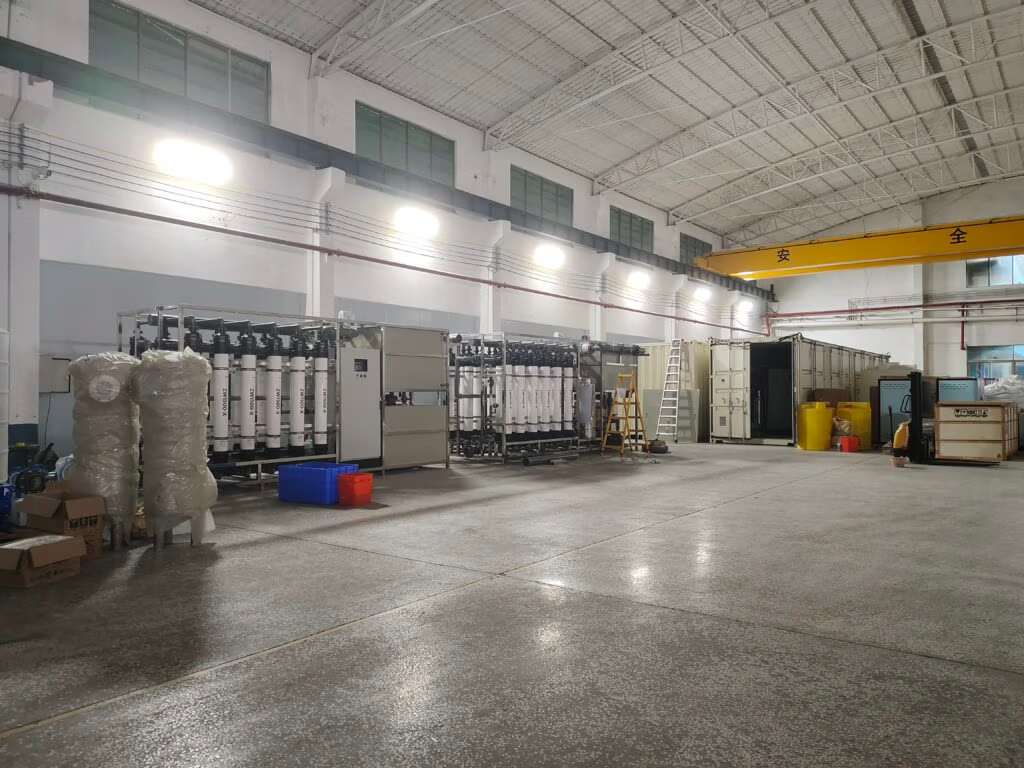
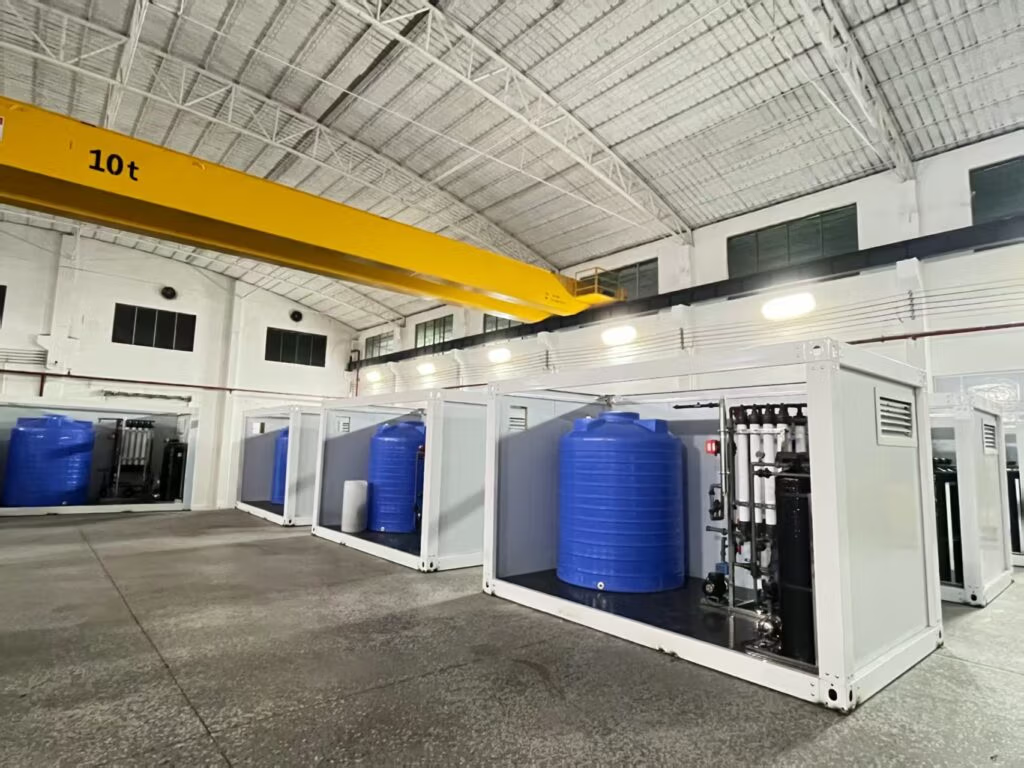
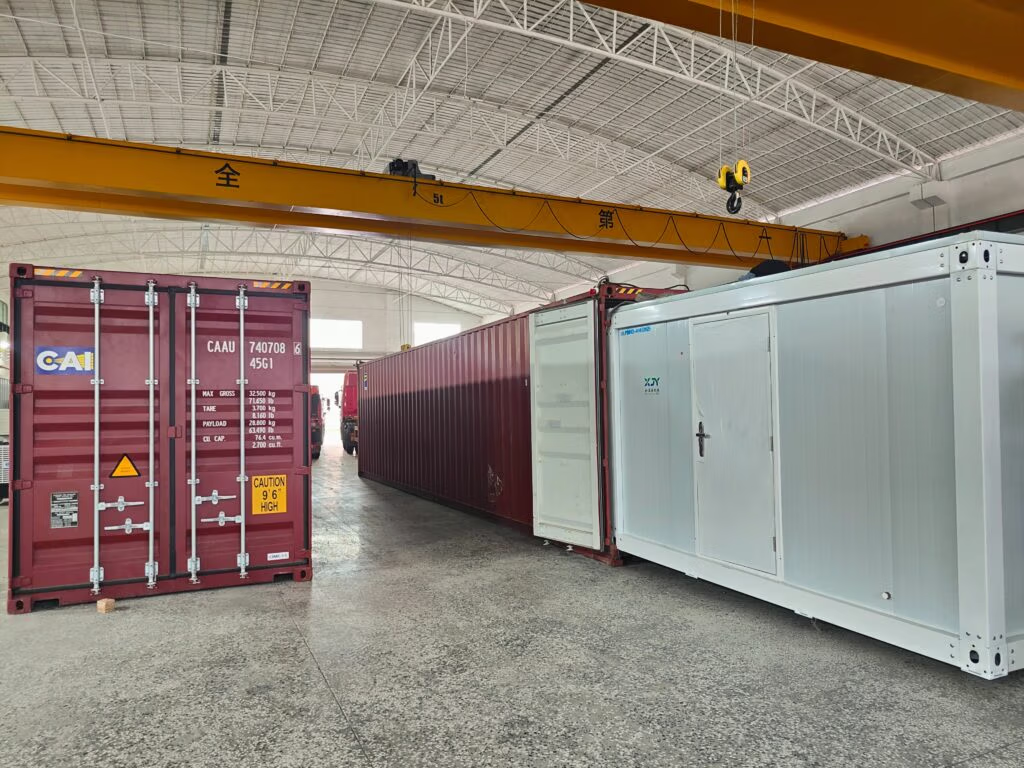
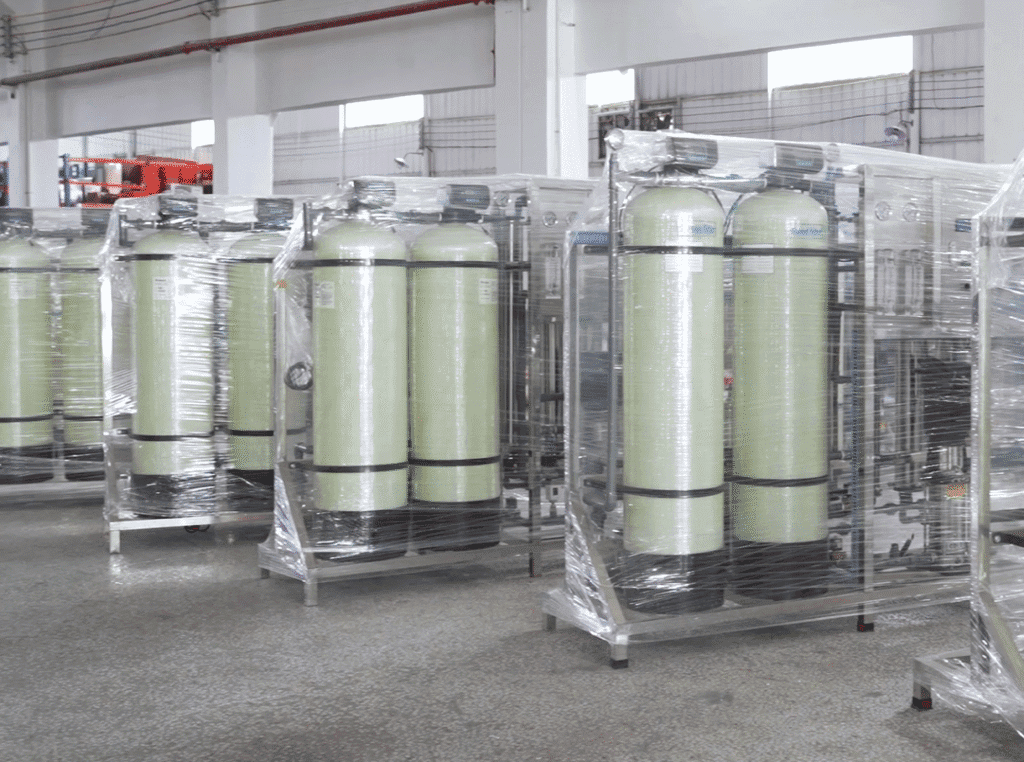
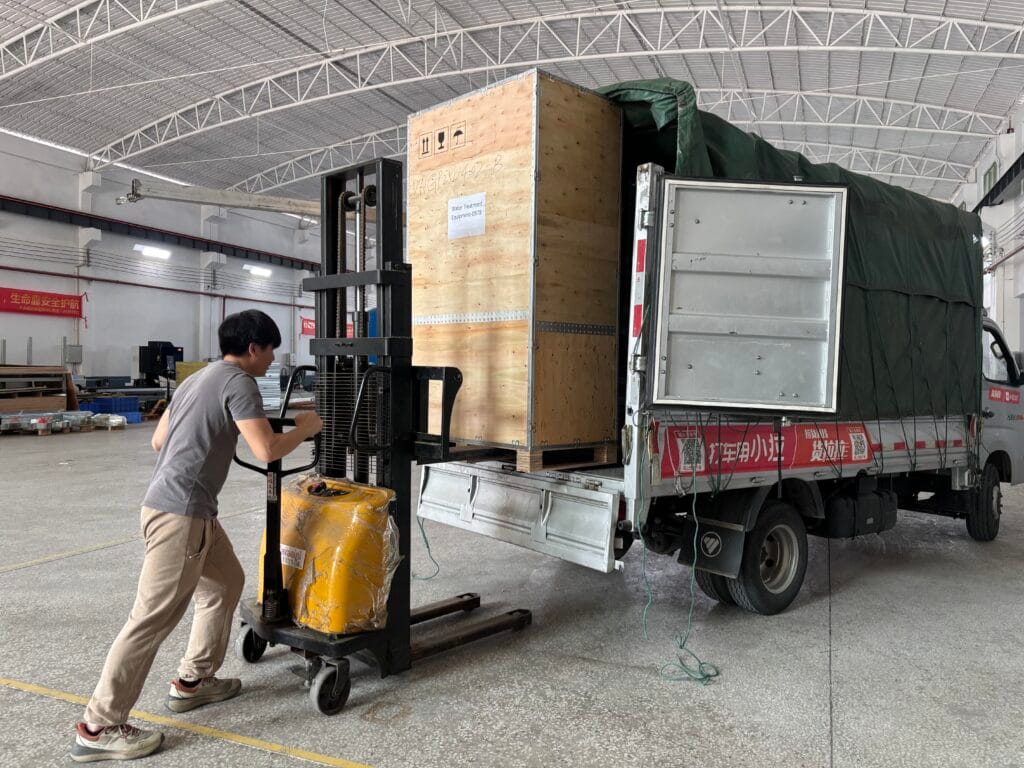
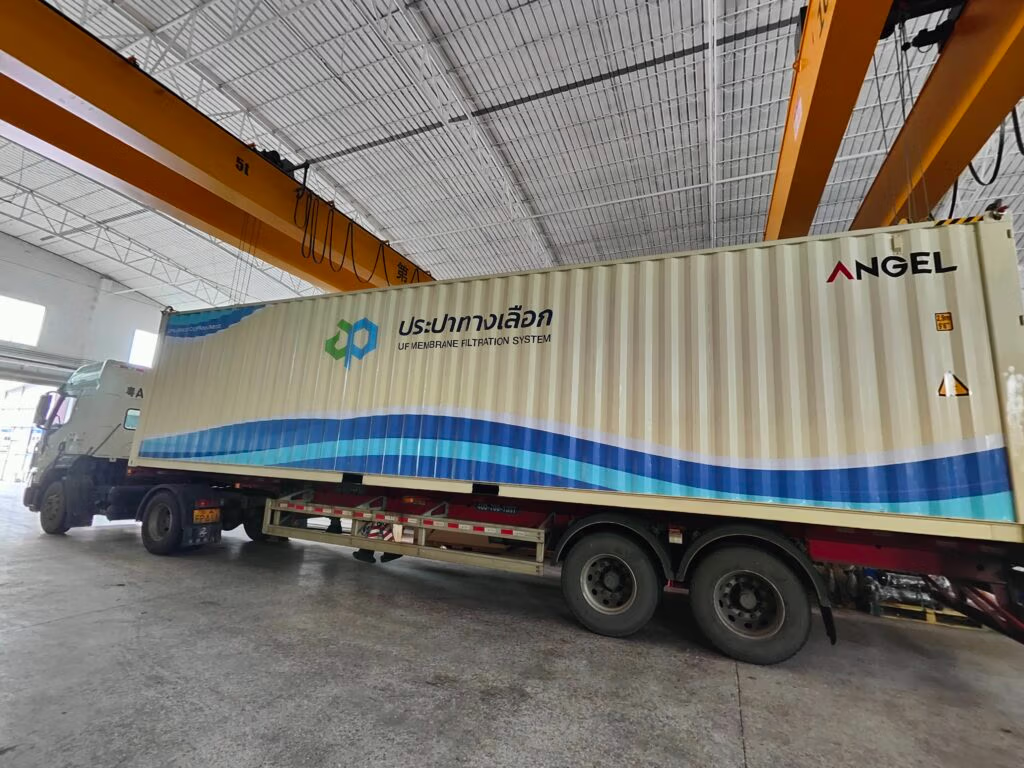
Osmosis balik dengan remineralisasi mengatasi konflik inheren di mana mineral-mineral bermanfaat hampir sepenuhnya dihilangkan. Teknologi ini berfungsi sebagai tahap pengondisian yang krusial setelah Pemurnian osmosis balik. Dengan menambahkan mineral-mineral yang memenuhi standar secara selektif, remineralisasi mencapai tujuan ganda, yakni "pemurnian yang aman" dan "keseimbangan kualitas air"; proses ini mempertahankan keunggulan kemurnian yang melekat pada teknologi *reverse osmosis*, sembari mengisi kembali elemen-elemen mineral yang esensial bagi kualitas air yang optimal. Dengan demikian, air yang telah diolah tersebut tidak hanya memenuhi standar sanitasi untuk air minum domestik, tetapi juga sangat ideal untuk memenuhi persyaratan stabilitas operasional jangka panjang dalam aplikasi-aplikasi industri.
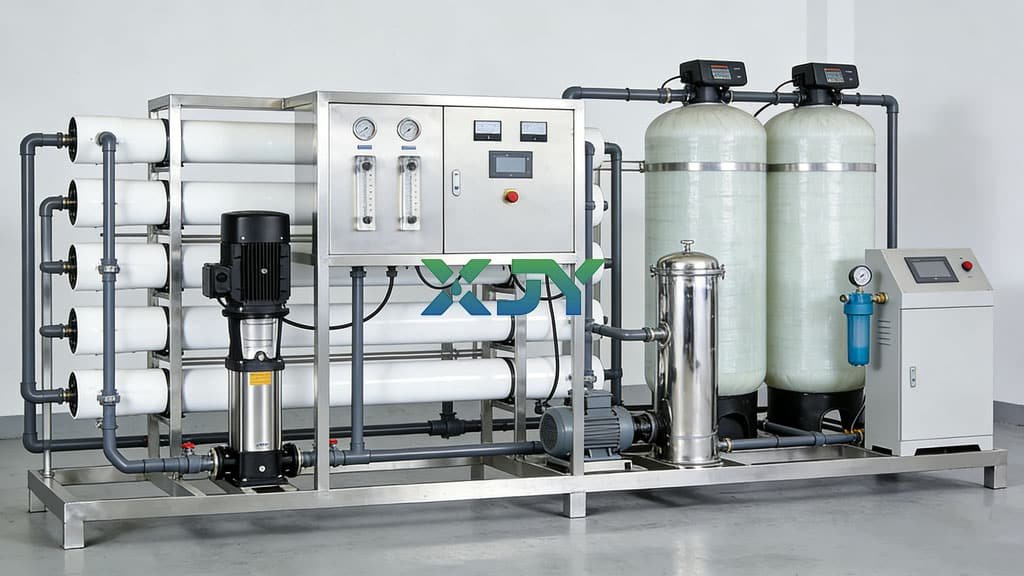
Logika Teknis Osmosis Balik dengan Remineralisasi
1. Logika Dasar Pemurnian Osmosis Terbalik
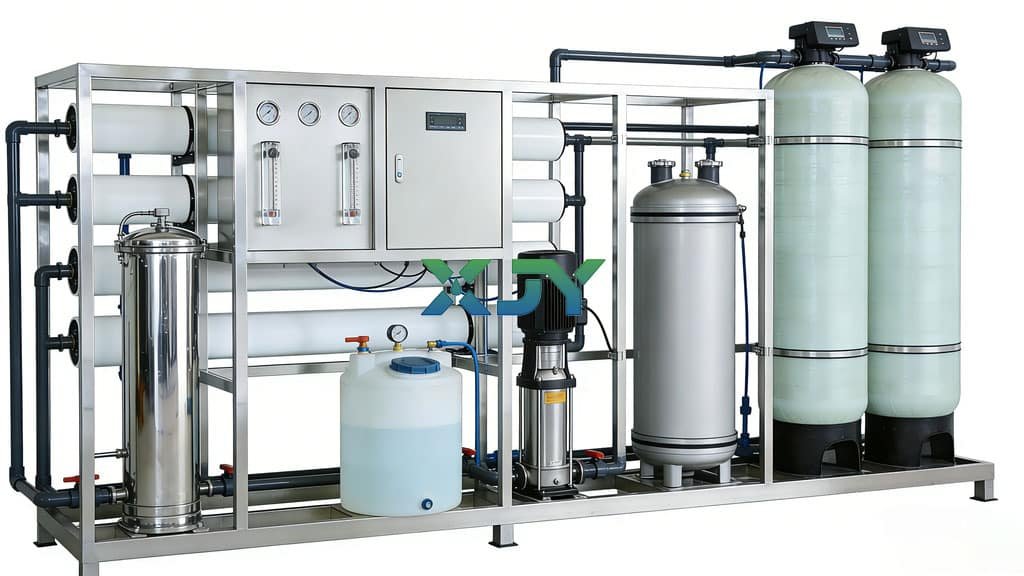
Prinsip utama dari reverse osmosis adalah “pemisahan membran yang digerakkan oleh tekanan.” Setelah air baku menjalani pretreatment - termasuk filtrasi multi-media, adsorpsi karbon aktif, dan perawatan resin pelembut - untuk menghilangkan padatan tersuspensi dan koloid, air tersebut diberi tekanan oleh pompa bertekanan tinggi hingga 0,8-1,5 MPa. Hal ini memaksa molekul air untuk melewati membran RO, sementara garam dan kotoran dipertahankan.
2. Mekanisme Ekuilibrium Inti Mineralisasi
Reverse osmosis dengan remineralisasi bukan hanya proses sederhana untuk menambahkan mineral. Sebaliknya, ini adalah prosedur khusus untuk menyesuaikan parameter kualitas air secara tepat, yang bertujuan untuk mempertahankan karakteristik utama air yang diolah dalam kisaran optimal.
- Suplementasi Mineral: Melalui proses fisik atau kimia, unsur-unsur mineral esensial—seperti kalsium, magnesium, strontium, dan asam metasilisat—yang dibutuhkan oleh tubuh manusia maupun untuk keperluan air industri diendapkan secara selektif. Hal ini memastikan terpenuhinya standar kadar mineral air minum yang direkomendasikan oleh WHO. Pada saat yang sama, pendekatan ini memenuhi persyaratan stabilitas kualitas air di lingkungan industri, sehingga mencegah masalah korosi peralatan yang dapat timbul akibat air yang terlalu murni.
- Keseimbangan Asam-Basa: Mengatur pH air yang diolah ke kisaran basa lemah 6,5-8,5. Hal ini sesuai dengan standar ANSI/NSF 62. Unit Pengolahan Air Minum-Efek Estetika, dan mencegah air asam merusak jaringan pipa dan peralatan logam. Hal ini sangat penting dalam skenario yang melibatkan desalinasi air laut dan pengolahan air sumber dengan salinitas tinggi, di mana Indeks Saturasi Langelier (LSI) harus dipertahankan dalam kisaran -0,5 hingga +0,5.
- Optimalisasi Kekerasan dan Alkalinitas Kendalikan total kesadahan (dinyatakan sebagai CaCO₃) dalam kisaran 80–120 mg/L dan pertahankan total alkalinitas (dinyatakan sebagai CaCO₃) pada kisaran sekitar 80 mg/L; pendekatan ini memastikan cita rasa air yang optimal sekaligus mencegah penumpukan kerak pada peralatan.
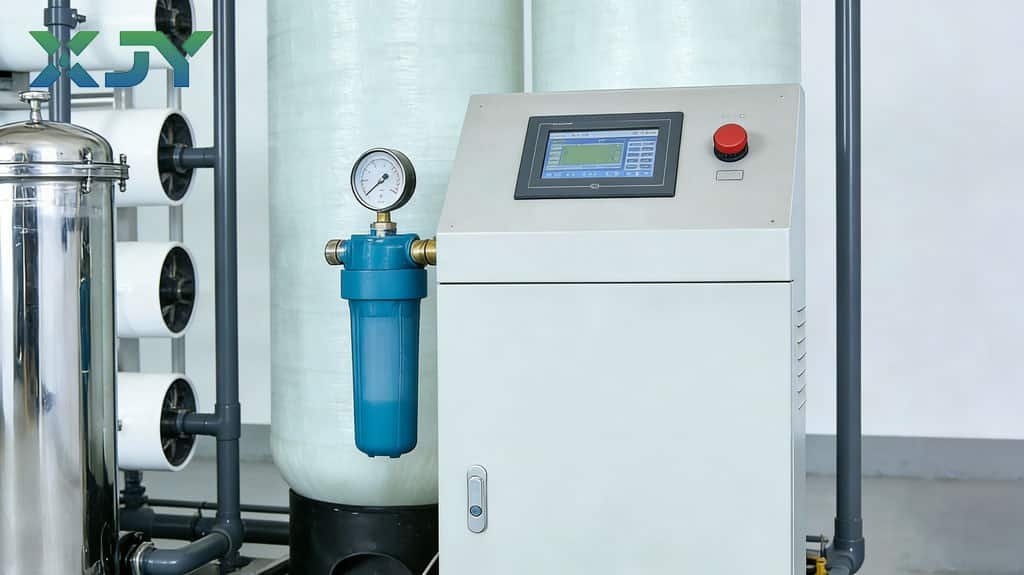
3. Poin-Poin Utama Proses Kolaboratif Osmosis Terbalik dengan Remineralisasi
Pengoperasian sinergis antara osmosis balik dan remineralisasi harus berpegang teguh pada prinsip inti "pemurnian didahulukan, mineralisasi kemudian" guna mencegah zat pengotor mengganggu proses mineralisasi. Selama tahap pra-perlakuan, pengendalian ketat terhadap kekeruhan air influen serta nilai SDI sangatlah esensial demi menjamin stabilitas operasional membran RO. Sebaliknya, tahap mineralisasi menuntut pemilihan metode mineralisasi dan parameter peralatan yang tepat—disesuaikan dengan kualitas air baku serta kebutuhan penggunaan yang spesifik—demi mencapai pengondisian air yang presisi.
Pemilihan Peralatan untuk Reverse Osmosis dengan Remineralisasi
| Jenis Perangkat | Fitur Utama | Parameter Seleksi | Skenario yang Berlaku |
|---|---|---|---|
| Modul Membran RO Anti-fouling | Menahan kotoran secara efisien dan memastikan desalinasi yang stabil. | Tingkat penolakan garam ≥ 97%, toleransi pH 2–11, fluks disesuaikan dengan air baku. | Air Limbah Industri, Air Baku dengan Kekeruhan Tinggi |
| Media Filter Mineralisasi Kaya Stronsium | Suplementasi strontium dan asam metasilisat secara terarah untuk meningkatkan cita rasa. | Pelepasan Stronsium yang Stabil ≥ 0,2 mg/L, memenuhi rekomendasi WHO mengenai kandungan mineral dalam air minum; masa pakai: 1+ tahun. | Air Minum, Air untuk Makanan dan Minuman |
| Pompa Tekanan Tinggi Frekuensi Variabel | Menahan kotoran secara efisien dan memastikan desalinasi yang stabil. | Tekanan dapat disesuaikan hingga 0,8–4,1 MPa, hemat energi lebih dari 15%, dan memenuhi standar kualitas ISO 9001. | Skenario Industri Komprehensif, Diadaptasi untuk Sistem dengan Lalu Lintas Tinggi |
| Sistem Pemantauan Daring | Pemantauan real-time terhadap indikator-indikator seperti TDS, pH, dan kesadahan. | Akurasi: ±0,1 mg/L, sesuai dengan standar pengujian ISO. | Proyek Skala Besar, Skenario Tanpa Pengawasan |
1. Penyesuaian Kualitas Air Baku: Berdasarkan parameter air baku—seperti TDS, kesadahan, dan kekeruhan—pilihlah membran RO dan unit mineralisasi yang sesuai, dengan tingkat desalinasi yang sepadan. Sebagai contoh, gunakan membran RO khusus air laut untuk air baku dengan salinitas tinggi, dan membran RO serbaguna untuk air baku dengan tingkat mineralisasi rendah.
2. Menyeimbangkan Kapasitas dan Konsumsi Energi: Untuk aplikasi industri yang memerlukan pengoperasian terus-menerus selama 20 jam, prioritaskan peralatan yang terbuat dari baja tahan karat (stainless steel) tipe 304 atau 316L. Padukan peralatan ini dengan pompa bertekanan tinggi berfrekuensi variabel guna meminimalkan biaya operasional dan pemeliharaan, sembari memastikan bahwa volume produksi air senantiasa memenuhi kebutuhan manufaktur.
3. Memprioritaskan Kepatuhan: Semua peralatan dan proses harus mematuhi standar internasional yang ditetapkan guna memastikan bahwa air yang diolah memenuhi seluruh tolok ukur kualitas yang disyaratkan.
4. Standar Kualitas Air: Air minum untuk keperluan rumah tangga harus mematuhi secara ketat pedoman air minum yang relevan, khususnya dengan menjaga Total Padatan Terlarut (TDS) pada tingkat ≤1000 mg/L dan Total Kesadahan pada tingkat ≤450 mg/L. Produk air laut hasil desalinasi wajib memenuhi standar ISO dan CE, dengan kisaran Kesadahan Kalsium sebesar 50–450 mg/L dan Indeks Saturasi Langelier (LSI) antara -0,5 hingga 0,5.
5. Kepatuhan Peralatan: Bahan habis pakai inti—seperti media mineralisasi dan membran RO—harus memiliki sertifikasi internasional terkait keamanan kontak dengan air dan higienitas. Selain itu, proses manufaktur peralatan harus mematuhi standar sistem manajemen mutu ISO 9001 secara ketat.
6. Persyaratan Lingkungan: Proyek-proyek industri wajib menerapkan sistem pengolahan air garam (brine) guna mencegah pembuangan langsung air limbah dengan salinitas tinggi. Sistem-sistem ini harus mencapai tingkat pemulihan air garam sebesar ≥85% serta mematuhi standar sistem manajemen lingkungan ISO 14001 dan peraturan lingkungan setempat yang berlaku.
Rangkuman
Osmosis balik yang dilengkapi dengan teknologi remineralisasi secara sempurna mengatasi kekurangan inheren pada air hasil olahan RO melalui kombinasi "pemurnian presisi dan pengondisian ilmiah," menjadikannya sangat ideal untuk memenuhi beragam kebutuhan dari berbagai aplikasi—termasuk desalinasi air laut, produksi air minum, dan pemanfaatan kembali air limbah.
Jika Anda tertarik dengan solusi pengolahan air ini, silakan hubungi kami XinJieYuan.