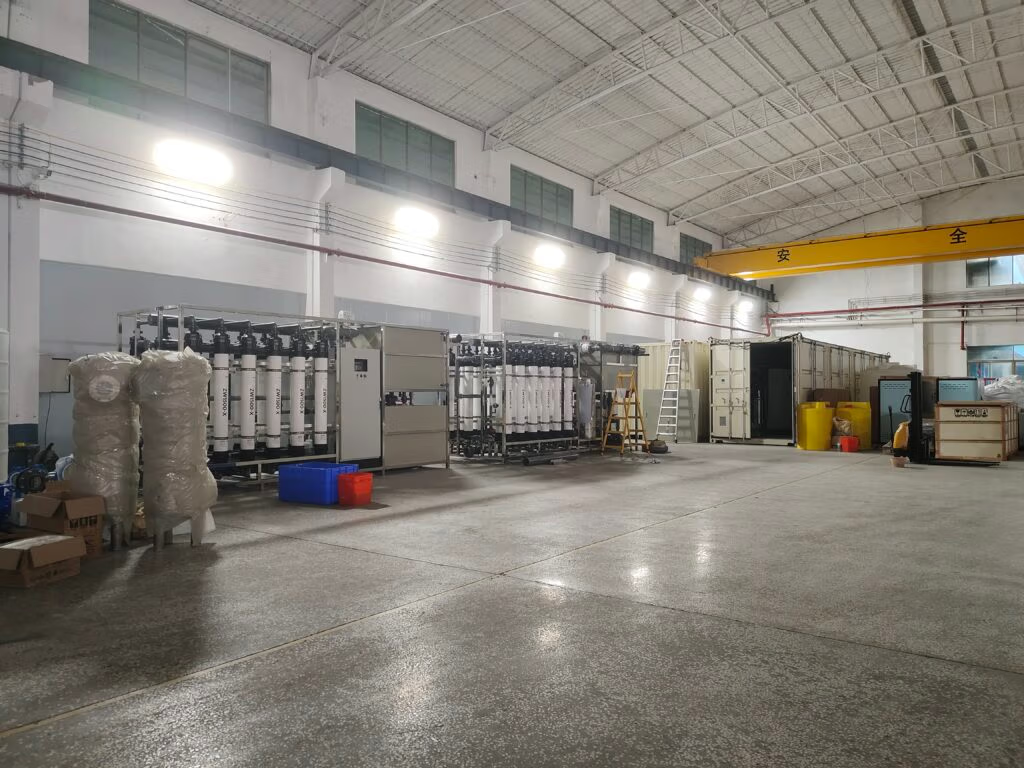
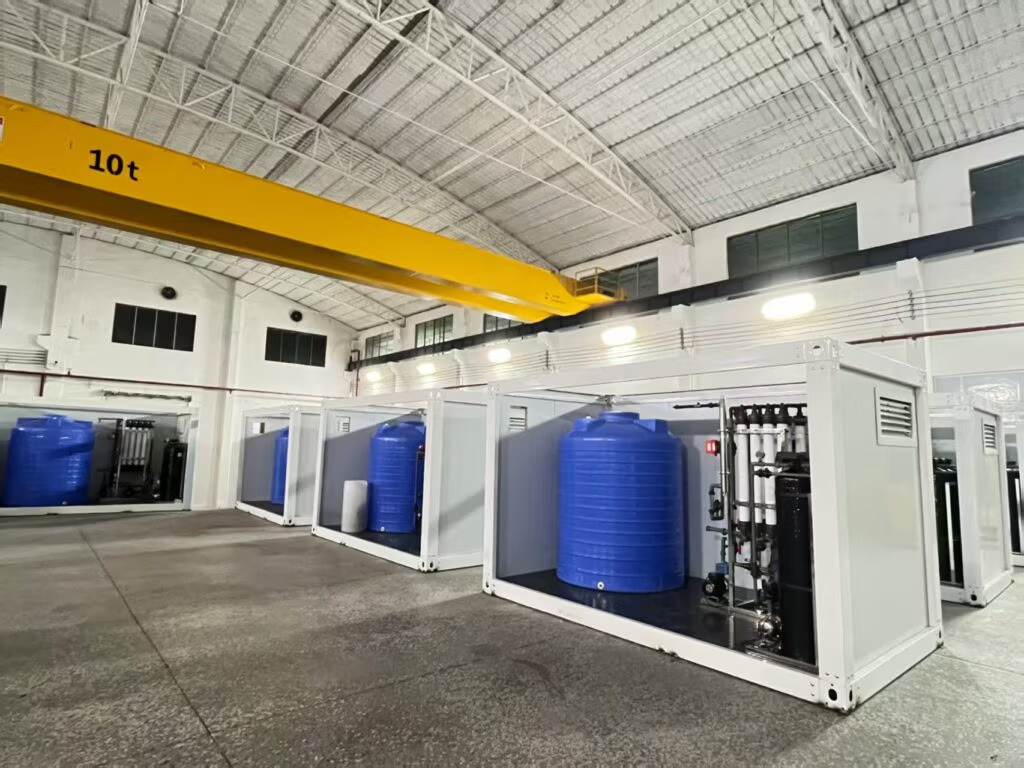
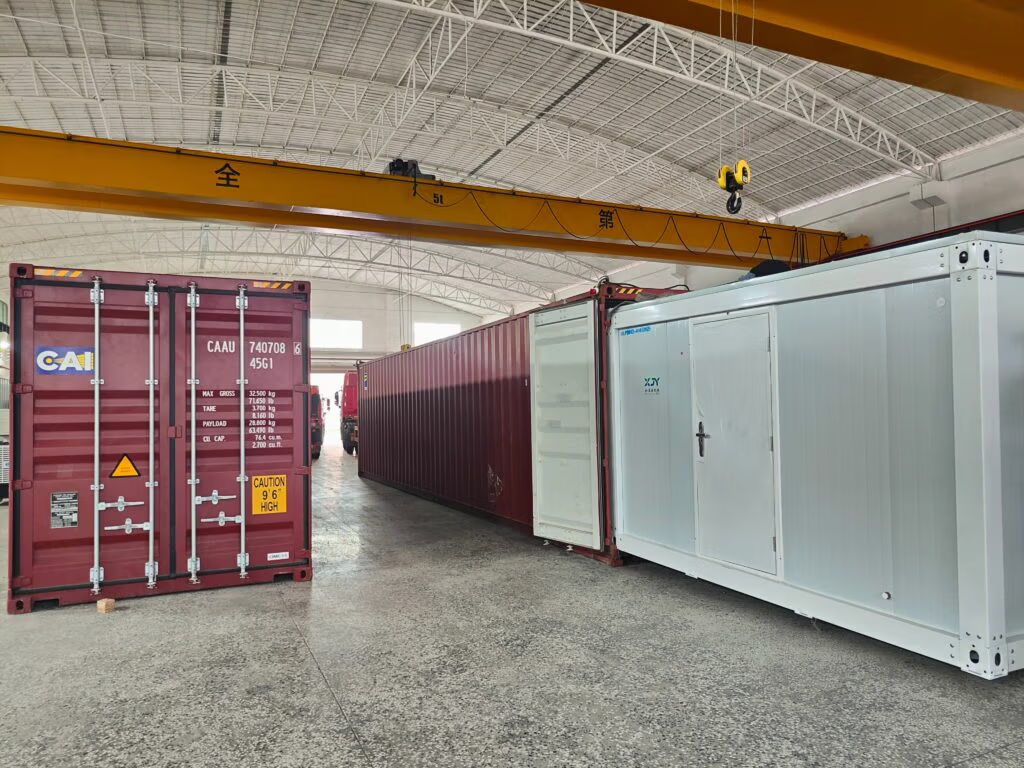
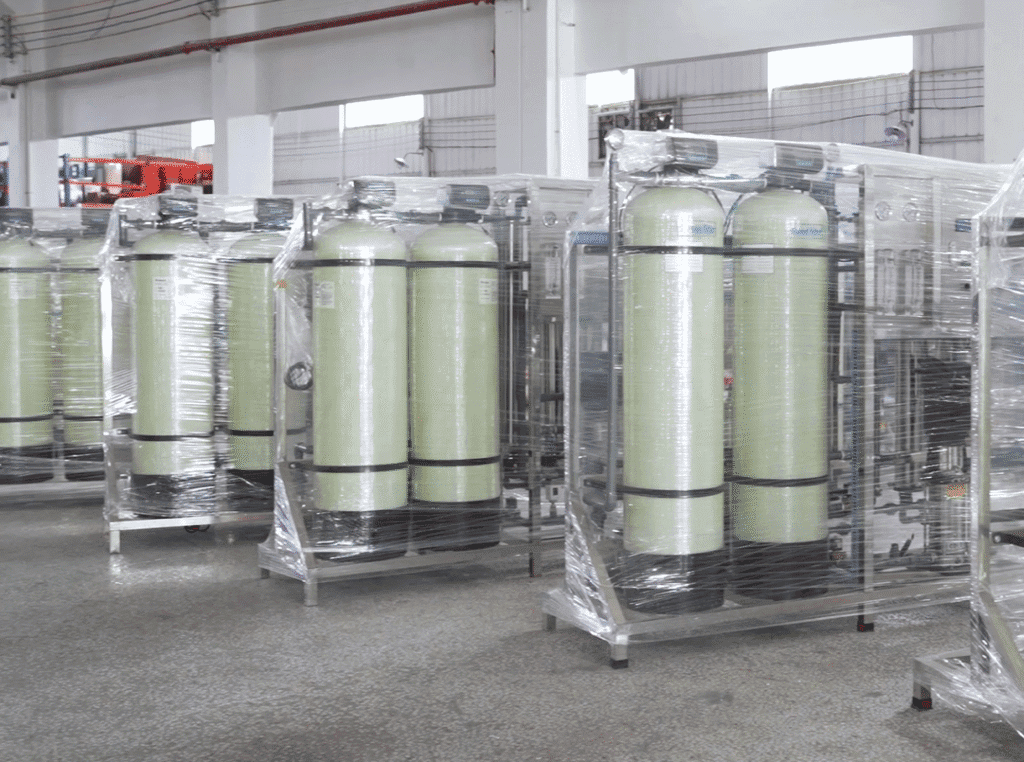
With the global water shortage and pollution problems becoming increasingly prominent, industrial reverse osmosis water system telah menjadi peralatan pengolahan air utama yang tak tergantikan bagi berbagai industri, berkat efek pemurniannya yang sangat baik dan pengoperasiannya yang stabil.
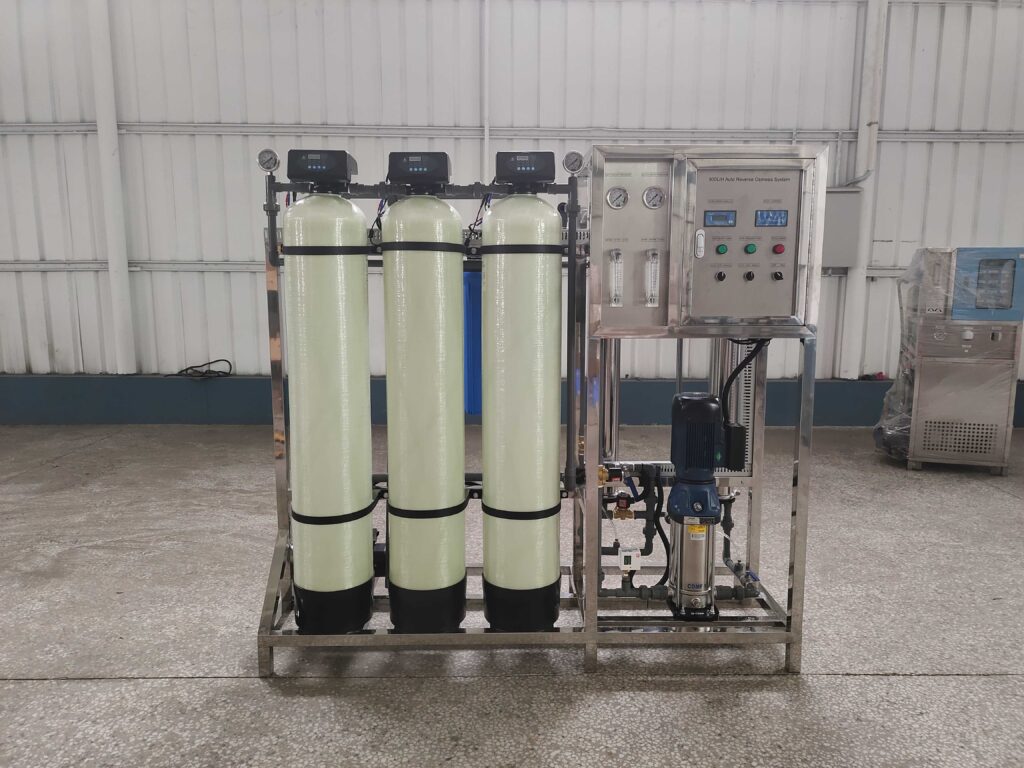
This system can efficiently block salt ions and suspended impurities in water under specific pressure, separating water molecules individually. The treated water quality fully meets the stringent standards of industrial production. Therefore, its applications have long since expanded from energy and electronics to many important fields such as food processing and pharmaceutical manufacturing.
Industrial reverse osmosis water system is used in the power industry
The power industry is a key application area for industrial reverse osmosis water systems, especially in the daily operation of thermal power plants and nuclear power plants, where water quality directly affects equipment lifespan and operational safety.
Jika air boiler pada pembangkit listrik tenaga termal mengandung ion kalsium dan magnesium, ion-ion tersebut akan dengan mudah membentuk kerak yang keras pada permukaan pemanas. Hal ini tidak hanya menurunkan efisiensi pertukaran panas secara signifikan, tetapi juga dapat memicu kecelakaan serius, seperti pecahnya pipa. Di sisi lain, sistem *reverse osmosis* skala industri mampu menghilangkan lebih dari 99% kandungan garam dari air baku. Pemanfaatan air dengan kemurnian tinggi hasil pengolahan ini sebagai air umpan boiler dapat mencegah pembentukan kerak sejak dari sumbernya, mengurangi korosi pada peralatan, serta meminimalkan kebutuhan akan bahan kimia penghambat kerak; dengan demikian, tercapailah manfaat ganda berupa penghematan energi, pengurangan emisi, dan perlindungan lingkungan.
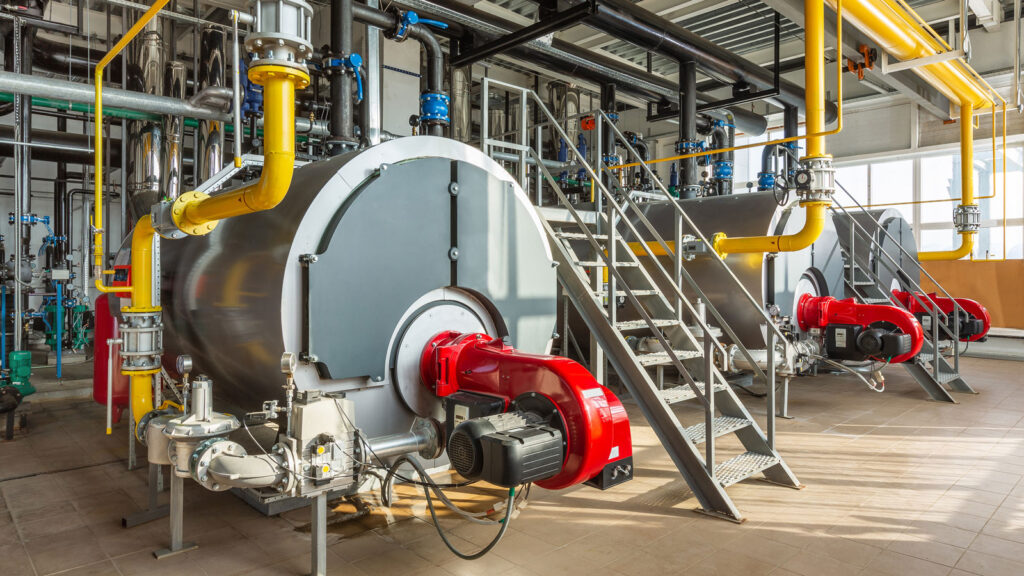
As for nuclear power plants, the water quality requirements for cooling systems and reactor makeup water are even stricter. Reverse osmosis technology, as the core link in pure water production, has built a key water quality defense line for the safe and stable operation of nuclear power units.
Utilize industrial reverse osmosis water systems in production.
The rapid development of the electronics and information industry has led to increasingly stringent standards for ultrapure water. In the production of precision electronic components such as semiconductor chips and LCD screens, even trace amounts of ions, suspended particles, or microorganisms in the water can cause components to fail and significantly reduce production yield.
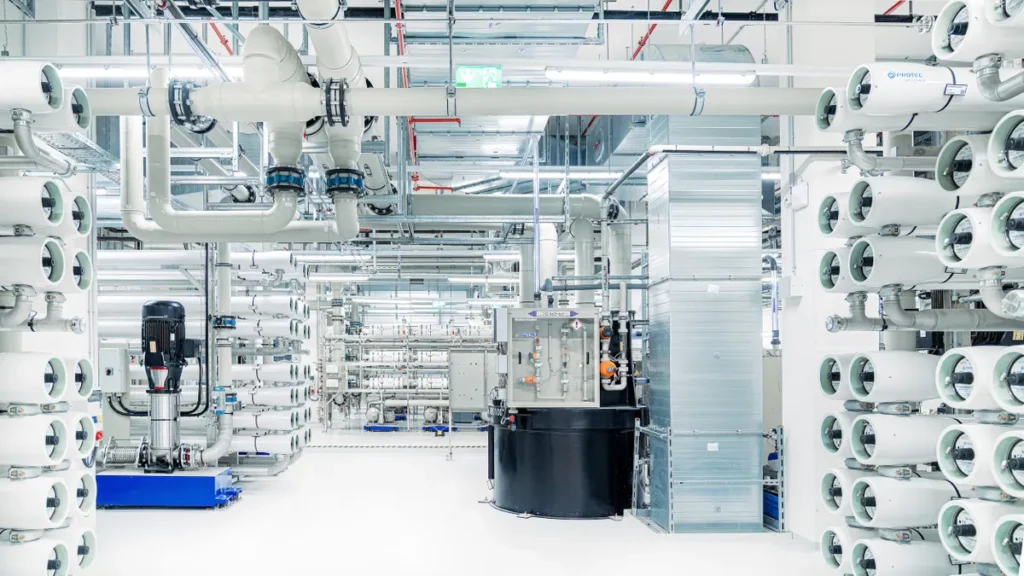
Ambil contoh manufaktur cip. Kita harus membersihkan proses-proses kritis, seperti fotolitografi dan etsa, menggunakan air ultrapur dengan resistivitas sebesar 18,2 MΩ·cm. Jika kualitas air tidak memenuhi standar, cacat-cacat kecil akan muncul pada permukaan cip, yang secara langsung memengaruhi kinerja normal sirkuit tersebut. Sistem osmosis balik (reverse osmosis) tingkat industri—yang dipadukan dengan pertukaran ion, EDI, dan teknologi pengolahan canggih lainnya—mampu menghilangkan berbagai kontaminan dari air baku secara presisi, serta memproduksi air ultrapur yang memenuhi standar industri elektronik secara terus-menerus dan stabil.
Sistem reverse osmosis industri digunakan dalam industri makanan dan minuman.
The food and beverage industry has extremely stringent requirements for the safety and stability of its production water. The application of industrial reverse osmosis water systems directly impacts product quality and consumer health.
In drinking water production, reverse osmosis technology effectively filters out harmful components such as heavy metals, pesticide residues, pathogens, and viruses from raw water, while retaining appropriate amounts of beneficial minerals, thus ensuring both safety and taste.
In beer brewing and juice processing, water quality directly affects fermentation results and product flavor. Pure water treated by reverse osmosis maintains a stable brewing environment, prevents contamination by other microorganisms, and ensures consistent product quality across every batch.
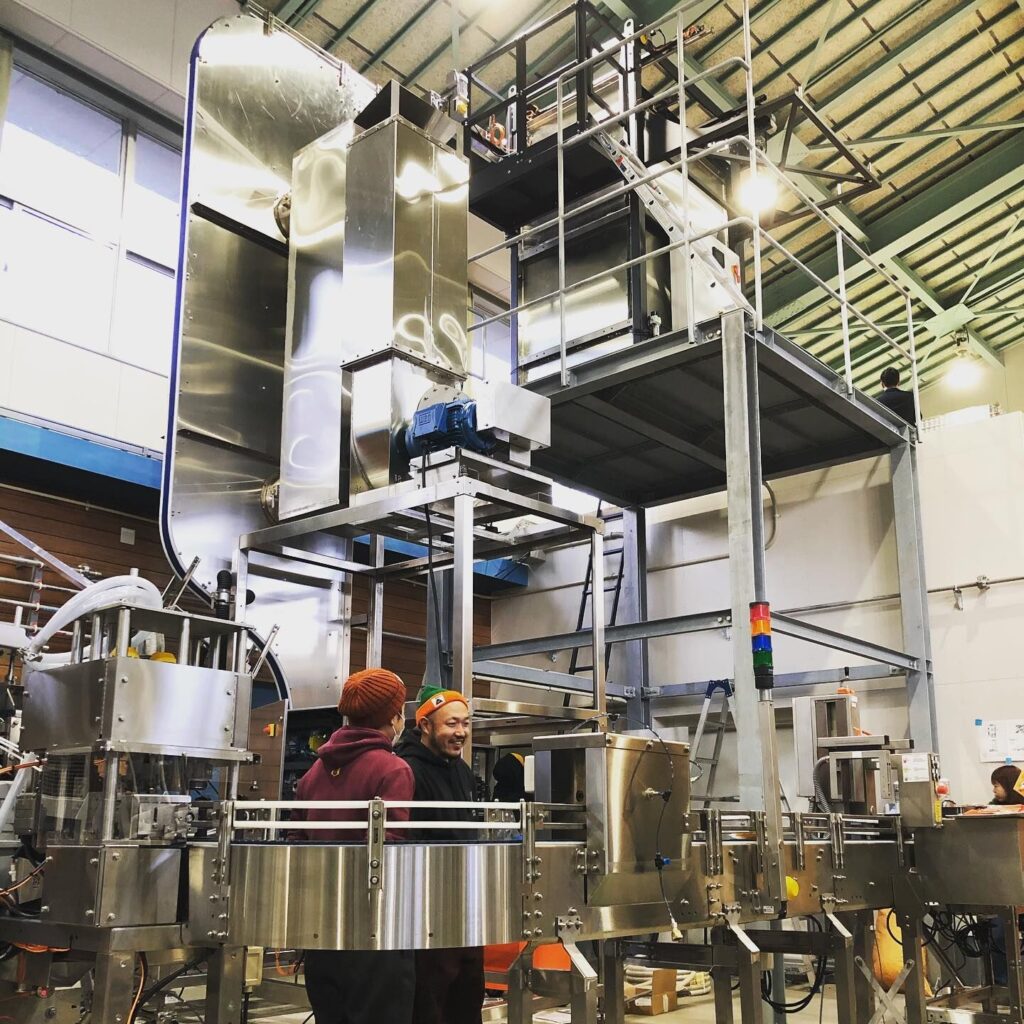
Selain itu, dalam pengolahan produk susu, air produksi yang murni dapat mencegah denaturasi protein akibat masalah kualitas air serta memperpanjang masa simpan produk, yang secara nyata menunjukkan nilai praktis dari sistem osmosis balik.
Sistem reverse osmosis industri digunakan dalam industri farmasi.
The pharmaceutical industry’s products are directly related to life and health, therefore, it has extremely stringent purity requirements for the water used in production. Reverse osmosis technology can efficiently remove contaminants such as microorganisms, pyrogens, and colloidal particles from raw water, and its stable and reliable operation ensures that the effluent quality consistently meets the stringent regulations for pharmaceutical production.
Due to bacterial contamination and also reduce the difficulty of subsequent drug purification, in critical stages such as antibiotic synthesis and vaccine development, purified water treated by reverse osmosis can prevent production interruptions
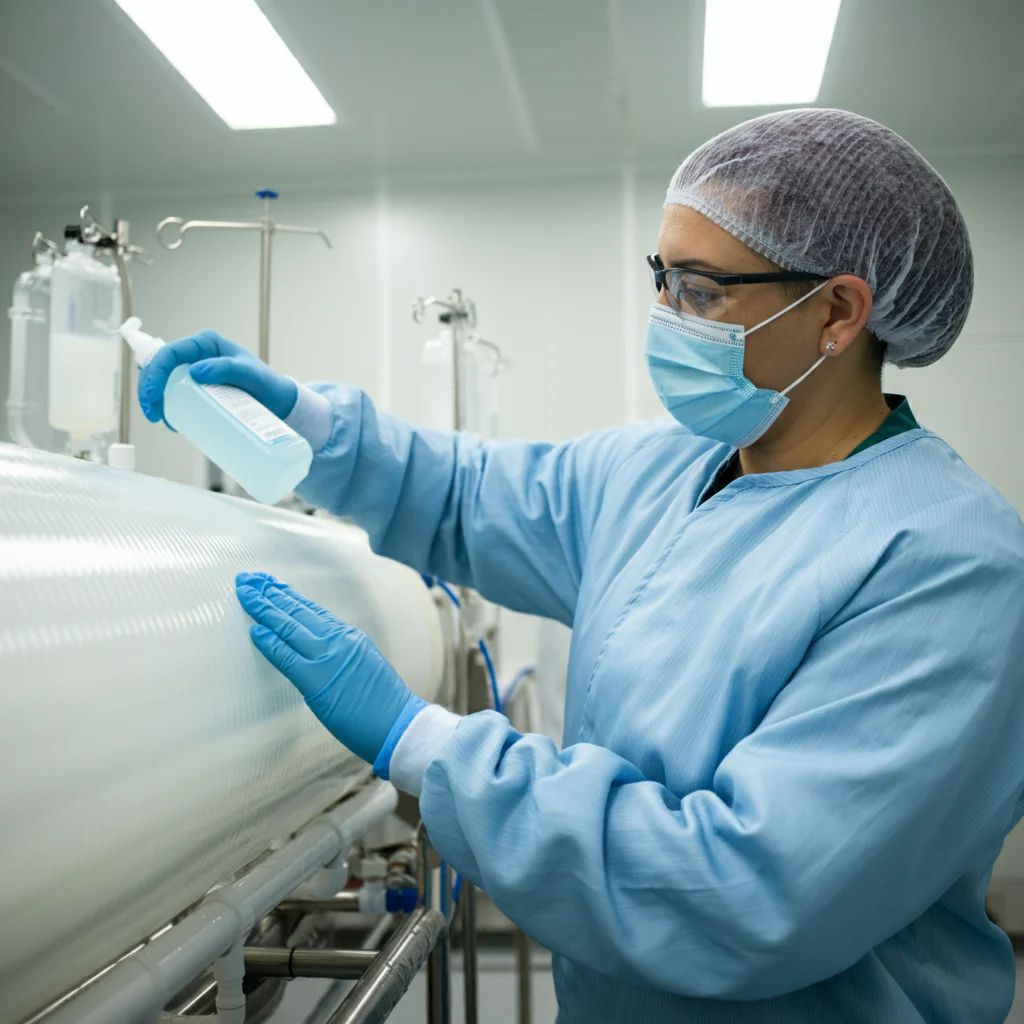
Which other industries utilize RO systems?
In addition to these fields, industrial reverse osmosis water systems also play a crucial role in industries such as chemical engineering, printing and dyeing, and seawater desalination.
- In chemical production, the use of high-purity water reduces byproducts of chemical reactions and significantly improves product purity.
- In the dyeing and printing industry, reverse osmosis water production completely solves the problem of impurities in raw water interfering with dyeing, resulting in fabrics with uniform and vibrant colors and meeting colorfastness standards.
- Di daerah pesisir, sistem desalinasi air laut reverse osmosis dapat mengubah air laut yang melimpah menjadi air industri yang berkualitas, yang secara efektif mengurangi kekurangan air tawar lokal.
Rangkuman
With the popularization of water conservation concepts, the industry is upgrading industrial reverse osmosis (RO) water systems for higher efficiency, energy savings, and intelligent control. These systems continue to expand their application scope, injecting stronger momentum into industrial green transformation and water resource recycling.