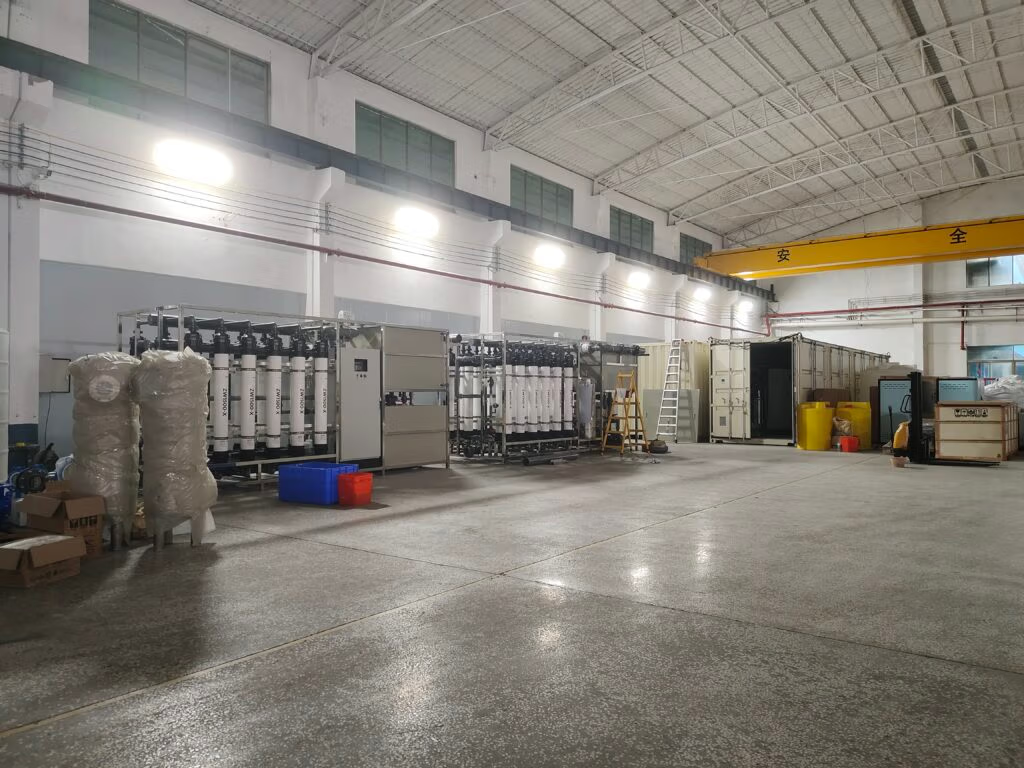
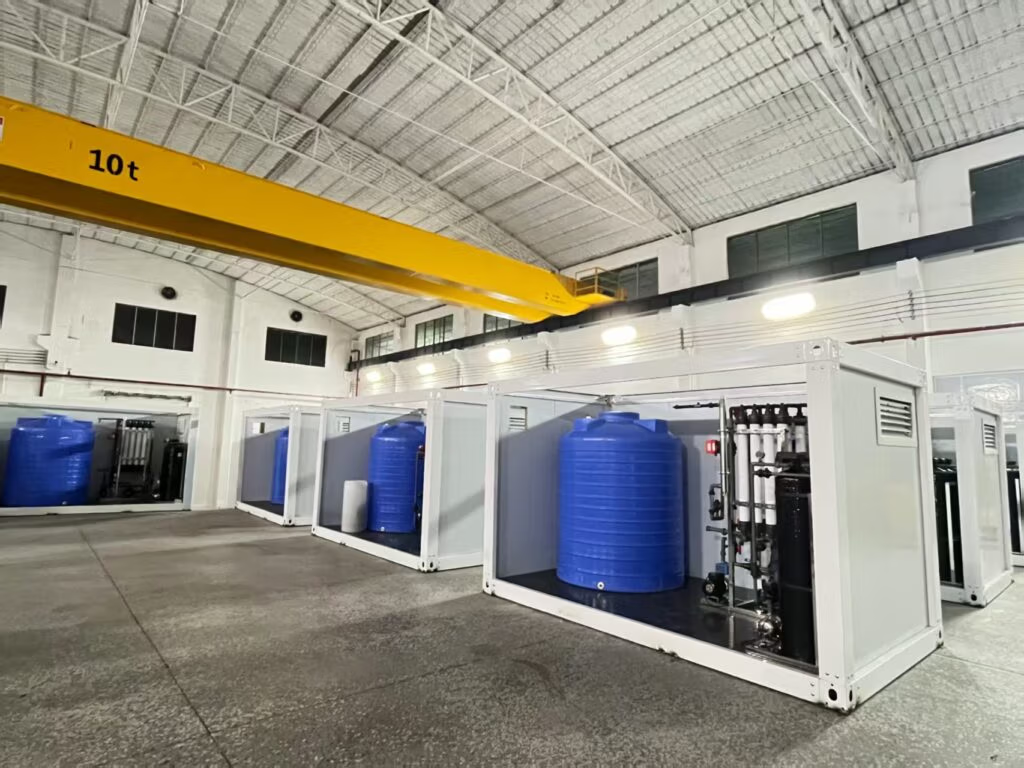
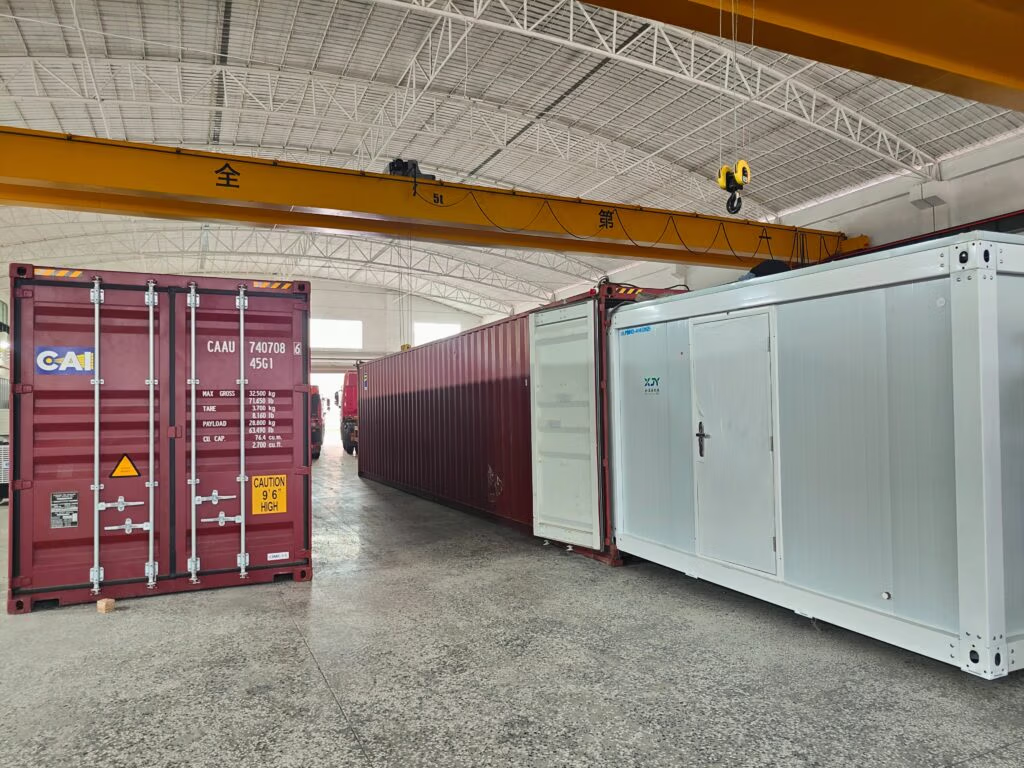
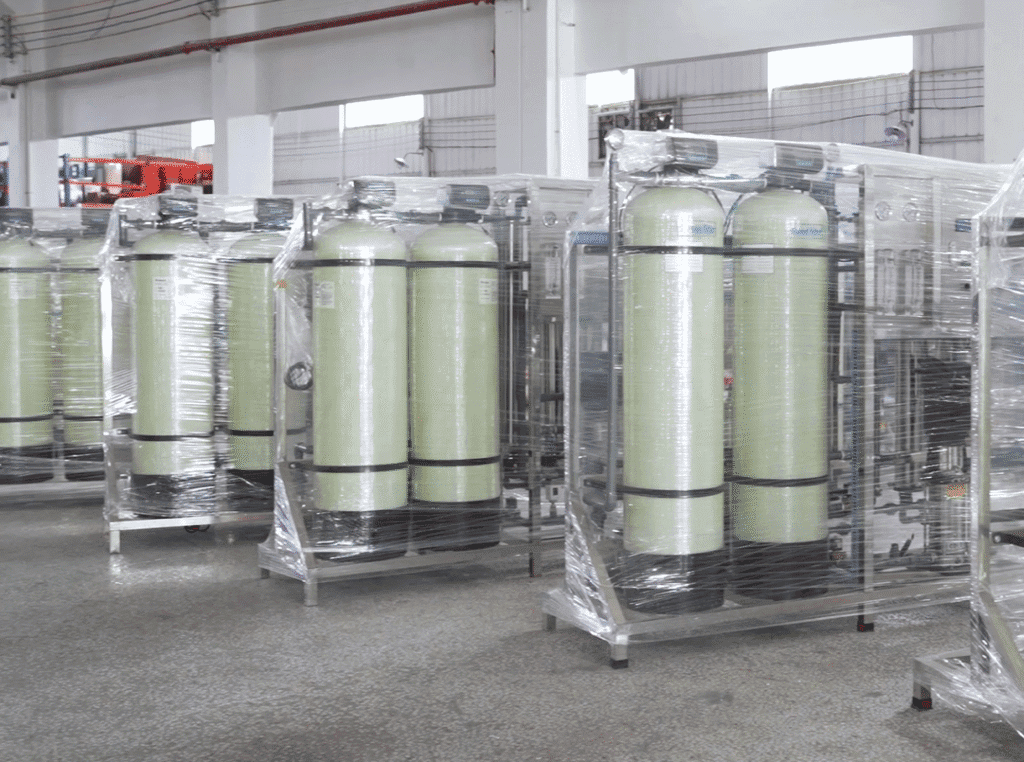
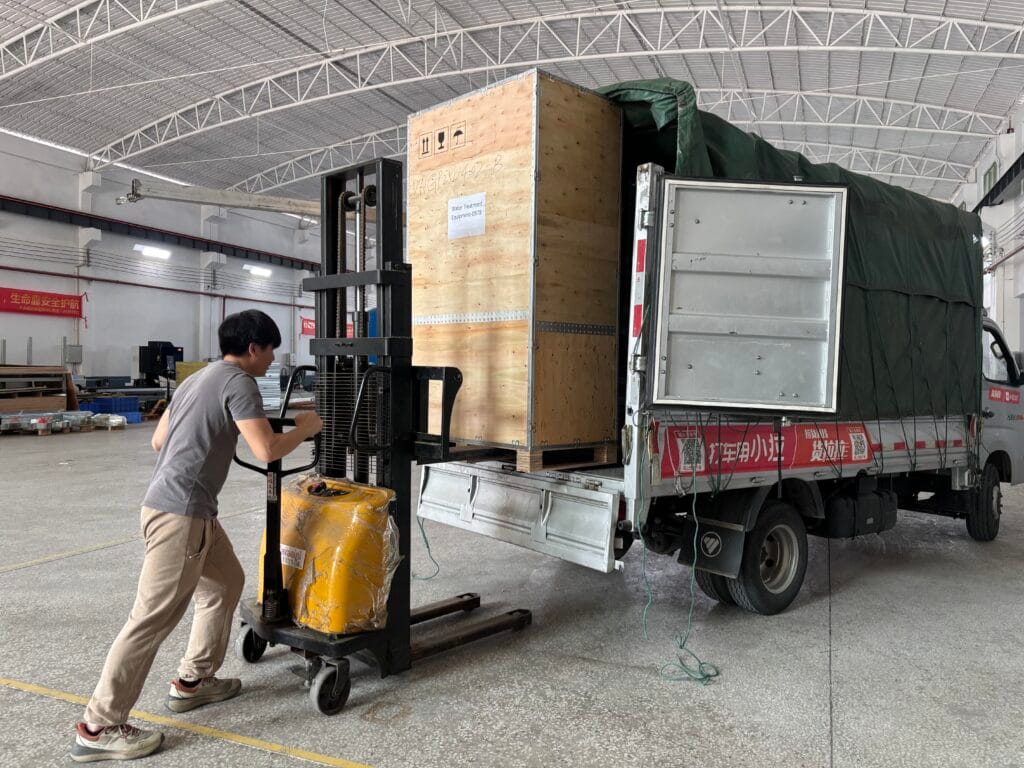
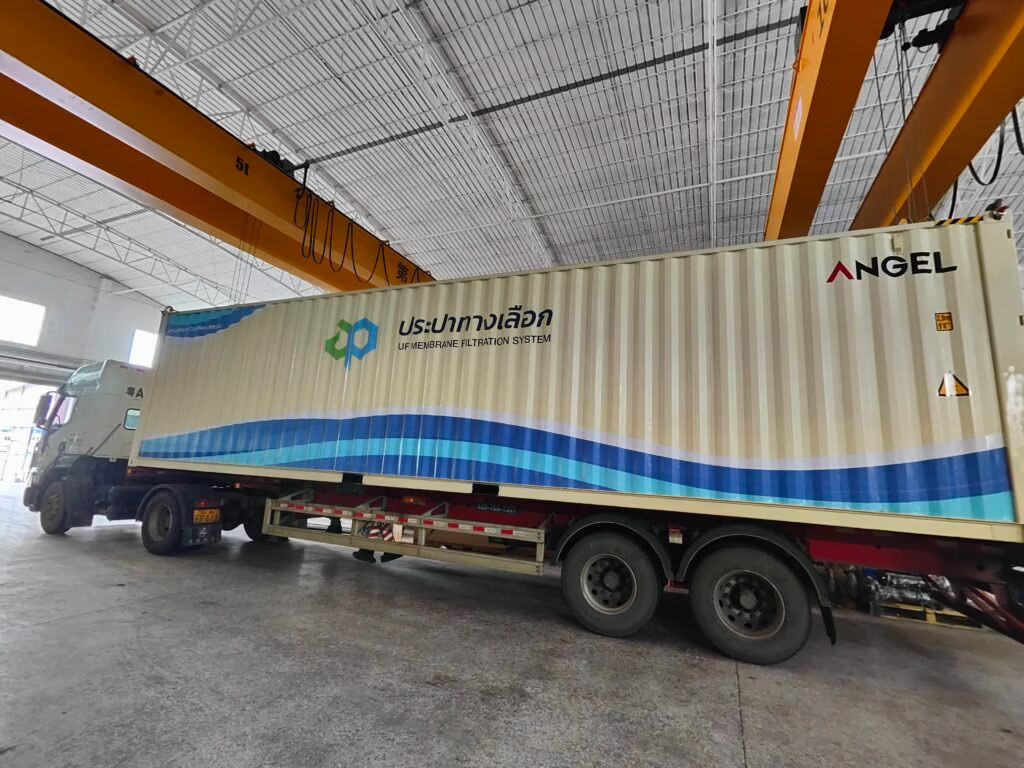
China industrial reverse osmosis equipment has become the go-to solution for manufacturers, food processors, pharmaceutical companies, and power generation facilities across global markets. At the center of modern water purification sits RO technology — a proven, cost-effective method capable of removing up to 99% of dissolved salts, organics, and microorganisms from a feed water supply. But not all China industrial reverse osmosis equipment is created equal. Choosing the wrong system can lead to premature membrane failure, excessive downtime, poor water quality, and spiraling operational costs.
This guide walks you through 7 proven steps to evaluate and select China industrial reverse osmosis equipment with confidence. Explore our full range of sistemi industriali ad osmosi inversa to learn more about our factory and certifications.
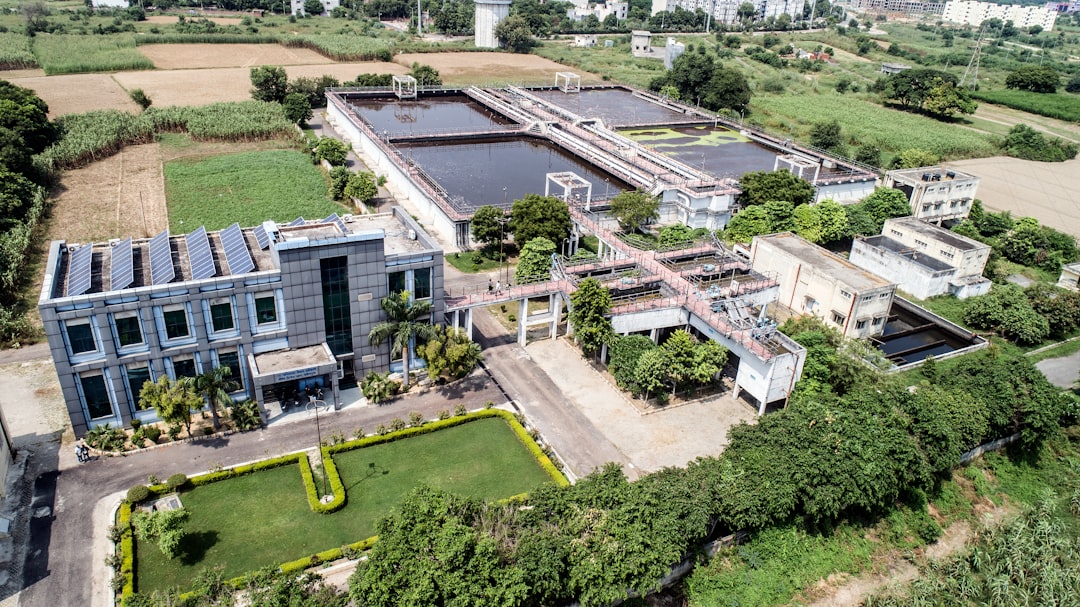
Step 1: Analyze Feed Water Quality Before Selecting China Industrial RO Equipment
Before comparing specifications, you need a thorough understanding of your source water. Feed water analysis is the non-negotiable first step when sourcing any China industrial reverse osmosis equipment — it determines membrane selection, pre-treatment requirements, and overall system design.
A comprehensive water test should measure total dissolved solids (TDS), hardness (calcium and magnesium levels), silica concentration, iron and manganese content, pH, turbidity, chlorine levels, and biological contaminants. These parameters directly affect membrane selection, pre-treatment requirements, and overall system design. For authoritative reference standards, the WHO Guidelines for Drinking-water Quality define internationally recognised thresholds for TDS, hardness, and microbial contamination.
High silica or hardness levels dramatically increase scaling risk on RO membranes, reducing flux rates and shortening lifespan. Feed water with elevated iron or biological load demands robust pre-treatment — including media filtration, iron removal, and antiscalant dosing. These are the exact water quality challenges that XinJieYuan’s China industrial reverse osmosis equipment is engineered to overcome.
Why Water Testing Is Critical for Global Industrial RO Buyers
Skipping water testing is one of the most costly mistakes buyers make. Always request a certified lab analysis and share it with your supplier before requesting a system design. XinJieYuan provides free pre-sales water quality consultation for all international inquiries — contact us before you commit to any China industrial reverse osmosis equipment purchase.
Step 2: Define Flow Rate and Water Purity Requirements for Your Application
Once you know your feed water profile, define what your process actually needs. Industrial RO systems produce two outputs — permeate (purified product water) and concentrate (rejected waste stream). Both flow rate and purity standards must be specified before selecting China industrial reverse osmosis equipment.
Flow rate requirements vary enormously. A small food and beverage operation might need 5–10 m³/hour, while a large power plant or semiconductor facility may require hundreds of cubic meters per hour. Undersizing creates production bottlenecks; oversizing wastes capital and energy.
For boiler feed water applications with extremely tight silica and conductivity limits, see our dedicated article on choosing the right reverse osmosis system for boiler water.

Step 3: Evaluate System Recovery Rate to Minimize Operating Costs
Recovery rate — the percentage of feed water converted to usable permeate — directly impacts operating costs. A standard single-pass China industrial reverse osmosis equipment configuration typically achieves 50–75% recovery depending on feed water chemistry.
Higher recovery reduces water waste and intake costs, but concentrates scaling ions on membrane surfaces. Pushing recovery too high without proper antiscalant chemistry leads to rapid fouling and membrane damage. For water-scarce facilities, a two-pass RO or concentrate recirculation design may be the smarter investment.
Work with your supplier to model the Langelier Saturation Index (LSI) and Stiff & Davis Stability Index for your water chemistry at your target recovery rate. This predicts scaling potential and optimizes chemical dosing before commissioning. The US EPA National Primary Drinking Water Regulations provide a widely referenced benchmark for contaminant limits in industrial water treatment design.
Step 4: Choose the Right Membrane Type for Your China Industrial RO Equipment
Membrane selection is central to any China industrial reverse osmosis equipment configuration. Each membrane type suits specific water quality conditions and application demands.
TFC Polyamide – The Industry-Proven Standard for Global Industrial RO Applications
Thin-Film Composite (TFC) Polyamide Membranes are the industry standard for most industrial applications, offering rejection rates of 98–99.7% for sodium chloride. Technical specifications and performance data are published in the DuPont Water Solutions design software and membrane documentation. They are sensitive to chlorine, so feed water must be dechlorinated upstream. Low-Pressure High-Flux Membranes maximize output where TDS is low, reducing energy costs. High-Rejection Membranes are essential for pharmaceutical, electronics, and boiler applications. Fouling-Resistant Membranes suit surface water and wastewater reclamation where feed quality varies.
Step 5: Plan Pre-Treatment and Post-Treatment for Reliable Long-Term Performance
The best China industrial reverse osmosis equipment is only as reliable as its pre-treatment system. Neglecting pre-treatment is the single greatest cause of premature membrane fouling, scaling, and biological contamination in industrial installations.
Essential pre-treatment components include multimedia filtration, activated carbon or sodium metabisulfite dosing to eliminate chlorine, antiscalant dosing, and water softening where required. In high-demand installations, ultrafiltration UF systems are added upstream to consistently deliver SDI values below 3, dramatically extending membrane service life.
On the post-treatment side, consider remineralization for drinking water applications, UV disinfection, or a second RO pass for ultra-pure quality. Some industries require EDI polishing downstream to reach resistivity above 15 MΩ·cm.

Step 6: Evaluate Total Cost of Ownership — Not Just the Purchase Price
When comparing China industrial reverse osmosis equipment suppliers, focusing on purchase price alone is a dangerous mistake. The true cost of ownership unfolds over years of operation — energy consumption, membrane replacement, chemical dosing, maintenance labor, and spare parts all add up significantly. Our article on how much a reverse osmosis system costs provides a thorough market breakdown to help you budget accurately.
A proven China industrial reverse osmosis equipment system with high-efficiency pumps, energy recovery devices, and intelligent automation typically delivers substantially lower 10-year total costs than a cheaper system with higher operational demands.
Step 7: Partner with a Trusted ISO-Certified China Industrial RO Equipment Manufacturer
The best China industrial reverse osmosis equipment comes from manufacturers who combine ISO and CE certification with deep engineering expertise and reliable international support. When evaluating suppliers, look for demonstrated experience in your industry, in-house customization capabilities, transparent warranty terms, and a track record of successful global project delivery.
Ask for references from comparable installations and a detailed system design proposal based on your actual water data. Selecting the right China industrial reverse osmosis equipment is a high-stakes technical decision with long-term operational consequences. Taking the time to evaluate water quality, performance requirements, certifications, and supplier credibility will pay dividends for the full life of your system.
Ready to source proven China industrial reverse osmosis equipment built for your specific water quality challenges? Contact XinJieYuan today — ISO-certified, CE-compliant, and trusted by clients in over 50 countries.