Every stage of industrial production is closely linked to water quality. This is because it directly affects not only the quality of end products but also the lifespan of production equipment.
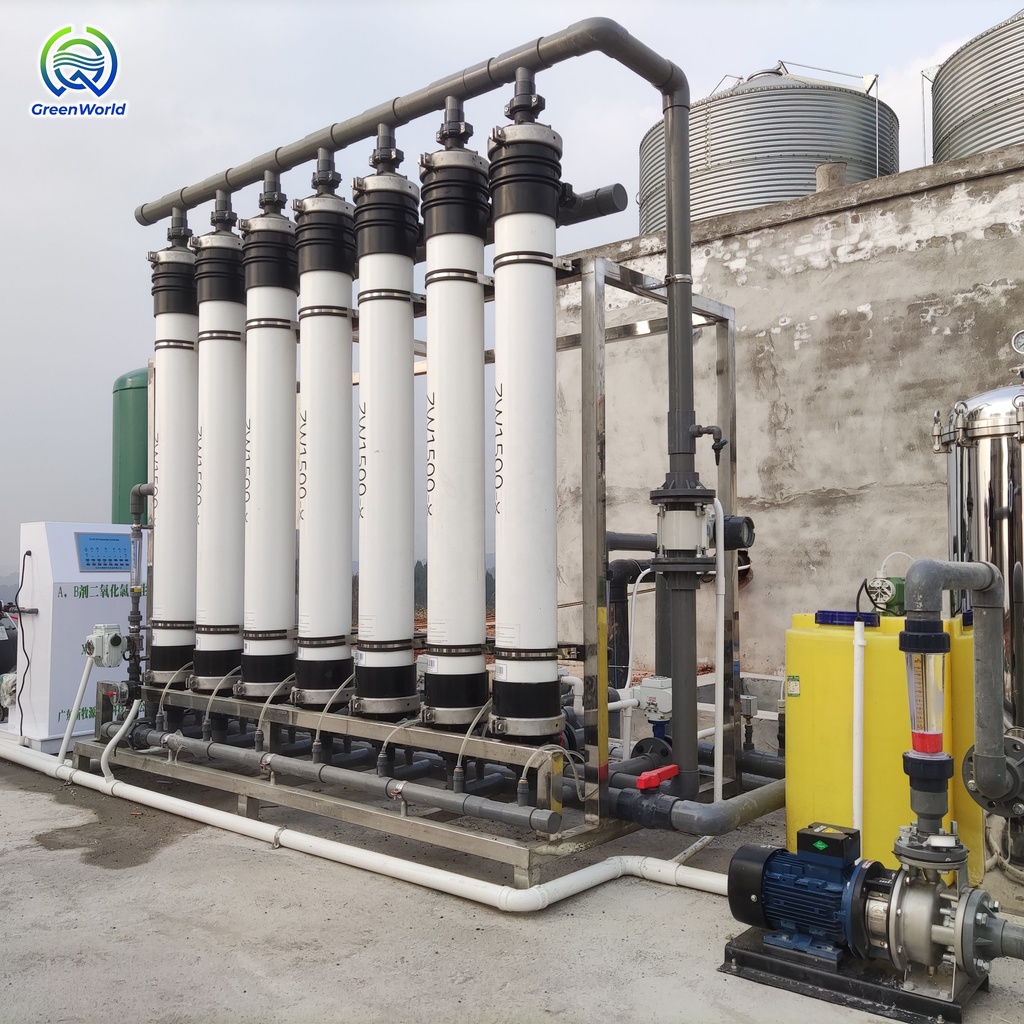
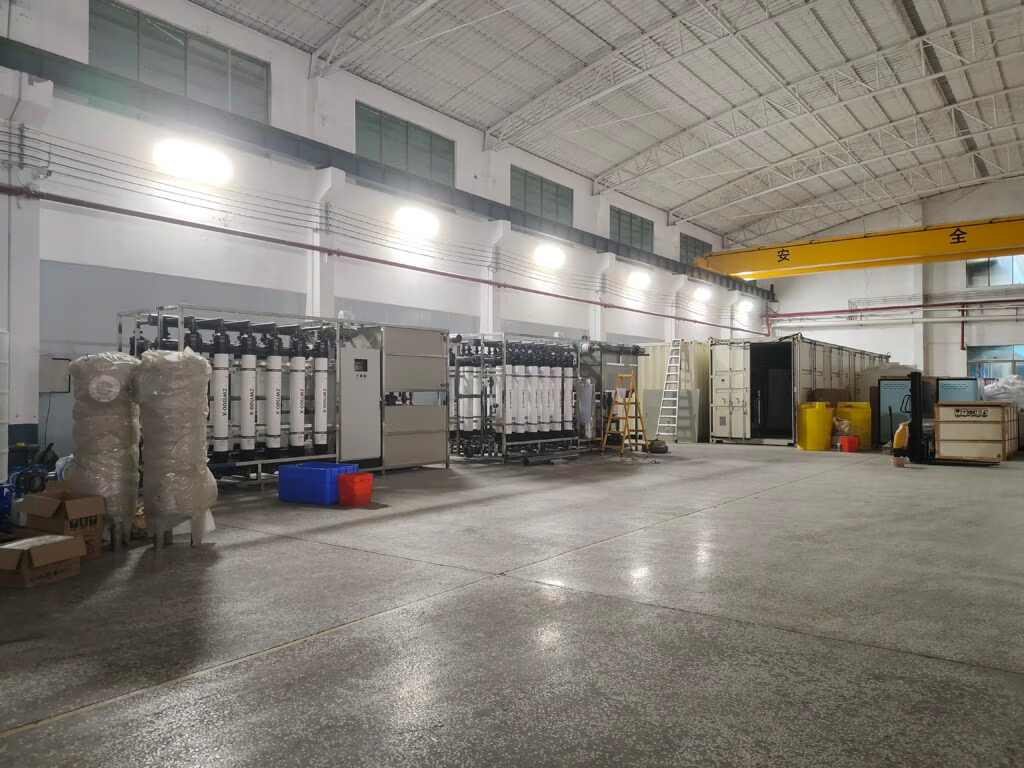
In recent years, traditional water treatment methods have become increasingly inadequate for the demands of high-precision purification. Instead, 限外ろ過水処理装置, with its outstanding advantages of high efficiency and stability, has gradually become the preferred solution in the industrial water treatment field.
What ultrafiltration water treatment membrane should we use?
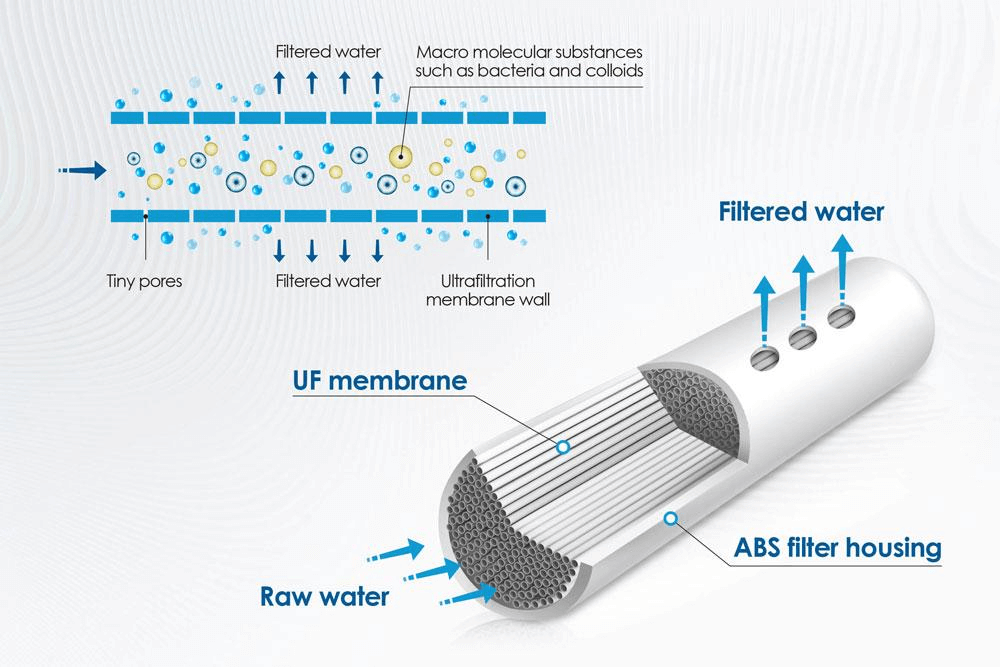
Ultrafiltration water treatment relies on the precise sieving characteristics of polymer membranes. Under moderate pressure, water molecules and small organic molecules can pass through the membrane pores smoothly, while the membrane traps colloidal particles, suspended impurities, microorganisms and macromolecular pollutants in the water on its surface.
Compared to traditional filtration processes, ultrafiltration membranes have pore sizes ranging from 0.01 to 0.1 micrometers. A precision is difficult for traditional methods such as quartz sand filtration and activated carbon adsorption to achieve. Therefore, they can remove over 99% of turbidity and pathogenic microorganisms from water. And the entire process requires no chemical additives, fundamentally eliminating the risk of secondary pollution.
What are the advantages compared to traditional methods?
In industrial applications, the value of ultrafiltration technology is particularly evident.
On the one hand, it possesses strong adaptability to various scenarios. Engineers can flexibly adjust membrane materials and operating parameters according to the water quality characteristics of different industries. Whether it’s high-purity water preparation in the electronics industry, water purification in food processing, or wastewater recycling in the chemical industry, it can provide customized solutions.
On the other hand, its operational economy is outstanding. The ultrafiltration membrane adopts a cross-flow filtration design, which effectively reduces membrane fouling and extends the membrane’s service life. Simultaneously, the equipment has a high level of automation, requiring only a small number of maintenance personnel to ensure continuous and stable operation. Furthermore, it offers significant environmental benefits. For example, we can recycle industrial wastewater after ultrafiltration treatment, greatly reducing the company’s fresh water consumption and thus achieving water conservation and emission reduction targets.
What upgrades have been made to ultrafiltration water treatment tech?
水処理装置の製造において培った15年間の経験に基づき、当社は産業用水処理の現場における課題(ペインポイント)を解決すべく、当社の限外ろ過(UF)システムを多角的に改良いたしました。例えば、膜モジュールの選定においては、優れた防汚特性を持つPVDF(ポリフッ化ビニリデン)素材を採用し、当社独自開発の膜繊維織り込みプロセスと組み合わせることで、膜モジュールの耐圧性および洗浄耐性を大幅に向上させています。さらに、システムアーキテクチャの設計にはインテリジェント監視ユニットを組み込み、膜フラックスや膜間差圧といった主要指標をリアルタイムでモニタリングしています。システムが膜の汚染傾向を検知すると、自動的にオンライン洗浄プロセスを開始し、システムの安定稼働を確保します。
These technological improvements have earned our ultrafiltration equipment market recognition. After adopting our equipment, a large electronics company in East China saw its production water resistivity consistently maintained above 15 MΩ·cm. Its product qualification rate increase by 3 percentage points, and its production line downtime rate decrease by nearly 20%.
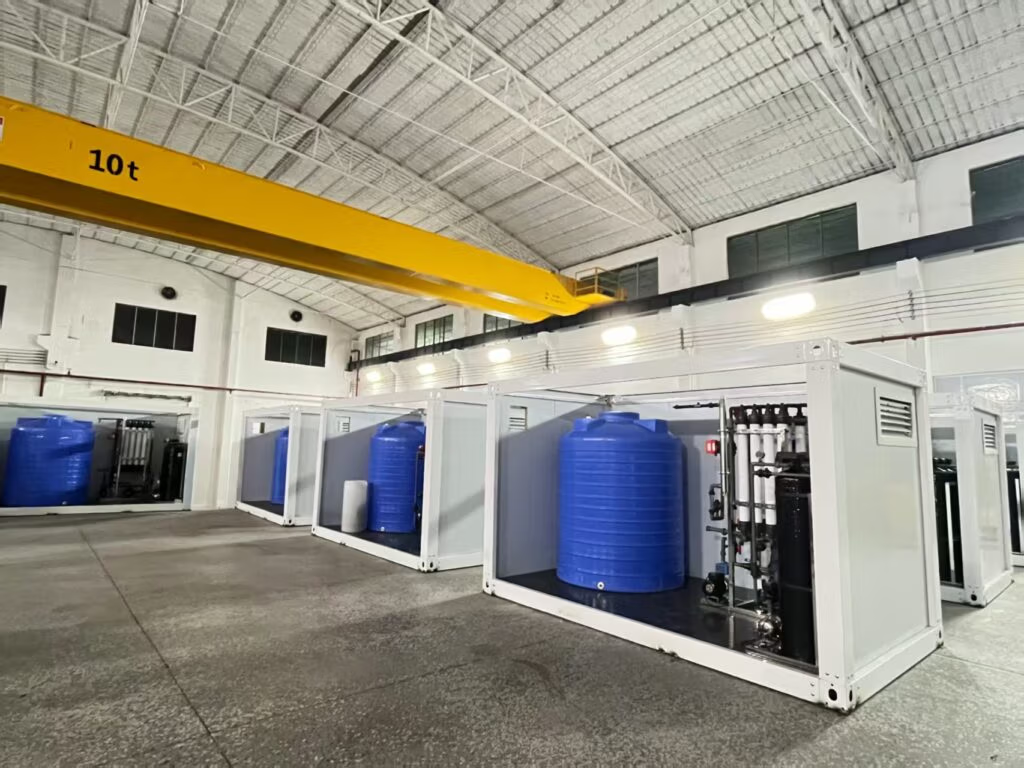
現在、限外ろ過(UF)水処理技術は、統合化、高機能化、そして省エネルギー化へと急速な進化を遂げています。当チームは、統合型水処理ユニットの開発に注力しています。限外ろ過技術に逆浸透(RO)およびナノろ過(NF)技術を組み合わせることで、原水の浄化から純水の製造に至るまでを一貫して担う「ワンストップサービス」の実現を目指しています。同時に、IoT技術を活用したインテリジェントな遠隔運用・保守用クラウドプラットフォームを構築しており、機器の稼働データや異常検知アラートのリアルタイム送信、さらには遠隔診断を可能にすることで、お客様により効率的なアフターサポートを提供しています。
要約
In the future, breakthroughs in membrane material technology will further improve the filtration accuracy and service life of ultrafiltration membranes. And the initial investment cost of equipment will gradually decrease. These measures will allow more small and medium-sized enterprises to enjoy the development dividends brought by efficient water treatment technology.