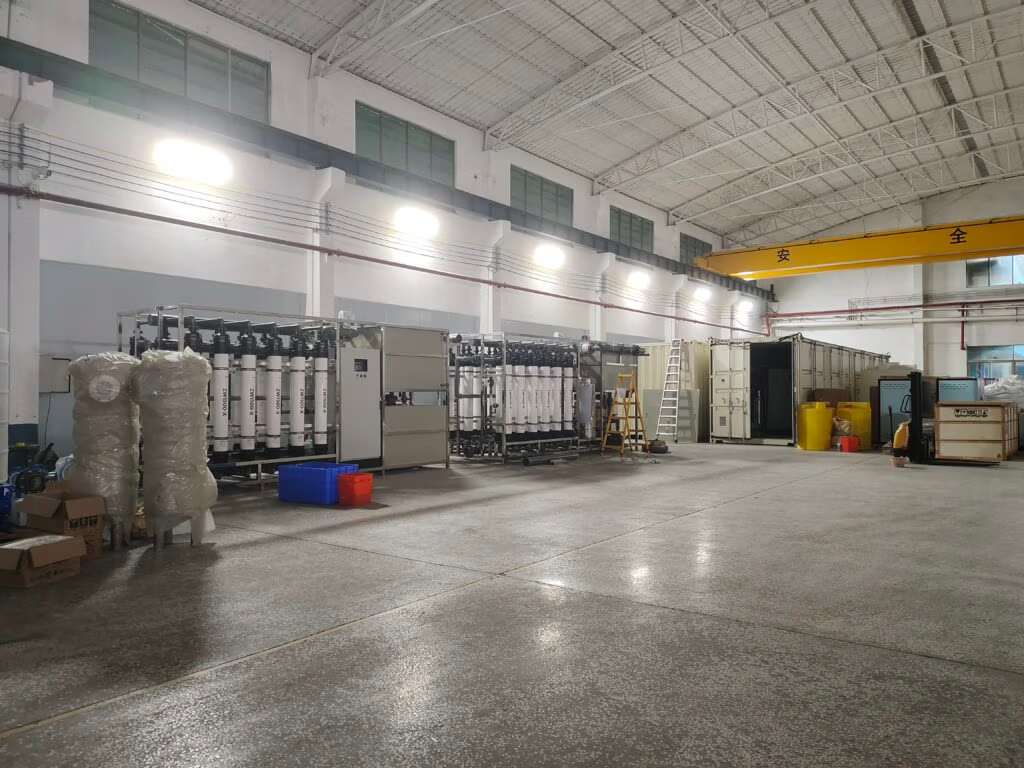
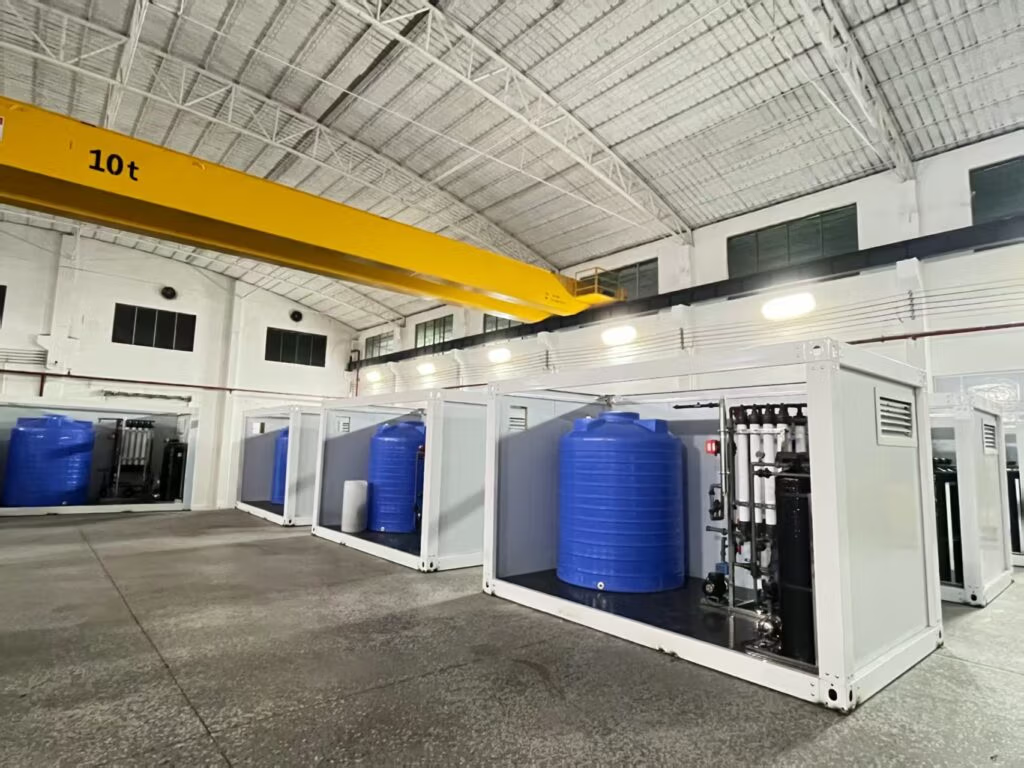
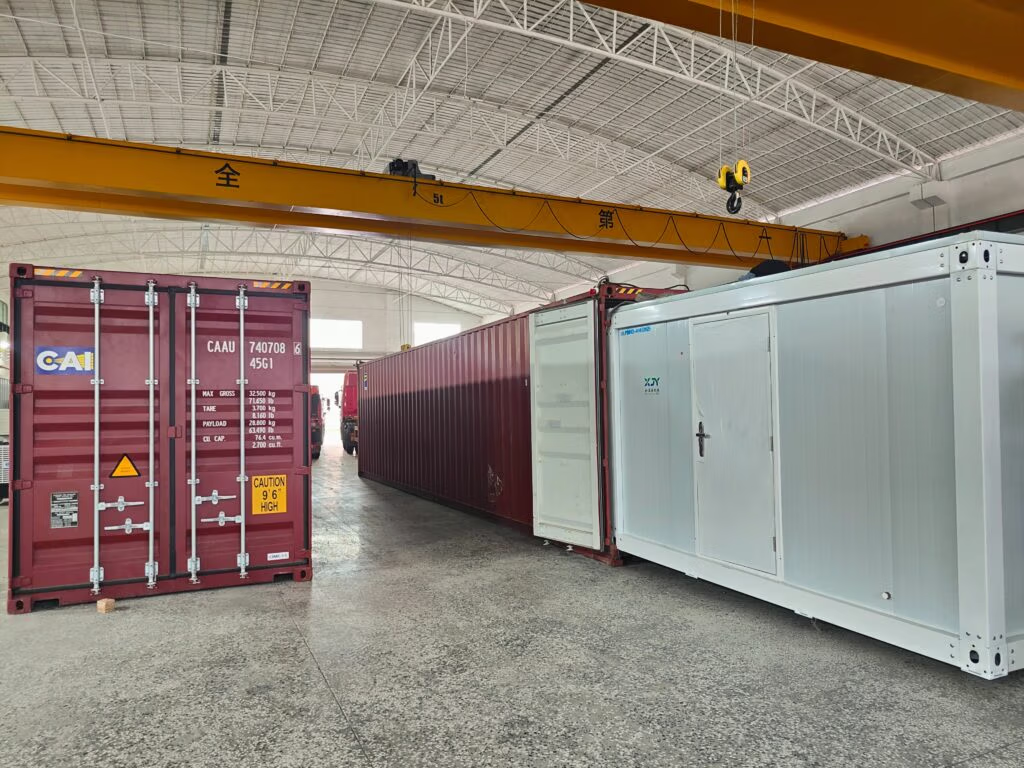
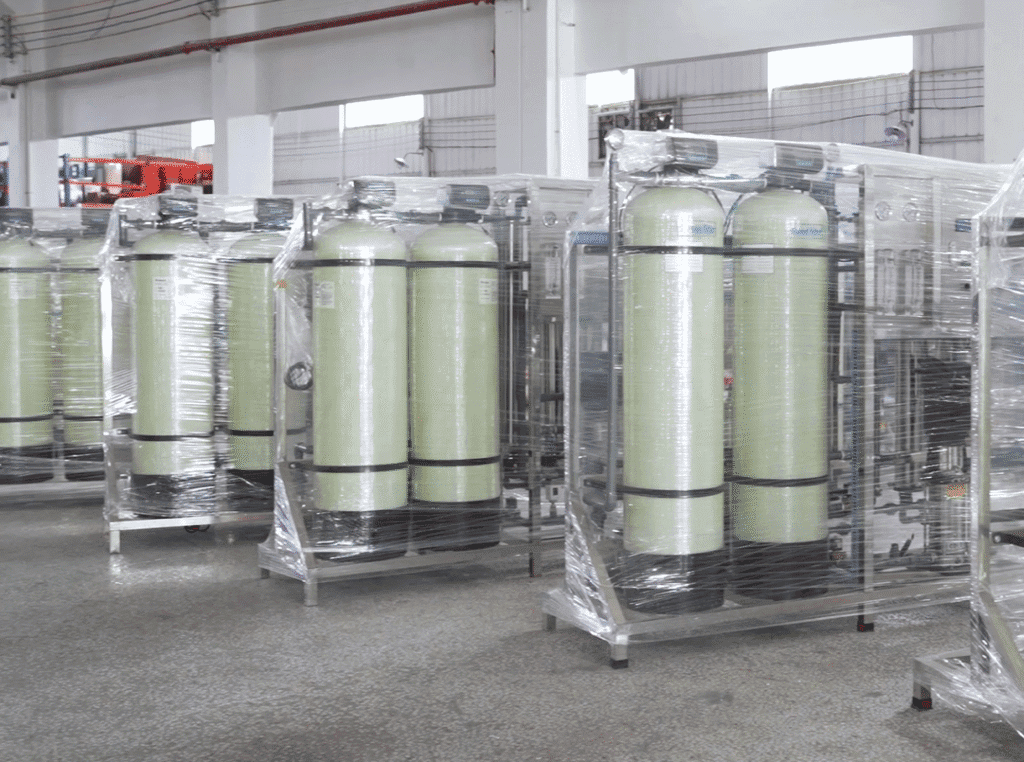
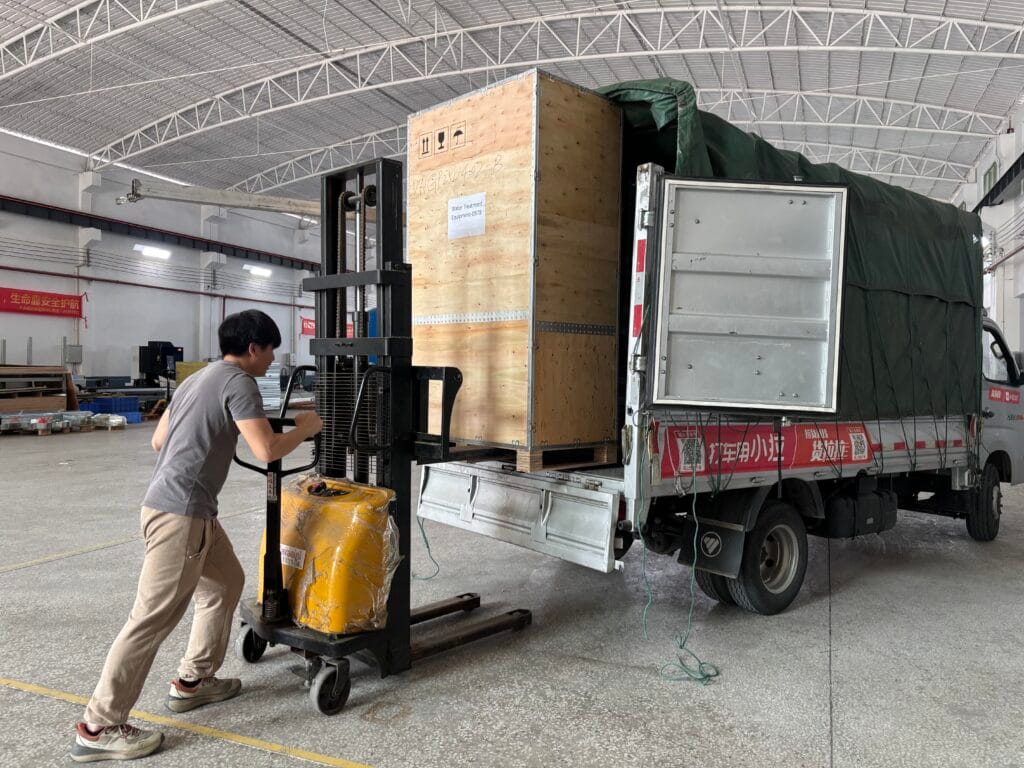
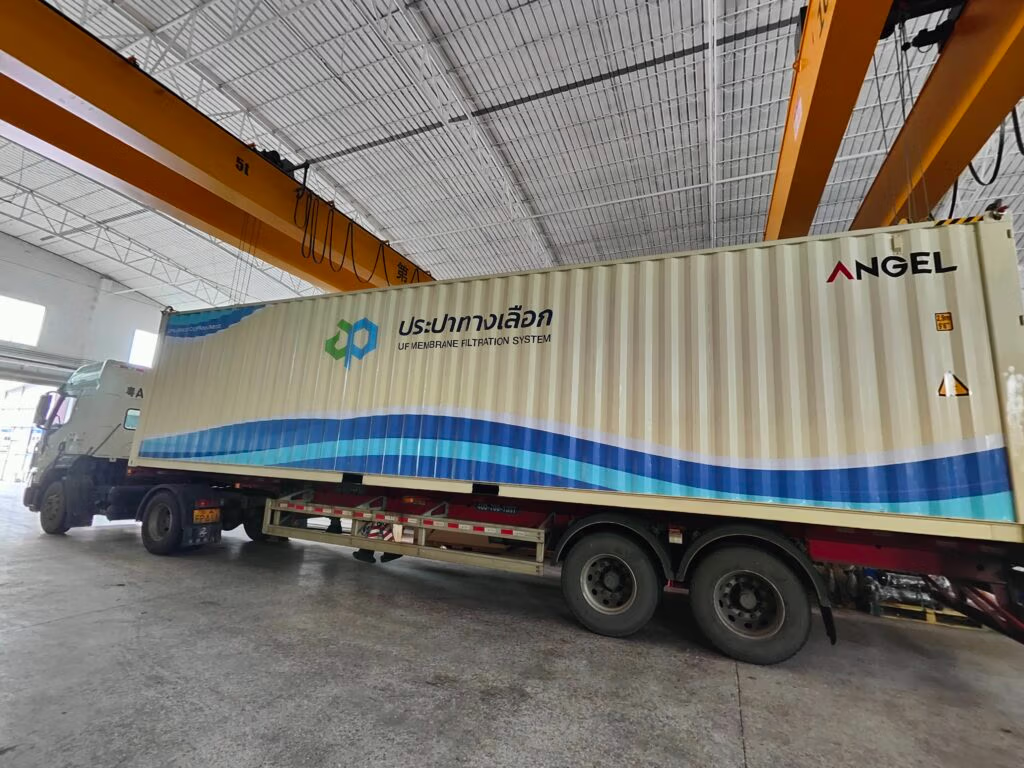
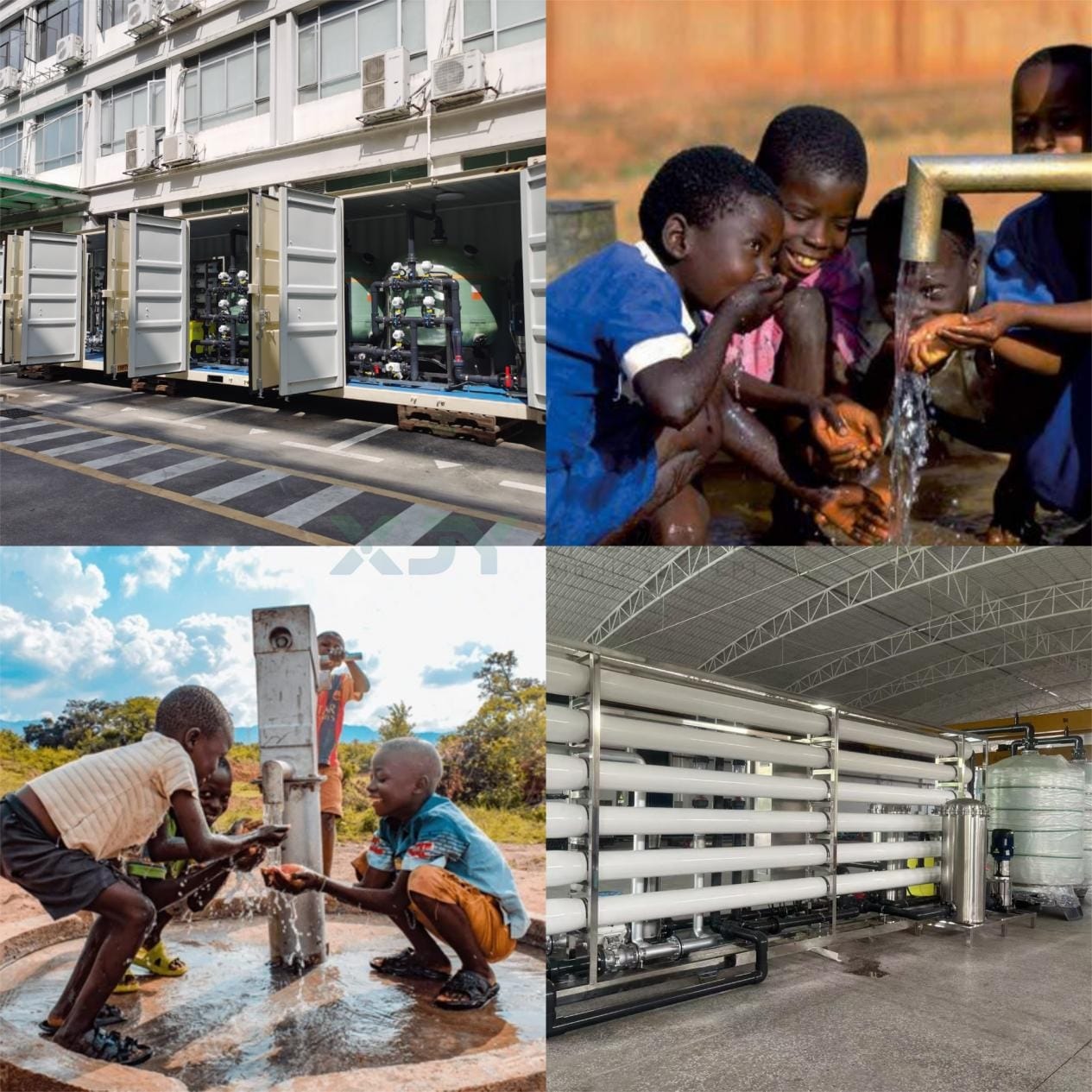
高度な膜分離技術である大型逆浸透システムは、海水淡水化において重要な役割を果たしています。その高い効率性、省エネルギー性、安定性により、これらのシステムは汚染物質や溶解固形物を除去することで、大量の高品質な水を生成します。
大型逆浸透システムとは何ですか?
Large 逆浸透システム uses reverse osmosis technology to produce pure water. The core of RO technology lies in the magical properties of its semi-permeable membranes. The pores of these membranes are only 0.1 nanometers. Thus, it is equivalent to one millionth of the diameter of a human hair. Under high pressure, water molecules not only can pass through these micropores, but more than 99% of dissolved salts, minerals and microorganisms are effectively intercepted.
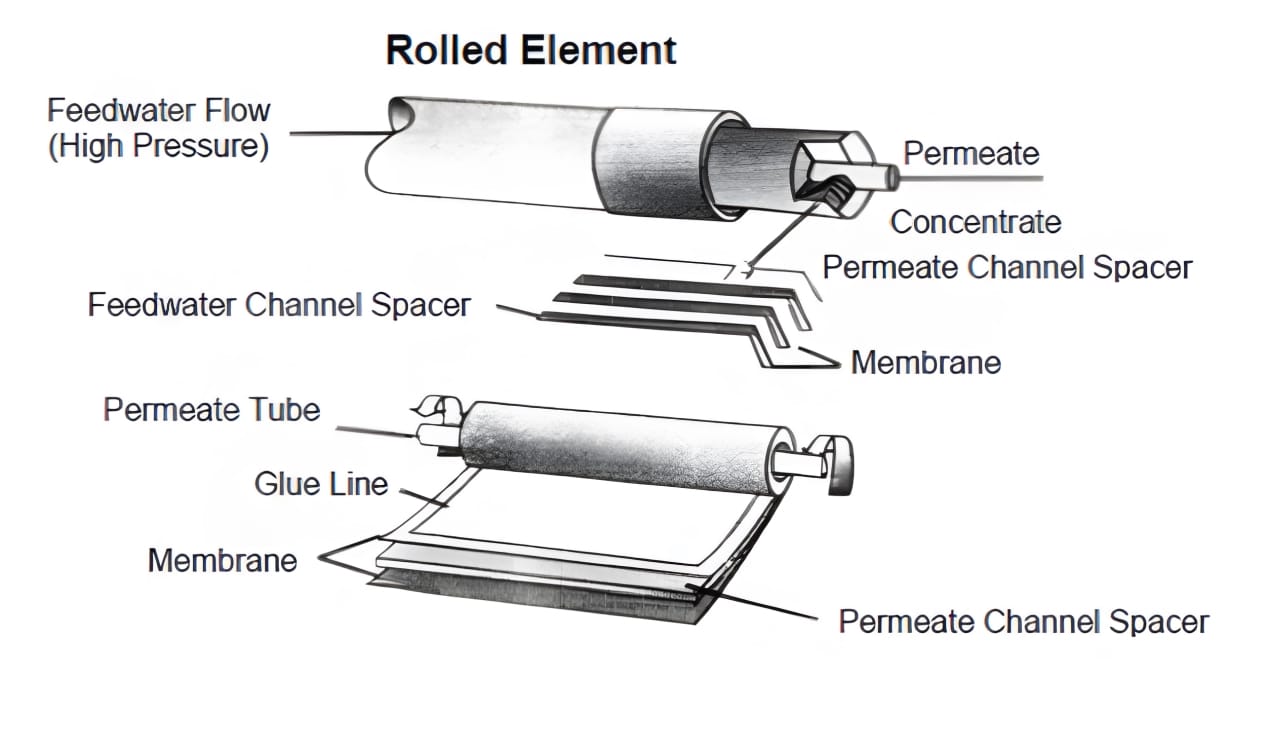
大型逆浸透システムの構成要素
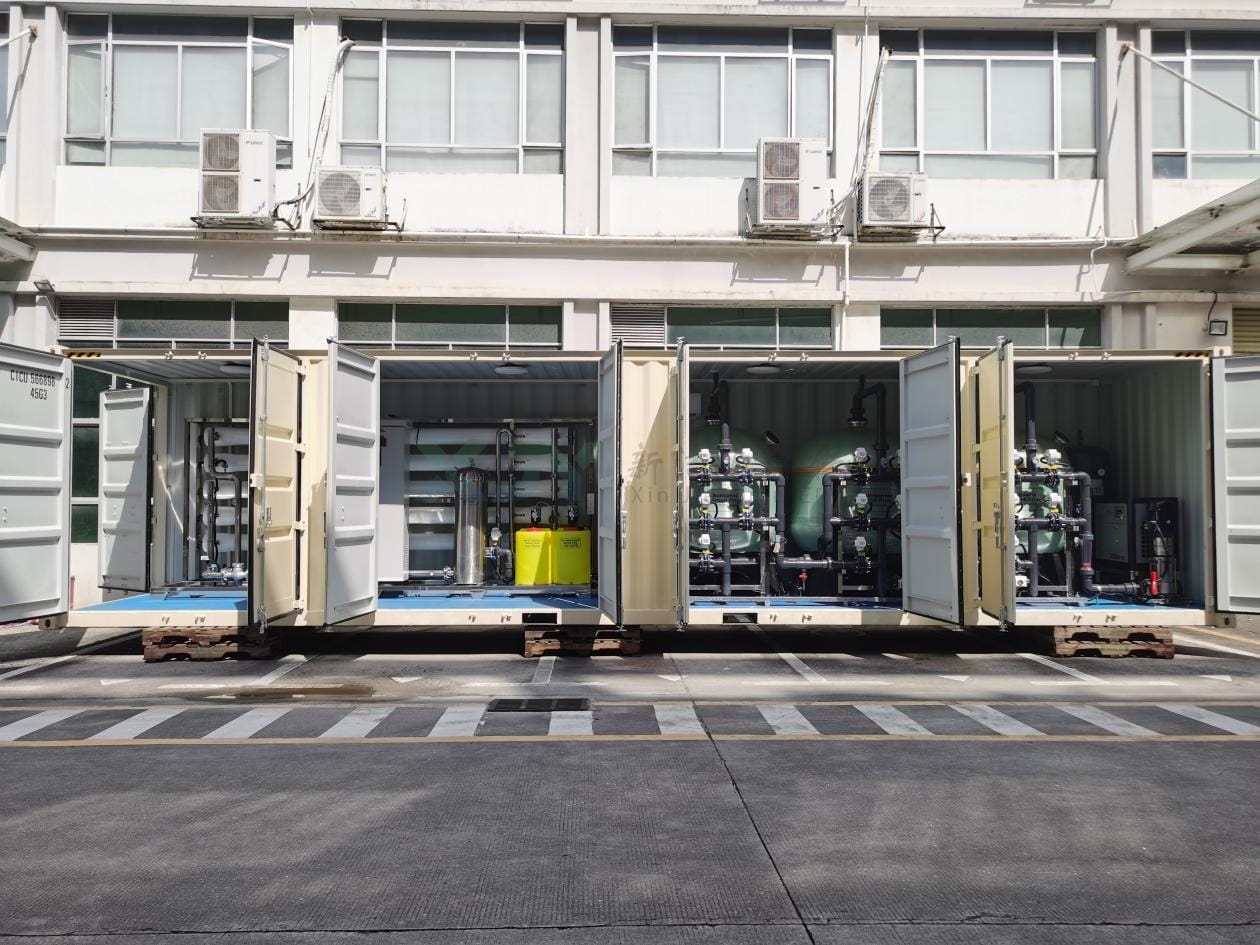
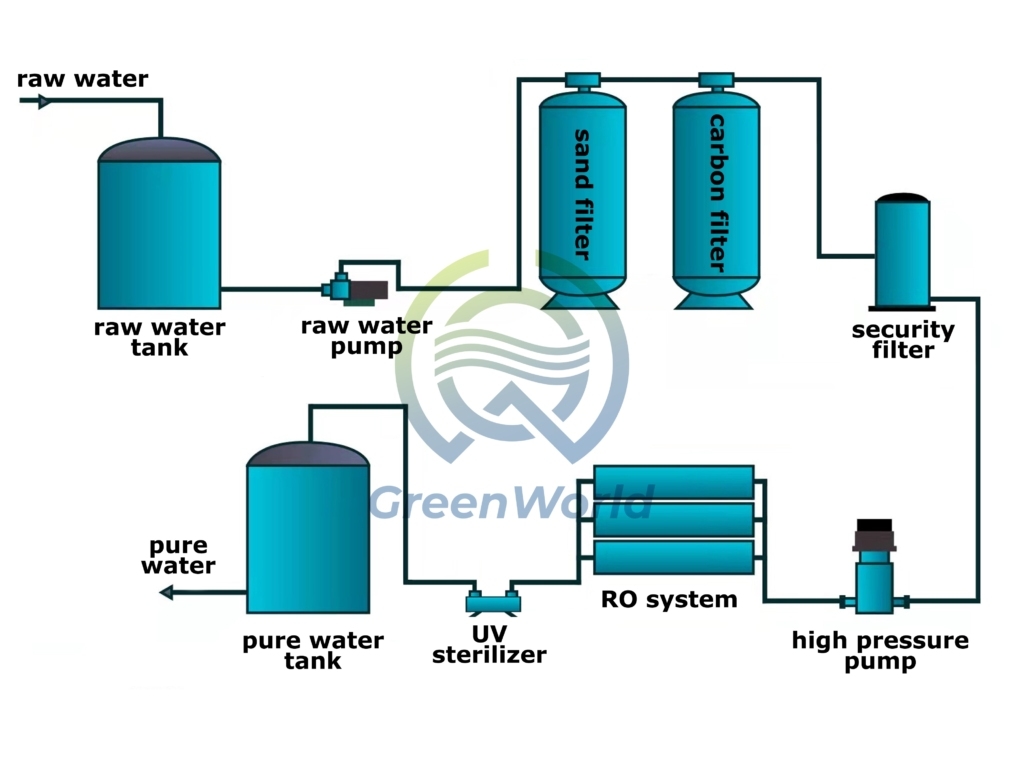
大型逆浸透システムは、効率的な水処理を実現するために連携して動作する様々な構成要素から成り立っています。これらの構成要素には、前処理システム、逆浸透装置、貯水・配水装置、後処理システム、および水質を監視するための計測機器が含まれます。
1.pretreatment system
Pretreatment is a key step in the reverse osmosis process. It can prevent membrane fouling and improve the overall efficiency of the system. First, the pretreatment system usually includes
- lMultimedia filter: Removes large particles from the feed water to ensure the operation of the reverse osmosis membrane.
- lCarbon filter:Eliminates chlorine, organic compounds and other contaminants that may damage the membrane.
- lWater softener:In hard water areas, a water softener is used to remove minerals such as calcium and magnesium.
- lUltraviolet disinfector:RO systems kill bacteria, viruses and other microorganisms that may be present in the feed water to protect the reverse osmosis membrane.
2.reverse osmosis process
Secondly, we use Huitong reverse osmosis membranes to form the unit to remove dissolved solids and contaminants from water. This reverse osmosis unit is designed to treat large volumes of water, making it ideal for industrial applications.
3.storage and distribution
Thirdly, due to the slow water production rate in the RO process, operators or relevant systems require a water storage tank to store the purified water. Therefore, we in the related field commonly use two types of water storage tanks: atmospheric water storage tanks and bladder water storage tanks. To distribute the water, operators or systems also require a re-pressurization pump to ensure a steady flow of water.
Although the atmospheric water storage tank is larger in size, it produces higher quality water. Because there is no bladder water storage tank. The bladder water storage tank is more compact and is therefore more suitable for small systems.
4.post-treatment system
Additionally, post-treatment is an important step to improve the quality and stability of purified water. Common post-treatment methods include
- lpH adjustment:Raise or lower the pH of water to the desired level to optimize subsequent processes.
- lDeionization:Remove residual ions and minerals in water to produce ultrapure water suitable for laboratory use or special applications such as semiconductor manufacturing.
- lUltraviolet disinfection:Use ultraviolet light to eliminate residual bacteria, viruses or microorganisms in water to ensure the microbiological safety of water.
5.monitoring water quality
最後に、精製水の品質を監視・維持するために、様々な計測機器や分析装置が用いられます。これらの機器は、pH、導電率、温度といったパラメータを測定することができ、プロセス制御や調整に必要なリアルタイムデータを提供します。
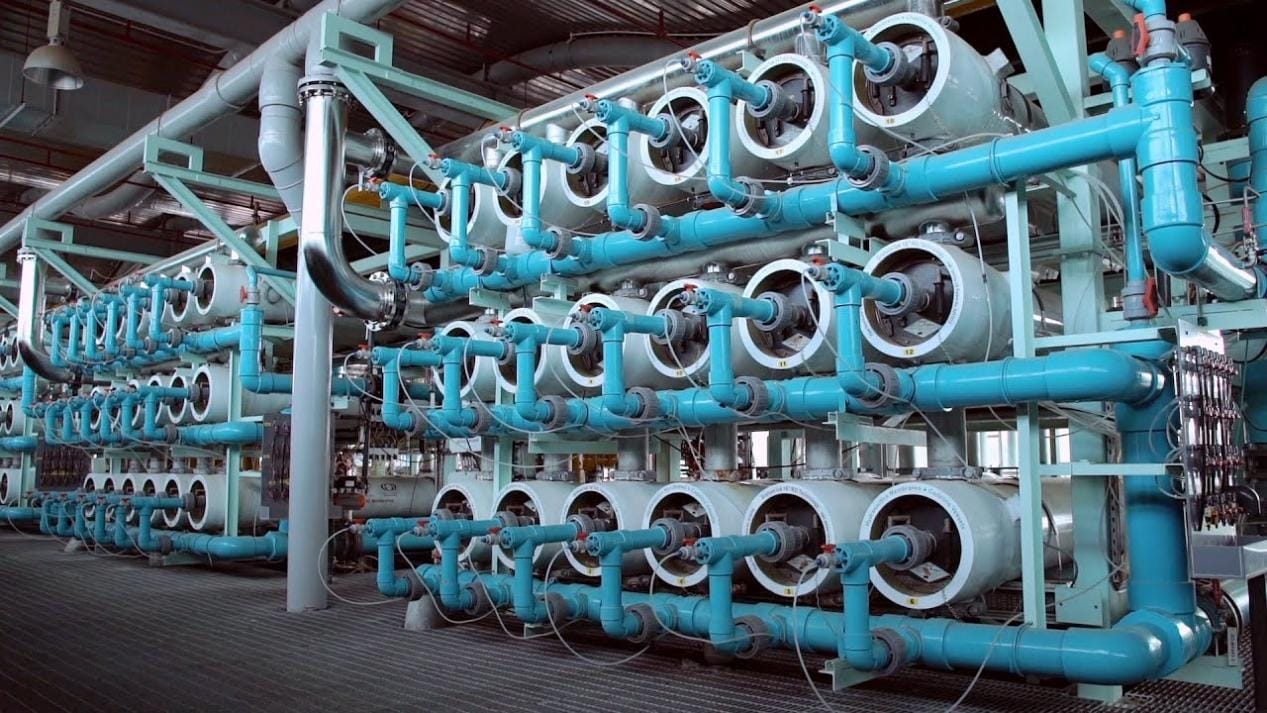
大型逆浸透システムの典型的な事例
Singapore NEWater Project
- Application Background: 水不足に悩むシンガポールでは、大規模な逆浸透膜システムを用いて都市下水を高度に処理し、工業用水や飲料水源として利用している。年間処理量は数億立方メートルに及ぶ。
- System scale:The number of RO membrane modules in a single treatment plant exceeds 100,000, and the daily treatment capacity exceeds 100,000 tons.
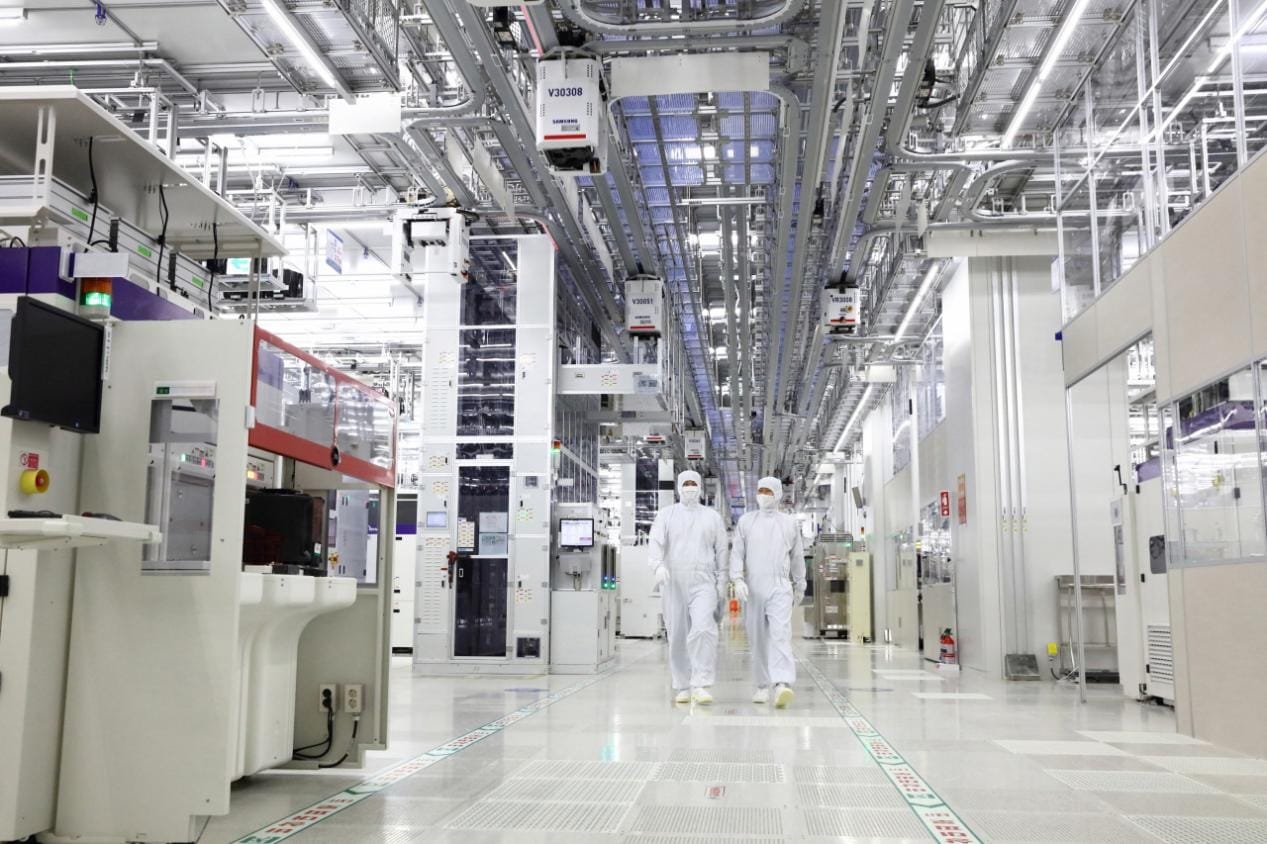
Samsung Pyeongtaek Chip Factory in South Korea
- Application scenario:Samsung Pyeongtaek Factory produces 3nm chips, and its RO system is one of the world’s largest semiconductor water treatment projects.
- System parameters:
- Daily processing capacity of 80,000 tons, using the “three-level RO+EDI” process, the outlet water resistivity is stable at 18.2MΩ・cm (close to theoretical pure water).
- Equipped with German Koch membrane elements, the anti-silicon pollution design avoids impurity deposition on the wafer surface, and the yield is increased to 98%.
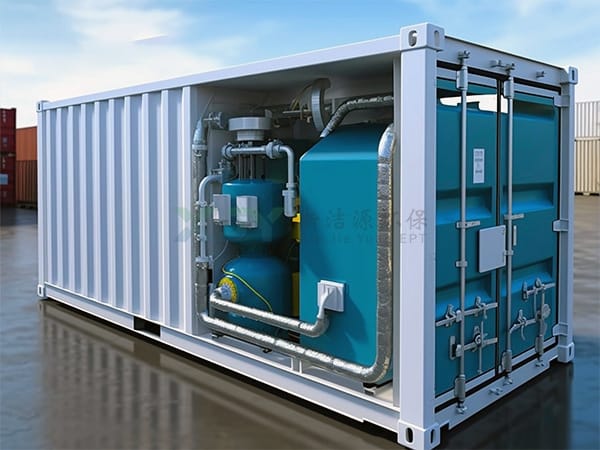
Maersk container ship
- Compliance requirements:
- The International Maritime Organization (IMO) has formulated new regulations in 2025 that require all ship ballast water to undergo RO treatment to kill microorganisms.
- System configuration:
- Maersk’s team has equipped its 18,000 TEU container ship with a German WesTech RO system—one that features a processing capacity of 2000m³/hour and hollow fiber membrane modules.
- After RO treatment, the microbial concentration of ballast water is less than 10/m³, which meets the D-2 standard, and the system occupies only 150㎡.
大型逆浸透システムの課題と展望
大規模逆浸透システムの技術は比較的成熟したレベルにまで発展してきたものの、膜の汚染など、依然として多くの技術的課題を抱えている。生物汚染、スケール付着、コロイド汚染はシステムの効率を著しく低下させる。濃縮塩水処理においては、高塩分排出水の環境への影響を適切に考慮する必要がある。エネルギー消費に関しては、効率は向上したものの、依然として運転コストの30~50%を占めている。
People expect that with technological progress and economies of scale, by 2030, the global reverse osmosis desalination capacity will increase by 40%. The unit energy consumption will see a further reduction of 20-30%. The level of intelligence will improve significantly, and its combination with renewable energy will become closer.
巨大逆浸透システムは、工学技術の偉業であるだけでなく、水資源問題に対処するための重要な武器でもあります。水処理に関するお困りごとがあれば、いつでも「https://xjyco.com/」にご相談ください。
お問い合わせ
名前: クリフ・モック
携帯電話 +86 17817887719