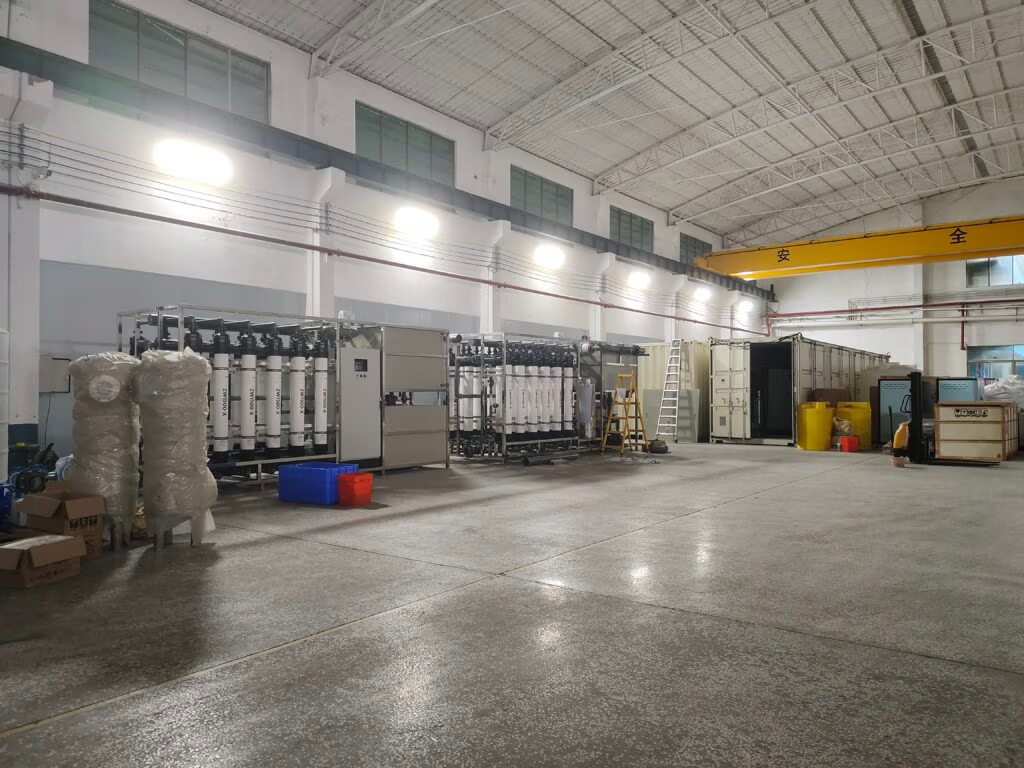
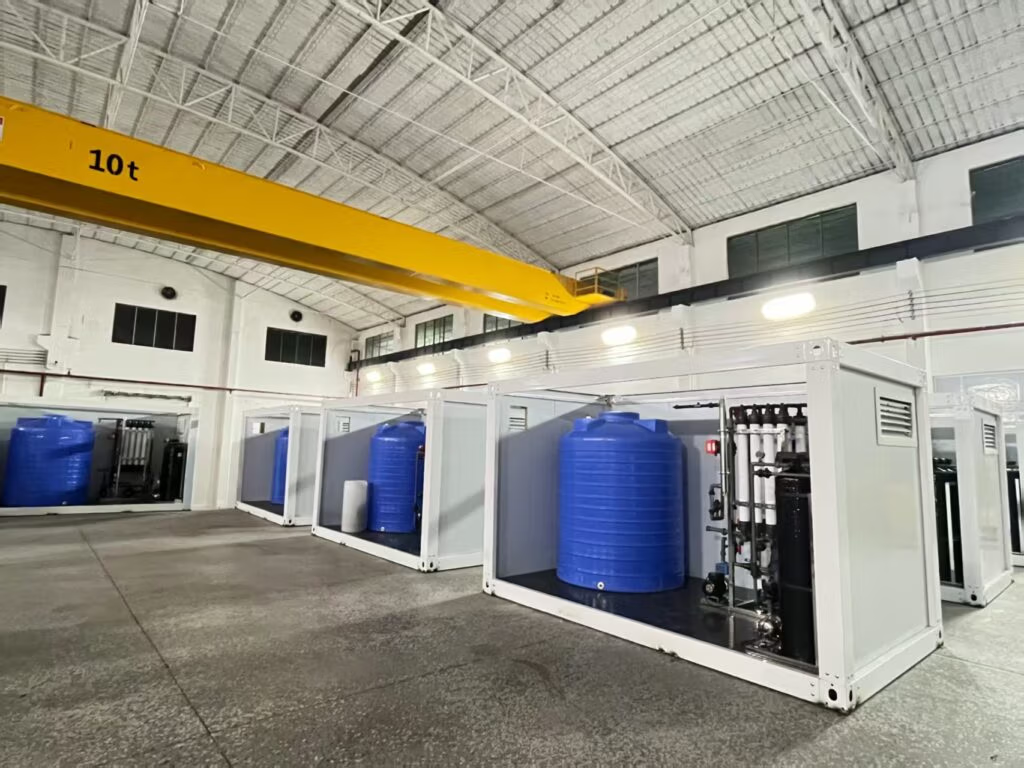
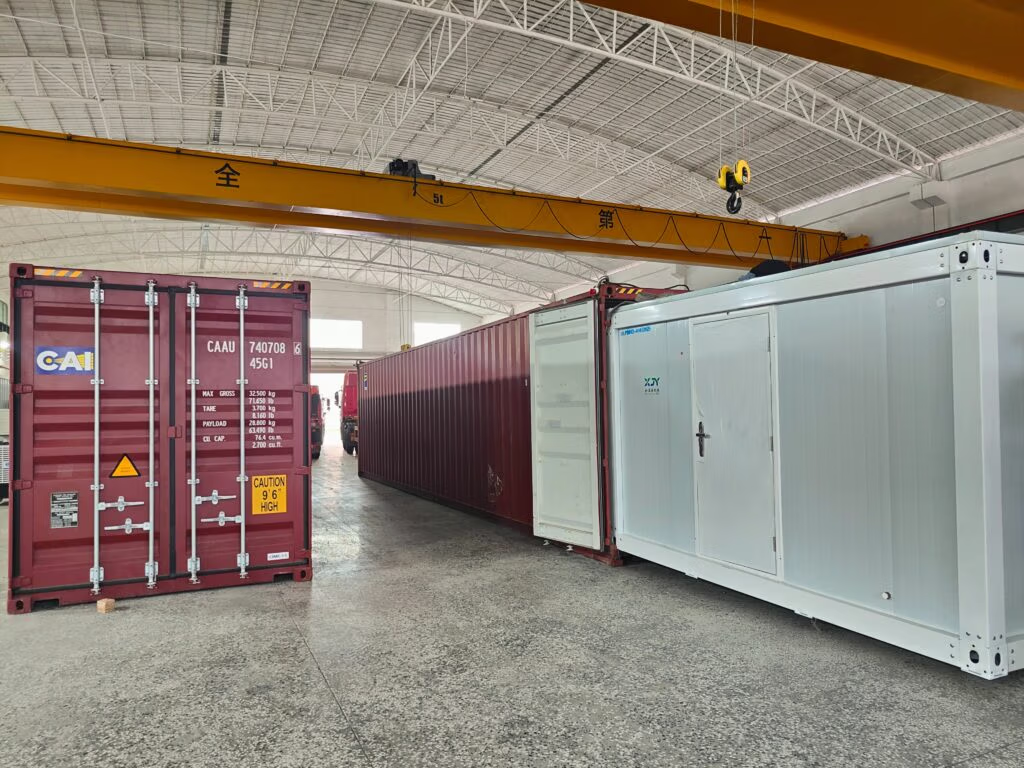
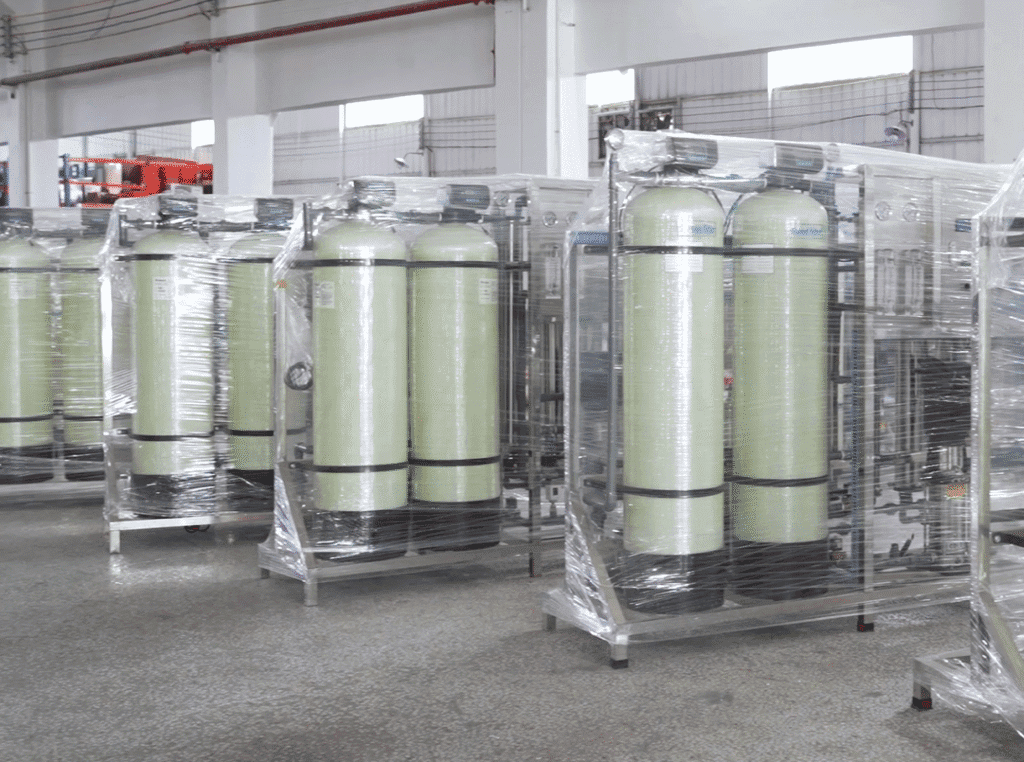
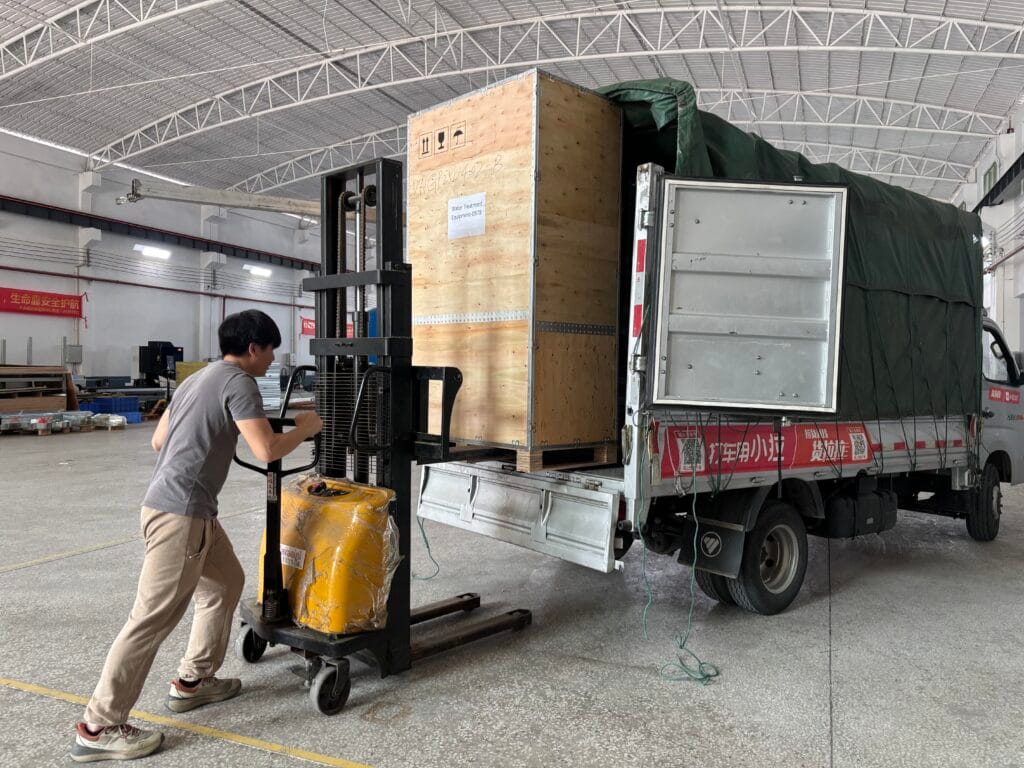
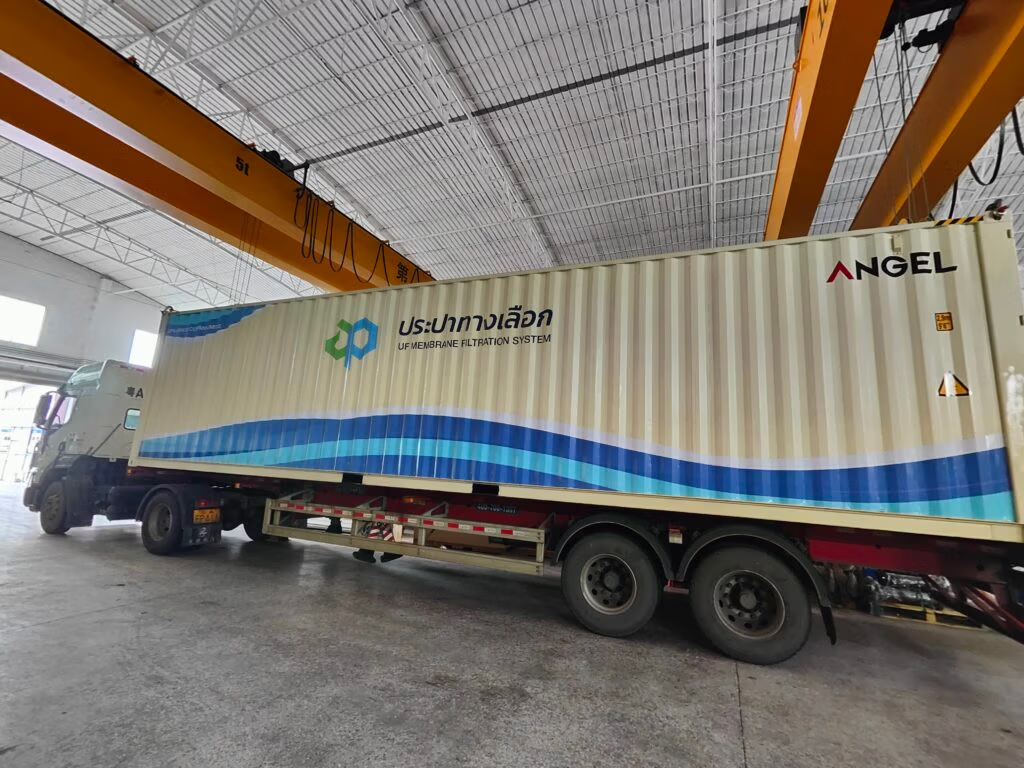
첨단 막 분리 기술인 대형 역삼투압 시스템은 해수 담수화에서 중요한 역할을 합니다. 고효율, 에너지 절약, 안정성이 뛰어나기 때문입니다. 이러한 시스템은 오염 물질과 용존 고형물을 제거하여 고품질의 물을 대량으로 생산합니다.
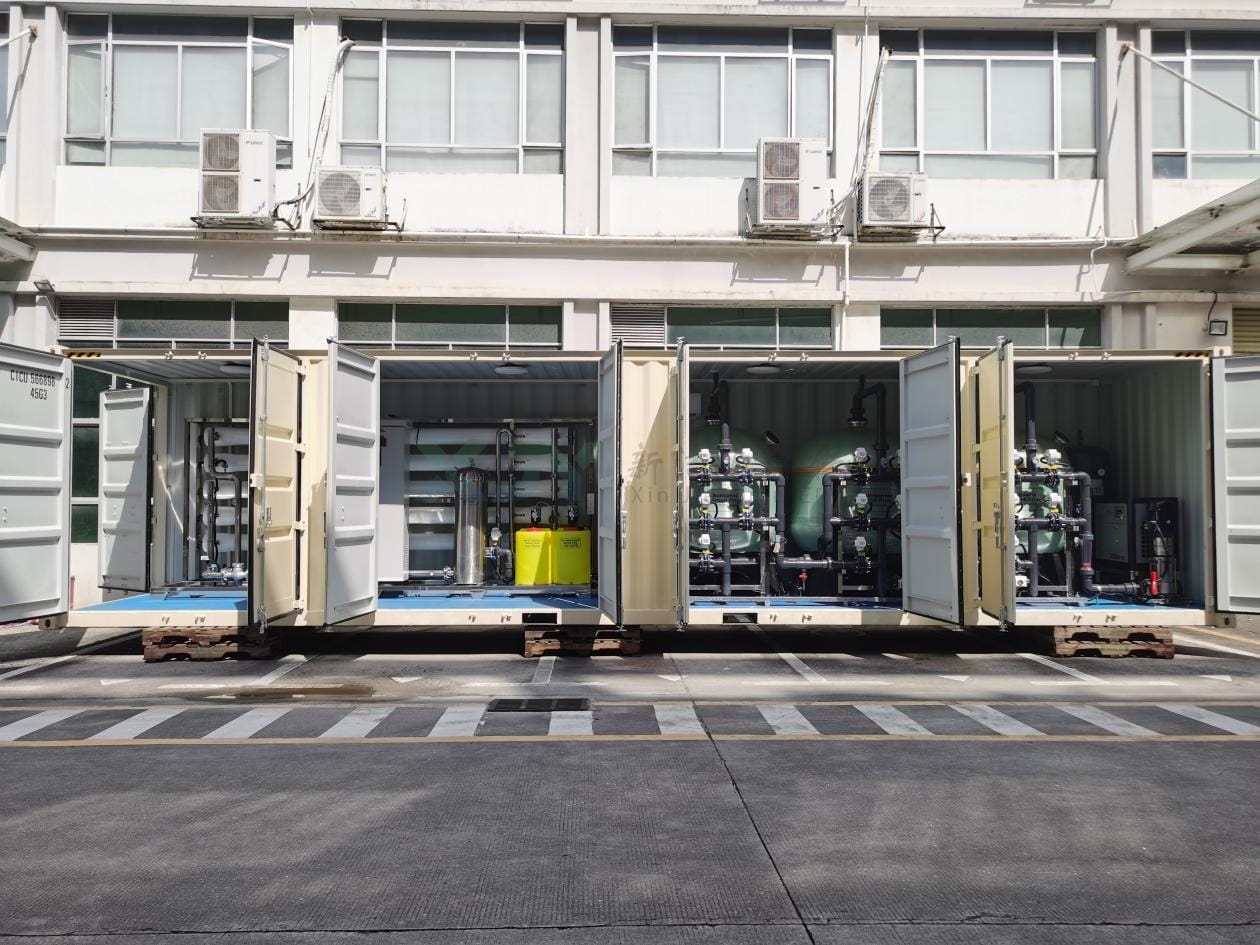
대형 역삼투압 시스템이란 무엇인가요?
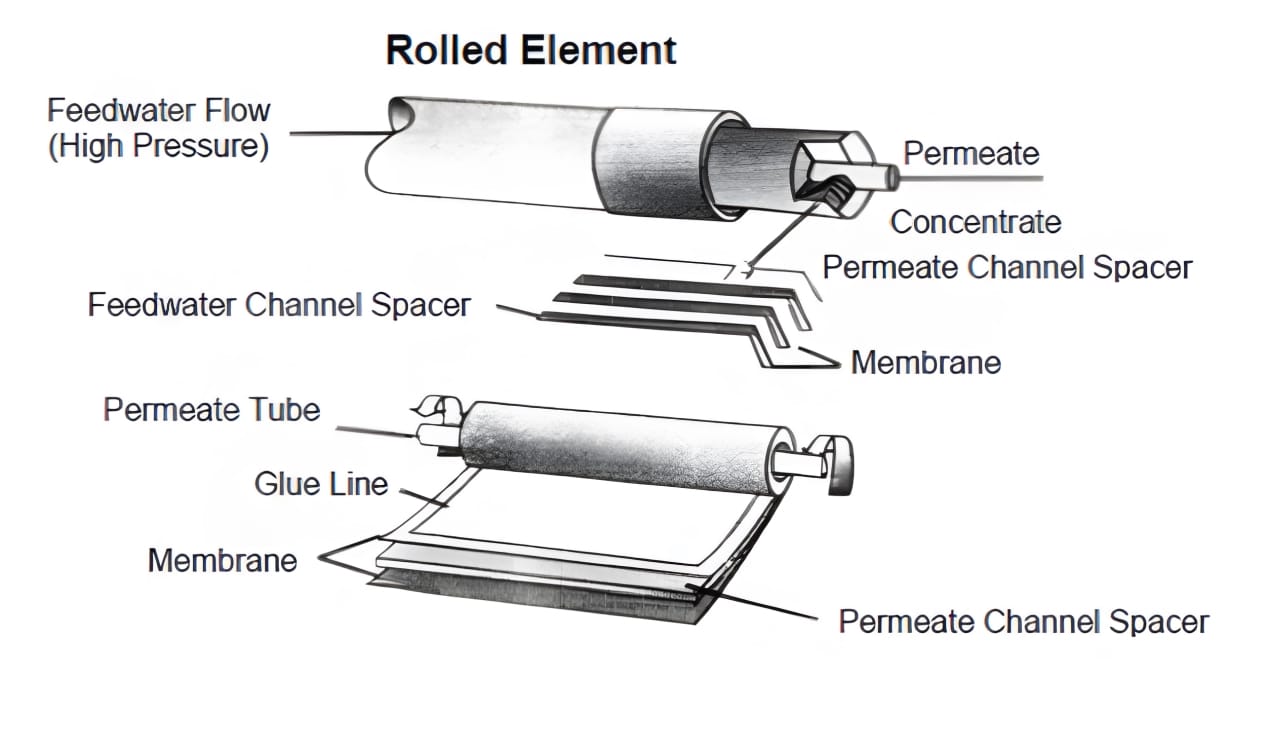
Large 역삼투압 시스템 uses reverse osmosis technology to produce pure water. The core of RO technology lies in the magical properties of its semi-permeable membranes. The pores of these membranes are only 0.1 nanometers. Thus, it is equivalent to one millionth of the diameter of a human hair. Under high pressure, water molecules not only can pass through these micropores, but more than 99% of dissolved salts, minerals and microorganisms are effectively intercepted.
대형 역삼투압 시스템의 구성 요소
대형 역삼투압 시스템은 효율적인 수처리를 보장하기 위해 여러 구성 요소가 함께 작동합니다. 이러한 구성 요소에는 전처리 시스템, 역삼투압 장치, 저장 및 분배 장치, 후처리 시스템, 그리고 수질 모니터링에 사용되는 계측 장비가 포함됩니다.
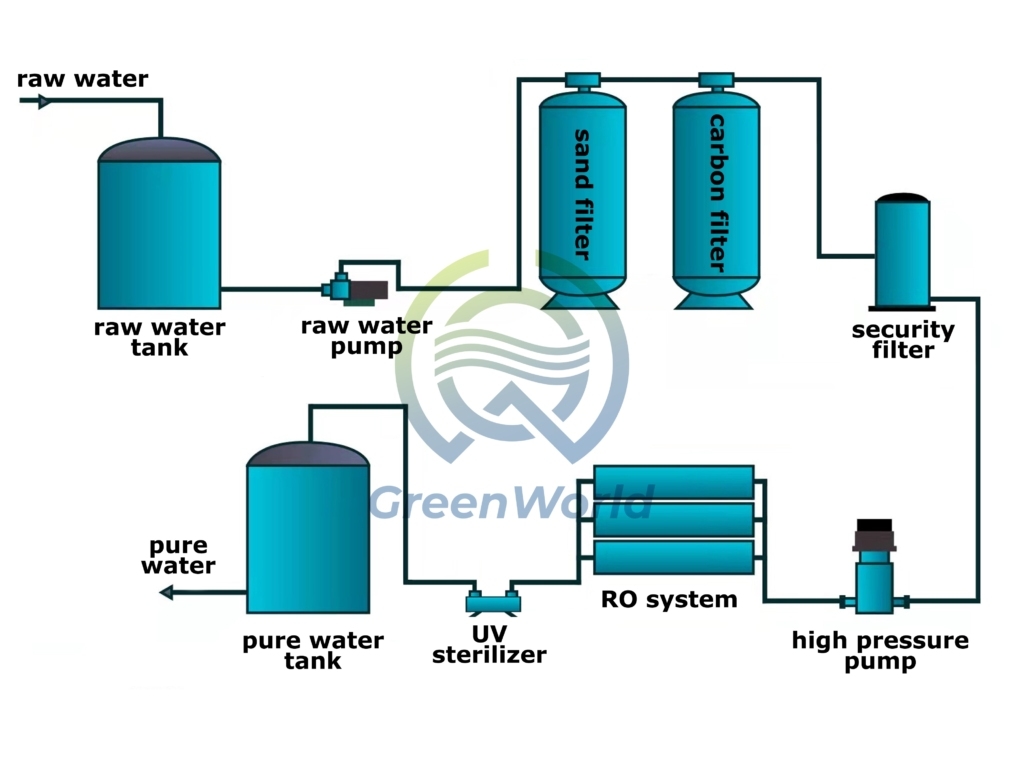
1.pretreatment system
Pretreatment is a key step in the reverse osmosis process. It can prevent membrane fouling and improve the overall efficiency of the system. First, the pretreatment system usually includes
- lMultimedia filter: Removes large particles from the feed water to ensure the operation of the reverse osmosis membrane.
- lCarbon filter:Eliminates chlorine, organic compounds and other contaminants that may damage the membrane.
- lWater softener:In hard water areas, a water softener is used to remove minerals such as calcium and magnesium.
- lUltraviolet disinfector:RO systems kill bacteria, viruses and other microorganisms that may be present in the feed water to protect the reverse osmosis membrane.
2.reverse osmosis process
Secondly, we use Huitong reverse osmosis membranes to form the unit to remove dissolved solids and contaminants from water. This reverse osmosis unit is designed to treat large volumes of water, making it ideal for industrial applications.
3.storage and distribution
Thirdly, due to the slow water production rate in the RO process, operators or relevant systems require a water storage tank to store the purified water. Therefore, we in the related field commonly use two types of water storage tanks: atmospheric water storage tanks and bladder water storage tanks. To distribute the water, operators or systems also require a re-pressurization pump to ensure a steady flow of water.
Although the atmospheric water storage tank is larger in size, it produces higher quality water. Because there is no bladder water storage tank. The bladder water storage tank is more compact and is therefore more suitable for small systems.
4.post-treatment system
Additionally, post-treatment is an important step to improve the quality and stability of purified water. Common post-treatment methods include
- lpH adjustment:Raise or lower the pH of water to the desired level to optimize subsequent processes.
- lDeionization:Remove residual ions and minerals in water to produce ultrapure water suitable for laboratory use or special applications such as semiconductor manufacturing.
- lUltraviolet disinfection:Use ultraviolet light to eliminate residual bacteria, viruses or microorganisms in water to ensure the microbiological safety of water.
5.monitoring water quality
마지막으로, 정제수의 품질을 모니터링하고 유지 관리하기 위해 다양한 계측기 및 분석기가 사용됩니다. 이러한 장비들은 pH, 전도도, 온도와 같은 지표들을 측정하여, 공정 제어 및 조정을 위한 실시간 데이터를 제공합니다.
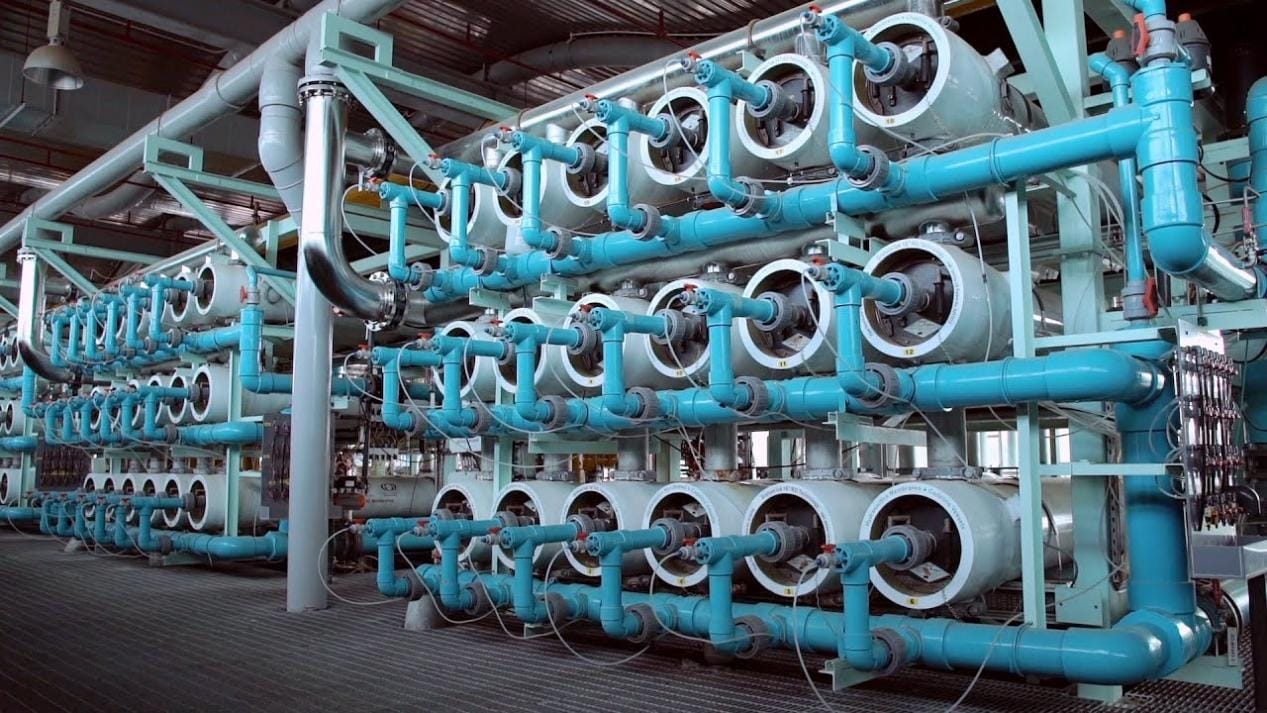
대형 역삼투압 시스템의 일반적인 사례
Singapore NEWater Project
- Application Background: 물 부족 국가인 싱가포르는 대규모 역삼투압 시스템을 사용하여 도시 하수를 심층 처리하여 산업용수와 식수로 전환하고 있으며, 연간 처리량은 수억 세제곱미터에 달합니다.
- System scale:The number of RO membrane modules in a single treatment plant exceeds 100,000, and the daily treatment capacity exceeds 100,000 tons.
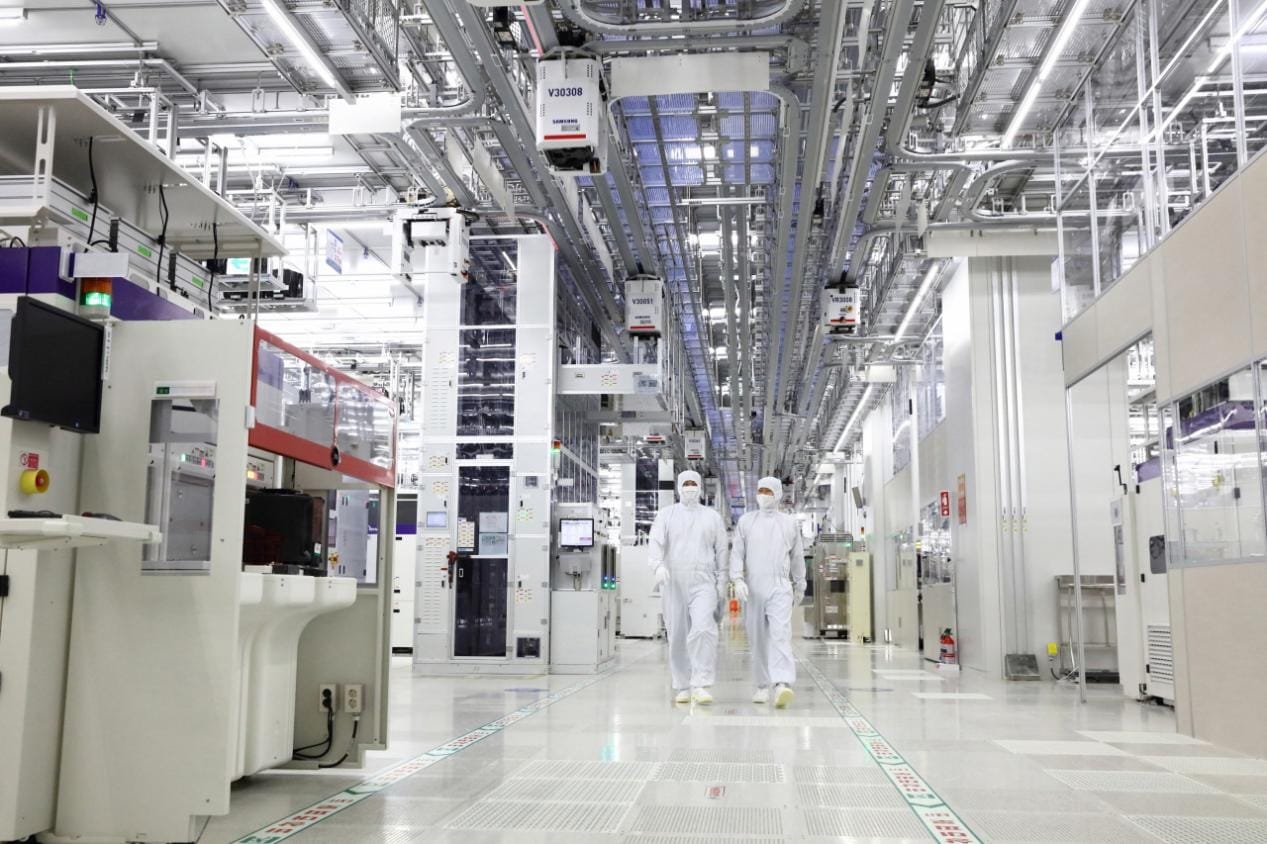
Samsung Pyeongtaek Chip Factory in South Korea
- Application scenario:Samsung Pyeongtaek Factory produces 3nm chips, and its RO system is one of the world’s largest semiconductor water treatment projects.
- System parameters:
- Daily processing capacity of 80,000 tons, using the “three-level RO+EDI” process, the outlet water resistivity is stable at 18.2MΩ・cm (close to theoretical pure water).
- Equipped with German Koch membrane elements, the anti-silicon pollution design avoids impurity deposition on the wafer surface, and the yield is increased to 98%.
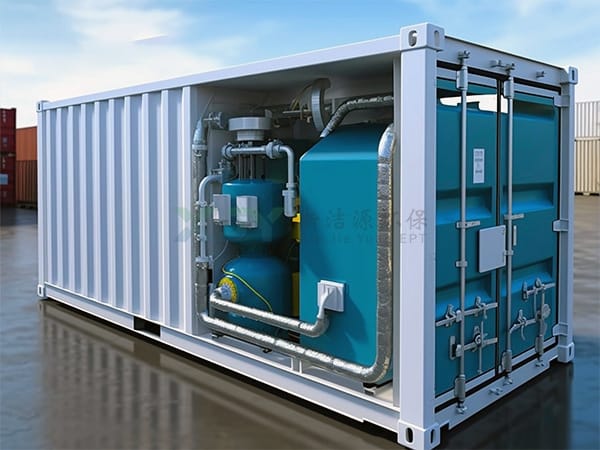
Maersk container ship
- Compliance requirements:
- The International Maritime Organization (IMO) has formulated new regulations in 2025 that require all ship ballast water to undergo RO treatment to kill microorganisms.
- System configuration:
- Maersk’s team has equipped its 18,000 TEU container ship with a German WesTech RO system—one that features a processing capacity of 2000m³/hour and hollow fiber membrane modules.
- After RO treatment, the microbial concentration of ballast water is less than 10/m³, which meets the D-2 standard, and the system occupies only 150㎡.
대형 역삼투압 시스템의 과제와 전망
대규모 역삼투압 시스템 기술은 비교적 성숙한 수준에 이르렀지만, 여전히 막 오염과 같은 여러 기술적 난제에 직면해 있습니다. 생물학적 오염, 스케일 형성, 콜로이드 오염은 시스템 효율을 크게 저하시킵니다. 염수 처리 측면에서는 고염도 방류수의 환경적 영향에 대한 적절한 대책 마련이 필요합니다. 에너지 소비 측면에서도 효율은 향상되었지만 여전히 운영 비용의 30~50%를 차지합니다.
People expect that with technological progress and economies of scale, by 2030, the global reverse osmosis desalination capacity will increase by 40%. The unit energy consumption will see a further reduction of 20-30%. The level of intelligence will improve significantly, and its combination with renewable energy will become closer.
초대형 역삼투압 시스템은 단순한 공학적, 기술적 성과일 뿐만 아니라, 사람들이 물 자원 문제에 대처하는 데 사용할 수 있는 중요한 무기이기도 합니다. 물 처리와 관련하여 궁금한 점이 있으면 언제든지 "https://xjyco.com/"을 방문하여 해결 방법을 알아보세요.
문의하기
이름: 클리프 목
휴대폰: +86 17817887719