Como funciona a máquina de dessalinização por osmose inversa? Para compreender o princípio de funcionamento deste equipamento, temos de começar por clarificar os significados de osmose e osmose inversa.
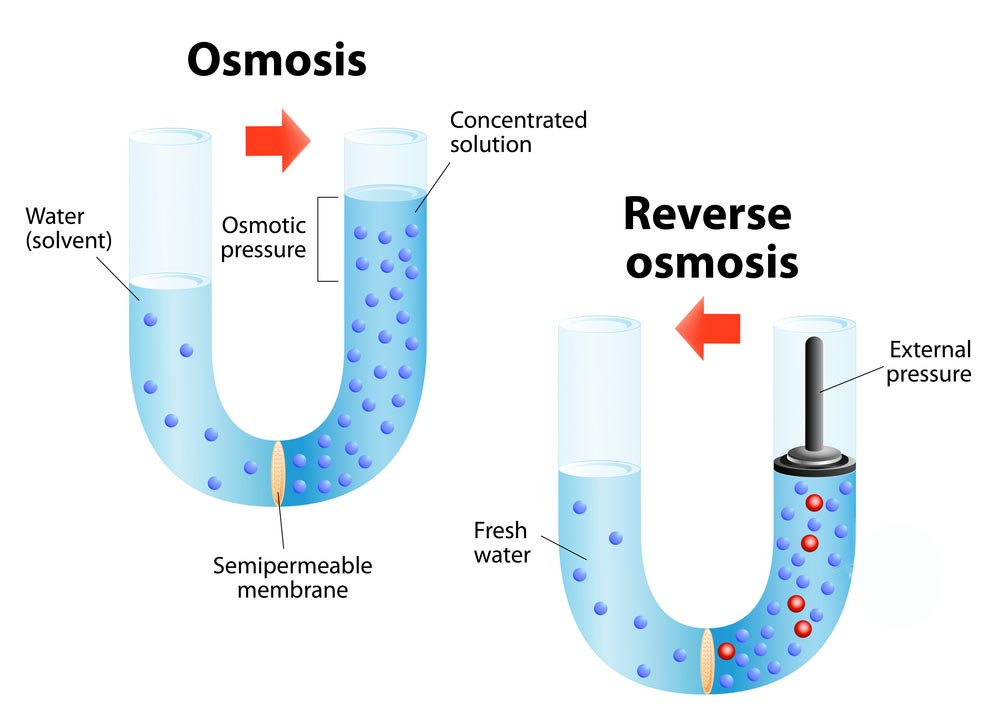
O que é a penetração?
Quando uma membrana semipermeável separa a água doce da água salgada, a água doce (menor concentração) fluirá naturalmente para o lado da água salgada (maior concentração) até que a pressão osmótica em ambos os lados esteja equilibrada. Em suma, a concentração mais baixa flui para a concentração mais elevada.
O que é a osmose inversa?
A aplicação de uma pressão externa que excede a pressão osmótica natural no lado da salmoura força as moléculas de água na salmoura a fluir para trás através da membrana semipermeável em direção ao lado da água doce, enquanto os iões de sal e as impurezas são retidos pela membrana.
A pressão osmótica natural da água do mar é de aproximadamente 2,4-3,0 MPa. Para tratar águas residuais concentradas, é necessária a tecnologia de osmose inversa. Por conseguinte, o equipamento tem de fornecer uma pressão significativamente mais elevada para forçar as moléculas de água a fluir para trás através da membrana de osmose inversa.
Quais são os componentes de um dessalinização por osmose inversa máquina?
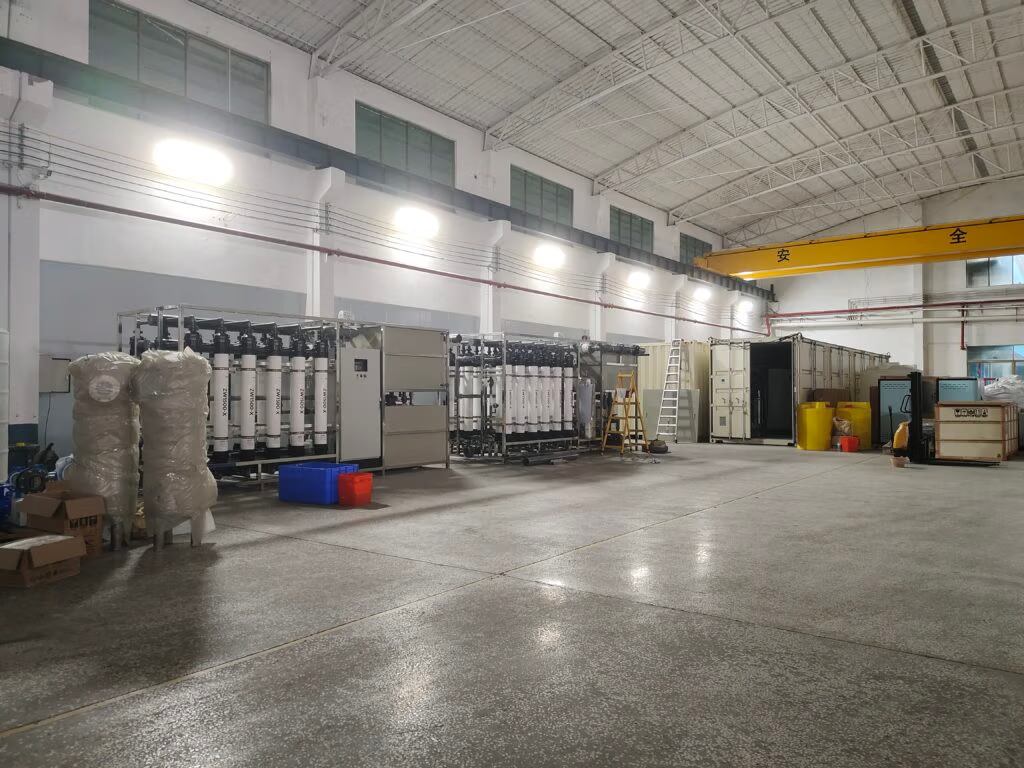
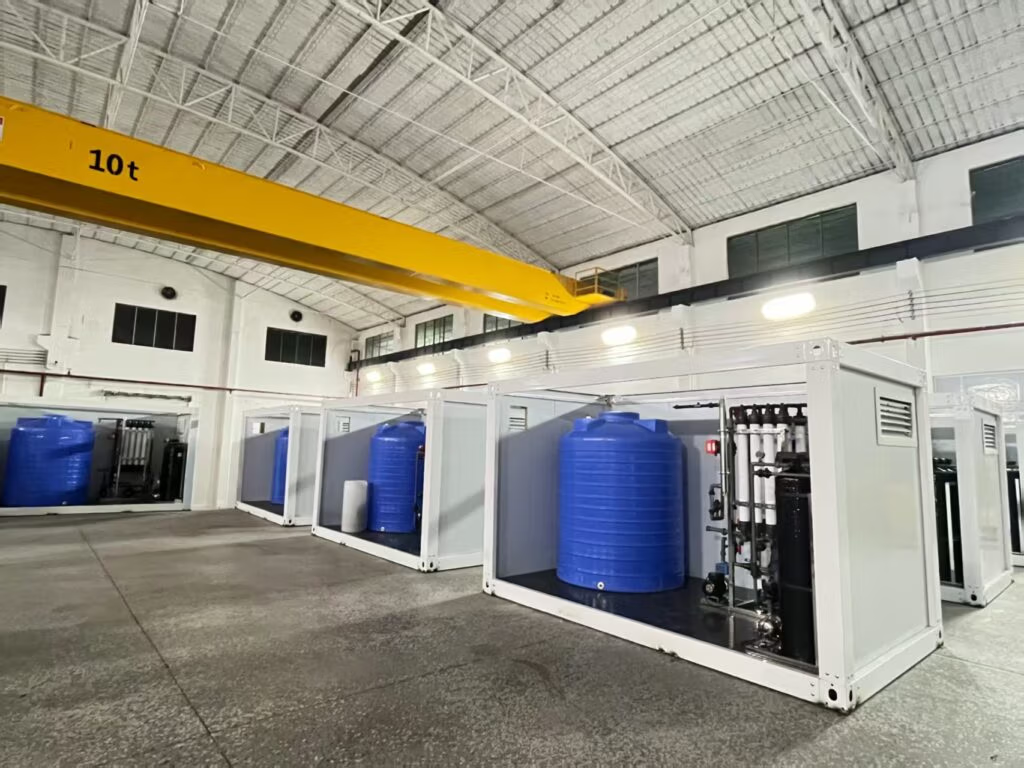
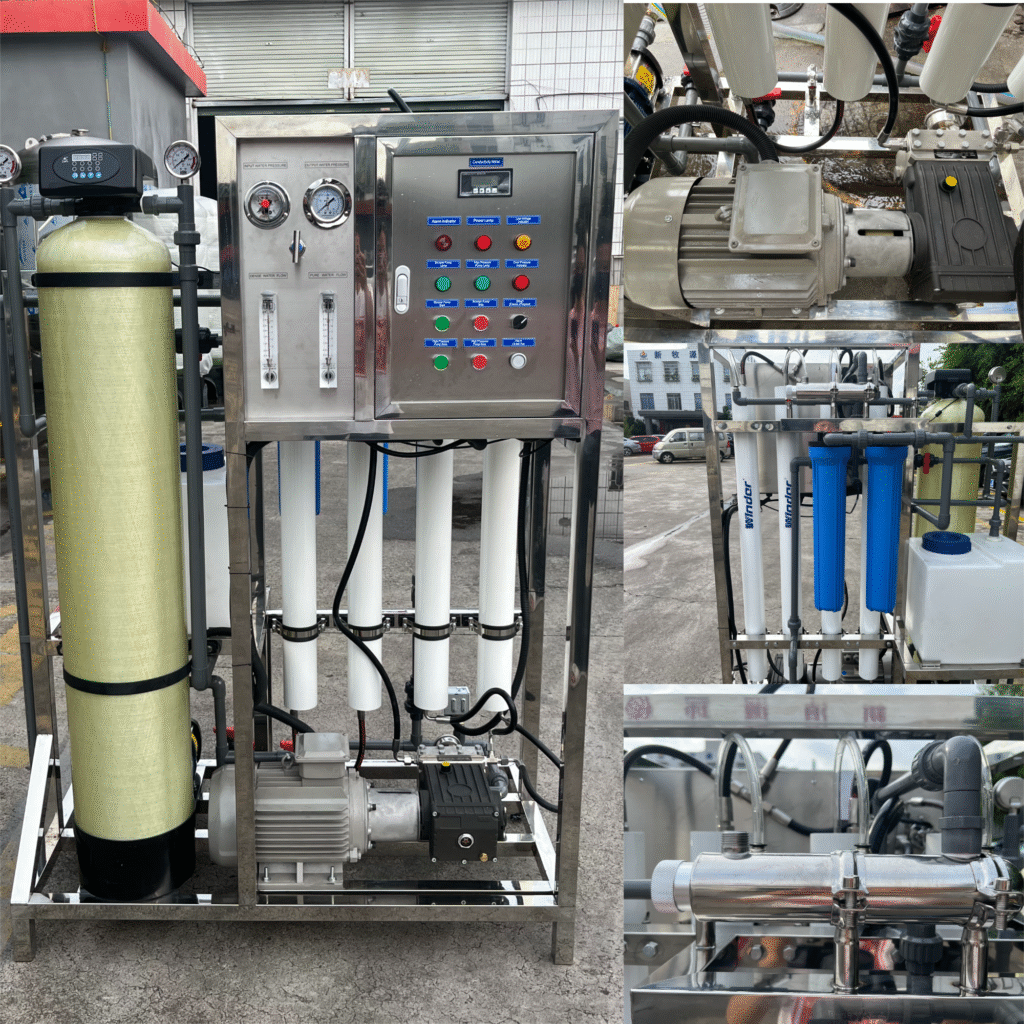
Atualmente, a maioria das máquinas de dessalinização por osmose inversa no mercado é um sistema modular, composto principalmente por um sistema de pré-tratamento, um corpo de bomba, módulos de membrana e um sistema de pós-tratamento.
① Sistema de pré-processamento:
- Função: Remove sólidos suspensos, colóides, microorganismos, matéria orgânica e outras impurezas da água do mar, prevenindo a contaminação, entupimento ou danos subsequentes da membrana RO.
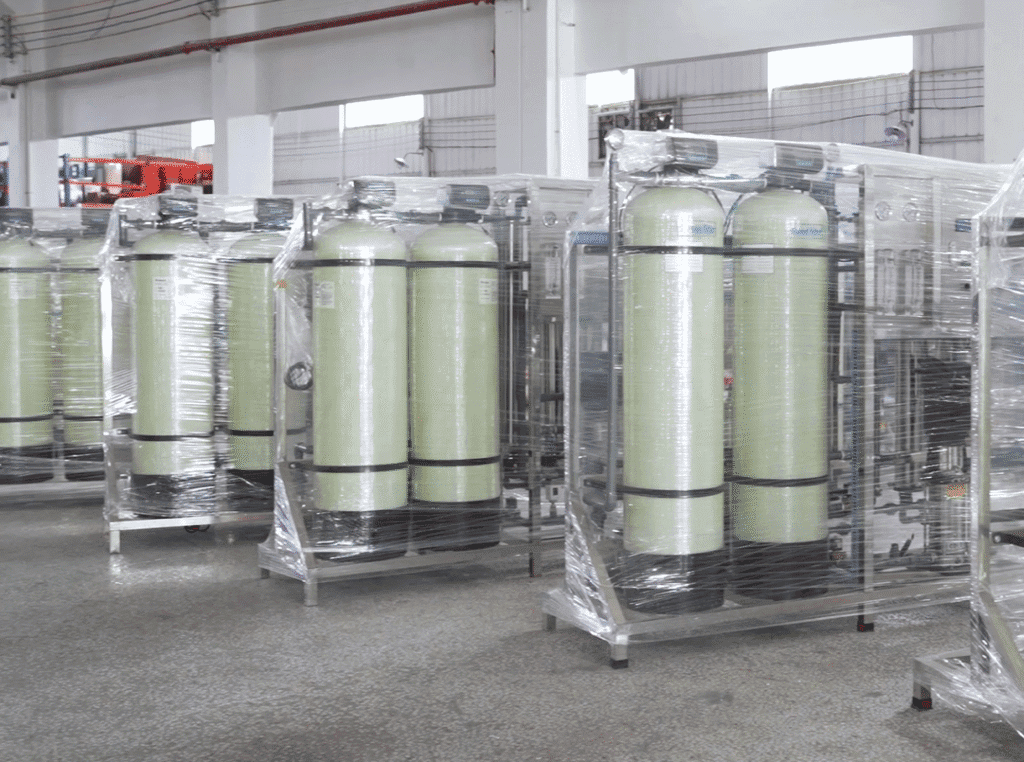
- Componentes principais: filtro de areia de quartzo (filtra partículas grandes de impurezas), filtro de carvão ativado (absorve matéria orgânica e odores), filtro de segurança (filtragem de precisão, tamanho dos poros geralmente 5μm, intercepta impurezas finas), bactericida (como hipoclorito de sódio) e dispositivo de adição de inibidor de incrustações (impede que os iões de cálcio e magnésio formem incrustações).
② Bomba de alta pressão:
- Função: Pressurizar a água pré-tratada para que a tecnologia de osmose inversa possa ser efectuada.
- Requisitos do equipamento: A bomba deve ser resistente a altas temperaturas e à corrosão, e possuir uma elevada estabilidade de pressão. É necessário construí-la em aço inoxidável e recomendamos corpos de bomba de marcas conceituadas como CNP (China), Grundfos (Dinamarca) e KNKE (EUA) para garantir a qualidade.
Módulo de membrana ③RO:
- Função: A membrana RO retém as impurezas, os iões de sal e outras substâncias, permitindo dessalinizar a água do mar para água doce. A estrutura da membrana adopta um elemento de membrana enrolado em espiral, que consiste em várias camadas de membranas semipermeáveis, uma malha de guia de fluxo e uma malha espaçadora. Esta estrutura de membrana aumenta a área de superfície para a separação de substâncias.
- Caraterísticas da membrana: O tamanho dos poros é de apenas 0,1-1 nanómetros, permitindo apenas a passagem de moléculas de água. Tem uma taxa de rejeição de cloreto de sódio superior a 97% e pode também intercetar metais pesados, bactérias, vírus, etc.
④ Sistema de pós-processamento:
- Otimizar a qualidade da água: Embora a água de osmose inversa seja pura, carece de minerais e pode ter um valor de pH baixo, exigindo a adição de um dispositivo de mineralização e de um esterilizador ultravioleta/ozono. Isto melhora o sabor e mata os microorganismos residuais, garantindo que a qualidade da água cumpre as normas.
Como funciona uma máquina de dessalinização por osmose inversa?
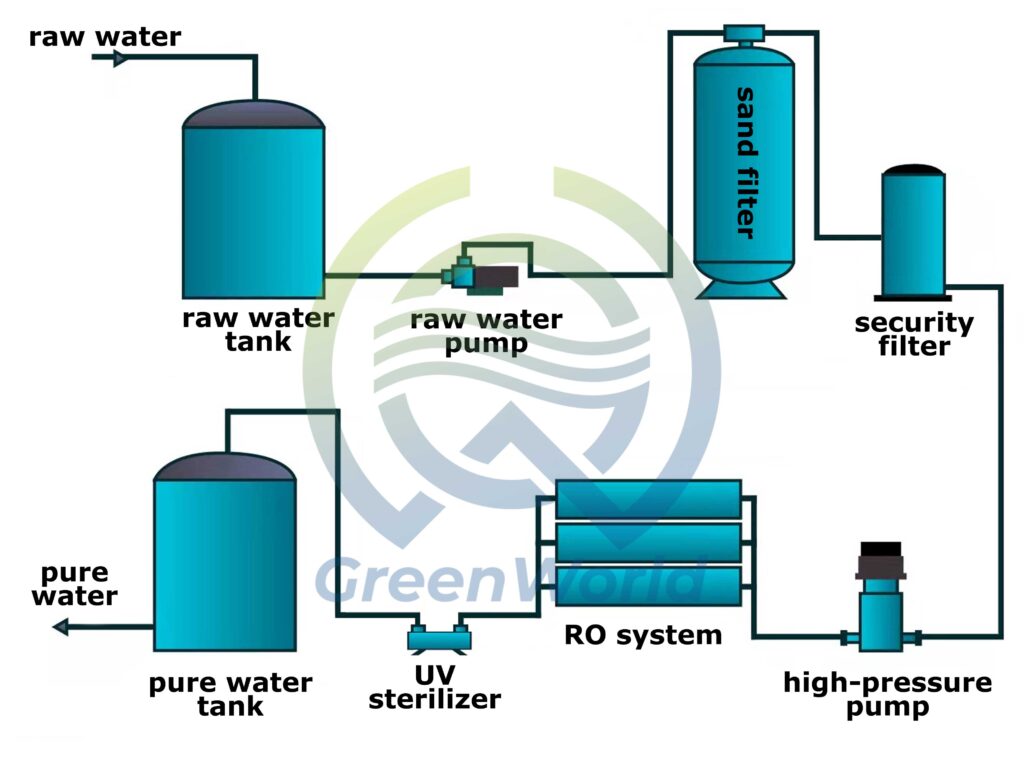
Todo o sistema de dessalinização RO pode ser dividido em quatro etapas principais para tratar a água bruta, transformando a água do mar em água doce.
Fase de pré-tratamento:
A água do mar entra primeiro no sistema de pré-tratamento para remover partículas grandes e matéria orgânica. Em seguida, o sistema adiciona bactericidas e inibidores de incrustações e, finalmente, o filtro de segurança efectua uma filtragem de precisão para obter o primeiro lote de água purificada.
Pressurização a alta pressão:
Uma bomba de alta pressão aspira a água purificada do primeiro lote e pressuriza-a a 10-80 MPa antes de a enviar para o módulo de membrana RO.
Separação por osmose inversa:
À medida que a água do mar a alta pressão flui através do módulo de membrana RO, as moléculas de água passam através da membrana de osmose inversa sob pressão, tornando-se “água doce”. A água retém iões de sal (sódio, cloreto), metais pesados, microorganismos, etc., formando uma “salmoura concentrada”.”
Sistema de pós-tratamento:
Nesta fase, é necessário ajustar o valor do pH, adicionar minerais e desinfetar. Finalmente, a água purificada torna-se água doce que cumpre as normas de consumo ou industriais.
Porque é que a dessalinização por osmose inversa se tornou a corrente principal?
Em comparação com as tecnologias tradicionais de dessalinização da água do mar, como a destilação, dessalinização por osmose inversa tem mais potencialidades e vantagens.
- Baixo consumo de energia: Com a ajuda da tecnologia de recuperação de energia, o consumo de energia por unidade de água produzida pelo sistema RO é atualmente apenas 1/3 a 1/2 do consumo do método de destilação. Podemos também optar pela tecnologia de dessalinização solar, que converte a energia luminosa em energia eléctrica através de painéis solares fotovoltaicos, accionando diretamente bombas de alta pressão, bombas de água no sistema de pré-tratamento e equipamento de desinfeção pós-tratamento, formando um “sistema de osmose inversa fotovoltaica (PV-RO)” integrado.
- Elevada pureza da água: A tecnologia RO pode reduzir a salinidade da água doce para menos de 500 mg/L e pode mesmo atingir níveis de água ultrapura.
- Pequena área ocupada: O módulo de membrana tem uma estrutura compacta, e um conjunto de equipamento de dessalinização RO com uma produção diária de 10.000 toneladas ocupa apenas cerca de 1/10 da área do método de destilação.
- Fácil de operar: Elevado grau de automatização, requerendo apenas um pequeno número de pessoal para a manutenção e uma forte estabilidade operacional.
Resumir
Por outras palavras, este tipo de equipamento utiliza a tecnologia de osmose inversa para forçar as moléculas de água do mar a passar através da membrana de osmose inversa na direção oposta para entrar no lado da água doce. A membrana retém impurezas como iões de sal, metais pesados e microrganismos, produzindo, em última análise, água doce que cumpre as normas.
Se precisar de um orçamento para este tipo de equipamento, não hesite em contactar-nos.