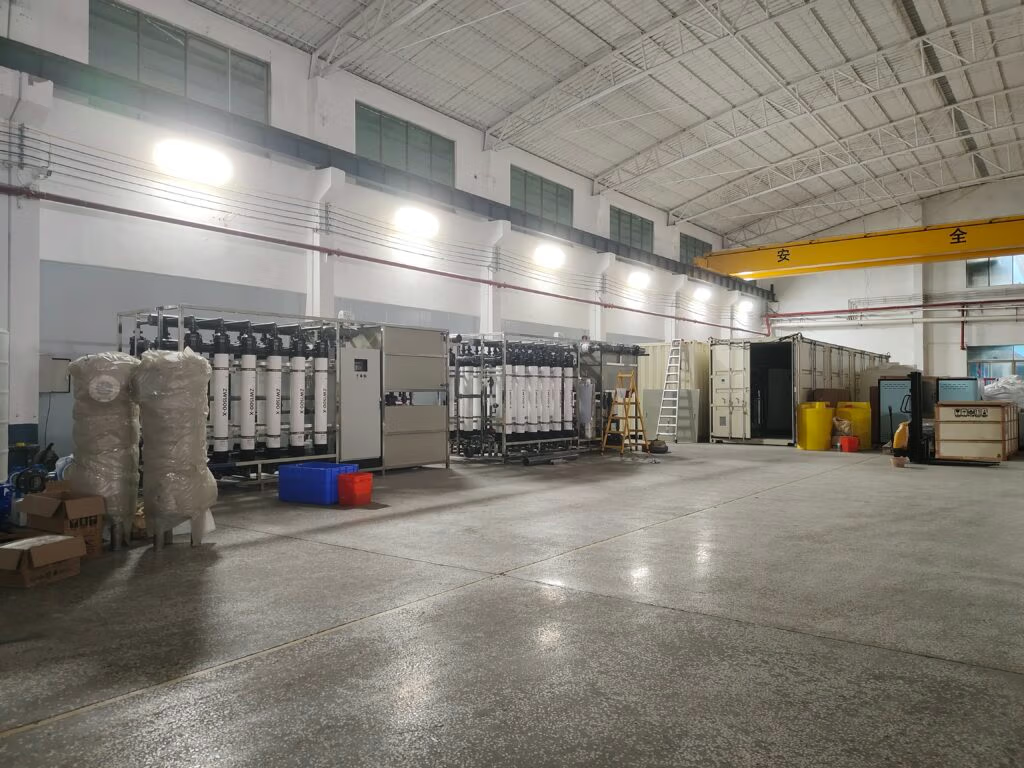
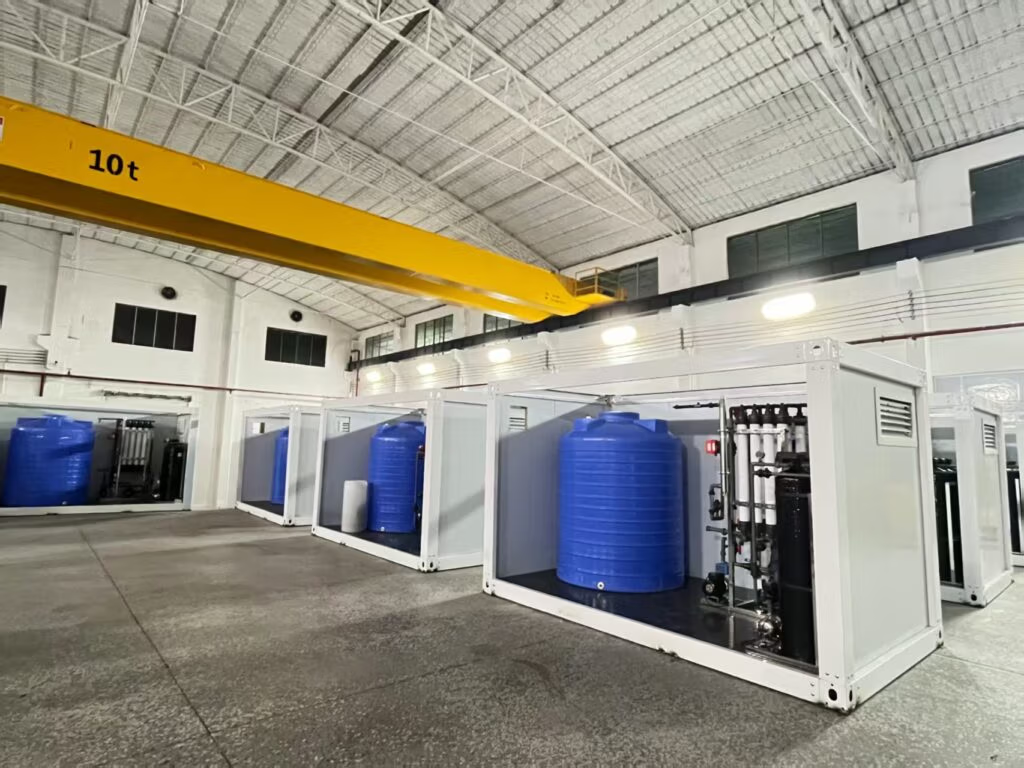
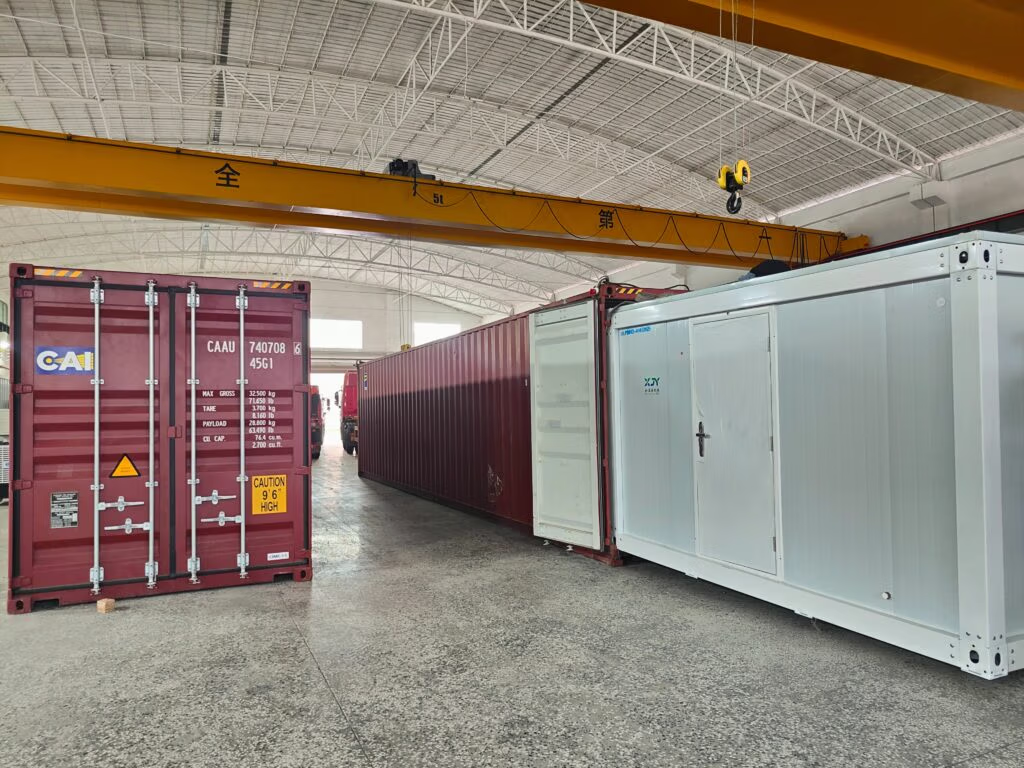
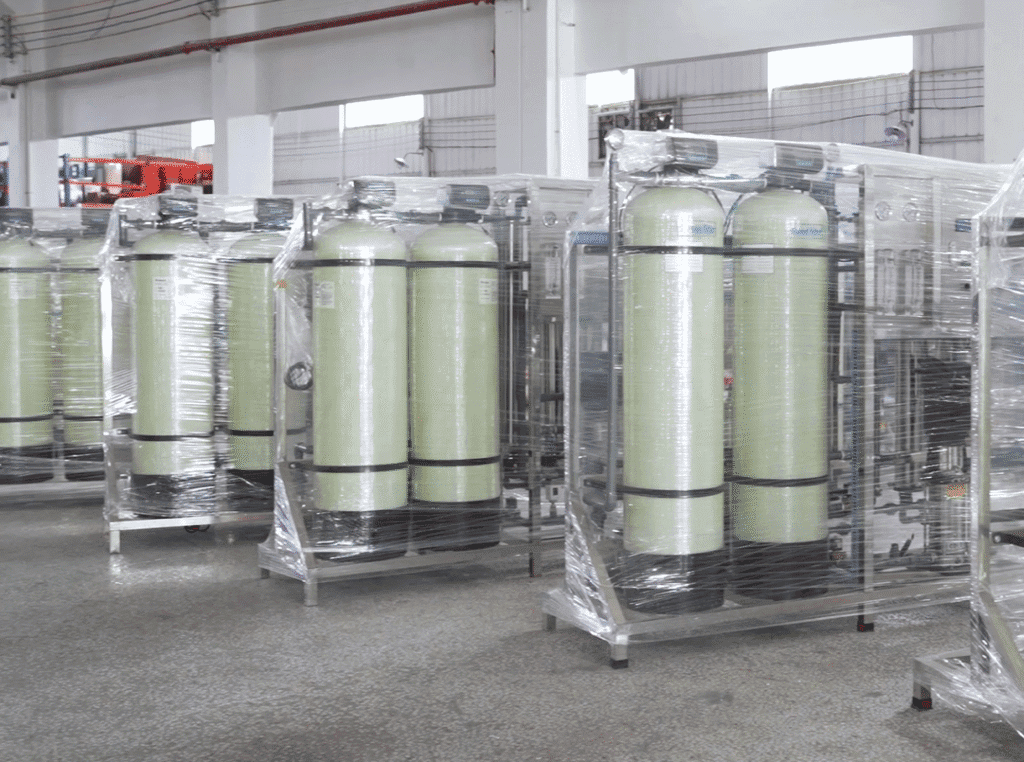
Reverse osmosis drinking water system has become a key water supply guarantee device in modern industrial areas due to their excellent impurity filtration capabilities and stable water quality output.
Precise filtration of reverse osmosis drinking water system
Reverse osmosis drinking water system use an external pressure difference as a power source to propel raw water through selectively permeable reverse osmosis membrane modules. During this process, impurities in the water, such as heavy metal ions (like lead, mercury, and chromium), soluble salts, microorganisms (bacteria, viruses, etc.), and organic pollutants, are retained by the membrane, ultimately producing clean water that meets industrial drinking water standards.
Compared to small-scale household RO systems, industrial-grade systems need to address more challenges. For example, they face specific requirements such as complex raw water quality, large water consumption, and the need for continuous operation.
Compared to traditional ion exchange and activated carbon filtration processes, the innovation of RO systems lies in the industrialization of membrane technology. It employs a multi-stage membrane module design, coupled with high-precision pretreatment units (including quartz sand filtration, precision filtration, and antiscalant dosing systems). This not only addresses the issue of large fluctuations in the quality of industrial raw water (such as groundwater and municipal reclaimed water) but also ensures the stable operation of the subsequent reverse osmosis membrane, extending the lifespan of the membrane modules. This is the core difference between industrial systems and household equipment in terms of design.

RO drinking water system is more stable and has lower costs
Highly efficient and stable operation, coupled with controllable operating costs, are the two most significant advantages of industrial reverse osmosis systems.
In large manufacturing parks, daily drinking water demand often reaches thousands of tons. RO systems can provide uninterrupted water supply for 20 hours a day, maintaining a stable water production rate of over 75%, far exceeding the 50% efficiency of traditional processes.
Taking a chemical industrial park as an example, the introduction of an RO system not only reduced the total dissolved solids (TDS) content in drinking water from 800 mg/L in the raw water to below 50 mg/L, but also increased wastewater utilization to 90% through a concentrate recovery device, reducing water waste by more than 100,000 tons annually.
How can we make the system run more stably?
However, the stable operation of an industrial RO system relies on scientific operation and maintenance management. We need to regularly clean the membrane modules, backwash the pretreatment unit, and monitor pressure parameters in real time. These are crucial measures to prevent system blockage and reduce the failure rate.
Reverse osmosis drinking water system covering the entire industry
The application of RO drinking water system has achieved full industry coverage.
- In food processing enterprises, RO permeable water that meets hygiene standards is a crucial pre-processing guarantee, effectively reducing the risk of food contamination.
- In remote mining areas, oil fields, and other special locations, RO systems can directly treat complex groundwater, solving the drinking water problems of field workers.
- In the metallurgical industry, raw water around the plant is often affected by production wastewater. The strong anti-pollution capabilities of RO systems can effectively purify water quality, providing a safe water source for workshop workers.
Energy-saving and intelligent reverse osmosis water system
In the future, reverse osmosis drinking water system will develop towards greater energy efficiency and intelligence. The research and application of new low-energy membrane materials will further reduce the system’s operating energy consumption. Deep integration with AI algorithms will enable precise matching between water quality requirements and system operation. As a “lifeline” protecting human health in industrial production, RO systems will undoubtedly play an increasingly important role in the construction of green industries and smart factories.