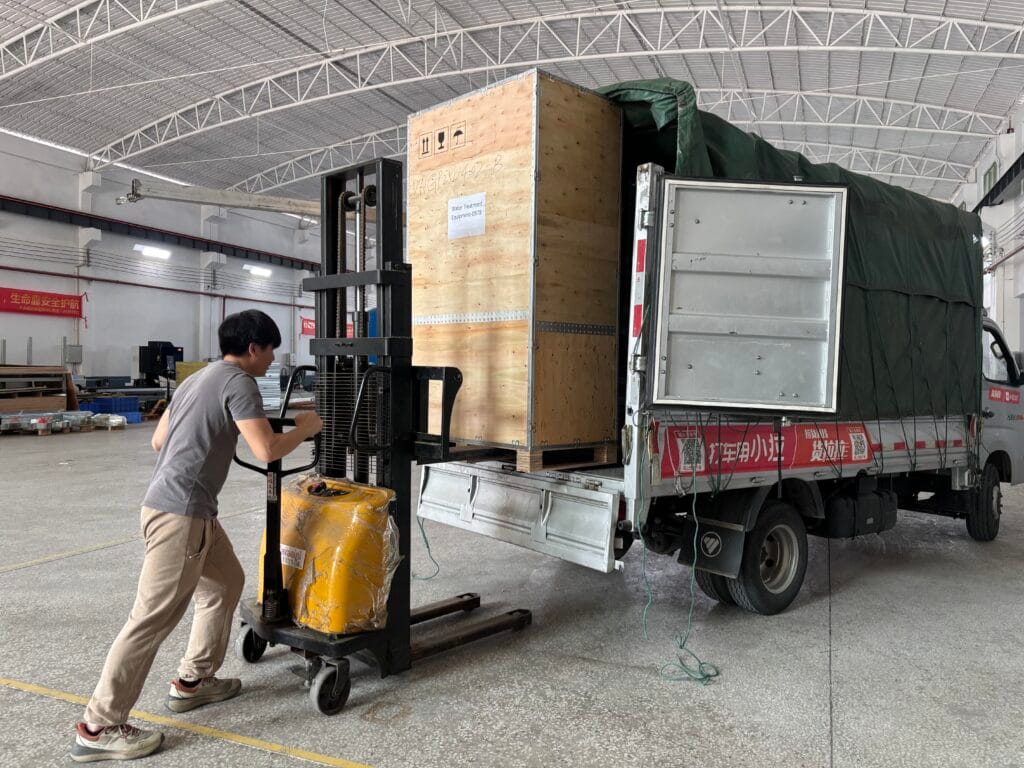
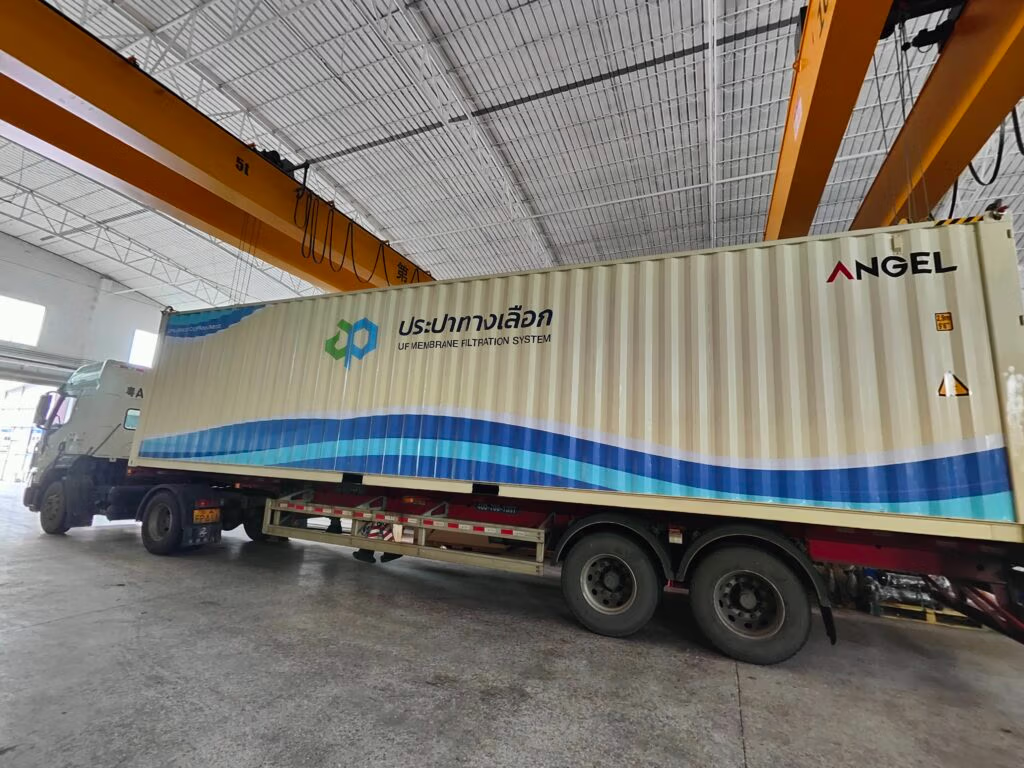
1. Background of the reverse osmosis system filter project
This reverse osmosis system filter project is located in Dar es Salaam Province. The water source is a newly built groundwater well, a vital source for the region’s domestic water supply. Due to geological conditions, the local groundwater generally suffers from high calcium and magnesium ion content and excessive hardness. Although the basic indicators meet Tanzania’s drinking water standard TZS 789:2018, the hard water characteristics pose numerous risks to residents’ daily water use and the operation of the pipeline network.
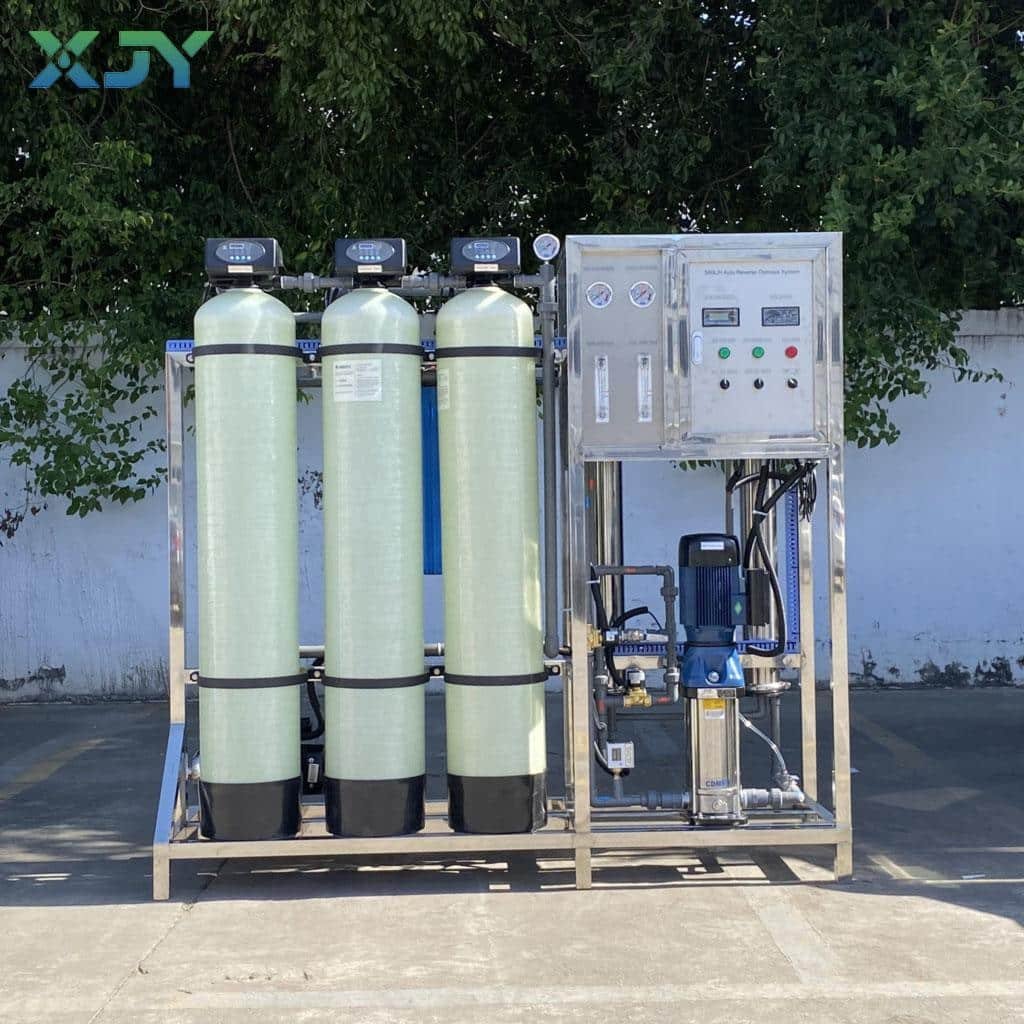
To address the issues of high groundwater hardness and insufficient water quality stability, this project will introduce a 500 liters per hour industrial reverse osmosis system filter to deeply purify the raw water, achieving an integrated upgrade of water softening, desalination, and sterilization. This will create a safe, stable, and high-quality centralized domestic water supply system, providing local residents with drinking water that meets international standards.
2. Raw water quality analysis
Because the raw groundwater is quite complex, we had our client conduct water quality testing. The Dodoma Water Quality Laboratory in Tanzania conducted comprehensive testing on water samples from the newly constructed groundwater well. The test results clearly identified the characteristics of the raw water and the key treatment areas:
1. Physicochemical Indicators: The raw water has a pH of 6.84, a temperature of 25.3℃, a conductivity of 609.0 μS/cm, a total dissolved solids of 335.0 mg/L, a turbidity of 23.7 NTU, and a color of 8 TCU. All indicators are within the Tanzanian drinking water standards. The total hardness is 215 mg/L (calculated as CaCO₃), classifying it as typical hard water. The calcium and magnesium ion contents are 56.0 mg/L and 18.24 mg/L, respectively, which are the core factors contributing to the water’s hardness.
2. Microbiological Indicators: Total coliforms, fecal coliforms, and Escherichia coli were not detected, indicating that microbiological safety meets standards and there is no risk of pathogenic bacterial contamination.
3. Other Indicators: The contents of heavy metals such as sulfate, nitrate, fluoride, iron, manganese, and copper, as well as inorganic salts, are far below the standard limits, and there are no issues with excessive levels of toxic or harmful substances.
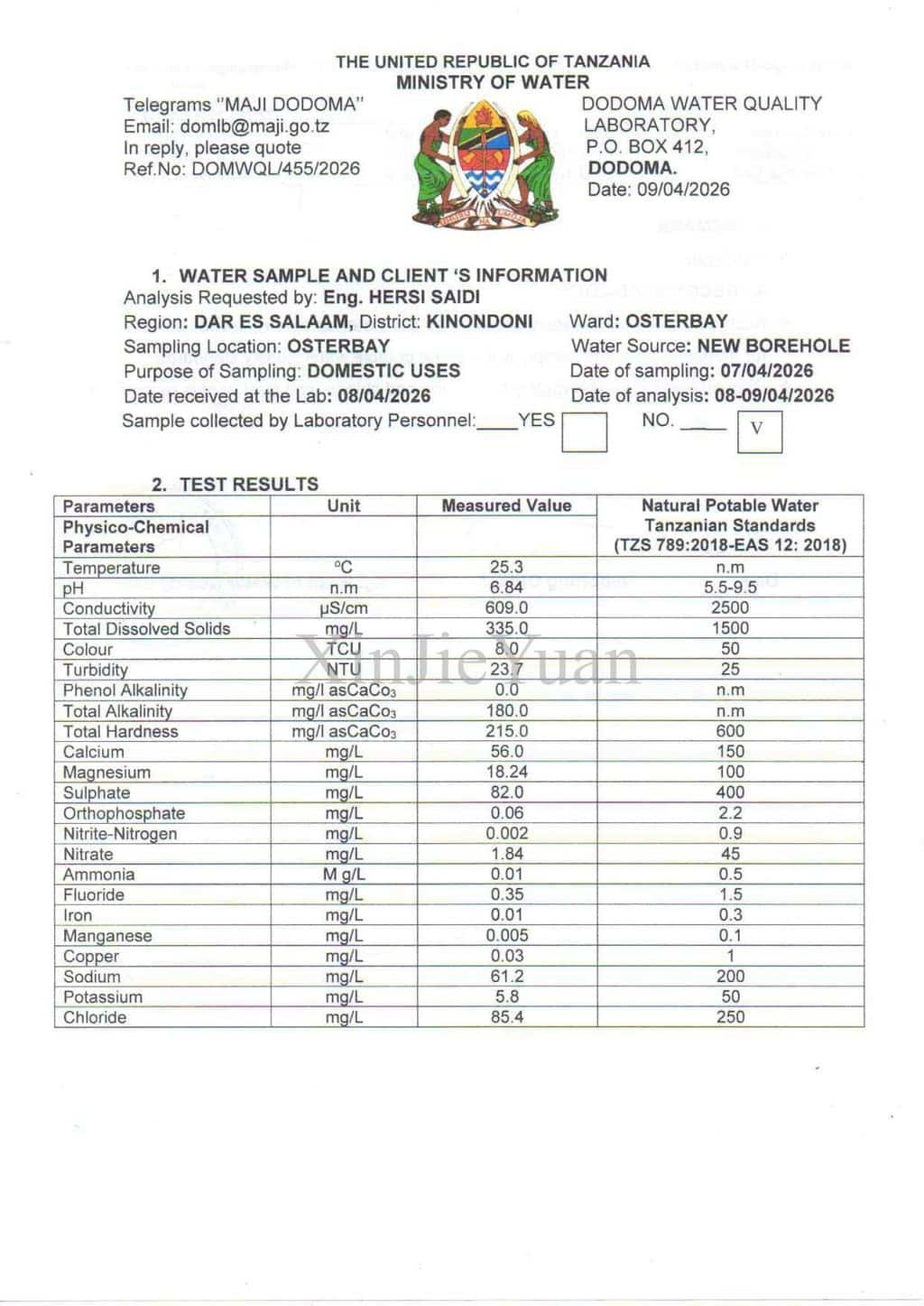
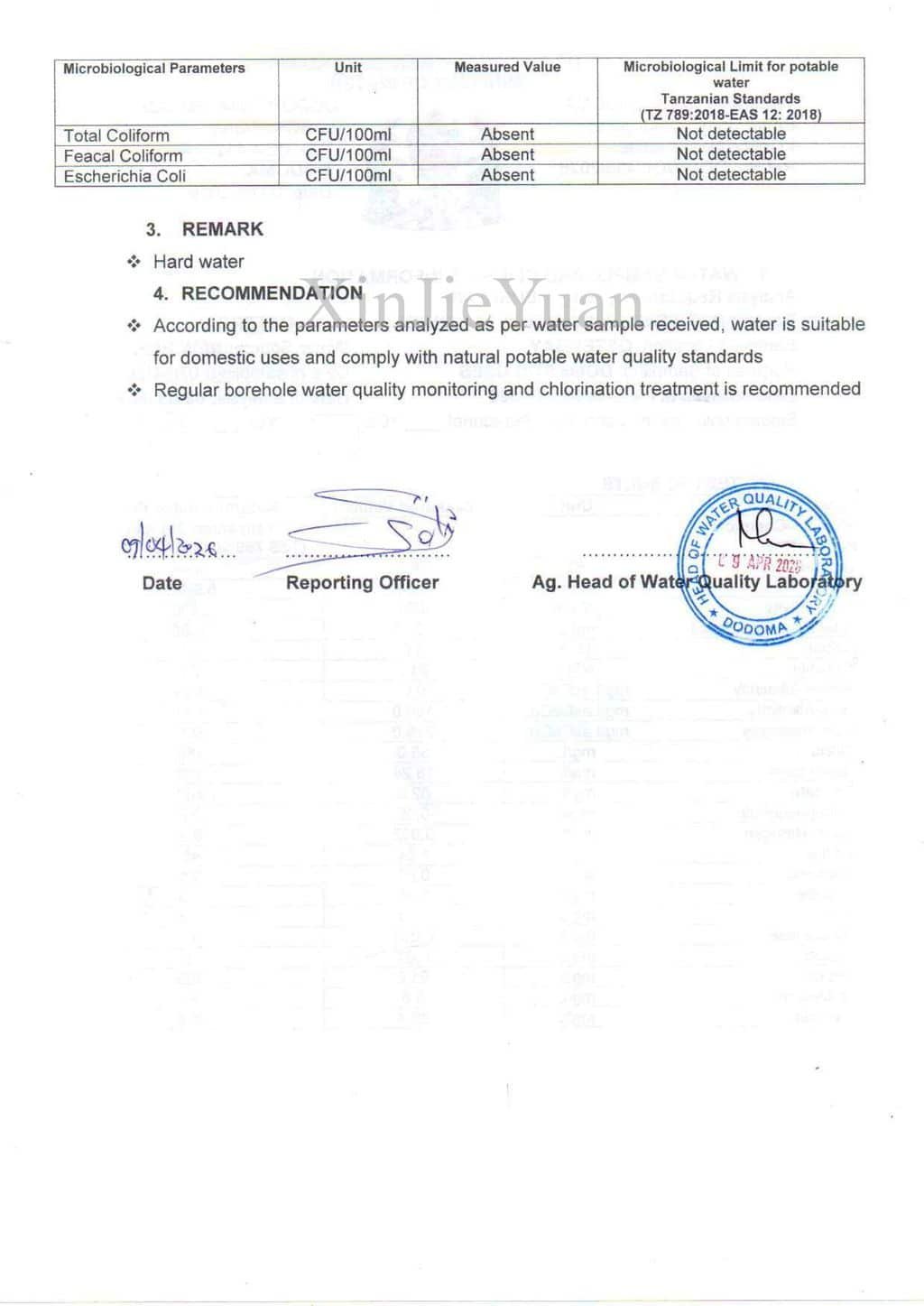
Based on the test report and actual on-site water usage, the core problem with the raw water was its high hardness. Hard water easily causes scaling in water supply networks, water heaters, washing machines, and other equipment, shortening their lifespan and increasing maintenance costs. Additionally, hard water results in poor soap lathering, affecting cleaning effectiveness and causing a slightly astringent taste, thus reducing the user experience. Furthermore, the raw water turbidity was close to the upper limit of the standard, requiring further optimization to improve water clarity and stability. Therefore, the project focused on softening and reducing hardness, deep purification, and stable water supply as its core objectives, selecting a 500L/h reverse osmosis system filter as the core treatment process.
3.500L/h reverse osmosis system filter process design
Reverse osmosis technology is a mature and efficient membrane separation technology in the field of industrial water treatment. Its principle is to separate water molecules from dissolved salts, colloids, microorganisms, heavy metals, and other substances through a semi-permeable membrane under pressure. Its desalination rate and hardness removal efficiency are relatively stable, making it suitable for small to medium-sized water supply scenarios.
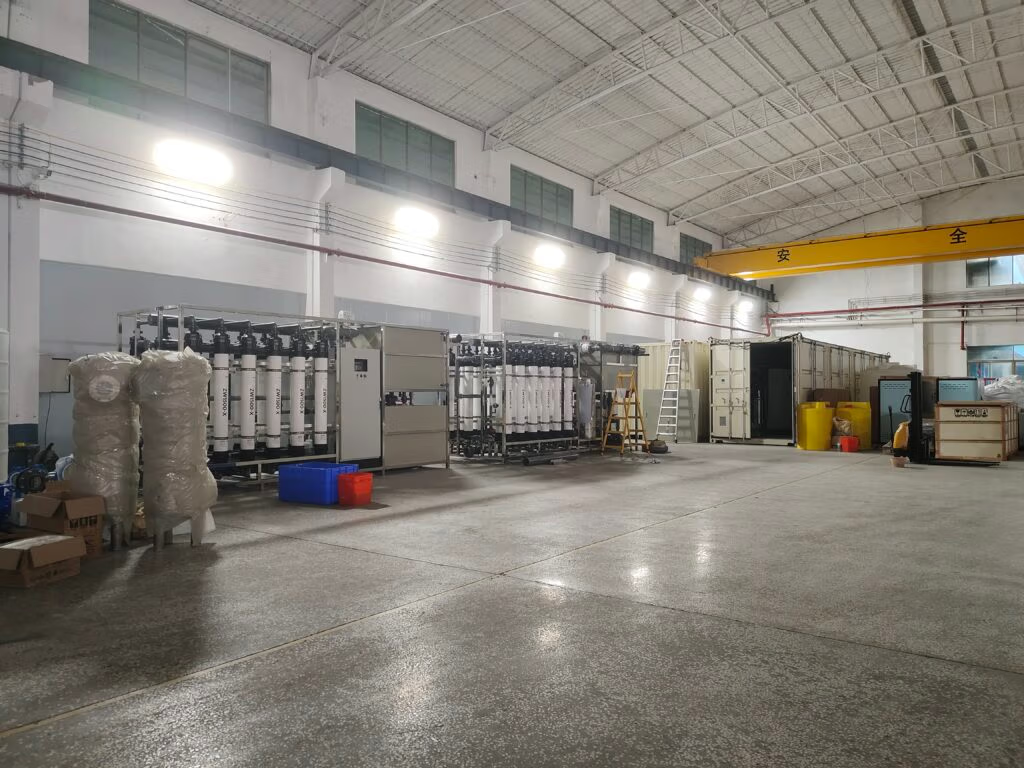
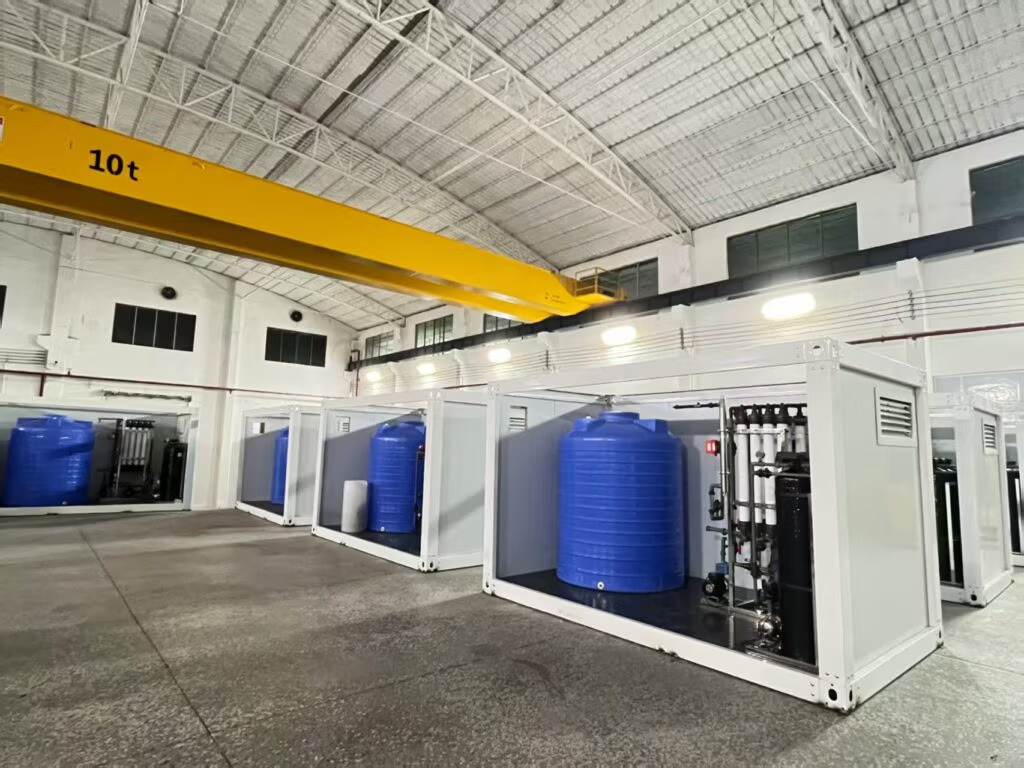
This project’s 500 liters per hour reverse osmosis system filter adopts a modular integrated design, following a complete process of “pretreatment + reverse osmosis unit + post-treatment + automatic control,” balancing treatment effect, operational stability, and convenient localized operation and maintenance. The specific configuration is as follows:
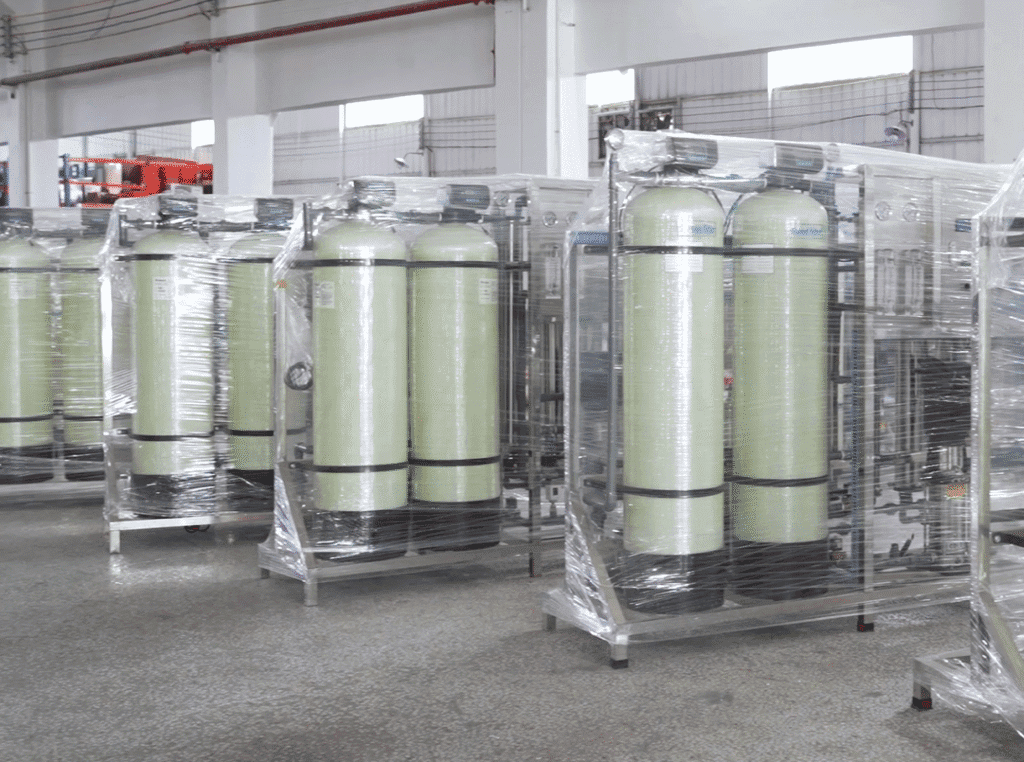
- Pretreatment Unit: Composed of a multi-media filter, activated carbon filter, and 5μm precision security filter. The multi-media filter removes suspended solids, silt, colloids, and other large particulate impurities from the raw water, reducing turbidity to below 1 NTU. The activated carbon filter adsorbs odors, residual chlorine, and some organic matter, improving the taste of the water. The security filter intercepts fine particles, preventing scratches and clogging of the reverse osmosis membrane elements, providing comprehensive protection for the core equipment.
- Reverse Osmosis Main Unit: Equipped with an energy-saving high-pressure pump, a fouling-resistant brackish water reverse osmosis membrane, and a pressure protection device. Designed for a desalination rate of ≥97% and a calcium and magnesium ion removal rate of over 95%. The system has a rated production capacity of 500 L/h and a daily production capacity of 12 tons, sufficient to meet the centralized domestic water needs of residents in the Ostaibe area. Designed for the high-temperature environment of Africa, the membrane elements are selected for their high temperature resistance and fouling resistance, adapting to local climate conditions and extending membrane lifespan.
- Post-treatment Unit: Equipped with an ultraviolet sterilizer and water quality conditioning device to further kill residual microorganisms in the water, ensuring the safety of the effluent microorganisms. Simultaneously, the pH value of the output water is finely adjusted to improve the taste and ensure that the output water meets the standards for high-quality drinking water.
- Automatic Control Unit: Utilizing an automatic control system, it features automatic flushing, high/low pressure protection, water shortage protection, fault alarm, and water production metering functions. No dedicated personnel are required, reducing the difficulty of manual operation.

4. Reverse osmosis system filter performance
After the 500L/h reverse osmosis system filter was put into operation, we collaborated with the Dodoma Water Quality Laboratory to conduct continuous 30-day monitoring of the produced water. The results showed that the system’s treatment effect was significant, and the water quality fully met and exceeded the Tanzanian national standards.
1. Thoroughly Improved Hardness: The total hardness of the effluent is stabilized at 25-35 mg/L, reducing it to soft water standards, completely eliminating the risk of scaling, and significantly extending the maintenance cycle of pipe networks and water-using equipment.
2. Optimized Physicochemical Indicators: Conductivity is reduced to 80-120 μS/cm, total dissolved solids are below 100 mg/L, turbidity is <0.5 NTU, color is <1 TCU, resulting in clear, transparent water with a sweet taste.
3. Guaranteed Microbiological Safety: Total coliforms, fecal coliforms, and Escherichia coli are undetectable in the effluent, and microbiological indicators meet international drinking water hygiene standards.
4. Stable and Efficient Operation: The system achieves a recovery rate of 65%-70%, with low energy consumption and low noise. It can operate continuously without failure even under local power fluctuations and high-temperature environments, and its level of automation meets on-site usage requirements.
In practical applications, customer feedback indicates a significantly improved water experience, with no hard water drawbacks observed in washing, cooking, and drinking. The scaling problem in community water supply networks has been eradicated, and RO equipment maintenance costs have been reduced by over 60%, fully validating the industrial application value of the 500L/h reverse osmosis system filter in hard water and groundwater purification.

5. Summary
This project successfully purified and upgraded Tanzania’s hard groundwater by applying a 500L/h industrial reverse osmosis system filter. The produced water is safe, stable, and of high quality, fully meeting the needs of residential water use, and ensuring the long-term stable operation of the water supply system.
If you have any groundwater treatment questions, please feel free to contact us for solutions.