Surrounded by vast oceans, these islands are plagued by a severe shortage of freshwater resources. Unstable rainfall, limited water storage capacity, and ecological fragility seriously hinder the improvement of local livelihoods, the development of tourism, and industrial upgrading.
Technological innovation and large-scale application of island desalination machine have provided a stable and sustainable freshwater supply solution, becoming a key lever to break the predicament of ‘living by the sea but lacking drinking water.’
What are the core technologies of island desalination machine?
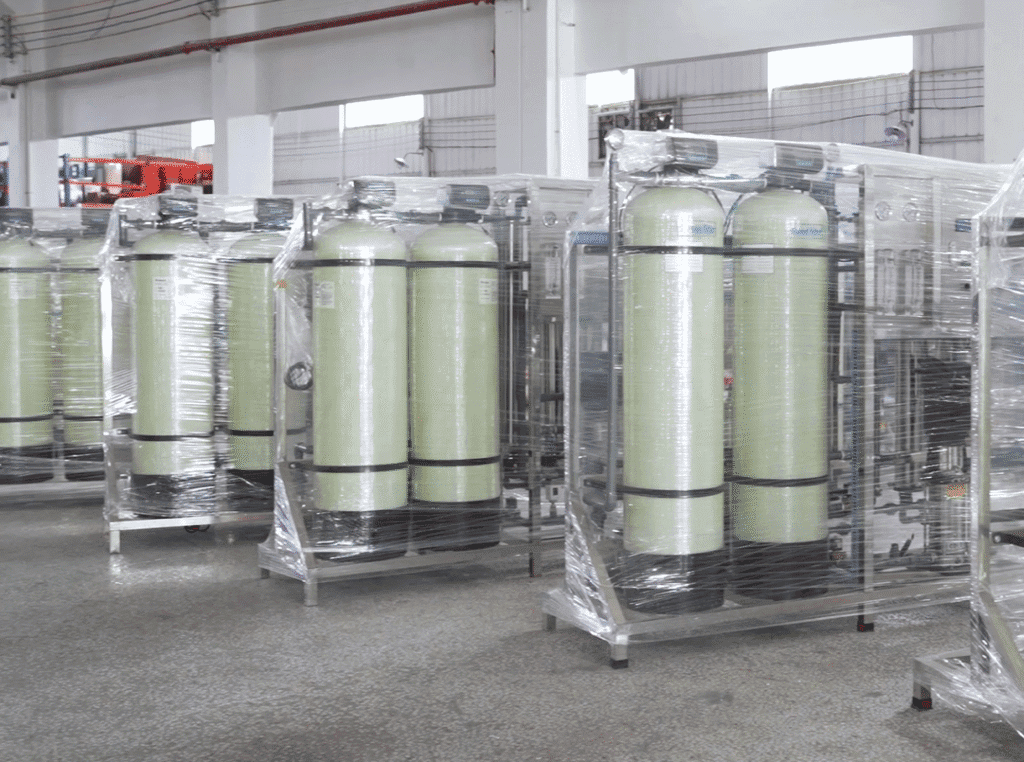
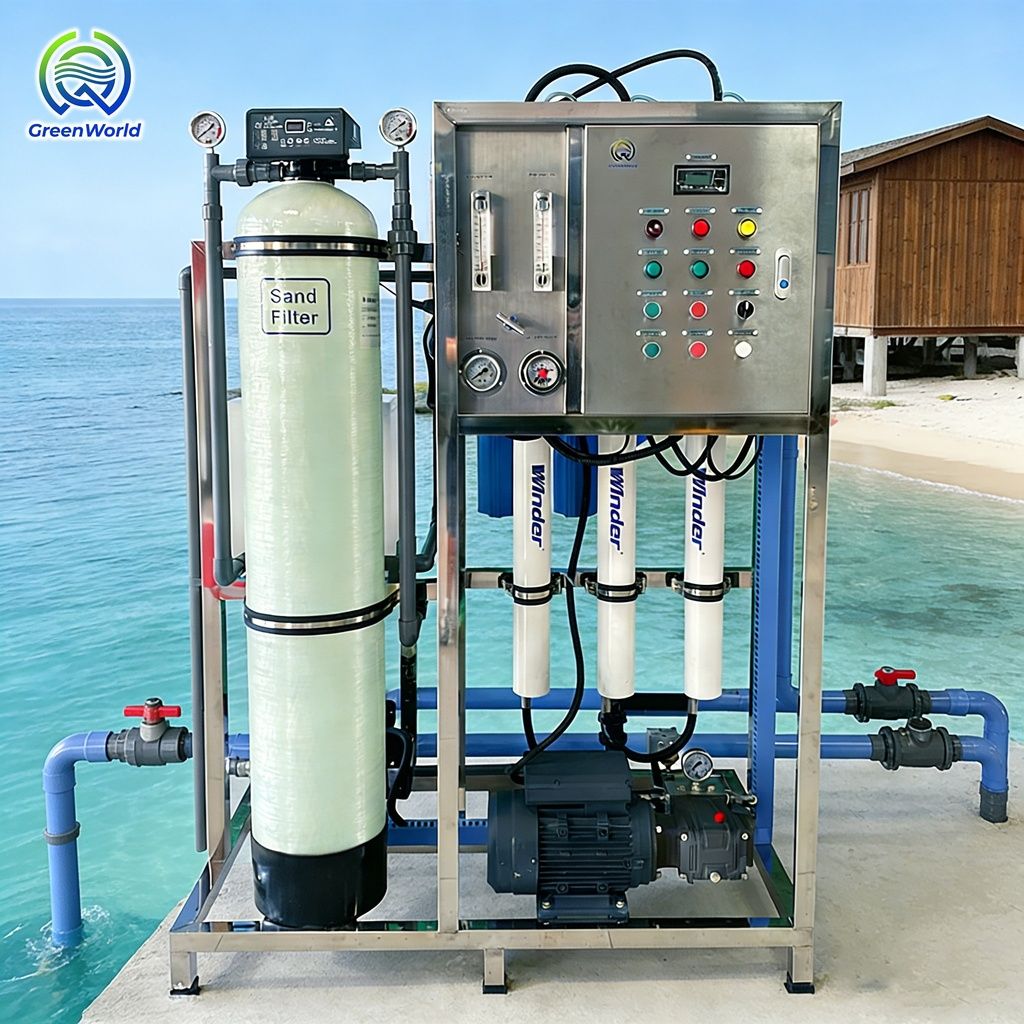
Currently, island desalination machine suitable for island environments primarily utilizes two major technological approaches: membrane-based and thermal methods. Among these, reverse osmosis membrane technology, with its advantages of low energy consumption and wide adaptability, has become the mainstream choice for islands.
The equipment uses a high-pressure pump to pressurize seawater to 5.5 to 7.5 MPa, forcing water molecules to permeate through a reverse osmosis membrane with pore sizes of only 0.1 to 1 nanometer. This efficiently intercepts salt ions, microorganisms, and other impurities, thus, achieving a stable desalination rate of over 99.5%, and producing water that fully meets international drinking water and industrial water standards.
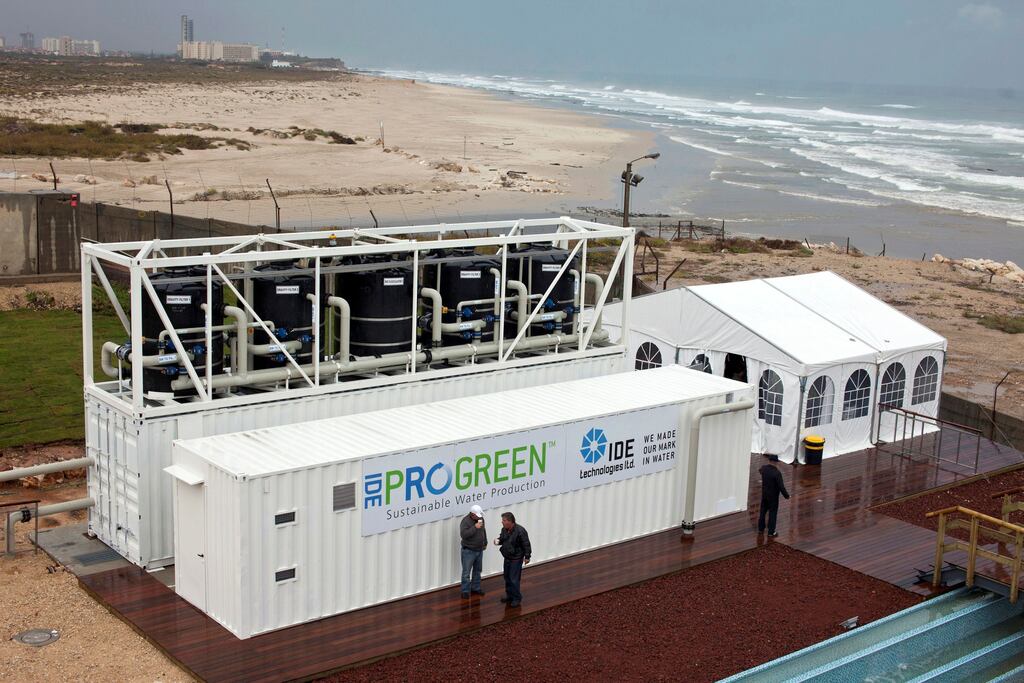
Addressing the common problem of insufficient energy supply on overseas islands, the equipment can be equipped with a high-efficiency energy recovery device to reuse the high-pressure energy contained in the concentrate. For example, similar equipment from Israel’s IDE company can control energy consumption to within 3.5 kWh per ton of water, significantly reducing operating costs.
What is the development trend of desalination machine?
To adapt to the diverse needs of island environments, reverse osmosis desalination machine has undergone continuous iteration and optimization, resulting in targeted technological upgrades.
For islands with abundant sunshine but weak power grids, the industry generally adopts a combined power supply model of “reverse osmosis + photovoltaic/wind power.” The integrated system jointly developed by Israel’s IDE company and photovoltaic enterprises can balance the instability of renewable energy through energy storage modules, ensuring continuous 24/7 operation of the desalination equipment. In applications around the Red Sea, it has achieved an energy self-sufficiency rate of over 70%.
For small islands with extremely limited space, mini reverse osmosis equipment has emerged. The portable skid-mounted unit launched by Germany’s Wilo Group requires only 10 square meters of installation space, producing up to 50 tons of fresh water per day. Enterprises equip it with an intelligent water quality monitoring module, enabling it to automatically adapt to different seawater salinity levels and widely applying it to coral reefs in the South Pacific.
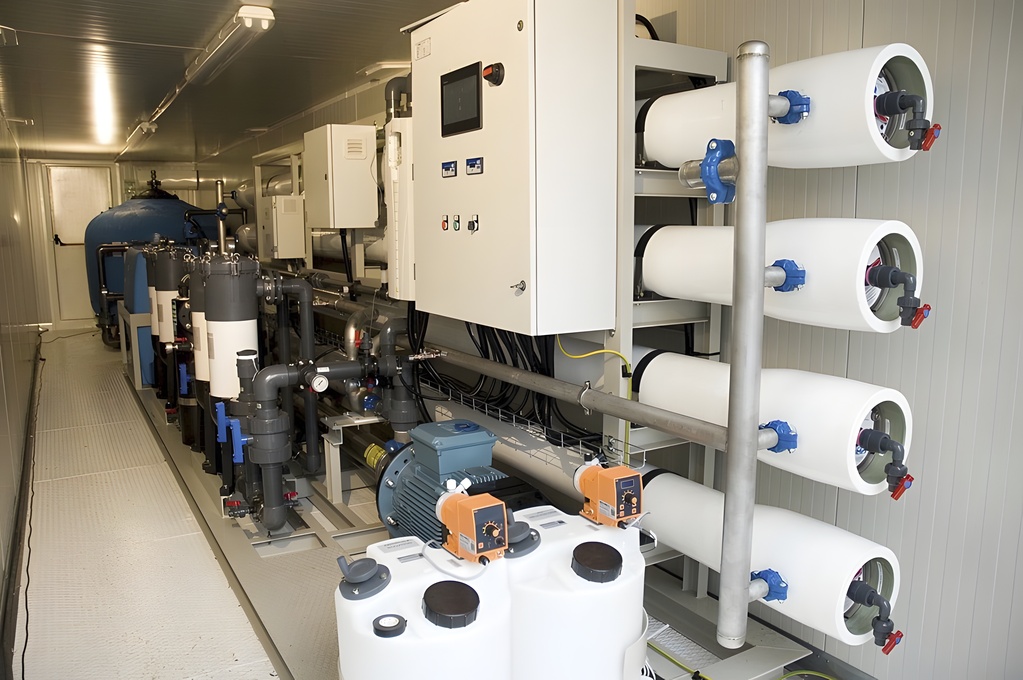
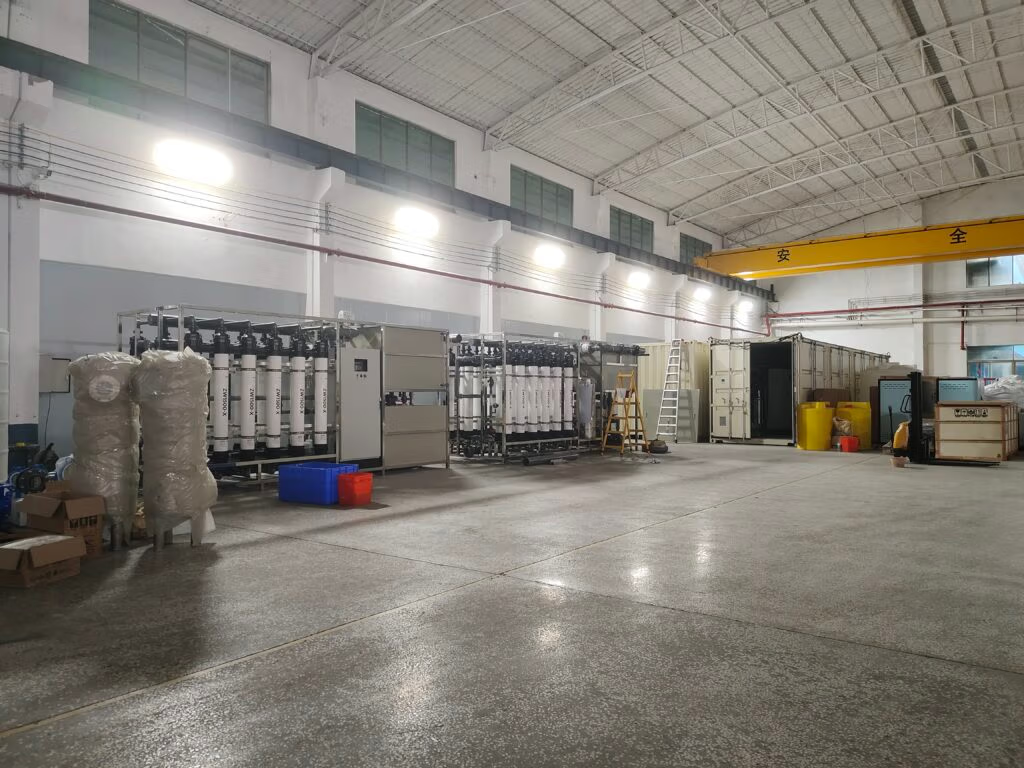
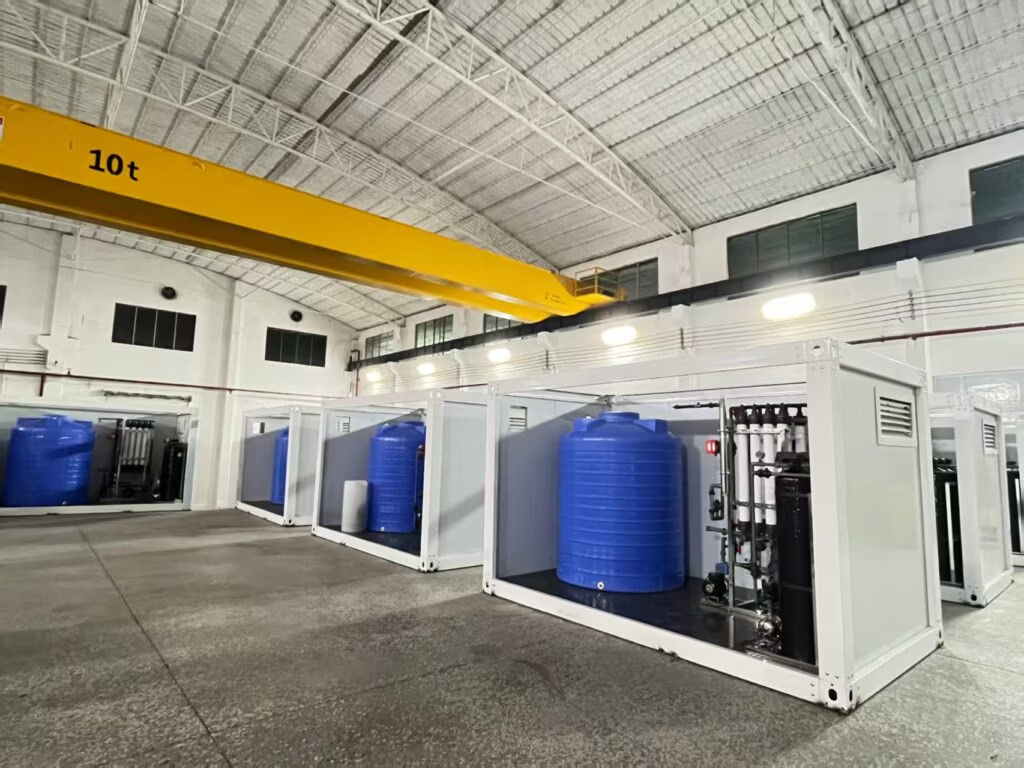
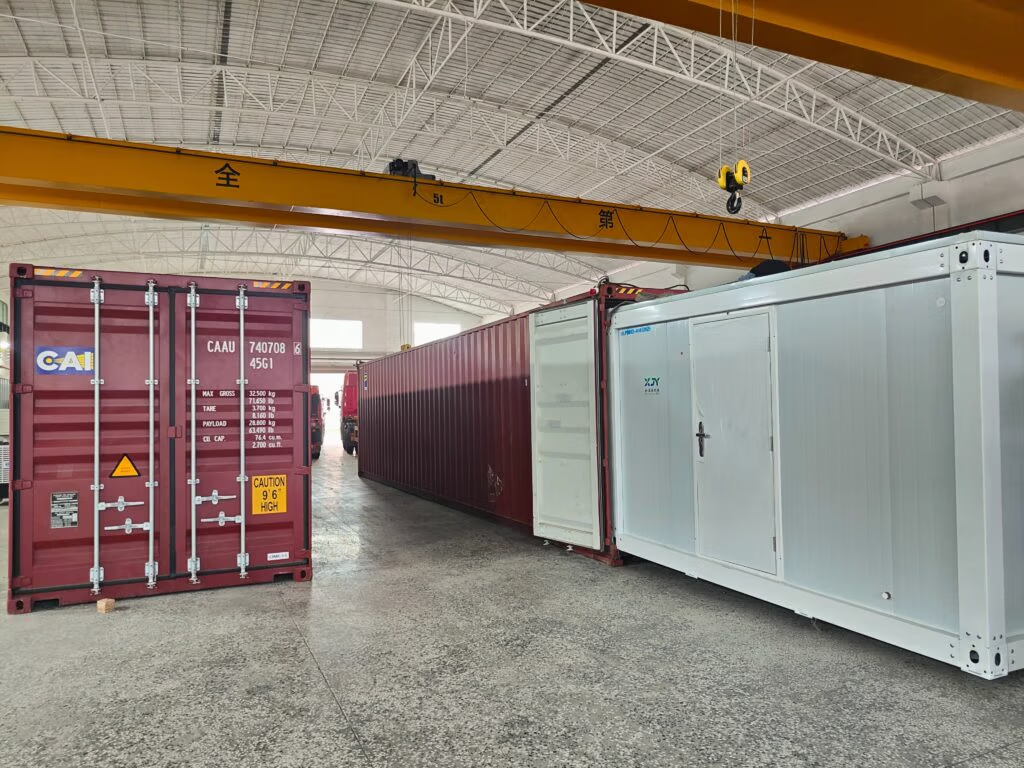
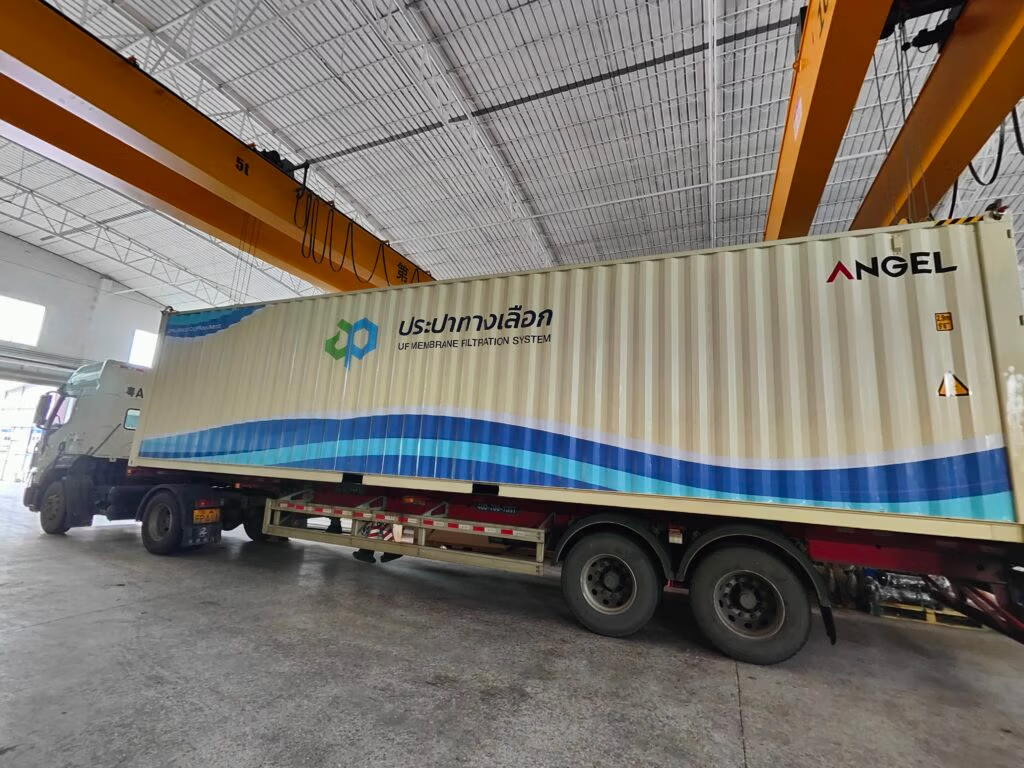
Modularization and customization have become core trends. France’s SLCE containerized skid-mounted equipment integrates a complete water treatment system. 20/40-foot containers can carry freshwater equipment with a daily production capacity of 72-1000 tons, offering compact size and convenient transportation and installation.
Where are island desalination machine actually used?
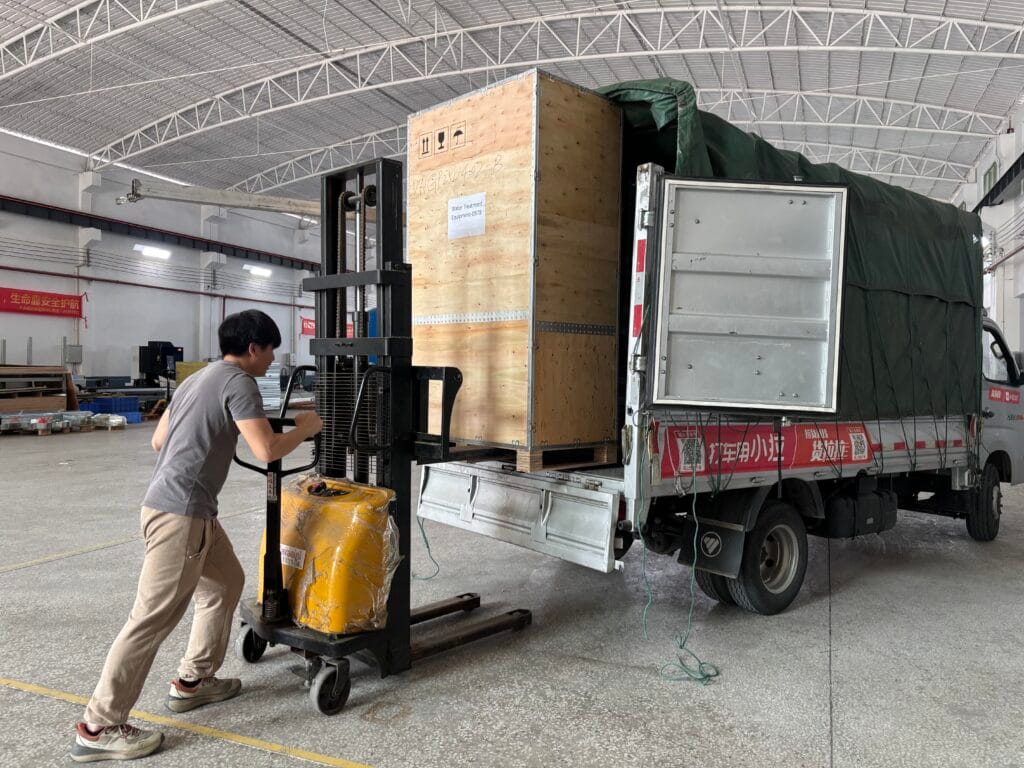
In practical applications, enterprises have deployed our island desalination equipment in numerous regions worldwide.
- enterprises deployed the desalination system on Kashidu Island in the Maldives, powering it with new energy and equipping it with a 100-kilowatt wind turbine and photovoltaic equipment.The daily freshwater production can meet the needs of more than 1,900 residents, completely ending the local reliance on rainwater harvesting.
- Norway plans to put into operation the world’s first commercial seabed desalination plant, “Flocean One,” which uses the natural water pressure of the deep sea to drive the reverse osmosis process. Initially, it will produce 1,000 cubic meters of fresh water per day, which can meet the water needs of 37,500 people. Its energy consumption is 30% to 50% lower than that of land-based equipment.
- The Ashkelon reverse osmosis desalination plant in Israel and the Taweelah A1 low-temperature multi-effect desalination plant in the UAE have provided large-scale freshwater supplies to the Mediterranean Sea, the islands around the Persian Gulf, and coastal areas, respectively.
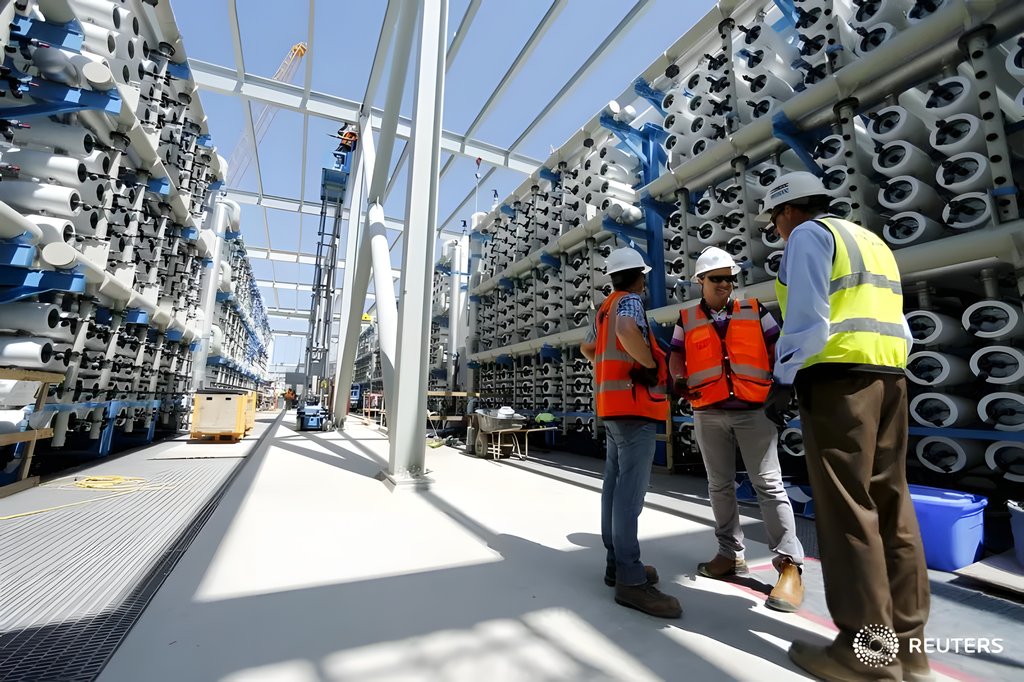
Island desalination machine has not only broken the shackles of water scarcity on islands, but also injected lasting momentum into the sustainable development of island economies. From daily water supply to remote Pacific islands, to tourism infrastructure on Mediterranean islands, and industrial water supply to Middle Eastern islands, this type of equipment has become a core component of overseas island development, helping various regions achieve a virtuous cycle of ‘using seawater to supplement freshwater.’