In long-distance ocean voyages, freshwater reserves are always a critical factor limiting sailing range, crew living conditions, and the normal operation of equipment. Traditional ships rely on port calls for freshwater replenishment, which not only increases operating costs but also restricts route planning and sailing duration.
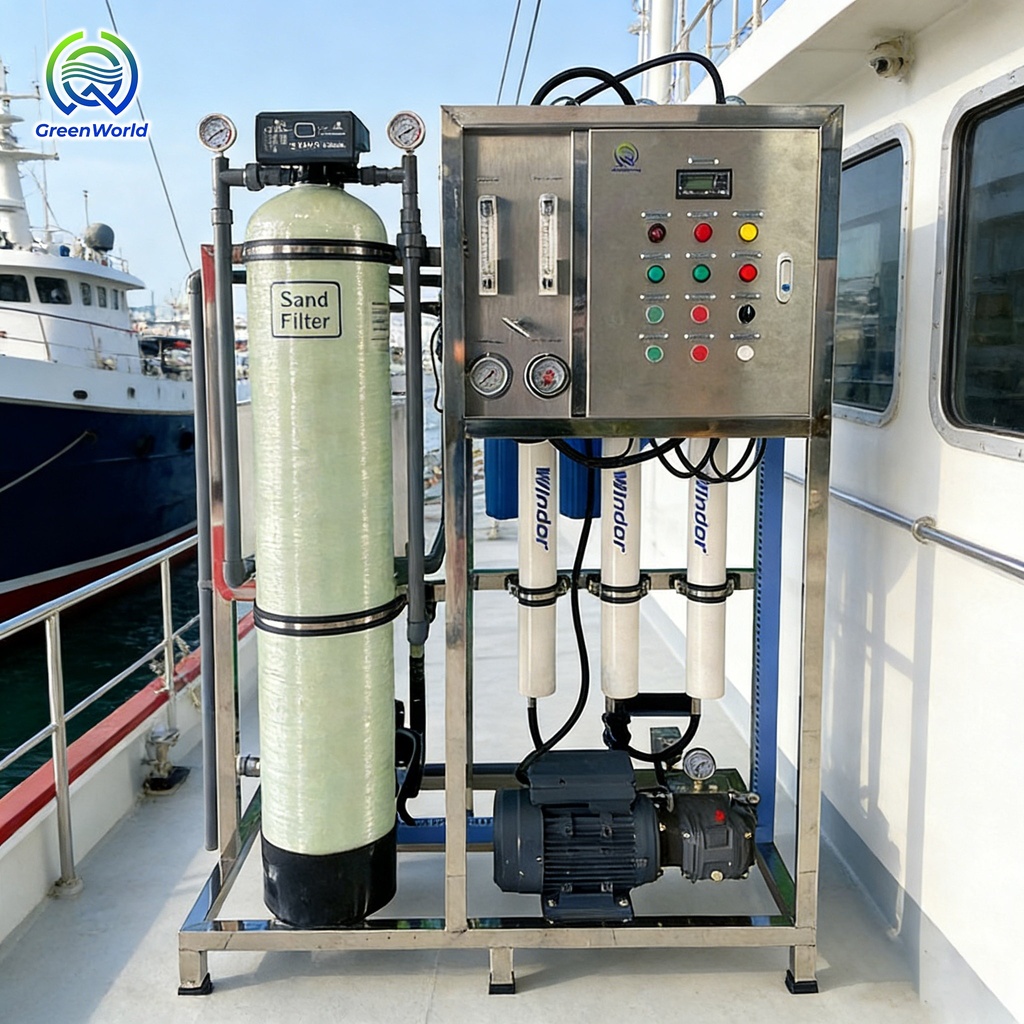
Marine reverse osmosis desalination system can precisely match the freshwater needs of small and medium-sized vessels (such as yachts, fishery patrol vessels, research vessels, and cargo ships). Through mature reverse osmosis technology, they enable the efficient utilization of seawater resources, providing a stable, efficient, and energy-saving freshwater supply for ship navigation.
What is the structure of a marine reverse osmosis desalination system?
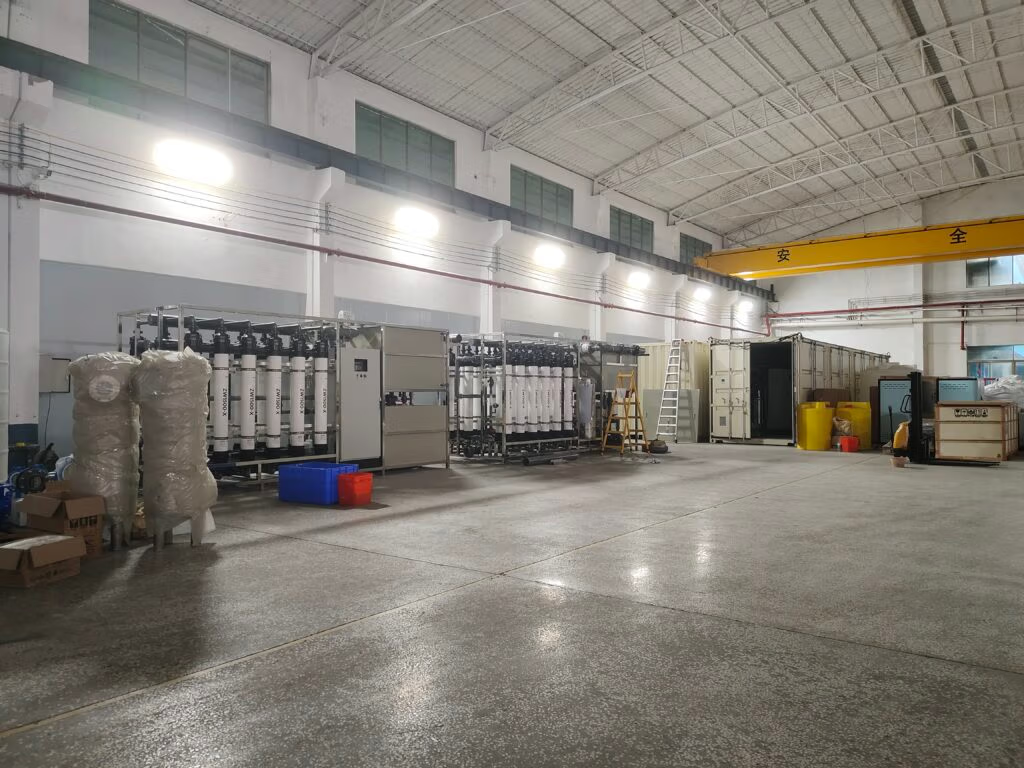
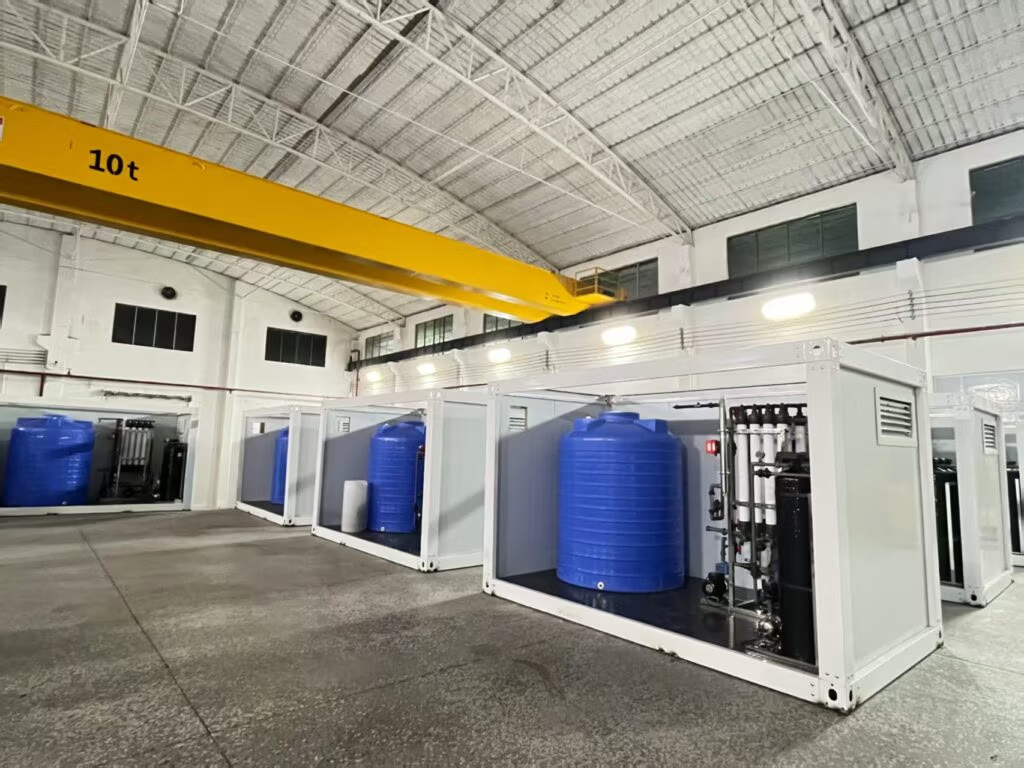
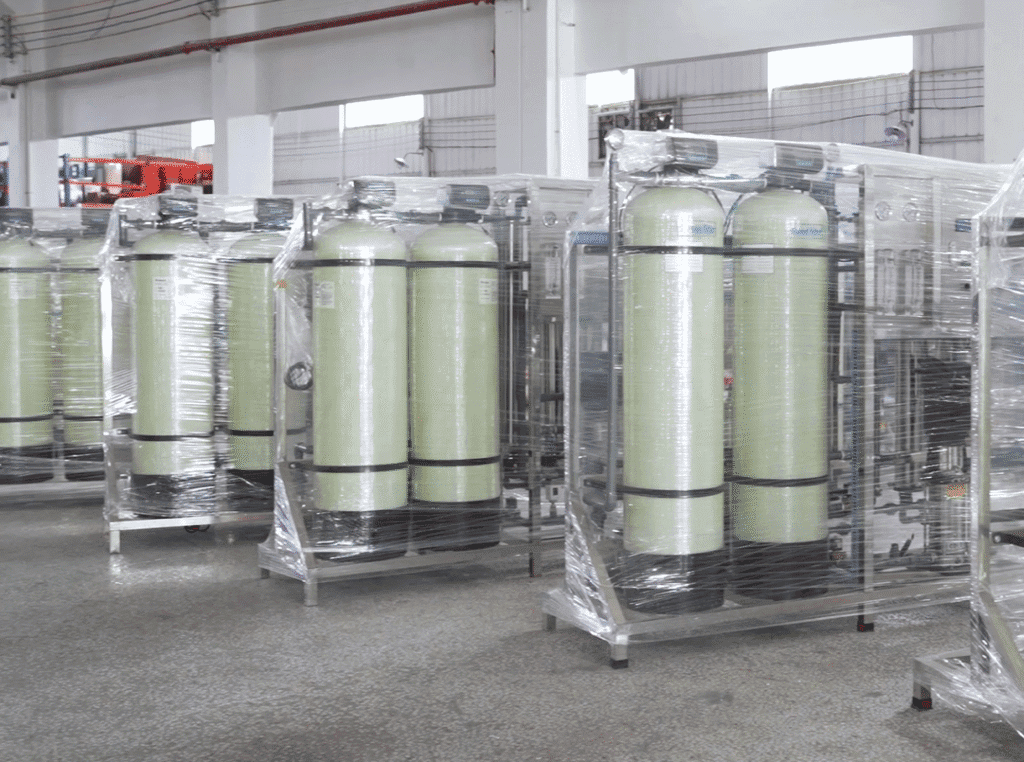
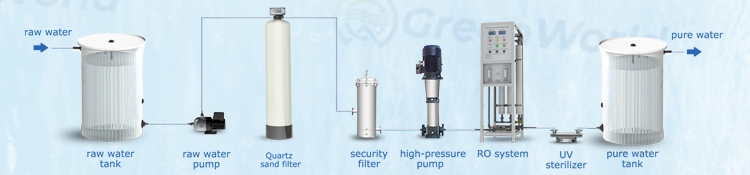
The marine desalination system is based on reverse osmosis membrane separation technology and is specifically designed to meet the unique operating conditions of ships. The entire system consists of six core modules: a pre-treatment unit, a high-pressure pump, a reverse osmosis membrane assembly, an energy recovery device, a product water storage unit, and a control system, forming a complete closed-loop process from seawater intake and purification to freshwater production.
What does the complete purification process involve?
What are the advantages of using reverse osmosis desalination system on ships?
Reverse osmosis seawater desalination system offers multiple advantages for long-distance ocean voyages, completely addressing the shortcomings of traditional water replenishment methods.
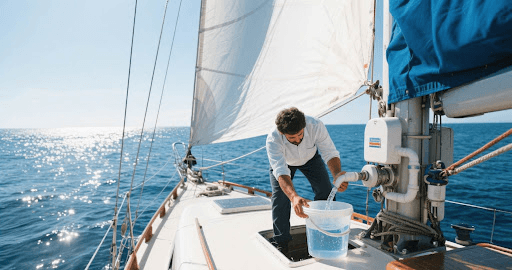
- Seawater desalination systems offer multiple advantages for long-distance ocean voyages, completely addressing the shortcomings of traditional water replenishment methods.
- Strong resistance to impact, especially against the bumps, tilting, and temperature changes encountered during ship navigation. The system features a vibration-resistant design and wide-temperature range adaptation technology, allowing it to operate normally in ambient temperatures from -5℃ to 45℃ and at tilt angles of ≤30°, without affecting water production quality or efficiency.
- Modular integrated design, with each unit component being compact and having a space-saving layout, allowing for flexible installation based on the ship’s deck space and engine room layout, without requiring extensive modifications.
- The system boasts strong independent water supply capabilities, directly utilizing seawater resources during the ship’s voyage. It can produce fresh water on-site and in real-time, eliminating the need for port resupply. This ensures self-sufficiency in freshwater regardless of where the ship is sailing in the world.
Summarize
The reverse osmosis desalination system, with its advanced technological principles, core advantages tailored to maritime applications, and powerful ability to handle complex environments, has completely solved the problem of freshwater supply for ships on long-distance voyages.
It not only provides high-quality freshwater for the crew, improving comfort and safety during voyages, but also eliminates reliance on port water resupply, thus enhancing the endurance of ocean-going vessels.