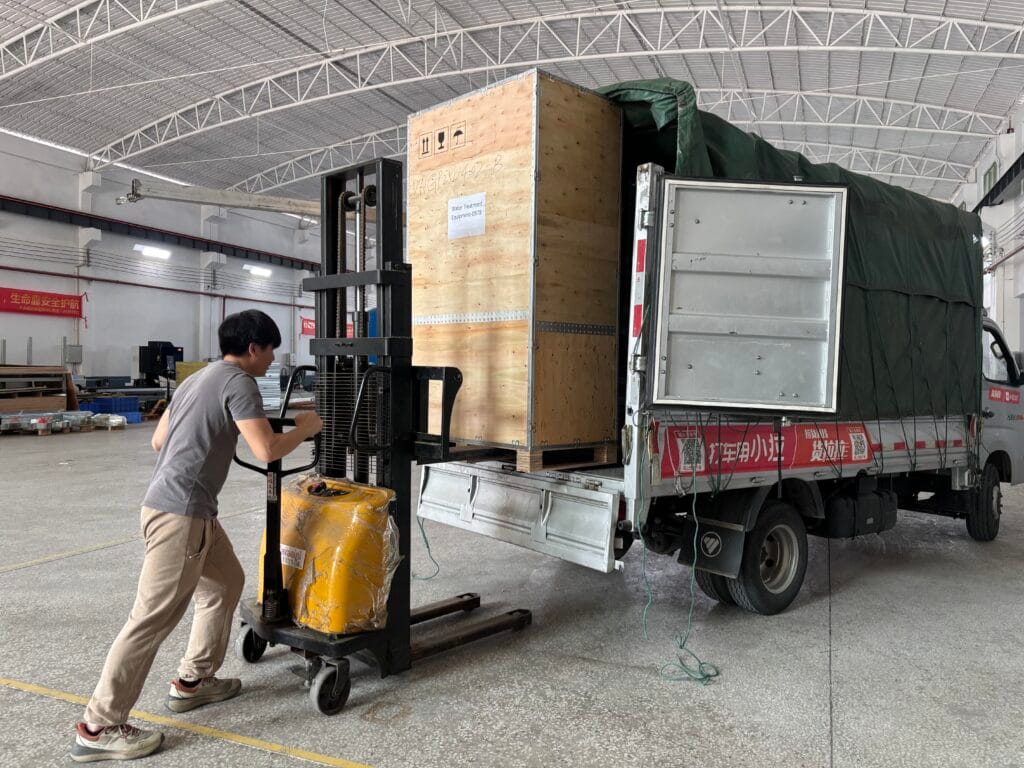
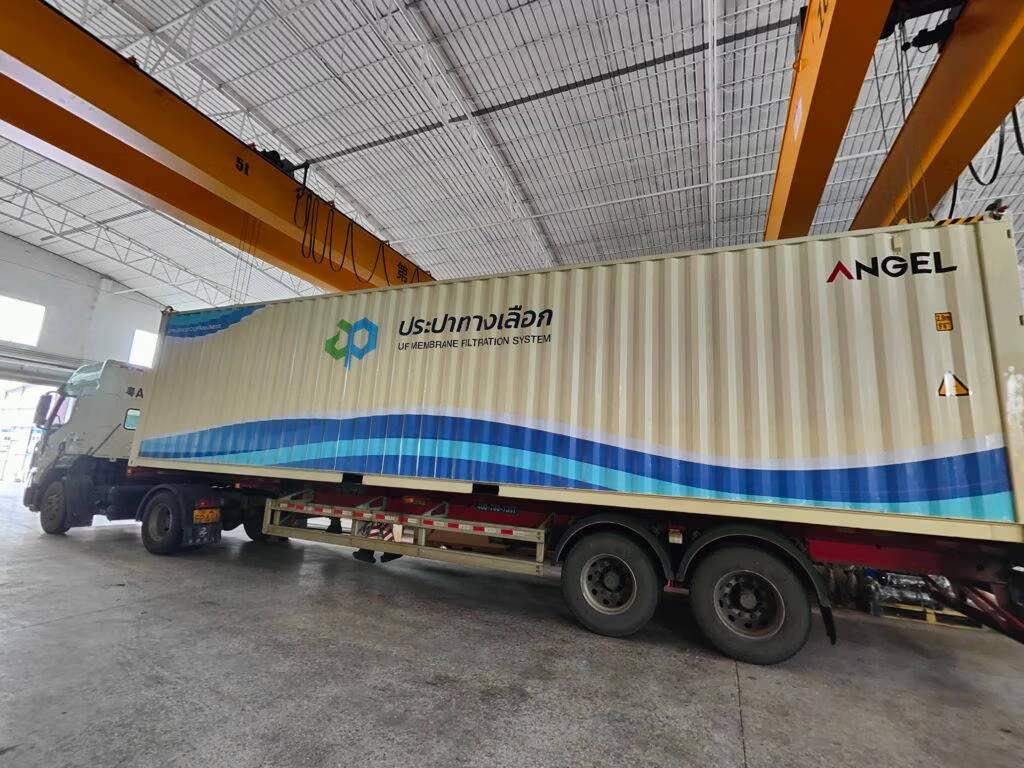
Leveraging precise sieving and filtration capabilities, ultrafiltration systems effectively remove suspended solids, colloids, bacteria, and macromolecular organic matter from water, thereby enabling industrial water recycling and wastewater reuse. These systems are widely applicable across various water treatment scenarios, including pure water production, reclaimed water utilization, advanced wastewater treatment, and reverse osmosis pretreatment. However, ensuring long-term stable, efficient, and low-energy operation requires a comprehensive design approach that accounts for complex industrial water quality conditions and adheres to principles of standardization, precision, and system adaptability. This article discusses the ultrafiltration systems design for industrial water treatment projects from five key perspectives.
1. Ultrafiltration systems designed based on raw water conditions
The fundamental prerequisite for designing industrial ultrafiltration systems is an accurate assessment of raw water quality and specific project requirements. This is crucial for avoiding equipment redundancy, preventing rapid membrane fouling, and ensuring the effluent meets required standards. Given the vast differences in water sources, ranging from chemical processing and textile printing/dyeing to machinery manufacturing and municipal reclaimed water—parameters such as turbidity, Silt Density Index (SDI), organic matter content, pH, and temperature vary significantly. Therefore, comprehensive testing of key water quality indicators and strict adherence to feed water specifications are essential during the initial design phase.
According to industry-standard design guidelines (such as those from Jay Water Management Pvt. Ltd.), the feed water SDI should be controlled below 5.0 (with an optimal range of SDI < 3), turbidity must be below 5 NTU, the temperature should be maintained between 5°C and 45°C, and the pH should fall within the 2–11 range. Exceeding these limits regarding contaminants accelerates membrane fouling, causes a rapid rise in transmembrane pressure (TMP), and significantly shortens the service life of the membrane elements.
Simultaneously, it is necessary to clearly define the project’s core objectives, distinguishing between applications such as reverse osmosis pretreatment, process water purification, wastewater reclamation, and discharge compliance. In order to establish appropriate standards for permeate quality, system recovery rates, and operational loads.
2. Design of membrane elements and materials for ultrafiltration systems
Currently, the mainstream materials for ultrafiltration membranes in the industrial water treatment sector are PVDF (polyvinylidene fluoride) and PES (polyethersulfone), which are suited to the requirements of various industrial operating conditions.
- Made of PVDF, this material offers high mechanical strength, chemical corrosion resistance, and excellent oxidation resistance. It withstands frequent acid and alkali cleaning and boasts a service life of 3–5 years. Ideally suited for treating industrial wastewater with high levels of pollution and impurities, such as in the chemical, printing and dyeing, and electroplating sectors. It is the material of choice for industrial ultrafiltration projects.
- PES material offers excellent hydrophilicity, high initial flux, and uniform filtration precision, making it particularly suitable for precision industrial applications, such as food processing, pharmaceuticals, and electronics that demand extremely high water purity and involve relatively simple contaminant profiles. Hollow-fiber ultrafiltration membranes with an outside-in flow configuration are the preferred structural choice. This design offers robust resistance to shock loads, accommodates high-turbidity feed water, and facilitates both online backwashing and chemical cleaning, thereby meeting the operational requirements of continuous production processes.
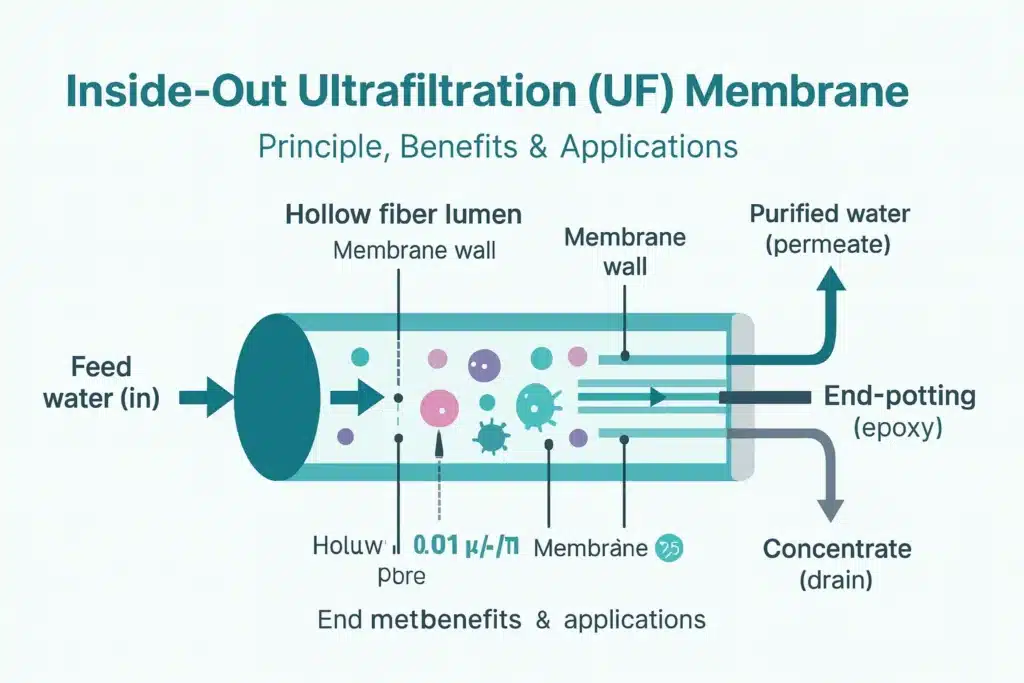
In the design of ultrafiltration systems, the membrane area must be calculated precisely using the formula: Total Membrane Area = Maximum Hourly Permeate Flow ÷ Design Flux × Safety Factor (1.1–1.2). Standard industrial design flux ranges from 60 to 120 L/(m²·h). However, for highly polluted feed water, the flux should be reduced to lower the rate of membrane fouling.
3. Process Design of the Integrated Ultrafiltration Systems
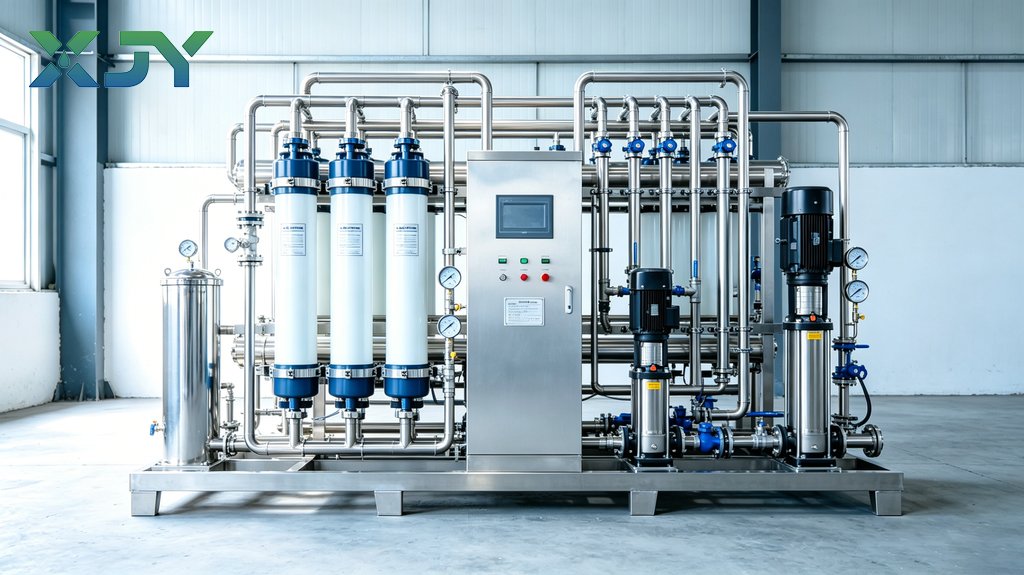
Industrial ultrafiltration water treatment systems require an integrated design comprising pretreatment, the ultrafiltration equipment, a cleaning system, and an automatic control system.
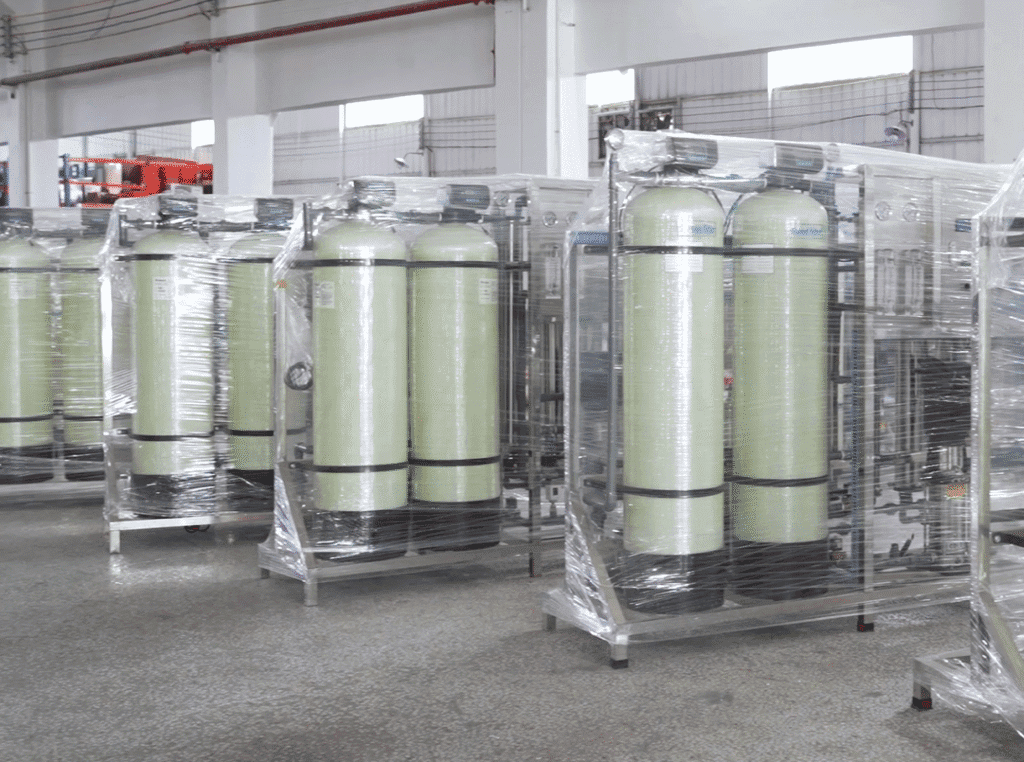
- The pretreatment system serves as the core protective unit. Multi-stage filtration equipment must be configured based on raw water quality, typically comprising quartz sand filters, activated carbon filters, and precision security filters. This system captures large suspended particles, sediment, grease, and certain organic matter, keeping influent turbidity and SDI values within acceptable limits to prevent large impurities from scratching the membrane fibers.
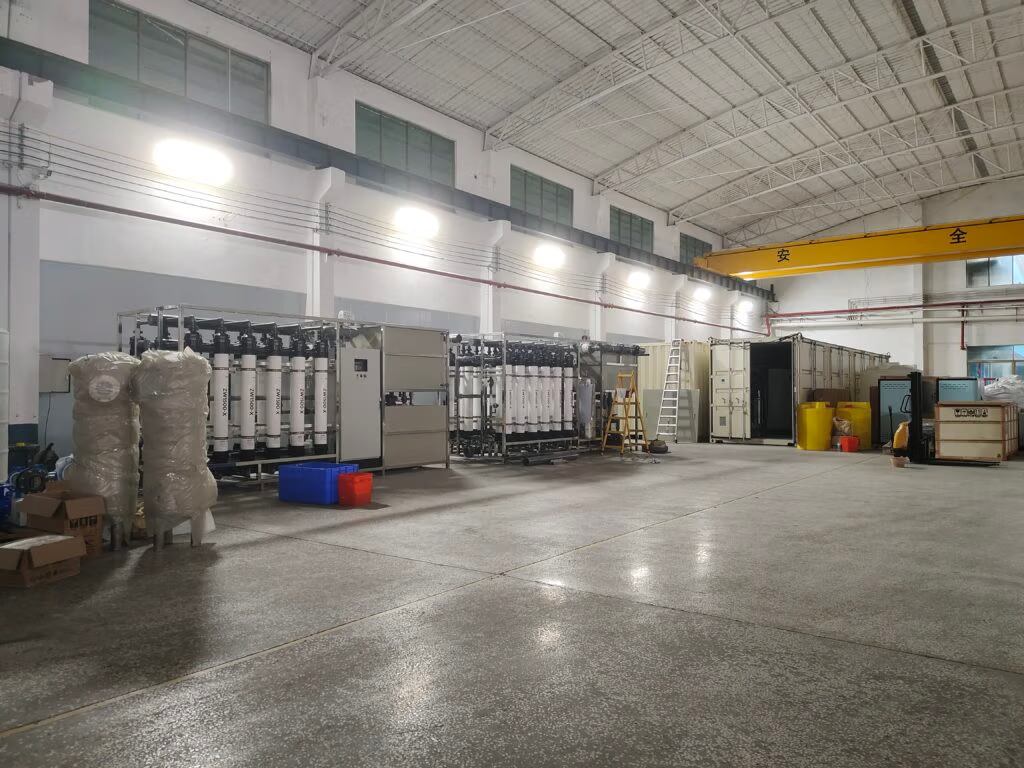
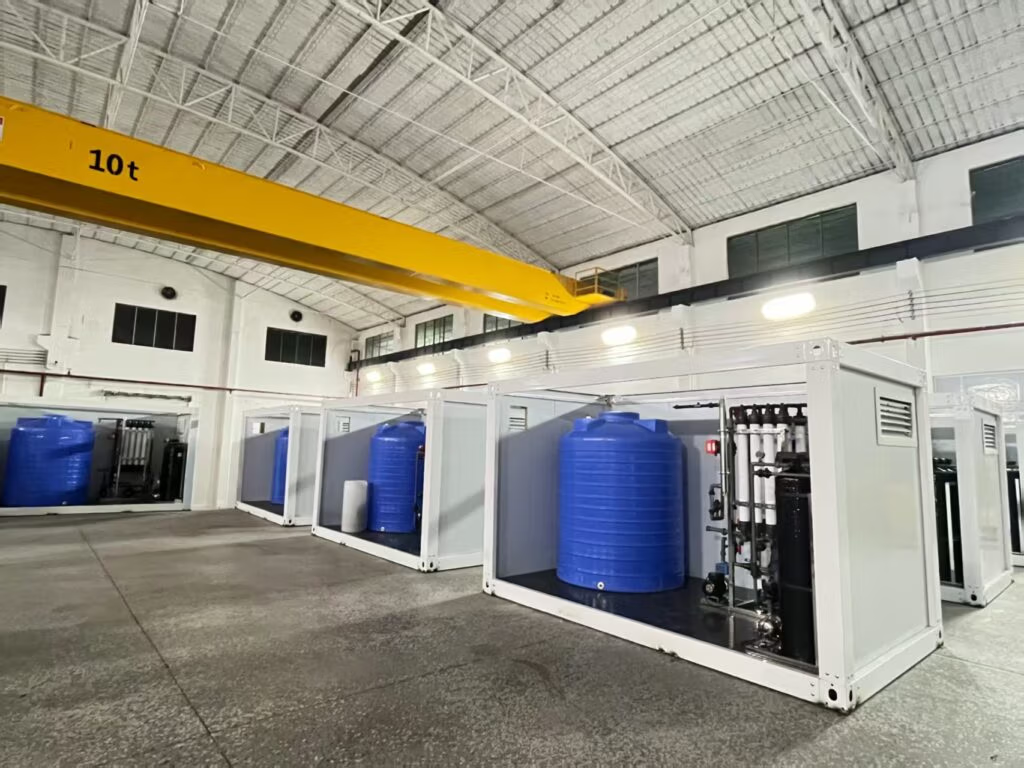
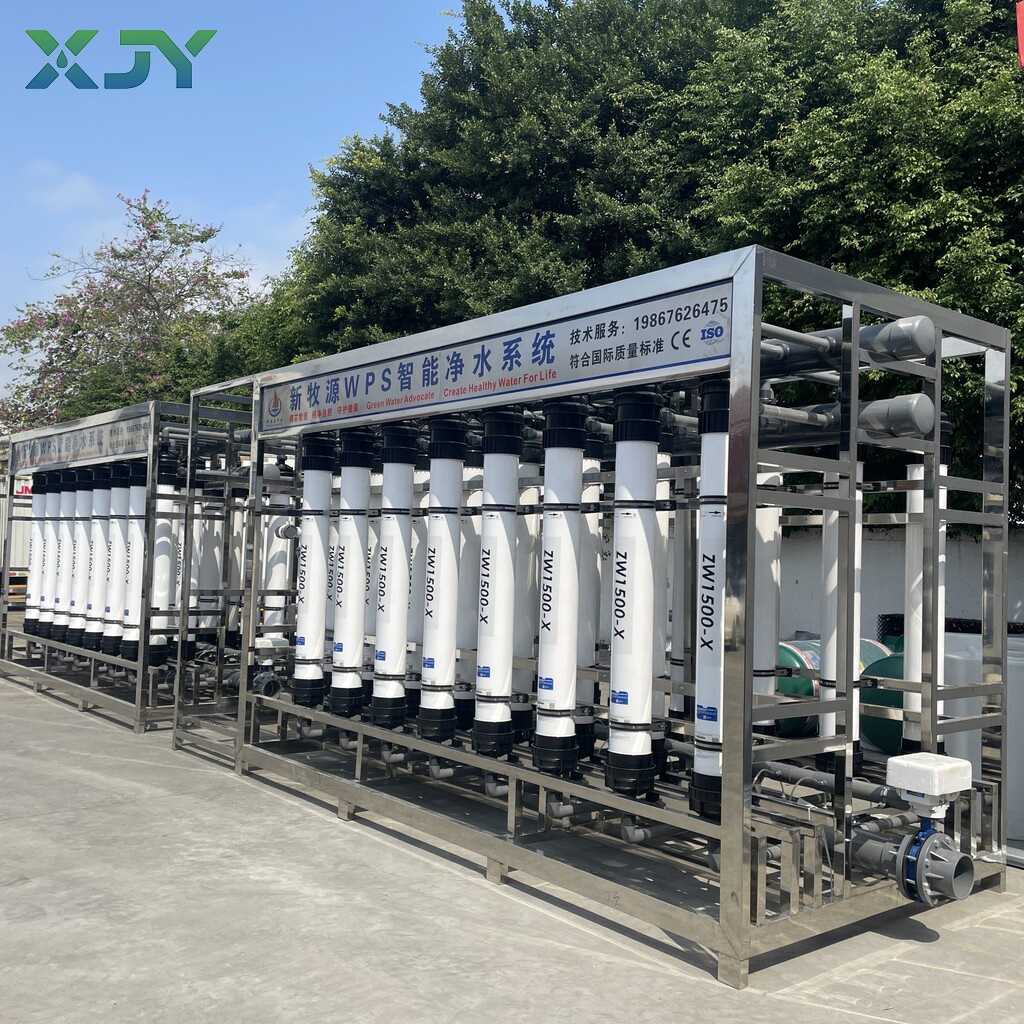
- The main ultrafiltration equipment utilizes a modular layout, with the number of membrane modules, inlet/outlet piping, booster pumps, and pressure monitoring devices configured according to the project’s production capacity. The system is designed for a standard operating pressure of 0.1–0.3 MPa, and the transmembrane pressure (TMP) alarm threshold is set at 0.2 MPa. If this value is exceeded, the cleaning process must be initiated promptly to prevent irreversible membrane fouling.
4. Design of Cleaning and Automated Control Systems
Water quality in industrial applications fluctuates significantly, making ultrafiltration membrane surfaces prone to pollutant accumulation. Therefore, comprehensive physical and chemical cleaning systems are required.
Physical cleaning primarily utilizes online backwashing and combined air-water scouring, automated, scheduled cleaning cycles—typically set to occur every 30 to 60 minutes—are implemented to effectively remove loose contaminants from the membrane surface.
A chemical cleaning process is initiated when the transmembrane pressure (TMP) consistently rises above 0.2 MPa, employing agents such as sodium hypochlorite, dilute hydrochloric acid, and sodium hydroxide to specifically target organic, colloidal, and microbial fouling. Since irreversible membrane flux decline occurs when the TMP exceeds 0.25 MPa, cleaning frequency must be optimized to prevent such performance loss.
Additionally, the ultrafiltration system incorporates a fully automated control unit with integrated online monitoring modules for pressure, flow rate, and turbidity. This enables automated operation across all stages—including feed intake, permeate production, scouring, shutdown, and fault alarming—thereby meeting the demands of continuous industrial production while reducing operation and maintenance costs. For detailed, correct operating procedures for ultrafiltration equipment, please refer to the article “How to operate industrial ultrafiltration systems.”
5. Optimized Design of the Ultrafiltration Systems
Furthermore, the design of industrial ultrafiltration systems must balance energy efficiency, safety, and scalability to meet the long-term operational requirements of industrial projects.
- Ancillary equipment—such as piping, pumps, and valves—must be constructed from corrosion-resistant and pressure-resistant industrial-grade materials that are compatible with the system’s operating pressure and chemical cleaning conditions.
- The system recovery rate is reasonably set based on water quality. For typical industrial reuse projects, the recovery rate is controlled between 85% and 90% to balance product water efficiency with operational stability.
- Space for equipment capacity expansion and a range for parameter adjustment are reserved to accommodate operational changes, such as production capacity upgrades and fluctuations in water quality.
Summarize
Designing ultrafiltration systems for industrial water treatment projects is not merely a matter of equipment selection and assembly. Rather, it is a systematic engineering process grounded in specific water quality conditions, treatment objectives, and operational requirements. The design phase demands rigorous attention to critical aspects—such as water quality compatibility, membrane element selection, process layout, cleaning and maintenance protocols, and intelligent control systems—to mitigate common issues like flux decline, rapid membrane fouling, and unstable effluent quality. Ultimately, a scientific and refined system design enables the full realization of ultrafiltration technology’s advantages, facilitating the efficient purification and recycling of industrial water resources.
If you have any further questions regarding the design of ultrafiltration systems, please feel free to contact us at any time.