As semiconductor manufacturing processes continue to iterate and upgrade towards 3nm, 2nm, and even more advanced processes, ultrapure water treatment for semiconductor industry has become one of the core process media determining chip production yield. The ISO 3696 standard for ultrapure water defines the exacting resistivity, TOC, and particle thresholds that semiconductor-grade water systems must consistently achieve. In the semiconductor wafer manufacturing process, core steps such as etching, cleaning, and thin film deposition have extremely high requirements for water cleanliness. Trace particles, metal ions, organic matter, and microorganisms in the water can cause problems such as short circuits in precision circuits, wafer defects, and chip performance degradation, directly affecting product yield. Therefore, professional ultrapure water treatment systems are indispensable core supporting equipment for semiconductor wafer fabs. Their purification precision, operational stability, and water quality consistency directly constrain the production quality of advanced semiconductor processes.
Compared to the purified water used in traditional industries, ultrapure water treatment for semiconductor industry has extremely stringent industry testing standards. Under a standard constant temperature environment of 25°C, the resistivity of ultrapure water must reach 18.2 MΩ·cm, approaching the theoretical limit of pure water. Simultaneously, the content of various pollutants in the water must be strictly controlled: the number of particles larger than 0.05 micrometers per liter of water must be less than one, the content of trace metal ions must be less than 0.1 ppb, the total organic carbon content must be controlled within 1 ppb, and microorganisms and dissolved gases must be almost completely removed. This extreme ultrapure water quality standard means that semiconductor ultrapure water purification cannot use a single purification process. It must rely on a multi-stage progressive purification system to remove various impurities layer by layer.
The process of ultrapure water treatment for semiconductor industry
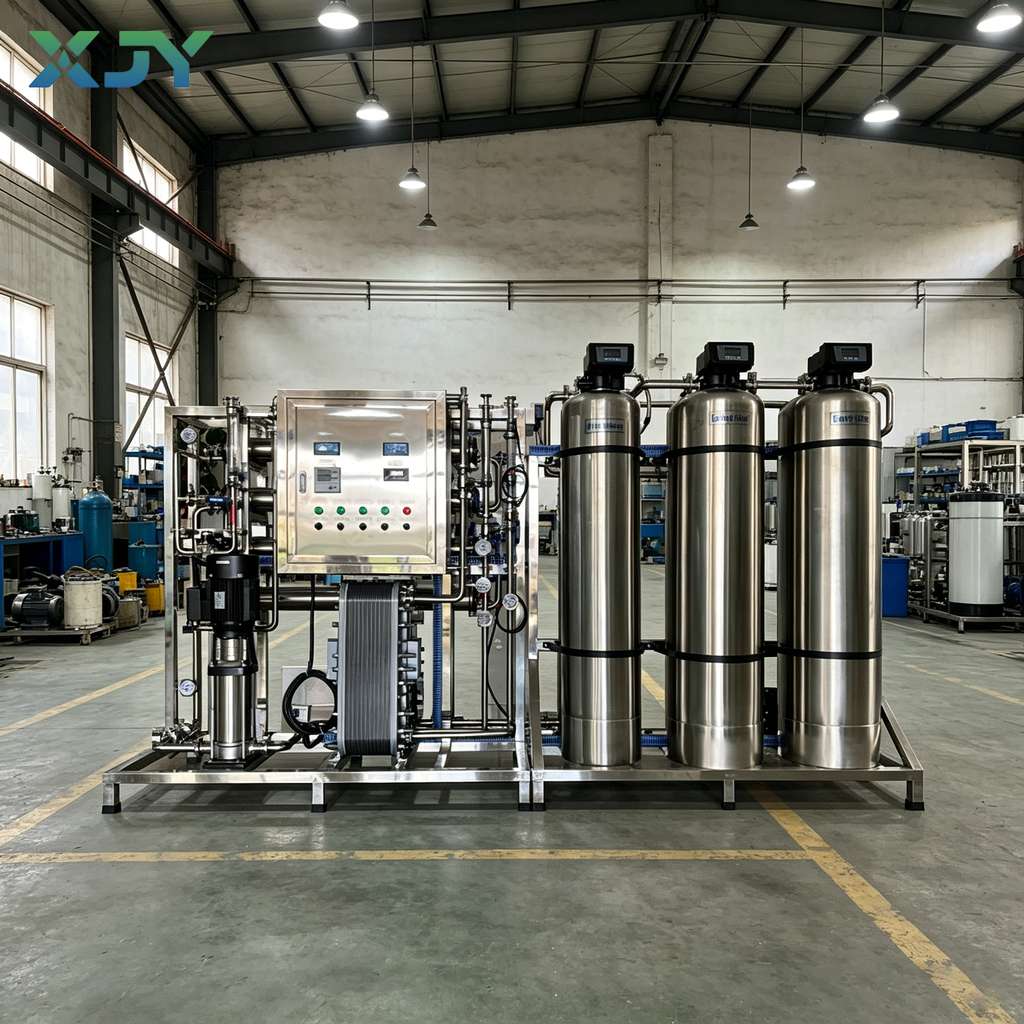
The current process for ultrapure water treatment for semiconductor industry employs a three-stage core technology architecture: pretreatment, primary desalination, and final fine treatment, coupled with a closed-loop circulation system to ensure stable water quality throughout the entire process.
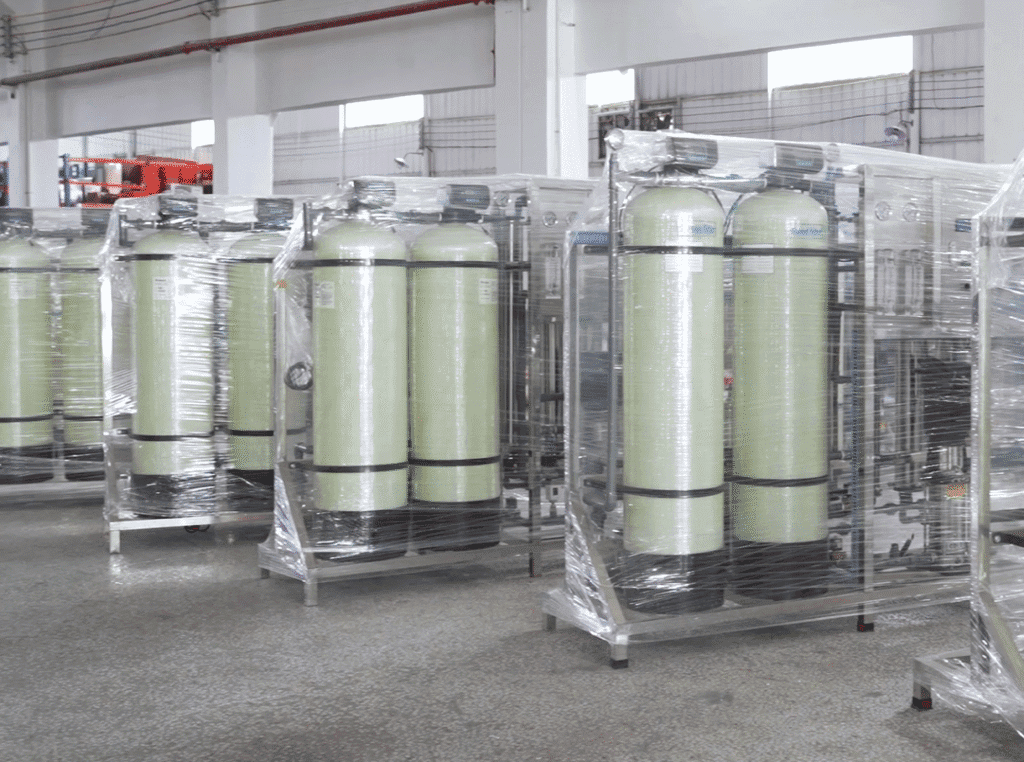
① Pretreatment primarily removes macroscopic impurities and large particulate contaminants from the raw water. This unit is equipped with a multi-media filter, activated carbon filter, water softener, and precision security filter, each performing its specific function to complete the primary purification.
- Multi-media filters can intercept suspended solids, silt, and colloidal impurities in raw water, reducing water turbidity and SDI pollution index.
- Activated carbon filters effectively adsorb residual chlorine, odors, and large molecular organic matter, preventing oxidation and corrosion of subsequent precision membrane equipment.
- Water softening equipment removes calcium and magnesium ions from water, preventing scaling and clogging of the reverse osmosis membrane.

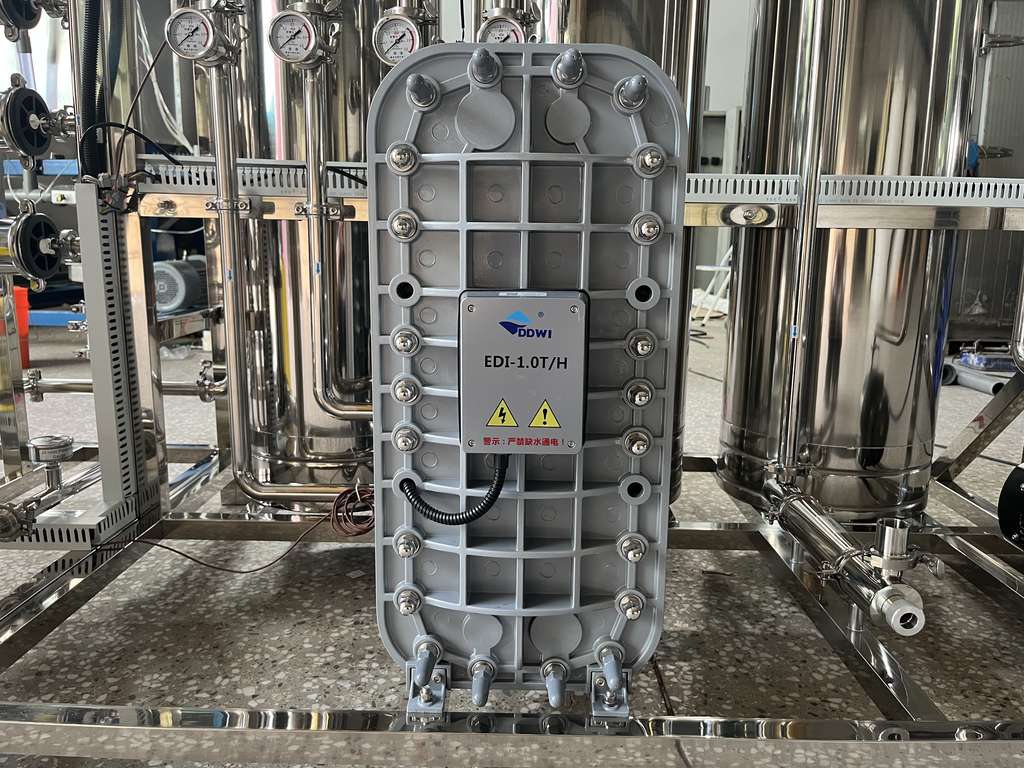
② Primary desalination is the core step in improving water quality. The mainstream technology in the industry is a combination of two-stage reverse osmosis and EDI electro-deionization.
- Dual-stage reverse osmosis membrane separation technology can remove more than 99% of ionic impurities, particulate matter, and organic pollutants from water. Compared with single-stage reverse osmosis, the dual-stage reverse osmosis process significantly improves the desalination rate and effectively reduces the operating load of downstream fine treatment equipment.
- Dual-stage reverse osmosis membrane separation technology can remove more than 99% of ionic impurities, particulate matter, and organic pollutants from water. Compared with single-stage reverse osmosis, the dual-stage reverse osmosis process significantly improves the desalination rate and effectively reduces the operating load of downstream fine treatment equipment.
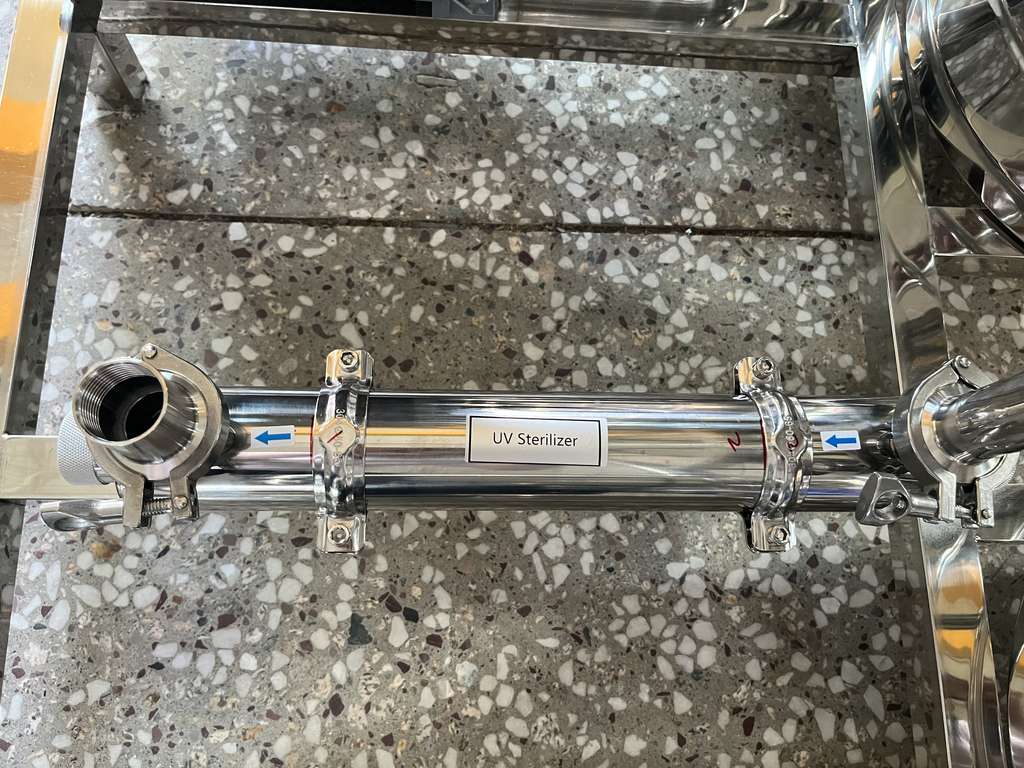
③ Terminal purification is a key process for achieving semiconductor ultrapure water standards. It is mainly used to remove trace impurities remaining in high-purity water, achieving ultimate water purification. The core configuration of this unit includes a dual-wavelength ultraviolet oxidation system, a vacuum degassing device, and a polishing mixed bed equipment.
- The dual-wavelength ultraviolet lamps of 185nm and 254nm can efficiently decompose trace total organic carbon in water and kill residual microorganisms, achieving ultra-low content control of organic matter.
- Vacuum degassing towers precisely remove dissolved gases such as dissolved oxygen and carbon dioxide that affect the precision of chip processing.
- Equipped with a high-purity special resin polishing mixed bed, it completes the final ion capture, thoroughly removes residual trace metal ions and acid and alkali ions, and finally produces ultrapure water that meets the top semiconductor standards and has a resistivity of 18.2 MΩ·cm.
3. Closed-loop delivery system for ultrapure water treatment for semiconductor industry
In addition to the core purification process, the closed-loop delivery system of ultrapure water treatment for semiconductor industry is crucial for stable operation in production. Ultrapure water purified at the terminal stage has extremely poor stability and is highly susceptible to secondary contamination from factors such as pipe material, air contact, and microbial adhesion. Therefore, the entire industrial system employs a fully enclosed pipeline circulation mode, coupled with regular pipeline disinfection and terminal precision filtration, to completely eliminate secondary contamination and ensure that the water quality at the point of use is consistent with the water quality effluent from the equipment.
4. Key Operation Points for Ultrapure Water Treatment in the Semiconductor Industry
In industrial operations and maintenance, ultrapure water treatment for semiconductor industry typically focuses on long-term stable operation and low-cost maintenance. We need to establish standardized replacement cycles for consumables such as filter cartridges, filter media, and resins. Simultaneously, we use online monitoring equipment to monitor key indicators such as water resistivity, total organic carbon, and particulate matter concentration in real time, enabling early warning of water quality anomalies.
Through standardized operations and maintenance, we can effectively avoid water quality fluctuations caused by equipment aging and consumable failure, reduce chip production defect rates, and compress overall maintenance costs. If you also need this EDI ultrapure water treatment systems, please feel free to contact me for a quote.