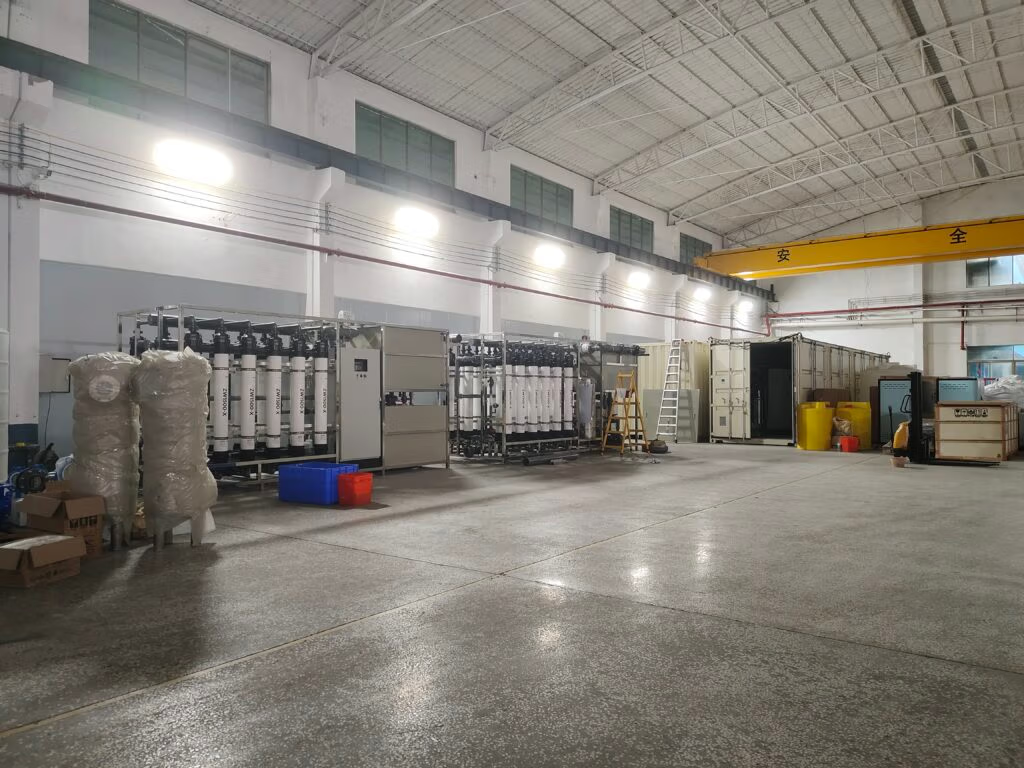
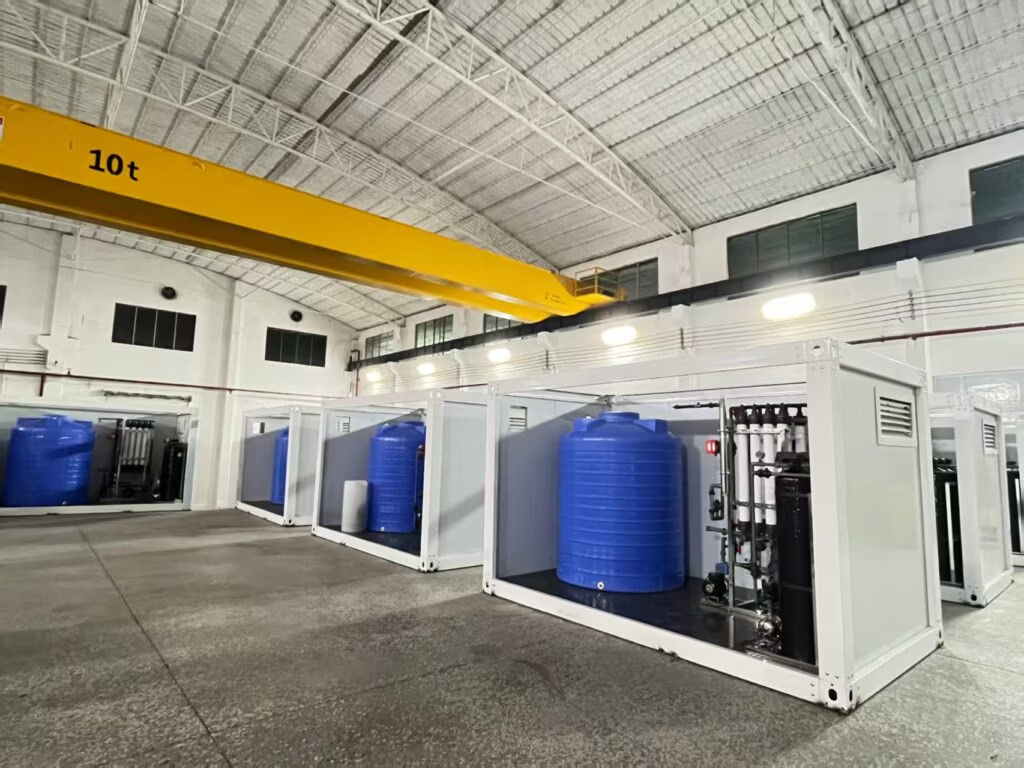
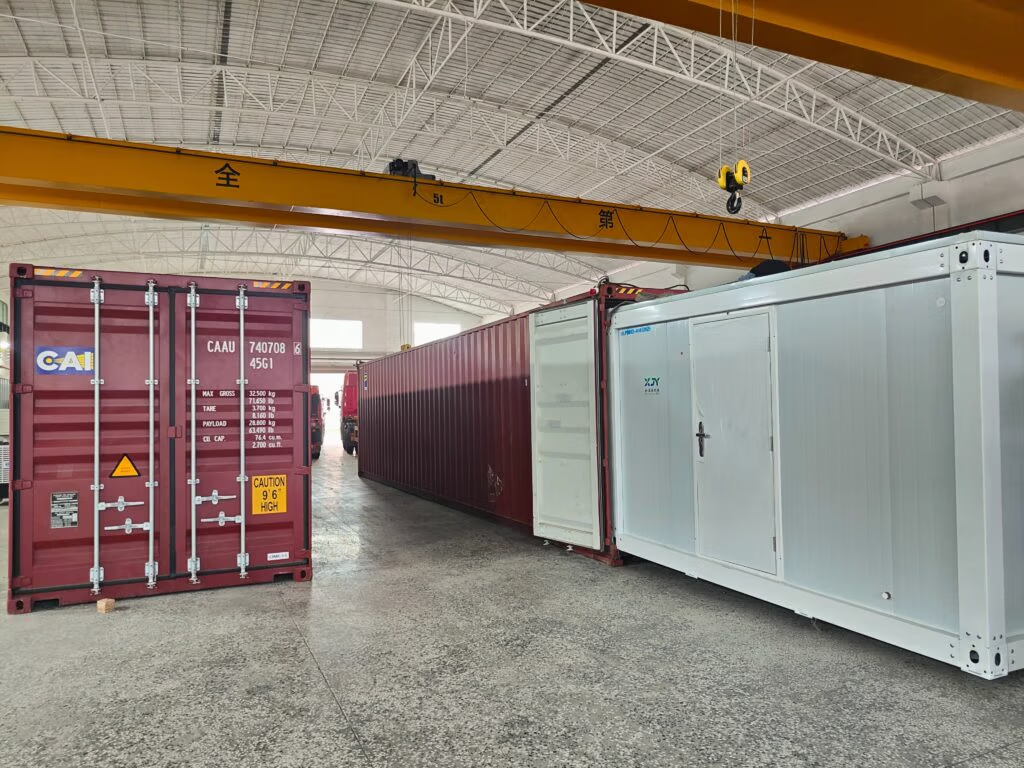
For businesses in manufacturing, food and beverage, pharmaceuticals, mining, and municipal water treatment, partnering with a reliable industrial RO plant manufacturer is critical to maintaining smooth project timelines and operational continuity. One of the most frequently asked questions by global buyers and project managers is: what is the standard lead time for industrial RO plant production and delivery? Understanding industrial RO plant lead times helps you plan project schedules, avoid construction delays, and optimize your water treatment system investment. This article breaks down the standard lead time ranges, key influencing factors, full project cycle details, and effective ways to shorten delivery timelines from professional industrial RO plant manufacturers.
Standard Lead Time of Industrial RO Plant Manufacturer
Industrial reverse osmosis plants vary greatly in specifications, configuration, and customization levels, so professional industrial RO plant manufacturer providers classify lead times based on standard modular models and fully customized systems. The overall lead time covers design, raw material procurement, assembly, testing, packaging, and delivery, with clear industry-standard timeframes as follows:
1. Standard Modular Industrial RO Plants
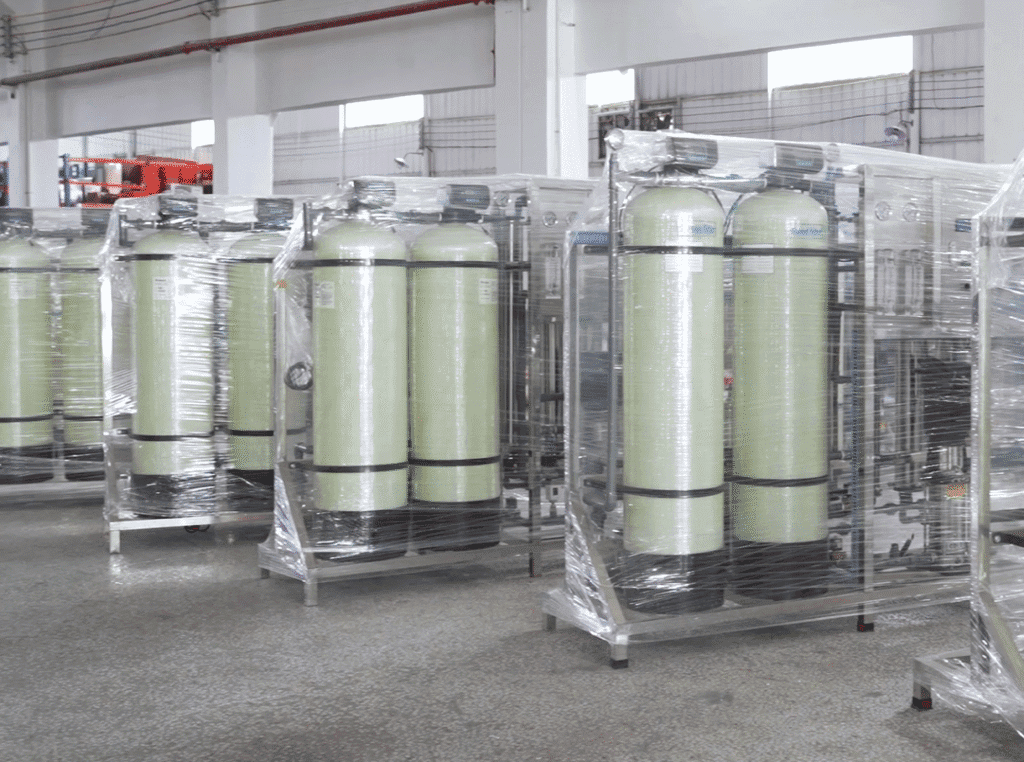
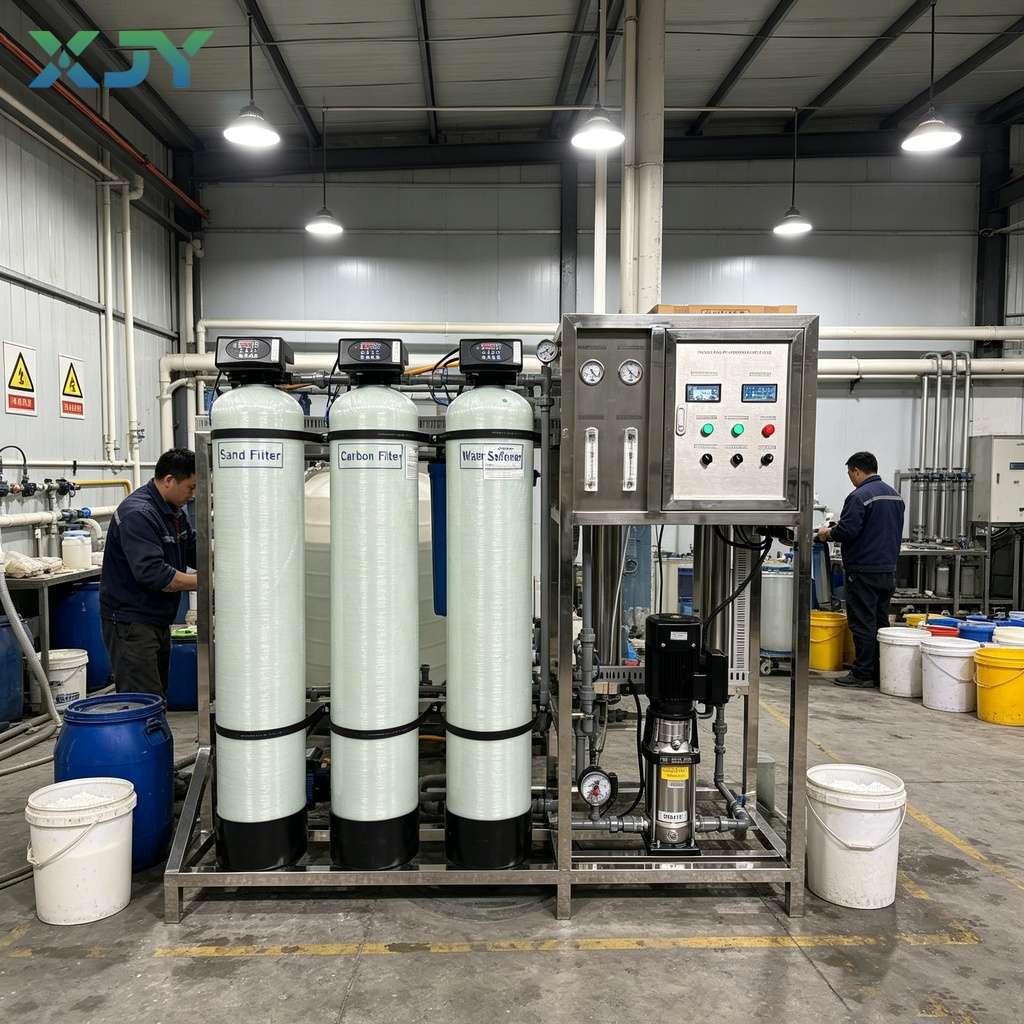
Standard pre-engineered RO plants with fixed capacities (250LPH, 500LPH, 1000LPH, 2000LPH) and conventional configurations are the most common industrial water treatment equipment. These models adopt standardized production processes with sufficient conventional raw material stock.
Standard Lead Time: 15–20 working days
This category includes fully automatic skid-mounted RO systems with basic filtration components (sediment filters, activated carbon filters, precision filters, standard RO membranes, and automatic control panels). Most professional industrial RO plant manufacturers maintain inventory for core standard parts, enabling fast assembly, strict factory testing, and prompt shipment for small and medium-scale industrial water treatment projects.
2. Medium-Scale Customized Industrial RO Plants
For projects requiring minor customization, such as special stainless steel materials, upgraded pressure protection systems, customized flow rates, and simple PLC intelligent control optimization, the production process requires additional design adjustment and targeted component procurement.
Standard Lead Time: 20–35 working days
These customized RO plants are widely used in industrial production water purification, commercial drinking water projects, and factory wastewater pretreatment. The extended lead time mainly comes from personalized design confirmation and customized accessory production, while the overall production cycle remains efficient and controllable.
3. Large-Scale & High-End Custom Industrial RO Plants
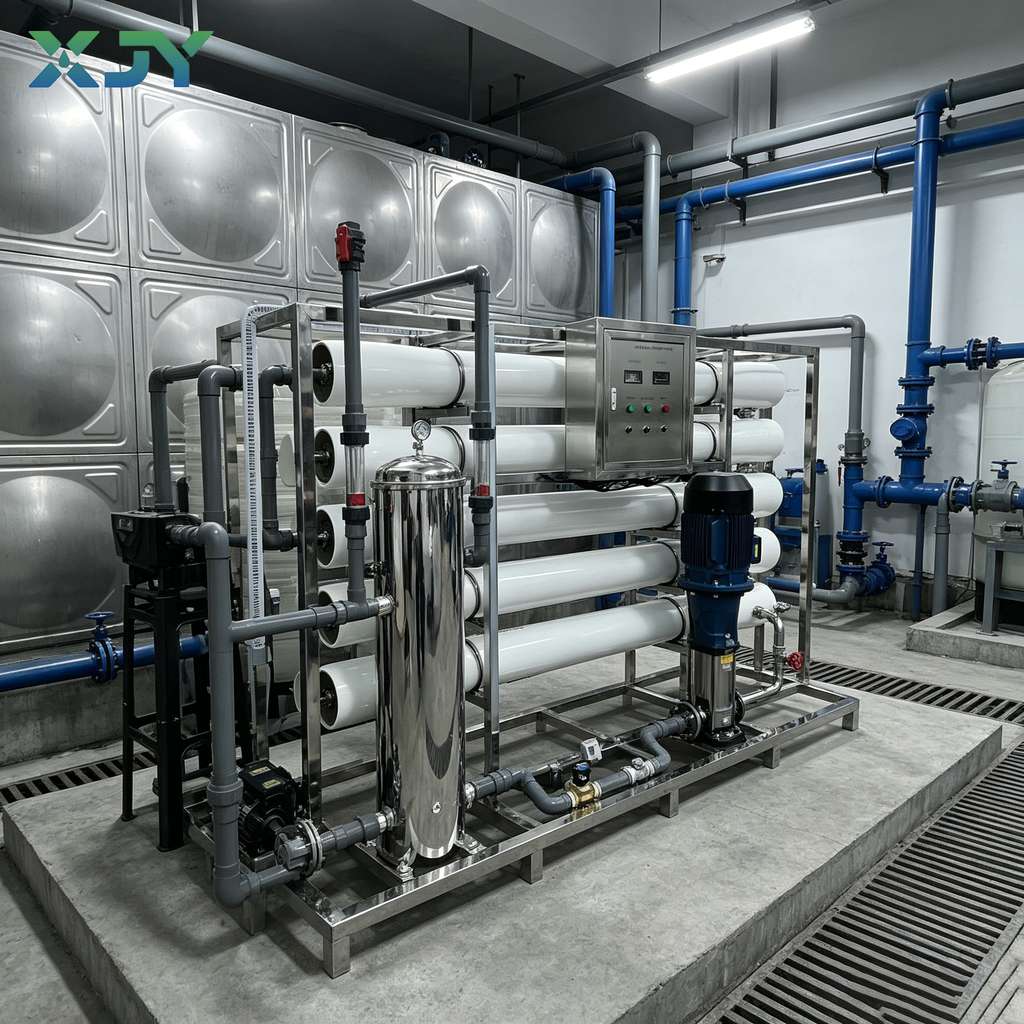
Large-capacity industrial RO systems (5000LPH and above), high-TDS seawater desalination RO plants, double-stage high-purity water RO equipment for pharmaceuticals and electronics, and fully intelligent centralized control RO units belong to high-standard customized products. They require professional engineering design, non-standard component customization, multi-round quality testing, and system linkage debugging.
Standard Lead Time: 35–60 working days
For ultra-large industrial water treatment projects with supporting water storage tanks, dosing systems, and full-set automatic monitoring systems, the lead time will be extended appropriately according to project complexity, ensuring stable equipment operation and compliance with industry water quality standards.
Key Factors That Affect Industrial RO Plant Lead Time
The lead time provided by an industrial RO plant manufacturer is not fixed—it is adjusted according to multiple practical factors. Understanding these factors allows you to accurately predict project cycles and communicate efficiently with manufacturers:
1. Equipment Customization Degree
Customization is the core factor affecting lead time. Standard modular RO plants with universal accessories can be produced quickly, while non-standard customized solutions involving special materials, high-precision filtration, intelligent system upgrading, and multi-stage combined water treatment processes require independent design, mold opening, and targeted debugging, greatly extending the production cycle.
2. Core Component Supply Status
Industrial RO membranes, high-pressure pumps, automatic valves, PLC controllers, and professional detection instruments are core components of RO plants. If special specification core parts are out of stock or need imported procurement, the manufacturer’s overall production lead time will be prolonged. Reliable industrial RO plant manufacturers will reserve conventional core component inventory to ensure stable delivery cycles.
3. Order Volume & Production Scheduling
Bulk orders for multiple sets of industrial RO plants or centralized order peaks in peak construction seasons will affect production scheduling. Formal manufacturers have standardized production lines and mature scheduling systems to prioritize key orders and ensure delivery on schedule.
4. Post-Production Testing & Certification
Qualified industrial RO plant manufacturers must conduct water quality testing, pressure testing, and full-machine operation debugging before delivery. For CE-certified, ISO-standard, and food-grade industrial RO equipment, additional standard inspection procedures are required, which take 3–7 working days but ensure stable equipment quality and compliant operation.
Full Lead Time Cycle of Industrial RO Plant Projects
Many buyers only focus on production time, while the full lead time of cooperating with an industrial RO plant manufacturer includes the whole process from consultation to on-site delivery:
-
Scheme Confirmation (1–3 days): Communicate project water quality parameters, water demand, usage scenarios, and customization requirements, and confirm the final equipment configuration and quotation scheme.
-
Production & Debugging (7–60 days): Complete raw material procurement, equipment assembly, system debugging, and quality inspection according to equipment type.
-
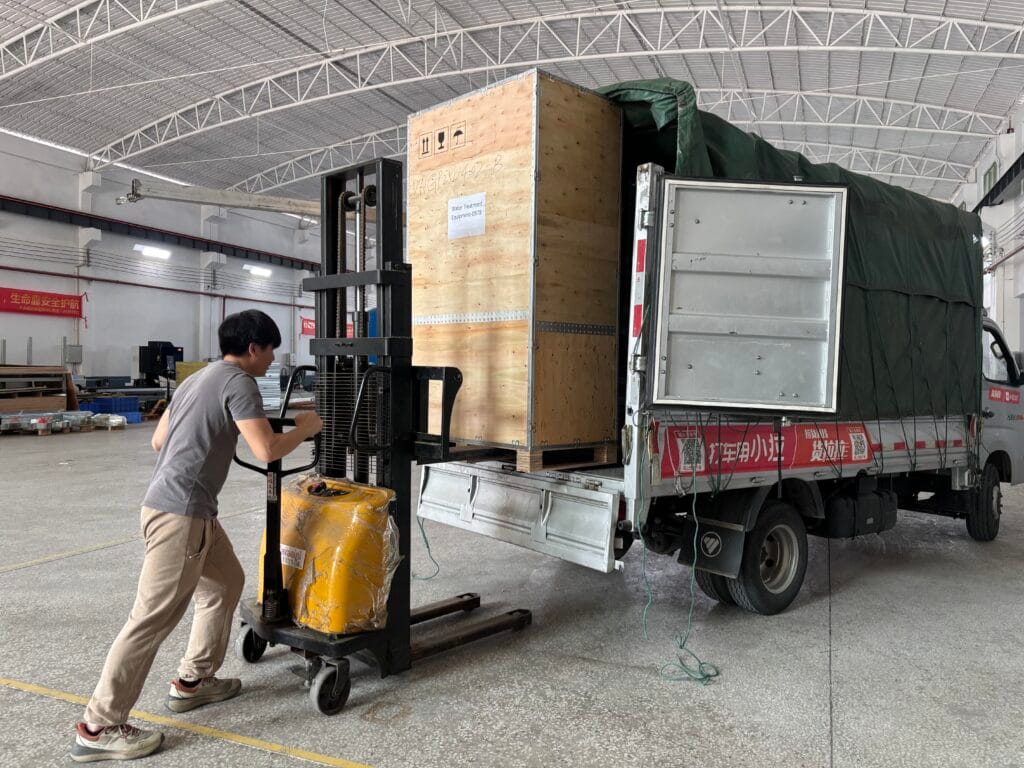
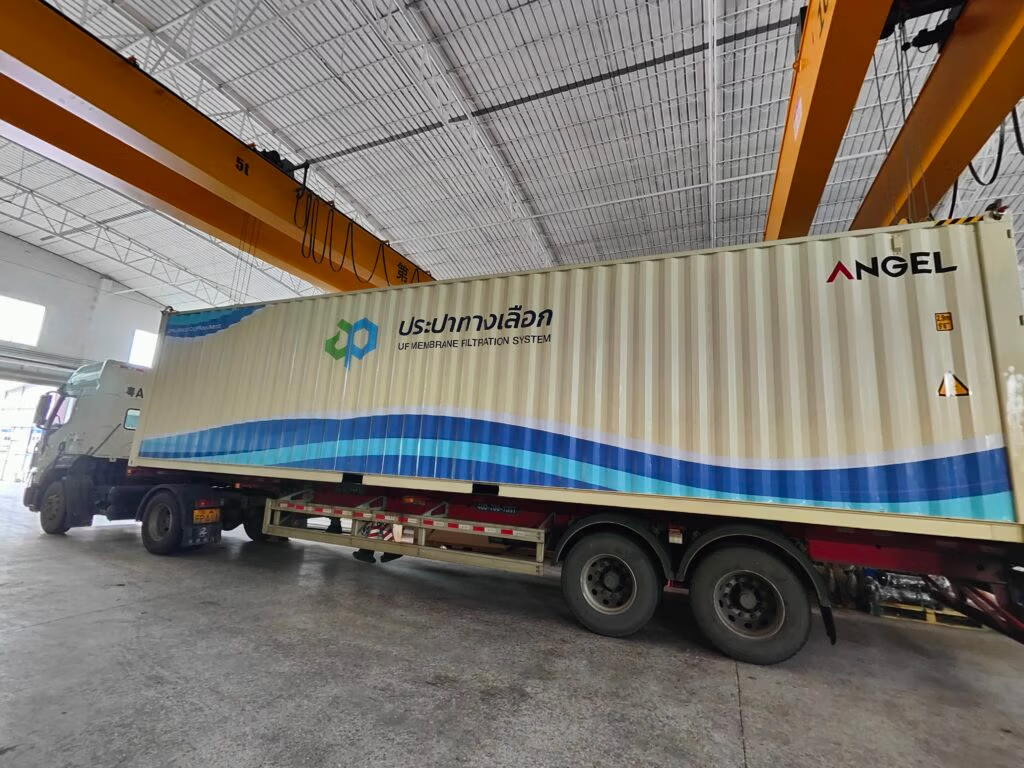
Packaging & Shipment (3–7 days): Adopt professional shockproof and waterproof packaging for industrial equipment, confirm logistics schemes, and arrange shipment.
-
Logistics & Delivery (Subject to distance): Domestic delivery takes 3–10 days, and international sea/air freight takes 15–45 days, depending on the destination port and logistics mode.
How to Shorten Lead Time When Working With Industrial RO Plant Manufacturer
To ensure your water treatment project is launched on schedule, you can adopt the following methods to optimize the lead time with your industrial RO plant manufacturer :
-
Confirm detailed requirements in advance: Provide accurate water quality test reports, hourly water demand, installation space, and industry usage standards at the early consultation stage to avoid repeated scheme modifications.
-
Priority selection of standard models: Choose pre-engineered standard RO plant models on the premise of meeting project demands to enjoy the fastest production and delivery cycle.
-
Apply for expedited production: Formal manufacturers support expedited production services for standard configurations, which can shorten the lead time by 10%–15% without affecting equipment quality.
-
Cooperate with manufacturers with sufficient inventory: Professional industrial RO plant manufacturers with complete spare parts inventory can effectively avoid delivery delays caused by component shortage.
Why Choose XinJieYuan Industrial RO Plant Manufacturing Service
As a professional industrial RO plant manufacturer, xinjieyuan provide transparent, standardized, and controllable lead time for all global clients. We maintain sufficient inventory of core components, support standard fast delivery and customized flexible production, and strictly follow ISO and CE production standards. Every industrial RO plant undergoes full-process debugging and water quality testing before delivery.
We support small standard RO systems to large-scale customized industrial water treatment projects, with predictable delivery cycles, professional after-sales installation guidance, and long-term technical support. If you need customized RO plant solutions or accurate lead time quotation for your project, feel free to contact our professional team for a free consultation.