Total Dissolved Solids (TDS) is the core metric for measuring salt and impurity concentrations in water, directly determining whether seawater can be converted into usable fresh water. For marine, coastal industrial, and residential water treatment projects, understanding the exact TDS removal capacity of a seawater reverse osmosis system is critical for equipment selection, water quality standard compliance, and operational budget planning. This guide breaks down the TDS removal range of standard and advanced seawater RO systems, key performance data, and practical factors that affect final water quality.
1. Basic TDS Range of Raw Seawater
Natural seawater features high and fluctuating TDS levels due to regional salinity differences. In most global marine areas, the standard seawater TDS ranges from 25,000 ppm to 45,000 ppm, with an average salinity of approximately 35,000 ppm. This extremely high TDS value makes seawater unfit for drinking, irrigation, or industrial use without professional desalination treatment.
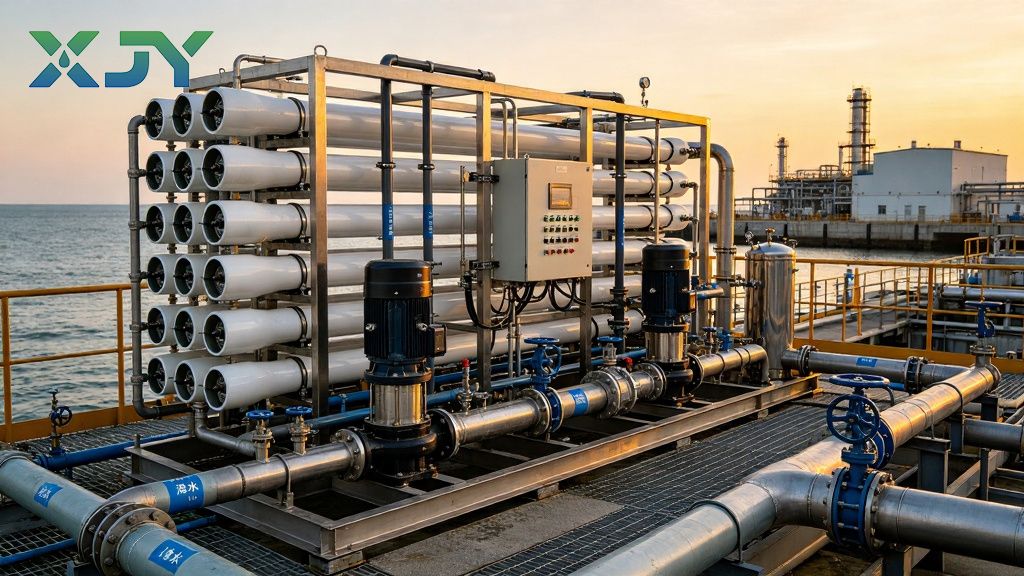
Unlike brackish water (TDS 1,000–10,000 ppm) that uses low-pressure RO systems, seawater requires high-pressure customized RO equipment to overcome strong osmotic pressure and intercept massive dissolved salts, minerals, and micro-impurities.
2. Exact TDS Removal Capacity of Seawater RO System
Seawater RO systems are classified into single-stage and double-stage configurations, with distinct TDS removal efficiency and final product water TDS levels. Industrial and municipal desalination projects adopt different setups based on water quality requirements.
Single-Stage Seawater RO System
A standard single-stage SWRO system is the most widely used configuration for general seawater desalination. It delivers a stable salt rejection rate of 99.2% to 99.6%. For conventional seawater with 35,000 ppm TDS, the product water TDS can be reduced to below 500 ppm, fully meeting international drinking water guidelines and general industrial water standards.
High-performance commercial SWRO membranes (such as DuPont SW series) can boost the salt rejection rate up to 99.8% under optimal operating conditions, lowering the effluent TDS to 300–400 ppm for higher water purity.
Double-Stage Seawater RO System
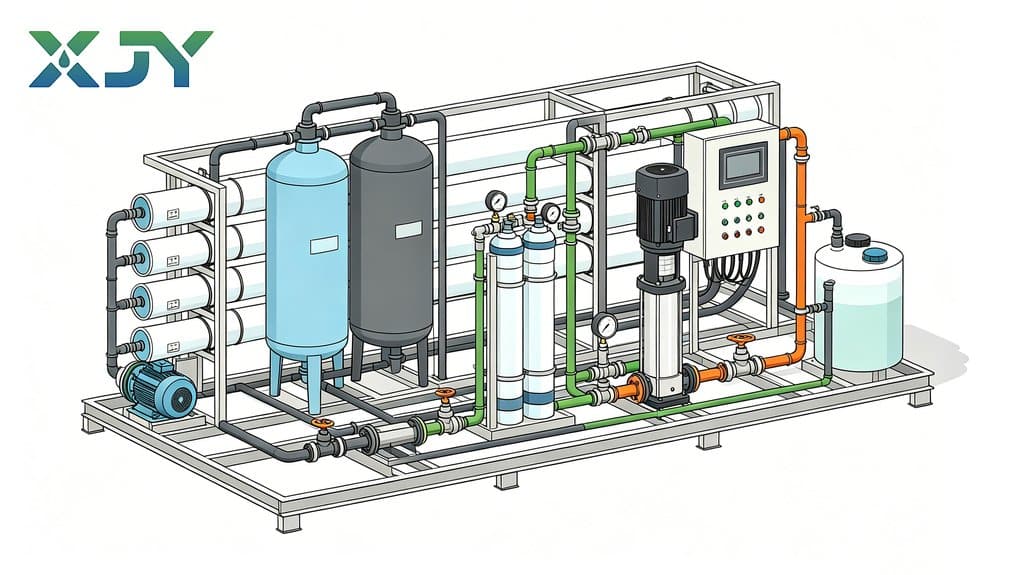
For scenarios requiring ultra-low TDS water, a double-stage SWRO system is adopted, which treats single-stage RO product water as secondary feed water. This advanced system achieves a comprehensive salt rejection rate exceeding 99.9%, reducing final water TDS to 10–50 ppm. Some high-precision customized double-stage systems can even stabilize effluent TDS below 10 ppm, catering to high-standard industrial production, pharmaceutical processing, and ultra-pure water preparation needs.
3. How Do Seawater RO System Remove High TDS
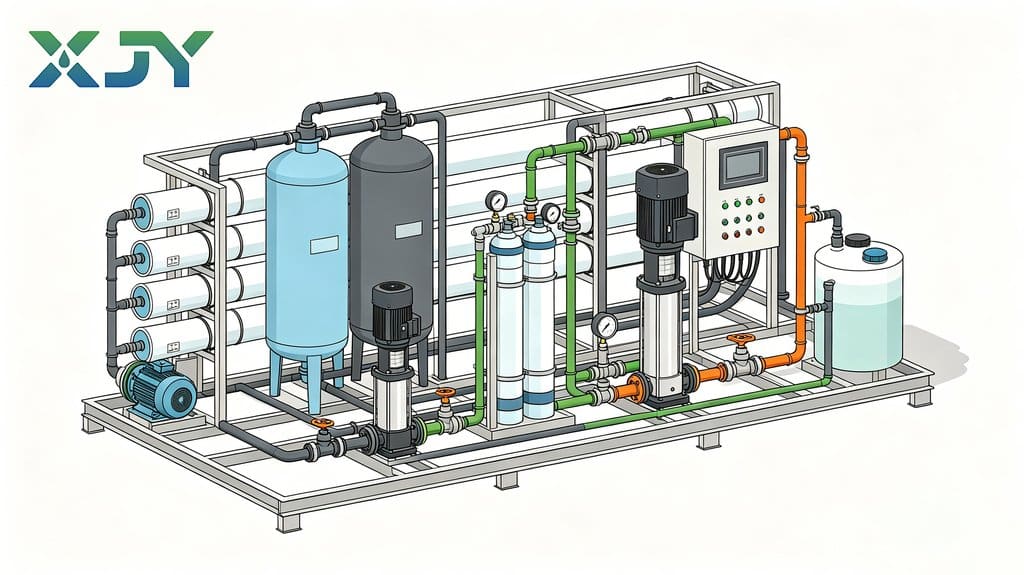
Seawater RO system relies on high-pressure membrane separation technology. By applying external pressure higher than the natural osmotic pressure of seawater, pure water molecules penetrate the semi-permeable RO membrane, while dissolved solids including sodium ions, chloride ions, magnesium, calcium, and other mineral salts are completely trapped and discharged with concentrated brine.
This physical separation process requires no chemical additives, ensuring stable TDS removal efficiency and no secondary pollution. Standard SWRO systems maintain a water recovery rate of 35%–45%, balancing desalination efficiency and operational energy consumption for long-term stable operation.
4. Key Factors That Affect SWRO TDS Removal Performance
Although factory-rated TDS removal parameters are fixed, actual effluent water quality is affected by multiple on-site factors. Understanding these variables helps optimize system operation and maintain stable low-TDS water output.
-
Raw Water Salinity: Extreme high-salinity seawater (above 40,000 ppm TDS) will slightly reduce relative salt rejection rate, requiring adjusted operating pressure to ensure qualified effluent TDS.
-
Operating Temperature: The optimal working temperature for SWRO systems is 25°C. Too low water temperature increases water viscosity and reduces membrane permeability, while excessive temperature may affect membrane stability, both impacting TDS removal results.
-
Membrane Condition: Regular membrane cleaning and maintenance prevent fouling, scaling, and microbial contamination. Aged or contaminated membranes will significantly decline in salt rejection capacity, leading to elevated product water TDS.
-
Pre-treatment Effect: Complete pre-treatment (filtration, sedimentation, activated carbon purification) removes suspended solids and colloids, protecting RO membranes and ensuring long-term stable TDS removal efficiency.
5. Application Scenarios Based on SWRO TDS Output Levels
Different TDS output ranges correspond to exclusive application scenarios, helping users select the most cost-effective SWRO solution:
-
TDS ≤ 500 ppm (Single-stage SWRO): Ideal for coastal residential drinking water, marine vessel domestic water, agricultural irrigation, and general industrial cleaning water, complying with WHO drinking water standards.
-
TDS 10–50 ppm (Double-stage SWRO): Suitable for boiler make-up water, aquaculture high-standard water, food and beverage processing, and commercial ultra-pure water supply.
-
TDS ≤ 10 ppm (Custom high-precision SWRO): Applied in pharmaceutical production, electronic manufacturing, laboratory ultra-pure water, and other high-precision industrial fields.
6. Frequently Asked Questions
Can a seawater RO system remove 100% of TDS?
No commercial SWRO system can achieve 100% TDS removal. The highest stable salt rejection rate of industrial-grade SWRO membranes is 99.9%, leaving trace dissolved solids in the product water. For absolute zero-TDS ultra-pure water, additional ion exchange or EDI equipment is required.
Is single-stage SWRO enough for daily drinking water?
Yes. Single-stage SWRO effluent with TDS below 500 ppm fully meets global drinking water safety standards, making it the most cost-effective choice for daily domestic and community water supply.
Final Verdict
Standard single-stage seawater RO systems effectively reduce seawater TDS from 25,000–45,000 ppm to below 500 ppm with a 99.2%+ salt rejection rate. Double-stage SWRO systems further lower TDS to 10–50 ppm for high-purity water demands. By matching the system configuration with actual water usage requirements, users can achieve optimal desalination performance and controllable operational costs in marine, coastal industrial, and municipal water treatment projects.
If you need such desalination systems, please feel free to contact us for a quotation at any time.