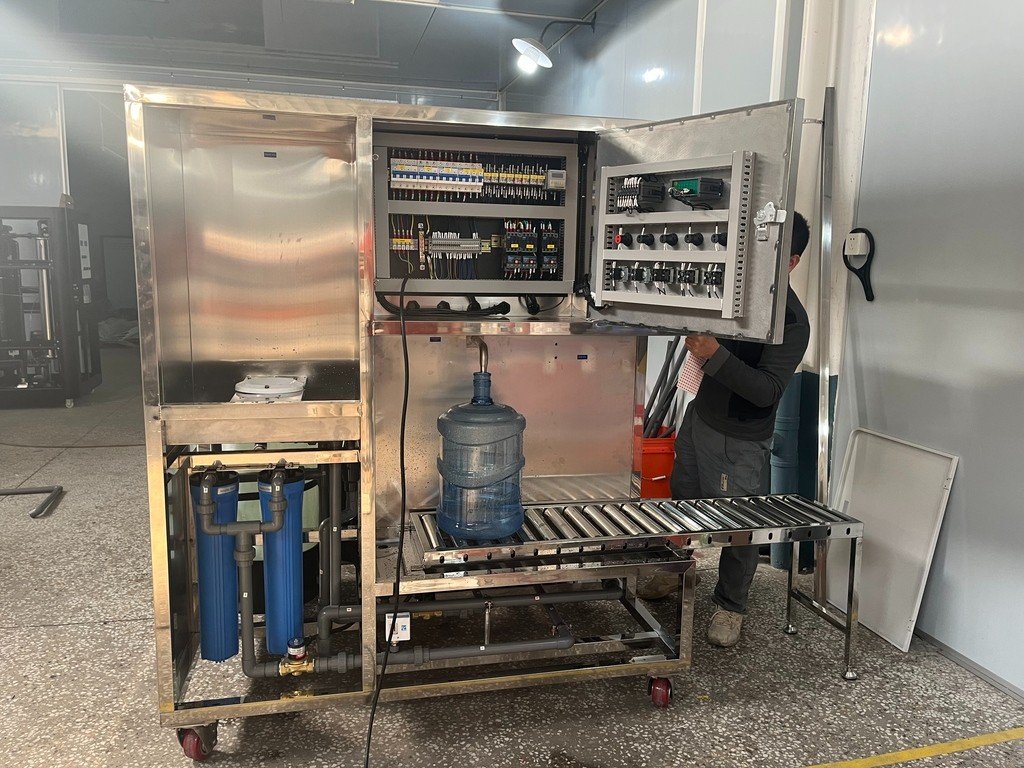
在瓶裝水生產行業中,設備穩定性、產水效率、集成度是影響水銷售利潤的關鍵因素。瓶裝水反滲透機以其 「清洗+淨化+灌裝 」的一體化設計,成為中小型瓶裝水生產商的理想選擇。該設備可精確匹配小型水廠的批量生產需求,兼具實用性與成本效益。.
What are the benefits of using a bottled water reverse osmosis system?
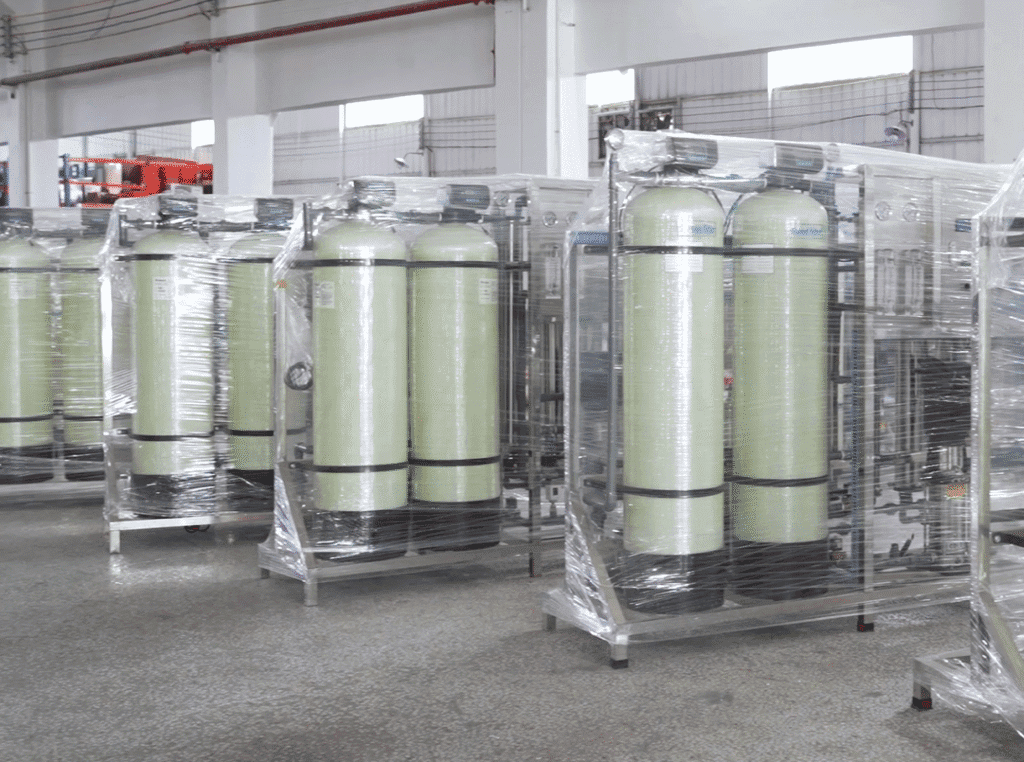
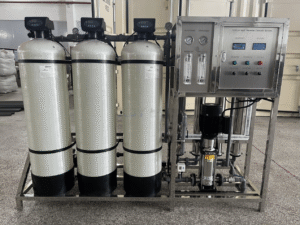
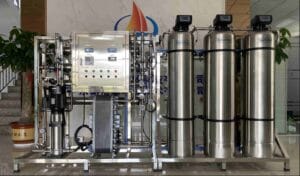
Reverse osmosis (RO) technology is the core support for bottled water purification. This 250LPH bottled water RO machine is equipped with high-quality RO membrane modules, which can efficiently remove impurities, heavy metal ions, microorganisms, and soluble salts from the raw water. It can ensure that the output water quality fully meets bottled drinking water hygiene standards.
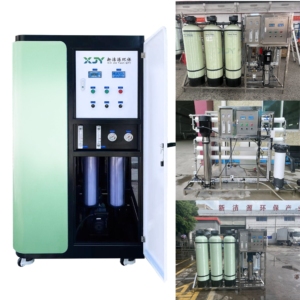
Compared to traditional split-type equipment, this model highly integrates the reverse osmosis water purification module, water storage device, and filling system, eliminating the need for additional complex piping and auxiliary facilities. This significantly reduces the footprint and lowers the risk of malfunctions at equipment connections, reducing subsequent maintenance costs.
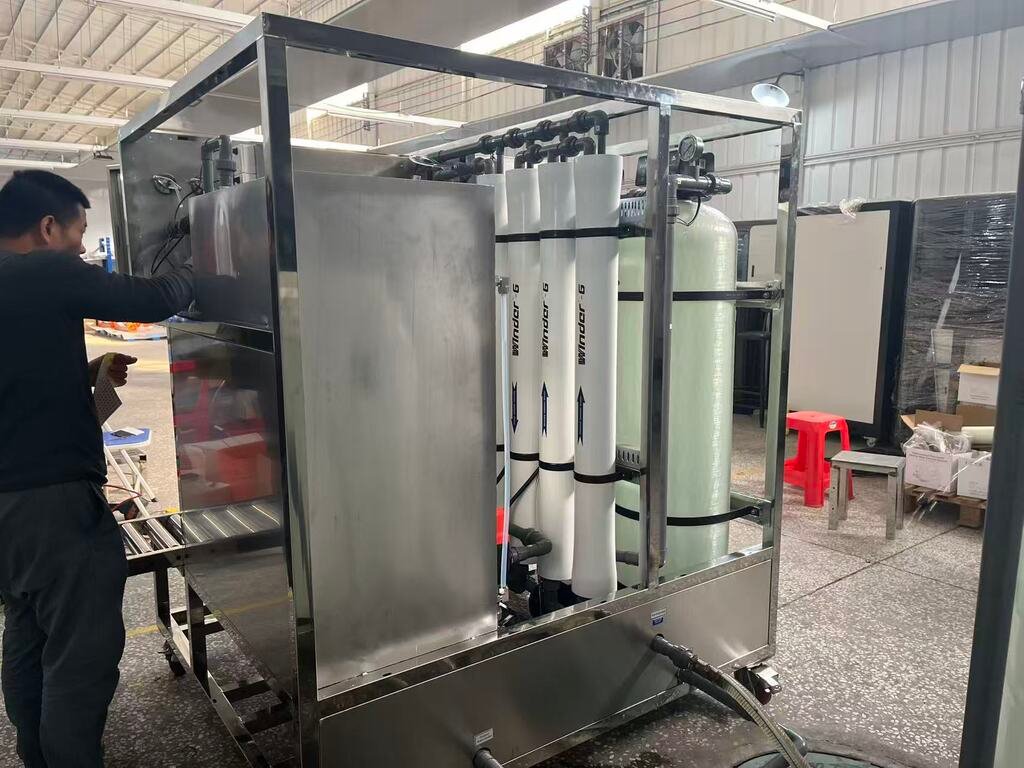
Excellent raw water adaptability is a key highlight of this bottled water RO machine. The equipment optimizes the pretreatment process for different water sources such as tap water, groundwater, and spring water, featuring a triple pretreatment unit: quartz sand filtration, activated carbon adsorption, and precision filtration. The filtration precision can be dynamically adjusted according to the raw water quality, effectively preventing the RO membrane from experiencing reduced lifespan due to impurity buildup. The filling rate and water purification efficiency are precisely synchronized, enabling continuous production of “filter and fill immediately” without the need for intermediate shutdowns.
What precautions should be taken when using a bottled water reverse osmosis machine?
During equipment operation, it is crucial to focus on adapting to operating conditions and conducting thorough initial commissioning. As these are prerequisites for ensuring long-term stable operation. Before startup, a simple test of the raw water quality should be performed. In order to determine key indicators such as turbidity and hardness, preventing excessive fluctuations in raw water quality that could exceed the pretreatment unit’s capacity. During operation, the working pressure and permeate flow rate of the RO membrane must be monitored in real time. If abnormal increases in pressure or sudden drops in flow occur, the system should be shut down immediately for troubleshooting. If the pretreatment filter cartridge is clogged or scale has formed on the RO membrane surface. It must be addressed promptly before restarting the equipment; continuous operation with malfunctions is strictly prohibited.
Routine maintenance should follow standardized procedures, with a focus on the status management of core components.
- It is recommended to replace the quartz sand filter media and activated carbon in the pretreatment unit every 3-6 months. The specific cycle should be adjusted according to the turbidity of the raw water and the frequency of use.
- Precision filter cartridges need to be inspected monthly, and replaced immediately. If they become clogged or damaged to prevent impurities from penetrating into the RO membrane.
- As a core component, the RO membrane needs to be chemically cleaned regularly to remove contaminants adhering to its surface. The cleaning cycle is usually 1-2 months. After cleaning, the quality of the produced water needs to be tested to ensure that it meets production standards.
Summarize
Bottled water reverse osmosis systems offer a cost-effective solution for small- to medium-sized bottled water production. Thank to their precise water production matching, integrated design, and controllable operating costs. They enable large-scale production and improved efficiency, making them a practical benchmark equipment in the bottled water production industry.
 English
  Belarusian
  Chinese
  Danish
  French
  German
  Indonesian
  Italian
  Spanish
  Japanese
  Korean
  Portuguese
  Thai
Thai  Dutch
Dutch