The stable operation, improved efficiency, and cost control of seawater 海水淡化廠 is always dependent on the technological capabilities of water treatment equipment.
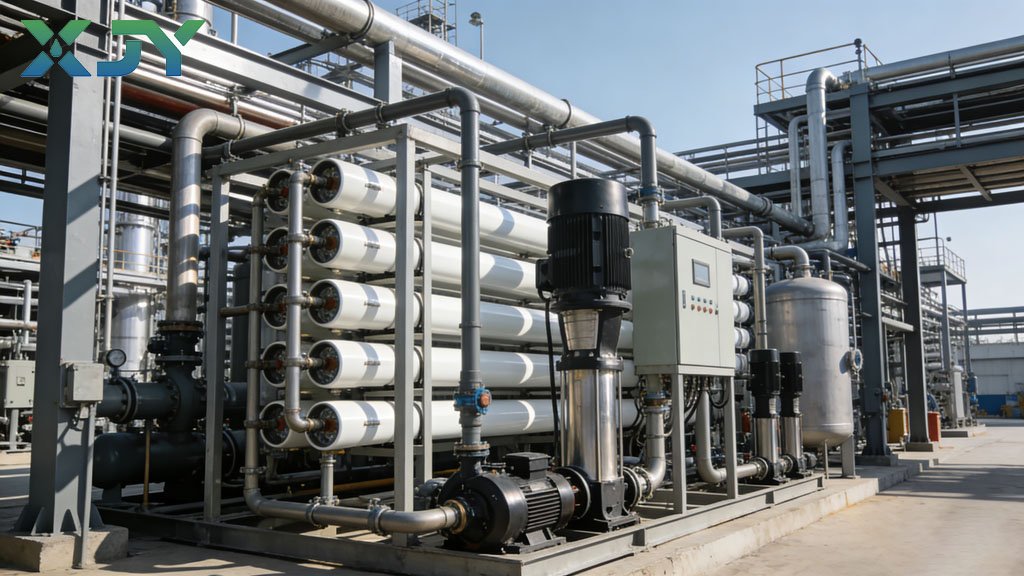
As a manufacturer of industrial water treatment equipment, we are deeply committed to the research and optimization of core equipment, becoming a key force in promoting the high-quality development of the seawater desalination industry.
What are the different seawater desalination plant processes?
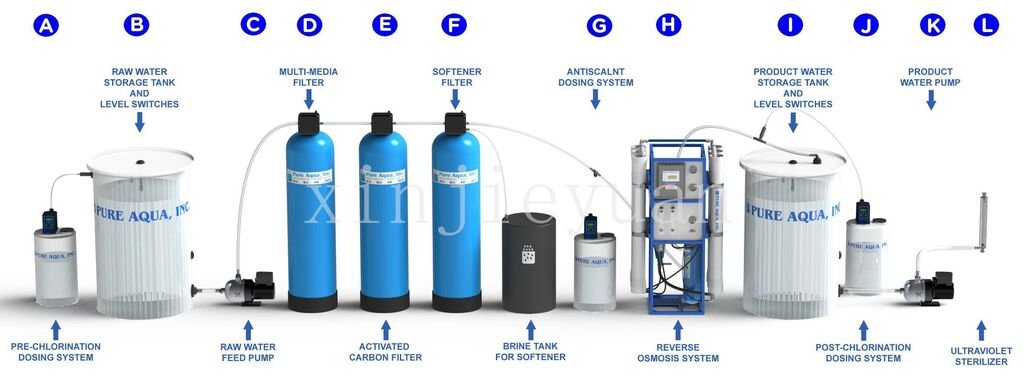
The successful implementation of desalination processes hinges on the performance evolution of water treatment equipment. Currently, the two main technological approaches, ro and multi-stage flash distillation, both rely on specialized equipment as their core support.
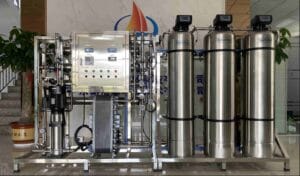
In reverse osmosis technology, high-pressure pumps provide stable pressure to drive seawater osmosis. Customized membrane modules precisely separate salt from water, and energy recovery devices significantly reduce energy consumption. The synergy of these three components determines the core efficiency of the desalination system.
The application of multi-stage flash distillation technology relies heavily on corrosion-resistant heat exchange equipment. And precise pressure control devices to ensure a continuous and stable seawater vaporization and condensation process. Thereby mitigate the damage to equipment caused by the high-salinity environment.
What do we need to do at each stage?
The entire process of a seawater desalination plant requires customized water treatment equipment at every stage. And the suitability of the equipment directly determines the success of the project.
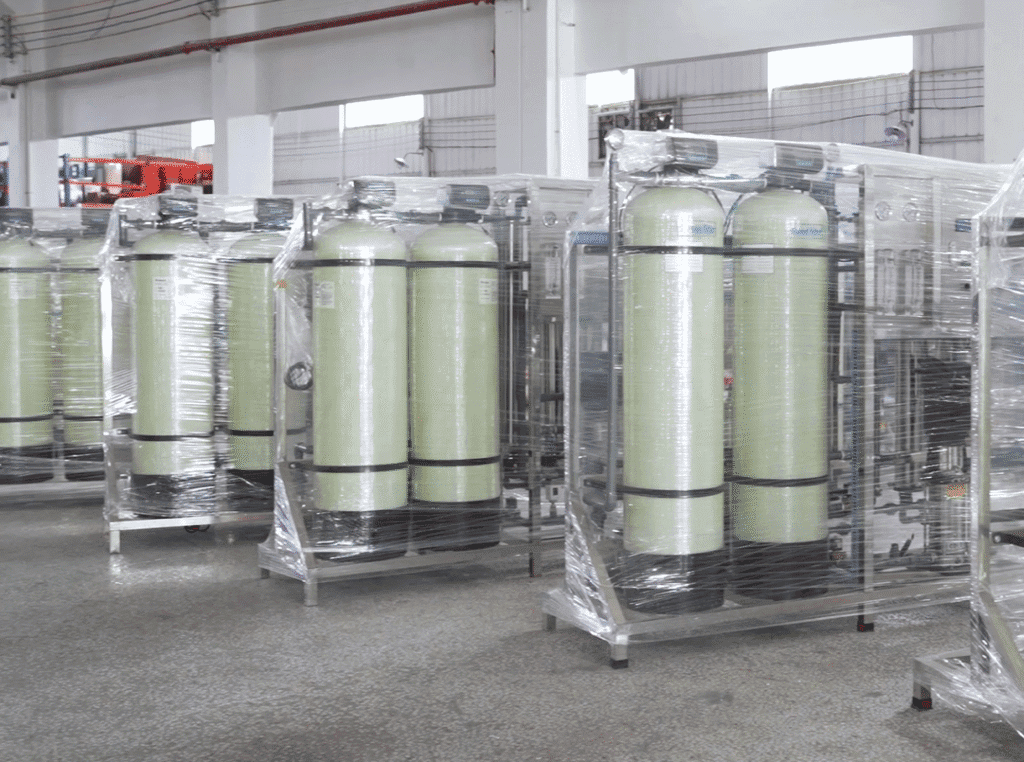
The water intake stage requires highly corrosion-resistant intake pumps. And precision screening equipment to intercept marine impurities while resisting corrosion from high chloride ion concentrations.
In the pretreatment stage, multi-media filters and high-precision filtration equipment must control the silt density index (SDI) within a safe range, building a robust protective barrier for subsequent core equipment.
The high-pressure pumps in the desalination stage need to stably output a pressure of 5.5-6.8 MPa. And the energy recovery equipment must achieve a recovery rate of over 40%, significantly reducing operating costs.
The mineralization adjustment and disinfection equipment in the post-treatment stage ensure that the treated water quality is suitable for different application scenarios.
What is the current state of development of seawater desalination plant?
The global wave of upgrades in the seawater desalination industry is forcing water treatment equipment to transform towards higher efficiency, energy saving, and intelligence. High-quality equipment has become a core factor in improving quality and efficiency for desalination plants.
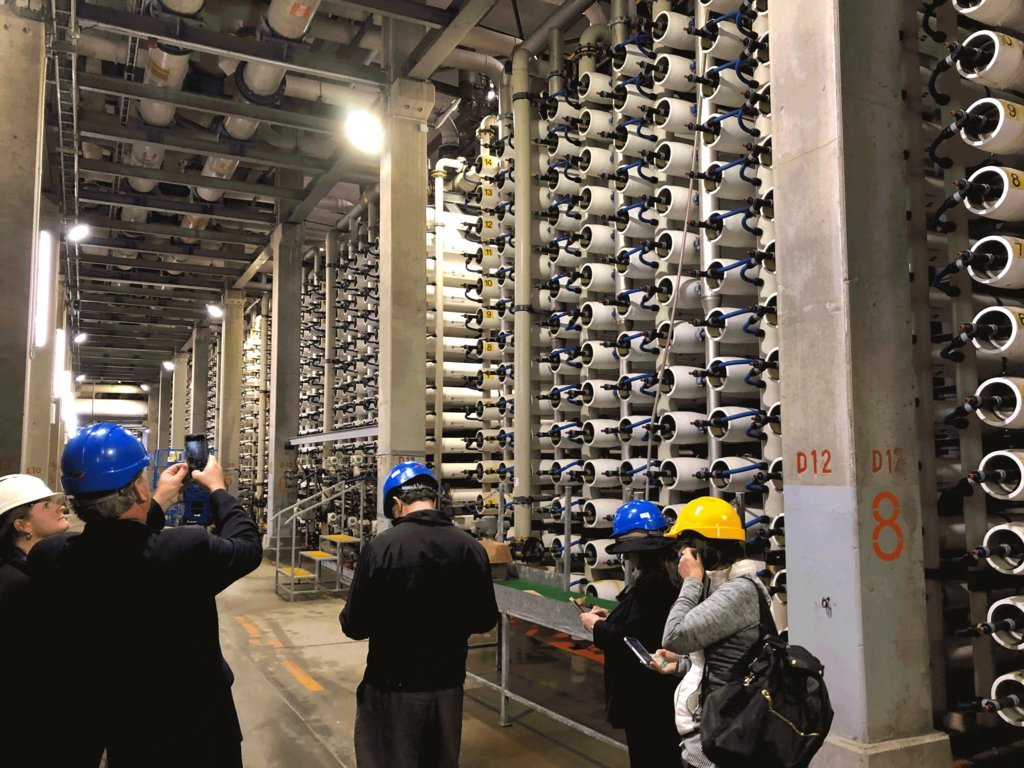
A seawater desalination plant in Israel uses customized low-energy high-pressure pumps and high-efficiency reverse osmosis membrane components, controlling the energy consumption per ton of water to below 3 kWh, with the core equipment operating stably for over 8500 hours annually.
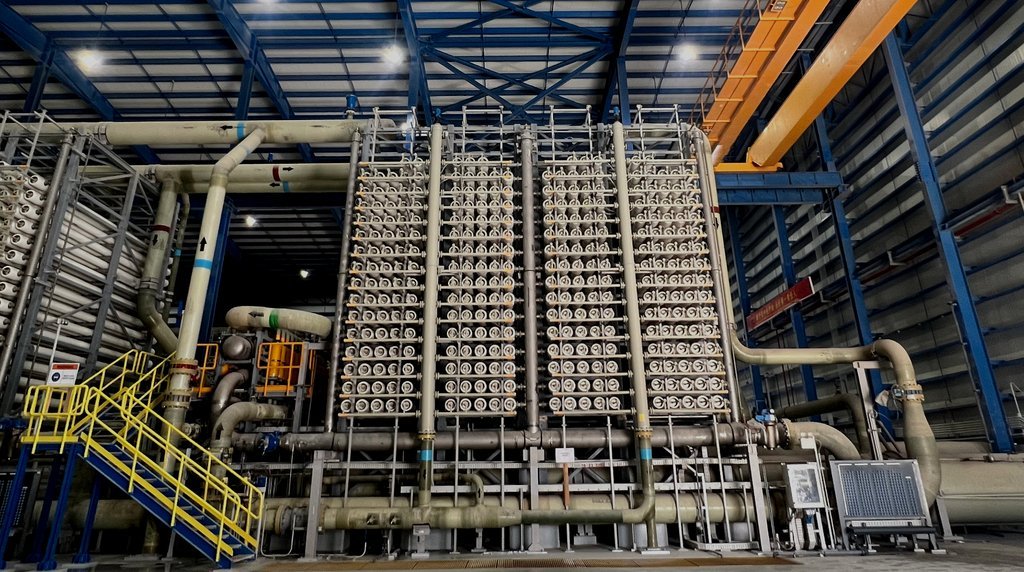
The Jubail desalination plant in Saudi Arabia is equipped with intelligent control energy recovery devices and a corrosion-resistant heat exchange system, resulting in a 30% reduction in overall energy consumption compared to traditional projects.
In the Tangshan Sanyou Blue Ocean Technology project in China, customized process water pumps achieved a daily delivery volume of 250,000 tons. Thanks to the corrosion resistance of the duplex stainless steel material, they achieved over 8,000 hours of stable operation annually. And demonstrate the core competitiveness of domestically produced industrial water treatment equipment.
What should water treatment equipment manufacturers do?
As a water treatment manufacturer deeply rooted in the industry, we must be guided by market demand. It means we need to focuse on technological breakthroughs and solution optimization for core equipment.
For example, addressing the challenges of high corrosion and high energy consumption in seawater desalination. We are increasing R&D investment in core components such as high-pressure pumps, membrane modules, and energy recovery devices. Through material upgrades and structural optimization, we aim to improve the corrosion resistance, stability, and energy efficiency of our equipment.
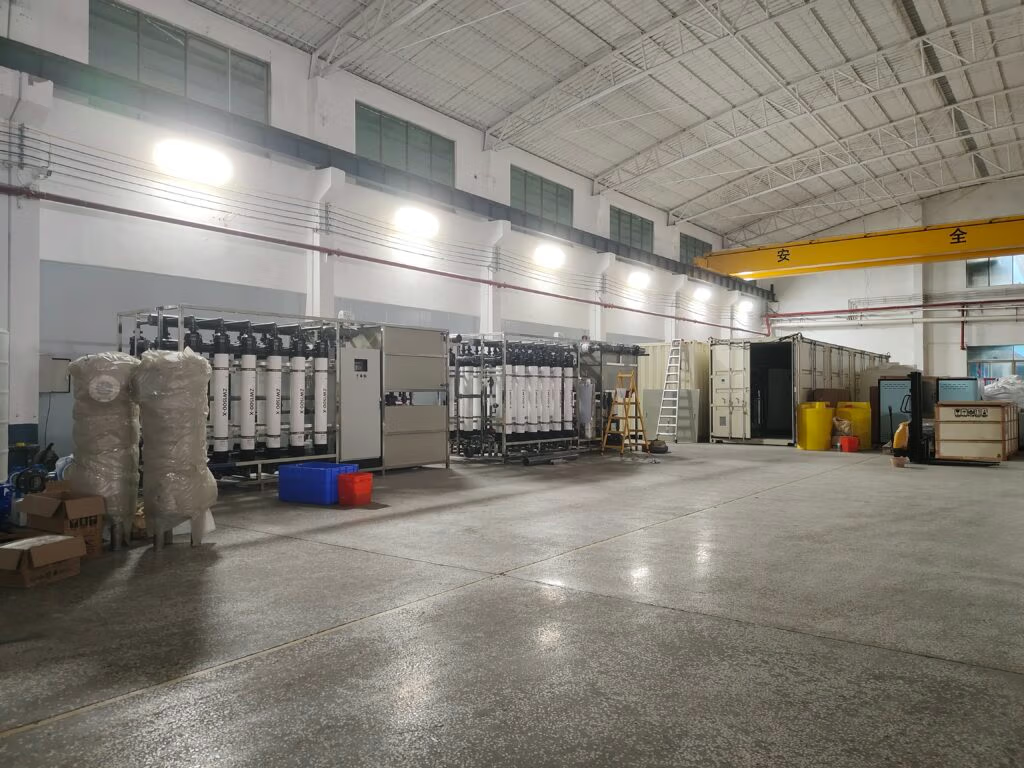
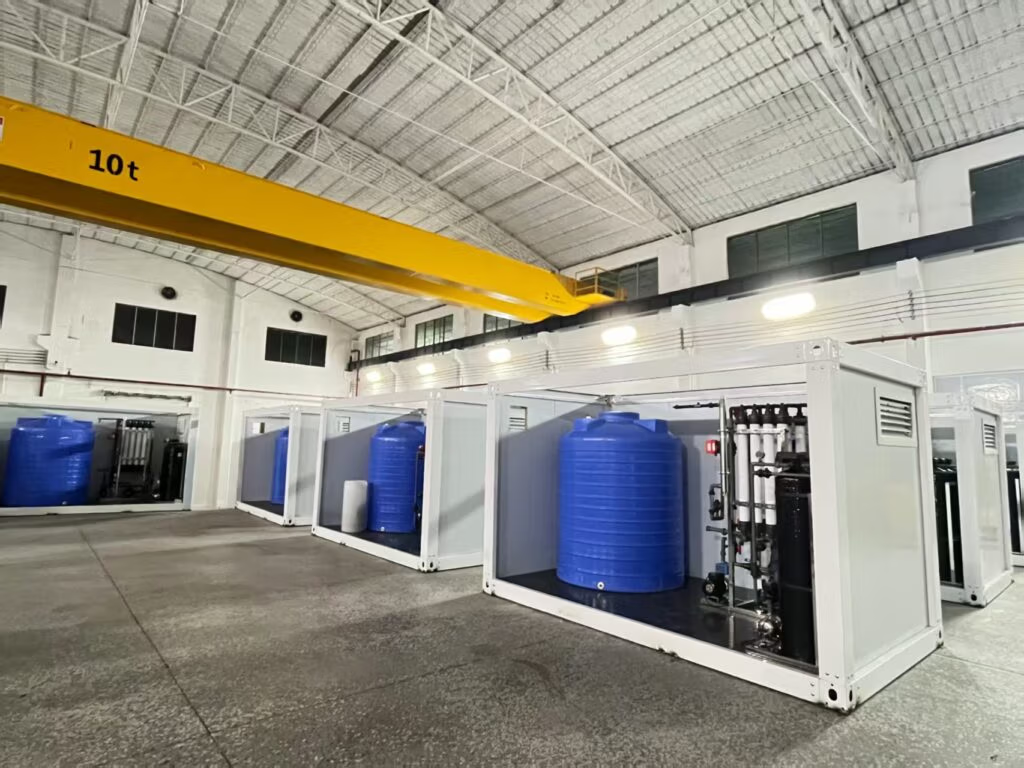
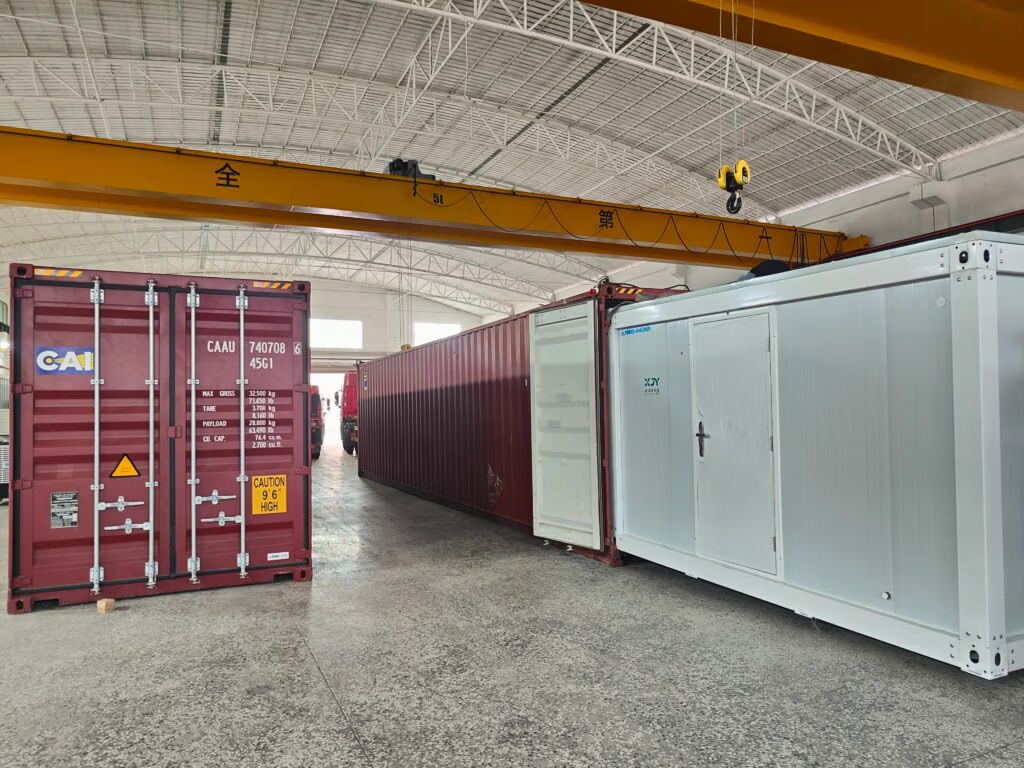
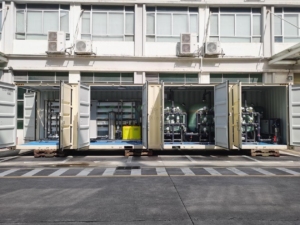
At the same time, leveraging our modular design capabilities, we provide customized equipment solutions for desalination plants of different scales and processes, catering to both large-scale municipal projects and small-scale industrial needs.
Furthermore, we are collaborating with desalination plants to explore pathways for the resource utilization. Then achieve multi-stage extraction of resources such as bromine and magnesium through equipment adaptation. Thereby building a circular economy model and improving the overall efficiency of the projects.
Summarize
The continuous growth in global freshwater demand presents vast development opportunities for the desalination industry. And water treatment equipment, as a core supporting element, will undergo higher levels of technological innovation.
In the future, we need to continuously focus on technological innovation, optimizing equipment performance and system integration capabilities. Then we can overcome energy consumption, cost, and environmental challenges in the desalination process, and provide reliable equipment support and professional solutions.
 English
  Belarusian
  Chinese
  Danish
  French
  German
  Indonesian
  Italian
  Spanish
  Japanese
  Korean
  Portuguese
  Thai
Thai  Dutch
Dutch