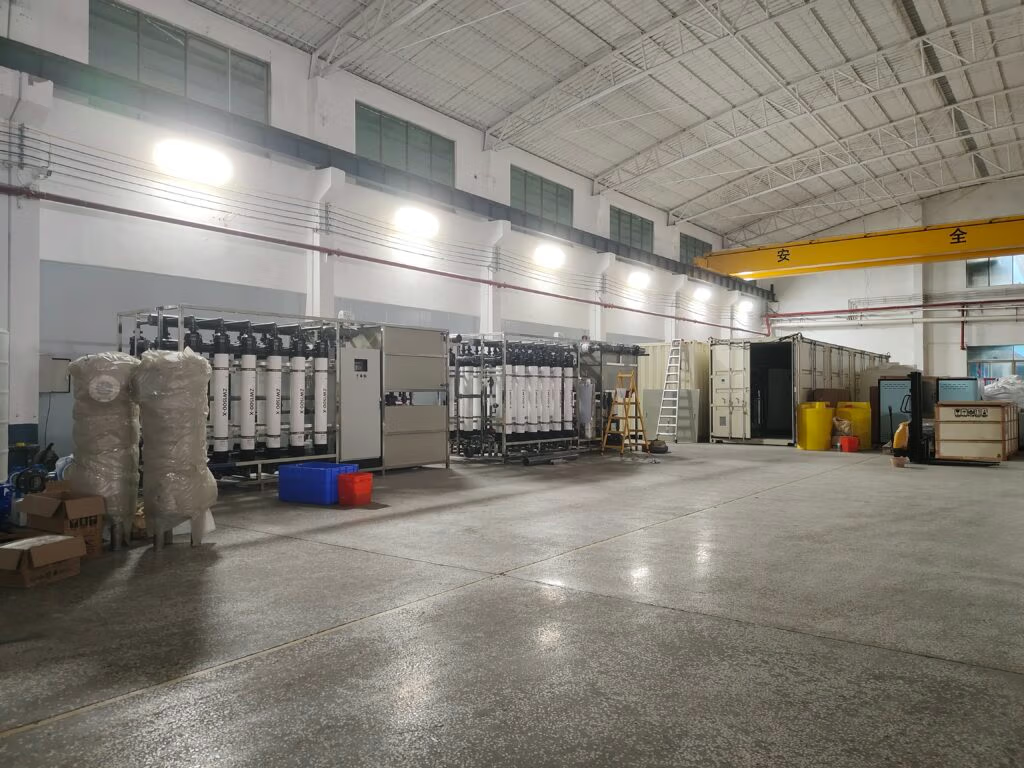
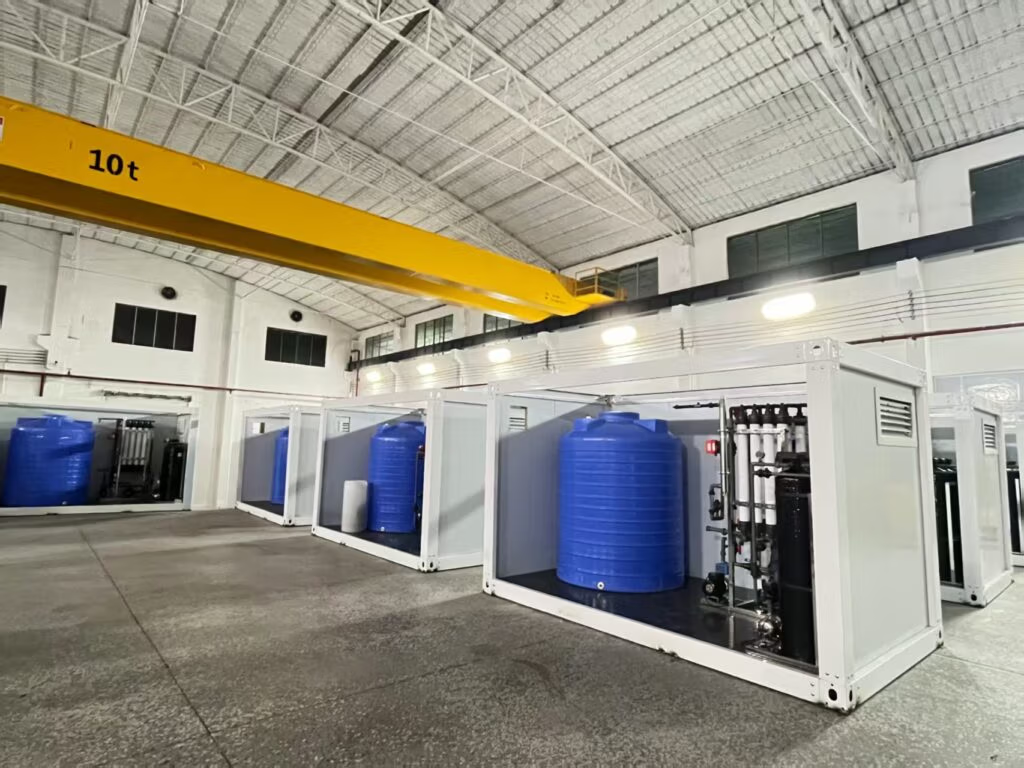
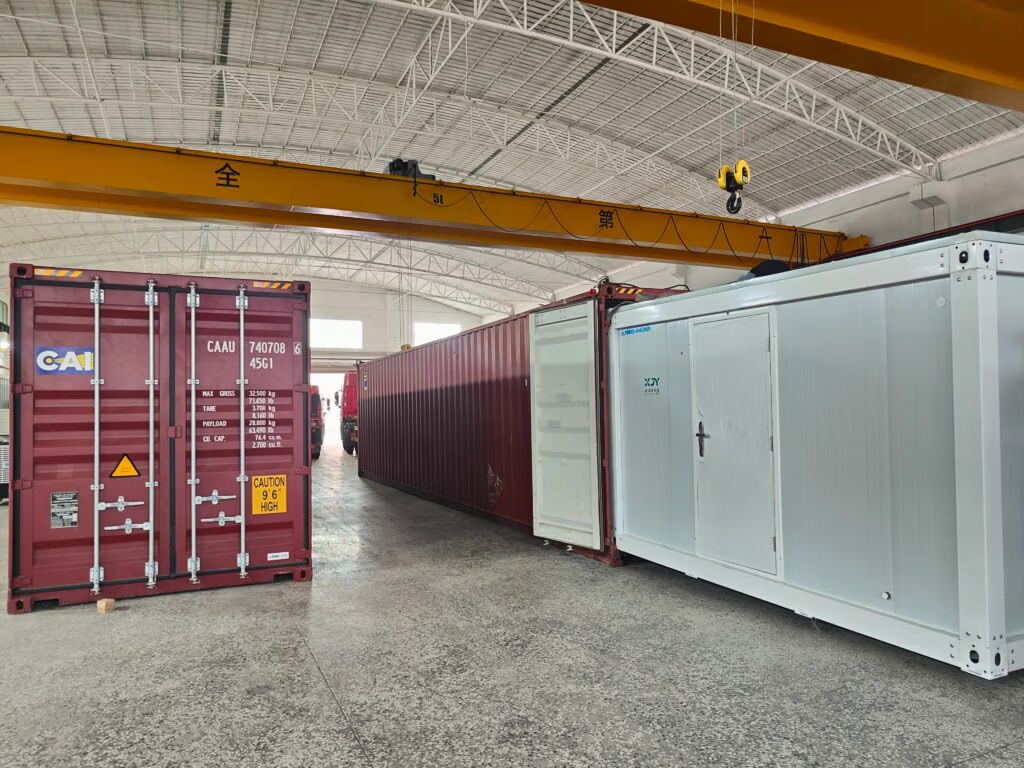
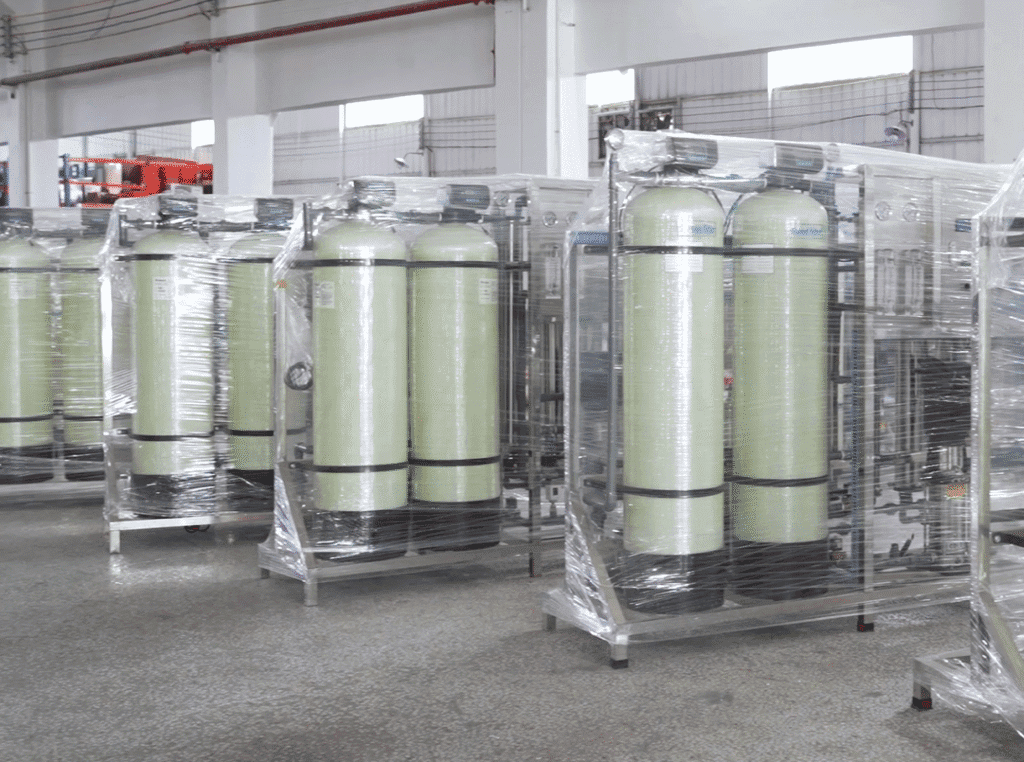
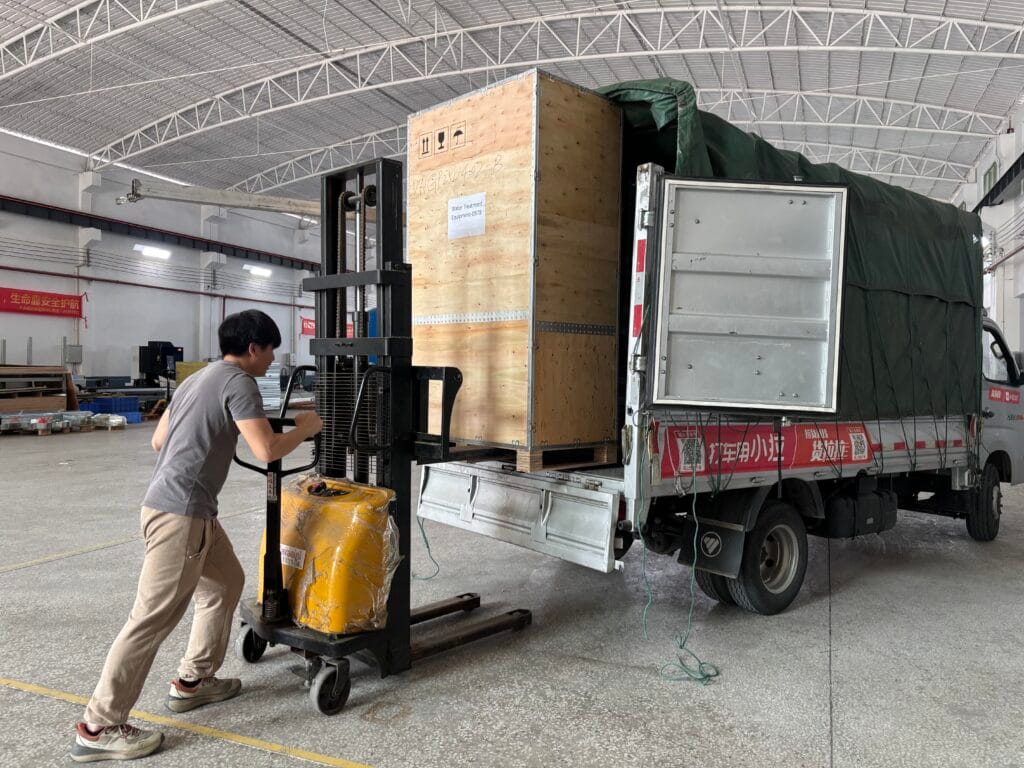
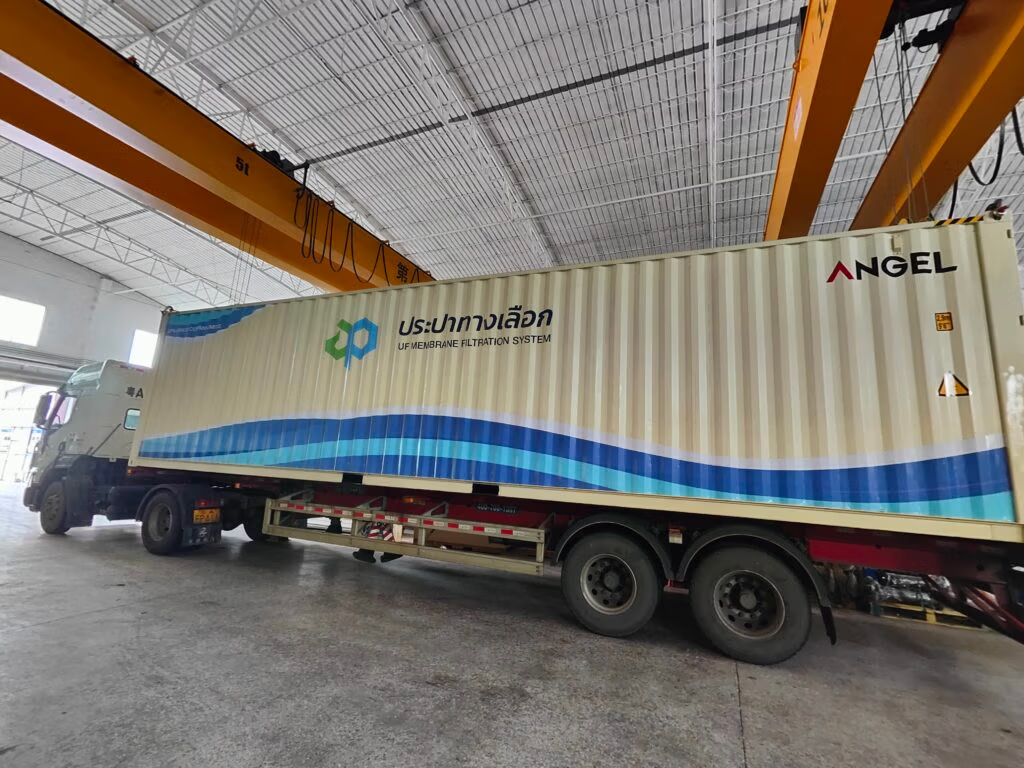
Brackish water, a water source with salinity between freshwater and seawater, is currently a highly promising alternative water source. Brackish desalination equipment, thanks to technological innovation and adaptation to various scenarios, is gradually alleviating the global imbalance between water supply and demand.

This type of equipment is specifically designed for low-salinity water sources such as groundwater and estuarine seepage water. Through diverse technological means, it achieves efficient desalination and can effectively serve various water supply needs in arid regions, industrial water supply, and other scenarios.
Development trends in brackish desalination technology
Energy recovery system upgrade
Brackish water desalination technology is steadily improving towards greater energy efficiency and modularity. Traditional reverse osmosis technology remains the mainstream, with key advancements focusing on optimizing membrane modules and upgrading energy recovery systems.
The iSave™ energy recovery device developed by Australian company SAE can recover 95% of the remaining energy from concentrated brine, requiring only 1.7 kilowatt-hours of electricity to treat one ton of brackish water. The operating cost is approximately $0.36 per ton, representing a 60% energy saving compared to traditional equipment.
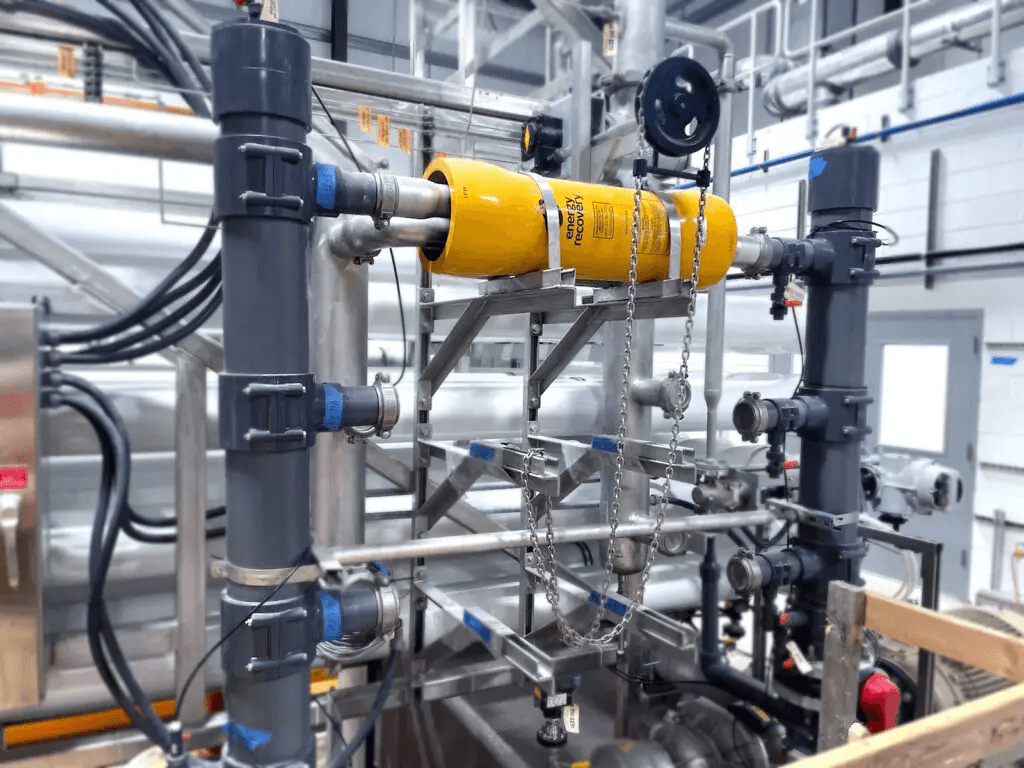
This technology has been widely used in Africa, on islands in Oceania, and in arid regions. Four desalination plants built in South Africa, each capable of processing 5,000 tons of water per day, utilize this technology and have successfully solved the water supply problems for local residents.
Scope of application expanded
Diverses technologies innovantes élargissent sans cesse le champ d'application des équipements de dessalement d'eau saumâtre.
L'équipe du professeur Yat Li, aux États-Unis, a combiné l'impression 3D et la désionisation capacitive (CDI) pour créer une nouvelle génération d'équipements de dessalement d'eau saumâtre. Ce dispositif ne repose pas sur les structures membranaires traditionnelles ; il utilise des électrodes positives et négatives pour adsorber les ions de sel présents dans l'eau. Lors du traitement d'eaux faiblement salées, il est nettement plus économe en énergie que les méthodes traditionnelles, et la saumure concentrée obtenue a un impact environnemental minimal. Les chercheurs ont mis au point un matériau de carbone conducteur poreux d'une surface spécifique de 3 000 m²/g et, en l'associant à une structure d'électrodes interpénétrées tridimensionnelle, ils ont considérablement amélioré l'efficacité du dessalement, ouvrant ainsi la voie à une nouvelle approche pour le dessalement des eaux souterraines dans les zones côtières.
Brackish desalination technology is developing steadily
Large companies’ investments in brackish water desalination technology are also driving the continuous development of this industry. Companies like Dow Chemical and Hydranautics produce reverse osmosis membranes that offer excellent desalination performance and long service life, making them highly competitive in the global market. Their developed anti-fouling membrane modules can handle complex brackish water compositions, reducing the frequency of equipment maintenance.
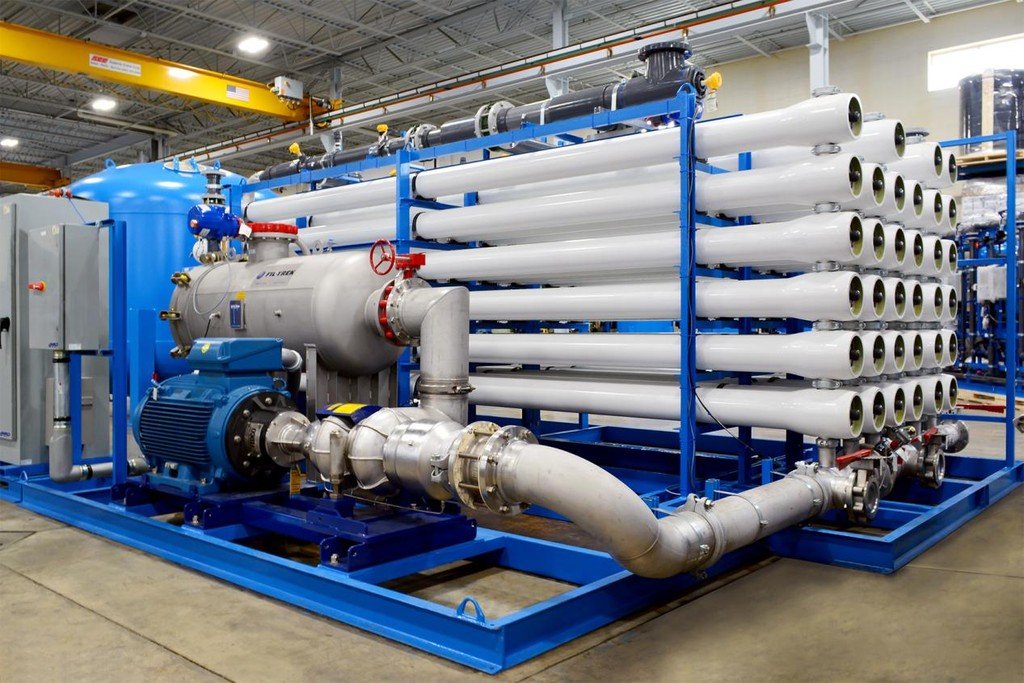
German company Meinert focuses on customized services, designing dual-membrane systems combining microfiltration and reverse osmosis for industrial applications. They have performed exceptionally well in wastewater recycling and desalination in industries such as electronics and chemicals.
What are the characteristics of customized desalination equipment?
Le Moyen-Orient a des besoins particuliers en équipements de dessalement d'eau saumâtre. Les équipements utilisés dans cette région sont généralement résistants à la corrosion, possèdent une capacité de production élevée et peuvent supporter les conditions environnementales extrêmes de températures et de salinité élevées.
European and American regions, on the other hand, place more emphasis on environmental protection, striving to combine desalination equipment with clean energy sources such as solar and wind power, achieving a model of “producing clean water using green electricity.”
Flocean, a Norwegian startup company, has developed an underwater brackish water desalination module that uses the natural pressure of the deep sea to drive desalination, saving 30% to 50% of electricity compared to land-based equipment and also saving considerable space. It is expected to be commercially available in 2026 and will be able to meet water needs in various scenarios.
Résumer
Des technologies d'osmose inverse écoénergétiques aux solutions de dessalement innovantes sans membrane, et des régions arides aux zones côtières, ces dispositifs de dessalement d'eau saumâtre jouent un rôle crucial dans divers domaines. À l'avenir, avec l'intégration croissante des énergies propres et des nouveaux matériaux, l'industrie continuera de moderniser les équipements de dessalement d'eau saumâtre, réduisant ainsi les coûts, améliorant l'efficacité et contribuant de manière significative à une gestion durable des ressources en eau mondiales.