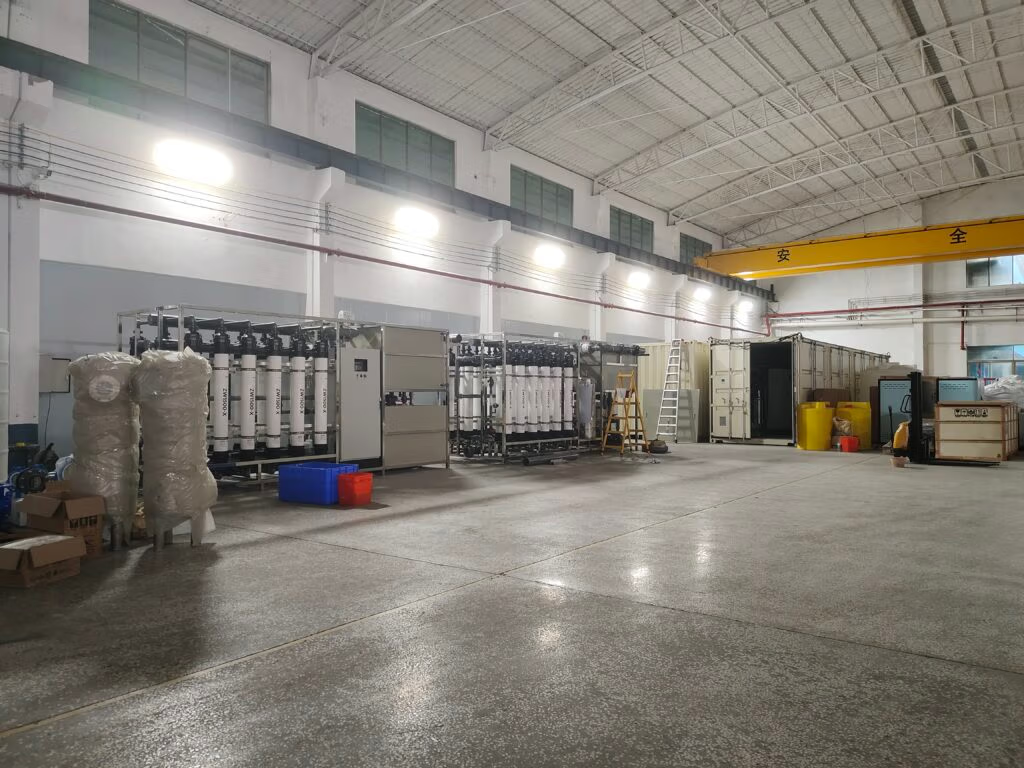
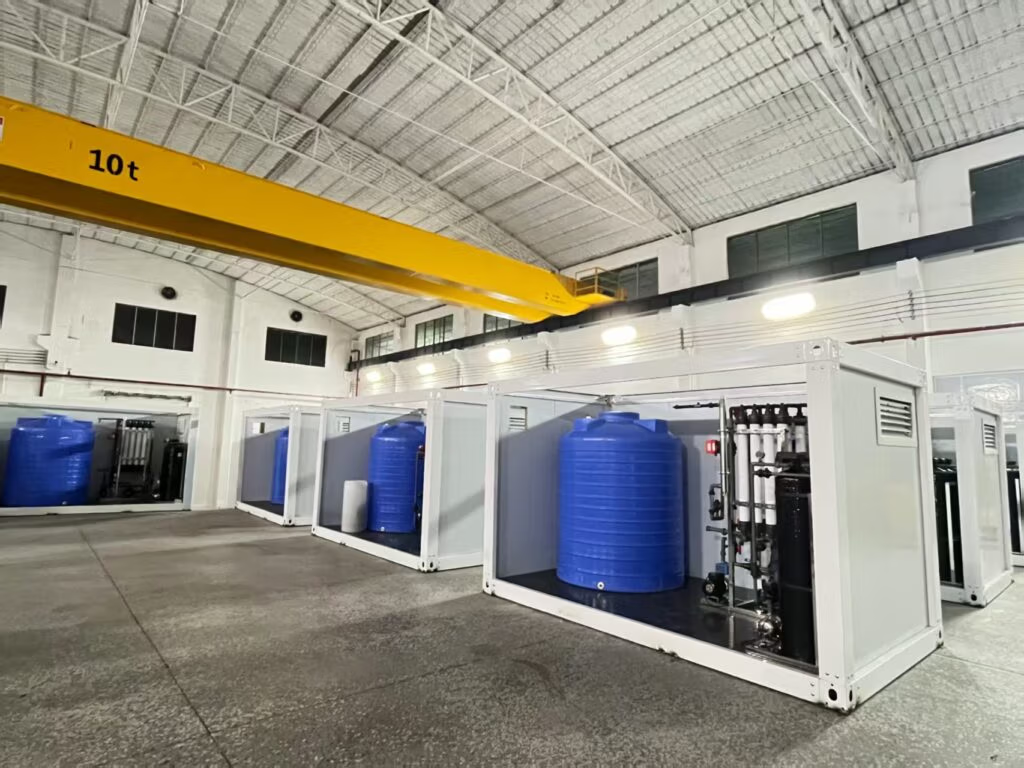
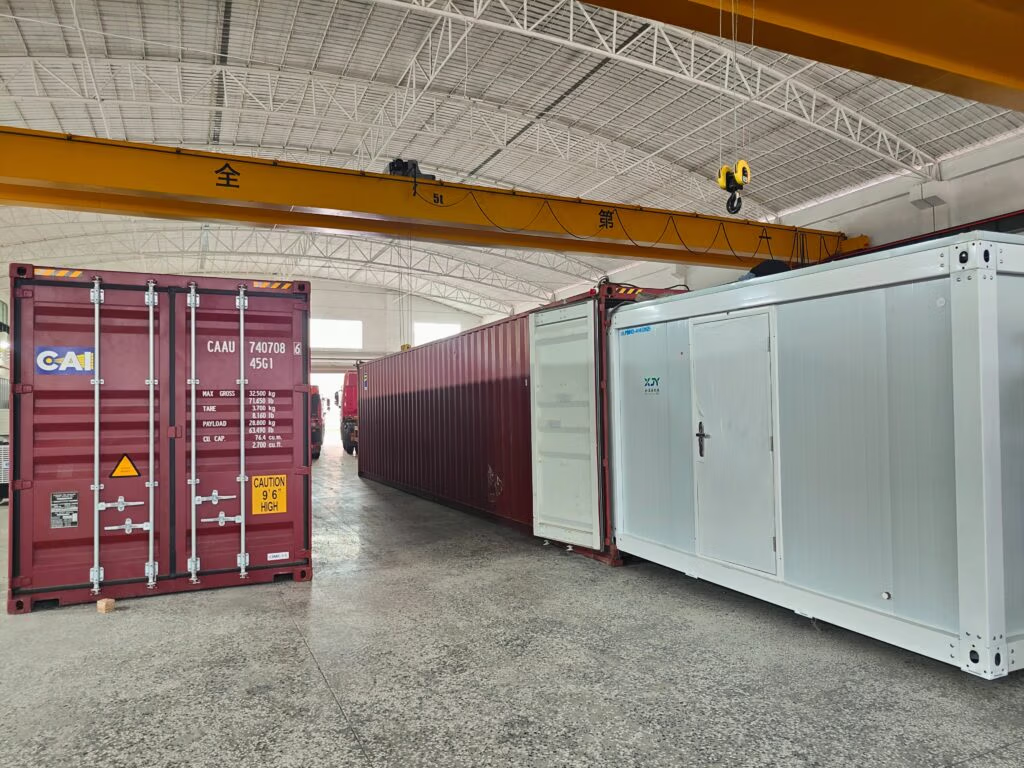
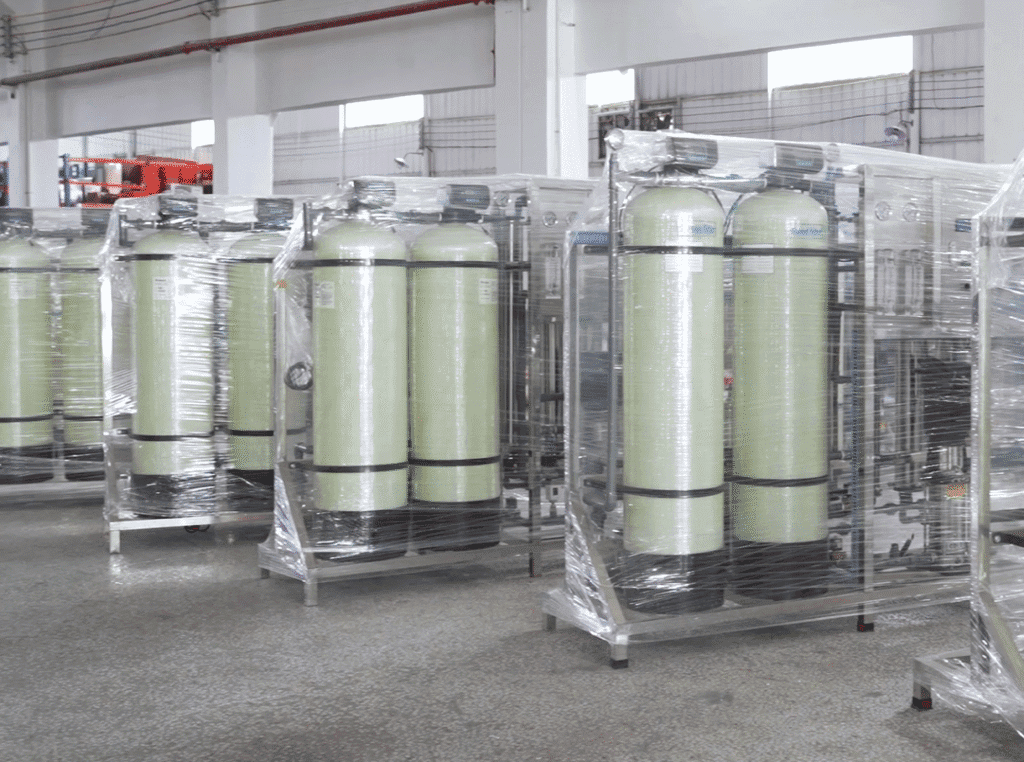
Brackish water, a water source with salinity between freshwater and seawater, is currently a highly promising alternative water source. Brackish desalination equipment, thanks to technological innovation and adaptation to various scenarios, is gradually alleviating the global imbalance between water supply and demand.

This type of equipment is specifically designed for low-salinity water sources such as groundwater and estuarine seepage water. Through diverse technological means, it achieves efficient desalination and can effectively serve various water supply needs in arid regions, industrial water supply, and other scenarios.
Development trends in brackish desalination technology
Energy recovery system upgrade
Brackish water desalination technology is steadily improving towards greater energy efficiency and modularity. Traditional reverse osmosis technology remains the mainstream, with key advancements focusing on optimizing membrane modules and upgrading energy recovery systems.
The iSave™ energy recovery device developed by Australian company SAE can recover 95% of the remaining energy from concentrated brine, requiring only 1.7 kilowatt-hours of electricity to treat one ton of brackish water. The operating cost is approximately $0.36 per ton, representing a 60% energy saving compared to traditional equipment.
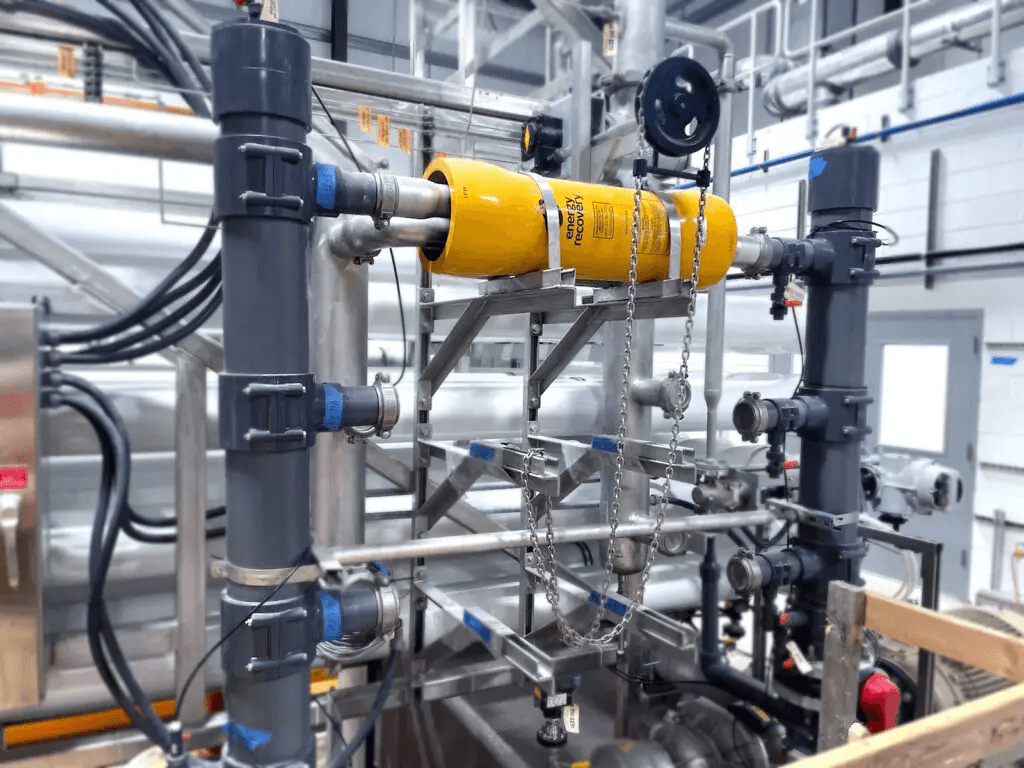
This technology has been widely used in Africa, on islands in Oceania, and in arid regions. Four desalination plants built in South Africa, each capable of processing 5,000 tons of water per day, utilize this technology and have successfully solved the water supply problems for local residents.
Scope of application expanded
Berbagai teknologi inovatif terus memperluas cakupan aplikasi peralatan desalinasi air payau.
Tim Profesor Yat Li di Amerika Serikat menggabungkan teknologi pencetakan 3D dengan deionisasi kapasitif (CDI) untuk menciptakan generasi baru peralatan desalinasi air payau. Perangkat ini tidak bergantung pada struktur membran tradisional; sebaliknya, ia menggunakan elektroda positif dan negatif untuk menyerap ion garam dari air. Saat mengolah air dengan salinitas rendah, perangkat ini jauh lebih hemat energi daripada metode tradisional, dan air garam pekat yang dihasilkan memiliki dampak lingkungan yang minimal. Mereka mengembangkan material karbon konduktif berpori dengan luas permukaan 3000 meter persegi per gram, dan dengan menggabungkannya dengan struktur elektroda interpenetrasi tiga dimensi, mereka telah meningkatkan efek desalinasi secara signifikan dan memberikan pendekatan baru untuk desalinasi air tanah di daerah pesisir.
Brackish desalination technology is developing steadily
Large companies’ investments in brackish water desalination technology are also driving the continuous development of this industry. Companies like Dow Chemical and Hydranautics produce reverse osmosis membranes that offer excellent desalination performance and long service life, making them highly competitive in the global market. Their developed anti-fouling membrane modules can handle complex brackish water compositions, reducing the frequency of equipment maintenance.
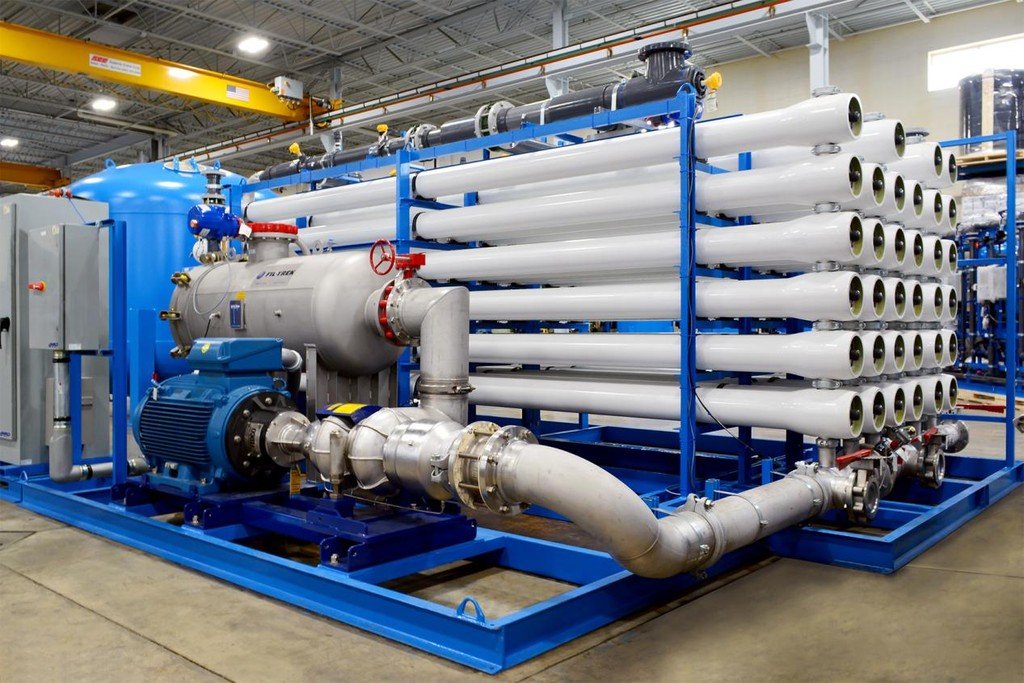
German company Meinert focuses on customized services, designing dual-membrane systems combining microfiltration and reverse osmosis for industrial applications. They have performed exceptionally well in wastewater recycling and desalination in industries such as electronics and chemicals.
What are the characteristics of customized desalination equipment?
Timur Tengah memiliki kebutuhan khusus akan peralatan desalinasi air payau. Peralatan yang digunakan di sana sebagian besar tahan korosi, memiliki kapasitas produksi yang tinggi, dan dapat tahan terhadap lingkungan yang keras dengan suhu tinggi dan salinitas tinggi.
European and American regions, on the other hand, place more emphasis on environmental protection, striving to combine desalination equipment with clean energy sources such as solar and wind power, achieving a model of “producing clean water using green electricity.”
Flocean, a Norwegian startup company, has developed an underwater brackish water desalination module that uses the natural pressure of the deep sea to drive desalination, saving 30% to 50% of electricity compared to land-based equipment and also saving considerable space. It is expected to be commercially available in 2026 and will be able to meet water needs in various scenarios.
Rangkuman
Mulai dari teknologi osmosis balik yang hemat energi hingga solusi desalinasi inovatif tanpa membran, dan dari daerah kering hingga daerah pesisir, perangkat desalinasi air payau ini memainkan peran penting di berbagai bidang. Di masa depan, seiring dengan semakin terintegrasinya energi bersih dan teknologi material baru, industri akan terus meningkatkan peralatan desalinasi air payau, memangkas biaya, meningkatkan efisiensi, dan memberikan kontribusi yang jauh lebih signifikan terhadap pemanfaatan sumber daya air global secara berkelanjutan.