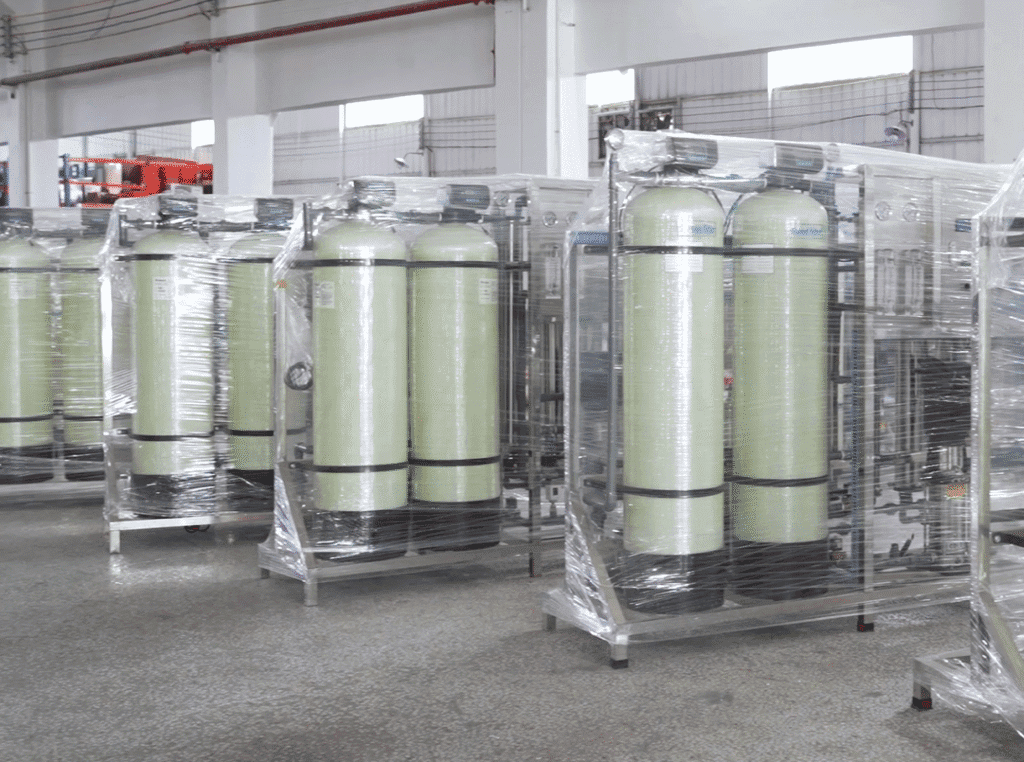
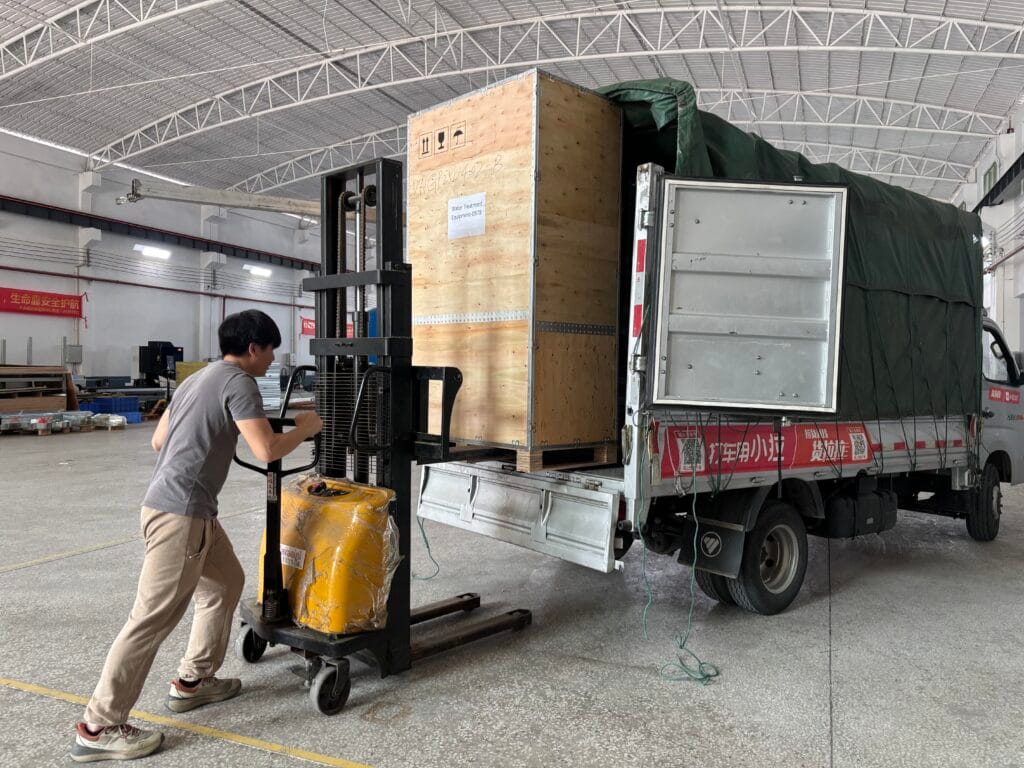
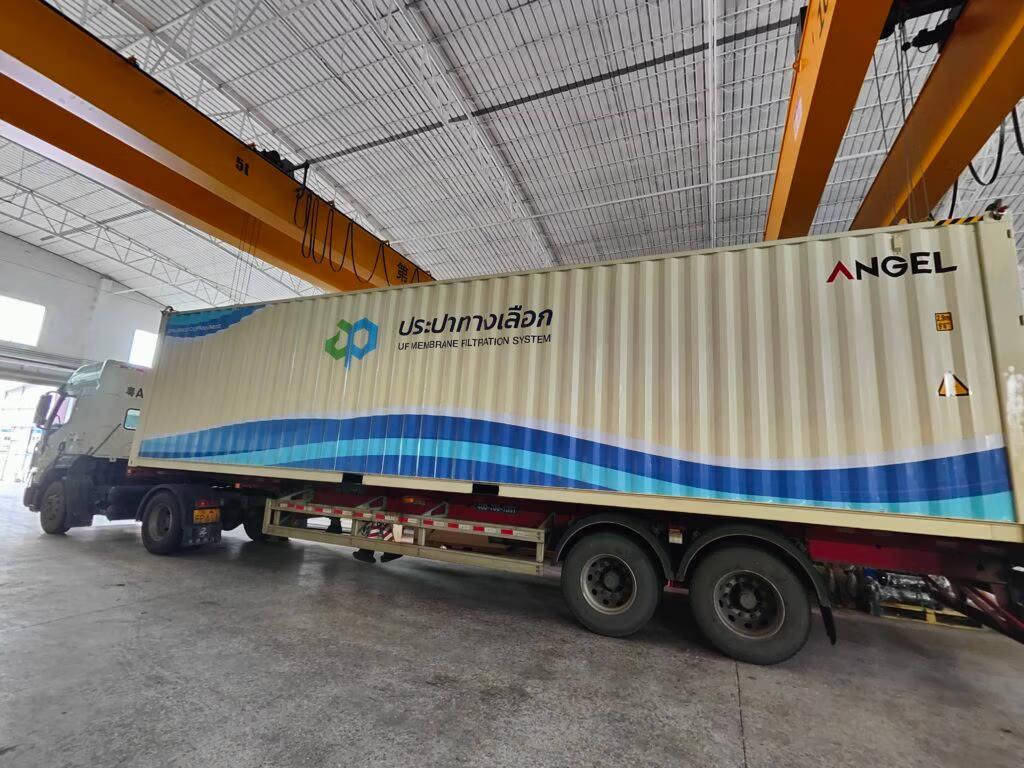
According to UN data, over one-third of the world’s population faces water scarcity. Therefore, the global shortage of freshwater resources severely impacts human societal development. Against this backdrop, the urgent need for freshwater among residents in arid and water-scarce coastal areas has driven the rapid development of seawater desalination technology. Through ro desalination system, bitter seawater can be transformed into usable freshwater.
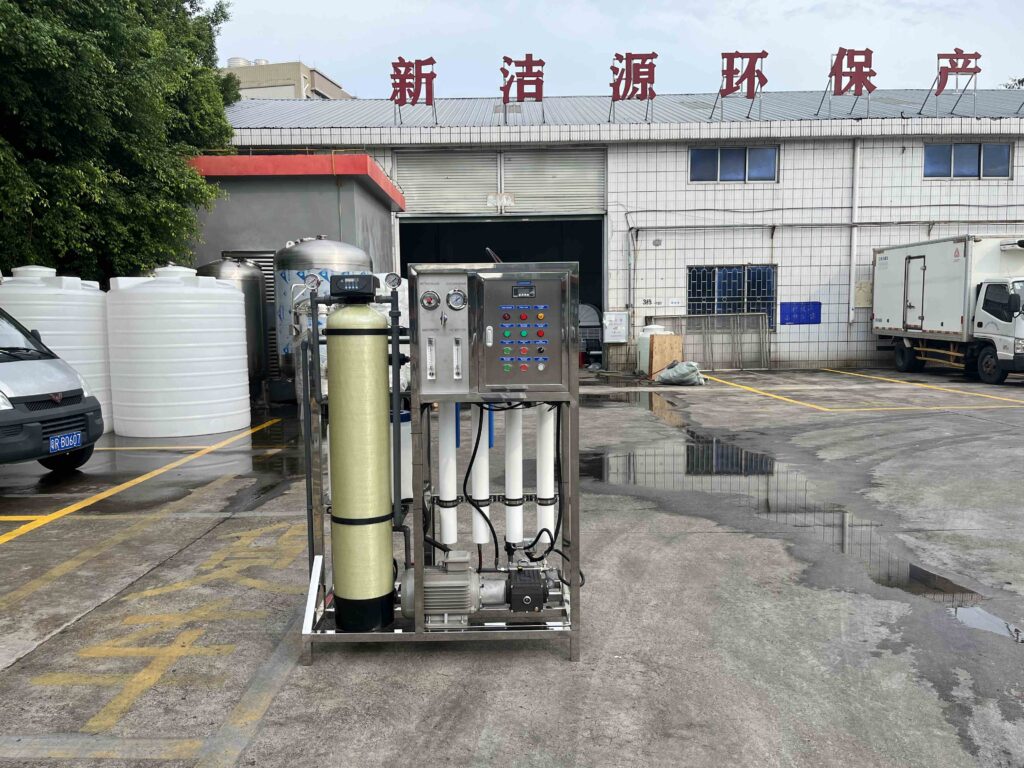
What is the components of a ro desalination system?
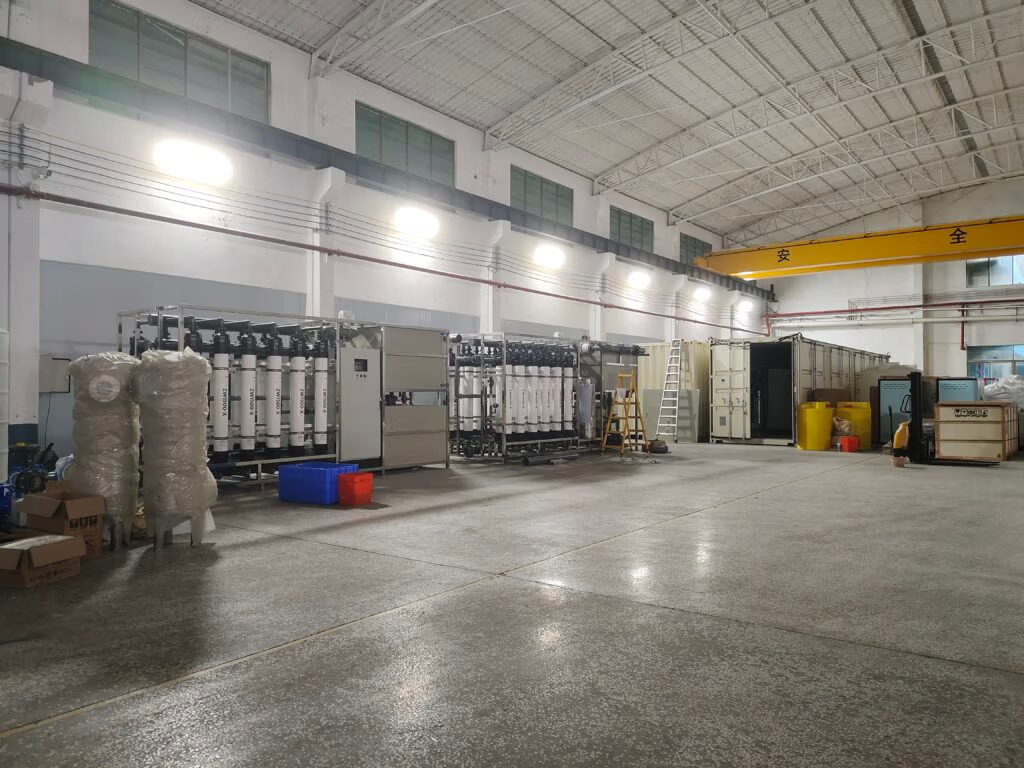
A fully functional ro desalination system mainly consists of three key parts: pretreatment, the reverse osmosis unit, and post-treatment. Each stage plays an irreplaceable role.
① The pretreatment stage utilizes mature technologies such as quartz sand filtration and activated carbon adsorption to remove silt particles, colloidal substances, and organic pollutants from seawater, preventing fouling or clogging of the subsequent membrane modules.
② 逆浸透ユニットは、本システムの「中核動力部」にあたります。高圧ポンプが海水の圧力を6〜8 MPaまで昇圧し、逆浸透プロセスに必要な動力を供給します。膜モジュールは、水分子を不純物から分離する役割を担います。
③ The post-treatment stage optimizes the taste of the water by adjusting the pH value and supplementing appropriate minerals, ensuring that the final effluent meets drinking water standards.

Compared to distillation, what is the differences between ro desalination system?
First, reverse osmosis and traditional distillation differ significantly in their core driving forces and processing procedures for seawater desalination.
RO desalination system: Powered by pressure (pressurized to 6-8 MPa by a high-pressure pump), it utilizes a semi-permeable membrane with a pore size of 0.1 nm to trap salt ions and contaminants, allowing only water molecules to pass through, thus achieving separation. Process: Pretreatment (quartz sand/activated carbon impurity removal) → High-pressure pump pressurization → Membrane module separation (water molecule penetration, impurity trapping) → Post-treatment (pH adjustment/mineral replenishment).
Distillation: Powered by heat, it heats seawater to its boiling point, vaporizing it, and utilizes the difference in boiling points between water and salts to achieve separation. Process: Seawater preheating → Heating to boiling point → Steam condensation into liquid freshwater → Collection.
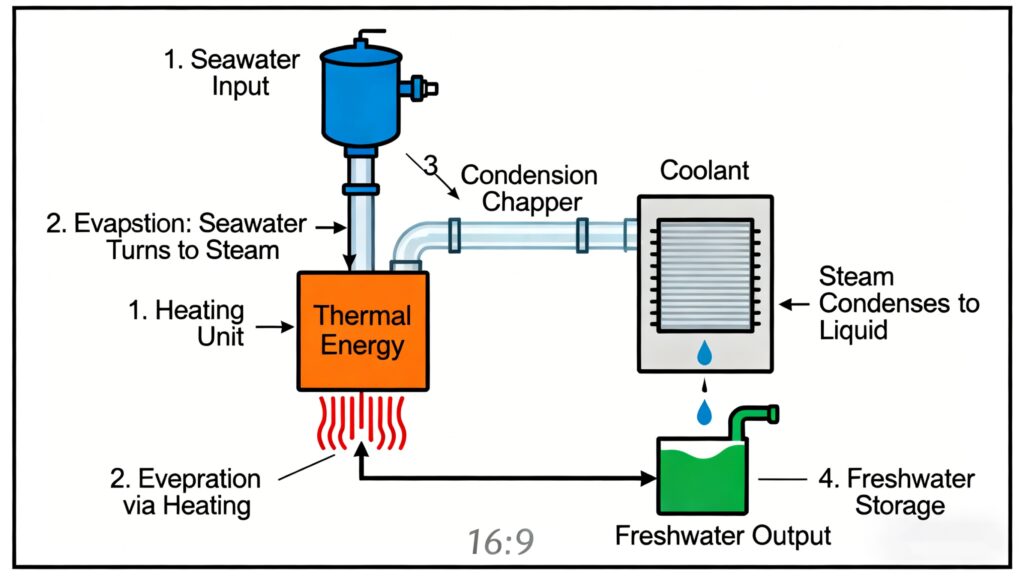
Secondly, compared to traditional distillation-based seawater desalination technology, 逆浸透技術 offers significant energy savings.
Distillation requires heating seawater to a boiling point, resulting in extremely high energy costs. Reverse osmosis, on the other hand, uses only pressure to drive the separation process, consuming less than a quarter of the energy of distillation.
Reverse osmosis membranes not only possess stronger anti-fouling properties but also have a lifespan extended from 2-3 years in the past to over 5 years, significantly reducing system maintenance costs.
現在、世界最大規模の逆浸透膜(RO)式海水淡水化プラントであるサウジアラビアのジュバイル淡水化プラントは、1日あたり140万立方メートルの淡水を生産することができ、数百万人の生産活動および生活用水の需要に対し、確固たる供給保証を提供しています。
What is the shortcomings of ro desalination system?
Despite its significant advantages, ro desalination system still faces several pressing challenges.
For example, the direct discharge of high-salinity concentrate generated during desalination could adversely affect the nearshore marine ecosystem. Currently, the industry has mitigated this problem to some extent through methods such as concentrate dilution and discharge, and recycling in conjunction with the salt chemical industry.
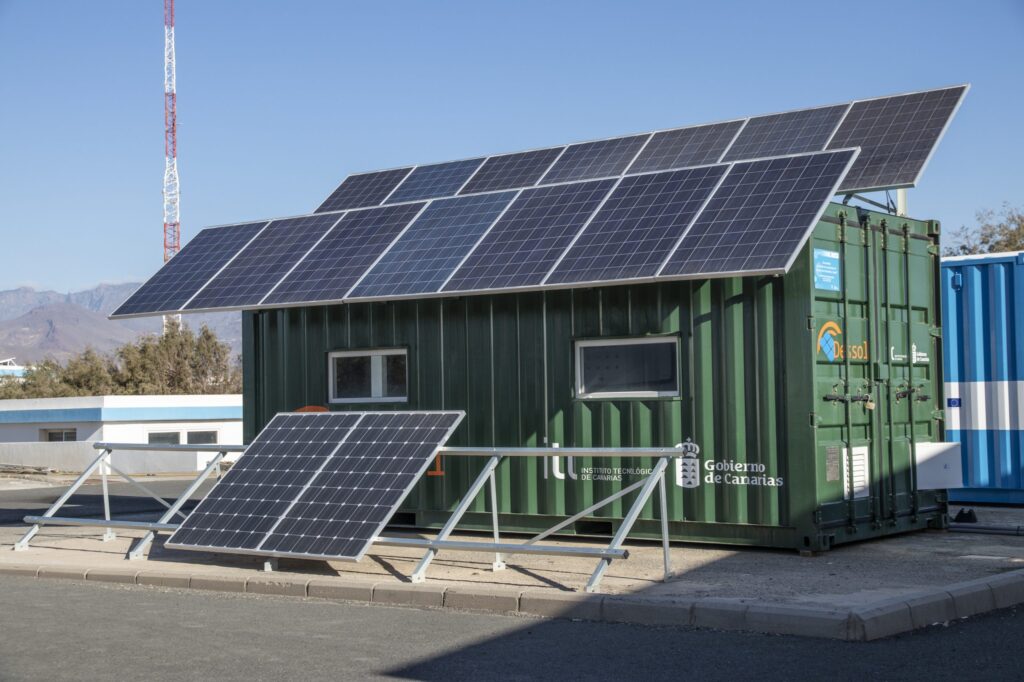
Furthermore, in regions where fossil fuels are the primary source of electricity, the system’s operation indirectly generates carbon emissions. Therefore, domestic and international research institutions are actively promoting the integration of photovoltaics and seawater desalination, utilizing clean solar energy to power the system and achieving green synergy between water resource development and energy utilization.
要約
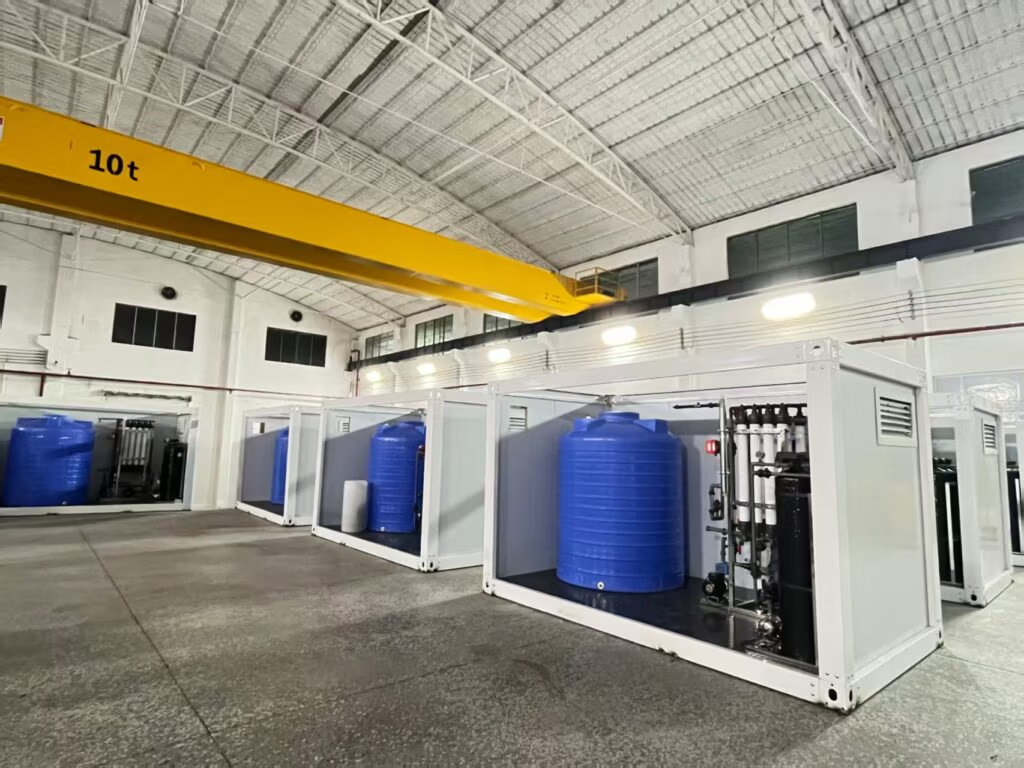
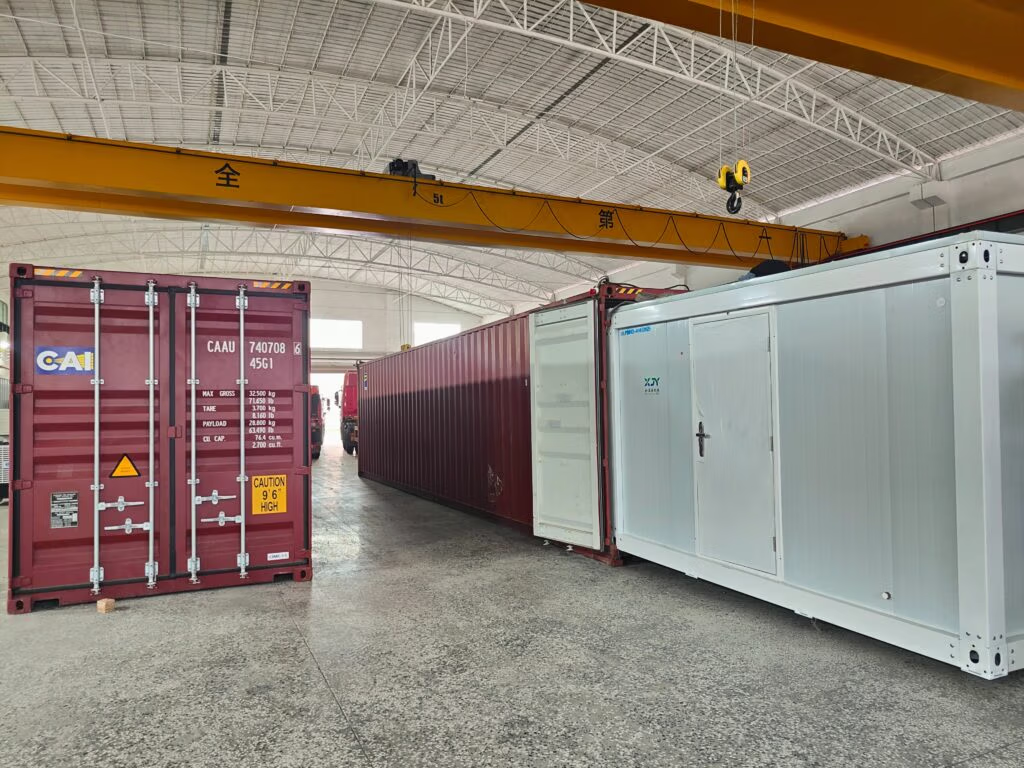
RO(逆浸透)式海水淡水化システムは、米国、カナダ、ペルーをはじめとする多くの国で国内外を問わず広く利用されています。膜材料技術の継続的な革新により、このシステムは給水安全保障においてより大きな役割を果たすだけでなく、コンテナ型移動式設備を活用することで、離島や外航船といった特殊な状況下においても、安定した信頼性の高い淡水供給サービスを提供できるようになります。