What is the desalination machine?

Seawater desalination is the process of removing salt and impurities from seawater through technological means, converting it into potable or agricultural freshwater. 97.5% of the Earth’s water resources are high-salinity seawater, with only 2.5% being freshwater resources, most of which are locked up in glaciers. Therefore, seawater desalination has become a core solution for water-scarce countries worldwide to overcome resource constraints, and in many coastal regions, it has upgraded from a supplementary measure to a strategic pillar.

What are the three main desalination systems?

Currently, mainstream seawater treatment technologies have formed three major systems, each with its own suitable applications and advantages.

MSF technology

① Multi-stage flash distillation (MSF) technology is mature and reliable. It works by gradually reducing pressure to instantly vaporize and condense preheated seawater. Operating temperatures are below 120℃, making it suitable for large-scale combined heat and power projects. For example, the Jubail desalination plant in Saudi Arabia uses this technology, producing 460,000 cubic meters of fresh water per day, making it the world’s largest multi-stage flash distillation plant.

MED technology

② Low-temperature multi-effect distillation (MED) technology is rapidly developing due to its energy-saving characteristics. Operating temperatures are below 70℃. The Taweelah A1 desalination plant in the UAE consists of 14 units and produces 240,000 cubic meters of fresh water per day, serving as a benchmark for this type of technology.

RO technology

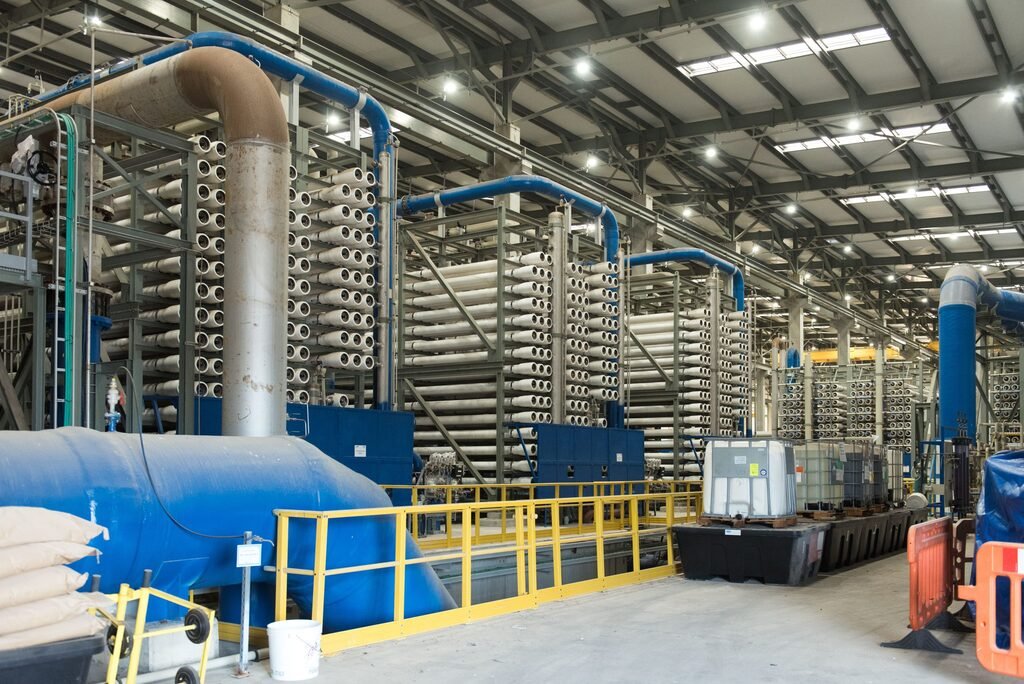
③ Reverse osmosis (RO) technology has become the fastest-growing technology due to its low energy consumption. At ambient temperature, high pressure forces water molecules through a semipermeable membrane and retains the salts. For instance, the Ashkelon desalination plant in Israel is the world’s largest reverse osmosis project, producing 330,000 cubic meters of fresh water per day. Through technological optimization, Israel reduced the cost per ton of water from $1.02 in 1985 to 48 cents in 2005.

淡水化プラント

Why has seawater desalination become so popular?

The widespread adoption of seawater treatment depends on context-specific practices and well-established mechanisms.

  • As a country facing extreme water scarcity, Israel relies on desalination for 70% of its drinking water supply. Through market-based models such as BOT and BOO, the government introduces private capital, guarantees minimum purchase volumes and prices, and thus reduces investment risks.
  • Many Middle Eastern countries utilize a combined power and water production model, relying on steam and electricity from power plants to drive desalination facilities. The Fujairah desalination plant in the UAE employs thermal membrane co-generation technology, producing 454,000 cubic meters of water per day, achieving a balance between cost and efficiency.
  • The EU provides up to 80% of the funding for desalination projects in its Mediterranean member states.
  • Japan treats desalination projects as public service projects, with the central government covering 85% of the construction costs for desalination plants on Okinawa Island.
  • South Korean companies such as Doosan Heavy Industries are participating in the construction of a large-scale thermal membrane desalination plant in Saudi Arabia, leveraging their technological advantages. This project is planned to produce 880,000 cubic meters of fresh water per day.

what is the desalination machine

What are the future development trends for seawater treatment?

Currently, seawater desalination is moving towards technological integration and green transformation. Thus, combined heat and membrane processes and the coupling of renewable energy with desalination are becoming trends. The Middle East is gradually replacing traditional thermal desalination plants with membrane-based systems, while American and Japanese companies are focusing on the research and development of reverse osmosis membranes and energy recovery devices, achieving energy recovery efficiencies exceeding 95%. More than 130 countries worldwide have adopted this technology, producing over 37.75 million cubic meters of desalinated water daily, 80% of which is used for drinking water supply, becoming an important safeguard for water security.

工場
ワークショップ

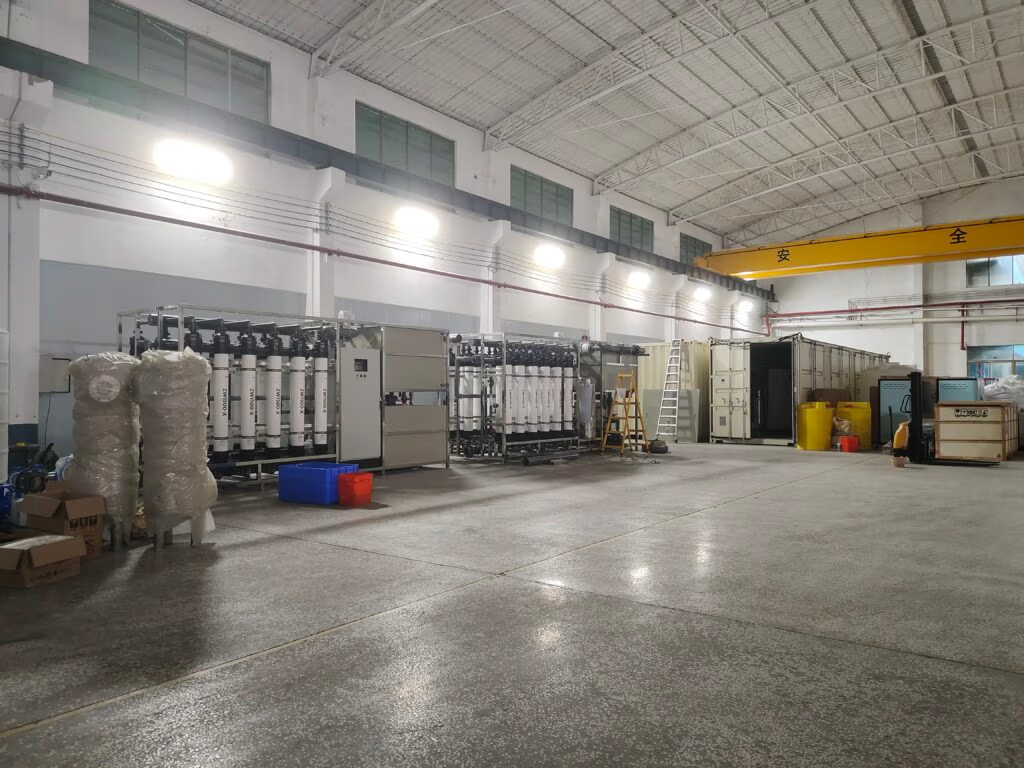
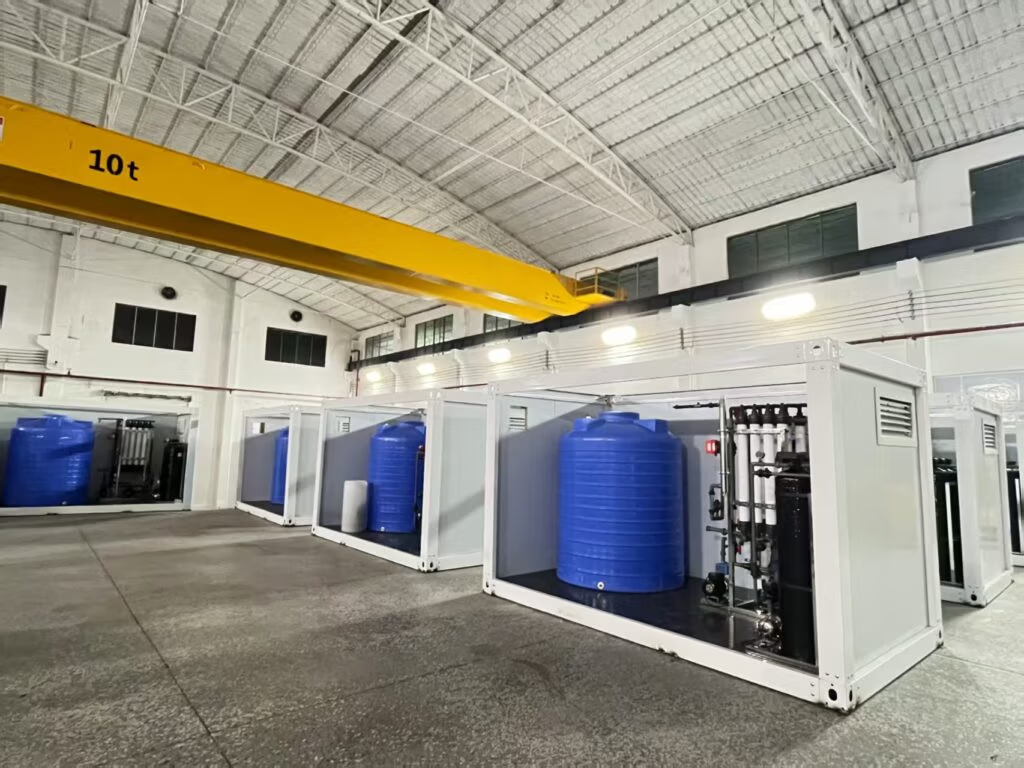
2018年に設立された広東新傑源環境保護技術有限公司は、科学研究、生産、販売を専門とする総合環境企業であり、20~99人の専門チームと中国広州市番禺区の約1,800平方メートルに及ぶ設備の整った施設を誇っている。珠江デルタの中心に位置する戦略的な立地を活かし、効率的な運営をサポートし、農業、化学工学、医療、食品加工産業(環境機器の研究開発、水・汚泥処理、生態系の回復を含む)においてビジネスを拡大し、グローバルな顧客に対してシームレスな輸出入業務を促進している。.

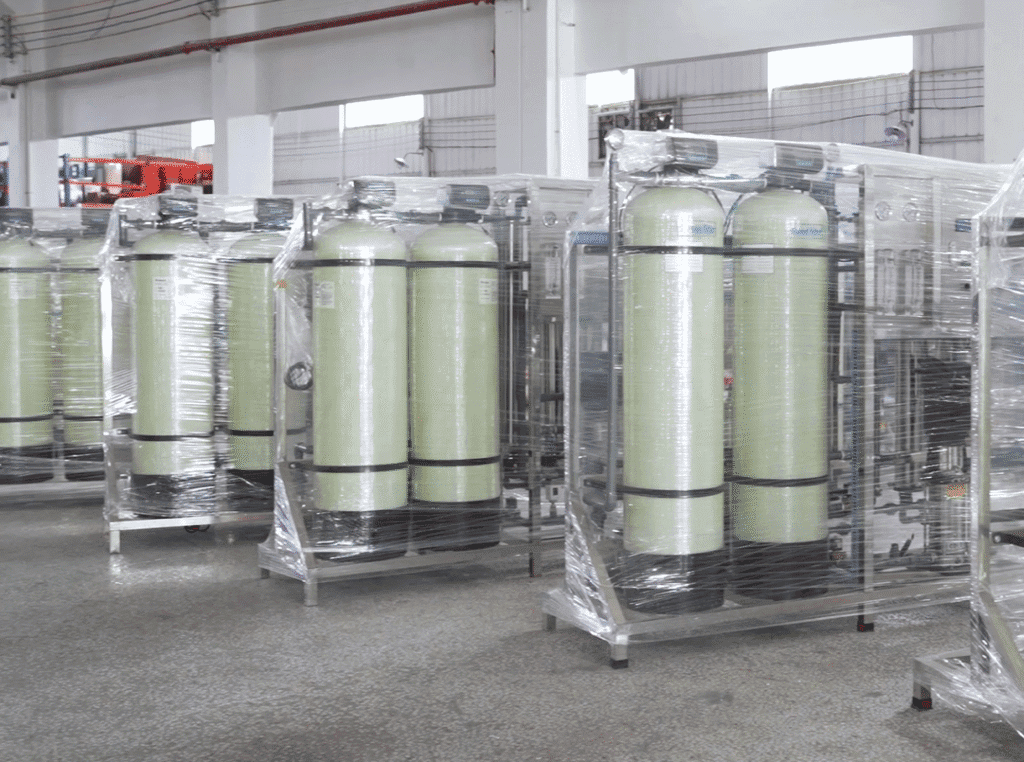
水処理装置ワークショップ
水処理装置ワークショップ
水処理装置ワークショップ
水処理装置ワークショップ
水処理装置ワークショップ
水処理装置ワークショップ

よくあるご質問

私達はあなたの水必要性(水質、電圧、プロセス、等)に基づいて装置の変数および処置解決をカスタマイズし、すべてのプロダクトは完全な証明文書が付いている国際的な普遍的な標準(ISO、セリウム、等を含む)に従います。機器の選定、設置指導から販売後のメンテナンスまで、当社の専門技術チームがフルサイクルのサポートを提供します。グローバルな協力物流ネットワークを活用し、24時間以内のアフターセールス対応で迅速な配送を保証し、海外調達や使用中のあらゆる懸念を完全に解決します。.

-私達は通常私達があなたの照会を得た 24 時間以内に引用します
(土日祝日を除く).
-お急ぎの場合は、お電話にてお問い合わせください。
またはその他の方法でお問い合わせください。.
-それはあなたが必要とするマシンの注文数量と電圧に依存します。.
-通常、少量の場合は7-15日以内に発送いたします、,
大量の場合は約30日。.
特別な電圧の場合、生産に40日ほどかかることがあります。.
-このマシンは設置が非常に簡単です。あなたが受け取ったマシン 
が組み立てられます。あなたは私たちの英語のステップに従うだけでよい。 
インストラクションとビデオ。マシンの容量が大きい場合、我々は手配することができます 
エンジニアがインストールをサポートする。.
-T/T、Western Union、MoneyGram、L/C at sight.これは交渉可能です。.
注文確認後、契約書をお送りします。 
会社の銀行情報当社への送金が可能です。 
T/Tで銀行口座。または、オンラインで注文することもできます。.
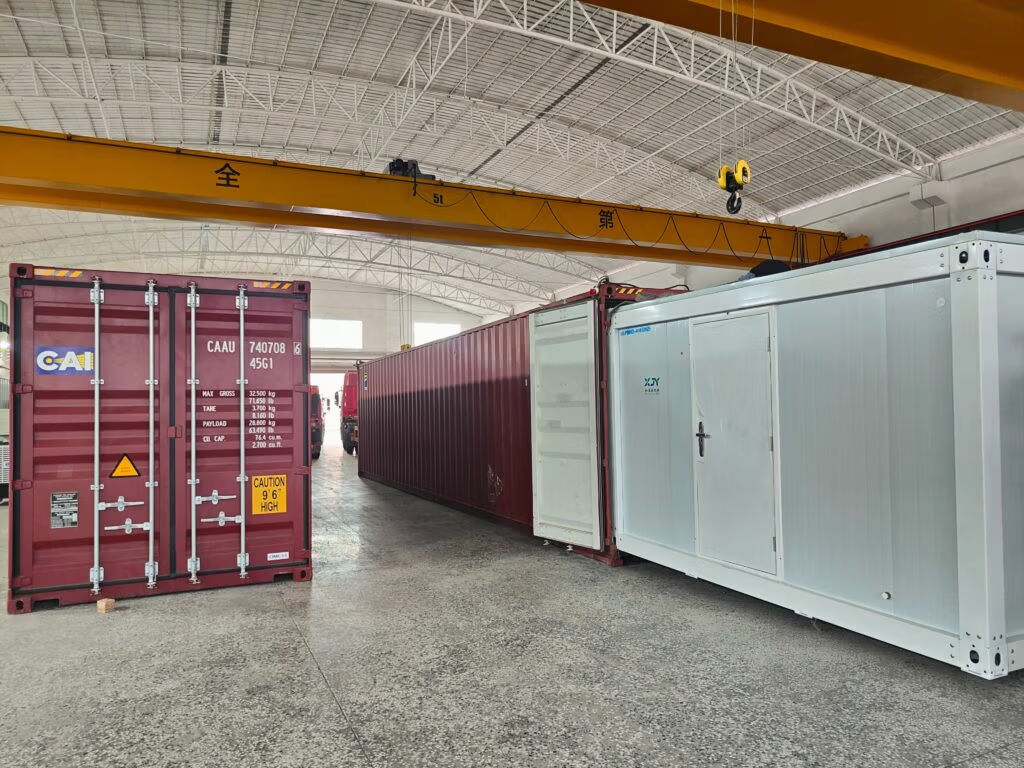
-機械は標準的な輸出合板の場合によって詰まる。.
船便/航空便/鉄道便での長時間輸送に適している。.
-船便、航空便、列車便での輸送が可能だ。.
ご注文前にご確認ください。.
-私達は1年の保証を提供する。それは部品があるときを意味します 
1年以内に故障した場合、スペアパーツを無料でお送りします。.
-1.私たちは、お客様との長期ビジネスを確立されています。私達のプロダクトの何れかのモデルに興味がある場合は、お問い合わせは、自由にしてくださいを参照してください。
-2.私たちは、お客様を友人として尊重し、誠意をもって対応させていただきます。 
そして、彼らがどこの出身であろうと、彼らと友だちになるのだ。.

お問い合わせ価格

このフィールドは必須です。.
このフィールドは必須です。.

注目記事


上部へスクロール

24時間以内にご返信いたします。.

おしゃべりしよう