Reverse osmosis system cost depends on water production, water quality requirements, and application scenarios. They are categorized into four main types: small, medium, large, and extra-large.
Small reverse osmosis system cost(water output 0.25-5m³/h)
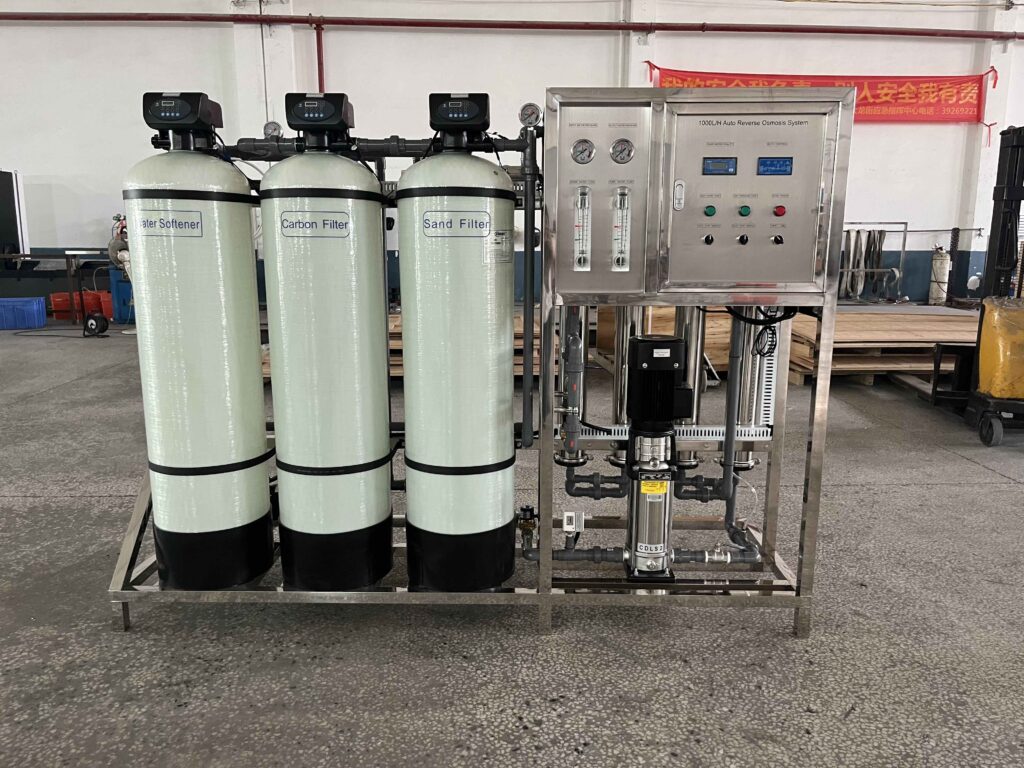
Suitable for small food processing plants, laboratory pure water preparation, and small electroplating cleaning. The initial equipment cost ranges from $1,350 to $48,000, making it a low-cost, easy-to-implement model.
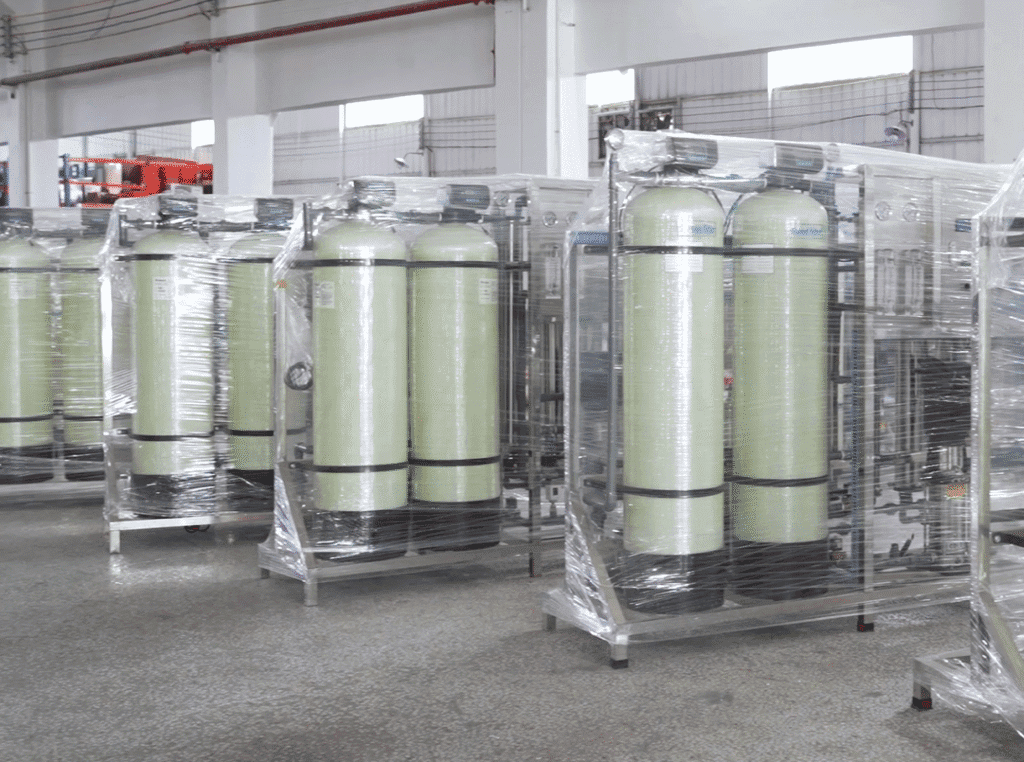
For a small beverage plant, for example, a single-stage RO system with a water output of 2 m³/h (including quartz sand filtration, activated carbon filtration, 5μm fine filtration, and an RO main unit) costs approximately $16,000 to $24,000.
If food-grade hygiene requirements are required (such as 304 stainless steel piping and sanitary RO membrane housings), the cost will increase by 15%-20%. Thus, it brings the final price to $19,000 to $30,000.
A 250LPH RO system at a soy product plant demonstrates that a $1,350 device can meet the water needs of a 6-ton daily production capacity.

Medium-sized reverse osmosis system cost(water output 5-50m³/h)
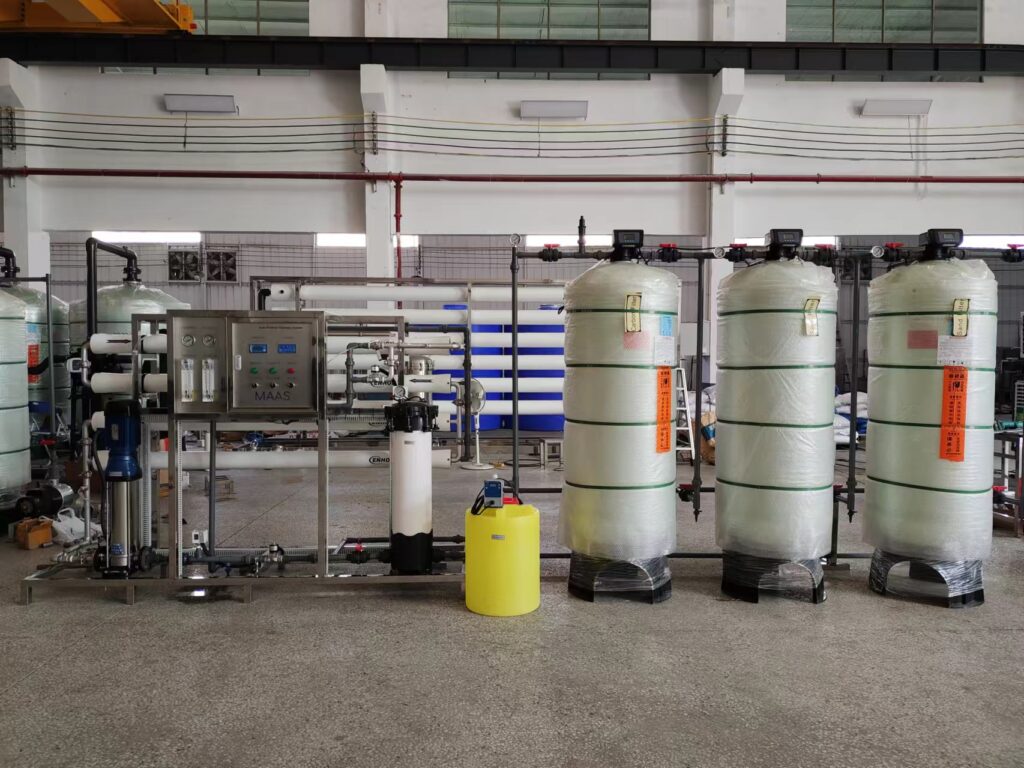
This type of RO system is primarily used for local water treatment. Such as electronics factories, food processing plants, and small chemical plants. Its initial costs ranging from $27,000 to $20,000.
For pure water production in the electronics industry, for example, a system with a water output of 10 m³/h (including pretreatment, RO, and EDI) costs approximately $68,000 to $110,000. Installation and commissioning costs account for approximately 15%-25% of the total equipment price. If GMP certification is required (as in the food industry), an additional 10%-15% in compliance costs is added, bringing the total cost to $80,000 to $160,000.

Large industrial systems cost(water output 50-500m³/h)
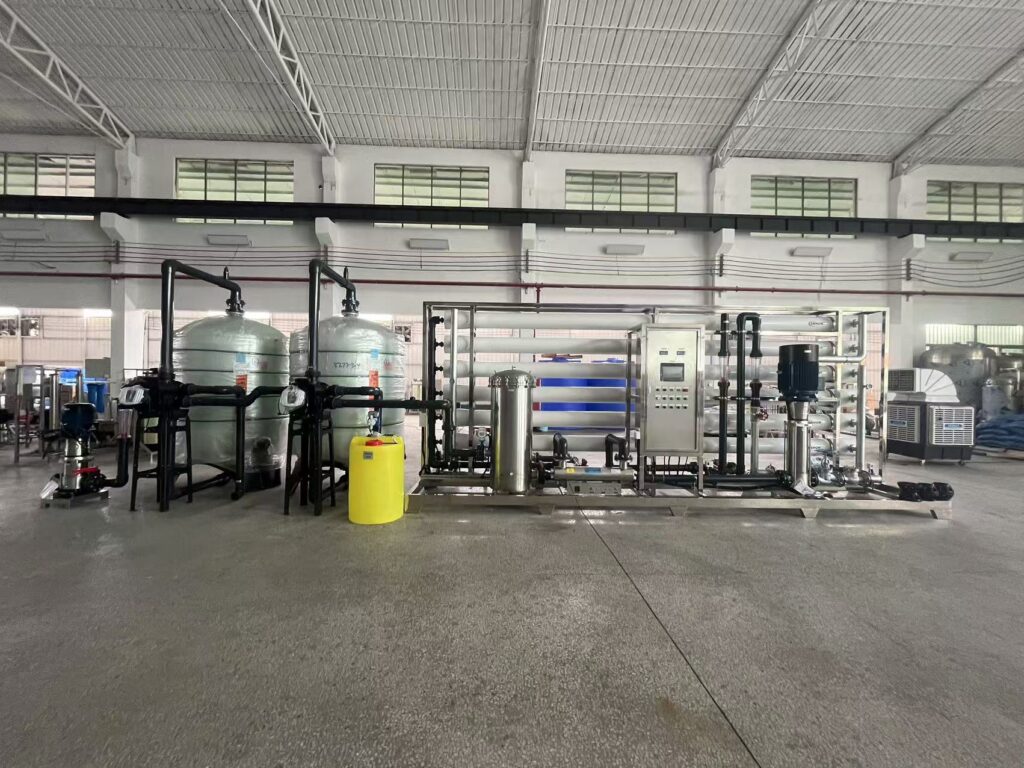
Large petrochemical plants and municipal wastewater reuse projects commonly have this type of system, with costs ranging from $200,000 to $1,600,000. A petrochemical company’s 200 m³/h circulating water reuse system cost $1,100,000 (including 64 8-inch anti-fouling RO membranes and four Grundfos high-pressure pumps). Because these systems must handle high-turbidity and high-salinity wastewater, the pretreatment stage (multi-media filtration + ultrafiltration) contributes 25%-30% of the cost, significantly higher than small and medium-sized systems.

Ultra-large industrial systems cost(water output > 500m³/h)
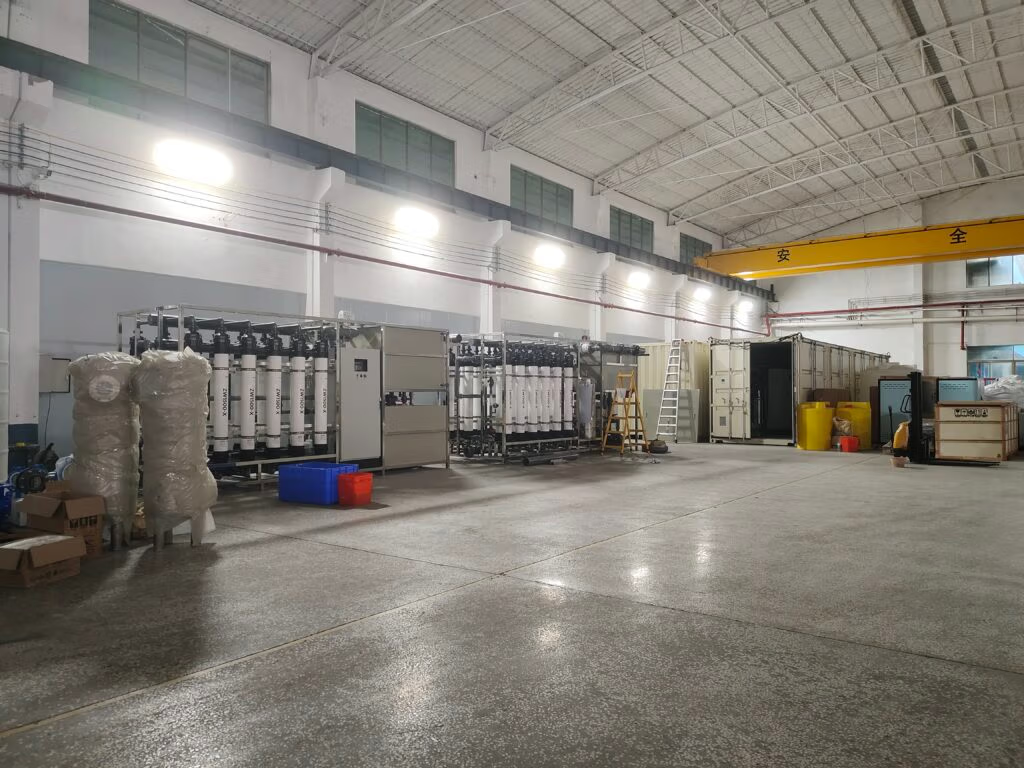
Enterprises and institutions primarily use this type of reverse osmosis equipment for seawater desalination and centralized water supply in industrial parks, with costs ranging from tens of millions to hundreds of millions of dollars. A 1,000 m³/h recycled water project at an industrial park in Tianjin, China, required a total equipment investment of $20 million (including a two-stage RO system and an ozone disinfection unit). Due to the need for high-salt-resistant membranes and higher-pressure pumps, the unit water production cost is 40%-60% higher than conventional industrial water treatment. The total investment for a 100,000-ton daily desalination RO system could reach $100-160 million.
Where does the core cost of the 逆浸透システム come from?
Membranes and pumps account for over 50%
Reverse osmosis membranes constitute the most significant cost component, and the unit prices of industrial-grade membranes vary significantly.
A conventional brackish water membrane (such as the Times Vorton ULP31-4040) costs approximately $110 per unit, while specialized acid- and alkali-resistant membranes (such as the Suez CPA3-LD) cost over $400 per unit, a price difference of 3.75 times.
For high-pressure pumps, cast iron pumps cost approximately $2,700 to $6,800 per unit. While corrosion-resistant stainless steel pumps (316L) cost $11,000 to $20,000 per unit, directly driving up equipment costs.
Parts and energy replacement consumption
RO systems typically consume 2.5-4.5 kWh/m³ of energy. Calculated at a water output of 100 m³/h and an electricity price of 0.6 yuan/kWh. The daily electricity bill is approximately $490-$890, with an average annual electricity bill of $180,000-$320,000.
The average annual O&M cost of an RO system includes membrane replacement (every two to three years, accounting for 40%-50% of the cost) and chemicals (antiscalants and cleaning agents, costing $6,800-$27,000 annually).
A food factory’s 20 m³/h system has an average annual O&M cost of approximately $24,000. It represents 22.5% of the initial investment of $110,000, far exceeding the cost of a household system.
How to minimize the cost of RO system?
①Customized requirements
Technicians select the membrane type according to raw water quality. For example, choosing anti-fouling membranes over conventional membranes for high-salinity wastewater can reduce membrane replacement frequency by 30%. System design is based on actual production capacity, voltage, and frequency. Furthermore, cost-effective core components are employed, such as Times Wharton membranes and Southern Pump Industry high-pressure pumps.
②Extend membrane life and reduce chemical consumption
Adjusting the chemical dosage based on actual needs can reduce chemical consumption by 15%-20%.
Regular membrane cleaning, rather than immediate replacement, can extend membrane life by 6-12 months.
Summarize
RO system cost control isn’t simply about minimizing initial investment. It requires a comprehensive balance across the entire lifecycle: equipment procurement, energy consumption, and operational expenses. Therefore, it’s essential to work with professionals to obtain a water treatment solution.
If you require a quote, please feel free to contact us.