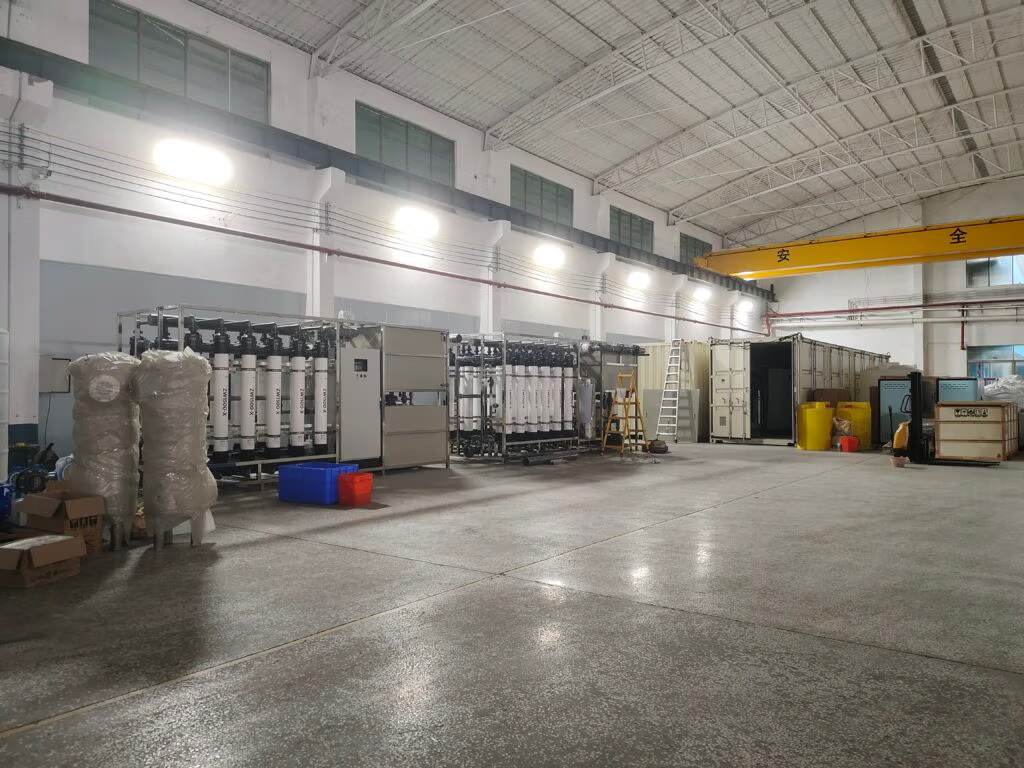
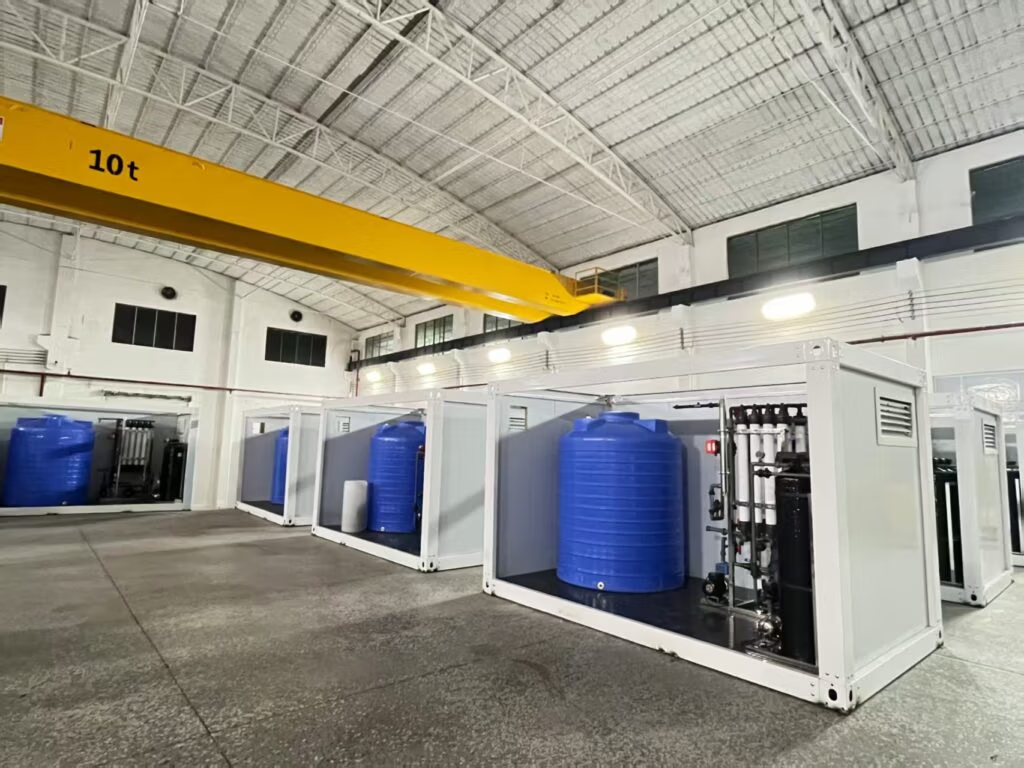
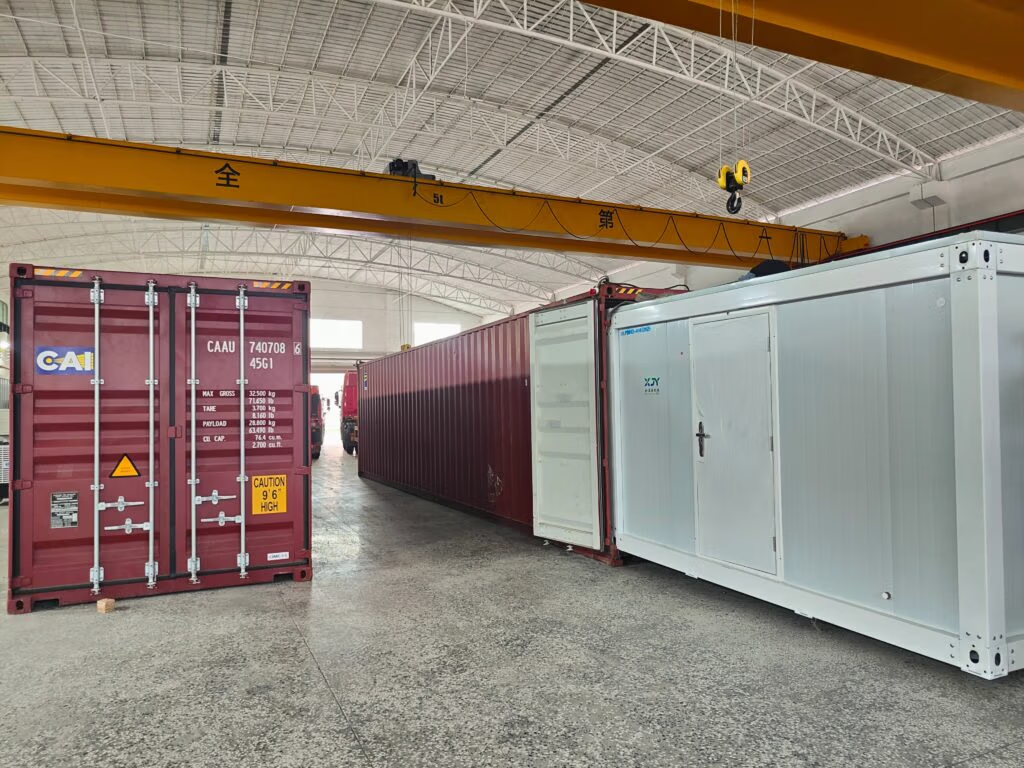
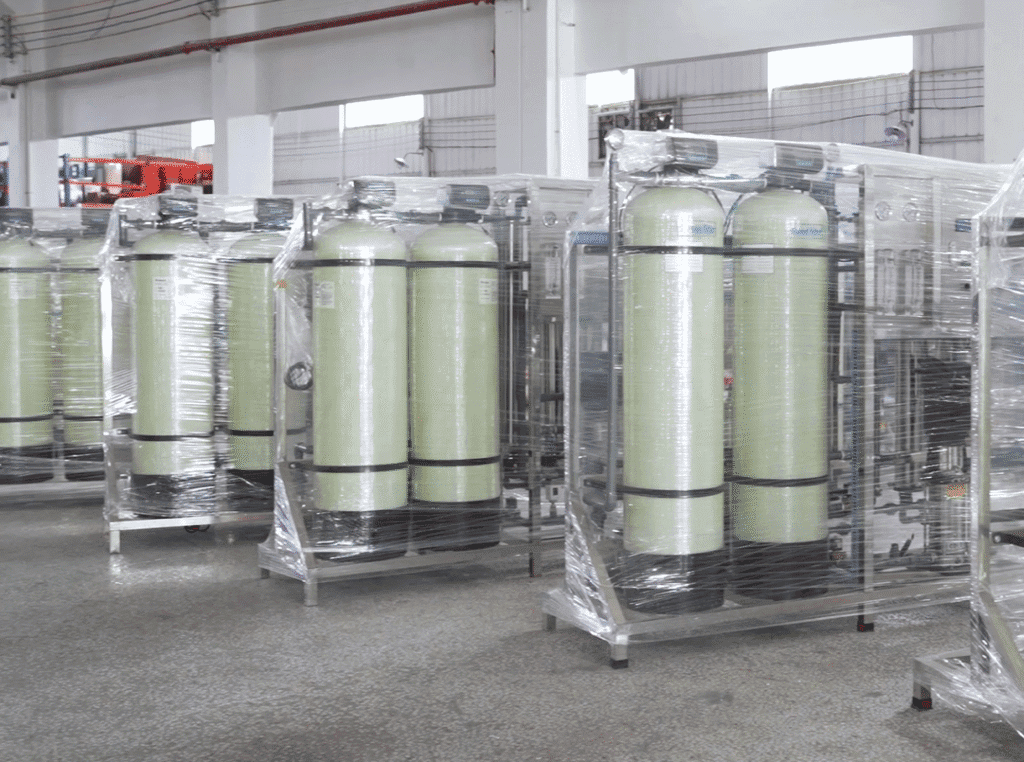
Seawater desalination is the process of removing salt and impurities from seawater through technological means, converting it into potable or agricultural freshwater. 97.5% of the Earth’s water resources are high-salinity seawater, with only 2.5% being freshwater resources, most of which are locked up in glaciers. Therefore, seawater desalination has become a core solution for water-scarce countries worldwide to overcome resource constraints, and in many coastal regions, it has upgraded from a supplementary measure to a strategic pillar.
What are the three main desalination systems?
Currently, mainstream seawater treatment technologies have formed three major systems, each with its own suitable applications and advantages.
MSF technology
① Multi-stage flash distillation (MSF) technology is mature and reliable. It works by gradually reducing pressure to instantly vaporize and condense preheated seawater. Operating temperatures are below 120℃, making it suitable for large-scale combined heat and power projects. For example, the Jubail desalination plant in Saudi Arabia uses this technology, producing 460,000 cubic meters of fresh water per day, making it the world’s largest multi-stage flash distillation plant.
MED technology
② Low-temperature multi-effect distillation (MED) technology is rapidly developing due to its energy-saving characteristics. Operating temperatures are below 70℃. The Taweelah A1 desalination plant in the UAE consists of 14 units and produces 240,000 cubic meters of fresh water per day, serving as a benchmark for this type of technology.
RO technology
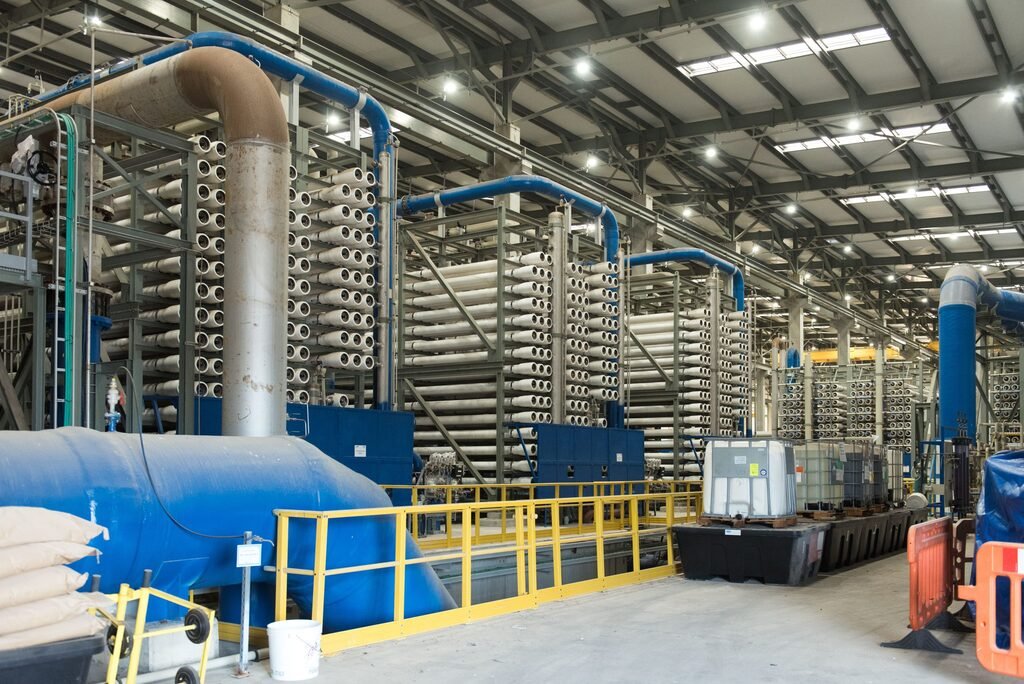
③ Reverse osmosis (RO) technology has become the fastest-growing technology due to its low energy consumption. At ambient temperature, high pressure forces water molecules through a semipermeable membrane and retains the salts. For instance, the Ashkelon desalination plant in Israel is the world’s largest reverse osmosis project, producing 330,000 cubic meters of fresh water per day. Through technological optimization, Israel reduced the cost per ton of water from $1.02 in 1985 to 48 cents in 2005.
Why has seawater desalination become so popular?
The widespread adoption of seawater treatment depends on context-specific practices and well-established mechanisms.
- As a country facing extreme water scarcity, Israel relies on desalination for 70% of its drinking water supply. Through market-based models such as BOT and BOO, the government introduces private capital, guarantees minimum purchase volumes and prices, and thus reduces investment risks.
- Many Middle Eastern countries utilize a combined power and water production model, relying on steam and electricity from power plants to drive desalination facilities. The Fujairah desalination plant in the UAE employs thermal membrane co-generation technology, producing 454,000 cubic meters of water per day, achieving a balance between cost and efficiency.
- The EU provides up to 80% of the funding for desalination projects in its Mediterranean member states.
- Japan treats desalination projects as public service projects, with the central government covering 85% of the construction costs for desalination plants on Okinawa Island.
- South Korean companies such as Doosan Heavy Industries are participating in the construction of a large-scale thermal membrane desalination plant in Saudi Arabia, leveraging their technological advantages. This project is planned to produce 880,000 cubic meters of fresh water per day.

What are the future development trends for seawater treatment?
Currently, seawater desalination is moving towards technological integration and green transformation. Thus, combined heat and membrane processes and the coupling of renewable energy with desalination are becoming trends. The Middle East is gradually replacing traditional thermal desalination plants with membrane-based systems, while American and Japanese companies are focusing on the research and development of reverse osmosis membranes and energy recovery devices, achieving energy recovery efficiencies exceeding 95%. More than 130 countries worldwide have adopted this technology, producing over 37.75 million cubic meters of desalinated water daily, 80% of which is used for drinking water supply, becoming an important safeguard for water security.