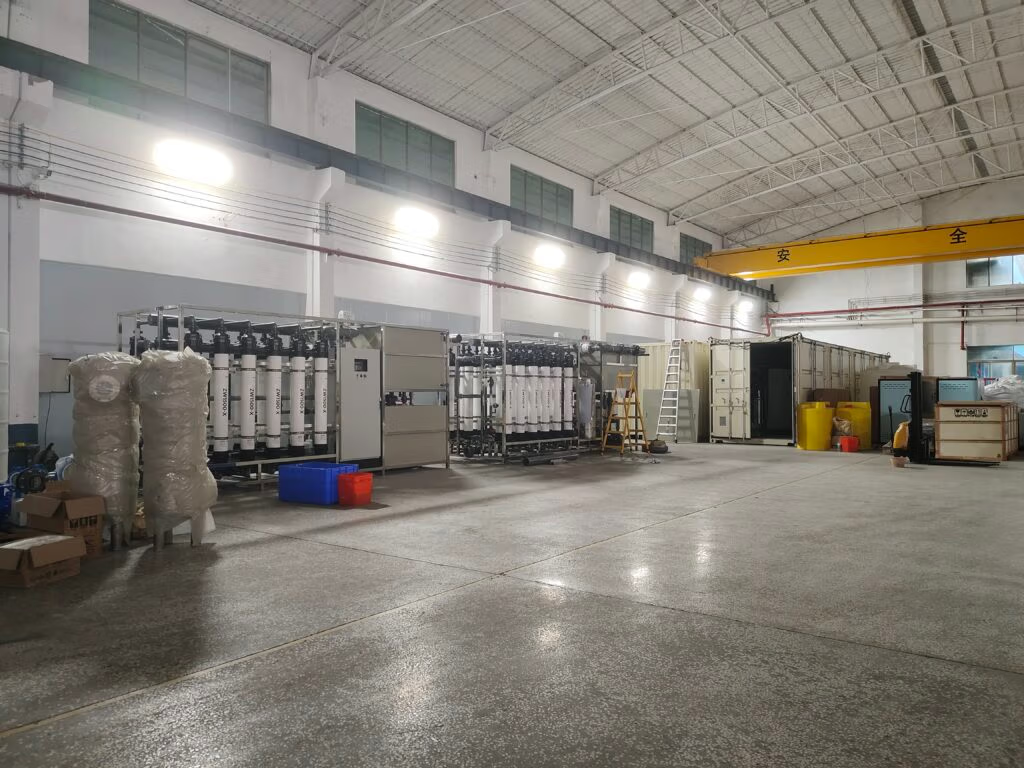
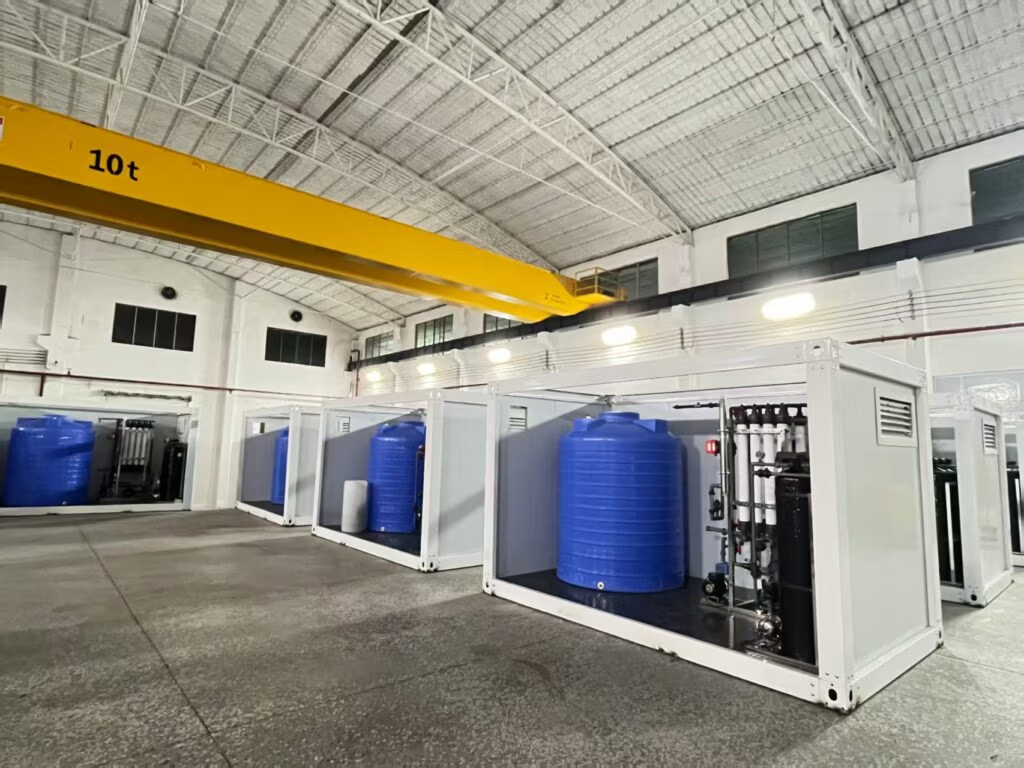
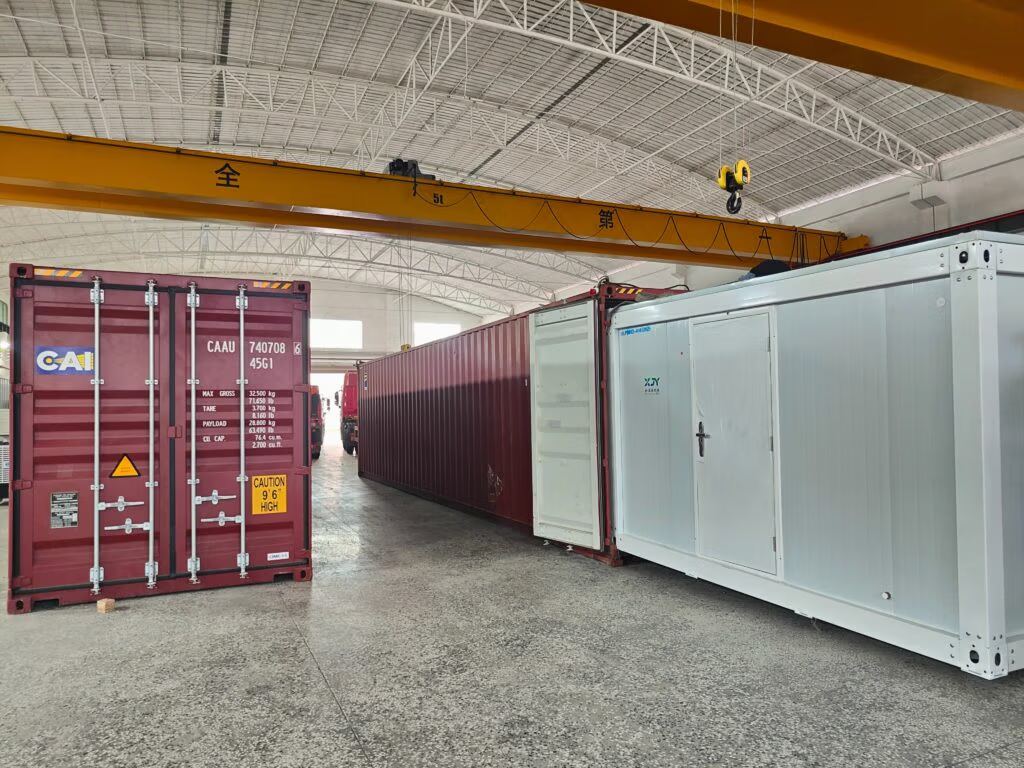
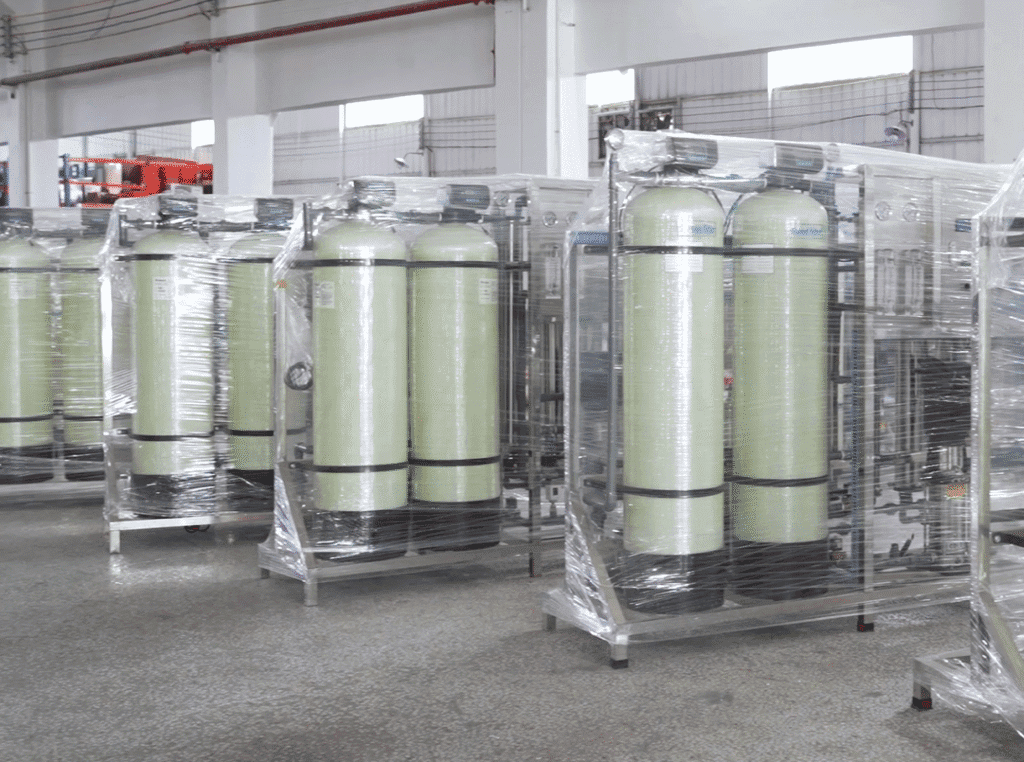
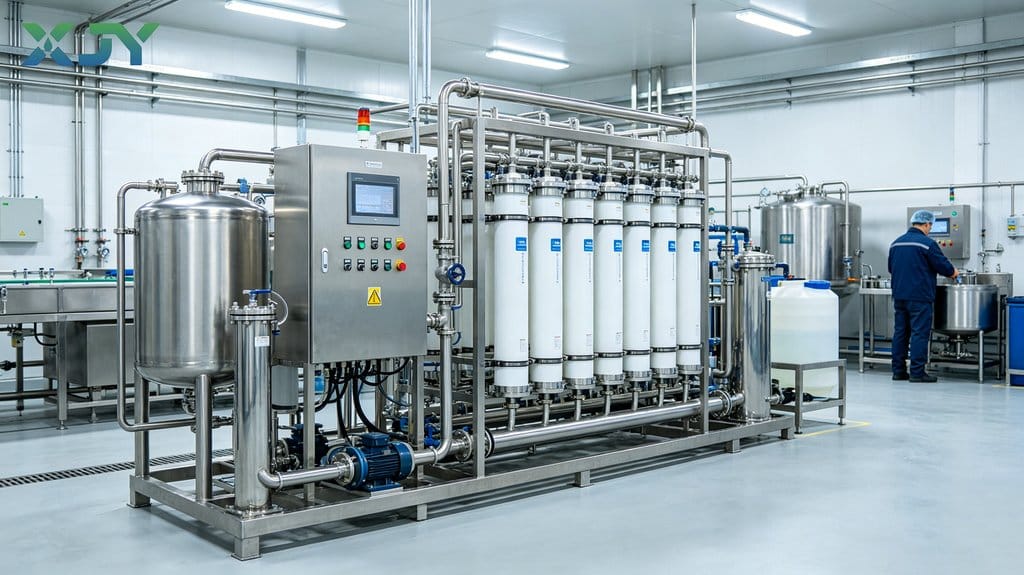
An ultrafiltration water system is one of the most reliable solutions in modern industrial water treatment. Whether your facility operates in chemical processing, food and beverage production, pharmaceuticals, or power generation, selecting and maintaining the right system directly impacts your output quality, operating costs, and equipment lifespan.
Yet many plant engineers still struggle with the same recurring problems: membrane fouling, inconsistent water quality, and unexpected downtime. This guide addresses those challenges and gives you a clear, actionable framework.
What Is an Ultrafiltration Water System and Why Does Industry Need It?
This technology uses a semi-permeable membrane with pore sizes ranging from 0.01 to 0.1 microns. Under applied pressure, water passes through while suspended solids, bacteria, viruses, colloids, and high-molecular-weight organics are rejected.
Unlike conventional sand filtration, UF delivers an absolute physical barrier. It produces stable, consistent output regardless of fluctuations in source water conditions, a critical advantage in industrial environments where feed water quality is rarely constant.
Industrial sectors that rely on this technology include boiler feed water pretreatment, cooling tower makeup water, semiconductor manufacturing, municipal wastewater reuse, and beverage and dairy processing.
According to DuPont Water Solutions, UF membranes can effectively exclude particles as small as 0.02 microns, meeting increasingly stringent global water quality standards.
How to Select the Right Industrial Ultrafiltration Water System
Choosing the wrong equipment leads to under-performance, excessive maintenance, and early membrane replacement. Here are the five most important selection criteria for an industrial water filtration setup.
1. Analyze Your Feed Water Quality
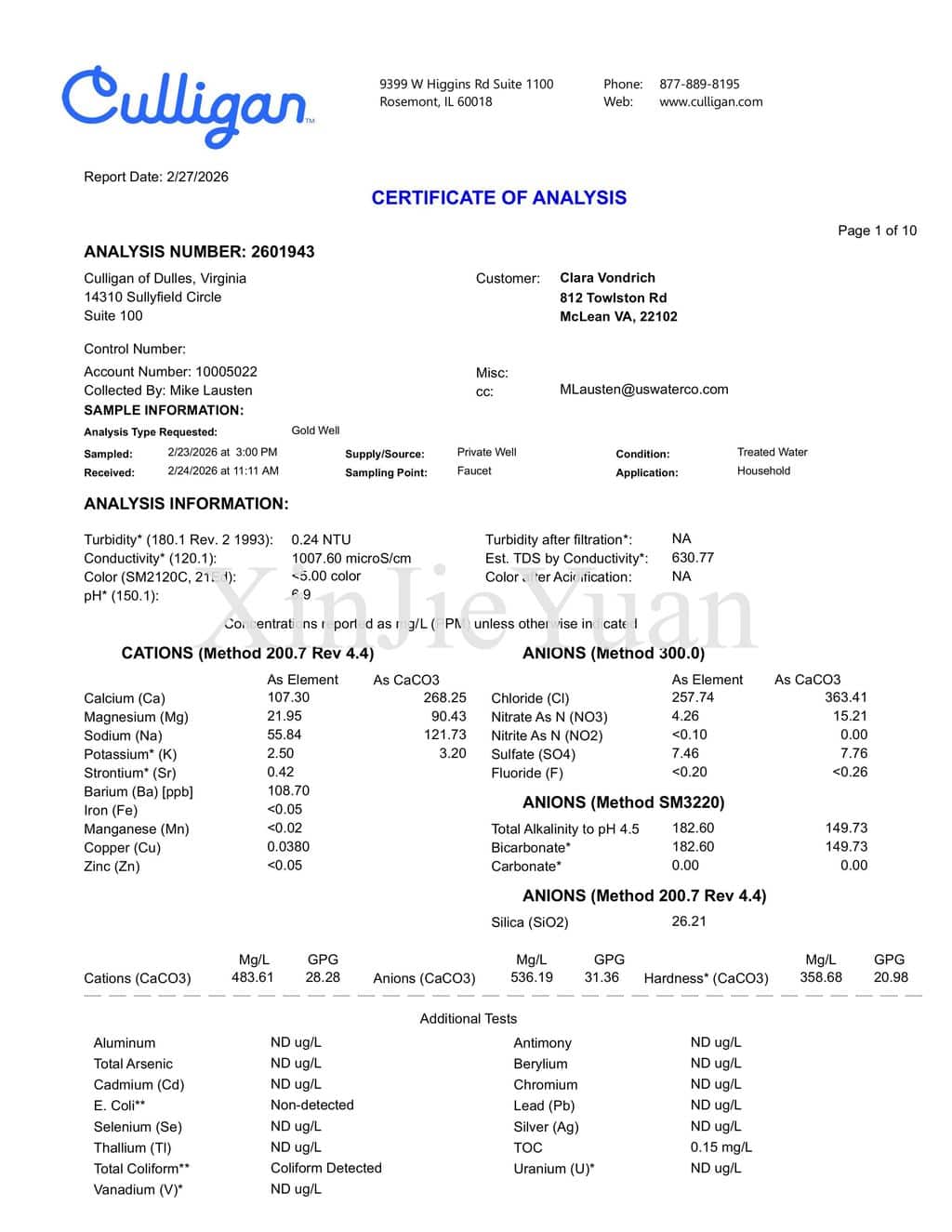
Before specifying any equipment, conduct a thorough feed water analysis. Key parameters include turbidity, total suspended solids (TSS), silt density index (SDI), organic content (TOC), and microbial load.
High TSS feed water requires robust pre-treatment — typically coagulation, sedimentation, or media filtration — upstream of the UF unit. Skipping this step is a primary cause of accelerated membrane fouling.
2. Define Your Flow Rate and Recovery Requirements
Industrial systems are sized by permeate flow rate (m³/h) and recovery ratio. Most well-designed units achieve 90–95% recovery. If your process demands high recovery, ensure the design includes an adequate backwash and chemical cleaning cycle frequency.
Oversizing leads to wasted capital expenditure. Undersizing creates bottlenecks. Match capacity to your peak daily demand, not average demand.
3. Choose the Right UF Membrane Material
Membrane material determines chemical resistance, operating temperature range, and cleaning tolerance. Common options include polyethersulfone (PES), which offers excellent chemical resistance and wide pH tolerance (2–13); polyvinylidene fluoride (PVDF), which provides superior chlorine resistance for heavily oxidized feed water; and ceramic membranes, which offer the highest durability for high-temperature or abrasive applications.
For most standard industrial water filtration scenarios, PES or PVDF hollow fiber membranes offer the best balance of performance and economy.
4. Evaluate Configuration: Inside-Out vs. Outside-In
In inside-out (lumen-side feed) mode, feed water enters through the hollow fiber lumen, offering better fouling control for high-solids streams. Outside-in (shell-side feed) allows greater membrane surface area per module and suits lower-turbidity applications requiring higher flux rates.
Your choice should align with your feed water characteristics and target flux.
5. Consider Automation and Control Capability
Modern industrial units incorporate PLC-based automation for backwash sequencing, chemical enhanced backwash (CEB), and clean-in-place (CIP) cycles. Automated controls reduce operator intervention, ensure consistent performance, and extend service life significantly.
Look for systems with real-time transmembrane pressure (TMP) monitoring, flow meters, and remote monitoring capability — especially important for large-scale or unmanned facilities.
The 3 Most Common UF Membrane Problems in Industrial Applications
Even a well-selected ultrafiltration water system will face operational challenges without proper care. These are the three issues that arise most frequently in industrial settings.
Membrane Fouling
Fouling is the accumulation of suspended solids, colloids, and organic matter on or within the membrane surface. It manifests as rising TMP and declining permeate flow. Maintain consistent pre-treatment quality and run automated backwash cycles every 20–40 minutes. Schedule CEB weekly using sodium hypochlorite for organic fouling or citric acid for mineral scaling.
Scaling
Scaling occurs when sparingly soluble salts — primarily calcium carbonate, calcium sulfate, or silica — precipitate onto membrane surfaces. It is more common in hard water regions or where the concentrate stream is not managed properly. Monitor feed water hardness and alkalinity, adjust recovery rates, and use antiscalant dosing upstream where scaling potential is elevated.
Membrane Integrity Failure
Fiber breakage or seal ring leakage can cause pathogen pass-through — a serious risk in water reuse or drinking water pretreatment applications. Run regular pressure decay tests (PDT) or diffusive airflow tests (DAF) at scheduled intervals. According to Water Online, fiber damage is often caused by water hammer events or excessive operating pressure — both preventable through proper system commissioning.
Best Maintenance Practices for Long-Term Performance
A well-maintained unit can deliver reliable service for 5–10 years before membrane replacement is required. Follow these structured practices to protect your investment.
Daily: Monitor TMP, permeate flow, and turbidity. Log all operational parameters and check for any abnormal pressure differentials across the treatment train.
Weekly: Perform chemical enhanced backwash. Inspect pre-treatment units including strainers and dosing pumps. Verify flow meter calibration.
Monthly: Conduct integrity testing on all membrane modules. Review chemical consumption trends and inspect all valves, seals, and instrumentation.
Annually: Complete CIP cleaning with the appropriate chemical protocol. Inspect structural components, piping, and pressure vessels. Review performance data against baseline commissioning values.
For a broader view of related technologies, see our overview of industrial reverse osmosis system maintenance and our guide to industrial RO filter selection — both complement the workflows described in this guide.
Why Industrial Facilities Choose UF Over Conventional Filtration
Compared to traditional sand or multimedia filters, an ultrafiltration water system offers measurable advantages for demanding treatment operations.
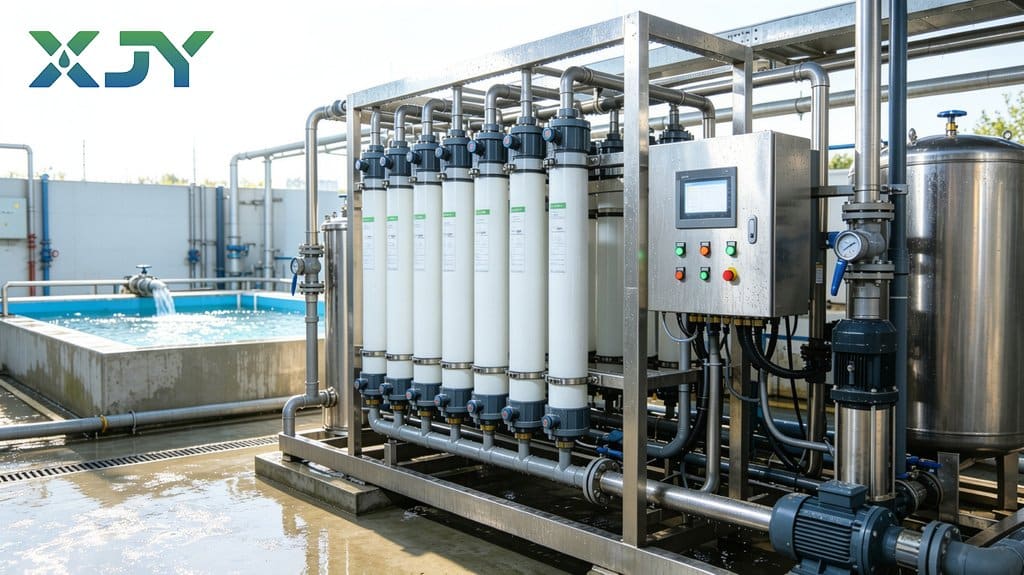
The absolute membrane barrier ensures physical removal of bacteria and viruses, not just size-based reduction. Effluent quality remains consistent regardless of feed water variability — critical for sensitive downstream processes such as RO pretreatment or pharmaceutical rinse water production.
Standard operation requires no chemical coagulants or disinfectants, reducing reagent costs and environmental load. Modular skid-mounted designs need significantly less floor space than equivalent conventional filter trains. Operating pressures of 0.5–2 bar are far lower than RO systems at 5–15 bar, translating to meaningfully reduced energy costs across the equipment lifecycle.
Conclusion: Build a Reliable Industrial Water Treatment Foundation
Selecting and maintaining the right ultrafiltration water system is a long-term investment in operational reliability. Start with accurate feed water data, size the equipment correctly, choose appropriate membrane materials, and commit to a disciplined maintenance schedule.
Facilities that follow these principles consistently achieve lower operating costs, fewer unplanned shutdowns, and longer service life — making industrial water filtration a genuine competitive advantage. Contact our technical team for a site-specific assessment and customized recommendation.